Избранное сообщение

пятница, 26 мая 2023 г.

Вулкан Попокатепетль в Мексике продолжает извергать клубы дыма и пепла


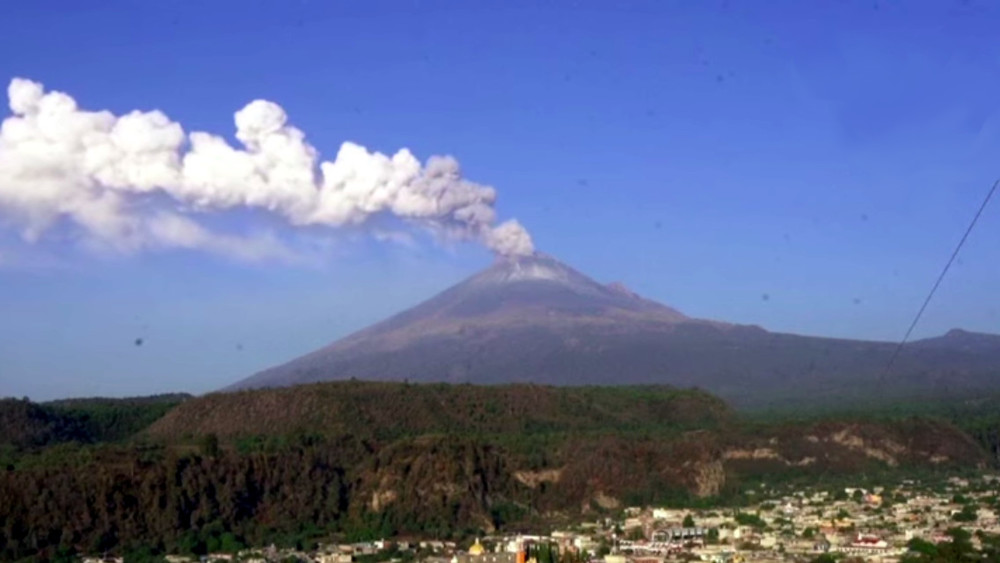
CentralAsia (CA) -  Клубы дыма и пепла продолжает извергать вулкан Попокатепетль в Мексике. Выбросы достигают высоты в полкилометра. Об этом пишет ntdtv.ru.

Попокатепетль или Эль-Попо, как его называют местные жители, – один из самых активных вулканов в стране. Он находится всего в 70 километрах от Мехико. В столичной агломерации живёт более 20 миллионов человек.

Вулкан засыпает близлежащие города пеплом уже неделю. Людям трудно дышать. Приходится постоянно подметать улицы. Фермеры беспокоятся за урожай.

Национальная служба гражданской обороны сообщает, что содержание пепла в выбросах уменьшилось. Однако поведение вулкана по-прежнему вызывает тревогу.

Власти закрыли школы в одиннадцати городах. Людям рекомендуют не приближаться к вулкану ближе, чем на 12 километров. Действует жёлтый уровень опасности. Ранее Международный аэропорт в Мехико приостановил работу на пять часов.

Попокатепетль – вторая по высоте гора Мексики. Она возвышается на 5426 метров над уровнем моря. За последние 500 лет вулкан извергался более 20 раз. В 1947 году он заснул, а в 94-м снова активизировался. Сильные извержения здесь были в периоды с 2000 по 2003 год и с 2012 по 2016 год. Тогда десятки тысяч людей были вынуждены эвакуироваться.


 https://centralasia.media/news:1928268
https://creativecommons.org/licenses/by/3.0/legalcode

четверг, 25 мая 2023 г.

Trafficking in the Sahel: Killer cough syrup and fake medicine | UN News


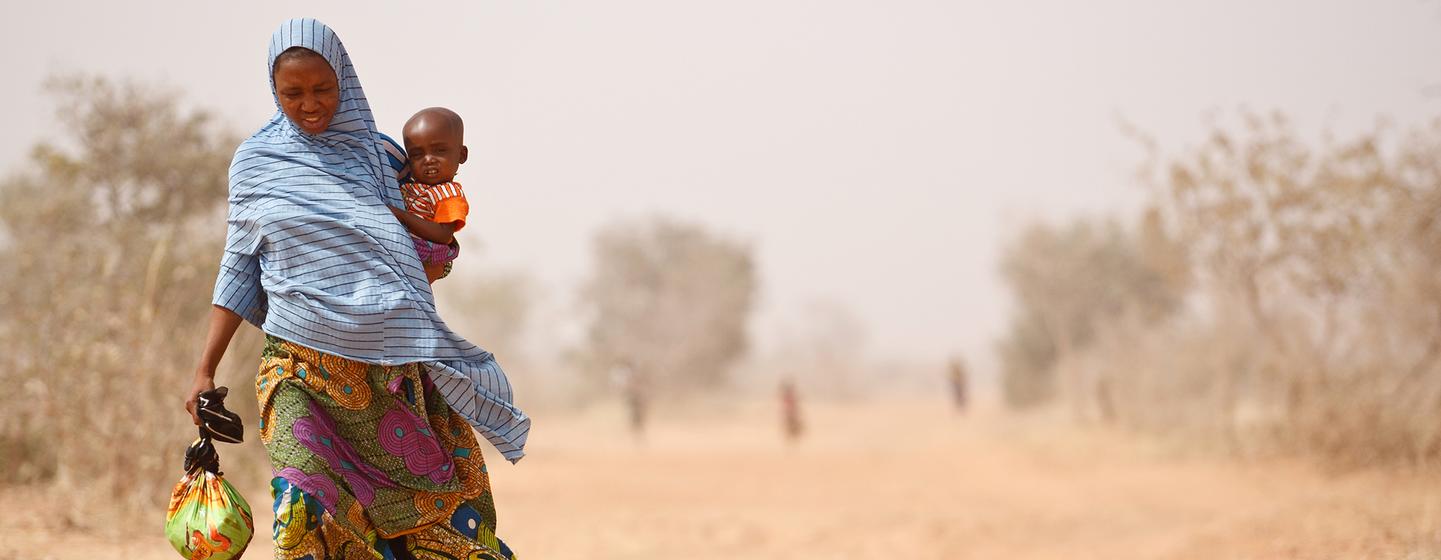
Millions of people in the Sahel region of Africa are facing food insecurity caused by consecutive failed rainy seasons, desertification, and a fragile security landscape.


© UNICEF/Olivier Asselin
 
Millions of people in the Sahel region of Africa are facing food insecurity caused by consecutive failed rainy seasons, desertification, and a fragile security landscape.
27 May 2023
Peace and Security

In the summer of 2022, 70 Gambian babies and young children died from kidney failure after ingesting cough syrup spooned out by their caregivers. The World Health Organization (WHO) issued a global alert that four tainted paediatric products had originated in India, as local health authorities continue to investigate how this tragedy unfolded.

This feature, which focuses on the illegal trade in substandard and fake medicines, is part of a UN News series exploring the fight against trafficking in the Sahel.

From ineffective hand sanitizer to fake antimalarial pills, an illicit trade that grew during the COVID-19 pandemic in 2020 is being meticulously dismantled by the UN and partner countries in Africa’s Sahel region.

Substandard or fake medicines, like contraband baby cough syrup, are killing almost half a million sub-Saharan Africans every year, according to a threat assessment report from the UN Office on Drugs and Crime (UNODC).

The report explains how nations in the Sahel, a 6,000-kilometre-wide swath stretching from the Red Sea to the Atlantic, which is home to 300 million people, are joining forces to stop fake medicines at their borders and hold the perpetrators accountable.

This fight is taking place as Sahelians face unprecedented strife: more than 2.9 million people have been displaced by conflict and violence, with armed groups launching attacks that have already shuttered 11,000 schools and 7,000 health centres.

Deadly supply meets desperate demand

Health care is scarce in the region, which has among the world’s highest incidence of malaria and where infectious diseases are one of the leading causes of death.

“This disparity between the supply of and demand for medical care is at least partly filled by medicines supplied from the illegal market to treat self-diagnosed diseases or symptoms,” the report says, explaining that street markets and unauthorized sellers, especially in rural or conflict-affected areas, are sometimes the only sources of medicines and pharmaceutical products.

Fake treatments with fatal results

The study shows that the cost of the illegal medicine trade is high, in terms of health care and human lives.

Fake or substandard antimalarial medicines kill as many as 267,000 sub-Saharan Africans every year. Nearly 170,000 sub-Saharan African children die every year from unauthorized antibiotics used to treat severe pneumonia.

Caring for people who have used falsified or substandard medical products for malaria treatment in sub-Saharan Africa costs up to $44.7 million every year, according to World Health Organization (WHO) estimates.

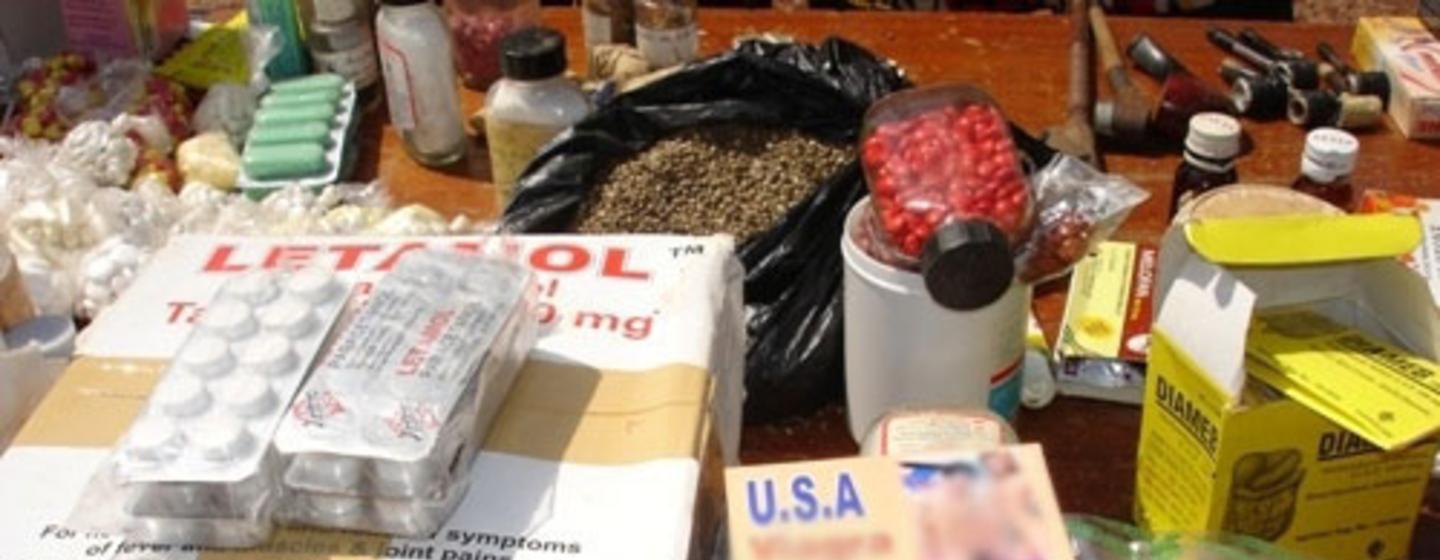
Counterfeit drugs at a market in Ouagadougou, Burkina Faso.
IRIN/Brahima Ouedraogo
 
Counterfeit drugs at a market in Ouagadougou, Burkina Faso.

Motley trafficking

Corruption is one of the main reasons that the trade is allowed to flourish.

About 40 per cent of substandard and falsified medical products reported in Sahelian countries between 2013 and 2021 land in the regulated supply chain, the report showed. Products diverted from the legal supply chain typically come from such exporting nations as Belgium, China, France, and India. Some end up on pharmacy shelves.

The perpetrators are employees of pharmaceutical companies, public officials, law enforcement officers, health agency workers and street vendors, all motivated by potential financial gain, the report found.

Traffickers are finding ever more sophisticated routes, from working with pharmacists to taking their crimes online, according to a UNODC research brief on the issue.

While terrorist groups and non-State armed groups are commonly associated with trafficking in medical products in the Sahel, this mainly revolves around consuming medicines or levying “taxes” on shipments in areas under their control.

Snip supply, meet demand

Efforts are under way to adopt a regional approach to the problem, involving every nation in the region. For example, all Sahel countries except Mauritania have ratified a treaty to establish an African medicines agency, and the African Medicines Regulatory Harmonization initiative, launched by the African Union in 2009, aims at improving access to safe, affordable medicine.

All the Sahel countries have legal provisions in place relating to trafficking in medical products, but some laws are outdated, UNODC findings showed. The agency recommended, among other things, revised legislation alongside enhanced coordination among stakeholders.

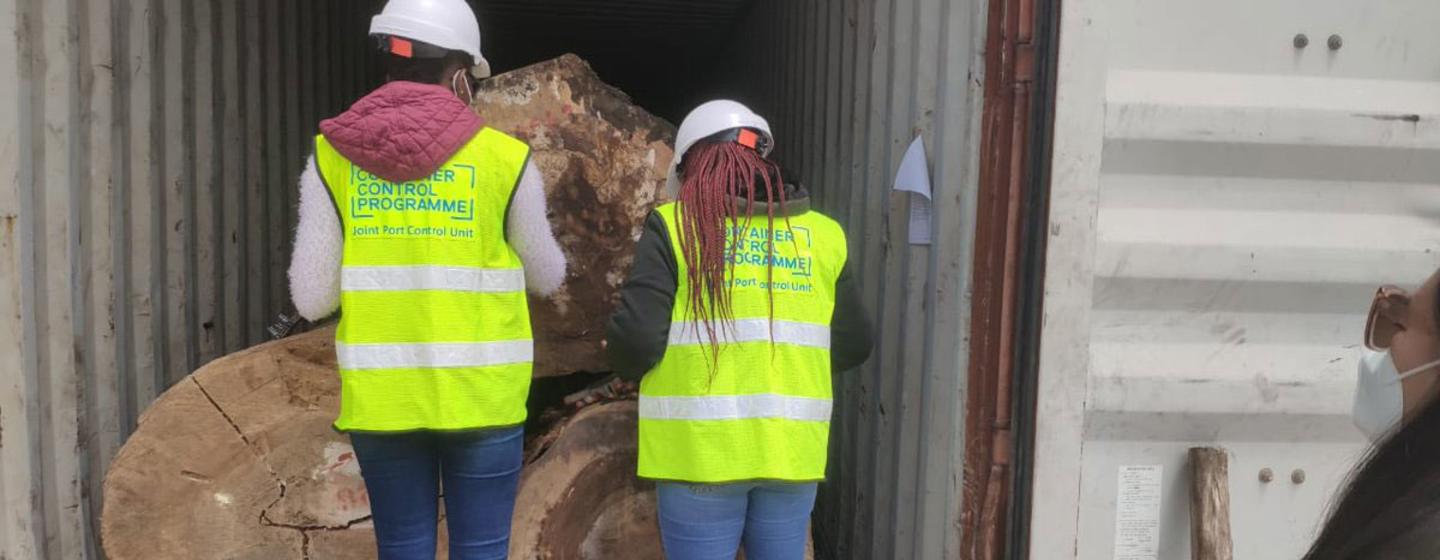
Custom and law enforcement officers prevent huge quantities of contraband from entering the markets of destination countries.
© UNODC
 
Custom and law enforcement officers prevent huge quantities of contraband from entering the markets of destination countries.

States taking action

Law enforcement and judicial efforts that safeguard the legal supply chain should be a priority, said UNODC, pointing to the seizure of some 605 tonnes of fake medicines between 2017 to 2021 by authorities in the region.

Operation Pangea, for example, coordinated by UN partner INTERPOL in 90 countries, targeted online sales of pharmaceutical products. Results saw seizures of unauthorized antivirals rise by 18 per cent and unauthorized chloroquine, to treat malaria, by 100 per cent.

“Transnational organized crime groups take advantage of gaps in national regulation and oversight to peddle substandard and falsified medical products,” UNODC Executive Director Ghada Waly said. “We need to help countries increase cooperation to close gaps, build law enforcement and criminal justice capacity, and drive public awareness to keep people safe.”

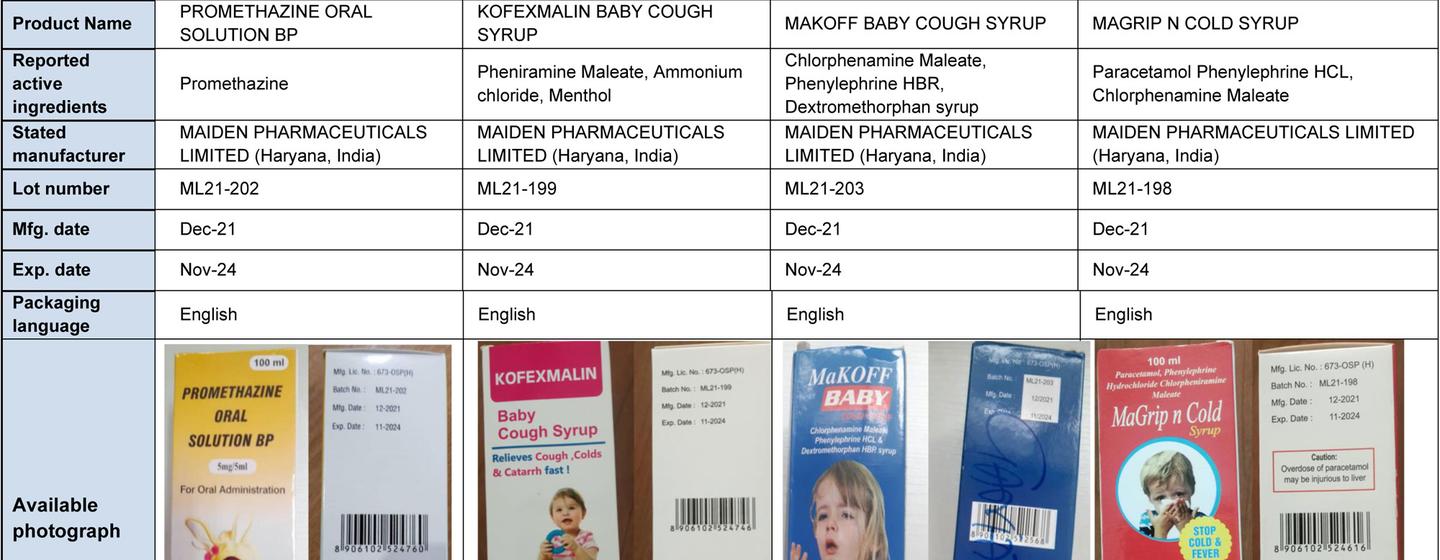
Following the death of 70 children in The Gambia in 2022, the World Health Organization identified four contaminated paediatric medicines in the West African nation.
© WHO
 
Following the death of 70 children in The Gambia in 2022, the World Health Organization identified four contaminated paediatric medicines in the West African nation.

UN in action


 https://news.un.org/en/story/2023/05/1137062

https://creativecommons.org/licenses/by/3.0/legalcode

UNESCO unveils new AI roadmap for classrooms


UNESCO calls out to implement its recommendations on the ethics of artificial intelligence to avoid its misuse.
Unsplash/D koi
 
UNESCO calls out to implement its recommendations on the ethics of artificial intelligence to avoid its misuse
Unsplash/D koi
 
UNESCO calls out to implement its recommendations on the ethics of artificial intelligence to avoid its misuse
Unsplash/D koi
 
UNESCO calls out to implement its recommendations on the ethics of artificial intelligence to avoid its misuse.
26 May 2023
Culture and Education

The UN convened the first ever global meeting with education ministers from around the world to explore risks and rewards of using chatbots in classrooms, announcing on Friday a new roadmap to chart a safer digital path for all.

Less than 10 per cent of schools and universities follow formal guidance on using wildly popular artificial intelligence (AI) tools, like the chatbot software ChatGPT, according to the UN Educational, Scientific and Cultural Organization (UNESCO), which hosted more than 40 ministers at an groundbreaking online meeting on Thursday.

Tweet URL

The ministers exchanged policy approaches and plans while considering the agency’s new roadmap on education and generative AI, which can create data and content based on existing algorithms, but can also make alarming factual errors, just like humans.

“Generative AI opens new horizons and challenges for education, but we urgently need to take action to ensure that new AI technologies are integrated into education on our terms,” said Stefania Giannini, UNESCO’s Assistant Director-General for Education. “It is our duty to prioritize safety, inclusion, diversity, transparency and quality.”

Institutions are facing myriad challenges in crafting an immediate response to the sudden emergence of these powerful AI apps, according to a new UNESCO survey of more than 450 schools and universities.

Rapidly evolving landscape

At the same time, governments worldwide are in the process of shaping appropriate policy responses in a rapidly evolving education landscape, while further developing or refining national strategies on AI, data protection, and other regulatory frameworks, according to UNESCO.

However, they are proceeding with caution. Risks to using these tools can see students exposed to false or biased information, some ministers said at the global meeting.

The debate revealed other common concerns, including how to mitigate the chatbots’ inherent flaws of producing glaring errors. Ministers also addressed how best to integrate these tools into curricula, teaching methods, and exams, and adapting education systems to the disruptions which generative AI is quickly causing.

Many highlighted the vital role teachers play in this new era as learning facilitators.

But, teachers need guidance and training to meet these challenges, according to UNESCO.

Adding to existing frameworks

Teachers need guidance and training to meet these challenges. — UNESCO

For its part, the agency will continue to steer the global dialogue with policy makers, partners, academia, and civil society, in line with its paper, AI and education: A guide for policy-makers and Recommendation on the Ethics of AI, as well as the Beijing Consensus on Artificial Intelligence and Education.

UNESCO is also developing policy guidelines on the use of generative AI in education and research, as well as frameworks of AI competencies for students and teachers for classrooms.

These new tools will be launched during Digital Learning Week, to be held at UNESCO Headquarters in Paris on 4 to 7 September, the agency said.

Learn more about UNESCO’s work in digital learning and education here.


 https://news.un.org/en/story/2023/05/1137117

https://creativecommons.org/licenses/by/3.0/legalcode

Архивные документы 9 века японского монаха будут внесены в «Память мира» ЮНЕСКО

Archives of 9th century Japanese monk to be added to UNESCO World Memory list

Документы, связанные с жившим в 9 веке японским монахом, который проделал путь в Китай для изучения буддизма, будут внесены в «Память мира» ЮНЕСКО.

Исполнительный совет ЮНЕСКО в среду в Париже принял решение добавить коллекцию из 64 документов в эту программу.

Япония представила для регистрации коллекцию документов 9 века из буддийского храма Миидэра в городе Оцу префектуры Сига и из других мест.

Эти документы были привезены обратно в Японию монахом Энтин, который побывал в императорской династии Тан в Китае. Документы включают оригинал разрешения на маршрут поездки - прототип нынешнего паспорта, который использовался во времена династии Тан.

Министерство образования и культуры Японии характеризует эти документы как ценные исторические свидетельства.

 https://www3.nhk.or.jp/nhkworld/ru/news/427692/


https://creativecommons.org/licenses/by/3.0/legalcode

UN and partners seek $7 billion to prevent catastrophe in the Horn of Africa


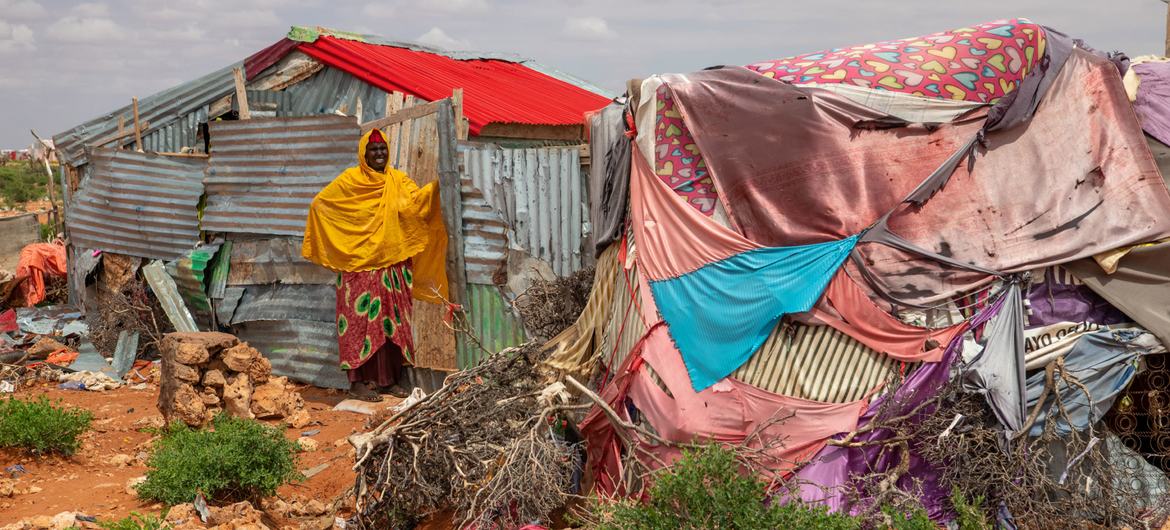
More people are being displaced in Somalia as a result of drought conditions.
© UNHCR/Samuel Otieno
 
More people are being displaced in Somalia as a result of drought conditions.
24 May 2023
Humanitarian Aid

With “crisis atop of crisis” threatening millions in the Horn of Africa, the international community cannot afford to stand idly by, Secretary-General António Guterres said at a pledging event to raise $7 billion for the region, held at UN Headquarters in New York on Wednesday. 

More than 43 million people across Ethiopia, Kenya and Somalia continue to suffer through one of the worst droughts in recent history, caused by five consecutive seasons of poor rains.   

Tweet URL

Years of conflict and insecurity have sparked mass displacement, while skyrocketing food prices and most recently, the fighting in Sudan, have compounded the situation. 

It was announced later in the day that $2.4 billion had been pledged by donors.

Appeal for action 

“We must act now to prevent crisis from turning into catastrophe,” Mr. Guterres said. “Let us act together now – with greater urgency and far greater support.” 

The pledging event was convened by the UN and Italy, Qatar, the United Kingdom and the United States, in collaboration with the three affected countries. 

The Secretary-General saw the devastating impact of the drought first-hand during recent visits to Kenya and Somalia. 

Families search for food 

“In parts of northern Kenya, parched landscapes and perished livestock have driven families from their homes in search of water, food, and incomes,” he said.  

While in the Somali city of Baidoa, he met communities who lost their livelihoods to drought and insecurity, as the battle against Al-Shabaab militants continues. 

“I was deeply moved by their struggles.  And I was inspired by their resilience, courage, and determination to rebuild their lives. But they cannot do it alone,” he said.

Step up support 

The UN chief assured that “action will make all the difference.”  Last year, donors delivered life-saving assistance to 20 million people and helped avert a famine.  

He called for increased support for humanitarian plans for the region which are currently less than 20 per cent funded. 

This is “unacceptable”, he said, warning that without an immediate financial injection, “emergency operations will grind to a halt, and people will die.”


Build climate resilience 

He said the drought in Somalia last year claimed 40,000 lives, and half were children under five, according to the World Health Organization (WHO) and the UN Children’s Fund (UNICEF). 

Although recent rains have brought some relief, vulnerable communities are still facing another year of immense hardship.   

“People in the Horn of Africa are paying an unconscionable price for a climate crisis they did nothing to cause,” he said.  

“We owe them solidarity. We owe them assistance. And we owe them a measure of hope for the future.  This means immediate action to secure their survival.  And it means sustained action to help communities across the Horn adapt and build resilience to climate change.” 

New challenges emerge 

The heads of major UN agencies working in areas such as aid delivery, food security, health, and assistance to migrants and refugees, made the case for scaled-up support in a video played during the event. 

The message was carried forward by Joyce Msuya, UN Assistant Secretary-General for Humanitarian Affairs and Deputy Emergency Relief Coordinator. 

She said even though improved rains have started to ease the impacts of the drought, they have also brought new risks and challenges, including disease outbreaks. 

“The humanitarian community is determined to provide the support that people need. But five months into the year, funding is critically short,” she told participants. 

Cash-based food assistance “has fallen off dramatically”, she said, "and humanitarian partners are already running out of money, with many facing the possibility of having to suspend, scale back or shut down programmes.” 

Sowing seeds of hope 

Somalia’s Foreign Minister Abshir Omar Huruse was among senior representatives from the affected countries who addressed the pledging conference. 

He said it comes at a critical time, as the Federal Government and partners have liberated more than a third of those areas previously controlled by Al-Shabaab.  

“This means that we can reach more people with life-saving humanitarian support and high impact development projects,” he said. 

Mr. Huruse urged donors to consider increasing their funding, saying “together we shall sow the seeds of hope (and) nurture a future in which no life is lost due to lack of assistance.” 


 https://news.un.org/en/story/2023/05/1136977
https://creativecommons.org/licenses/by/3.0/legalcode

среда, 24 мая 2023 г.

Unprecedented joint call to shield children on the move from violence


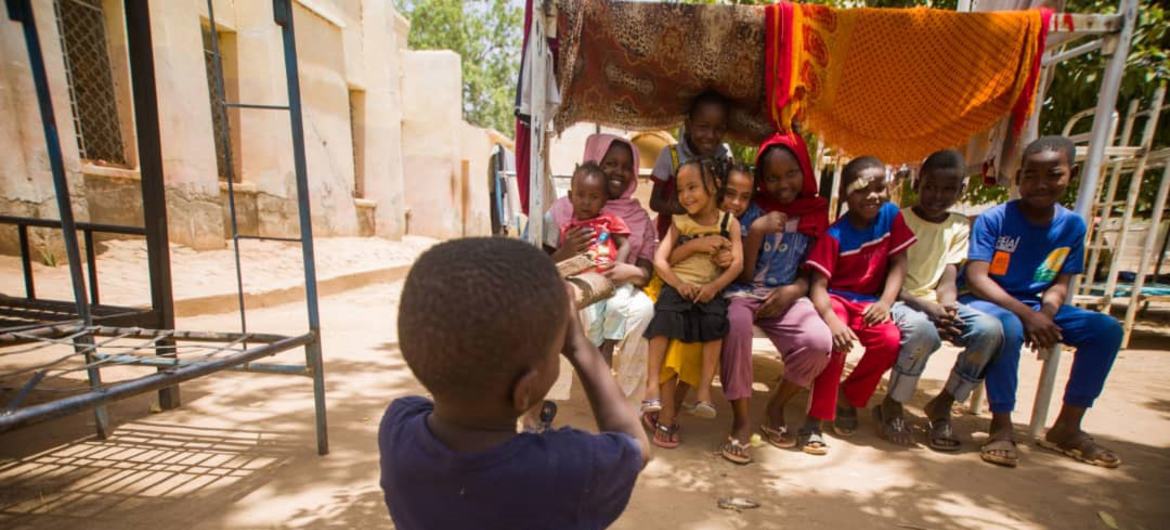
Displaced Sudanese children at a temporary shelter..
© UNICEF/Ahmed Elfatih Mohamdee
 
Displaced Sudanese children at a temporary shelter..
24 May 2023
Peace and Security

The UN’s top advocate on ending violence against children, joined UN agencies on Wednesday in highlighting the urgent need to protect the rights of young people on the move, amid spiralling crises worldwide.

With more than 42 million children displaced worldwide and increasing exposure to multiple forms of violence, the Office of the Special Representative on Violence against Children co-launched a new brief, Protecting the Rights of Children on the Move in Times of Crisis, which draws on past lessons, and outlines key principles to boost child protection.

Tweet URL

In this unprecedented joint call, the Special Representative Dr. Najat Maalla M’jid, was joined by the head of the UN human rights office (OHCHR), refugee agency UNHCR, the UN Children’s Fund UNICEF, the UN Office on Drugs and Crime (UNODC), and the UN migration agency (IOM) - in close partnership with the Organization for Security and Co-operation in Europe (OSCE) Special Representative and Coordinator for Combating Trafficking in Human Beings – who stressed that “protection of all children, independently of their status, is more necessary than ever.”  

This includes investing in strong rights-based national protection systems that include displaced children, rather than excluding them or creating separate services for them, says the brief, which has proven to be more sustainable and effective in the long-term.

Concrete actions

As millions of children are displaced, often for many years, by crises such as armed conflicts, political instability, climate change – and it’s associated fallout for health and economic survival - the best interests of the child must be the primary consideration, the brief states.

Full protection requires translating good intentions into concrete and sustained actions, ensuring non-discriminatory access to national services.

This includes civil documentation such as birth registration, social welfare, justice, health, education, and social protection - for all children, without distinction or exclusion based on their migration status.

Penelope Cruz - unity call

Spanish film star and campaigner, Penelope Cruz joined the call, emphasizing that we all have a role to play in protecting children from violence: “Children must be protected everywhere and in all circumstances. Keeping all children safe from harm and promoting their wellbeing with particular attention to those is crisis situations is – and must be – everybody’s business.

“Let's be united in creating a world free from violence against children”, she declared.


 https://news.un.org/en/story/2023/05/1137002


https://creativecommons.org/licenses/by/3.0/legalcode

Представители более 50 стран примут участие во II Евразийском экономическом форуме


https://creativecommons.org/licenses/by/3.0/legalcode