Избранное сообщение

Показаны сообщения с ярлыком WHO. Показать все сообщения

суббота, 29 марта 2025 г.

WHO Air Pollution and Health conference seeks to reinvigorate global action


28 March 2025

WMO is participating in a major international conference on air pollution and health, which seeks to revitalize commitment to clean air and clean energy and to improve public and environmental well-being.  

A serene lake reflecting a dense forest with a wooden structure and people at the water's edge, surrounded by tall evergreen trees.
Pure Water of Jiuzhaigou - Xin Li
WMO 2025 Calendar Competition

The Second Global Conference on Air Pollution and Health, from 25-27 March, will call on countries to pledge voluntary actions to achieve a 50% reduction in the health impacts of air pollution by 2040. The event is co-organized by the World Health Organization and the Government of Colombia with the support of the Government of Spain and other UN agencies such as UNEP, WMO, World Bank and others.  

Air pollution remains one of the greatest environmental threats to human health, causing millions of premature deaths each year. Rising temperatures and environmental changes – extreme heat, more frequent wildfires and sand and dust storms- – exacerbate the risk. This exposes communities—especially the most vulnerable—to severe health risks, disrupts key economic sectors and harms ecosystems.  

“Protecting  human health and saving lives is central to the mission of the World Meteorological Organization,” WMO Secretary-General Celeste Saulo said in a video message to the high-level segment of the conference.

She recalled WMO’s 75 year history of transforming science into action that empower decision-making.

The UN Secretary-General's Early Warnings for All initiative seeks to ensure that every person is covered by early warning systems against weather and climate-related hazards, including the dangerous combination of heat and poor air quality, Celeste Saulo said.

“WMO is advancing operational warning and advisory systems for sand and dust storms and wildfires to help countries mitigate health, economic and environmental impacts. WMO seeks to strengthen atmospheric composition monitoring to track transboundary pollution and inform policies that safeguard public health,” she said.  

Infographic showing overlapping circles: "Reduce Climate Change," "Reduce Air Pollution," with "Protect Health" in center. Illustrations include factories, trees, and transportation. WHO logo present.
Clean Air for Health
WHO

WMO’s Global Atmosphere Watch through its Global Air Pollution and Forecasting Information System initiative seeks to provide the necessary tools and knowledge at both regional and global levels.  

WMO co-organized dedicated sessions on air quality monitoring, wildfires, sand and dust storms at the conference. WMO has issued new Guidelines on sand and dust storm mitigation- which contain a review of monitoring, forecasting and impact assessment.  

But technology alone is not enough. Building local capacity is key, ensuring the translation of air quality data into effective policies and life-saving actions.  

Bridging air quality, public health, and climate action is essential. Some air pollutants are also greenhouse gases, and tackling them requires coordinated policies that deliver benefits on multiple fronts.  

To inform decision-making, WMO publishes annual bulletins on greenhouse gases, air quality and climate, airborne dust, and ozone and UV.  

Participants at the conference in Colombia include Ministers of Health, respective Ministers of Environment, Energy and officials of national, intergovernmental and development agencies; health professionals; mayors, local authorities and planners; representatives of critical sectors such as energy, transport, industry, waste and land-use; as well as delegates from research, academia and civil society 


https://wmo.int/media/news/who-air-pollution-and-health-conference-seeks-reinvigorate-global-action

https://creativecommons.org/licenses/by/4.0/legalcode

понедельник, 15 июля 2024 г.

Childhood immunization levels stalled in 2023


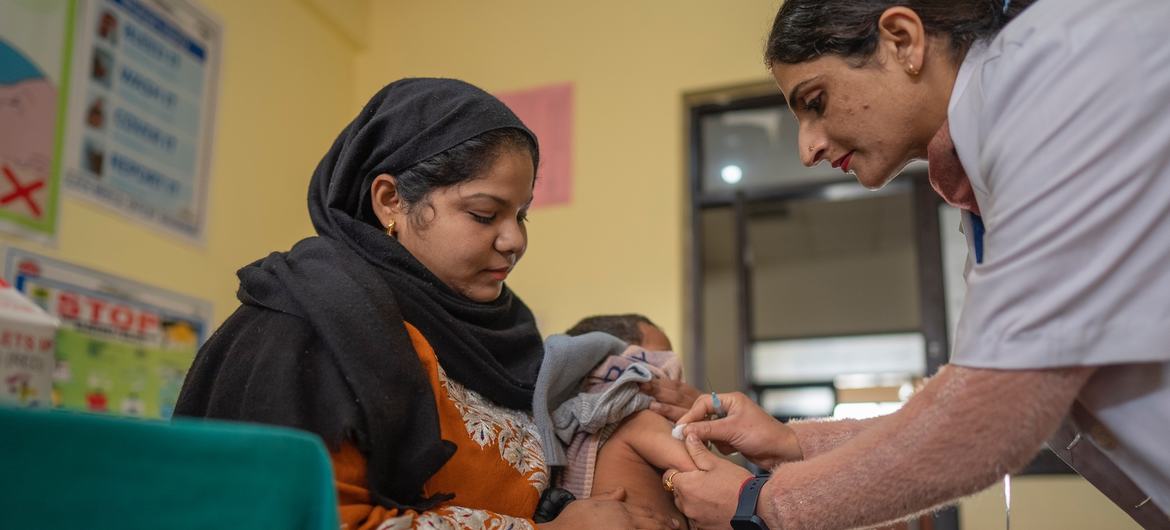
India’s immunization programme caters to almost 27 million newborns each year.
UNDP India/Gaurav Menghaney
 
India’s immunization programme caters to almost 27 million newborns each year.


14 July 2024 

Health

New data published on Monday by UN agencies shows that immunization coverage for children worldwide stalled during 2023, leaving around 2.7 million lacking the protection they need compared to the pre-COVID-19 levels of 2019.

That’s according to the World Health Organization (WHO) and UN Children’s Fund (UNICEF) snapshot of trends for vaccinations against 14 diseases – all of which underlines the need for ongoing catch-up, recovery and system-strengthening efforts.

“The latest trends demonstrate that many countries continue to miss far too many children,” said UNICEF Executive Director Catherine Russell. “Closing the immunization gap requires a global effort, with governments, partners, and local leaders investing in primary healthcare and community workers to ensure every child gets vaccinated, and that overall healthcare is strengthened.”

The number of children who received three doses of the vaccine against diphtheria, tetanus and pertussis (DTP) in 2023 - a key marker for global immunization coverage - stalled at 84 per cent (108 million).

Going backwards

However, those who did not receive a single dose of the vaccine increased from 13.9 million in 2022 to 14.5 million in 2023.

More than half of unvaccinated children live in 31 countries with fragile, conflict-affected and vulnerable settings, where children are especially vulnerable to preventable diseases because of disruptions and lack of access to security, nutrition, and health services, the agencies reported.

Additionally, 6.5 million children did not complete their third dose of the DTP vaccine, which is necessary to achieve disease protection in infancy and early childhood.

These trends, which show that global immunization coverage has remained largely unchanged since 2022 and – more alarmingly - has still not returned to 2019 levels, reflect ongoing challenges with disruptions in services, logistical challenges, vaccine hesitancy and inequities in accessing shots.

Emerging measles outbreaks

The data further show that vaccination rates against the deadly measles disease stalled, leaving nearly 35 million children lacking sufficient protection.

In 2023, only 83 per cent of children worldwide received their first dose of the measles vaccine through routine health services, while the number of children receiving their second dose modestly increased from the previous year, reaching 74% of children.

These figures fall short of the 95 per cent coverage needed to prevent outbreaks, avert unnecessary disease and deaths, and achieve measles elimination goals.

Over the last five years, measles outbreaks hit 103 countries – home to roughly three-quarters of the world’s infants. Low vaccine coverage (80% or less) was a major factor. In contrast, 91 countries with strong measles vaccine coverage did not experience outbreaks.

Canary in the mine

Measles outbreaks are the canary in the coalmine, exposing and exploiting gaps in immunization and hitting the most vulnerable first,” said Dr Tedros Adhanom Ghebreyesus, WHO Director-General.

“This is a solvable problem. Measles vaccine is cheap and can be delivered even in the most difficult places. WHO is committed to working with all our partners to support countries to close these gaps and protect the most at-risk children as quickly as possible.”

Good news on Global HPV vaccine coverage

The new data also highlight some brighter spots in immunization coverage.

The steady introduction of some newer vaccines, including  for human papillomavirus (HPV), meningitis, pneumococcal, polio and rotavirus disease, continues to expand protection - particularly in the 57 countries supported by Gavi, the Vaccine Alliance.  

For example, the share of adolescent girls globally who received at least one dose of the HPV vaccine, which provides protection against cervical cancer, increased from 20% in 2022 to 27% in 2023.

"The HPV vaccine is one of the most impactful vaccines in Gavi’s portfolio, and it is incredibly heartening that it is now reaching more girls than ever before,” said Dr Sania Nishtar, CEO of Gavi.

However, HPV vaccine coverage is well below the 90 per cent target to eliminate cervical cancer as a public health problem, reaching only 56 per cent of adolescent girls in high-income countries and 23% in low and middle-income countries.

https://news.un.org/en/story/2024/07/1152091


https://creativecommons.org/licenses/by/4.0/legalcode

вторник, 25 июня 2024 г.

Half the world now following doctors’ orders on cutting trans fats: WHO


Industrially produced trans fat is commonly found in packaged foods, baked goods, cooking oils and spreads.
© Unsplash/Viktor Forgacs
 
Industrially produced trans fat is commonly found in packaged foods, baked goods, cooking oils and spreads.


24 June 2024

Health

A total of 53 countries had best practice policies in place for tackling industrial trans fats in food as of last year, vastly improving the food environment for 3.7 billion people, or 46 per cent of the world’s population, according to a milestone report published by the UN World Health Organization on Monday.

This is significant progress compared to the 2018 figure of just six per cent, or less than half a billion people, when the ambitious target to eliminate all trans fat from the global food supply by the end of 2023 was initially set by WHO.

Trans fat elimination is attainable, affordable and life-saving, and WHO remains committed to supporting Member States in their journeys towards this goal,” said Dr. Francesco Branca, Director of the Department of Nutrition and Food Safety at WHO.

Trans fats - or trans-fatty acids - clog arteries, increasing risk of heart attack and death. Cardiovascular diseases are the leading cause of mortality in the world and more than 278,000 deaths per year can be attributed to intake of industrially produced trans fat, according to the health agency.

Given their negative health effects, the current advancements made could save approximately 183,000 lives per year. However, progress has been unequal, with the highest remaining burden concentrated in the WHO Africa and Western Pacific Regions. The new report summarizes country actions to ban this toxic chemical and make recommendations to achieve global trans fat elimination.

Best practices

Remarkable progress has been made in every region of the world towards the WHO’s goal of total elimination of industrially produced trans fats. The chemicals are fatty acids that can be found in many fried foods, baked goods, vegetable shortening and margarine.

In 2023 alone, new best practice policies became effective in seven countries: Egypt, Mexico, Nigeria, North Macedonia, Philippines, the Republic of Moldova and Ukraine.

In January 2024, WHO awarded five countries the Validation Certificate for progress in eliminating industrially produced trans fat: Denmark, Lithuania, Poland, Saudi Arabia and Thailand.

However, despite promising trends, progress has been uneven. More than four billion people around the world remain unprotected from this toxic chemical, mainly in the WHO African and Western Pacific Regions. 

Implementing best practice policies in just eight additional countries would eliminate 90 per cent of the global deaths associated with this harmful ingredient.

“Beyond passing WHO-recommended best practice trans fat policies, ensuring that compliance with these policies is monitored and enforced will be critical to achieve maximized and sustained health benefits of trans fat elimination,” added Dr. Branca.

New WHO commitments

The WHO’s new report helps to further the organization’s efforts towards global trans fat elimination. The report urges all countries to enact best practice policies and to better monitor and enforce these policies so that more countries may become eligible for the WHO Validation Certificate.

The WHO also calls on food manufacturers to eliminate the use of trans fats in product lines and supply chains, even where regulations are not yet in place.


https://news.un.org/en/story/2024/06/1151386


https://creativecommons.org/licenses/by/4.0/legalcode

понедельник, 24 июня 2024 г.

Sudan: WHO appalled by horrific attack on El Fasher’s maternity hospital


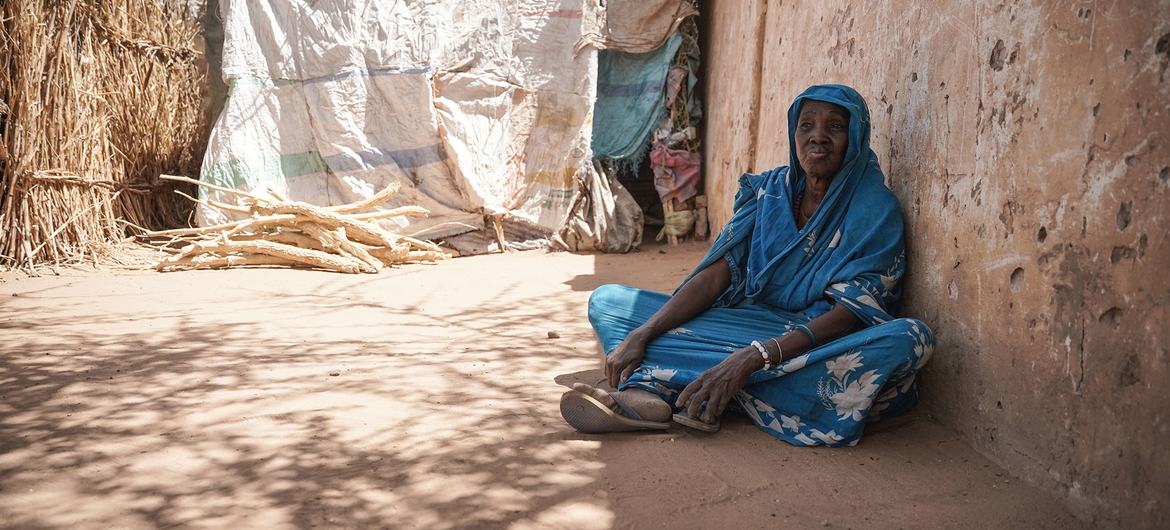
A woman who fled her home due to conflict rests at a centre for displaced people in El Fasher, Darfur. (file)
© UNICEF/Mohamed Zakaria
 
A woman who fled her home due to conflict rests at a centre for displaced people in El Fasher, Darfur. (file)


24 June 2024
Peace and Security

Heavy fighting in Sudan hit a new low over the weekend when a maternity hospital in besieged El Fasher city came under attack, killing a pharmacy worker and prompting new calls on Monday from the head of the UN health agency for the violence to stop.

The attack on the only maternity hospital in the town in Sudan’s western state of North Darfur is “shocking and appalling,” the head of the World Health Organization (WHO) said on Sunday, calling on warring parties to “protect mothers and children at all times and allow them safe access to healthcare” in the war-torn African country.

Tweet URL
DrTedros

WHO Director-General Tedros Adhanom Ghebreyesus noted that the Saudi Maternity Hospital was “the only one that has been providing maternal and child healthcare” in El Fasher.

The development comes after more than 14 months of fighting between rival militaries in Sudan.

Media reports pointed to “a Rapid Support Forces bombing” of the hospital in El Fasher, which is the capital of the Darfur region and home to hundreds of thousands of people displaced by the war.

Killed on the job

UN Resident and Humanitarian Coordinator for Sudan Clementine Nkweta-Salami released more details on the death of pharmacist Amna Ahmed Bakhit: “Killed on the job, prescribing and administering medicine to women, men and children in a place that should have been safe,” the top UN official in the country said in a post on X.

“From bullets or bombs, starvation or disease, each soul lost to this senseless war takes Sudan another inexorable step away from what we all want. Peace,” Ms. Nkweta-Salami added, calling for an end to the brutal fighting.

“Mothers and babies must be protected at all times and allowed safe access to healthcare. Healthcare workers must be able to work in safety”, WHO’s Tedros emphasized adding that despite the attack, the hospital continues to function thanks to the dedication of its staff working in dire conditions. 

Since 10 May, the city of El Fasher has been the scene of intense fighting between the former allies who went to war with each other 14 months ago.

Calls from the UN and the international community have grown in recent weeks to prevent Sudan from falling into a humanitarian catastrophe that could push millions into starvation, due to food shortages caused by fighting that has spread to 12 of the country’s 18 states.

WFP steps up aid

People in parts of Khartoum, Darfur and Kordofan states continue to be deprived of food and health assistance, and child malnutrition in Sudan is reaching emergency levels according to UN Children’s Fund (UNICEF).

Around nine million children are facing acute food insecurity.

The World Food Programme’s (WFP) food security analysis has identified 44 hunger hotspots in Sudan – mainly in areas of active fighting such as Khartoum, Kordofan, Darfur and Gezira – where 2.6 million people are at high risk of falling into the extreme phase five of the Integrated Food Security Phase Classification (IPC 5)

Against this backdrop, the UN emergency food assistance agency is scaling up its operations to stave off famine. WFP is prioritising these areas and has provided food assistance to 22 of the hunger hotspots since January.

The UN agency says it has reached more than three million people and plans to reach an additional five million through general food assistance, nutrition, school meals and resilience activities throughout the year.


https://news.un.org/en/story/2024/06/1151371


https://creativecommons.org/licenses/by/4.0/legalcode

пятница, 21 июня 2024 г.

WHO issues warning on falsified medicines used for diabetes treatment and weight loss


20 June 2024 
News release
 
Reading time: 2 min (572 words)

The World Health Organization (WHO) issued a medical product alert on falsified semaglutides, the type of medicines that are used for treatment of type 2 diabetes and obesity in some countries.

The alert addresses 3 falsified batches of product of semaglutide class of medicines (of specific brand Ozempic), which have been detected in Brazil in October 2023, the United Kingdom of Great Britain and Northern Ireland in October 2023, and the United States of America in December 2023. WHO Global Surveillance and Monitoring System (GSMS) has been observing increased reports on falsified semaglutide products in all geographical regions since 2022. This is the first official notice issued by WHO after confirmation of some of the reports.

“WHO advises healthcare professionals, regulatory authorities and the public be aware of these falsified batches of medicines,” said Dr Yukiko Nakatani, WHO Assistant Director-General for Essential Medicines and Health Products. “We call on stakeholders to stop any usage of suspicious medicines and report to relevant authorities”.

Shortage of supplies and increased falsification

The semaglutides, including the specific brand product that has been falsified, are prescribed to people with type 2 diabetes in order to lower their blood sugar levels. Semaglutides also reduce the risk of cardiovascular events. Most semaglutide products must be injected under the skin on a weekly basis but they are also available as tablets taken by mouth daily. These medicines are shown to suppress appetite in addition to lowering blood sugar levels, and therefore are being increasingly prescribed for weight loss in some countries.

WHO has been observing increased demand for these medicines as well as reports on falsification. These falsified products could have harmful effects to people’s health; if the products don’t have the necessary raw components, falsified medicines can lead to health complications resulting from unmanaged blood glucose levels or weight. In other cases, another undeclared active ingredient may be contained in the injection device, e.g. insulin, leading to an unpredictable range of health risks or complications.

Semaglutides are not part of WHO-recommended treatments for diabetes management due to their current high cost. The cost barrier makes these products unsuitable for a public health approach, which aims to ensure the widest possible access to medicines at the population level and to strike a balance between the best-established standard of care and what is feasible on a large scale in resource-limited settings. Also, there are more affordable treatments available for diabetes, with similar effects to those of semaglutides on blood sugar and cardiovascular risk.

WHO is currently working on a rapid advice guideline on possible use of GLP-1 RAs, including semaglutides, for treatment of obesity in adults and as part of a more comprehensive model of care. The term GLP-1 RAs stands for glucagon-like peptide-1 receptor agonists, which include semaglutides, for a class of medicines used for diabetes treatment to lower blood sugar and support weight loss.

Individual action

To protect themselves from falsified medicines and their harmful effects, patients who are using these products can take actions such as buying medicines with prescriptions from licensed physicians and avoid buying medicines from unfamiliar or unverified sources, such as those that may be found online.

People should always check packaging and expiry dates of medicines when they buy them, and use the products as prescribed. In the case of injectable semaglutides, patients should ensure they are stored in the refrigerator. All notifications on falsified medicines can be sent to WHO via rapidalert@who.int


https://www.who.int/news/item/20-06-2024-who-issues-warning-on-falsified-medicines-used-for-diabetes-treatment-and-weight-loss


https://creativecommons.org/licenses/by/4.0/legalcode


четверг, 23 мая 2024 г.

‘Critical gaps’ in understanding climate change fuel tropical disease spread


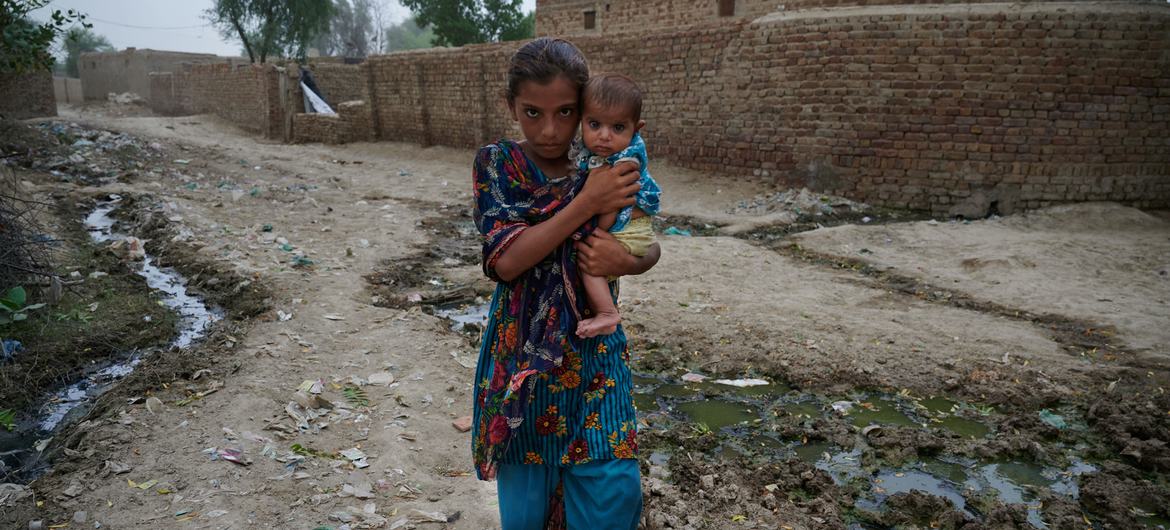
A girl, holding a child, walks to a mobile health clinic in a flood-affected village in Pakistan. Water-logging has led to an increase in spread of malaria in the region. (file)
© UNICEF/Shehzad Noorani
 
A girl, holding a child, walks to a mobile health clinic in a flood-affected village in Pakistan. Water-logging has led to an increase in spread of malaria in the region. (file)


22 May 2024
Health

A comprehensive review by the UN health agency has revealed critical gaps in understanding the full impact of climate change on malaria, dengue, trachoma and other tropical diseases.

The World Health Organization (WHO) study, conducted in partnership with Reaching the Last Mile (RLM), a global health initiative to eliminate neglected tropical diseases (NTDs), found that rising temperatures and changing weather patterns are altering the spread of vector-borne diseases, posing significant health risks.

As the geographical spread of disease vectors like mosquitoes expand, the risk of introducing or reintroducing these diseases to new areas increases. This shift is likely to have the most severe impact on communities already disproportionately affected.

The study analysed peer-reviewed papers from January 2010 to October 2023, crunching data on national disease burdens, healthcare access and climate vulnerability scores.

The majority of data sets used focused on malaria, dengue, and chikungunya, while other NTDs were significantly underrepresented.

Lack of evidence

Only 34 per cent of studies reviewed (174 studies) addressed mitigation and a mere five per cent (24 studies) looked at adaptation, underscoring the dire lack of evidence available to help malaria and NTDs.

Ibrahima Socé Fall, Director of the Global NTD Programme at WHO, emphasized the need for more comprehensive, collaborative and standardized modelling to predict and mitigate effects of climate change on health.

This important and timely review reveals alarming trends and is a call to urgent action. Malaria transmission is likely to shift both polewards and to higher altitude, while the mosquito vector responsible for transmission of dengue and chikungunya is predicted to continue to expand its range,” she said.

“If we are to protect and build upon the hard-won victories of the past two decades, the time to mobilize is now.”

Neglected tropical diseases

Neglected tropical diseases (NTDs) are a diverse group of conditions caused by a variety of pathogens, including viruses, bacteria, parasites, fungi and toxins.

These include Chagas disease, dengue, chikungunya, leprosy, rabies, soil-transmitted helminthiases, snakebite, trachoma and yaws. It is estimated that they affect more than one billion people, according to WHO.


https://news.un.org/en/story/2024/05/1150101

https://creativecommons.org/licenses/by/3.0/legalcode

пятница, 17 мая 2024 г.

Rights expert condemns death of Palestinian doctor in Israeli custody, urges independent inquiry


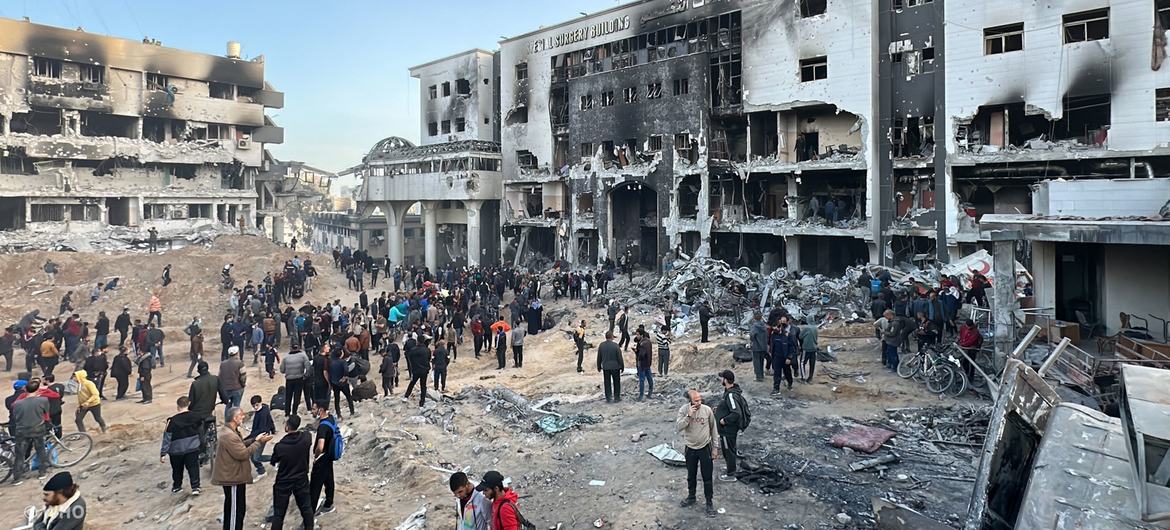
The Al Shifa hospital, one of the largest health facilities in Gaza, has been destroyed.
WHO
 
The Al Shifa hospital, one of the largest health facilities in Gaza, has been destroyed.


16 May 2024

Human Rights

A renowned Palestinian orthopaedic surgeon’s death in Israeli detention has been labelled “horrifying’ by a UN human rights expert, prompting calls for an independent international investigation.

Dr. Adnan Al Bursh, 50, the head of the orthopaedic department at Al-Shifa Hospital in Gaza City, died on April 19, 2024, in Ofer prison, a detention facility in the West Bank. His body has not yet been released by Israeli authorities.

Before his death, he had reportedly been beaten in prison, with his body showing signs of torture.

Dr. Al Bursh had been detained with other doctors and medical personnel by Israeli forces on 18 December 2023, at Al Awda Hospital in North Gaza. At that time, he was generally in good health and was performing his duties normally.

Call for independent probe

Tlaleng Mofokeng, UN Special Rapporteur on the right to health, said she was “horrified” by the news.

“He was detained while undertaking his duty to patients and caring for them according to the oath he took as a medical practitioner … he died for trying to protect the rights to life and health of his patients,” she said.

The expert underscored the need for an independent probe.

“Dr. Adnan’s case raises serious concerns that he died following torture at the hands of Israeli authorities. His death demands an independent international investigation,” the Special Rapporteur said.

Concerns of safety of healthworkers

Ms. Mofokeng also raised concerns over the safety of healthcare workers amidst Israel’s relentless military operation in Gaza following the brutal attacks by Hamas and other groups in southern Israel on 7 October.

“I am deeply saddened that I continue to receive reports of doctors being killed in this conflict,” she said.

Tweet URL
UN_SPExperts

The Ministry of Health in Gaza has reported that at least 493 healthcare workers from Gaza have been killed since 7 October 2023. This includes nurses, paramedics, doctors, and other medical personnel. Many more have been injured.

The UN World Health Organization (WHO) has reported that at least 214 healthcare workers have been detained by Israeli forces while on duty.

Doctors should not be killed

“The killing and detention of healthcare workers is not a legitimate method of warfare. They have a legitimate and essential role to care for sick and wounded persons during times of conflict,” Ms. Mofokeng said.

“Healthcare workers should not be killed practicing their profession.”

The Special Rapporteur urged Israel to immediately release all healthcare workers arbitrarily detained in Israel and the occupied Palestinian territory, and reiterated her call for an immediate ceasefire.

Independent expert

Appointed by the Human Rights Council – the UN’s highest intergovernmental forum on human rights – and forming a part of its Special Procedures, Special Rapporteurs are mandated to monitor and assess the rights situation in certain thematic or country situations.

They work voluntarily – independent of governments and the UN, are not UN staff and do not receive a salary.

https://news.un.org/en/story/2024/05/1149856

https://creativecommons.org/licenses/by/3.0/legalcode

пятница, 10 мая 2024 г.

World News in Brief: Vaccine ‘patches’ trial shows promise, lowering catheter infection risk


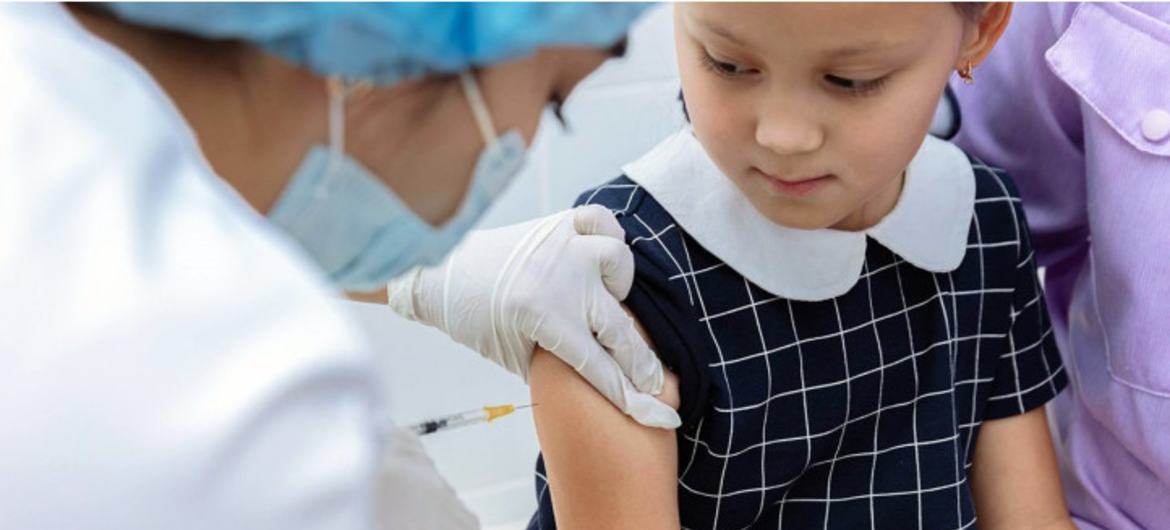
A girl in Kazakhstan receives a measles vaccine. New trials of a vaccine patch instead of shots, are showing promise.
© WHO
 
A girl in Kazakhstan receives a measles vaccine. New trials of a vaccine patch instead of shots, are showing promise.


9 May 2024
Health

Few enjoy having injections and if you have children, you probably like them even less when it’s time for their mandated vaccine shots.

But now, there could be an easier alternative in the form of patches that can be simply applied to the skin, much like a sticking plaster.

Early data from a vaccine patch trial in the Gambia has shown promising indications that it could be effective in protecting children from measles.

Tweet URL
WHOAFRO

The UN World Health Organization (WHO) has been helping to develop these vaccine microarray patches – or MAPS – as they are known, for several years already.

Birgitte Giersing, team lead at WHO’s Vaccine Product and Delivery Research Unit, said that the patches could be a major breakthrough in protecting vulnerable populations from preventable diseases.

Groundbreaking potential

“They are potentially groundbreaking vaccine delivery technology that could really contribute to increasing the coverage of life saving vaccines like measles and rubella…especially in low resource settings”, she told reporters in Geneva.

“And this is because they can be more easily delivered than vaccines that need to be injected, especially in outbreaks or in humanitarian emergency situations.”

Dr. Giersing explained that the patches could be especially useful in combating measles and rubella. Vaccines for both of these diseases have been available for decades but coverage levels dropped during the COVID-19 pandemic and now there are many millions of susceptible children in many countries.

“People may be more willing to be vaccinated by a patch than by a needle, so there's really an acceptability advantage” to the patches, Dr Giersing said.

First ever guidelines to lower infection rates due to catheters published

In further health news, WHO on Thursday published the first global guidelines to prevent bloodstream and other infections caused by use of catheters placed in minor blood vessels while patients are undergoing minor procedures.

Poor practices in the routine use of catheters – how they are inserted and removed in the arm for example – can lead to a high risk of infections entering the system via the blood.

Serious consequences

This can lead to serious conditions such as sepsis, and difficult-to-treat complications in major organs like the brain and kidneys, WHO said.

Soft tissue infections at the insertion site of the catheter can also occur.

People who receive treatments through catheters are often particularly vulnerable to infections, as they might be seriously ill or have low immunity.

WHO estimates that from 2000 to 2018, average mortality among patients affected by healthcare-associated sepsis was 24.4 per cent, increasing to 52.3 per cent among patients treated in intensive care units.

“Infections associated with health care delivery represent a preventable tragedy and a serious threat to the quality and safety of health care,” said Dr. Bruce Aylward, WHO Assistant Director-General.

“Implementing clean care and infection prevention and control recommendations is critical to saving lives and alleviating a great deal of avoidable suffering experienced by people around the world.”

The new guidelines include 14 good practice statements and 23 recommendations on key areas for health workers, including better education and training for health workers.


https://news.un.org/en/story/2024/05/1149561

https://creativecommons.org/licenses/by/3.0/legalcode

вторник, 19 марта 2024 г.

WHO study shows $39 return for each dollar invested in fight against TB


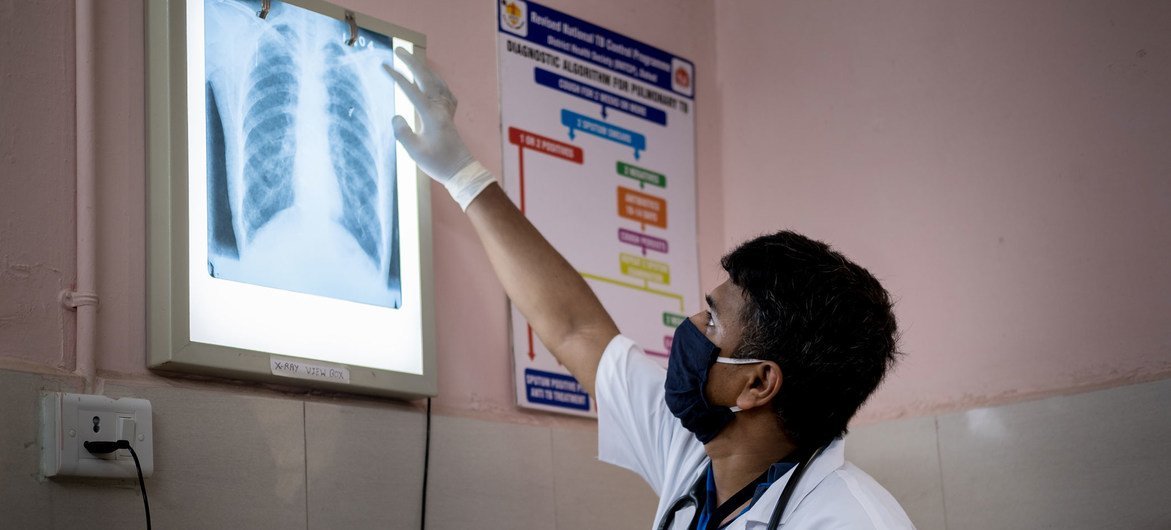
A doctor checks a patient’s chest x-ray for signs of tuberculosis.
© UNICEF/Vinay Panjwani
 
A doctor checks a patient’s chest x-ray for signs of tuberculosis.


18 March 2024
Health

The UN World Health Organization (WHO) on Monday called for a funding boost in tuberculosis (TB) screening and prevention programmes to protect vulnerable populations and achieve key health goals.

Relatively modest new investment could result in significant health and economic benefits, with up to $39 worth of benefits for each dollar invested, the UN agency said

The returns extend beyond monetary, encompassing substantial improvements in public health outcomes and the mitigation of TB’s devastating impact on individuals, families and communities.

“The investment case outlines the health and economic rationale for investing in evidence-based, WHO-recommended interventions on TB screening and prevention that can contribute to advancing universal health coverage

“Today, we have the knowledge, tools and political commitment that can end this millennia-old disease that remains one of the world’s top infectious killers.”

Tweet URL
WHO

Crucial advocacy tool

While significant strides have been made to combat the disease, with an estimated 75 million lives saved since 2000, TB continues to cause about 1.3 million deaths annually and affects millions more worldwide.

Moreover, multidrug-resistant TB (MDR-TB) is a growing public health concern, with only about two in five people having accessed treatment in 2022.

Progress in the development of new TB diagnostics, drugs and vaccines remains constrained by the overall level of investment in these areas, WHO said, adding that it is clear much more needs to be done to combat TB.

Against this background, its investment case is expected to serve as a vital advocacy tool for securing increased resources for TB screening and preventive treatment, aligning with the commitments made by governments at the 2023 High-Level Meeting on TB

2024 World TB Day

As the global community prepares to World TB Day on 24 March under the theme Yes! We can end TB!

The next five years will be critical

“WHO will continue to provide global leadership for the TB response, working with all stakeholders until we reach and save every person, family and community impacted by this deadly disease”.


https://news.un.org/en/story/2024/03/1147696


https://creativecommons.org/licenses/by/3.0/legalcode

суббота, 17 февраля 2024 г.

Lifesaving medical care collapsing under assault in Gaza: WHO


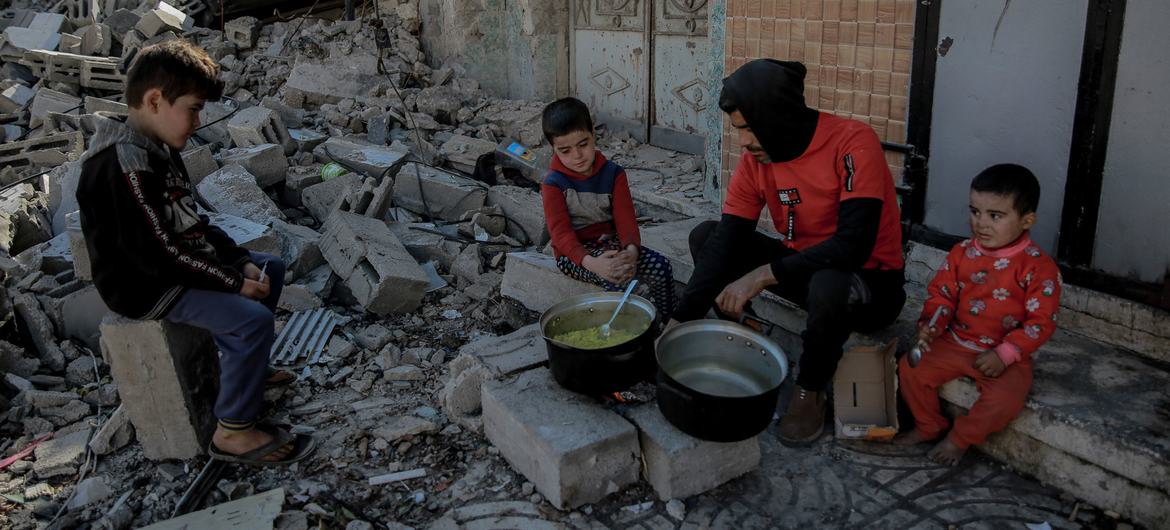
A man cooks food for his children over a wood fire in front of his destroyed home in an area west of Gaza City.
© UNICEF/Omar Al-Qattaa
 
A man cooks food for his children over a wood fire in front of his destroyed home in an area west of Gaza City.


16 February 2024
Peace and Security

The largest remaining hospital in southern Gaza is “barely functional”, the UN World Health Organization (WHO) warned on Friday amid reports of intense attacks by Israeli forces.

There have been reports of damage to Nasser Hospital’s orthopedic unit, reducing its ability to provide urgent medical care, WHO spokesperson Tarik Jašarević told correspondents at a press briefing in Geneva.

More degradation to the hospital means more lives being lost,” he said.

According to the UN agency, of the 36 hospitals in the war-ravaged enclave, only 11 are functioning. There are also reports that several patients have died during the Israeli operation.

The Israeli military has alleged that Hamas was holding hostages or withholding the bodies of Israelis within the Nasser compound, situated in Khan Younis.

Places of healing, not burial

Tweet URL
UN_News_Centre

The hospital has been providing lifesaving services to the most critically ill and has been a refuge to countless civilians displaced from elsewhere in the Gaza Strip.

Mr. Jašarević added that WHO was trying to gain urgent access to the complex.

We really need to get there to bring fuel so [the] hospital can continue to function and those patients who are still there can continue to receive medical care,” he said, also stressing the need to assess the conditions of patients and for their safe referral to other facilities.

“We have been saying all this time…that patients, health workers and civilians who are seeking refuge in hospitals deserve safety and not a burial in those places of healing,” he added.

Intense bombardment continues

Meanwhile, intense Israeli bombardment from air, land and sea continues to be reported across much of the Gaza Strip, resulting in further civilian casualties, displacement and infrastructure damage, the UN Office for the Coordination of Humanitarian Affairs (OCHA) said.

“Widespread ground operations and heavy fighting between Israeli forces and Palestinian armed groups also continue to be reported, especially in the centre of Khan Younis and east of Deir Al-Balah,” OCHA noted in a flash update issued on Friday.

Between the afternoon of 15 February and 11am on 16 February (local times), according to the Ministry of Health in Gaza, 112 Palestinians were killed, and 157 Palestinians were injured, and since 7 October, at least 28,775 Palestinians were killed in Gaza and a further 68,552 reported injured.

Tiny sliver of land

OCHA also relayed reports that intensified airstrikes on Rafah and statements by Israeli officials of a ground operation have led to the movement of people sheltering there towards the town of Deir Al-Balah in central Gaza.

Over half of Gaza’s population are crammed into Rafah, which is located at the southern end of the Strip, in an area that represents just one fifth of the entire enclave.

‘Humanity must prevail’

The situation is particularly dire for pregnant women, new mothers and newborns.

The UN Population Fund (UNFPA) warned that the Al-Helal Al-Emirati Maternity Hospital in Rafah is “overwhelmed and struggling” to provide adequate care.

If the bombs don't kill pregnant women, if disease, hunger and dehydration don't catch up with them, simply giving birth could
– UNFPA

“Put simply, if the bombs don't kill pregnant women, if disease, hunger and dehydration don't catch up with them, simply giving birth could,” the UN agency, which works for safe motherhood, said.

Further attacks, UNFPA warned, would mark another devastating turn in the war, and thousands more could die in the violence or through lack of access to food, water and critical lifesaving services. 

Humanity must prevail, it added, reiterating the call for an immediate humanitarian ceasefire in Gaza and the safe and immediate release of all hostages.

‘Clock is ticking fast’

The UN independent committee monitoring the implementation of the Convention on the Elimination of All Forms of Discrimination against Women echoed that call.

It urged Israel to allow the provision of medicines and medical personnel and humanitarian assistance, including the special needs of women and girls such as sexual and reproductive health services, and sanitary and hygiene products.

“The clock is ticking fast towards famine and an outbreak of epidemics. The lives and health, physical and mental, of the women and girls of Gaza are severely compromised,” said the committee, which is composed of experts independent of any government and the United Nations. 


https://news.un.org/en/story/2024/02/1146632


https://creativecommons.org/licenses/by/3.0/legalcode

среда, 20 декабря 2023 г.

COVID-19: WHO designates JN.1 ‘variant of interest’ amid sharp rise in global spread


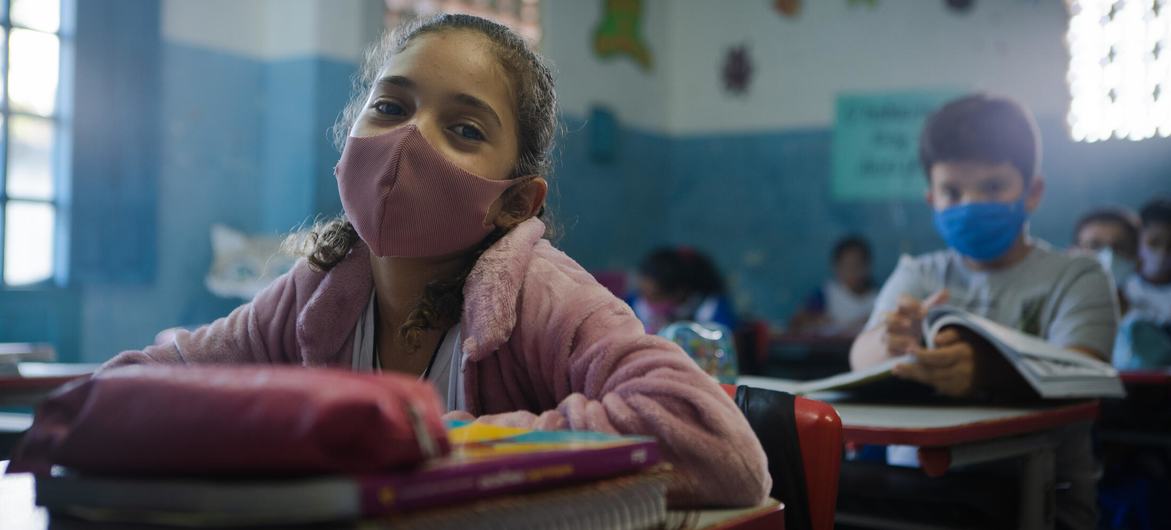
A child, wearing a mask, attends classes in rural Brazil. (2021 photo)
© UNICEF/Hugo Coutinho
 
A child, wearing a mask, attends classes in rural Brazil. (2021 photo)
20 December 2023
Health

The UN World Health Organization (WHO) has said it is continuously monitoring the global spread of JN.1, a COVID-19 variant of interest, adding that current vaccines continue to offer protection against severe disease and death from this and other variants in circulation.

Though its current evaluation of the global public health risk is “low”, the UN health agency cautioned that with the onset of winter in the Northern Hemisphere, the new variant “could increase” the burden of respiratory infections in many countries, noting other diseases such as RSV, influenza and childhood pneumonia that are already on the rise.

Tweet URL

Rapidly increasing spread

The classification of JN.1 as a separate variant of interest (VOI) is down to “its rapidly increasing spread” around the globe, WHO said in an advisory issued on Tuesday.

JN.1 has been found in many countries, including India, China, the United Kingdom, and the United States.

Previously JN.1 was classified and tracked as part of its parent BA.2.86 lineage, which itself is a descendant of the Omicron or B.1.1.529 variant of SARS-CoV-2, the virus causing COVID-19 disease.

In comparison with its parent lineage BA.2.86, JN.1 has an additional mutation (the L455S mutation) in the spike protein.

Risk evaluated as ‘low’

WHO said that based on the currently available data, “the additional global public health risk posed by JN.1 is currently evaluated as low.”

“Despite this, with the onset of winter in the Northern Hemisphere, JN.1 could increase the burden of respiratory infections in many countries,” it added.

WHO also highlighted that current vaccines continue to protect against severe disease and death from JN.1 and other circulating variants of SARS-CoV-2.

Other respiratory diseases

COVID-19 is not the only respiratory disease in play. Influenza, RSV (Respiratory Syncytial Virus) and common childhood pneumonia are on the rise, according to WHO.

It advised people to take measures to prevent infections and severe disease using all available tools, including wearing a mask when in crowded, enclosed, or poorly ventilated areas, and keeping a safe distance from others.

It also urged everyone to put safety first by covering coughs and sneezes; cleaning one’s hands regularly; and staying up to date with vaccinations against COVID-19 and influenza, especially if you are at a high risk of severe disease.

Additionally, people should stay home if they are sick, and to get tested if they have symptoms, or if they might have been exposed to someone with COVID-19 or influenza.

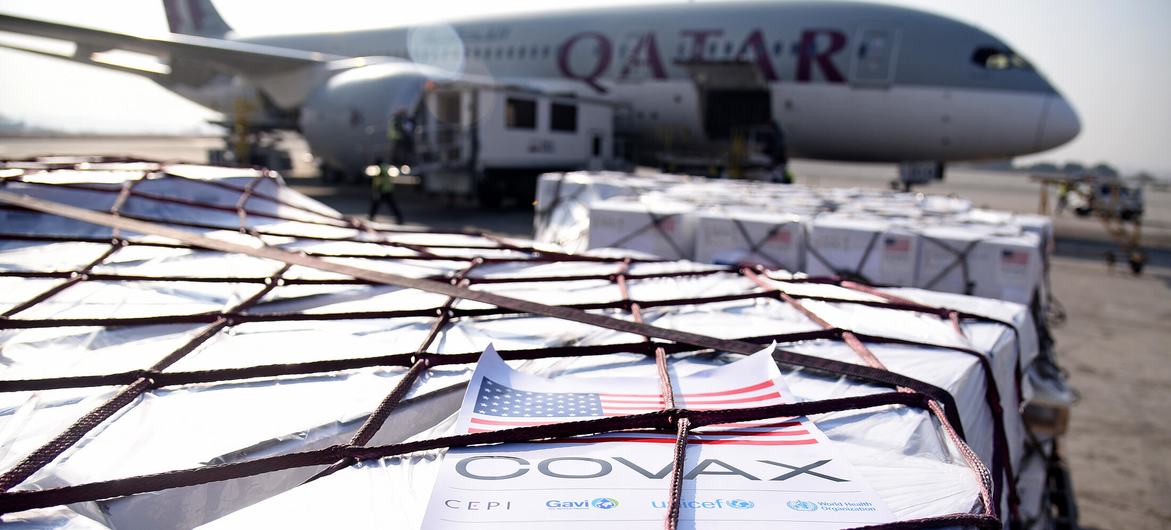
COVAX facilitated the delivery of some two billion doses of COVID vaccines globally, pictured here, a delivery of Pfizer COVID-19 in vaccines in Nepal in 2021.
© UNICEF/Angad Dhakal
 
COVAX facilitated the delivery of some two billion doses of COVID vaccines globally, pictured here, a delivery of Pfizer COVID-19 in vaccines in Nepal in 2021.

Global vaccine initiative winds down

Also on Tuesday, WHO announced that COVAX, the landmark multilateral mechanism for equitable global access to COVID-19 vaccines, launched in 2020, will end on 31 December 2023, as COVID-19 vaccinations shift to regular immunization programmes.

Since its launch in 2020, COVAX delivered nearly two billion doses of vaccines to 146 economies and averted an estimated 2.7 million deaths in lower-income economies.

“Low- and lower middle-income economies will continue to receive COVID-19 vaccines and delivery support from Gavi, the Vaccine Alliance in 2024 and 2025, with 83 million doses so far requested for 2024 from 58 economies,” WHO said in a statement.

COVAX was the vaccines pillar of the Access to COVID-19 Tools (ACT) Accelerator, the ground-breaking global collaboration to accelerate the development, production, and equitable access to COVID-19 tests, treatments, and vaccines.

It was co-led by Gavi, the Vaccine Alliance; the Coalition for Epidemic Preparedness Innovations (CEPI); WHO; and the UN Children’s Fund (UNICEF).

Unprecedented emergency response

With the rallying cry “no one is safe until everyone is safe”, COVAX partners urged the world to place vaccine equity at the heart of the global response to the COVID-19 pandemic, and for every country to have at least enough doses to protect those most at risk.

“The joint efforts of all partners to ensure an equitable response to the pandemic helped protect the futures of millions of children in vulnerable communities,” said Catherine Russell, Executive Director of UNICEF.

“This huge and historic undertaking is something we can be collectively proud of and build on. UNICEF will continue to deliver vaccines to the world's youngest to stop the spread of all preventable diseases and build strong health systems for the future.”

WHO Video | Importance of revaccination against COVID-19

https://creativecommons.org/licenses/by/3.0/legalcode

понедельник, 11 декабря 2023 г.

Gaza: WHO adopts resolution on access for lifesaving aid


Gaza: WHO adopts resolution on access for lifesaving aid

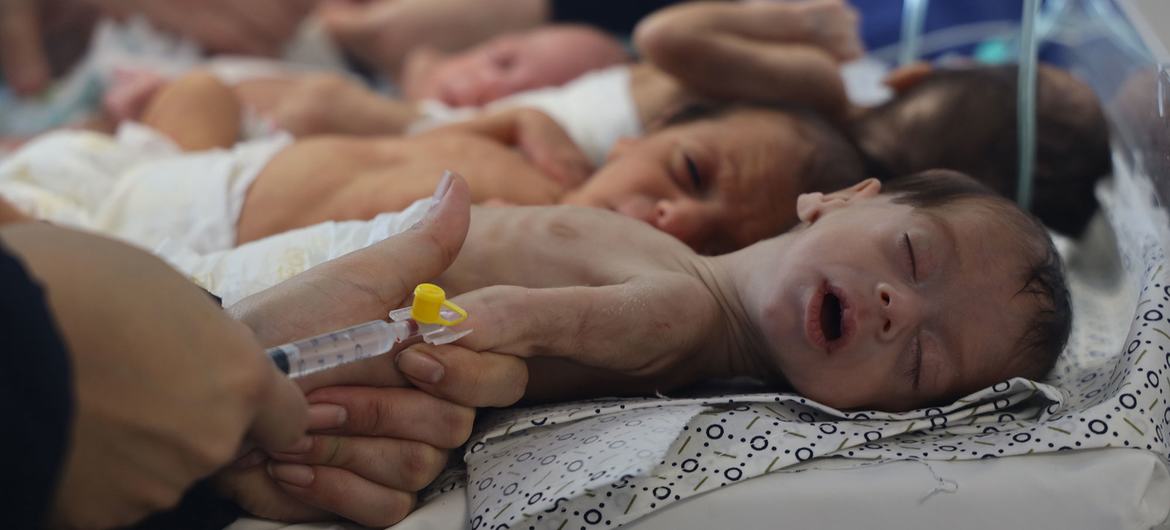
Babies at Gaza's Al-Shifa hospital being prepared for evacuation (file photo).
© UNICEF/Eyad El Baba
 
Babies at Gaza's Al-Shifa hospital being prepared for evacuation (file photo).
10 December 2023Humanitarian Aid

In a special emergency session held on Sunday in Geneva, the Executive Board of the World Health Organization (WHO) adopted a resolution by consensus, aimed at addressing the catastrophic humanitarian situation in the Gaza Strip.

This is the first time since 7 October that a resolution on this conflict has been adopted by consensus within the UN system, the UN health agency noted. It underscores the importance of health as a universal priority, in all circumstances, and the role of healthcare and humanitarianism in building bridges to peace, even in the most difficult of situations.

Tweet URL

The resolution calls for “immediate, sustained and unimpeded passage of humanitarian relief, including the access of medical personnel.”

It calls on “all parties to fulfill their obligations under international law…and reaffirms that all parties to armed conflict must comply fully with the obligations applicable to them under international humanitarian law related to the protection of civilians in armed conflict and medical personnel.”

The resolution also commends WHO and health cluster partners in the field for remaining and delivering.

The Executive Board of WHO consists of 34 people all qualified in the health field, each one designated by a Member State that has been elected to serve by the World Health Assembly.

On Saturday, amid what WHO described as extremely difficult circumstances, the health agency and partners working on the ground in Gaza delivered supplies for up to 1,500 patients and transferred patients from the Al-Ahli Hospital in the north to a facility in the south.

Attacks on healthcare must stop

WHO Director-General Dr Tedros Adhanom Ghebreyesus said in his opening remarks that he deplored “the barbaric and unjustifiable attacks by Hamas on Israel of 7 October, which killed more than 1,200 people, and added that he was “appalled by reports of gender-based violence during the attacks, and by the mistreatment of hostages.”

He expressed relief that 114 hostages have been released and repeated his call for them all to be freed.

“I well understand the anger, grief and fear of the Israeli people following the horrific attacks two months ago”, Tedros said.

“I also understand the anger, grief and fear of the people of Gaza, who had already suffered through 16 years of blockade, and are now enduring the destruction of their families, their homes, their communities and the life they knew.

Since the 7th of October, WHO has verified more than 449 attacks on healthcare in Gaza and the West Bank, and 60 attacks on healthcare in Israel, he said, adding that “healthcare should never be a target.”

“I also grieve the loss of more than 100 of our UN colleagues in Gaza, including our own Dima Alhaj, who was killed alongside her six-month old son, her husband and her two brothers.”

The resolution calls on Tedros to report on the public health implications of the crisis; strengthen technical and material assistance, and to strengthen partnerships with other care providers.

“But I must be frank with you: these tasks are almost impossible in the current circumstances”, he lamented.

He applauded the UN chief’s invocation of the powerful emergency tool Article 99 last week, and António Guterres’s call for a humanitarian ceasefire, saying it was “the only way to truly protect and promote the health of the people of Gaza.”

Tedros expressed deep regret that the Security Council was unable to adopt a resolution on such a ceasefire last Friday.

Resolution ‘a starting point’

He said despite “difficult” negotiations over the Executive Board’s text, he appreciated the spirit of cooperation and compromise on the part of board members to reach consensus on the resolution.

In remarks delivered throughout the day, many Member States offered sympathies for the loss of life of civilians, as well as health workers and UN employees.

In his closing remarks, WHO chief Tedros said the adoption of the resolution was a starting point. “It does not resolve the crisis. But it is a platform on which to build.”

He added that “without a ceasefire, there is no peace. And without peace, there is no health. I urge all Member States, especially those with the most influence, to work with urgency to bring an end to this conflict as soon as possible.”

In a statement released in response to the resolution, Israel’s Ambassador to the UN in Geneva, Meirav Eilon Shahar, deplored the lack of reference to hostages in the text.

The resolution also fails to condemn “Hamas terrorism” or the group’s use of human shields, she said, branding the text a “complete moral failure for the international community.”


https://news.un.org/en/story/2023/12/1144627
https://creativecommons.org/licenses/by/3.0/legalcode

четверг, 5 октября 2023 г.

Gaza: Forcing patients to flee hospitals a 'death sentence' warns WHO


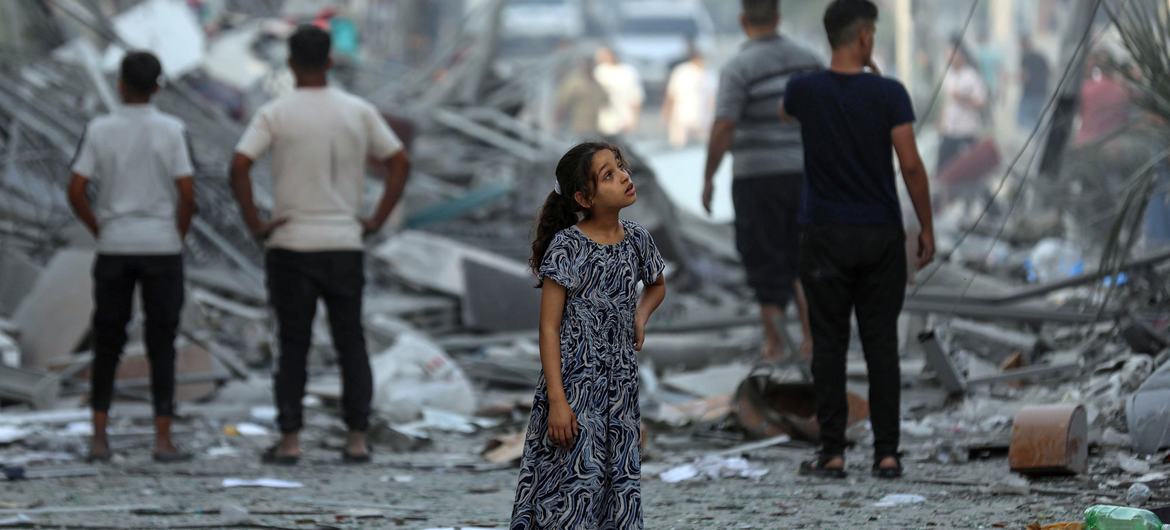
Neighbourhoods in Gaza have been razed by airstrikes.
© UNICEF/Mohammad Ajjour
 
Neighbourhoods in Gaza have been razed by airstrikes.
14 October 2023
Peace and Security

The UN Palestine refugee agency (UNRWA) issued an urgent call on Saturday for Israeli Authorities to protect all civilians sheltering in Gaza.

The statement came as the Israeli-imposed deadline for some 1.1 million civilians to leave the northern part of the enclave, ahead of what is expected to be a major advance into Gaza by Israeli ground forces, expired.

Tweet URL

“UNRWA shelters in Gaza and northern Gaza are no longer safe. This is unprecedented,” said the statement. 

The agency reminded that according to the rules of warfare, civilians, hospitals, schools, clinics and United Nations premises cannot be a target.

“UNRWA is sparing no efforts to advocate with parties to the conflicts to meet their obligations under international law to protect civilians, including those seeking refuge in UNRWA shelters,” the agency emphasized.  

UNRWA pointed out that many of the vulnerable, particularly pregnant women, children, the elderly and persons with disabilities simply will be unable to flee south.

“They have no choice and must be protected at all times.”

Taps run dry

UNRWA chief Philippe Lazzarini said that with water supplies running dry due to Israel cutting off all utilities to Gaza, "it has become a matter of life and death".

"It is a must. Fuel needs to be delivered now into Gaza to make water available for two million people", he said.

More than 1,300 people were killed in Israel after Hamas fighters raided settlements close to Gaza last Saturday. In response, more than 2,200 have been killed during Israel’s aerial offensive on Gaza, according to Palestinian authorities.

On Friday, UN Secretary-General António Guterres said it would be “impossible” for civilians in Gaza to comply with the evacuation order without devastating humanitarian consequences.

The UN chief called on the world to unite in support of the fundamental principle of protecting civilians, and “finding a lasting solution to this unending cycle of death and destruction.”

‘Agonising choice’ for hospital workers amid Israeli order to evacuate

The World Health Organization (WHOon Saturday strongly condemned Israel’s repeated order for 22 hospitals in northern Gaza to be evacuated, describing it as a “death sentence” for the sick and injured.

With around 2,000 desperately ill patients inside their wards, WHO said the forced evacuation of both patients and health workers “will further worsen the current humanitarian and public health catastrophe.”

The statement said the lives of those in intensive care or who rely on life support – including newborns in incubators and those needing hemodialysis – now hang in the balance.

“Health facilities in northern Gaza continue to receive an influx of injured patients and are struggling to operate beyond maximum capacity. Some patients are being treated in corridors and outdoors in surrounding streets due to a lack of hospital beds”, said WHO.

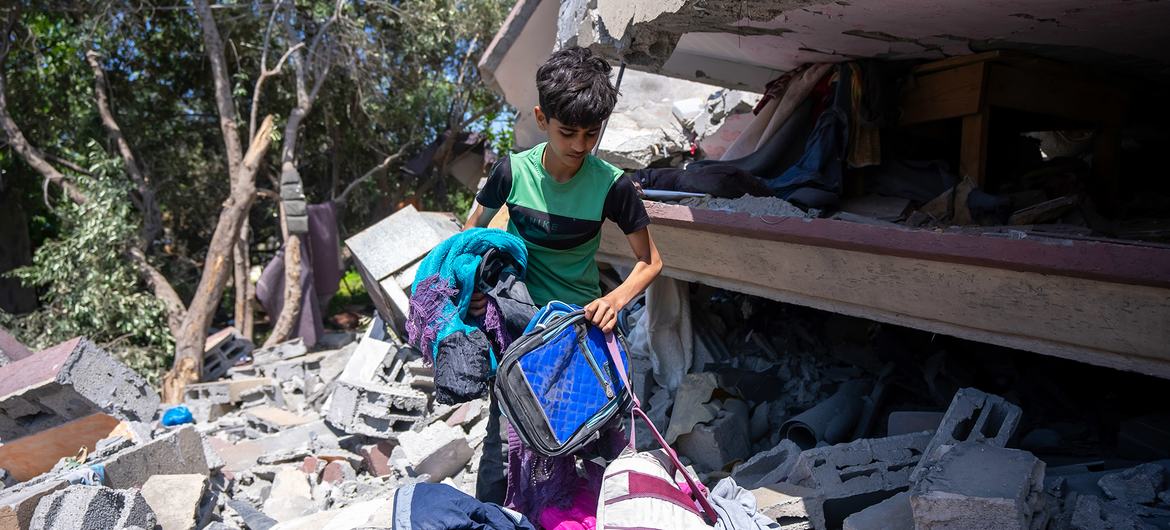
A boy picks through his belongings in the remains of his destroyed home in Gaza.
WHO
 
A boy picks through his belongings in the remains of his destroyed home in Gaza.

'Tantamount to a death sentence'

“Forcing more than 2000 patients to relocate to southern Gaza, where health facilities are already running at maximum capacity and unable to absorb a dramatic rise in the number patients, could be tantamount to a death sentence.”

Those running the hospitals now face an agonizing choice, the agency said: either abandon the critically ill, put their own lives at risk by staying amid the bombing, or endanger patients’ lives “while remaining on site to treat patients, or endanger their patients’ lives “while attempting to transport them to facilities that have no capacity to receive them.”

The agency said that overwhelmingly, staff have chosen to stay behind rather than risk lives by moving those who are critically ill.

WHO airlifts vital health supplies

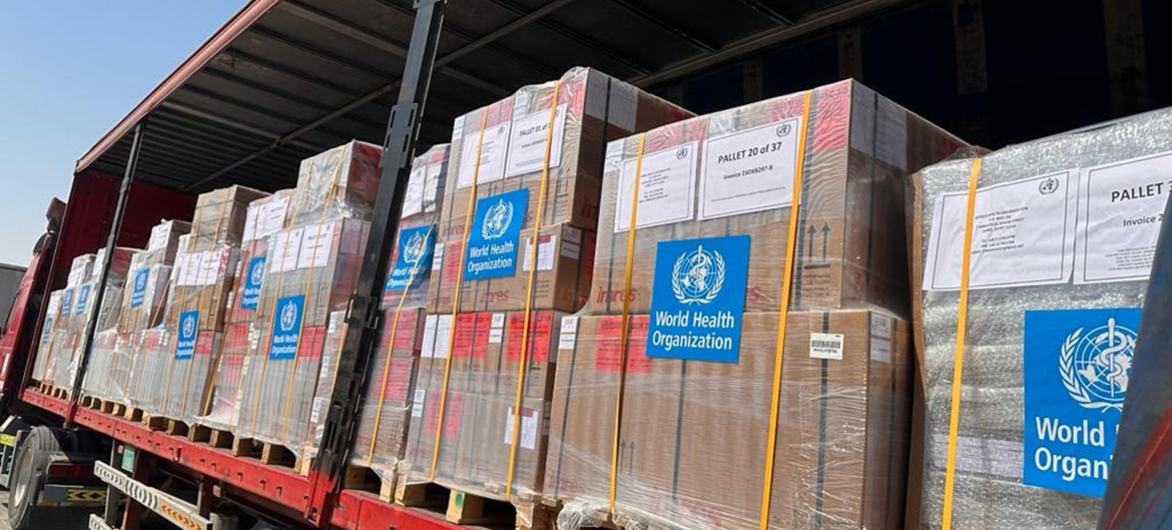
A plane carrying life-saving health supplies from the WHO logistics hub in Dubai landed in Egypt on Saturday to aid civilians in Gaza – as soon as access across the border into the enclave can be established.

Health supplies for Gaza are dispatched from the WHO logistics hub in Dubai.
WHO
 
Health supplies for Gaza are dispatched from the WHO logistics hub in Dubai.

The shipment includes trauma medicines, healthcare essentials, and equipment sufficient to treat around 1,200 who have suffered injuries during the bombing raids and around 1,500 chronically ill patients.

The cargo also includes basic health supplies to meet the needs of 300,000 others, including pregnant women.

With hospitals in Gaza either completely out of action, or simply overwhelmed, the supplies will help save the lives of the wounded wherever they can find shelter, WHO said. 

Access essential

WHO said it was critical for the Rafah crossing on the Egyptian border to be reopened. “While the Egyptian side of the crossing is accessible, the Israeli side remains closed”, said the statement. 

“Every hour these supplies remain on the Egyptian side of the border, more girls and boys, women, and men, especially those vulnerable or disabled, will die while supplies that can save them are less than 20 kilometres (12 miles) away.”

WHO said it would be working with the Egyptian and Palestinian Red Crescent Societies to ship the supplies across the border into Gaza, as soon as practicable. 

WHO Director-General Tedros Adhanom Ghebreyesus met Egyptian President Abdel Fattah El-Sisi on Monday who endorsed the request to facilitate medical aid across the border into Gaza.

Soundcloud

‘I fear the worst is yet to come’: UN relief chief

Following a week of “utter anguish and devastation” for civilians in both Israel and the Occupied Palestinian Territory, the UN relief chief on Saturday said he fears “the worst is yet to come.”

“In Israel, families are reeling from the horror of last Saturday’s attack”, said Humanitarian Affairs chief Martin Griffiths. “More than a thousand people have been killed and many more have been injured. Over 100 people are held captive.

“In Gaza, families have been bombed while inching their way south along congested, damaged roads, following an evacuation order that left hundreds of thousands of people scrambling for safety but with nowhere to go.” 

The past week has been a test for humanity, and humanity is failing - Martin Griffiths

He warned that the humanitarian situation in the Gaza Strip, “already critical, is fast becoming untenable.”

The OCHA chief warned that violence is on the rise in the occupied West Bank, with a surge in civilian deaths and injuries leaving families “facing ever greater movement restrictions.”

“And in Lebanon, the risk of the conflict spilling into the country is a major concern.”

He called for all civilians and civilian infrastructure, including humanitarian workers, to be protected by all combatants.

Mr. Griffiths echoed the UN chief’s appeal saying all countries with influence must exert it to ensure respect for the rules of war and to avoid any further escalation and spillover.

“The past week has been a test for humanity, and humanity is failing.”

Soundcloud

UN independent expert warns of ‘mass ethnic cleansing’

An independent UN-appointed human rights expert warned on Saturday that Gaza’s civilian population was now in grave danger of “mass ethnic cleansing” on the international community to urgently mediate a ceasefire.

Tweet URL

“The situation in the occupied Palestinian territory and Israel has reached fever pitch,” said Francesca Albanese, UN Special Rapporteur on the situation of human rights in the Palestinian Territory occupied since 1967. 

She called on the UN and Member States to intensify efforts to mediate an immediate ceasefire between the parties, before “a point of no return” is reached. 

The UN Human Rights Council-appointed expert reminded the international community of its responsibility to prevent and protect populations from atrocity crimes.

‘Both deserve to live in peace’

“Time is of the essence. Palestinians and Israelis both deserve to live in peace, equality of rights, dignity and freedom,” Ms. Albanese said. “Any continued military operations by Israel have gone well beyond the limits of international law. The international community must stop these egregious violations of international law now, before tragic history is repeated.”

Special Rapporteurs and other independent experts work on a voluntary basis, they are not UN staff and do not receive a salary for their work.

Lebanon frontier: Peacekeepers warn of further 'tragedies' following journalist’s death 

The UN peacekeeping force in Lebanon on Saturday extended its heartfelt condolences to the family of a Reuter’s news agency video journalist who was killed in the south of the country, covering the exchange of fire between Israeli forces and Hezbollah militia.

In a statementUNIFIL, the UN Interim Force in Lebanon, confirmed there had been firing across the Blue Line, the unofficial frontier between the two countries, with Israeli forces striking a position on Friday close to the village of Alma As Shab.

According to Reuters, Issam Al Abdullah, a Lebanese videographer, was killed during the exchange of fire and six other journalists were injured.

UNIFIL wished the injured media workers a swift recovery and stressed that it could not say exactly how the group had been hit.

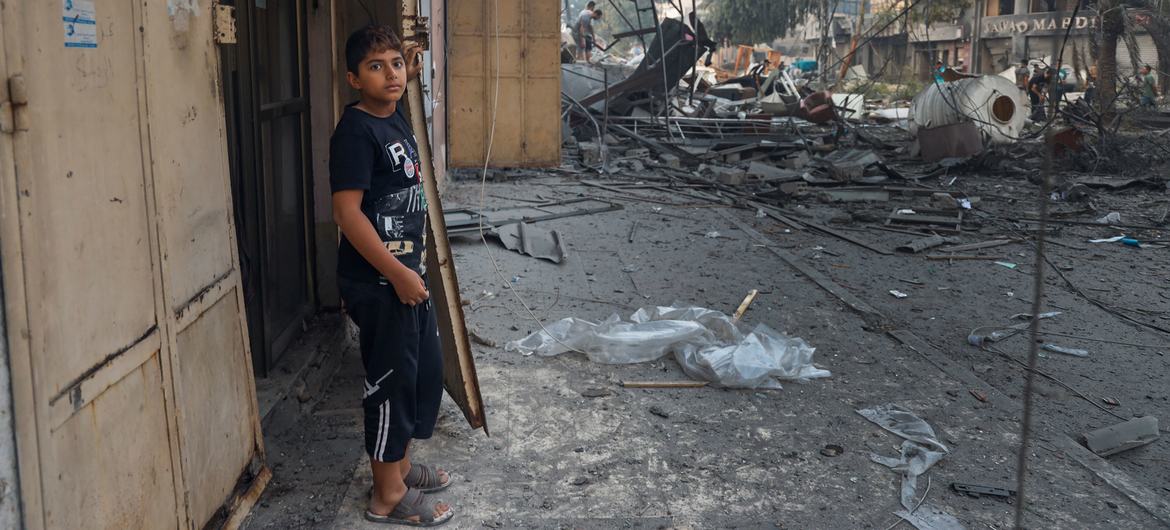
An 11-year-old boy stands at the entrance to his home in Gaza City.
© UNICEF/Mohammad Ajjour
 
An 11-year-old boy stands at the entrance to his home in Gaza City.

Stop the escalation

“If the situation continues to escalate, we will most likely see more such tragedies. Any civilian loss of life is a tragedy and should be prevented at all times.

“This is why we urge everyone to cease fire and allow us, as peacekeepers, to help find solutions”, the statement added. “No one wants to see more people hurt or killed.”

According to news reports, Israeli authorities have pledged to investigate the incident.


https://news.un.org/en/story/2023/10/1142347
https://creativecommons.org/licenses/by/3.0/legalcode