Избранное сообщение

Показаны сообщения с ярлыком Gaza. Показать все сообщения

суббота, 17 августа 2024 г.

Guterres appeals for ‘Polio Pause’ in Gaza


Two rounds of a polio vaccination campaign are expected to be launched at the end of August and September 2024 across the Gaza Strip.
© WHO
 
Two rounds of a polio vaccination campaign are expected to be launched at the end of August and September 2024 across the Gaza Strip.


16 August 2024 

UN Secretary-General António Guterres called on Friday for warring parties in Gaza to lay down their arms so that humanitarians can safely vaccinate more than half a million children against polio. 

“I am appealing to all parties to provide concrete assurances right away guaranteeing humanitarian pauses for the campaign,” he said, speaking to reporters at UN Headquarters in New York. 

“Let’s be clear: The ultimate vaccine for polio is peace and an immediate humanitarian ceasefire. But in any case, a Polio Pause is a must.”

Tweet URL

‘Polio does not wait’

Mr. Guterres described Gaza as being in “a humanitarian freefall” because “just when it seems the situation could not get worse for Palestinians in Gaza, the suffering grows – and the world watches.”

Poliovirus was recently detected in sewage samples in two locations, Khan Younis and Deir Al-Balah, meaning that the disease – which can cause paralysis - is circulating in the enclave and putting thousands of children at risk.

“Polio does not care about dividing lines – and polio does not wait,” he said.

Vaccines at the ready

Starting at the end of the month, the UN is set to launch a two-phase campaign to vaccinate more than 640,000 children in Gaza under the age of 10.

The World Health Organization (WHO) has already approved the release of 1.6 million doses of the polio vaccine and the UN Children’s Fund (UNICEF) is coordinating delivery efforts and the cold chain equipment needed for storage.

Meanwhile, medical teams from the UN Palestine refugee agency, UNRWA – the largest primary healthcare provider in Gaza – are ready to administer the vaccines and assist with logistics.

Challenges to the campaign

Mr. Guterres outlined the grave challenges these efforts face.

He said Gaza’s health, water and sanitation systems “have been decimated”, most hospitals and primary care facilities are not functional, and people are constantly forced to run to seek safety.

Furthermore, routine immunizations have been severely disrupted due to the conflict, thus increasing the spread of measles, hepatitis A and other preventable diseases.

“We know how an effective polio vaccination campaign must be administered,” he said.

“Given the wholesale devastation in Gaza, at least 95 per cent vaccination coverage will be needed during each round of the two-round campaign to prevent polio’s spread and reduce its emergence.”

Safety first

The campaign will involve 708 teams at hospitals and primary healthcare centres, he said, again noting that many are barely functioning, and 316 community outreach teams throughout Gaza. 

It requires effective transport routes for the vaccines and cold chain equipment, the entry of polio experts into Gaza and fuel so that health teams can carry out their work.

Reliable internet and phone services for communications outreach, and an increase in the amount of cash allowed into Gaza to pay health workers, are also needed.

“Above all, a successful polio vaccination campaign needs safety,” the UN chief said. 

“Safety for health workers to do their jobs.  Safety for children and families to get to the health facilities. And safety for those health facilities to be protected from bombardment.” 

Soundcloud

A shared obligation

Stressing that “it is impossible to conduct a polio vaccination campaign with war raging all over,” Mr. Guterres warned of the potential for wider consequences. 

“Polio goes beyond politics. It transcends all divisions. And so it is our shared obligation to come together. To mobilize – not to fight people, but to fight polio,” he said.

He stressed the need to “defeat a vicious virus that, left unchecked, would have a disastrous effect not only for Palestinian children in Gaza, but also in neighboring countries and the region.


https://news.un.org/en/story/2024/08/1153276


https://creativecommons.org/licenses/by/4.0/legalcode

четверг, 11 июля 2024 г.

Schools ‘bombed-out’ in latest Gaza escalation, says UNRWA chief


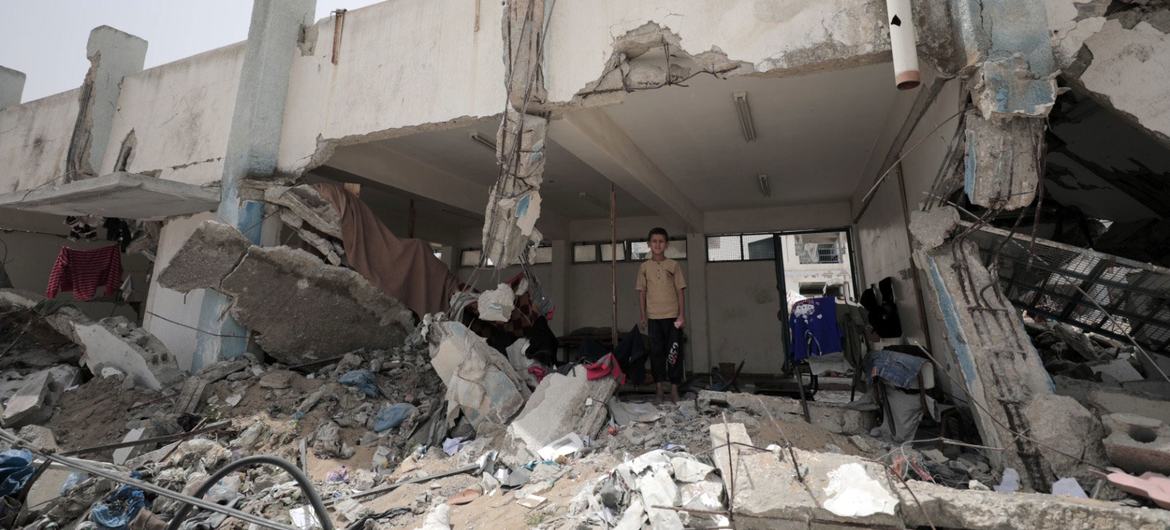
A bombed-out school provides some shelter to a family in Khan Younis, Gaza.
© UNRWA
 
A bombed-out school provides some shelter to a family in Khan Younis, Gaza.
By Daniel Johnson

10 July 2024 

Peace and Security

Amid reports of intensified heavy shelling in north, central and southern Gaza, the head of the UN agency for Palestine refugees, UNRWA, confirmed on Wednesday that schools-turned-shelters have been “bombed-out” as a result of the latest escalation.

“Four schools hit in the last four days. Since the war began, two thirds of UNRWA schools in Gaza have been hit, some were bombed out, many severely damaged,” said Philippe Lazzarini, in a post on X.

In a statement posted on Tuesday, the Israeli military said it had been targeting “terrorist infrastructure and terrorist operatives” in Gaza City.

Under fire

On Tuesday, at least 25 people were killed after an Israeli strike near a school building sheltering displaced Gazans in eastern Khan Younis, southern Gaza, according to the enclave’s health authorities.

Tweet URL

On Saturday, another strike left at least 16 dead at an UNRWA school in Nuseirat, central Gaza, followed a day later by a hit on a school in Gaza City that was reportedly sheltering hundreds of people.

Further Israeli strikes on Monday were reported on or near an UNRWA school in Nuseirat,  UNRWA Director of Communications Juliette Touma told UN News.

No safe place

“This is becoming commonplace; only in the past four days we've seen four schools come under attack,” she said. Every time a school is hit “dozens of people pay the price.”

The UN agency – the largest humanitarian operator in Gaza - closed all of its schools when war erupted on 7 October in response to Hamas-led attacks on multiple targets in southern Israel that left some 1,250 dead and more than 250 taken hostage.

“We've turned the vast majority of them into shelters and at some point we had one million people staying in our schools,” Ms. Touma explained, adding that of the casualties from the latest school strikes, “many” were women and children.

Since the war began, more than half of UNRWA’s facilities - the vast majority of them schools - have been hit.

“Some were completely bombed out and are out of commission”, Ms. Touma continued, adding that since the war began, at least 600,000 children have seen their schools close.

Lost generation

“In the case of UNRWA most of them were used as shelters, but what this means is that if this war continues, we are on the verge of losing a whole generation of children,” she continued.

“The longer children stay out of school, the more difficult it is for them to catch up on education losses; the higher the risk that they fall prey to exploitation, including child labour, child marriage, but also recruitment into armed groups, and recruitment into the fighting. So it is for the sake of those children that we must have a ceasefire”.

In response to allegations that the schools were being used by Hamas fighters or affiliates, the UNRWA official insisted that no UN facility should be used for military purposes, before reiterating repeated calls by the Commissioner-General for “independent inquiries and investigations into all these very serious claims”.

“Civilian infrastructure, including schools, including shelters, including other facilities like health, clinics, or hospitals, must be protected at all times, including in times of conflict,” Ms. Touma insisted.

Soundcloud

Rising toll

In a related development, the UN sexual reproduction agency, UNFPA, warned that the humanitarian situation in Gaza continues to worsen, with “severe suffering” now the norm.

Citing Gazan health authorities, UNFPA said that nearly 38,000 Palestinians have now been killed and more than 87,000 injured, with food, shelter, health and livelihood resources all “critically low”.

Across the enclave some 1.9 million people remain forcibly uprooted by the conflict – often repeatedly - and evacuation orders issued by the Israeli military.

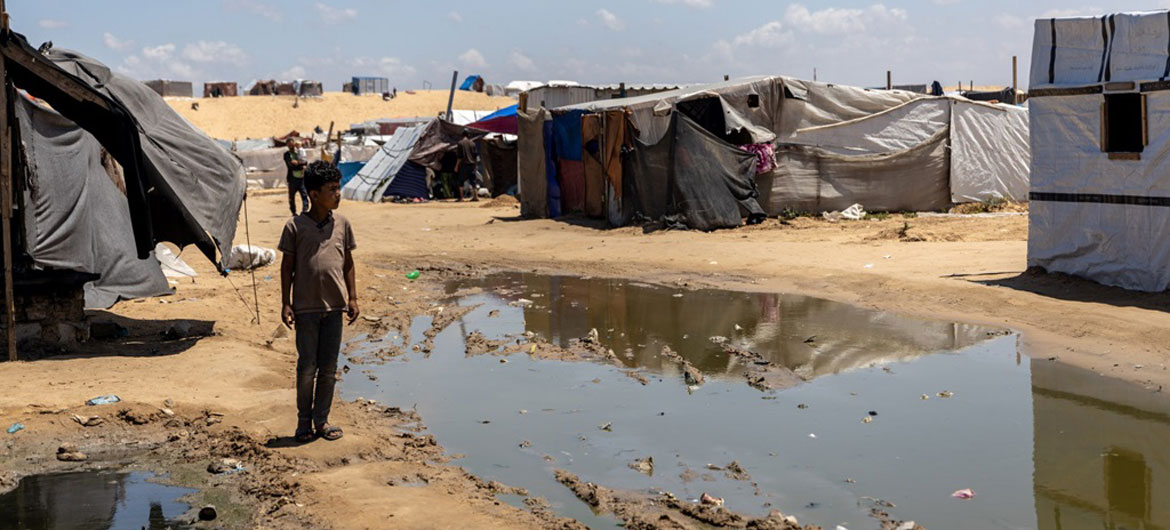
Gazans live in “tents, overcrowded shelters, or on the streets without basic necessities”, the UN agency said, pointing to widespread feelings of hopelessness by people “with little prospect of returning home or ending the conflict”.

Lifesaving supplies blocked

“Severe obstacles” in ensuring that humanitarian aid can reach those who need it continue to hamper the relief operation, the UNFPA situation update noted, listing “crossing point closures and bureaucratic hurdles impeding life-saving assistance”.

Problems associated with the breakdown in law and order in Gaza has also increased theft and violence, endangering humanitarian workers and their operations, according to the UN agency.

In addition, doctors continue to report rising numbers of preterm and low-birth-weight babies, “indicators of severe malnutrition exacerbated by stress and fear among pregnant women” UNFPA said, while also highlighting the high risk of gender-based violence (GBV) faced by women and adolescent girls, “particularly those displaced, widowed, or unaccompanied”.

Aid successes

Despite the challenges, UNFPA has distributed essential sexual reproductive health and GBV services in Gaza and the West Bank.

The UN agency and partners have also established two maternal health units for emergency births, provided menstrual hygiene products to thousands of women and girls and supported mobile medical points and deployed sexual and reproductive health teams to shelters.


https://news.un.org/en/story/2024/07/1151921


https://creativecommons.org/licenses/by/4.0/legalcode

воскресенье, 9 июня 2024 г.

Amid Gaza war, children now work so families can survive: ILO


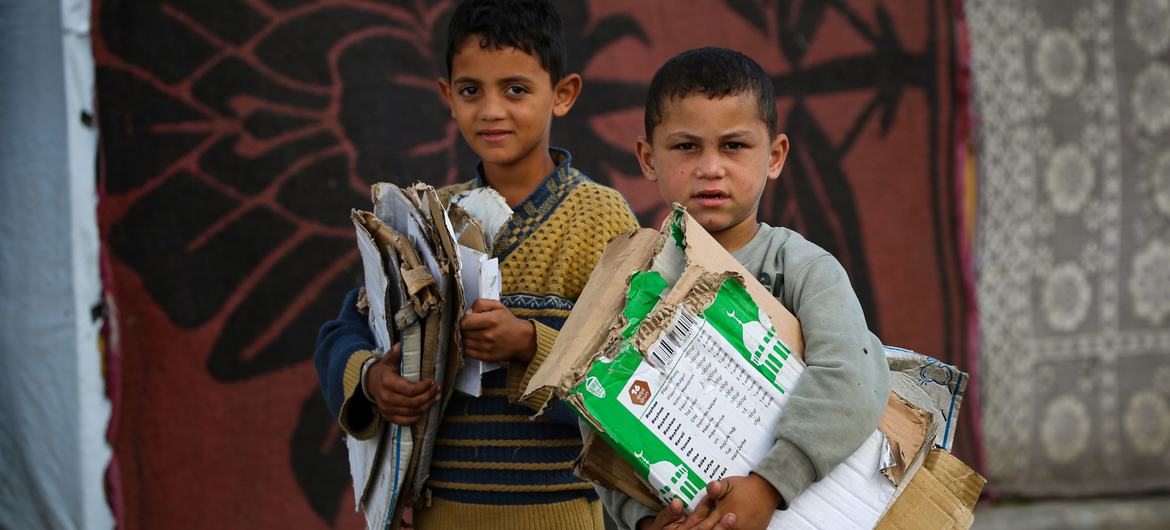
Children in Gaza collect cardboard to light fires for cooking.
© UNICEF/Eyad El Baba
 
Children in Gaza collect cardboard to light fires for cooking.


7 June 2024
Peace and Security

Eight months to the day since the Israel-Hamas war erupted in Gaza, the UN labour agency, ILO, warned on Friday that families there now send their children to work just to survive, as unemployment nears a staggering 80 per cent.

Details of that development and the “unprecedented devastation” to the Palestinian jobs market and the wider economy beyond Gaza and the West Bank are outlined in a new report from the ILO.

Ahead of its publication, the UN agency’s Director-General Gilbert Houngbo told the 112th International Labour Conference in Geneva on Thursday that the labour market in Gaza had “literally collapsed” since “horrific” Hamas-led terror attacks against Israel last October, that sparked Israel’s “relentless war”. 

“Today Gaza is in ruins. Livelihoods are shattered and work is scarce. Labour rights have been decimated,” he said. “This has been the hardest year for Palestinian workers since 1967. Never before has the situation been this bleak.”

Hard data 

According to data crunched by the ILO and the Palestinian Central Bureau of Statistics, unemployment in the Gaza Strip has reached 79.1 per cent. 

Although not directly impacted by the war, the occupied West Bank has also been severely impacted by the crisis, with almost one in three unemployed.

“These figures bring the average rate of unemployment to 50.8 per cent across the two areas of the OPT,” said the authors of The situation of Workers in the Occupied Arab Territories, before noting the true figure was likely even higher as it did not include individuals who had left the labour force altogether because of a lack of opportunities.

Unsurprisingly, overall economic output in Gaza has contracted by 83.5 per cent and by 22.7 in the West Bank over the past eight months, while the entire OPT economy has shrunk by nearly 33 per cent.

Health relief breakthrough

Tweet URL
WHOoPt

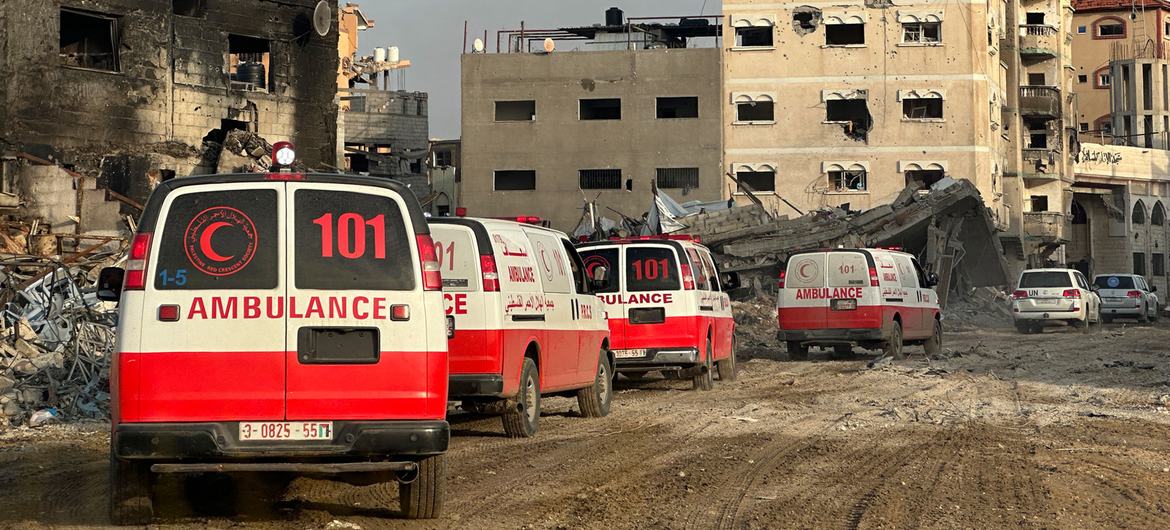
In related developments in Gaza on Friday, the UN health agency announced despite “significant constraints”, one fully-laden truck and a partially stacked trailer carrying medical relief had reached Gaza via the southern crossing of Kerem Shalom.

“The supplies will be distributed to health facilities to support the treatment of up to 44,000 people,” the World Health Organization (WHO) said in a post on X. 

The assistance comprises treatments for noncommunicable diseases such as hypertension and cardiac conditions, type 2 diabetes, and chronic respiratory diseases but much more relief is needed urgently via the still-closed Rafah crossing, the UN health agency insisted.

In a separate update, the WHO reported that 464 attacks on healthcare in the Gaza Strip have been documented since 7 October.

“Attacks have resulted in 727 fatalities, 933 injuries, affected 101 health facilities and 113 ambulances,” the World Health Organization (WHO) said in another post on X. 

“Two-fifths (37 per cent) of attacks were in Gaza City, nearly a quarter (23 per cent) in north Gaza, and over a quarter (28 per cent) in Khan Younis. WHO calls for the respect of international law and active protection of civilians and health care,” the UN agency insisted.

Rafah

In Rafah, fewer than 100,000 people now remain across the southern governorate, the UN aid coordination office, OCHA, reported late Thursday.

This follows the forced evacuation “of about a million people – who were again on the run” and moving toward Khan Younis and Deir al Balah, OCHA said, adding that the ongoing hostilities had massively disrupted the delivery of lifesaving relief.

The halt to fuel deliveries via Rafah crossing from Egypt had multiple negative ramifications, the UN aid office explained, as it affected “trucks, hospitals, sewage systems, desalination operations and bakeries”.

“As things stand, aid convoys still need to navigate active hostilities, barely passable roads, unexploded ordnance, and recurrent delays,” OCHA said.


Israel-Lebanon border clashes a grave concern: Guterres

The continuing exchange of fire between Israeli forces and militants in southern Lebanon along the UN-patrolled Blue Line frontier are a source of grave concern, the UN Secretary-General António Guterres said on Thursday.

In a statement issued in the evening from his Spokesperson’s Office in New York, the UN chief called for an urgent ceasefire.

He remains gravely concerned that the exchanges of fire have not only ravaged communities close to the Blue Line but have also impacted deeper into the territories of both Lebanon and Israel, with the use of increasingly destructive weapons”, the statement continued.

“These exchanges of fire could trigger a broader conflict with devastating consequences for the region.”


https://news.un.org/en/story/2024/06/1150776


https://creativecommons.org/licenses/by/4.0/legalcode


пятница, 17 мая 2024 г.

Rights expert condemns death of Palestinian doctor in Israeli custody, urges independent inquiry


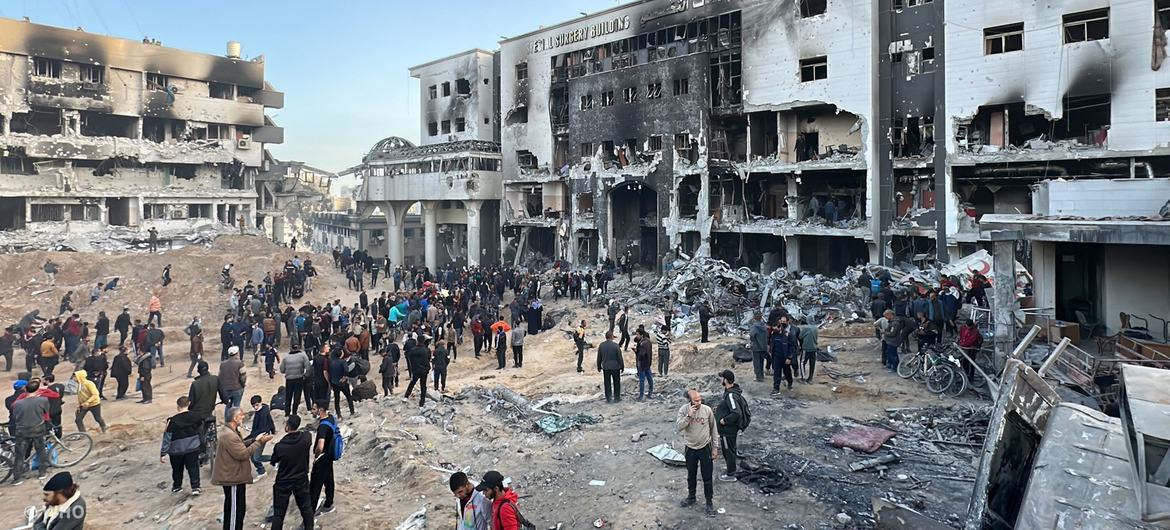
The Al Shifa hospital, one of the largest health facilities in Gaza, has been destroyed.
WHO
 
The Al Shifa hospital, one of the largest health facilities in Gaza, has been destroyed.


16 May 2024

Human Rights

A renowned Palestinian orthopaedic surgeon’s death in Israeli detention has been labelled “horrifying’ by a UN human rights expert, prompting calls for an independent international investigation.

Dr. Adnan Al Bursh, 50, the head of the orthopaedic department at Al-Shifa Hospital in Gaza City, died on April 19, 2024, in Ofer prison, a detention facility in the West Bank. His body has not yet been released by Israeli authorities.

Before his death, he had reportedly been beaten in prison, with his body showing signs of torture.

Dr. Al Bursh had been detained with other doctors and medical personnel by Israeli forces on 18 December 2023, at Al Awda Hospital in North Gaza. At that time, he was generally in good health and was performing his duties normally.

Call for independent probe

Tlaleng Mofokeng, UN Special Rapporteur on the right to health, said she was “horrified” by the news.

“He was detained while undertaking his duty to patients and caring for them according to the oath he took as a medical practitioner … he died for trying to protect the rights to life and health of his patients,” she said.

The expert underscored the need for an independent probe.

“Dr. Adnan’s case raises serious concerns that he died following torture at the hands of Israeli authorities. His death demands an independent international investigation,” the Special Rapporteur said.

Concerns of safety of healthworkers

Ms. Mofokeng also raised concerns over the safety of healthcare workers amidst Israel’s relentless military operation in Gaza following the brutal attacks by Hamas and other groups in southern Israel on 7 October.

“I am deeply saddened that I continue to receive reports of doctors being killed in this conflict,” she said.

Tweet URL
UN_SPExperts

The Ministry of Health in Gaza has reported that at least 493 healthcare workers from Gaza have been killed since 7 October 2023. This includes nurses, paramedics, doctors, and other medical personnel. Many more have been injured.

The UN World Health Organization (WHO) has reported that at least 214 healthcare workers have been detained by Israeli forces while on duty.

Doctors should not be killed

“The killing and detention of healthcare workers is not a legitimate method of warfare. They have a legitimate and essential role to care for sick and wounded persons during times of conflict,” Ms. Mofokeng said.

“Healthcare workers should not be killed practicing their profession.”

The Special Rapporteur urged Israel to immediately release all healthcare workers arbitrarily detained in Israel and the occupied Palestinian territory, and reiterated her call for an immediate ceasefire.

Independent expert

Appointed by the Human Rights Council – the UN’s highest intergovernmental forum on human rights – and forming a part of its Special Procedures, Special Rapporteurs are mandated to monitor and assess the rights situation in certain thematic or country situations.

They work voluntarily – independent of governments and the UN, are not UN staff and do not receive a salary.

https://news.un.org/en/story/2024/05/1149856

https://creativecommons.org/licenses/by/3.0/legalcode

понедельник, 26 февраля 2024 г.

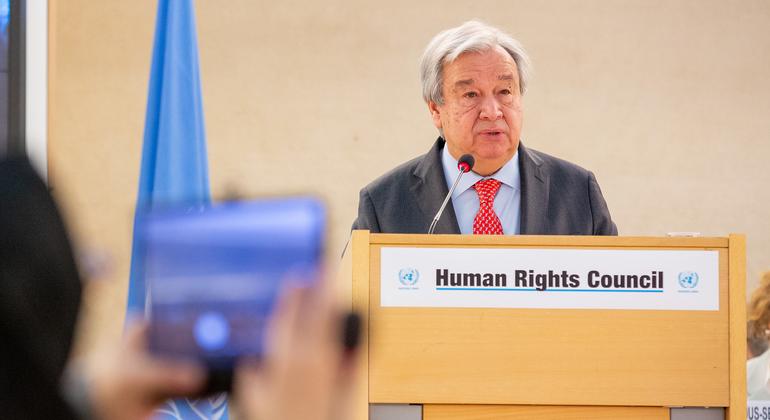
With eyes on Gaza, Ukraine, UN chief launches rights protection pledge


With eyes on Gaza, Ukraine, UN chief launches rights protection pledge

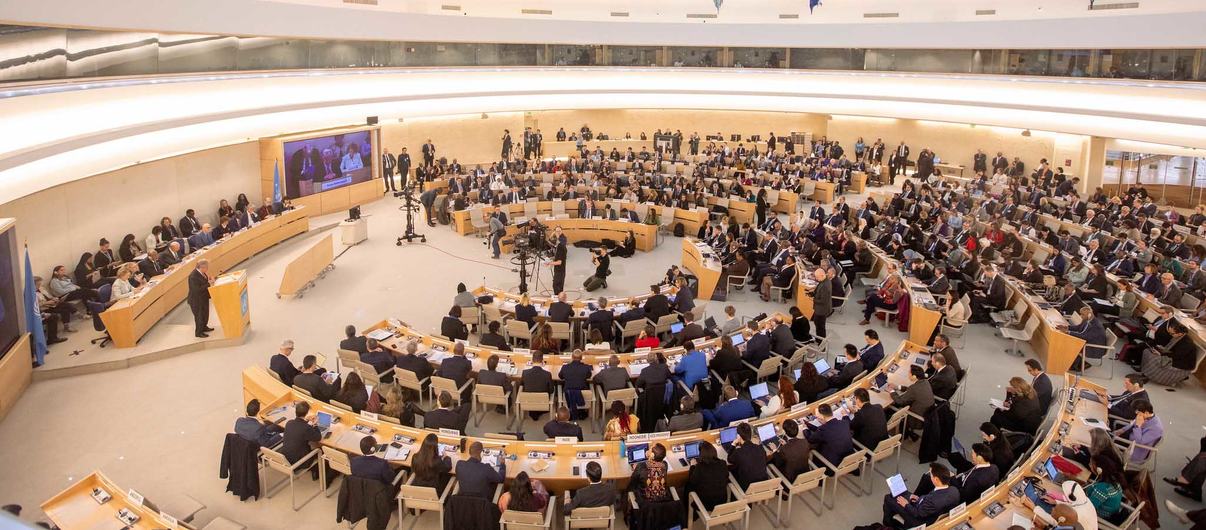
The UN Human Rights Council gathered in Geneva for its 55th session.
UN Photo / Elma Okic
 
The UN Human Rights Council gathered in Geneva for its 55th session.


26 February 2024
Human Rights

An all-out Israeli offensive on Rafah would spell the end for UN-led humanitarian relief to the people of Gaza, UN Secretary-General António Guterres warned on Monday, in a wide-ranging call to the international community to fulfil its “primary responsibility” of promoting and protecting human rights everywhere and for everyone.

Addressing the Human Rights Council in Geneva at the start of its first high-level session of the year, the UN chief insisted that any further extension of Israel’s ground operation in the south of Gaza “would not only be terrifying for more than a million Palestinian civilians sheltering there; it would put the final nail in the coffin of our aid programmes”. 

Rules of war ignored

The top human rights body also heard the UN chief decry how the  “rule of law and the rules of war” were being undermined from Ukraine to Sudan and from Myanmar to the Democratic Republic of the Congo and beyond – a theme echoed by the UN’s top human rights official, Volker Türk, and by President of the UN General Assembly, Dennis Francis.

To respond to these emergencies, and in a call for reasoned and long-term solutions to these conflicts and other serious threats to human rights around the world, UN chief Mr. Guterres emphasised that the Summit of the Future in September would be the ideal opportunity for Member States “to step up and re-commit to working for peace and security rooted in human rights”. 

Protection pledge

UN Secretary-General António Guterres addresses the 55th session of the Human Rights Council.
UN Photo / Elma Okic

Mr. Guterres also pledged the global body’s system-wide support to all governments in this endeavour, announcing the launch of the United Nations Agenda for Protection, in partnership with the UN human rights office, OHCHR.

“Under this Agenda, the United Nations, across the full spectrum of our work, will act as one to prevent human rights violations, and to identify and respond to them when they take place,” the Secretary-General said. “That is the Protection Pledge of all United Nations bodies: to do their utmost to protect people.”

Disinformation target

Tweet URL
volker_turk

Welcoming the UN chief’s initiative and offering to help advance people’s fundamental rights “in every circumstance, no matter how challenging”, UN High Commissioner for Human Rights Türk cautioned that the global body’s work was at serious risk from “continued attempts to undermine the legitimacy and work of the United Nations and other institutions”.

Mr. Türk explained that these attempts “include disinformation that targets UN humanitarian organizations, UN peacekeepers and my Office. The UN has become a lightning rod for manipulative propaganda and a scapegoat for policy failures”. 

This malign influence was “profoundly destructive of the common good, and it callously betrays the many people whose lives rely on it”, insisted the UN High Commissioner for Human Rights.

General Assembly chief’s alert

Echoing warnings that international humanitarian law and even the UN Charter were coming under increasing threat around the world, the head of the UN General Assembly, Dennis Francis, told the Human Rights Council that it was time for all global citizens to “do our part”.

Today, 75 years after the adoption of the Universal Declaration of Human Rights – “humanity’s cherished Magna Carta”  –  conflict, the impact of climate change “including the existential threat of sea-level rise” – had left 300 million people in dire need of humanitarian assistance, some 114 million of them being refugees and other displaced people, he warned. 

“We must not simply stand-by as callous observers, less we be seen as complicit in the expanding web of dehumanization…We must do our part,” he said.

Highlighting the crisis in the Middle East, the UN General Assembly President said that the suffering of innocent civilians in Gaza had reached an “unbearable tipping point”.

More than 90 per cent of the enclave’s population had been displaced and was now “teetering on the brink of starvation and trapped in the depths of an impending though avoidable public health catastrophe”, Mr. Francis told the forum’s 47 Member States.

Tweet URL
un_hrc

And as war continues in Gaza – triggered by unprecedented Hamas-led attacks and bloodshed that left some 1,200 butchered and more than 250 taken hostage on 7 October, “the most vulnerable suffer most”, Mr. Francis continued; “hostages and their families are living in anguish; women and children are facing desperate and uncertain futures; and innocent civilians are unjustly caught in life threatening crossfire.” 

In the name of humanity

To help the most vulnerable – not only in Gaza but in Ukraine, Haiti and Yemen, Sudan, the wider Sahel and Myanmar – the General Assembly President insisted: “we must not fail the victims – the victims of human rights violations… We must never tolerate or ignore the flagrant disregard for the rights and freedoms our forebearers worked so arduously to define and to codify. Nor should we ignore the systemic impunity with which it is perpetrated.”

Mr. Francis also insisted on the need for an “immediate humanitarian ceasefire” in Gaza and for humanitarian corridors to deliver aid to some 1.5 million homeless Palestinians “in the name of humanity”. 

The appeal by the President of the General Assembly came days after receiving a letter from the head of the UN agency for Palestinians, UNRWA, warning of a “monumental disaster” in Gaza and the West Bank, amid repeated Israeli calls to dismantle it and the freezing of $450 million in funding by dozens of donors.

“I implore  donor States to uphold and sustain their contributions to the critical funding necessary for UNRWA to discharge its mandated responsibilities to the Palestinians. Even in the midst of the current extraordinary challenges, UNRWA has been and continues to be an indispensable lifeline of support to the Palestinians,” Mr. Francis said.


https://news.un.org/en/story/2024/02/1146942


https://creativecommons.org/licenses/by/3.0/legalcode

среда, 21 февраля 2024 г.

Gaza has become a ‘death zone’, warns UN health chief


Gaza has become a ‘death zone’, warns UN health chief

WHO led two crucial missions to transfer 32 critical patients from Nasser hospital, in southern Gaza on 18 and 19 February.
© WHO/Christopher Black
 
WHO led two crucial missions to transfer 32 critical patients from Nasser hospital, in southern Gaza on 18 and 19 February.


21 February 2024
Peace and Security

An “inhumane” health and humanitarian situation now prevails across Gaza with conditions continuing to deteriorate, the head of the UN World Health Organization warned on Wednesday.

“Gaza has become a death zone,” Tedros Adhanom Ghebreyesus, WHO Director-General told correspondents at a press briefing in Geneva.

“Much of the territory has been destroyed. More than 29,000 people are dead; many more are missing, presumed dead; and many, many more are injured,” he added.

Across the war-ravaged Gaza Strip, severe malnutrition has shot up dramatically since the start of the war on 7 October, from under one per cent of the population, to over 15 per cent in some areas.

“This figure will rise the longer the war goes on and supplies [are] interrupted,” Tedros said, expressing deep concern that agencies such as the World Food Programme (WFP) are unable to access the north.

WFP suspended its aid deliveries there due to lack of security for both humanitarian personnel and those seeking assistance.

‘What world do we live in’

“What type of world do we live when people cannot get food and water, and when people who cannot even walk are unable to receive care?”, he lamented.

“What type of world do we live in when health workers are at risk of being bombed as they carry out their life saving work [and] hospitals must close because there is no more power or medicines to help save patients?”

Tweet URL
UN_News_Centre

He underscored the need for an immediate ceasefire, for hostages to be released, the guns to fall silent, and unfettered humanitarian access.

“Humanity must prevail,” Tedros said.

Hospital evacuations

Over the past three days the UN health agency and partners carried out several emergency missions to the Nasser medical complex in Khan Younis, southern Gaza, to evacuate critically ill patients, including children.

“With the intensive care units no longer working, WHO helped move patients, many of whom cannot even walk,” Tedros said.

Around 130 sick and injured patients and at least 15 doctors and nurses remain in the hospital, amidst ongoing Israeli military operations, no electricity and running water and dwindling lifesaving medical supplies.


https://news.un.org/en/story/2024/02/1146792


https://creativecommons.org/licenses/by/3.0/legalcode

понедельник, 11 декабря 2023 г.

Gaza: WHO adopts resolution on access for lifesaving aid


Gaza: WHO adopts resolution on access for lifesaving aid

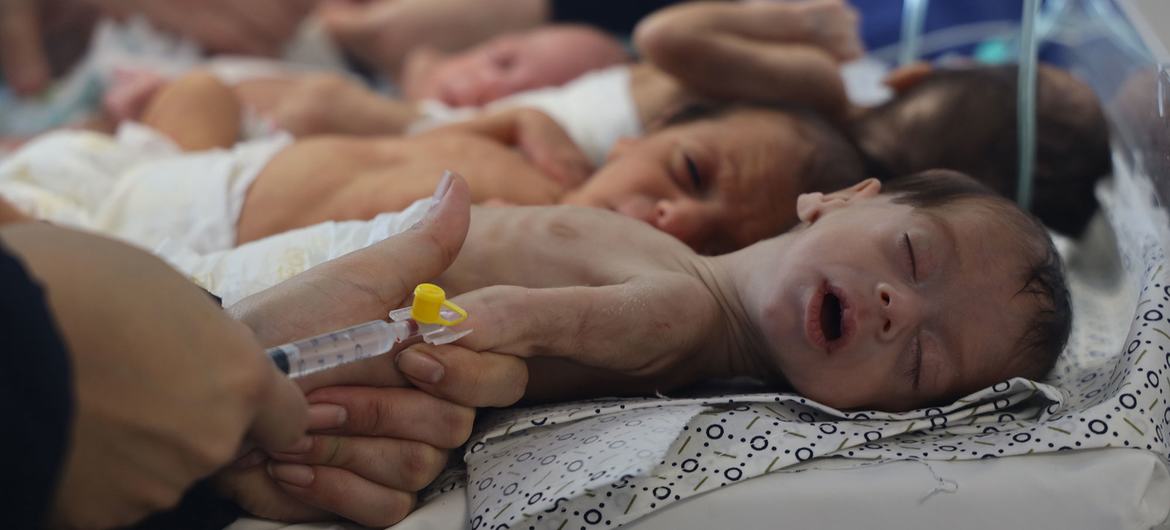
Babies at Gaza's Al-Shifa hospital being prepared for evacuation (file photo).
© UNICEF/Eyad El Baba
 
Babies at Gaza's Al-Shifa hospital being prepared for evacuation (file photo).
10 December 2023Humanitarian Aid

In a special emergency session held on Sunday in Geneva, the Executive Board of the World Health Organization (WHO) adopted a resolution by consensus, aimed at addressing the catastrophic humanitarian situation in the Gaza Strip.

This is the first time since 7 October that a resolution on this conflict has been adopted by consensus within the UN system, the UN health agency noted. It underscores the importance of health as a universal priority, in all circumstances, and the role of healthcare and humanitarianism in building bridges to peace, even in the most difficult of situations.

Tweet URL

The resolution calls for “immediate, sustained and unimpeded passage of humanitarian relief, including the access of medical personnel.”

It calls on “all parties to fulfill their obligations under international law…and reaffirms that all parties to armed conflict must comply fully with the obligations applicable to them under international humanitarian law related to the protection of civilians in armed conflict and medical personnel.”

The resolution also commends WHO and health cluster partners in the field for remaining and delivering.

The Executive Board of WHO consists of 34 people all qualified in the health field, each one designated by a Member State that has been elected to serve by the World Health Assembly.

On Saturday, amid what WHO described as extremely difficult circumstances, the health agency and partners working on the ground in Gaza delivered supplies for up to 1,500 patients and transferred patients from the Al-Ahli Hospital in the north to a facility in the south.

Attacks on healthcare must stop

WHO Director-General Dr Tedros Adhanom Ghebreyesus said in his opening remarks that he deplored “the barbaric and unjustifiable attacks by Hamas on Israel of 7 October, which killed more than 1,200 people, and added that he was “appalled by reports of gender-based violence during the attacks, and by the mistreatment of hostages.”

He expressed relief that 114 hostages have been released and repeated his call for them all to be freed.

“I well understand the anger, grief and fear of the Israeli people following the horrific attacks two months ago”, Tedros said.

“I also understand the anger, grief and fear of the people of Gaza, who had already suffered through 16 years of blockade, and are now enduring the destruction of their families, their homes, their communities and the life they knew.

Since the 7th of October, WHO has verified more than 449 attacks on healthcare in Gaza and the West Bank, and 60 attacks on healthcare in Israel, he said, adding that “healthcare should never be a target.”

“I also grieve the loss of more than 100 of our UN colleagues in Gaza, including our own Dima Alhaj, who was killed alongside her six-month old son, her husband and her two brothers.”

The resolution calls on Tedros to report on the public health implications of the crisis; strengthen technical and material assistance, and to strengthen partnerships with other care providers.

“But I must be frank with you: these tasks are almost impossible in the current circumstances”, he lamented.

He applauded the UN chief’s invocation of the powerful emergency tool Article 99 last week, and António Guterres’s call for a humanitarian ceasefire, saying it was “the only way to truly protect and promote the health of the people of Gaza.”

Tedros expressed deep regret that the Security Council was unable to adopt a resolution on such a ceasefire last Friday.

Resolution ‘a starting point’

He said despite “difficult” negotiations over the Executive Board’s text, he appreciated the spirit of cooperation and compromise on the part of board members to reach consensus on the resolution.

In remarks delivered throughout the day, many Member States offered sympathies for the loss of life of civilians, as well as health workers and UN employees.

In his closing remarks, WHO chief Tedros said the adoption of the resolution was a starting point. “It does not resolve the crisis. But it is a platform on which to build.”

He added that “without a ceasefire, there is no peace. And without peace, there is no health. I urge all Member States, especially those with the most influence, to work with urgency to bring an end to this conflict as soon as possible.”

In a statement released in response to the resolution, Israel’s Ambassador to the UN in Geneva, Meirav Eilon Shahar, deplored the lack of reference to hostages in the text.

The resolution also fails to condemn “Hamas terrorism” or the group’s use of human shields, she said, branding the text a “complete moral failure for the international community.”


https://news.un.org/en/story/2023/12/1144627
https://creativecommons.org/licenses/by/3.0/legalcode

четверг, 5 октября 2023 г.

Gaza: Forcing patients to flee hospitals a 'death sentence' warns WHO


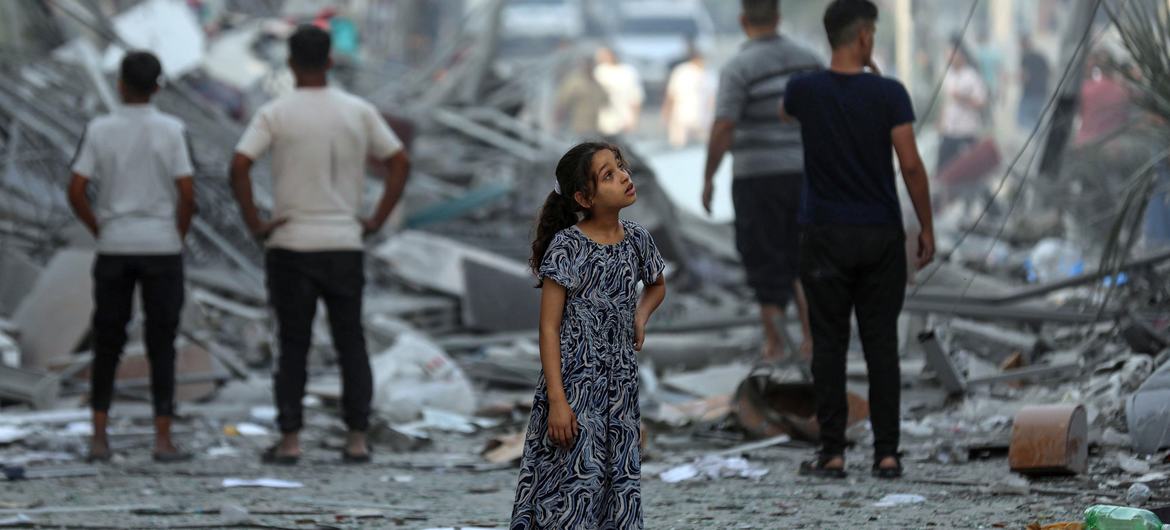
Neighbourhoods in Gaza have been razed by airstrikes.
© UNICEF/Mohammad Ajjour
 
Neighbourhoods in Gaza have been razed by airstrikes.
14 October 2023
Peace and Security

The UN Palestine refugee agency (UNRWA) issued an urgent call on Saturday for Israeli Authorities to protect all civilians sheltering in Gaza.

The statement came as the Israeli-imposed deadline for some 1.1 million civilians to leave the northern part of the enclave, ahead of what is expected to be a major advance into Gaza by Israeli ground forces, expired.

Tweet URL

“UNRWA shelters in Gaza and northern Gaza are no longer safe. This is unprecedented,” said the statement. 

The agency reminded that according to the rules of warfare, civilians, hospitals, schools, clinics and United Nations premises cannot be a target.

“UNRWA is sparing no efforts to advocate with parties to the conflicts to meet their obligations under international law to protect civilians, including those seeking refuge in UNRWA shelters,” the agency emphasized.  

UNRWA pointed out that many of the vulnerable, particularly pregnant women, children, the elderly and persons with disabilities simply will be unable to flee south.

“They have no choice and must be protected at all times.”

Taps run dry

UNRWA chief Philippe Lazzarini said that with water supplies running dry due to Israel cutting off all utilities to Gaza, "it has become a matter of life and death".

"It is a must. Fuel needs to be delivered now into Gaza to make water available for two million people", he said.

More than 1,300 people were killed in Israel after Hamas fighters raided settlements close to Gaza last Saturday. In response, more than 2,200 have been killed during Israel’s aerial offensive on Gaza, according to Palestinian authorities.

On Friday, UN Secretary-General António Guterres said it would be “impossible” for civilians in Gaza to comply with the evacuation order without devastating humanitarian consequences.

The UN chief called on the world to unite in support of the fundamental principle of protecting civilians, and “finding a lasting solution to this unending cycle of death and destruction.”

‘Agonising choice’ for hospital workers amid Israeli order to evacuate

The World Health Organization (WHO) on Saturday strongly condemned Israel’s repeated order for 22 hospitals in northern Gaza to be evacuated, describing it as a “death sentence” for the sick and injured.

With around 2,000 desperately ill patients inside their wards, WHO said the forced evacuation of both patients and health workers “will further worsen the current humanitarian and public health catastrophe.”

The statement said the lives of those in intensive care or who rely on life support – including newborns in incubators and those needing hemodialysis – now hang in the balance.

“Health facilities in northern Gaza continue to receive an influx of injured patients and are struggling to operate beyond maximum capacity. Some patients are being treated in corridors and outdoors in surrounding streets due to a lack of hospital beds”, said WHO.

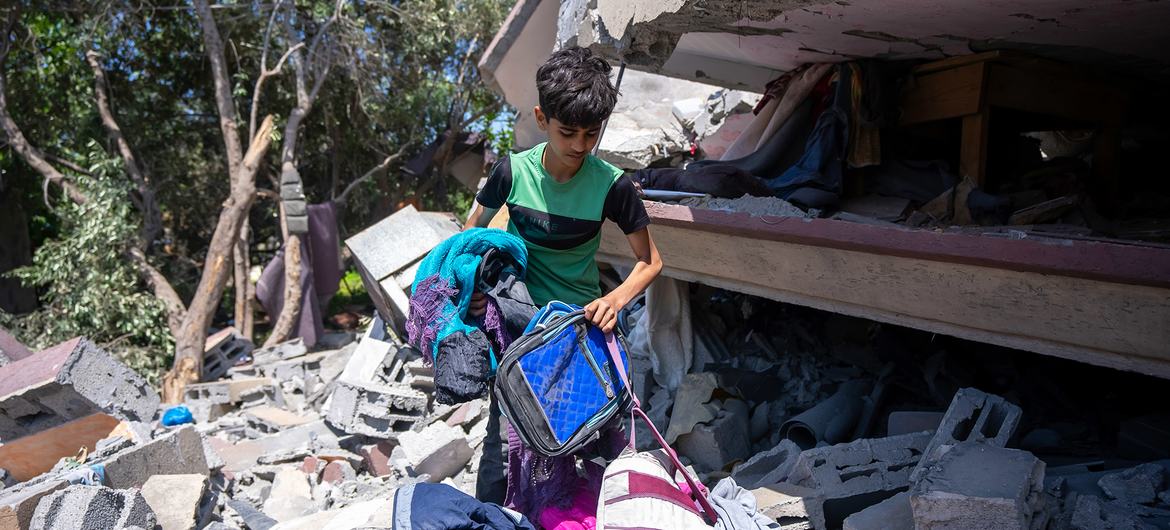
A boy picks through his belongings in the remains of his destroyed home in Gaza.
WHO
 
A boy picks through his belongings in the remains of his destroyed home in Gaza.

'Tantamount to a death sentence'

“Forcing more than 2000 patients to relocate to southern Gaza, where health facilities are already running at maximum capacity and unable to absorb a dramatic rise in the number patients, could be tantamount to a death sentence.”

Those running the hospitals now face an agonizing choice, the agency said: either abandon the critically ill, put their own lives at risk by staying amid the bombing, or endanger patients’ lives “while remaining on site to treat patients, or endanger their patients’ lives “while attempting to transport them to facilities that have no capacity to receive them.”

The agency said that overwhelmingly, staff have chosen to stay behind rather than risk lives by moving those who are critically ill.

WHO airlifts vital health supplies

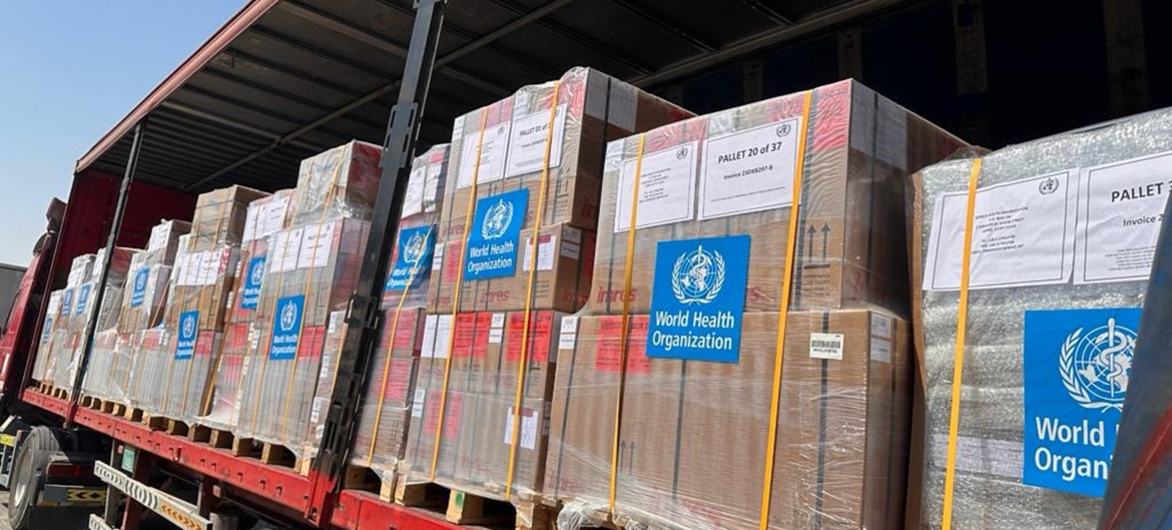
A plane carrying life-saving health supplies from the WHO logistics hub in Dubai landed in Egypt on Saturday to aid civilians in Gaza – as soon as access across the border into the enclave can be established.

Health supplies for Gaza are dispatched from the WHO logistics hub in Dubai.
WHO
 
Health supplies for Gaza are dispatched from the WHO logistics hub in Dubai.

The shipment includes trauma medicines, healthcare essentials, and equipment sufficient to treat around 1,200 who have suffered injuries during the bombing raids and around 1,500 chronically ill patients.

The cargo also includes basic health supplies to meet the needs of 300,000 others, including pregnant women.

With hospitals in Gaza either completely out of action, or simply overwhelmed, the supplies will help save the lives of the wounded wherever they can find shelter, WHO said. 

Access essential

WHO said it was critical for the Rafah crossing on the Egyptian border to be reopened. “While the Egyptian side of the crossing is accessible, the Israeli side remains closed”, said the statement. 

“Every hour these supplies remain on the Egyptian side of the border, more girls and boys, women, and men, especially those vulnerable or disabled, will die while supplies that can save them are less than 20 kilometres (12 miles) away.”

WHO said it would be working with the Egyptian and Palestinian Red Crescent Societies to ship the supplies across the border into Gaza, as soon as practicable. 

WHO Director-General Tedros Adhanom Ghebreyesus met Egyptian President Abdel Fattah El-Sisi on Monday who endorsed the request to facilitate medical aid across the border into Gaza.

Soundcloud

‘I fear the worst is yet to come’: UN relief chief

Following a week of “utter anguish and devastation” for civilians in both Israel and the Occupied Palestinian Territory, the UN relief chief on Saturday said he fears “the worst is yet to come.”

“In Israel, families are reeling from the horror of last Saturday’s attack”, said Humanitarian Affairs chief Martin Griffiths. “More than a thousand people have been killed and many more have been injured. Over 100 people are held captive.

“In Gaza, families have been bombed while inching their way south along congested, damaged roads, following an evacuation order that left hundreds of thousands of people scrambling for safety but with nowhere to go.” 

The past week has been a test for humanity, and humanity is failing - Martin Griffiths

He warned that the humanitarian situation in the Gaza Strip, “already critical, is fast becoming untenable.”

The OCHA chief warned that violence is on the rise in the occupied West Bank, with a surge in civilian deaths and injuries leaving families “facing ever greater movement restrictions.”

“And in Lebanon, the risk of the conflict spilling into the country is a major concern.”

He called for all civilians and civilian infrastructure, including humanitarian workers, to be protected by all combatants.

Mr. Griffiths echoed the UN chief’s appeal saying all countries with influence must exert it to ensure respect for the rules of war and to avoid any further escalation and spillover.

“The past week has been a test for humanity, and humanity is failing.”

Soundcloud

UN independent expert warns of ‘mass ethnic cleansing’

An independent UN-appointed human rights expert warned on Saturday that Gaza’s civilian population was now in grave danger of “mass ethnic cleansing” on the international community to urgently mediate a ceasefire.

Tweet URL

“The situation in the occupied Palestinian territory and Israel has reached fever pitch,” said Francesca Albanese, UN Special Rapporteur on the situation of human rights in the Palestinian Territory occupied since 1967. 

She called on the UN and Member States to intensify efforts to mediate an immediate ceasefire between the parties, before “a point of no return” is reached. 

The UN Human Rights Council-appointed expert reminded the international community of its responsibility to prevent and protect populations from atrocity crimes.

‘Both deserve to live in peace’

“Time is of the essence. Palestinians and Israelis both deserve to live in peace, equality of rights, dignity and freedom,” Ms. Albanese said. “Any continued military operations by Israel have gone well beyond the limits of international law. The international community must stop these egregious violations of international law now, before tragic history is repeated.”

Special Rapporteurs and other independent experts work on a voluntary basis, they are not UN staff and do not receive a salary for their work.

Lebanon frontier: Peacekeepers warn of further 'tragedies' following journalist’s death 

The UN peacekeeping force in Lebanon on Saturday extended its heartfelt condolences to the family of a Reuter’s news agency video journalist who was killed in the south of the country, covering the exchange of fire between Israeli forces and Hezbollah militia.

In a statement, UNIFIL, the UN Interim Force in Lebanon, confirmed there had been firing across the Blue Line, the unofficial frontier between the two countries, with Israeli forces striking a position on Friday close to the village of Alma As Shab.

According to Reuters, Issam Al Abdullah, a Lebanese videographer, was killed during the exchange of fire and six other journalists were injured.

UNIFIL wished the injured media workers a swift recovery and stressed that it could not say exactly how the group had been hit.

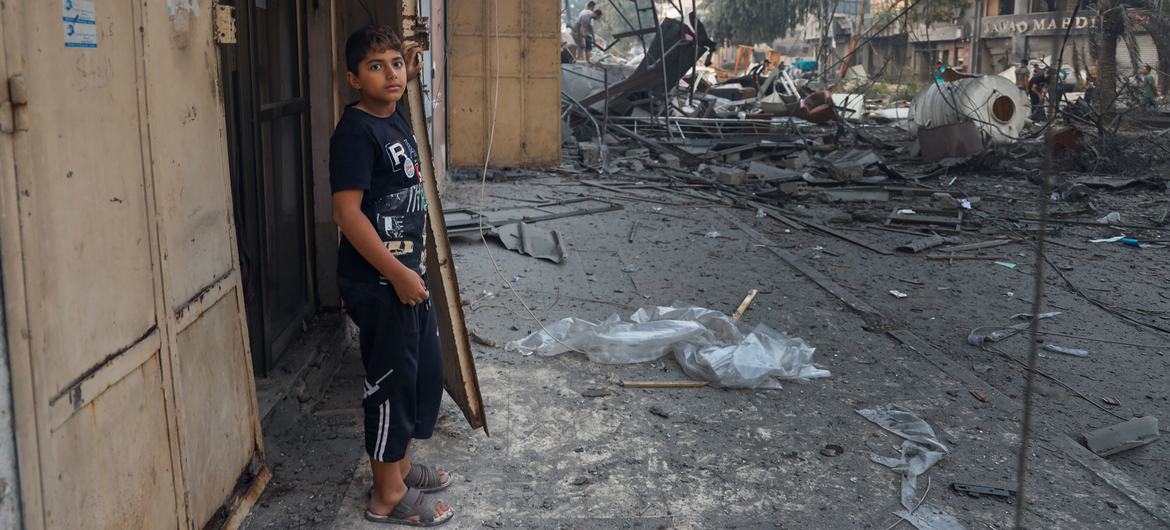
An 11-year-old boy stands at the entrance to his home in Gaza City.
© UNICEF/Mohammad Ajjour
 
An 11-year-old boy stands at the entrance to his home in Gaza City.

Stop the escalation

“If the situation continues to escalate, we will most likely see more such tragedies. Any civilian loss of life is a tragedy and should be prevented at all times.

“This is why we urge everyone to cease fire and allow us, as peacekeepers, to help find solutions”, the statement added. “No one wants to see more people hurt or killed.”

According to news reports, Israeli authorities have pledged to investigate the incident.


https://news.un.org/en/story/2023/10/1142347
https://creativecommons.org/licenses/by/3.0/legalcode