Избранное сообщение

Показаны сообщения с ярлыком climate change. Показать все сообщения

среда, 28 мая 2025 г.

Climate change: World Likely to Breach 1.5°C limit in next five years


Glaciers are retreating due to climate change including in Chile .
   

28 May 2025 
Climate and Environment

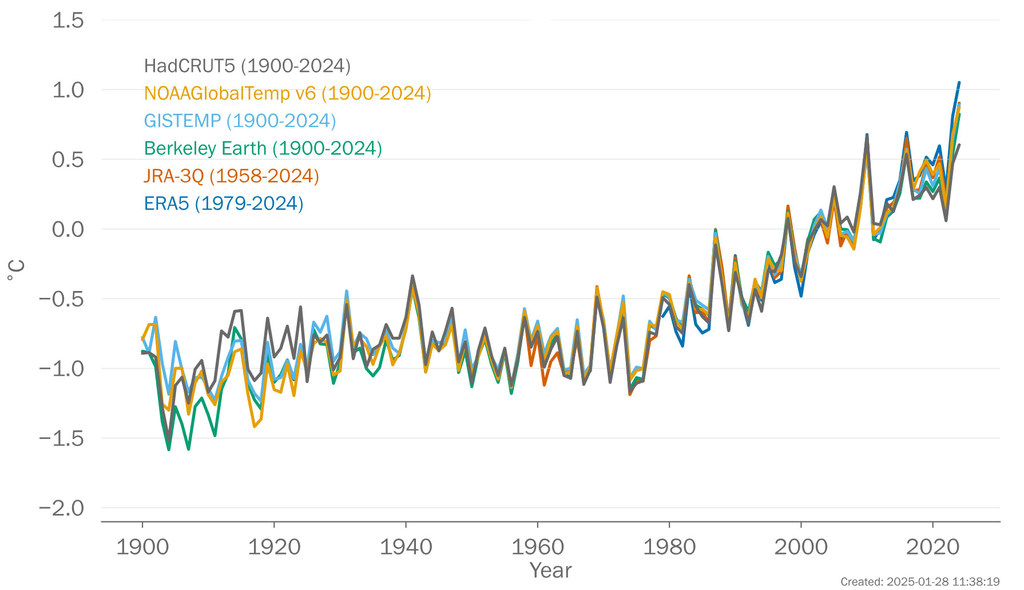
2024 was the warmest year on record – but the heat is far from over. A new report from the World Meteorological Organization (WMO) warns that global temperatures are likely to continue rising, with an 80 per cent chance that at least one year between 2025 and 2029 will surpass the 2024 record.

According to the Global Annual to Decadal Climate Update, the planet is predicted to experience temperatures between 1.2°C and 1.9°C above pre-industrial levels (1850–1900) over the next five years.

Breaching critical thresholds
In 2024, the WMO estimated that the average global temperature was between 1.34°C and 1.41°C higher than pre-industrial levels (1850-1900). The WMO now projects the 20-year average warming for 2015–2034 to reach around 1.44°C above pre-industrial levels.

The report finds a staggering 86 per cent chance that global average temperatures will exceed 1.5°C above pre-industrial levels in at least one of the next five years, and a one per cent chance of one of those years exceeding 2°C of warming.

There is a 70 per cent chance that the five-year average itself will exceed this 1.5 degree threshold.

The WMO stressed that the 1.5°C Paris Agreement target refers to long-term averages over 20 years, meaning its threshold has not been breached quite yet.

However, these near-term spikes are warning signs of an accelerating climate crisis.

The forecast also highlights regional precipitation impacts, including wetter-than-average conditions expected in the African Sahel, northern Europe, and South Asia. Conversely, the Amazon region could see continued drought.

Arctic Warming Accelerates
The situation is even more catastrophic in the Arctic than in the rest of the world. The average Arctic temperature over the next five winters (November to March) is expected to be 2.4°C warmer than the 1991–2020 average, more than three and a half times the increase in the global average temperature.

Sea ice is expected to keep shrinking, particularly in the Barents, Bering, and Okhotsk Seas, contributing to rising sea levels and disrupted weather patterns worldwide.

As the world enters this critical window, the UN agency urged climate action to prevent even more dangerous warming in the decades ahead and keep long-term warming below the 1.5°C limit

https://news.un.org/en/story/2025/05/1163751

https://creativecommons.org/licenses/by/4.0/legalcode

вторник, 13 мая 2025 г.

Climate change takes increasingly extreme toll on African countries


Africa faces "urgent and escalating realities" of climate change such as persistent drought and deadly flooding, warned Celeste Saulo, head of the World Meteorological Organization (WMO), which supports adaptation efforts.
© Unsplash/Florian Berger
 
Africa faces "urgent and escalating realities" of climate change such as persistent drought and deadly flooding, warned Celeste Saulo, head of the World Meteorological Organization (WMO), which supports adaptation efforts.


By Juliette Maigné
12 May 2025 

Climate and Environment

Devastating floods in South Sudan in recent months left thousands of herders without their most precious possessions: goats, cows and cattle. The animals are central to people’s lives and age-old customs including marriage and cultural traditions. All risk being swept away or scorched by the ravages of climate change.

Extreme weather and climate change impacts are hitting every single aspect of socio-economic development in Africa and exacerbating hunger, insecurity and displacement,” the UN World Meteorological Organization (WMO) said on Monday.

WMO said that average surface temperature across Africa in 2024 was approximately 0.86°C above the 1991–2020 average.

Tweet URL

North Africa recorded the highest temperature change at 1.28°C above the 1991-2020 average, making it the fastest-warming sub-region of Africa.

Marine heat spike

Sea surface temperatures were also the highest on record. “Particularly large increases in sea surface temperatures have been observed in the Atlantic Ocean and Mediterranean Sea,” WMO said.
Data shows that almost the entire ocean area around Africa was affected by marine heatwaves of strong, severe or extreme intensity last year and especially the tropical Atlantic.

Head of WMO, Celeste Saulo, warned that climate change is an urgent and escalating problem across the African continent “with some countries grappling with exceptional flooding caused by excessive rainfall and others enduring persistent droughts and water scarcity”.

El Niño influence

Highlighting Africa’s particular vulnerability to our warming planet – caused mainly by rich nations burning fossil fuels – the UN agency said that floods, heatwaves and droughts forced 700,000 people out of their homes across the continent last year.

WMO also noted that the El Niño phenomenon was active from 2023 into early 2024 and “played major roles in rainfall patterns” across Africa.

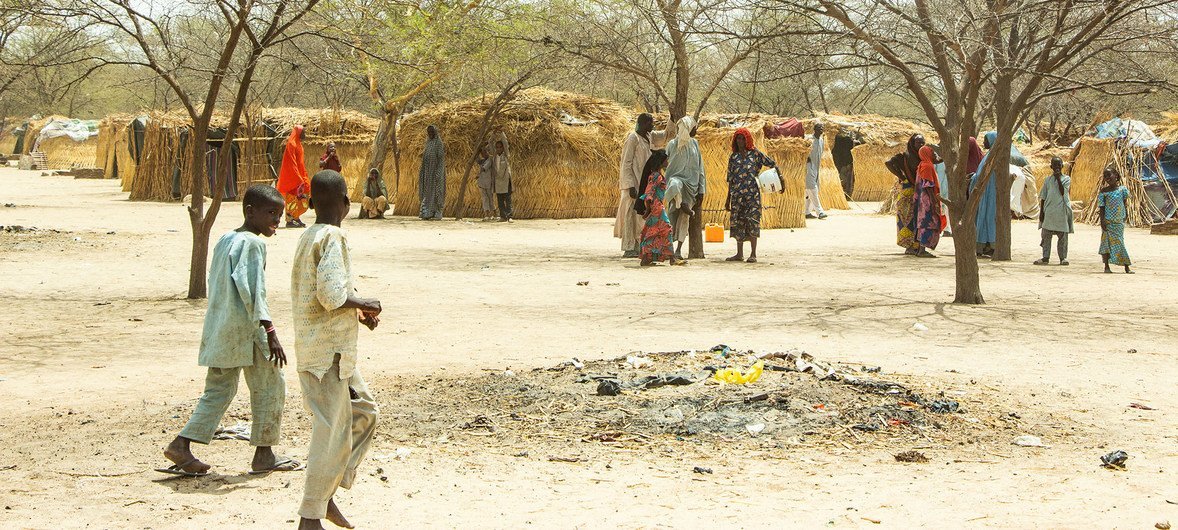
In northern Nigeria alone, 230 people died in floods last September that swept across the capital of Borno state, Maiduguri, displacing 600,000, severely damaging hospitals and contaminating water in displacement camps.

Regionally, rising waters caused by torrential rains ravaged West Africa and impacted a staggering four million people. 

Conversely, Malawi, Zambia and Zimbabwe suffered the worst drought in at least two decades, with cereal harvests in Zambia and Zimbabwe 43 per cent and 50 per cent below the five-year average, respectively.

Heat shock

Heatwaves are also a growing threat to health and development and Africa, WMO said, noting that the past decade has also been the warmest on recordDepending on the dataset, 2024 was the warmest or second-warmest year.

Blistering temperatures already impact children’s education, with schools closing in March 2024 in South Sudan as temperatures reached 45°C. Worldwide, at least 242 million pupils missed school because of extreme weather in 2024, many of them in sub-Saharan Africa, according to the UN Children’s Fund, UNICEF.

Beyond education, rising temperatures across the continent are making Africa more water-scarce and food-insecure, with North African countries the hardest-hit.

Annual Regional mean temperature for WMO RA 1 Africa from 1900-2024.
© WMO
 
Annual Regional mean temperature for WMO RA 1 Africa from 1900-2024.

South Sudan focus

Erratic weather patterns across Africa are also hindering farming, driving food insecurity and displacing people who have already had to flee war already, WMO explained.

Last October, for example, flooding affected 300,000 people in South Sudan – a hefty figure for a nation of 13 million, scarred by years of civil strife and where infrastructure is poor.

The disaster wiped out cattle, adding up to between 30 and 34 million farm animals – roughly two per inhabitant – and stagnant water fuelled diseases. Families who had been self-sufficient had to seek help once again.

“When someone slides back into being fed, it affects their dignity,” said Meshack Malo, South Sudan Country Representative for the UN Food and Agriculture Organization (FAO).

At the forefront of climate change, the troubled East African country is already dealing with a crippling economic crisis, mass displacement made worse by the war in neighbouring Sudan, as well as escalating tensions at home and pervasive violence.

Fighting in Sudan has derailed the South Sudanese economy, which relies on oil exports for 90 per cent of its national revenue, reports indicate.

Destructive cycle

When South Sudan is not hit by floods, it is plagued by drought.

“This cyclic change between floods and drought, makes the country affected almost a good part of the year,” said Mr. Malo.  

Flooding has worsened and become more intense and frequent in recent years.

“That means that any short rain then can easily trigger the flooding, because water and the soil remain quite saturated,” Mr. Malo added. “So that intensity and frequency makes this situation worse.”

With road access disrupted for aid trucks, UN agencies such as the World Food Programme (WFP) must airlift food assistance – a costly, impractical solution, as humanitarian funding dwindles.

Pushing back  

In the South Sudanese town of Kapoeta, the FAO has helped to reduce the number of dry months from six to two, by harvesting and storing water to protect crops at risk from climate change.  

“The impact of drought is no longer felt as much,” FAO’s Mr. Malo said, speaking to UN News from the capital, Juba.

Soundcloud

Worth its salt

In countries that lack water resources for crop irrigation, climate resilience and adaptation are critical, Dr. Ernest Afiesimama of the WMO Regional Office for Africa in Addis Ababa, told journalists.

And while desalination – the process of removing salt from seawater – may be a solution for some, for many African nations it is not viable.

Rather than turning to desalination as a panacea, investing in adaptation measures including early warning systems for action and preparedness is urgently needed, environmental scientists say.  “Considering the challenges in sub-Saharan Africa, [desalination] presents a complex economic, environmental and social challenge, and there is a question about its long-term sustainability and equity,” said Dr. Dawit Solomon, Contributor at Accelerating Impacts of CGIAR Climate Research for Africa (AICCRA).  

“Africa is facing a high climate change bill. Imagine the continent which is struggling economically and then facing this additional risk multiplier,” Dr. Salomon added.


https://news.un.org/en/story/2025/05/1163126


https://creativecommons.org/licenses/by/4.0/legalcode

среда, 23 апреля 2025 г.

Local leaders raise temperature on action to fight climate change


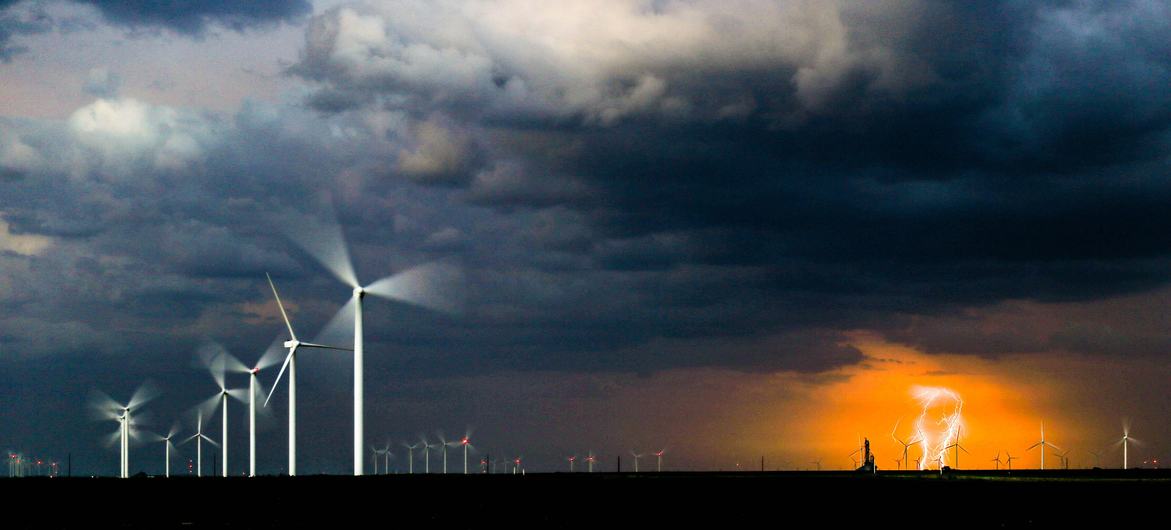
Windmills generate electrify in the US state of Indiana as a storm approaches.
© Unsplash/Cassie Boca
 
Windmills generate electrify in the US state of Indiana as a storm approaches.

22 April 2025 .


City officials, state governors and other leaders across the world are ensuring their localities can benefit from initiatives that tackle climate change and can prosper in an uncertain future. 

From Morocco to Maharastra, California to Quebec, the UN’s Local Leaders series highlights how strong leadership is positively impacting on people’s lives in both developing and developed countries.

On  International Mother Earth Day which is celebrated annually on 22 April, the series aims to encourage broader climate action and demonstrate the importance of local leadership in tackling global challenges.

Meet some of the local leaders inspiring change.

Maharashta, India: Pankaja Munde, Minister for Environment and Climate Change of Maharashtra

“Maharashtra is one of the five states in the country most vulnerable to the impacts of climate change. Our state witnessed 142 extreme weather events in 2024.  

Our initiatives focus on decarbonising the building sector, incentivising electric vehicles, expanding green areas, fostering climate-resilient farming and promoting bamboo cultivation as an alternative to fossil fuels. 

The Mazi Vasundhara Abhiyan (My Earth Mission), the state government’s flagship climate initiative…. demonstrates the power of grassroots mobilization in addressing the climate challenge and underscores the vital role communities can play in furthering the climate agenda.”

Read more here.

California, USA: Gavin Newsom, Governor 

“This year started with catastrophic firestorms in Los Angeles, but Californians have long seen the intensifying impacts of climate change firsthand — hotter hots, drier dries, and stronger, more severe storms.

 Since 2014, the [cap-and-trade] programme has driven over $11 billion in climate investments, with more than 75 per cent of those dollars flowing directly into low-income and frontline communities. 

California is showing that you don’t have to choose between a strong economy and bold climate leadership.

Read more here.

Guelmim-Oued Noun, Morocco: Mbarka Bouaida, President of the Regional Council

“The region is experiencing increasingly irregular rainfall, prolonged droughts, and advancing desertification. This is placing significant stress on our water resources, ecosystems, and agricultural productivity. 

Our strategy includes investments in seawater desalination, hill dams, artificial aquifer recharge, and wastewater reuse.

This initiative delivers measurable environmental and social benefits. It strengthens climate resilience by improving water security, promoting the circular use of resources, and reducing vulnerability in rural communities, which also helps reduce regional disparities.” 

Read more here.

Read more from other Local leaders


https://news.un.org/en/story/2025/04/1162496

https://creativecommons.org/licenses/by/4.0/legalcode

среда, 19 марта 2025 г.

Climate change: Paris Agreement goals still within reach, says UN chief


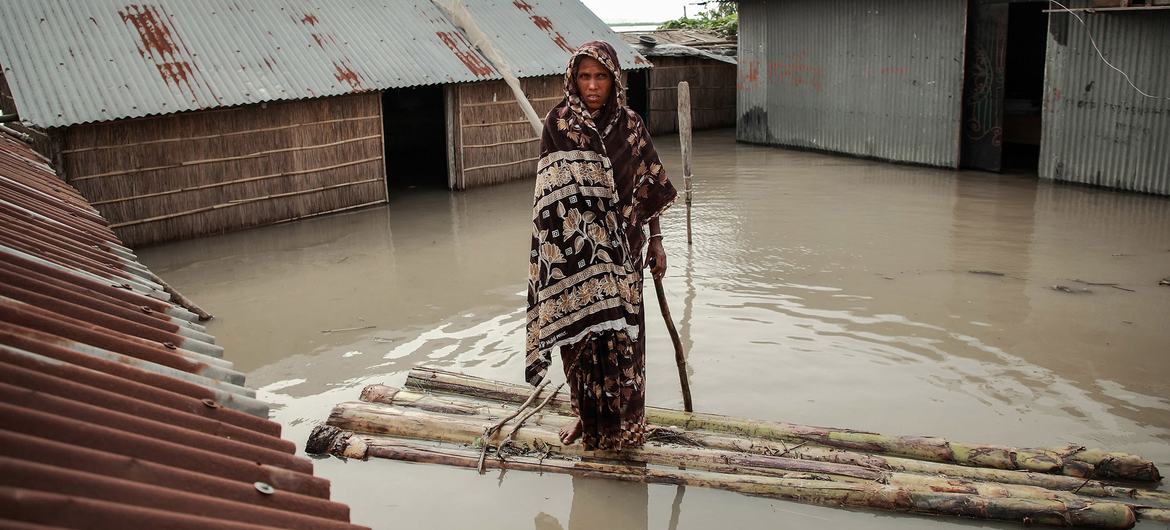
Extreme weather events in 2024 led to the highest number of new displacements recorded in a year since 2008.
© WMO/Muhammad Amdad Hossain
 
Extreme weather events in 2024 led to the highest number of new displacements recorded in a year since 2008.


18 March 2025

 Climate and Environment

The effects of human-driven climate change surged to alarming levels in 2024, with some consequences likely to be irreversible for centuries - if not millennia – according to a new report from the World Meteorological Organization (WMO). 

The latest State of the Global Climate report confirms 2024 as the hottest year since records began 175 years ago, with a global mean temperature of 1.55°C above pre-industrial levels – surpassing the critical warming threshold of 1.5°C for the first time.  

While a single year above 1.5°C doesn't break the Paris Agreement's long-term goals (a long-term average below 1.5°C), it is a stark warning of the urgent need for emissions reduction.

Multiple climate indicators also set new records. Atmospheric carbon dioxide concentrations are at their highest in 800,000 years, and the oceans continue to warm at unprecedented rates.  

Glaciers and sea ice are rapidly melting, contributing to a rise in global sea levels that threatens coastal ecosystems and infrastructure worldwide.

Furthermore, tropical cyclones, floods, droughts, and other hazards last year led to the highest number of new displacements recorded in 16 years, contributing to worsening food crises, and fuelling massive economic losses.  

Leveraging renewables and early warning systems

Despite these alarming trends, UN Secretary-General António Guterres said that the Paris Agreement goals are still achievable and called on world leaders to step up their efforts in response to the mounting crisis.

Our planet is issuing more distress signals – but this report shows that limiting long-term global temperature rise to 1.5 degrees Celsius is still possible. Leaders must step up to make it happen –seizing the benefits of cheap, clean renewables for their people and economies – with new national climate plans due this year’’, he urged.

WMO Secretary-General Celeste Saulo called the report findings a “wake-up call” to the increasing level of deadly risk facing human life, economies and the planet.

“WMO and the global community are intensifying efforts to strengthen early warning systems and climate services to help decision-makers and society at large be more resilient to extreme weather and climate. We are making progress but need to go further and need to go faster”, she said.  

Irreversible changes

The report explains that the record-breaking global temperatures in 2023 and 2024 were primarily driven by increasing greenhouse gas emissions, amplified by the transition from La Niña to El Niño.  

Other factors that might have contributed include solar cycle variation, volcanic activity and changes in ocean circulation.

Scientists also underscore the urgency of taking action, outlining some already irreversible changes – including the rate of sea level rise – that has doubled since satellite measurements began.

Projections show that ocean warming, which reached its highest level on record, will continue over the rest of the 21st century and beyond, even if the world were to significantly reduce emissions. Similarly, ocean acidification will continue to increase for the rest of this century, at rates dependent on future emissions.

Other key findings

  • Globally, each of the past ten years were individually the ten warmest years on record.
  • Each of the past eight years has set a new record for ocean heat content.
  • The 18 lowest Arctic sea-ice extents on record were all in the past 18 years.
  • The three lowest Antarctic ice extents were in the past three years.
  • The largest three-year loss of glacier mass on record occurred in the past three years.
  • In 2024, ocean heat content reached its highest level in the 65-year observational record.
  • Tropical cyclones were responsible for many of the highest-impact events of 2024. These included Typhoon Yagi in Viet Nam, the Philippines and southern China.

https://news.un.org/en/story/2025/03/1161251


https://creativecommons.org/licenses/by/4.0/legalcode

вторник, 17 сентября 2024 г.

Climate change: Ozone layer still well on track for full recovery


The ozone layer can protect the environment.
UN Photo/R. Kollar
 
The ozone layer can protect the environment.


16 September 2024 

Climate and Environment

New evidence in the World Meteorological Organization’s (WMO) annual Ozone and UV Bulletin published on Monday reveals strong evidence that the ozone layer is well on track for a long-term recovery.

The Ozone and UV Bulletin’s release coincides with World Ozone Day which celebrates the implementation of the Montreal Protocol and the later amendment to the pact, known as the Kigali Agreement. That key international agreement saw an end to the production of “damaging ozone-depleting substances.”

Tweet URL

Noting that the ozone layer is on the road to recovery, the UN Secretary-General, António Guterres, said further protection measures are essential.

“The Protocol’s Kigali Amendment, which focuses on phasing down hydrofluorocarbons (HFCs) – powerful climate-warming gases – can contribute to advancing climate mitigation efforts, protecting people and planet,” the Secretary-General said. “And that is needed more than ever, as temperature records continue to shatter.”

Ozone layer recovery

The UN weather agency said ozone could recover to 1980 levels - before any hole in the ozone layer appeared - by around 2066 over the Antarctic if current policies remain.

This could also lead to full recovery of the layer by 2045 over the Arctic and 2040 for the rest of the world.

Matt Tully, Chair of WMO’s Scientific Advisory Group on Ozone and Solar UV Radiation, said the organization’s Global Atmosphere Watch (GAW) Programme is continuously providing crucial support for ozone science by means of observations, analysis, modelling, data stewardship and capacity-building.

It is critical that observations of ozone, ozone-depleting substances and ultraviolet (UV) radiation are maintained with the quality, resolution and global coverage necessary to account for changes in ozone over the coming decades,” Mr. Tully said. “Many factors will influence the expected recovery of ozone, which must be fully measured and understood.”

Soundcloud

Other findings

WMO’s bulletin also provided details on strategies to protect human health and the environment from ultraviolet radiation while exploring the impact of weather patterns and a significant volcanic eruption, on the Antarctic ozone hole in 2023.

It states that the “​​total column ozone values in 2023 were within the range observed in previous years and in line with expectations, owing to the beginning of the decline of ozone-depleting chlorine and bromine in the stratosphere.”

While the bulletin details positive changes to the Antarctic ozone hole, it found that are atmospheric events can have a big impact on how the ozone hole develops periodically.

WMO says scientists still have some gaps in understanding these variables and will continue to monitor the ozone layer closely to explain any unexpected changes.


https://news.un.org/en/story/2024/09/1154366


https://creativecommons.org/licenses/by/4.0/legalcode

вторник, 23 июля 2024 г.

Forests face increasing risk of wildfires and pests due to climate change


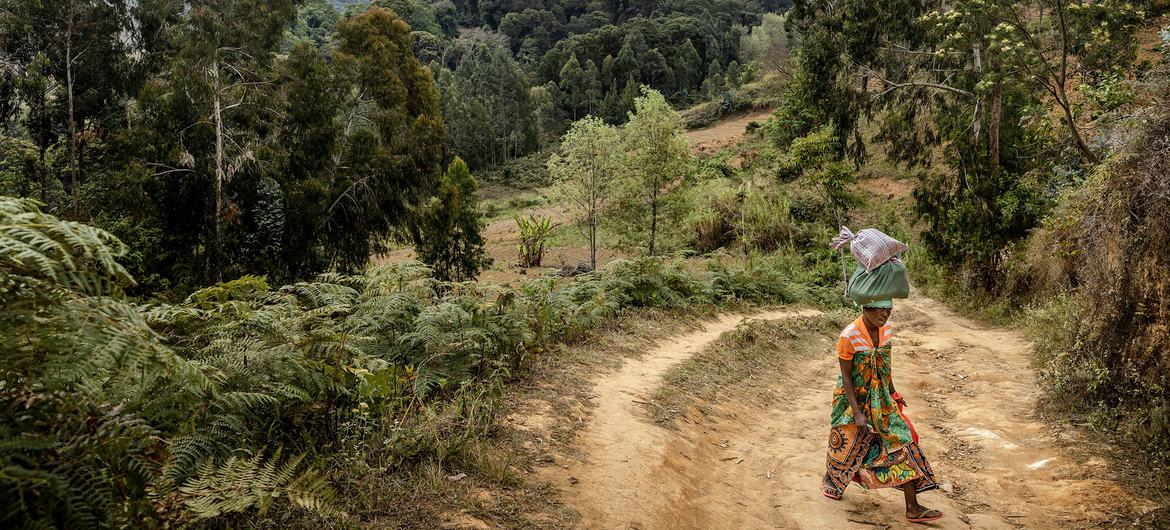
A woman carries goods through Uluguru Nature Forest Reserve in Morogoro, Tanzania.
© FAO/Luis Tato
 
A woman carries goods through Uluguru Nature Forest Reserve in Morogoro, Tanzania.


22 July 2024 

Climate and Environment

The world’s forests are becoming increasingly susceptible to wildfires and pests due to climate change, according to a new report by the UN Food and Agriculture Organization (FAO), released Monday. 

“Forests and trees are essential components of agrifood systems. The removal of forest cover, especially in the tropics, increases local temperatures and disrupts rainfall patterns in ways that compound the local effects of global climate change, with potentially severe consequences for agricultural productivity,” the report warned. 

The report is calling for innovation in the forestry sector alongside urgent action from the international community in order to face these challenges and progress toward achieving the Sustainable Development Goals (SDGs).   

Tweet URL

Wildfires and pests 

Wildfires around the world are more intense and frequent than ever before, even in areas that were previously unaffected.  In 2023 alone, wildfires released an estimated 6,687 megatonnes of carbon dioxide. 

Specifically, fires in the boreal zone just south of the arctic reached a new high in 2021 and accounted for nearly one-quarter of total wildfire emissions, up from 10 per cent previously, FAO said.

Climate change also makes forests more vulnerable to invasive species, with insects, pests and disease pathogens threatening tree growth and survival. Pine wood nematode, a microscopic parasitic roundworm, has already caused significant damage to native pine forests in some countries in Asia. 

Areas of North America are also projected to experience devastating damage due to insects and disease by 2027. 

This destruction of forests is a serious threat given that demand for global wood production is at record levels, at four billion cubic metres a year. Projections show global roundwood demand could grow by up to 49 per cent between 2020 and 2050. 

Moreover, nearly six billion people rely on non-timber forest products and 70 per cent of the world’s poor rely on wild species for their basic needs.  

Innovative solutions 

FAO believes that science can help to address these challenges, and identifies five types of innovation that enhance forests’ potential to address global challenges: technological, social, policy, institutional, and financial.  

One example of such an innovation is to use AI for data analysis and innovative financing for forest conservation.

Since innovation can create winners and losers, FAO is arguing for inclusive and gender-responsive approaches to ensure the fair distribution of benefits among men, women and youth in all socioeconomic and ethnic groups. 

FAO Director-General Qu Dongyu ultimately hopes the new report will “ scale up evidence-based innovation in forestry.” 

“I believe it will also support FAO Members and other stakeholders in enabling responsible, inclusive, and essential innovation in the forest sector to strengthen sustainability and the resilience of agrifood systems for a better world and a better future for all,” he added.


https://news.un.org/en/story/2024/07/1152386


https://creativecommons.org/licenses/by/4.0/legalcode

суббота, 15 июня 2024 г.

Climate change fuels tensions in Nigeria


Climate change impacts continue to fuel tensions and drive displacement in Nigeria.
IOM/Jorge Galindo
 
Climate change impacts continue to fuel tensions and drive displacement in Nigeria.


14 June 2024
Humanitarian Aid

Despite its huge potential, Nigeria, Africa’s most populous country, continues to grapple with a host of challenges which are impacting people’s lives and triggering conflict over key resources, a senior UN official in the country said on Friday.

Speaking to reporters at UN Headquarters in New York, UN Resident and Humanitarian Coordinator in Nigeria Mohamed Malick Fall highlighted the worrying impact of climate change.

The country is witnessing climate-related shocks which are triggering displacement and driving conflict, he said, singling out clashes over dwindling resources between farmers and herdsmen.

This conflict is exacerbated by the climate crisis, which is forcing herding communities to leave their traditional lands in search of better grazing options.

Mohamed Malick Fall, the UN Resident and Humanitarian Coordinator in Nigeria
UN Photo/Loey Felipe
 
Mohamed Malick Fall, the UN Resident and Humanitarian Coordinator in Nigeria

Improvements in the northeast

The Boko Haram insurgency in Nigeria’s northeast has been controlled to some extent, Mr. Fall reported, with the situation there showing signs of improvement.

That sentiment is reflected in a recent survey carried out by the UN International Organization for Migration (IOM) looking at the aspirations of people displaced by conflict in the region.

Around 37 per cent taking part expressed a desire to return to their places of origin. Areas once worst affected by Boko Haram, such as Borno state, showed an even higher percentage willing to go back - two in three (67 per cent).

Similarly, about 38 per cent expressed the intention to stay in their current locations and integrate with local communities.

Primary factors influencing both groups include the reconstruction of homes destroyed in places of origin and the favourable security situation in areas where they have been displaced to, according to the IOM survey.

Inflation concerns

Mr. Fall further informed journalists of the Government’s efforts to institute economic reforms, such as through its “Renewed Hope” agenda which was launched last year.

Economists predict that inflation – a concern at present – could turn the corner and start falling by the end of the year.

“But in the meantime, we are seeing prices getting higher. Mainly food prices, which is impacting negatively on the possibility of people to access a decent life,” Mr. Fall said.

Two-track support

The Resident and Humanitarian Coordinator said the UN was aligning its operations with the Government’s priorities, taking a two-track approach.

One is the humanitarian response, helping save and improve lives of regular Nigerians, and reducing vulnerabilities.

The other, he added, is supporting efforts to spur development in pursuit of the Sustainable Development Goals (SDGs).


https://news.un.org/en/story/2024/06/1151106

https://creativecommons.org/licenses/by/3.0/legalcode

четверг, 23 мая 2024 г.

‘Critical gaps’ in understanding climate change fuel tropical disease spread


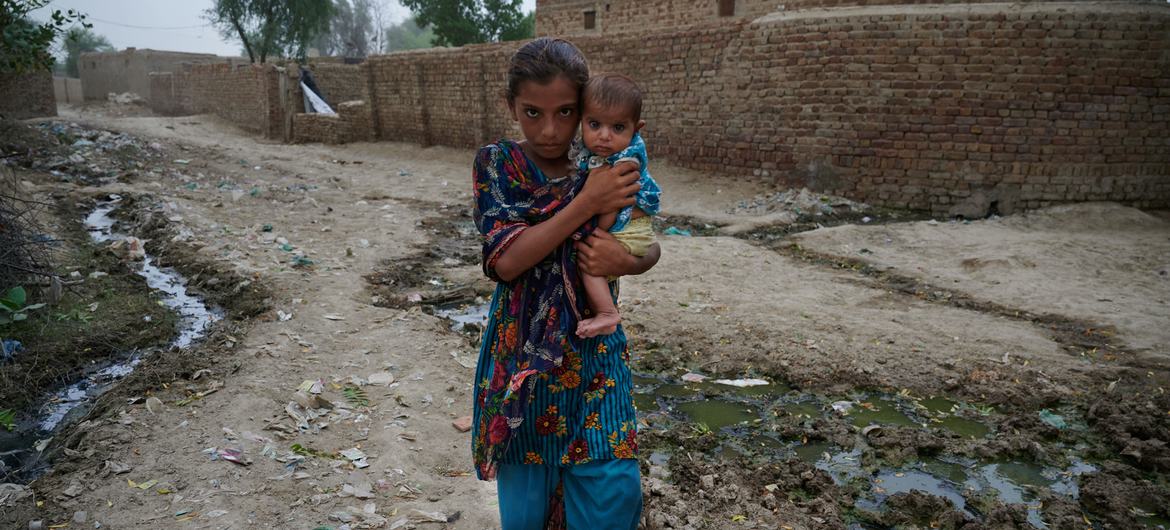
A girl, holding a child, walks to a mobile health clinic in a flood-affected village in Pakistan. Water-logging has led to an increase in spread of malaria in the region. (file)
© UNICEF/Shehzad Noorani
 
A girl, holding a child, walks to a mobile health clinic in a flood-affected village in Pakistan. Water-logging has led to an increase in spread of malaria in the region. (file)


22 May 2024
Health

A comprehensive review by the UN health agency has revealed critical gaps in understanding the full impact of climate change on malaria, dengue, trachoma and other tropical diseases.

The World Health Organization (WHO) study, conducted in partnership with Reaching the Last Mile (RLM), a global health initiative to eliminate neglected tropical diseases (NTDs), found that rising temperatures and changing weather patterns are altering the spread of vector-borne diseases, posing significant health risks.

As the geographical spread of disease vectors like mosquitoes expand, the risk of introducing or reintroducing these diseases to new areas increases. This shift is likely to have the most severe impact on communities already disproportionately affected.

The study analysed peer-reviewed papers from January 2010 to October 2023, crunching data on national disease burdens, healthcare access and climate vulnerability scores.

The majority of data sets used focused on malaria, dengue, and chikungunya, while other NTDs were significantly underrepresented.

Lack of evidence

Only 34 per cent of studies reviewed (174 studies) addressed mitigation and a mere five per cent (24 studies) looked at adaptation, underscoring the dire lack of evidence available to help malaria and NTDs.

Ibrahima Socé Fall, Director of the Global NTD Programme at WHO, emphasized the need for more comprehensive, collaborative and standardized modelling to predict and mitigate effects of climate change on health.

This important and timely review reveals alarming trends and is a call to urgent action. Malaria transmission is likely to shift both polewards and to higher altitude, while the mosquito vector responsible for transmission of dengue and chikungunya is predicted to continue to expand its range,” she said.

“If we are to protect and build upon the hard-won victories of the past two decades, the time to mobilize is now.”

Neglected tropical diseases

Neglected tropical diseases (NTDs) are a diverse group of conditions caused by a variety of pathogens, including viruses, bacteria, parasites, fungi and toxins.

These include Chagas disease, dengue, chikungunya, leprosy, rabies, soil-transmitted helminthiases, snakebite, trachoma and yaws. It is estimated that they affect more than one billion people, according to WHO.


https://news.un.org/en/story/2024/05/1150101

https://creativecommons.org/licenses/by/3.0/legalcode