Избранное сообщение

Показаны сообщения с ярлыком Humanitarian Aid. Показать все сообщения

вторник, 9 декабря 2025 г.

Humanitarians launch $33 billion appeal for 2026

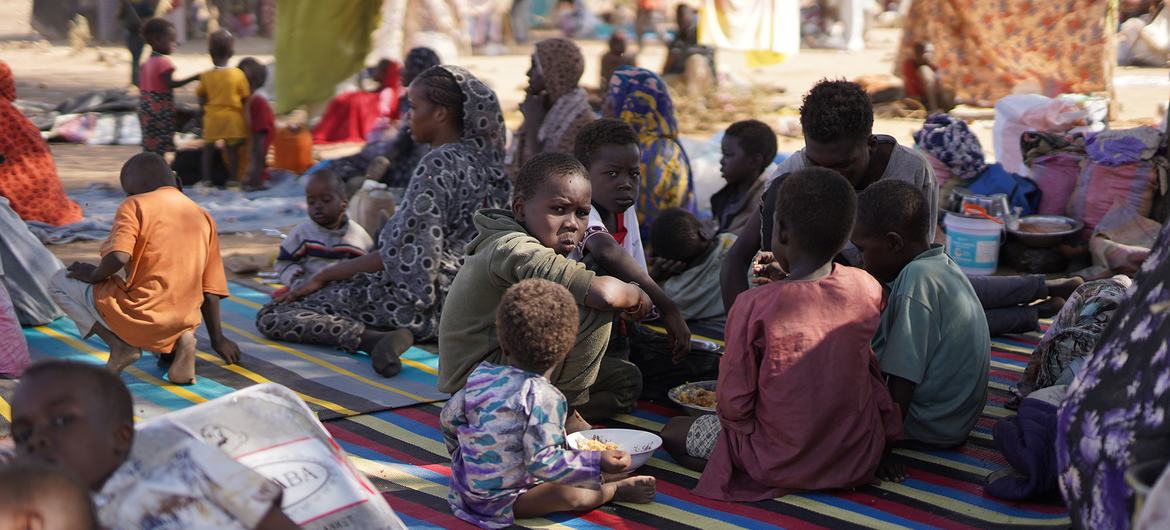
Families fleeing violence in Darfur, Sudan, arrive at a camp for displaced people.
© UNICEF/Mohammed Jamal
 
Families fleeing violence in Darfur, Sudan, arrive at a camp for displaced people.


8 December 2025 
Humanitarian Aid

The UN and partners are seeking $23 billion to provide lifesaving support next year to 87 million people worldwide affected by war, climate disasters, earthquakes, epidemics and crop failures. 

Tweet URL

This is the immediate priority of the $33 billion Global Humanitarian Overview 2026, launched on Monday, which aims to reach 135 million people overall in 50 countries.

This appeal sets out where we need to focus our collective energy first: life by life,” said UN humanitarian chief Tom Fletcher.

Millions in need

The updated GHO follows a year marked by brutal cuts to humanitarian operations and a record number of deadly attacks against aid workers.

It includes 29 detailed plans, and the largest is for the Occupied Palestinian Territory, where $4.1 billion is needed to reach some three million people.

In Sudan, $2.9 billion is required to provide lifesaving aid to 20 million people caught in the world’s largest displacement crisis, with another $2 billion for the seven million Sudanese who have fled the country.

The largest of the regional plans is for Syria, at $2.8 billion for 8.6 million people.

Cuts and consequences

Mr. Fletcher recalled that the 2025 appeal received only $12 billion – the lowest funding in a decade. As a result, humanitarians reached 25 million less people than during the previous year.

The consequences were immediate, including rising hunger and strained health systems – “even as famines hit parts of Sudan and Gaza,” he said at a press briefing prior to this year's launch.

Programmes to protect women and girls were slashed, hundreds of aid organizations shut. And over 380 aid workers were killed – the highest on record.”

Humanitarians under attack

The UN relief chief described humanitarians as “overstretched, underfunded and under attack” – something he has stressed on several occasions.

“Only 20 per cent of our appeals are supported. And we drive the ambulance towards the fire on your behalf,” he said.

“But we are also now being asked to put the fire out. And there is not enough water in the tank. And we are being shot at.”

Member State support

Humanitarians will now take the appeal to UN Member States and ask for their backing.

This will happen over the next 87 days – “one for each of the million lives that we will set out to save,” he said.

Countries will also be urged to step up protection for humanitarians, “not with statements of concern, but by holding to account those killing us – and those arming those killing us,” he added.


https://news.un.org/en/story/2025/12/1166526

https://creativecommons.org/licenses/by/4.0/legalcode

понедельник, 1 декабря 2025 г.

Cyclone Ditwah brings worst flooding in decades to Sri Lanka, killing hundreds


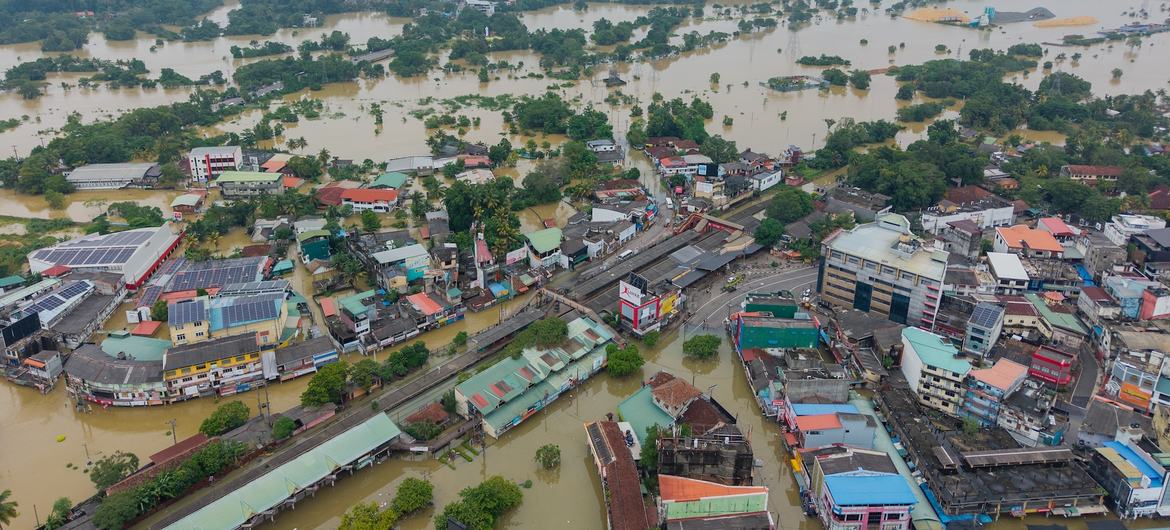
Gampaha (pictured), a district on Colombo's outskirts, has been among the areas hardest hit by flooding after Cyclone Ditwah.© UNICEF/InceptChange
 
Gampaha (pictured), a district on Colombo's outskirts, has been among the areas hardest hit by flooding after Cyclone Ditwah.


By Vibhu Mishra
30 November 2025 
Humanitarian Aid

Sri Lanka is facing one of its worst flood disasters in two decades, with nearly one million people affected and more than 400 reported dead or missing after Cyclone Ditwah unleashed catastrophic flooding and landslides across the island.

According to the UN relief coordination office, OCHA, 998,918 people across all 25 districts have now been affected, with 212 deaths reported and 218 people missing. More than 180,000 people from over 51,000 families are sheltering in 1,094 government-run safety centres as search and rescue efforts continue.

Cyclone Ditwah made landfall on 28 November before moving back over the Bay of Bengal, triggering some of the most severe flooding Sri Lanka has seen since the early 2000s.

The hardest-hit districts include Gampaha, Colombo, Puttalam and Mannar, as well as Trincomalee and Batticaloa, while deadly landslides in the central hill country have devastated Kandy, Badulla and Matale.

Tweet URL

Homes destroyed, infrastructure shattered

Initial assessments indicate that more than 15,000 homes have been destroyed. Over 200 roads remain impassable, at least 10 bridges have been damaged, and sections of the rail network and national power grid affected.

Flooding along the Kelani River, which runs through Colombo and surrounding low-lying areas, continues to hamper access and disrupt information flow from affected communities, complicating rescue and relief operations.

Severe disruption to electricity, mobile and communications, and transport networks are reported in northern districts such as Jaffna, with entire villages isolated

Access to clean water also remains a major concern, with several areas reporting little or no supply.

Health system under strain, food insecurity looms

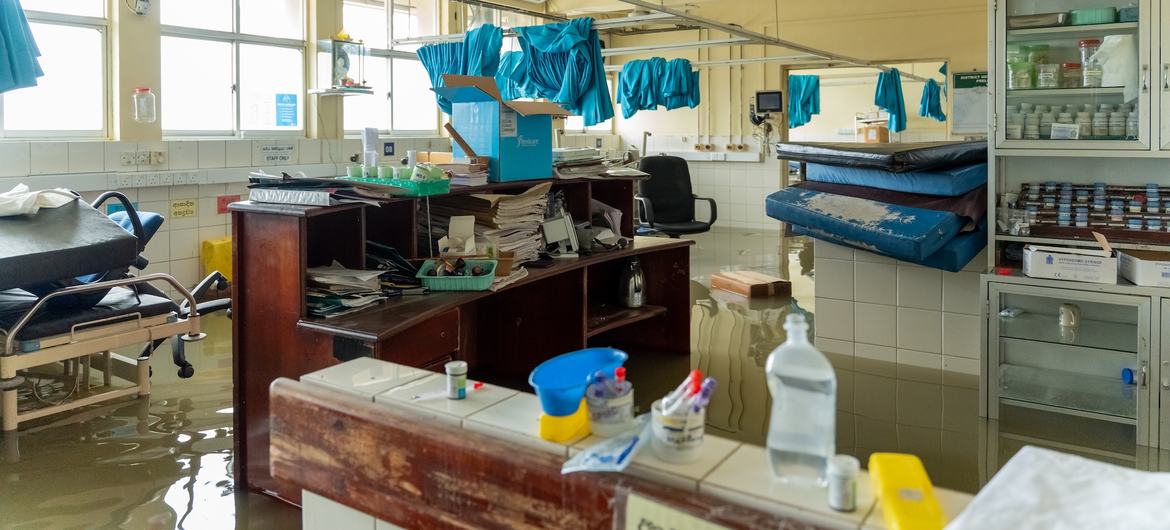
Sri Lanka’s already fragile health system is under severe pressure, OCHA said. Several district hospitals remain flooded and are receiving only limited supplies, with critically ill patients being airlifted to functioning facilities.

Response is further hindered by recurring landslides and the breach of multiple tank bunds (embankments or barriers), including at Mavilaaru, heightening risks in Trincomalee and Batticaloa.

Authorities have also warned of rising food insecurity, as submerged farmland, damaged storage facilities and severed supply routes threaten shortages and price increases in the weeks ahead.

The World Health Organization (WHO) warned that floods significantly raise the risk of vector-borne, food-borne and water-borne diseases, urging communities to prevent mosquito bites, ensure food safety and use safe drinking water wherever possible.

Floodwaters have entered several hospitals across Sri Lanka, further straining the health system.
© UNICEF/ InceptChange
 
Floodwaters have entered several hospitals across Sri Lanka, further straining the health system.

UN mobilises coordinated response

The United Nations in Sri Lanka activated its emergency coordination system on Sunday to scale up a unified response with government agencies and humanitarian organizations.

Sector coordination has been set up across food security, health, water and sanitation (WASH), education, protection, shelter and early recovery, while a multi-sector needs assessment is under way with disaster management authorities to identify the most urgent gaps.

“The UN in Sri Lanka is mobilising its teams across the system to support national rescue and early recovery efforts, in coordination with authorities. We stand in solidarity with all affected communities,” said UN Resident Coordinator Marc-André Franche.

Despite access challenges, the UN Children’s Fund (UNICEF) has delivered portable water to 25 safety centres in Badulla in the central hills, which had been cut off from the rest of the country by floods and infrastructure damage.

To support government-led efforts, India and Pakistan have deployed emergency teams to work alongside Sri Lanka’s armed forces in the worst-hit districts.

Meanwhile, in the wider Asian region

Severe monsoon flooding continues across Thailand and Malaysia, affecting more than two million people in southern Thailand alone and displacing nearly 25,000 people in Malaysia, according to OCHA. People have been evacuated in several hard-hit Thai provinces, while the rainfall is expected to ease in coming days.

In Indonesia, media reports cite at least 440 deaths from floods and landslides, with more than 400 people missing, particularly in parts of Sumatra, where thousands remain stranded without access to food and water.


https://creativecommons.org/licenses/by/4.0/legalcode
https://news.un.org/en/story/2025/11/1166474

пятница, 9 мая 2025 г.

More than 50 million in West and Central Africa at risk of hunger


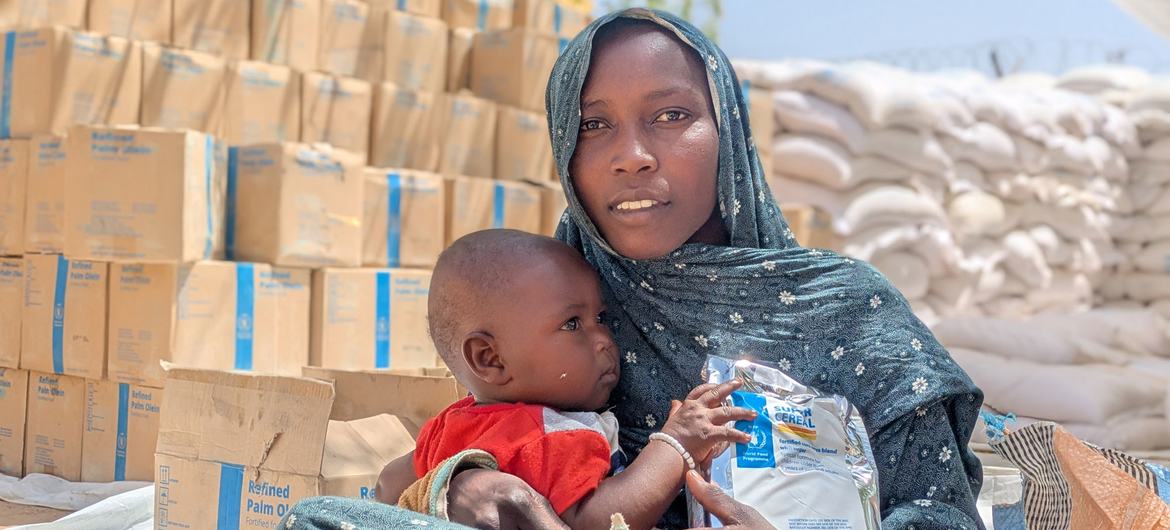
Oumalis Abdraman and her six-month-old baby arrived from Western Darfur in Koulbus where they were WFP treated for malnutrition.
© WFP/Lena von Zabern
 
Oumalis Abdraman and her six-month-old baby arrived from Western Darfur in Koulbus where they were WFP treated for malnutrition.


9 May 2025 

Humanitarian Aid

The UN World Food Programme (WFP) has warned that millions of people in West and Central Africa are facing record hunger as conflict, displacement, economic hardship and repeated extreme weather push the region towards a major crisis. 

More than 36 million are struggling to meet their basic food needs, which is projected to rise to over 52 million during the lean season from June to August, latest analysis reveals.

This includes almost three million people facing emergency conditions, and 2,600 people in Mali who are at risk of catastrophic hunger.

Tweet URL

Although needs are at a historic high, resources are limited, with millions of lives at stake. 

Without immediate funding, WFP will be forced to scale down even further both in the number of people reached and the size of food rations distributed,” said Margot van der Velden, Regional Director for West and Central Africa. 

‘Extremely difficult and dire’ 

In 2019, only four per cent of the population was food insecure compared to 30 per cent today, according to Ollo Sib, a senior research adviser with WFP.

“We hope that our voice will be heard because this food security situation in the Sahel remains extremely difficult and dire,” he said, speaking from Dakar to journalists in Geneva.

Mr. Sib recently travelled to some of the affected areas, such as communities in northern Ghana grappling with unprecedented drought.

“They were forced to replant two to three times, and for them, each failed sowing is an additional financial burden as the cost of fertilisers and seeds were extremely high in those locations,” he said.

The assessment team also went to northern Mali, which is the only place in the region where people are facing catastrophic food security conditions.

“We had the opportunity to interact with pastoralist elders who typically sell their livestock to buy cereals,” he said. 

“This year they were worried because the cost of food rose by 50 per cent compared to the five-year average. But at the same time, they are not able to access markets to sell their goods.” 

Fighting, food inflation and floods

WFP said unyielding conflict is among the factors driving deepening hunger in West and Central Africa.  

Fighting has displaced more than 10 million of the most vulnerable people across the region, including more than two million refugees and asylum seekers, in Chad, Cameroon, Mauritania and Niger. 

Nearly eight million more have been internally displaced, mainly in Nigeria and Cameroon. 

Meanwhile, food inflation exacerbated by rising food and fuel costs are pushing hunger levels to new highs.

At the same time, recurrent extreme weather “erodes the ability of families to feed themselves,” WFP said. 

Five million at risk

WFP stands ready to respond and scale up vital assistance in West Africa and the Sahel. The UN agency is seeking $710 million to support its life-saving operations through the end of October.

The aim is to reach almost 12 million people this year with critical assistance.

So far, teams have already reached three million of the most vulnerable including refugees, internally displaced people, malnourished children under five, and pregnant or breastfeeding women and girls.

The agency said that five million risk losing assistance unless urgent funding is found.

Address root causes

WFP also called for governments and partners to invest in sustainable solutions aimed at building resilience and reducing long-term dependency on aid.

Since 2018, the UN agency has been working with regional governments to address the root causes of hunger through a programme that has rehabilitated over 300,000 hectares of land to support over four million people in more than 3,400 villages. 


https://news.un.org/en/story/2025/05/1163086


https://creativecommons.org/licenses/by/4.0/legalcode

суббота, 29 марта 2025 г.

UN teams ramp up response to deadly quake in Myanmar and Thailand


The 7.7 magnitude earthquake has caused significant damage to buildings in Mandalay region, in central Myanmar.
© UNICEF
 
The 7.7 magnitude earthquake has caused significant damage to buildings in Mandalay region, in central Myanmar.


28 March 2025

 Humanitarian Aid

Amid reports of hundreds dead or missing following a 7.7 magnitude earthquake with its epicentre in central Myanmar, UN teams in the region are “responding fast”, said UN relief chief Tom Fletcher on Friday.

The Emergency Relief Coordinator tweeted that UN teams are being “supported by expertise across our global network”.

Tweet URL

News reports quoting sources in the Burmese city of Mandalay, close to the epicentre of the quake, indicate that hundreds have died. In neighbouring Thailand more than 80 construction workers are missing, according to the Thai deputy prime minister, with a search and rescue operation underway.

UN chief António Guterres sent condolences to all those in the region impacted and underlined that the UN system is mobilising as fast as possible in support. 

Mr. Fletcher, who heads aid coordination office, OCHA, made an intial allocation from the Central Emergency Response Fund of $5 million to support life-saving assistance.

‘Significant damage’

The UN Resident Coordinator’s Office in Myanmar told UN News in a statement that reports indicate “significant damage” has occurred in Mandalay state, as well as Nay Pyi Taw, Bago, Magway, Sagaing, Shan “and possibly other areas”.

Our thoughts are with everyone impacted by this event…We are gathering information about the people impacted, infrastructure damage, and immediate humanitarian needs to guide a response and will share more updates as information becomes available."

Sheela Matthew of the UN World Food Programme (WFP) said the quake had hit Myanmar “at the worst possible time. With one in four in the country already facing acute food insecurity, Myanmar just can't afford another disaster."

She said WFP has stocks of ready-to-eat food available in warehouses "and we are ready to respond as needed."

Speaking from Myanmar’s largest city of Yangon, Marie Manrique, Programme Coordinator for the Myanmar country team of the International Federation of Red Cross and Red Crescent Societies (IFRC), told journalists at the UN in Geneva that the quake had also been felt in China, Thailand, and India.

She said that beyond damage to buildings and infrastructure, there was concern over potential dam bursts. Electricity and communications have been cut off in parts of the country.

She said the Myanmar Red Cross Society had launched an emergency operation to help people in need and assess the situation.

Myanmar has been in the grip of an increasingly brutal civil war since a military coup more than four years ago. Around 20 million people – a third of the population are expected to need humanitarian assistance this year. Around 15 million are projected to face acute food insecurity during 2025.

Fighting between junta forces and opposition armed groups has displaced more than 3.5 million people within the country.

People gather in front of collapsed buildings in the Mandalay region of central Myanmar, following the 7.7 magnitude earthquake.
© UNICEF
 
People gather in front of collapsed buildings in the Mandalay region of central Myanmar, following the 7.7 magnitude earthquake.

Aid operation underway

Speaking for the World Health Organization (WHO) in Geneva, Dr. Margaret Harris said relief efforts were underway in coordination with country offices in Myanmar and Thailand.

She said the agency had activated its logistics hub in Dubai to primarily provide trauma supplies and a health needs assessment is underway.

Babar Baloch, for the UN refugee agency, UNHCR, said that the central and northwest parts of Myanmar had the highest number of internally displaced people (IDPs) due to the conflict.

Some 1.6 million IDPs out of the total 3.5 million live in these areas and the catastrophe will only exacerbate hardships, he told journalists.

More to come on this developing story…

https://news.un.org/en/story/2025/03/1161646


https://creativecommons.org/licenses/by/4.0/legalcode

среда, 2 октября 2024 г.

Nepal: Hundreds killed as ‘unprecedented’ flash floods strike capital Kathmandu


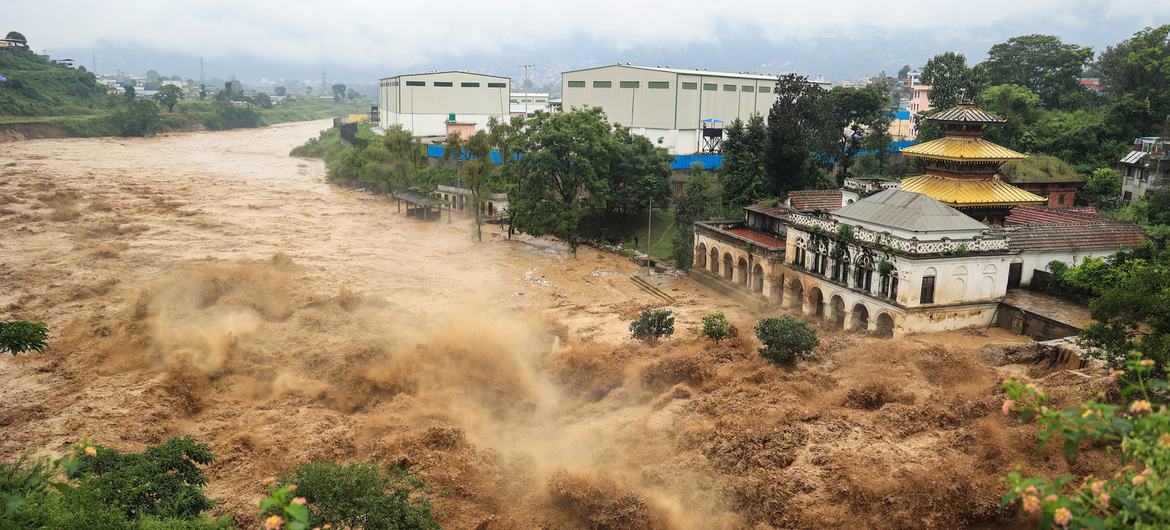
A swollen river surges through Kathmandu, Nepal's capital, after the heaviest rainfall in over 50 years.
© UNICEF/Laxmi-Prasad-Ngakhusi
 
A swollen river surges through Kathmandu, Nepal's capital, after the heaviest rainfall in over 50 years.


By Vibhu Mishra
1 October 2024 


More than 215 people, including 35 children, have been killed and dozens are missing after heavy rains triggered flash floods and landslides across Nepal, UN humanitarians said on Tuesday.

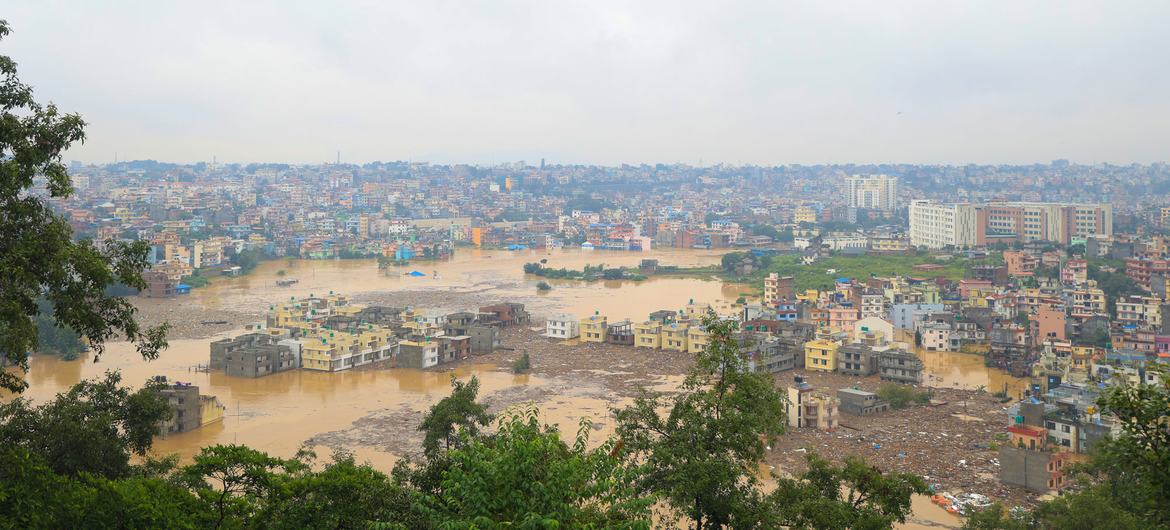
Many of the deaths have occurred in the capital, Kathmandu, which witnessed the most intense rains in over half a century. Hundreds of houses along with schools and hospitals have been damaged and the southern portion of the city remains inundated.

The rains, which began on 27 September, and lasted more than 72 hours, also caused extensive damage outside the capital. Forty-four of Nepal’s 77 districts have been affected, and many areas are cut off, with bridges and roads swept away and powerlines and telecommunication networks disrupted.

Security forces and volunteers have rescued about 4,500 people. It is estimated that over 7,600 families have been severely affected, many of whom lived in informal settlements that have washed away.

Furthermore, as water pumps, pipes and cropland have been damaged, access to water and food and their affordability, could become a major challenge in coming days.

Concern for children

In response to the disaster, UN humanitarian teams alongside the Government and partners have mobilised rapidly to deliver aid and assess damage.

Emergency teams from UN Children’s Fund (UNICEF), for instance, are distributing vital supplies, including hygiene kits, water purification tablets, blankets and mosquito nets, a spokesperson told UN News.

Florine Bos, Chief of Communications at UNICEF Nepal said the agency has also set up a medical tent to temporarily replace a major hospital that was destroyed, potentially reaching 2,000 people with healthcare.

She also highlighted that children are at heightened risk of violence, abuse and exploitation, especially with many schools closed after being damaged.

We are very worried about children’s access to schools. Schools are not only for learning, but they also are a safe place where children meet their friends and play,” she said.

“We hope that the schools will open soon,” she added.

Soundcloud
Florine Bos, UNICEF Nepal Chief of Communications, speaks with UN News.

‘Unprecedented disaster’

Azmat Ulla, head of the International Federation of Red Cross and Red Crescent Societies (IFRC) Nepal country office, emphasized the unprecedented nature of the disaster.

Speaking to the media at a briefing in Geneva via video link from Kathmandu, he said that access to essential resources, such as fresh water, will be a challenge in the coming days and once the floodwaters have receded, there is the threat of water and vector borne diseases such as dengue.

There are still many villages which are isolated due to impassable roads and broken bridges…the Nepal Red Cross and IFRC have been coordinating with the local authorities to clean roads and access people in need, and these efforts are making a difference,” Mr. Ulla said.

A view of flooded areas of southern Kathmandu, the capital of Nepal, following heavy rainfall lasting several days across the country.
© UNICEF/Laxmi Prasad Ngakhusi
 
A view of flooded areas of southern Kathmandu, the capital of Nepal, following heavy rainfall lasting several days across the country.

While its teams are engaged in immediate relief efforts, the Red Cross is also preparing for long-term recovery, including the launch of a humanitarian appeal, he added.

“As Nepal faces the increasing threat of climate change, which has intensified disasters like this, preparedness within communities will be the key,” he said.


https://news.un.org/en/story/2024/10/1155246


https://creativecommons.org/licenses/by/4.0/legalcode

суббота, 14 сентября 2024 г.

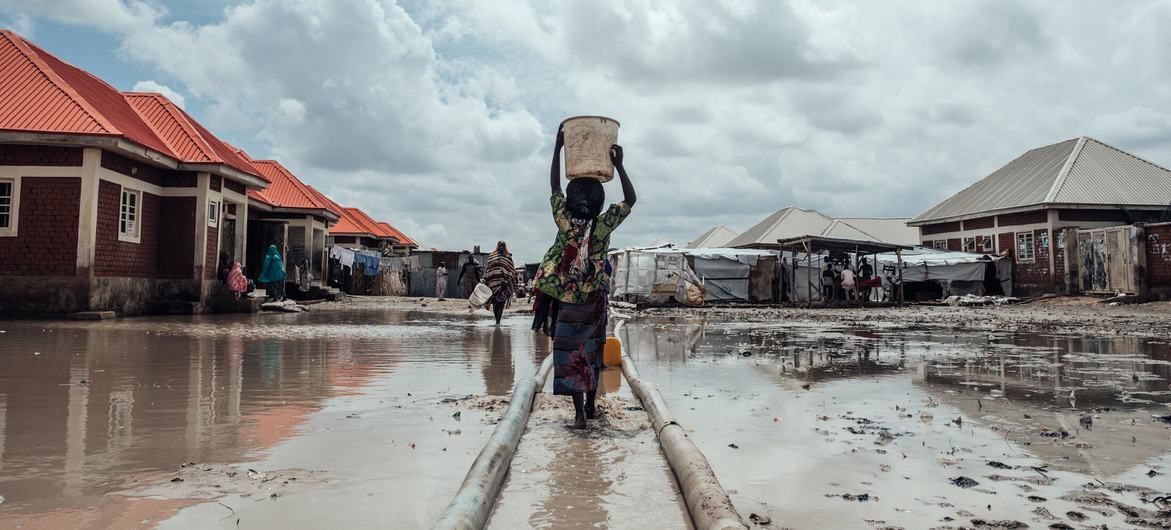
Nigeria: Hundreds of thousands in need of aid as flooding wipes out homes – WFP


Millions remain displaced across Nigeria due to conflict, climate change impacts and natural disasters. In this file photo, a girl carries water to her shelter at an IDP camp in the country's northeast. (file)
© UNICEF/KC Nwakalor
 
Millions remain displaced across Nigeria due to conflict, climate change impacts and natural disasters. In this file photo, a girl carries water to her shelter at an IDP camp in the country's northeast. (file)


13 September 2024 

Humanitarian Aid

UN humanitarians are rushing to assist scores of newly displaced people in northeast Nigeria, after torrential rains caused a dam to collapse and flood the area, the UN World Food Programme (WFP) said on Friday.

Alau Dam, located just over 10 miles to the south of Maiduguri, the capital of Borno State, collapsed in the middle of the night on Tuesday, forcing hundreds of thousands from their homes.

Tweet URL

Emmanuel Bigenimana, the head of WFP’s office in Maiduguri, said that he managed to fly over the city in a UN humanitarian air service (UNHAS) helicopter dispatched by WFP, to conduct a rapid assessment of damage and needs.

“What I have seen is really heartbreaking,” he said, describing homes, infrastructure, roads, schools, hospitals submerged by water.

Sleeping on the street

“Many, many people - I'm talking about over 200,000 - 300,000 displaced people - are overcrowded in several IDP (internally displaced persons) camps and also on the streets.”

WFP reported that the dam collapse saw river water overrunning 50 per cent of Maiduguri and state authorities issued evacuation orders to residents in the affected areas, appealing for humanitarian support.

Speaking from the centre of one of the IDP camps, Mr. Bigenimana said that WFP has managed to open soup kitchens to provide hot meals to the affected people and was scaling up its response together with the authorities and partners.

The soup kitchens located in three camps - Teachers’ Village, Asheikh and Yerwa - aim to provide nutritious hot meals to “50,000 of the worst affected children, women, and men who have lost their homes,” WFP said, but more assistance is needed.

Compounding security crisis, economic hardship

This is really an additional burden to already existing crises,” WFP’s Mr. Bigenimana stressed. “This region has been facing conflict for a decade.”

Borno State was one of the areas worst affected by the Boko Haram insurgency which, the UN said earlier this year, has been controlled to some extent.

More recently, we have seen food inflation, food prices have been skyrocketing, really affecting millions of people who are facing food insecurity,” Mr. Bigenimana added.

The impacts of extreme weather are being felt severely across the country. Some 800,000 people in 29 states in Nigeria have been affected by floods as of September 2024, WFP said, and over 550,000 hectares of cropland have been flooded.

As of March this year, some 32 million people in the country were already facing acute hunger.

The UN’s food agency said that it needs $147.9 million to support food insecure people in Nigeria’s northeast over the coming six months.

For the flood-affected populations in Maiduguri, “recovery will take long,” Mr. Bigenimana said. “We need more resources to save lives and to put together efforts to respond to the crises - and also think of longer-term recovery and solutions.”


https://news.un.org/en/story/2024/09/1154301

https://creativecommons.org/licenses/by/4.0/legalcode

пятница, 30 августа 2024 г.

Floods, landslides wreak havoc across South Asia


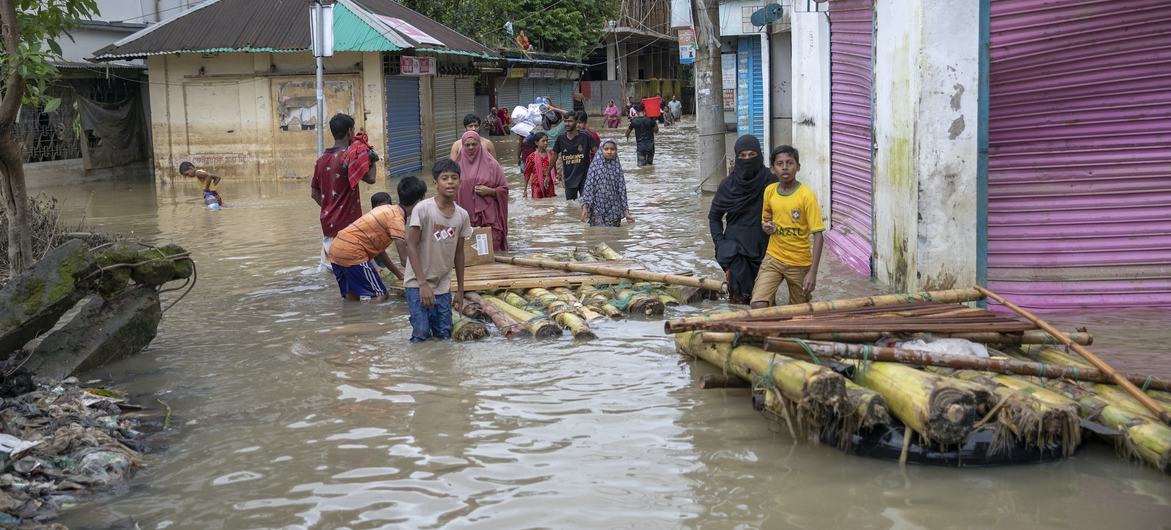
Flood-affected residents construct makeshift bamboo rafts to navigate submerged streets in Feni district, southeast Bangladesh.
© UNICEF/Salahuddin Ahmed Paulash
 
Flood-affected residents construct makeshift bamboo rafts to navigate submerged streets in Feni district, southeast Bangladesh.


By Vibhu Mishra
29 August 2024

 Humanitarian Aid

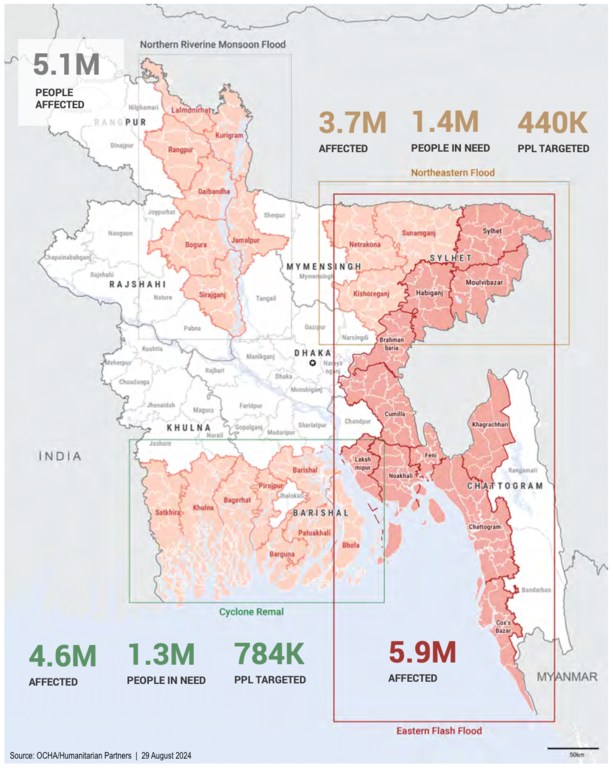
Over 18 million people in Bangladesh have been affected by severe monsoon conditions, with more than 1.2 million families trapped as flash floods submerge vast areas of the country’s east and southeast.

The worst affected regions are Chattogram and Sylhet, where major rivers are “flowing well above danger levels”, further aggravating the situation, according to the UN Children’s Fund (UNICEF).

Initial estimates suggest that around five million people - including two million children - have been affected, many stranded without food and relief.

Impact of cyclone and monsoon floods in Bangladesh (May to August 2024)
Source: OCHA
 
Impact of cyclone and monsoon floods in Bangladesh (May to August 2024)

Twenty deaths have been reported as of Tuesday, and a further 285,000 have sought refuge in more than 3,500 shelters, UNICEF added.

Massive damage has also been reported to roads, croplands, and fisheries, severely impacting livelihoods.

Government-led search and rescue operations are ongoing, with some areas inaccessible.

UN-partners in some places have reported that water levels are not expected to recede for at least a week, with risk of persistent waterlogging and accompanying threat of water- and vector-borne diseases.

Extraordinary rainfall in eastern India

The state of Tripura in eastern India was hit by extraordinary rainfall for over 72 hours roughly ten days ago, resulting in some of the most severe floods since 1983, according to local media.

The rains along with over 2,000 resulting landslides, reportedly affecting 1.7 million people, including around 117,000 who have been displaced to relief camps set up by district authorities.

Some 26 people are said to have been killed, the UN Office for the Coordination of Humanitarian Affairs (OCHAsaid, citing officials.

A Government-led response is ongoing, with floodwater levels said to have been receding.

Multiple landslides were also reported in the northern state of Himanchal Pradesh since late July, leading to several casualties.

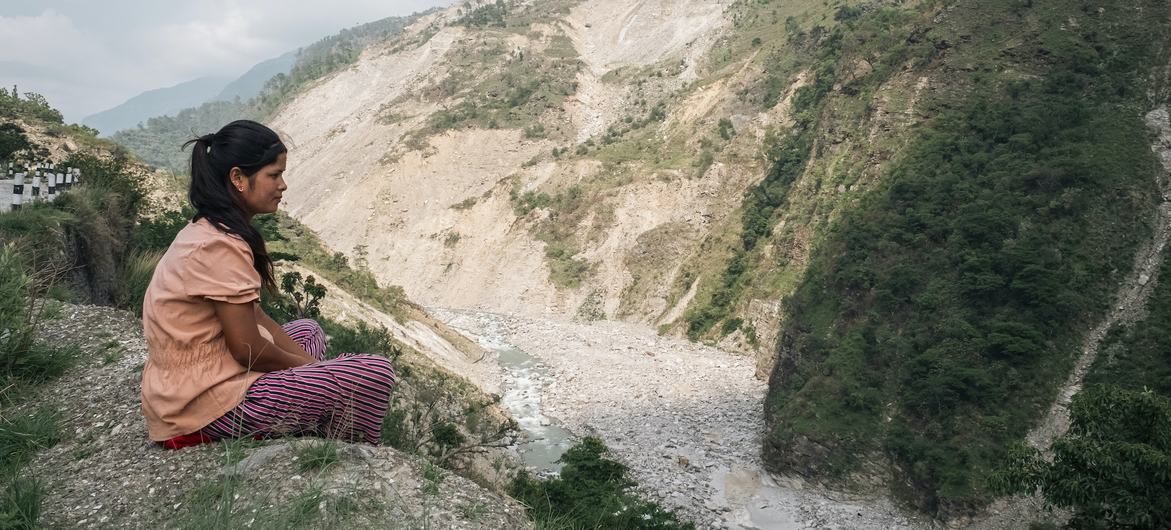
In western Nepal, a girl sits on the edge of a cliff, overlooking a massive landslide brought on by the monsoon rains in 2023.
© UNICEF/Vlad Sokhin
 
In western Nepal, a girl sits on the edge of a cliff, overlooking a massive landslide brought on by the monsoon rains in 2023.

Climate change impacts in Nepal

The monsoon season also wreaked havoc in Nepal, a country on the frontlines of climate change, experiencing more erratic and intense weather and rapid warming of glaciers, leading to severe flash floods and landslides.

A glacial lake outburst flood (GLOF) in the country’s Everest region wiped off the village of Thame, situated at an altitude of about 3,800 metres (12,500 feet) and popular with trekkers.

Though no deaths or serious injuries were reported, more than a dozen houses and small hotels, a school and a health clinic were washed away.

Elsewhere in the country, however, the 2024 monsoon season led to more than 200 deaths, including in the capital, Kathmandu.

In a particularly tragic incident, about 65 people died when two buses were pushed into a swollen river last month. Authorities have been able to recover the remains of only three people, with search efforts ongoing.

Response continues in Pakistan

In Pakistan, disasters claimed the lives of 243 people since July – about half of them children, underscoring their heightened vulnerability, OCHA reported.

Floods also resulted in “extensive damage” to livelihoods and vital infrastructure, including schools and bridges.

Assessments and response continue, with humanitarian partners and authorities reporting food, clean water, medical supplies and hygiene kits as key needs.


https://news.un.org/en/story/2024/08/1153726


https://creativecommons.org/licenses/by/4.0/legalcode

вторник, 13 августа 2024 г.

UN migration agency steps up support to families affected by deadly Yemen floods


The heavy rains in Hudaydah, Yemen, have impacted and damaged health facilities in the area, further impeding access to healthcare.
OCHA Yemen
 
The heavy rains in Hudaydah, Yemen, have impacted and damaged health facilities in the area, further impeding access to healthcare.


12 August 2024 

Humanitarian Aid

The International Organization for Migration (IOM) is ramping up emergency operations in Yemen to support thousands of families affected by relentless rains and catastrophic flooding that has wreaked havoc across the country. 

The floods began in late June and intensified through early August.  At least 57 people were killed and over 34,000 families impacted, as torrential rains devastated Hudaydah, Taiz, Marib and other regions, according to the UN humanitarian affairs office, OCHA.

Tweet URL

War, displacement and poverty

The crisis is unfolding amid the ongoing war between Government forces, backed by a Saudi-led coalition, and Houthi rebels, which began a decade ago.

The devastation caused by the floods and windstorms has worsened the already dire humanitarian situation in Yemen, where millions are grappling with the impacts of the prolonged conflict as well as displacement and poverty. 

The situation for internally displaced persons has become even more critical as the destruction of shelters, coupled with limited access to essential services, further hampers their recovery.

Donor support needed

Matt Huber, IOM Yemen’s Acting Chief of Mission, said the magnitude of the disaster is overwhelming and needs are enormous.

“Our teams are on the ground, working tirelessly to provide life-saving assistance to those in need, but the resources at our disposal are limited,” he said.

“Without significant and sustained support from international donors and partners, the ability to meet the needs of those affected will remain severely limited.”

Families displaced, farmland destroyed, landmines dislodged

The floods have displaced over 6,000 families and caused severe infrastructure damage in Hudaydah governorate, among the hardest-hit areas. 

The flood waters have buried wells, washed away farmlands and caused widespread destruction of homes and essential public services. Roads have been closed and access to affected areas remains challenging, which is further complicating relief efforts.

IOM said the situation is equally dire in three districts on Yemen’s west coast- Hays, Mokha and Al Khokha - where 5,800 families have been affected and thousands displaced.  Crops and critical infrastructure have been destroyed, including roads and water supply systems. 

Meanwhile in Hays, the flooding has swept landmines into new areas, thus complicating access and increasing risks of those trying to reach communities in need.

Assistance and assessments

In response to the crisis, IOM has provided aid to more than 300 families in Hays and Al Khokha districts. The agency has distributed shelter materials to 83 households as well as 3,000 hygiene kits.  Teams are also conducting assessments, including in Water, Sanitation, and Hygiene (WASH), protection, and shelter/non-food items.

In Marib, recent windstorms and floods have caused extensive damage, with broken electrical poles, widespread power outages, and severe impact on shelters. 

IOM manages 21 displacement sites there and preliminary assessments reveal that 600 shelters were fully damaged and 2,800 partially damaged, affecting over 20,000 people. Four deaths and several injuries were reported, with 12 people referred to IOM-supported hospitals in Marib city for urgent care.

Disease fears

The flooding has also raised serious health concerns as the combination of stagnant water and poor sanitation provide a breeding ground for mosquitoes, which could lead to diseases such as malaria and dengue fever.  Contaminated water sources also may exacerbate the risk of waterborne diseases and the current cholera outbreak.

In response, IOM’s teams have been conducting initial assessments, activating emergency response committees and restoring critical infrastructure, such as water and sanitation systems.  Teams have also been deployed to open channels for water discharge and construct embankments to prevent further damage. 

Appeal to the international community

Yet despite these efforts, IOM said the scale of the disaster has exposed critical gaps in resources, particularly among partners supplying shelter and non-food items, due to low contingency stocks. 

IOM is closely coordinating with local authorities and humanitarian partners to ensure a comprehensive and effective response. 

With more rain and wind expected in the coming days, the agency urgently called for the international community to significantly increase support to address the overwhelming needs in Yemen. 


https://news.un.org/en/story/2024/08/1153061


https://creativecommons.org/licenses/by/4.0/legalcode

четверг, 8 августа 2024 г.

Zimbabwe faces worsening food crisis due to El Niño droughts


People wait for a distribution of food in Mazambara, Zimbabwe.
© WFP/Matteo Cosorich
 
People wait for a distribution of food in Mazambara, Zimbabwe.


7 August 2024 

Humanitarian Aid

A new report from the UN aid coordination office (OCHA) reveals that food insecurity levels in Zimbabwe are rapidly deteriorating after it was hit with historic droughts due to the El Niño weather pattern.

This comes just two months after UN humanitarians declared Zimbabwe as one of the hunger hotspots where acute food insecurity was likely to deteriorate.

The storm destroyed more than half of the country’s harvest, leaving about 7.6 million people at risk of acute hunger.

El Niño is a regular and naturally occurring weather event which affects the air temperatures around the sea and coastal landmasses. The climate crisis in recent years has led to more frequent and intense patterns.  

Officials from the UN and the World Food Programme (WFP) recently visited Zimbabwe to determine the drought’s impact on the nation and to call for more international support for the humanitarian response.

‘Nationwide state of disaster’

In April, local Zimbabwean authorities declared that the country was in a nationwide state of disaster.

Figures from the authorities showed that 57 per cent of people in “rural” parts of the country are set to be food insecure between January and March 2025 – a peak hunger period there.

Other UN reports indicate that civilians will need to depend on “alternative sources of income, social support, and humanitarian assistance” to withstand this season.

It was further reported that “humanitarian assistance needs will remain high in many areas of the country until the harvest in 2025 due to poor purchasing capacity resulting from limited income-earning opportunities and high food prices.”

El Niño’s impact

The El Niño-induced droughts have reportedly put a strain on Zimbabwe’s economy, leaving more than a fifth of children out of school and a lack of water supplies in the country.

The UN and some of its partners are working with the Zimbabwean Government to provide aid to civilians.

However, these teams require more funding, as the $429 million flash appeal which was launched in May that aims to aid over 3 million people, is only about 11 per cent funded.

The El Niño droughts have also affected other South African countries including the Democratic Republic of the Congo, Madagascar, Malawi and more. Each of these nations is in high need of humanitarian interventions as food insecurity levels have risen significantly due to the drought. 


https://news.un.org/en/story/2024/08/1152936
https://creativecommons.org/licenses/by/4.0/legalcode

вторник, 30 июля 2024 г.

Torrential rains and floods in South Asia endanger millions of children, warns UNICEF


Houses and infrastructures are submerged by floodwaters in Kurigram, northern Bangladesh.
© UNICEF/Salahuddin Ahmed Paulash
 
Houses and infrastructures are submerged by floodwaters in Kurigram, northern Bangladesh.
29 July 2024

 Humanitarian Aid

More than six million children in South Asia are at risk following severe torrential rains, flash floods, and landslides that have devastated the region, leaving many homeless, the UN Children’s Fund (UNICEF) warned on Monday.

“We are only halfway through the monsoon season, yet the rainfall, damage and destruction have been devastating,” Sanjay Wijesekera, UNICEF Regional Director for South Asia, said in a news release.  

In Nepal, 109 people, including children, have died due to floods and landslides this monsoon season. This includes 65 people who were on two buses pushed into a swollen river by landslides in July.

Similarly, in Afghanistan, flash floods last week swept away several hundred homes, claiming at least 58 lives and leaving hundreds of families homeless, further exacerbating existing vulnerabilities.

Tweet URL

Climate crisis impacts

“These erratic weather events, worsened by climate change, are severely impacting children across South Asia,” Mr. Wijesekera said.  

“UNICEF is concerned about predictions of heavier rain in the coming weeks, which could further jeopardize children.”

He also noted that Afghanistan, Bangladesh, India and Pakistan are among the countries where children are at an elevated risk of the impacts of the climate crisis, citing the agency’s Children’s Climate Risk Index.

Other devastating effects

The UNICEF official further warned that floods pose a threat to children beyond death and injury.

In contaminating safe water supplies, floods increase the risk of disease and diarrhoea outbreaks, which, left untreated, can lead to dehydration and malnutrition among children.

Children affected by frequent flooding over time are also more likely to be underweight and stunted.

In addition to health effects, floods damage sanitation facilities, destroy schools and roads, and disrupt children’s education, putting children at risk of abuse, exploitation and trafficking.

Landslides have claimed many lives in Nepal.
© UNICEF/Vlad Sokhin
 
Landslides have claimed many lives in Nepal.

Humanitarian response

UNICEF is actively responding to the crisis, providing relief to thousands across the region.

In Nepal, the agency is working with Government and partners to support affected children and families. It has provided key relief items and psychosocial support to over 4,500 people.

UNICEF is also supporting the Government-led response in India’s Assam province, where record rainfall since June caused flash floods, upending the lives of half a million children and their families.

The agency is also supporting response efforts in Bangladesh, Pakistan and Afghanistan.

Call to action

However, with forecasts predicting further heavy rains, Mr. Wijesekera urged governments to “prepare well and respond quickly” to protect lives.

He also highlighted the urgent need for resources, stating “strained financial resources will hamper responses in the future.”

UNICEF has appealed for $9.3 million to support emergency preparedness and strengthen climate-resilience programmes for children across the region.


https://news.un.org/en/story/2024/07/1152631

https://creativecommons.org/licenses/by/4.0/legalcode

суббота, 27 июля 2024 г.

Oil tanker sinks, hundreds of thousands affected as ‘super typhoon’ batters Philippines


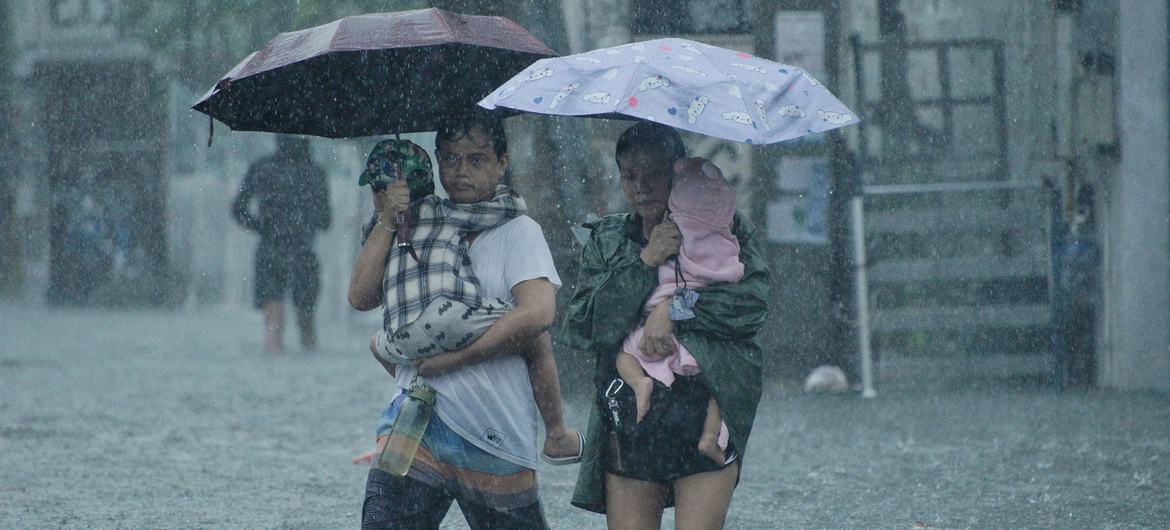
Parents carry their children as they walk on a flooded street in Quezon City, Philippines.
© UNICEF/Larry Monserate Piojo
 
Parents carry their children as they walk on a flooded street in Quezon City, Philippines.


By Vibhu Mishra
26 July 2024 

Humanitarian Aid

Over 1.5 million people have been affected in the Philippines, where a state of calamity was declared this week in Metro Manila and nearby areas, as Super Typhoon Gaemi swept through the island nation, the UN Office for the Coordination of Humanitarian Affairs (OHCA) has reported.

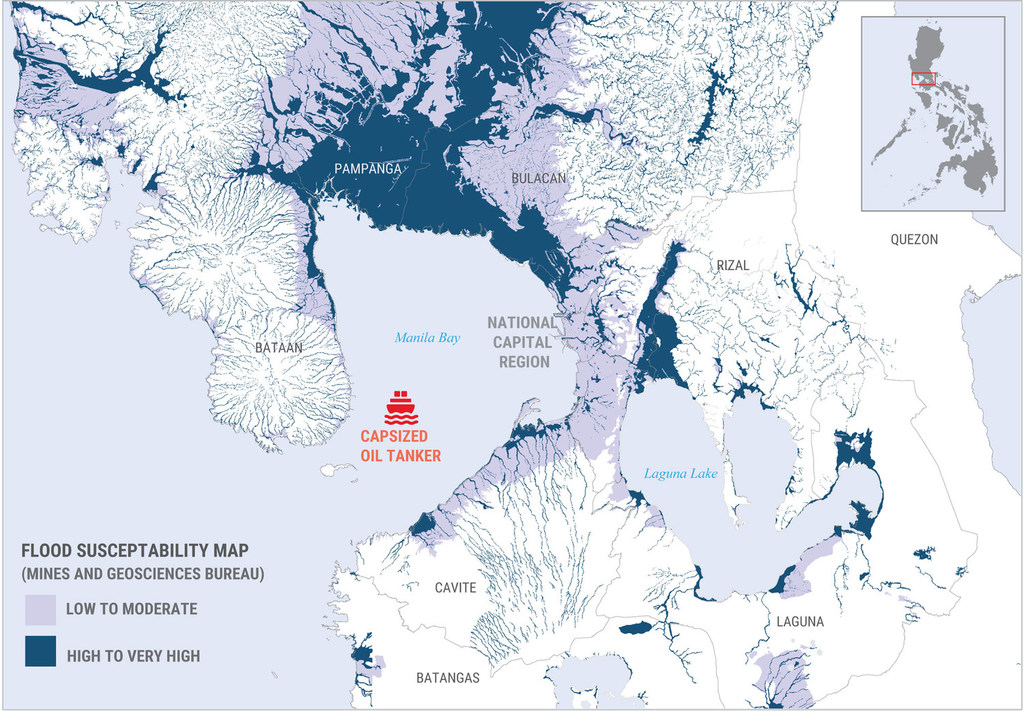
An oil tanker carrying 1.4 million litres of fuel also sank in rough seas off the capital, in the Manila Bay.

Now downgraded to a typhoon, Gaemi (locally called Carina) combined with effects of southwest monsoons to bring intense rains and winds to western Luzon Island, home to over half of the Filipino population.  

Close to 400,000 people were affected by the rains and floods on Wednesday alone, including about 198,000 who sought refuge in evacuation centres. At least 13 people have been killed, with reports that two more may have perished.

In addition, La Mesa Dam, located near Metro Manila capital region, reached its spilling levelOCHA said in a flash update issued late on Thursday.

Flood susceptibility map.
Source: UNOCHA
 
Flood susceptibility map.

Water levels in the Dam have since returned to normal levels and the storm exited the Philippine area on Thursday, OCHA added. There have also been some improvements in the weather, but rains are forecast to continue into the weekend.

Oil tanker capsizes  

Aside from the human impact, an oil tanker carrying 1.4 million litres (about 400,000 gallons) of industrial fuel sank in the Manila Bay amidst the strong waves and winds.

The Philippine Coast Guard rescued 16 of the 17 crew from the ship but containing the oil spill is complicated by strong winds and sea conditions.

The spill is said to have stretched out over several kilometres and could reach the shores of capital Manila, according to media reports. The ship, Motor Tanker (MT) Terra Nova has reportedly not broken up.

There are fears that that the spill could severely impact the marine environment as well as the livelihoods of fisher communities that depend on the seas.

Government-led response

OCHA further reported that the Government of the Philippines is taking the lead in coordinating response and early recovery efforts.

Authorities have distributed more than 360,000 family food packets and are clearing roads damaged by rains and landslides.

Humanitarian agencies, such as the Philippine Red Cross mobilized first aid stations and ambulances across Manila, Pasig and Bataan. It also distributed hot meals and provided psychosocial support.

Detailed assessments are ongoing, and priority needs identified thus far include hygiene kits and cleaning kits, logistics, prophylaxis for the prevention of waterborne diseases, food items, and potable water.

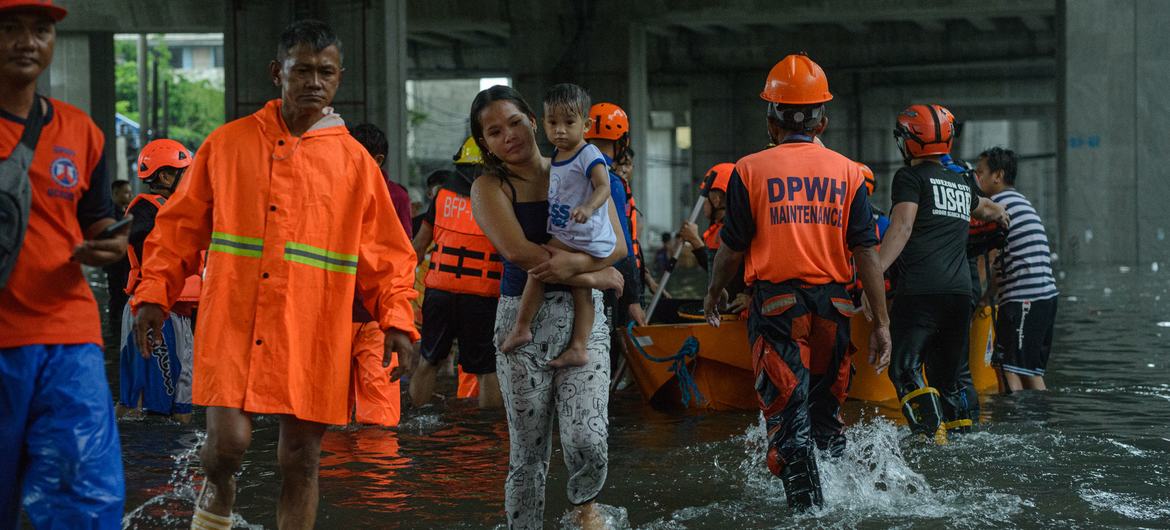
Disaster response and rescue workers evacuate children and their families from their flooded homes in Quezon City, Philippines.
© UNICEF/Larry Monserate Piojo
 
Disaster response and rescue workers evacuate children and their families from their flooded homes in Quezon City, Philippines.

School year worries

With widespread flooding, road closures and power outages reported in rural areas, and the new school year starting on Monday (29 July), the UN Children’s Fund (UNICEF) voiced deep concern over the impact on children.

In any emergency, children are among those who suffer the most. They continue to bear the brunt of extreme weather events exacerbated by climate change,” the agency said in a news release.

It added that the Philippines had the highest number of children displaced in the last six years from weather-related events, 9.7 million, and that 97 per cent of children there experienced three or more types of hazards.  

Help children contribute

Children in the Philippines should not have to fear for their lives every time a strong typhoon comes,” acting head of UNICEF in the country Edgar Donoso Paz said.

He added that while the climate crisis is threating their future and exposing them to harm, children and young people should be involved in resilience and adaptation efforts.

“While they are vulnerable, children and young people do have an active role to play in reducing risk and working with adults. They bring critical skills, experiences, and creative solutions,” he added.


https://news.un.org/en/story/2024/07/1152576


https://creativecommons.org/licenses/by/4.0/legalcode

пятница, 26 июля 2024 г.

Ethiopia landslides: Death toll rises as UN supports response


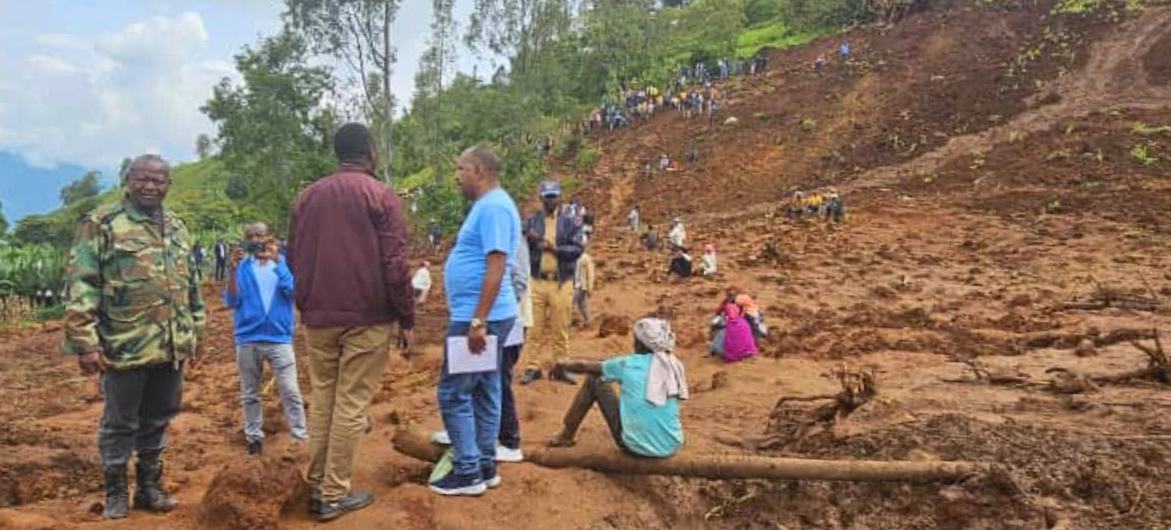
Heavy rains caused a landslide in a village perched high on a mountain in a remote region of southern Ethiopia.
© UNOCHA/Tamirat Mengistu
 
Heavy rains caused a landslide in a village perched high on a mountain in a remote region of southern Ethiopia.


By Vibhu Mishra
25 July 2024 
Humanitarian Aid

A UN inter-agency humanitarian team has reached the area affected by deadly landslides in Ethiopia earlier this week and is supporting the response.

More than 250 people are reported to have been killed, amid fears that the toll could rise to over 500, the UN Office for the Coordination for Humanitarian Affairs (OCHA) said in a flash update on the disaster, issued on Thursday.

Gezei Gofa Woreda, in southern Ethiopia, suffered three successive landslides following heavy rains on 21 and 22 July. More than 15,500 people are said to be affected, including at least 1,320 children under five and 5,293 pregnant and nursing mothers.  

“These people are at high risk of further landslides and need to be evacuated to safe zones immediately. The Federal Government, in collaboration with regional and zonal authorities is finalizing an evacuation plan,” the update noted.

Search and rescue efforts, led by local authorities and supported by the Ethiopian Red Cross Society and community members, are also ongoing.

“[They are] mainly digging through mounds of mud with their bare hands and spades for lack of other options,” the update added.

Tweet URL

UN chief ‘deeply saddened’

In a statement, Stéphane Dujarric, the Spokesman for the Secretary-General, said that the UN chief was deeply saddened by the loss of lives and expressed his condolences to the families of the victims and to the people and Government of Ethiopia.

“The United Nations and its partners are working closely with the Government, evaluating the humanitarian situation to determine the extent of the damage and assess the humanitarian needs of the affected population,” the statement noted.

UN agencies are dispatching food, nutrition, health and other critical supplies to help people affected by the landslides,” it added.

UN response

OCHA further reported UN agencies and humanitarian partners have dispatched initial relief supplies for immediate needs.  

The UN World Food Programme (WFP) will further dispatch on Friday additional food supplies, including cereals, pulses and vegetable oil, to cover the needs of 14,500 people for two months.

Similarly, the UN Children’s Fund (UNICEF) has dispatched water and sanitation supplies, including 17,000 laundry soaps, 96,000 strips of water treatment chemicals, 1,000 plastic sheets, 17,000 jerry cans, and five emergency medical kits. 

The UN International Organization for Migration (IOM) has also readied additional supplies of these items for dispatch.

The UN World Health Organization (WHO) has dispatched health supplies, including trauma and emergency health kits and medical supplies for cholera, measles and severe malnutrition.


https://news.un.org/en/story/2024/07/1152521


https://creativecommons.org/licenses/by/4.0/legalcode

среда, 24 июля 2024 г.

UN and partners launch emergency appeal to address severe drought in Malawi


Prolonged droughts in Malawi have caused severe damage to crops and decimated harvests.
© UNICEF/Bennie Khanyizira
 
Prolonged droughts in Malawi have caused severe damage to crops and decimated harvests.


By Vibhu Mishra
23 July 2024 
Humanitarian Aid

UN agencies alongside humanitarian partners in Malawi have launched a Flash Appeal to help millions in the country stricken by drought that has decimated harvests and sent hunger levels soaring.

In March, the Government declared a state of emergency in 23 of the southeast African nation’s 28 districts amidst severe El Niño conditions.

The current El Niño weather pattern is occurring against the backdrop of recurrent disaster and climate shocks, and heightened vulnerabilities that have set back Malawi’s development trajectory.  

In March last year, Tropical Cyclone Freddy affected over 2.2 million people and damaged critical infrastructure. In 2022, Malawi also faced its deadliest cholera outbreak ever.

Widespread damage

The dry spells this year have caused widespread damage to crops and negatively affected food production in Malawi, where over 80 per cent of the population depend on agriculture for their livelihoods.

Estimates indicate that about 4.2 million people will face “acute” or IPC-3 levels of food insecurity and a further 6.7 million people “stress” or IPC-2 levels, until September.

Deterioration feared

The situation is expected to deteriorate during the upcoming October-March lean season with a national vulnerability assessment predicting that 5.7 million people (28 per cent of the population) will face IPC-3 level conditions – on the hunger classification index – or worse.

The Flash Appeal targets assistance for 3.8 million people between July 2024 and April 2025. Women, children and older persons constitute about 82 per cent of the target number.

Incorporating 82 projects and working with 27 partners, including the UN, national and international non-governmental organizations plus the Red Cross, the Appeal is aiming to raise $136.5 million.

Severe drought conditions in Malawi have drastically reduced access to safe water, increasing the risk of waterborne diseases.
© UNICEF/Bennie Khanyizira
 
Severe drought conditions in Malawi have drastically reduced access to safe water, increasing the risk of waterborne diseases.

Monetary pressures

The situation in complicated by 32.3 per cent year-on-year inflation rate as of April, and elevated food prices with maize averaging over 1.5 times above the five-year average.

In addition, the devaluation of the Malawi Kwacha by 44 per cent since November 2023 and the prohibitive cost of agricultural inputs in 2023 further exacerbating the situation for the most vulnerable.

The devaluation and depreciation of the national currency also increased transport costs for imported foods and agricultural inputs needed during the upcoming lean season.

Humanitarians also anticipate that as the dry, winter season sets in, livestock are likely to be affected by shrinking pastures, reduced access to water and an increase in disease.

Key sectors

The Flash Appeal has prioritized the districts where drought-related impacts are most severe and where urgent, immediate life-saving assistance is most needed.

It targets interventions in key sectors of agriculture and food security, alongside logistics, water and sanitation, health, and nutrition.


https://news.un.org/en/story/2024/07/1152441


https://creativecommons.org/licenses/by/4.0/legalcode

пятница, 19 июля 2024 г.

Eastern Afghanistan reels from fatal storms; dozens dead, hundreds homeless


A house severely damaged by floods in eastern Afghanistan. (file photo)
© UNICEF/Madina Qati Musadiq
 
A house severely damaged by floods in eastern Afghanistan. (file photo)


By Vibhu Mishra
18 July 2024
 Humanitarian Aid

UN teams and humanitarian partners in Afghanistan are mobilizing in response to devastating windstorms and flash floods that have ravaged eastern regions of the country, resulting in dozens of fatalities and the destruction of hundreds of homes.

Nangarhar province, including its capital Jalalabad, is reported to be the hardest hit. This province also suffered from devastating floods in April. Other affected provinces include Badakhshan, Kunar, Laghman and Nuristan.

During the daily press briefing in New York, UN Spokesperson Stephane Dujarric reported that a reception centre at Nangarhar’s Torkham border crossing, a primary entry point for people returning from Pakistan, has been heavily impacted by the storm.  

“While assessments are ongoing, our humanitarian partners have deployed nine mobile health and nutrition teams, while our health partners have provided medical supplies to Nangahar Regional Hospital and Fatima Zuhra Hospital.”

Tweet URL

Urgent needs

According to the UN Office for the Coordination of Humanitarian Affairs (OCHA), water, sanitation, and hygiene (WASH) facilities, along with 400 tents at a nearby camp, have been damaged or destroyed.

Initial reports indicate that affected households urgently need access to food, shelter, health, and WASH services. Forty people are said to have died and more than 340 injured.

Protection and health risks are exacerbated by many flood-affected families sheltering outside their destroyed or damaged homes. There is also a critical need for mental health and psychosocial support services for the most affected families.

Unexploded ordinance hazards

UN refugee agency, UNHCRreported that some areas affected by the flooding are feared to be contaminated with unexploded ordinances (UXOs) or mines, posing grave risks to civilians.

It also said most families have lost their sources of income, which is likely to push them into deeper vulnerabilities, while women and girls indicated feeling unsafe at water points, latrines, firewood collecting areas and open spaces with no shelter.

Resources lacking

Mr. Dujarric also highlighted the urgent need for additional funding to support those impacted.

“To date, we have received some $720 million – which is less than a quarter of what we need for this year’s $3 billion humanitarian appeal for Afghanistan,” he said.


https://news.un.org/en/story/2024/07/1152271

https://creativecommons.org/licenses/by/4.0/legalcode

четверг, 11 июля 2024 г.

UN emphasizes gender-sensitive approach in response to Hurricane Beryl


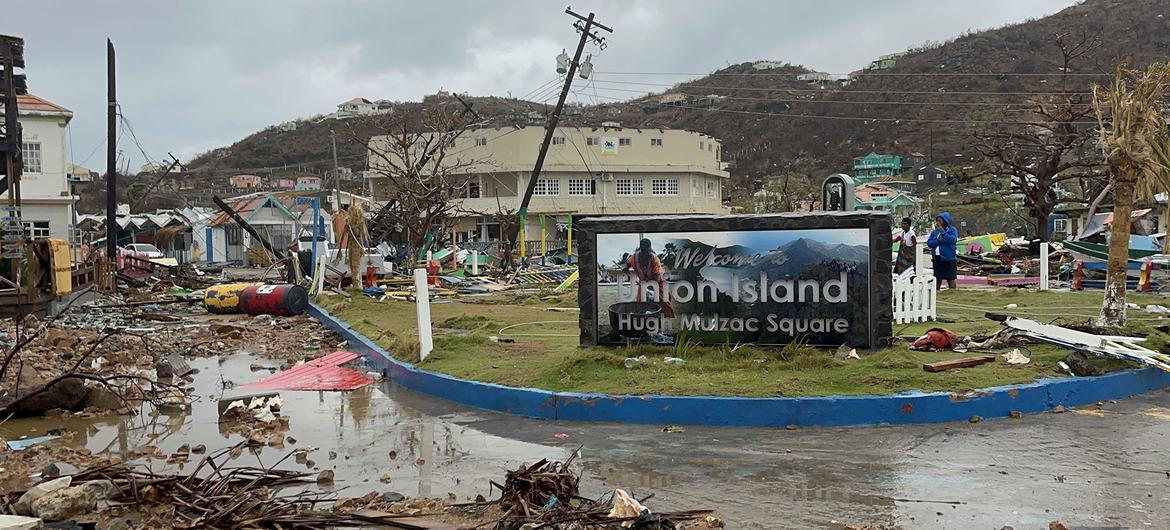
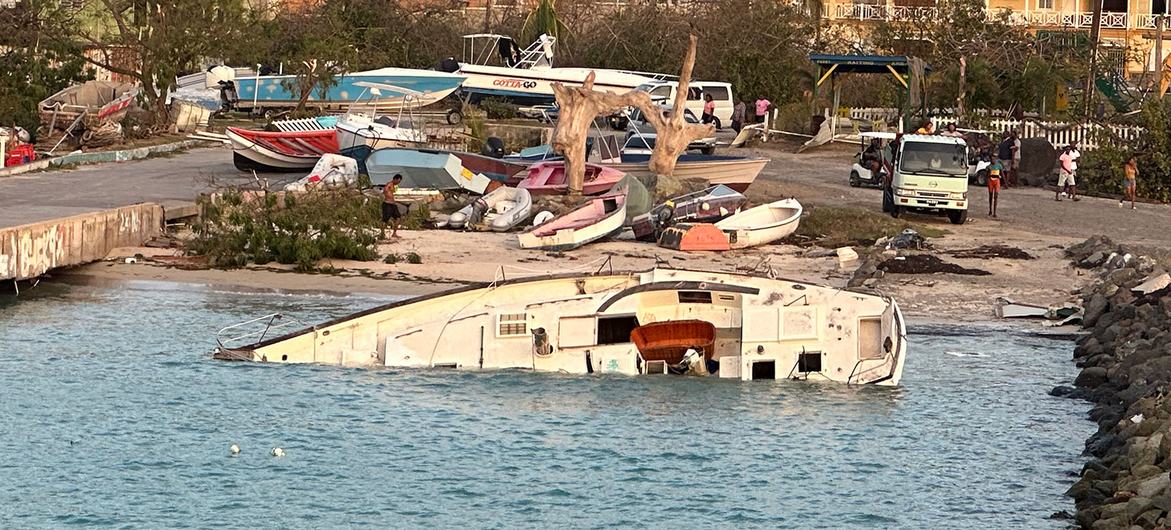
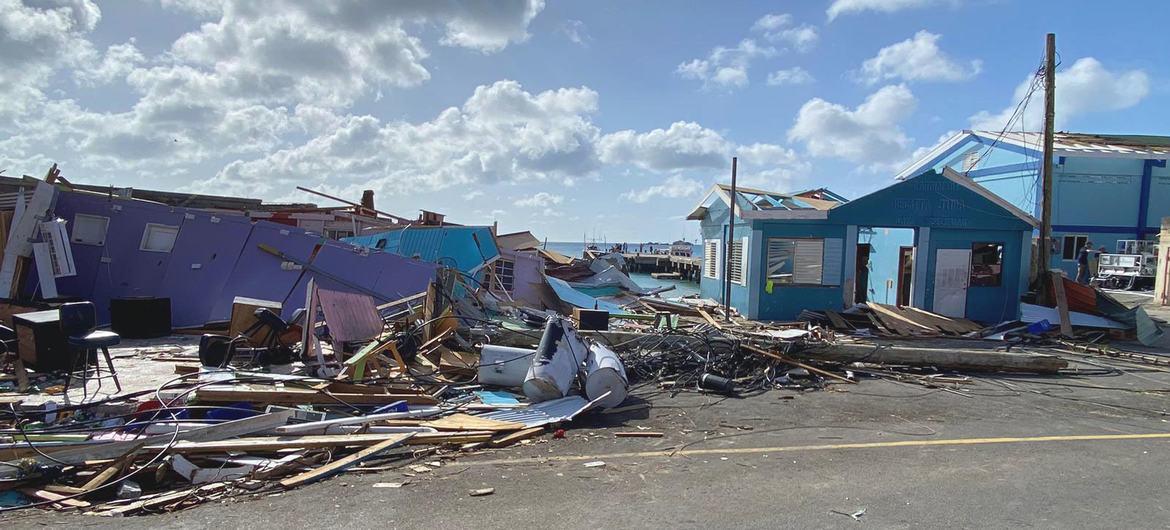
Hurricane Beryl caused massive destruction on Union Island in Saint Vincent and the Grenadines.
© WFP/Fedel Mansour
 
Hurricane Beryl caused massive destruction on Union Island in Saint Vincent and the Grenadines.


By Vibhu Mishra
10 July 2024 

Humanitarian Aid

The United Nations has announced a regional response plan to support communities in the islands worst affected by Hurricane Beryl, which swept through the Caribbean last week, leaving a trail of devastation.

The response plan, unveiled on Tuesday, estimates initial requirements at $9 million and targets support for about 43,000 people in Grenada and Saint Vincent and the Grenadines. These estimates may change as detailed assessments are ongoing.

The plan aims to provide lifesaving multisectoral assistance, complementing Government-led efforts, while ensuring the protection of women, girls and other vulnerable groups from gender-based violence.

It will also support the rapid delivery and resumption of essential services and livelihoods in affected areas, including restoring health, water and sanitation, education and agriculture services.

Tweet URL

Gender sensitivity crucial

The plan emphasizes that gender sensitivity will be critical in analyzing the needs, and in

the response, as both countries have a significant proportion of female-headed households.

Nearly half of all households in Grenada, and 39 per cent in Saint Vincent and the Grenadines, are headed by women.

The region is also prone to high levels of violence against women and girls, with almost 39 per cent of women in Grenada having experienced violence in a relationship.

Response phases

The initial humanitarian response is expected to take place in two main phases which may overlap in practice, depending on the situation on the ground. This approach will ensure that immediate needs are met while laying the groundwork for long-term recovery.

In the immediate term, humanitarians will work rapidly to expand the scope and scale of aid efforts, including rapid assessments, ramping up delivery, restoring key sectors such as healthcare, and water and sanitation, and addressing protection risks.

Focus will then shift to helping people resume their lives. This phase would include recovery and reconstruction, restoring livelihoods, building resilience, and transiting to longer-term activities.

International solidarity

To kickstart the response, the UN Secretary-General last week allocated $4 million from the Organization’s Central Emergency Response Fund (CERF), including $1.5 million for Grenada and Saint Vincent and the Grenadines.

According to the UN Office for the Coordination of Humanitarian Affairs (OCHA), Canada announced $1 million in assistance, to be channeled through UN agencies and the Red Cross. It is also supporting the Caribbean Disaster Emergency Management Agency (CDEMA).

OCHA also urged interested individual donors to make financial contributions to reputable charities or aid agencies and to refrain from in-kind donations, which may not correspond to identified needs or meet required quality standards, potentially creating administrative burdens and undermining local markets.

Contributions can also be made to CERF, the OCHA-UNDP Connecting Business initiative (CBi), or by supporting public advocacy and outreach. Support or contribution provided can be reported online to the Financial Tracking Service to ensure coherence and minimize duplication.

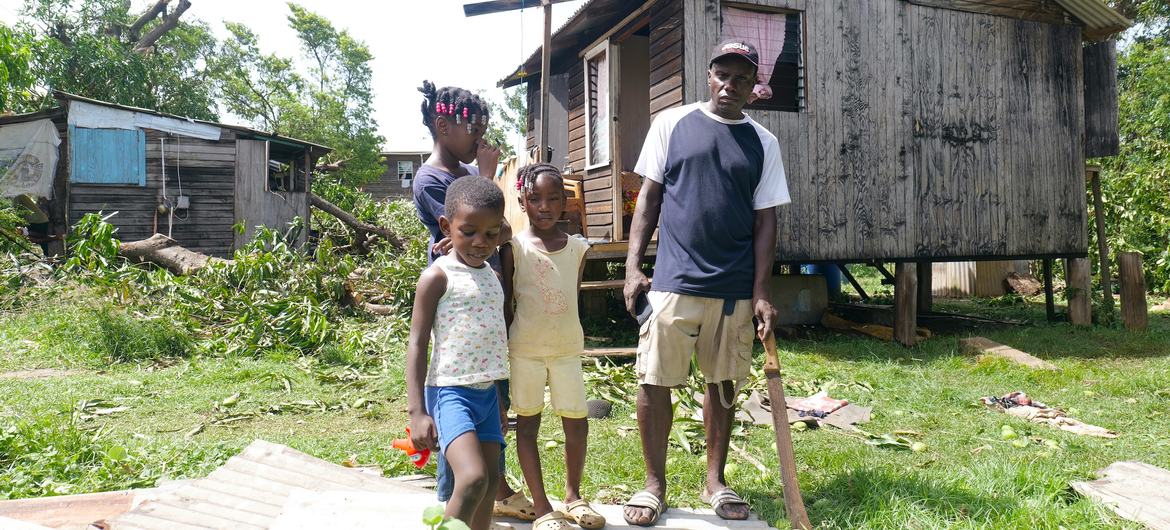
A family stands outside their home damaged by Hurricane Beryl in St. Andrews, Grenada.
© UNICEF/Sam Ogilvie
 
A family stands outside their home damaged by Hurricane Beryl in St. Andrews, Grenada.

Strongest hurricane ever in June

Hurricane Beryl was the strongest hurricane in history to form in June in the Atlantic Ocean.

Initially a tropical depression, it rapidly intensified into a Category 4 storm and briefly reached Category 5 status, with winds up to 240 km/h (150 mph).

UN World Meteorological Organization (WMO) experts have warned of a “very intense” hurricane season this year, with near-record ocean temperatures and the shift to La Niña conditions.

The agency has predicted up to 25 named storms expected through November. Among them, eight to 13 could develop into hurricanes.


https://news.un.org/en/story/2024/07/1151946

https://creativecommons.org/licenses/by/4.0/legalcode

понедельник, 8 июля 2024 г.

Hurricane Beryl highlights need for robust early warning systems


Hurricane Beryl has caused near total devastation on Union Island in Saint Vincent and the Grenadines.
© WFP/Fedel Mansour
 
Hurricane Beryl has caused near total devastation on Union Island in Saint Vincent and the Grenadines.


By Vibhu Mishra
2 hours ago Humanitarian Aid

Hurricane Beryl, which left a trail of destruction from the Caribbean to Mexico – and now the United States – has once again underscored the urgent need for robust early warning systems, the UN meteorological agency (WMO) said on Monday.

Beryl is the strongest hurricane ever to form in the Atlantic during June and rapidly intensified from a tropical depression to a Category 4 storm, briefly reaching Category 5 with winds up to 240 km/h (150 mph).

It made landfall in Texas early Monday morning local time as a Category 1 hurricane, causing a dangerous storm surge and the risk of flash flooding.

It is expected to weaken rapidly as it moves further inland, according to the UN World Meteorological Organization (WMO) specialized regional centre Miami, which is operated by the US National Hurricane Center (NHC).

Tweet URL

Extra vigilance needed

WMO also warned of a very intense hurricane season, with up to 25 named storms expected through November. Among them, eight to 13 could develop into hurricanes.  

We need to be especially vigilant this year due to near-record ocean heat in the region where Atlantic hurricanes form and the shift to La Niña conditions, which together create the conditions for increased storm formulation,” said Ko Barrett, WMO Deputy Secretary-General.

“This is why WMO and its partners have prioritized early warning action in small islands under the international Early Warnings For All initiative.”

‘Sobering picture’ in Jamaica

As access improves, the full impact of Hurricane Beryl is becoming clear.  

UN humanitarian teams in Jamaica, where the hurricane made landfall at 5:00 PM on July 3, report a “sobering picture of widespread damage and destruction.”

More than 250 roads together with critical infrastructure have been extensively damaged by fallen trees, flooding, and storm surges. Many houses have lost their roofs, according to a humanitarian bulletin issued on Sunday.

“[A UN team] visited Old Harbor Bay, Portland Cottage, Rocky Point, Alligator Pond and Treasure Beach. They witnessed many families in need of water, food, cleaning, and reconstruction supplies for their homes, as well as psychological support.”

About 160,000 people, including 37,000 children, are estimated to require humanitarian assistance.

Devastation caused by Hurricane Beryl on Carriacou Island in Grenada.
© WFP/Jean Paul Laveau
 
Devastation caused by Hurricane Beryl on Carriacou Island in Grenada.

‘Significant destruction’

In the eastern Caribbean, where Hurricane Beryl first made landfall on 1 July, islands have reported “severe damage” and “significant destruction.”

“Exact numbers remain a challenge, as assessments are ongoing amid damage to logistics, power and communications services, as well as power cuts,” the UN Office for the Coordination of Humanitarian Affairs (OCHA) said in a bulletin, also issued on Sunday.

Damage to small airstrips and reliance on smaller boats are hampering logistics efforts, complicating assessments, and delivery of aid.

In Grenada, Carriacou and Petite Martinique, as well as northern areas, are among the hardest-hit, with limited public transportation links between Carriacou and the mainland.

Union Island in Saint Vincent and the Grenadines is also severely affected. Authorities are housing vulnerable people in tourism facilities and conducting assessments. An unknown number of people have evacuated the island.

UN responding rapidly

Meanwhile, UN teams are supporting national and regional authorities in ongoing assessment and assistance missions.  

Specialist UN Disaster Assessment and Coordination (UNDAC) teams have also deployed to Grenada, and Saint Vincent and the Grenadines to aid the response.

In Jamaica, the UN Children’s Fund (UNICEF) has finalized its response plan and submitted funding requests to key humanitarian donors to meet immediate needs for children and affected families. The agency is also collaborating with other agencies under the leadership of the UN Humanitarian Coordinator to prepare a joint appeal to raise emergency funds.


https://news.un.org/en/story/2024/07/1151856


https://creativecommons.org/licenses/by/4.0/legalcode