Избранное сообщение

Показаны сообщения с ярлыком Afghanistan. Показать все сообщения

среда, 14 августа 2024 г.

Afghanistan: Taliban rule has erased women from public life, sparked mental health crisis


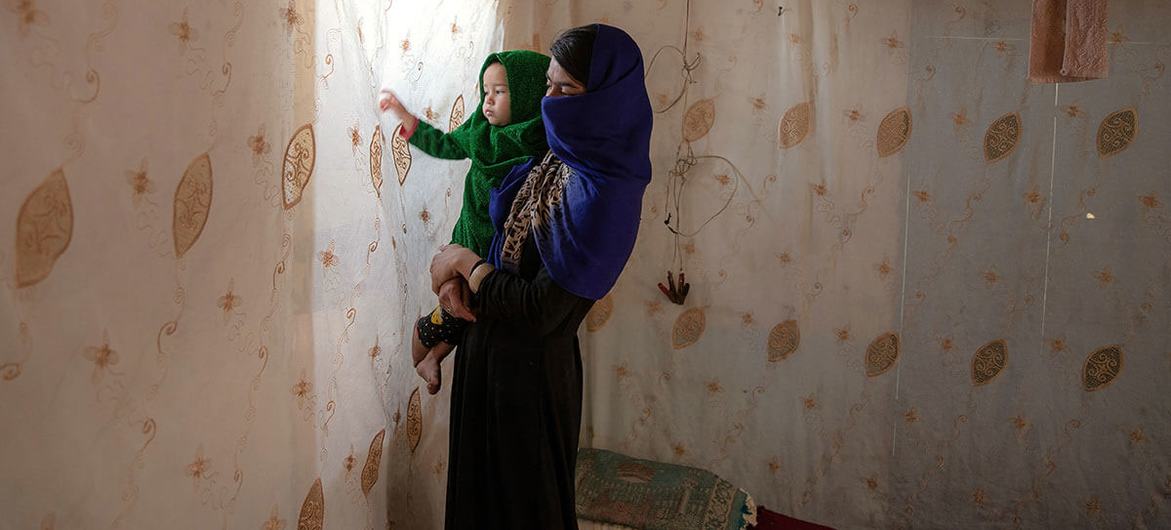
An Afghan mother holds her daughter, staring at the light from behind her obscured window.
© UN Women/Sayed Habib Bidell
 
An Afghan mother holds her daughter, staring at the light from behind her obscured window.


By Dianne Penn
13 August 2024
 Women

Three years of Taliban rule in Afghanistan has led to the “striking” erasure of women from public life, which is also reflected at the community and household levels, a senior official with the UN agency championing gender equality said on Tuesday. 

Alison Davidian, UN Women Country Representative in Afghanistan, briefed journalists in New York on their latest report addressing the plight of women and girls since the de facto authorities returned to power in August 2021.

She described this period as “three years’ worth of countless decrees, directives, and statements targeting women and girls – stripping them of their fundamental rights and eviscerating their autonomy.”

‘The horrors have not stopped’

Taliban edicts have denied girls from getting an education beyond the sixth grade and banned women from working for non-governmental organization (NGOs).

“Three years ago, the world was watching a takeover that was livestreaming horror after horror,” she said, speaking via videoconference from the Afghan capital, Kabul.

“And three years later, while the world’s attention may have turned elsewhere, the horrors have not stopped for Afghan women and girls, but nor has their conviction to stand against the oppression.” 
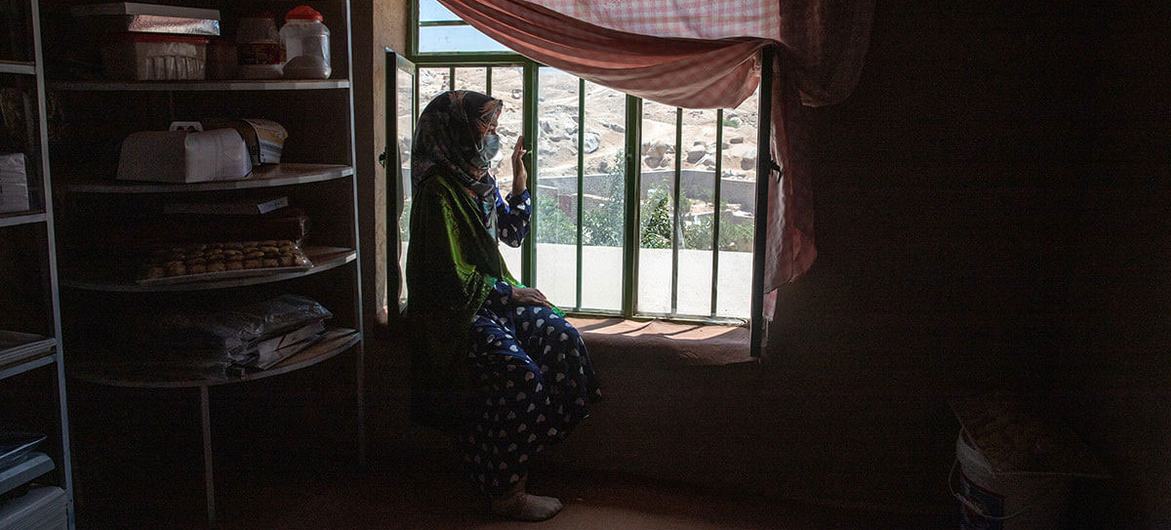
A 31-year-old woman sits by the window. She used to be an entrepreneur before the Taliban takeover.
© UN Women/Sayed Habib Bidell
 
A 31-year-old woman sits by the window. She used to be an entrepreneur before the Taliban takeover.

Monitoring other women

The UN Women report details trends based on consultations with thousands of women across Afghanistan – from provincial capitals to rural areas – since the Taliban’s return.

“And the first most striking trend is the erasure of Afghan women from public life,” said Ms. Davidian.

“To date, no woman in Afghanistan is in a leadership position anywhere that has influence politically, either at national or provincial level. When women are engaged in the Taliban’s structures, their roles are largely to monitor compliance of other women with their discriminatory decrees.”

No longer heard, even at home

This political erasure is also mirrored at the social level as a staggering 98 per cent of women surveyed felt they had limited or zero influence over decisions made in their communities.

Furthermore, the percentage of women who feel they have a say in decisions made in their own homes has dropped by nearly 60 per cent over the past year.

“To give some context, three years ago an Afghan women could technically decide to run for President. Now, she may not even be able to decide when to go and buy groceries,” said Ms. Davidian.

“Now, I’m not saying that three years ago it was perfect. It was not perfect. But it wasn’t this.”

When asked about the finding, she responded: “I think when you take away women’s right to education and restrict their rights to work and public life, it affects all rights and affects women’s agency more generally.”

Mental health crisis

The UN Women data also revealed an escalating mental health crisis linked to the loss of rights.  Sixty-eight per cent of women reported having “bad” or “very bad” mental health, and eight per cent said they knew at least one other woman or girl who had attempted suicide.

Ms. Davidian was adamant that the Taliban’s restrictions on women and girls will affect generations to come.

“Our analysis shows that by 2026, the impact of leaving 1.1 million girls out of school, and 100,000 women out of university, correlates to an increase in early childbearing by 45 per cent and an increase in maternal mortality by up to 50 per cent,” she said.

Invest in women

In the face of the deepening women’s rights crisis in Afghanistan, UN Women are calling for continued investment in the country’s women and girls.

“Nothing undermines the Taliban’s vision for society more than empowering the very part of the population that it seeks to oppress,” Ms. Davidian told reporters.

She said investment means allocating long-term sustainable funding to women’s organizations, designing programmes that directly counter their erasure – such as initiatives focused on education, livelihoods and entrepreneurship – and facilitating spaces “where Afghan women can tell us directly on what their priorities are and what their recommendations are.” 

Regarding entrepreneurship, she explained that Afghan women can run businesses, though mainly home-based, in sectors such as carpet weaving, tailoring and food processing.  However, access to markets and financing are key challenges.

In this regard, UN Women are supporting Afghan women entrepreneurs to overcome these hurdles, in addition to helping them with business development skills “so that in the space that they have, they’re able to utilize it as much as possible.”
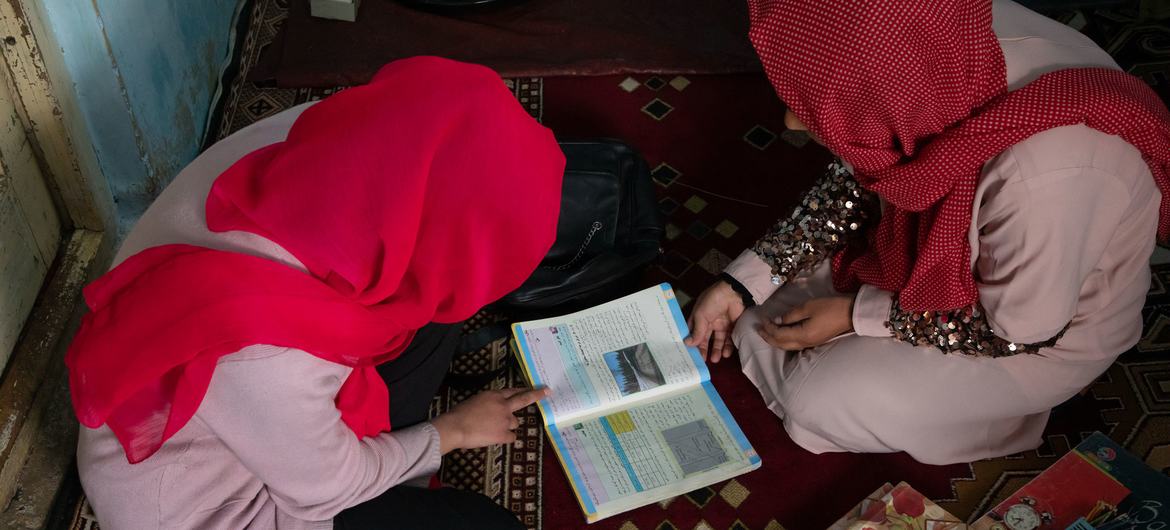
An Afghan girl studies at home with the help of her father after being denied the right to carry on studying at school.
© UNICEF/Munir Tanwee/Daf recor
 
An Afghan girl studies at home with the help of her father after being denied the right to carry on studying at school.

‘The world is watching’

Overall, the agency’s report shows that “Afghan women want to represent themselves, but one meeting, one participation option, is not enough,” Ms. Davidian said.

“In every and any form of engagement, we need to be asking how do we meaningfully include Afghan women?  And how do we break the pattern of women’s exclusion?” 

She also looked at the wider picture as “we are at a real inflection point” in the fight for women’s rights globally, and not just in Afghanistan.

“The world is watching what happens to Afghan women and girls,” she said. “In some cases, it watches to condemn, but in others, it watches to emulate the Taliban’s systematic oppression.” 

She insisted that the international community cannot leave Afghan women to fight alone, because “if we do, we have no moral ground to fight for women’s rights anywhere else. Their fate determines the fate of women everywhere.”  


https://news.un.org/en/story/2024/08/1153151
https://creativecommons.org/licenses/by/4.0/legalcode

пятница, 19 июля 2024 г.

Eastern Afghanistan reels from fatal storms; dozens dead, hundreds homeless


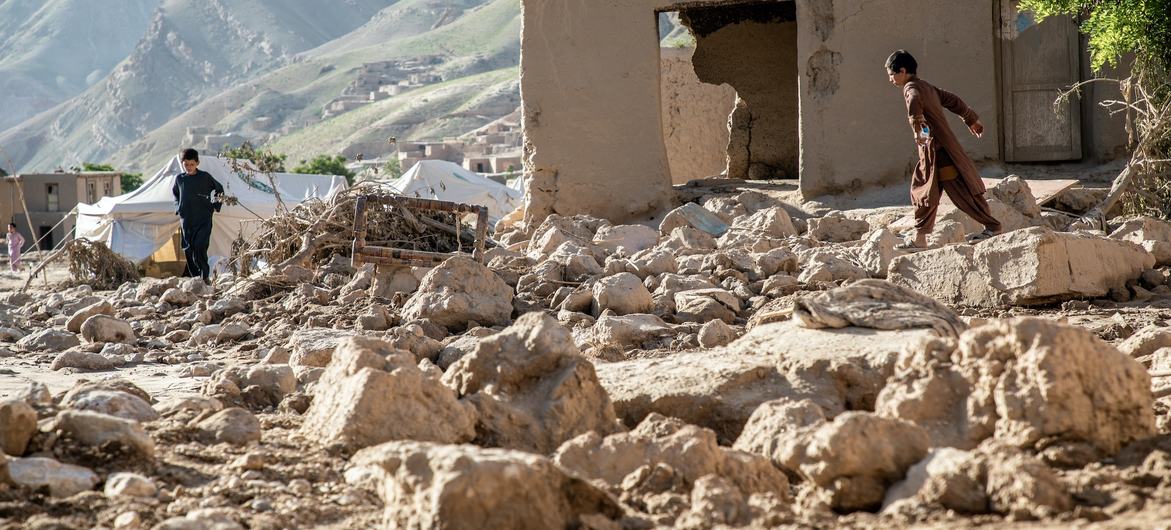
A house severely damaged by floods in eastern Afghanistan. (file photo)
© UNICEF/Madina Qati Musadiq
 
A house severely damaged by floods in eastern Afghanistan. (file photo)


By Vibhu Mishra
18 July 2024
 Humanitarian Aid

UN teams and humanitarian partners in Afghanistan are mobilizing in response to devastating windstorms and flash floods that have ravaged eastern regions of the country, resulting in dozens of fatalities and the destruction of hundreds of homes.

Nangarhar province, including its capital Jalalabad, is reported to be the hardest hit. This province also suffered from devastating floods in April. Other affected provinces include Badakhshan, Kunar, Laghman and Nuristan.

During the daily press briefing in New York, UN Spokesperson Stephane Dujarric reported that a reception centre at Nangarhar’s Torkham border crossing, a primary entry point for people returning from Pakistan, has been heavily impacted by the storm.  

“While assessments are ongoing, our humanitarian partners have deployed nine mobile health and nutrition teams, while our health partners have provided medical supplies to Nangahar Regional Hospital and Fatima Zuhra Hospital.”

Tweet URL

Urgent needs

According to the UN Office for the Coordination of Humanitarian Affairs (OCHA), water, sanitation, and hygiene (WASH) facilities, along with 400 tents at a nearby camp, have been damaged or destroyed.

Initial reports indicate that affected households urgently need access to food, shelter, health, and WASH services. Forty people are said to have died and more than 340 injured.

Protection and health risks are exacerbated by many flood-affected families sheltering outside their destroyed or damaged homes. There is also a critical need for mental health and psychosocial support services for the most affected families.

Unexploded ordinance hazards

UN refugee agency, UNHCR, reported that some areas affected by the flooding are feared to be contaminated with unexploded ordinances (UXOs) or mines, posing grave risks to civilians.

It also said most families have lost their sources of income, which is likely to push them into deeper vulnerabilities, while women and girls indicated feeling unsafe at water points, latrines, firewood collecting areas and open spaces with no shelter.

Resources lacking

Mr. Dujarric also highlighted the urgent need for additional funding to support those impacted.

“To date, we have received some $720 million – which is less than a quarter of what we need for this year’s $3 billion humanitarian appeal for Afghanistan,” he said.


https://news.un.org/en/story/2024/07/1152271

https://creativecommons.org/licenses/by/4.0/legalcode

вторник, 4 июня 2024 г.

UNICEF extends aid to children in Afghanistan affected by flash floods


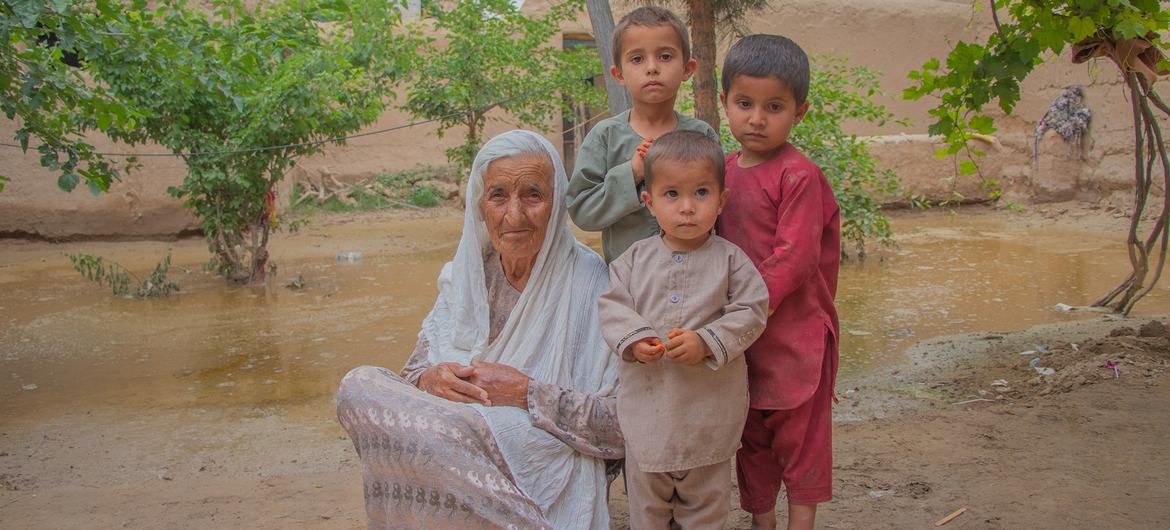
A grandmother sits with her three grandsons who were injured when flash floods hit their village in Baghlan province, Afghanistan.
© UNICEF/Osman Khayyam
 
A grandmother sits with her three grandsons who were injured when flash floods hit their village in Baghlan province, Afghanistan.


3 June 2024

Climate and Environment

The UN Children’s Fund (UNICEF) has rushed to support tens of thousands of children in Afghanistan who are being affected by ongoing flash floods, mainly in Baghlan, Badakhshan and Ghor.

Afghanistan’s most recent floods killed about 350 people, including dozens of children, and damaged more than 7,800 homes leaving over 5,000 families displaced. 

UNICEF has since provided safe water, hygiene kits with soap, toothbrushes and more to communities in Afghanistan. The children’s fund also organised hygiene sessions to teach civilians about handwashing and safe water storage amidst the natural disaster.

Dr. Tajudeen Oyewale, UNICEF Representative in Afghanistan said that international communities should “redouble efforts and investments to support communities to alleviate and adapt to the impact of climate change on children.”

UNICEF has also supported civilians in Afghanistan by offering cash assistance to help families provide for their basic needs, and by assigning health and nutrition teams to treat those injured and ill. Further, the agency has distributed warm clothing, blankets and household items to families who had lost possessions.

Intensifying climate crisis

UNICEF reports that the recent flash floods in Afghanistan reveal an “intensifying climate crisis” that is “increasing in frequency and ferocity” causing loss of lives and livelihoods and damaged infrastructure. 

Dr. Oyewale said UNICEF and members of the humanitarian community need to prepare for a “new reality of climate-related disasters.”

“The growing number and severity of extreme weather events will require UNICEF and other humanitarian actors to step in with even more rapid and large-scale humanitarian responses,” she said. “But this can only be possible with strengthened preparedness measures, such as greater pre-positioning of emergency relief supplies and enhanced coordination with partners.”

She also said that UNICEF needs to concentrate on helping communities adapt to climate and environmental shocks to reduce civilian dependence on humanitarian aid. 

Children’s Climate Risk Index 

UNICEF says that Afghanistan is ranked 15th out of 163 nations on its 2021 Children's Climate Risk Index which means that children there are particularly vulnerable to the effects of climate and environmental shocks. However, Afghanistan is said to be among those least responsible for creating climate issues.

Dr. Oyewale said heavy rainfall should not trigger a disaster for children in Afghanistan.

“We need to prioritise the unique needs of children in decision-making and address these needs now to protect children from future disasters while simultaneously investing in the basic services they rely on,” she said. 


https://news.un.org/en/story/2024/06/1150566


https://creativecommons.org/licenses/by/3.0/legalcode

среда, 22 мая 2024 г.

Climate crisis fuels deadly floods, worsening hunger in Afghanistan


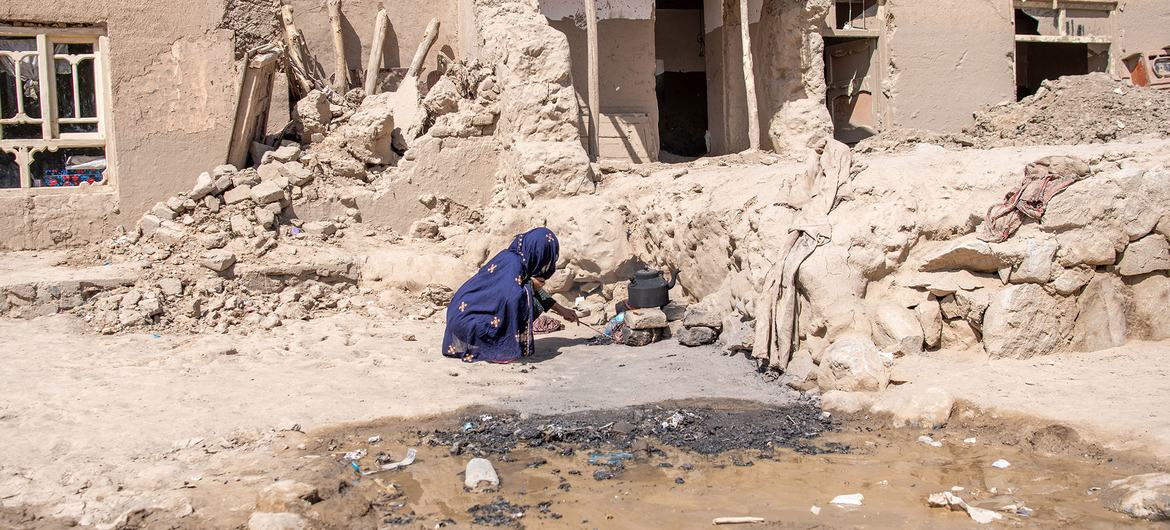
Aftermath of the 10 May floods in Baghlan province, Afghanistan.
© UNICEF/Amin Meerzad
 
Aftermath of the 10 May floods in Baghlan province, Afghanistan.


21 May 2024

Humanitarian Aid

The devastating floods that struck Afghanistan recently are likely to intensify in the coming months, exacerbating the already critical food insecurity in the affected districts, the UN emergency food relief agency warned on Tuesday.

The UN World Food Programme (WFP) said that as erratic weather on the back of the worsening climate crisis “becomes the norm”, things will only get worse.

This month’s unusually high rainfall followed a dry winter, rendering the ground too hard to absorb water, leading to massive flooding. Unseasonably warm temperatures further complicated the situation by melting mountain snow, causing rivers to overflow and inundating villages with mud.

“With one disaster after another hitting these communities, they are being pushed back into destitution. Recent improvements in food security in Afghanistan now risk being lost,” said Hsiao-Wei Lee, WFP Country Director for Afghanistan.

“These families need emergency assistance to survive, and in the longer term, they need investments in community infrastructure that help protect their homes, lands and livelihoods.”

Tweet URL
WFP_Afghanistan

Severe destruction

Floods last week due to heavy rains caused severe destruction in Ghor and Faryab provinces, in northwest Afghanistan. Over 130 people are reported to have died, hundreds more are missing, and thousands of houses and businesses have been destroyed or damaged.

Access is also a major challenge with many villages cut off and humanitarians are struggling to reach affected regions.

As search and rescue operations continue, the number of casualties is expected to rise, highlighting the urgent need for more international support and intervention to address the growing humanitarian crisis in Afghanistan.

On 10-11 May, the northeast was struck by heavy rains and flash floods, affecting Badakhshan, Baghlan and Takhar provinces. At least 180 people are confirmed to have been killed and a further 280 injured.

WFP response

In immediate response to the floods, WFP provided fortified biscuits and nutritional supplements to children, and worked with local bakeries to distribute bread to the hardest-hit communities.

By the end of last week, the agency began distributing food rations and cash assistance in functional market areas.

For its ongoing response, WFP requires an additional $14.5 million to cover emergency food and nutrition assistance and resilience building projects.

To mitigate future disasters, it is investing in climate adaptation projects, including the construction of protective walls, dams, and irrigation canals.

Notably, a WFP-supported flood wall in Baghlan protected 670 families and 400 acres of agricultural land during the heavy rains.

DiCarlo in Afghanistan

Meanwhile, on the political front, Rosemary DiCarlo, UN Under-Secretary-General for Political Affairs, visited Afghanistan from 18 to 21 May, where she met Taliban officials, members of the diplomatic community in Kabul and representatives of civil society.

According to UN Spokesperson Stéphane Dujarric, discussions focused on the meeting of Special Envoys on Afghanistan, which the UN is organizing in the Qatari capital, Doha, on 30 June and 1 July.

The meeting aims to increase international engagement with Afghanistan in a more coherent, coordinated and structured manner.

“She extended to the de facto Minister of Foreign Affairs, Amir Khan Muttaqi, an advance invitation from the Secretary-General to participate at the forthcoming meeting of Special Envoys,” Mr. Dujarric told journalists at the regular press briefing in New York.

Taliban leaders did not attend the last round of the meeting, held in February.


https://news.un.org/en/story/2024/05/1150066


https://creativecommons.org/licenses/by/3.0/legalcode

пятница, 8 марта 2024 г.

Afghanistan’s economy has ‘basically collapsed’: UNDP


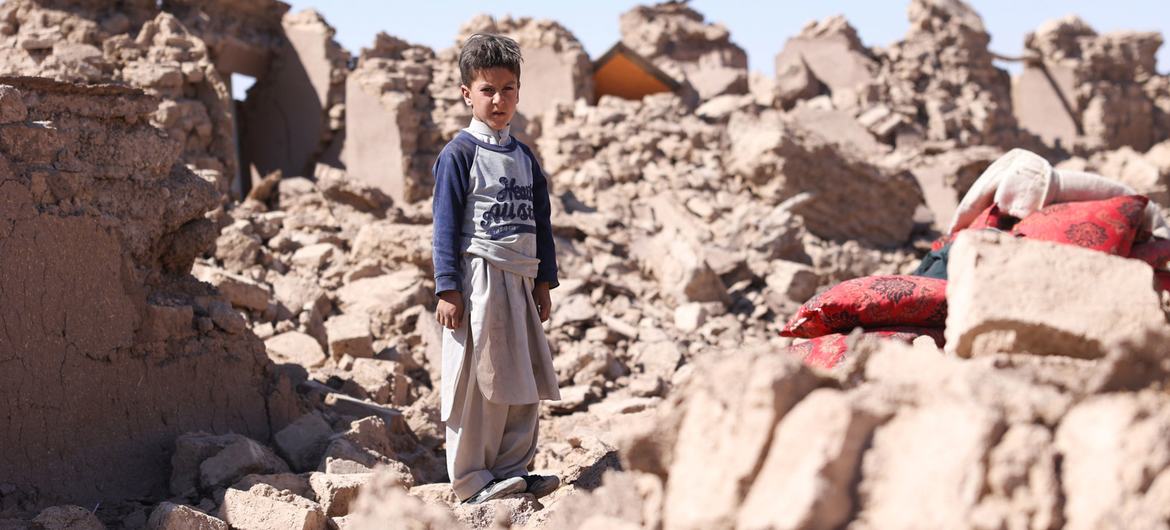
A child stands amidst the ruins left in the aftermath of the devastating October 2023 earthquakes in Herat, Afghanistan.
© WHO/Zakarya Safari
 
A child stands amidst the ruins left in the aftermath of the devastating October 2023 earthquakes in Herat, Afghanistan.


7 March 2024
Economic Development

The Afghan economy and especially regions affected by the devastating earthquakes in October last year, “are still hurting”, the UN Development Programme (UNDP) said on Thursday, as restrictions on women and girls continue to thwart basic rights and economic progress.

Kanni Wignaraja, Director of UNDP’s Regional Bureau for Asia and the Pacific, who recently visited the country, told correspondents in New York that 69 per cent of Afghans are “subsistence insecure” – meaning they do not have enough basic resources.

“Something that really hit me … was the harsh impact of continuous natural disasters,” she said, adding that many parts of Afghanistan are facing “dramatic” scarcity of water further setting back development efforts.

Lights out

Since the takeover by the Taliban in 2021, the Afghan economy has contracted by 27 per cent, leading to economic stagnation, according to UNDP. Unemployment has doubled and only 40 per cent of the population has access to electricity.

Sectors such as finance have “basically collapsed” and there are no major sources of economic activity such as exports or public expenditure, leaving small and medium enterprises (SMEs) and farmers as the lifeblood of the faltering economy.

Afghan economy, households and cross-cutting sectors.

Ban on girls’ education

She also voiced concern over the situation of women and girls.

There have been severe restrictions on women imposed by the Taliban, such as on their dress code and employment in various sectors.

While they can work without restriction in sectors such as health or nursing, their employment in the public sector dropped even further to about six per cent, Ms. Wignaraja said.

“The biggest challenge is the continued edict that bans girls’ education. Not being able to move forward after the sixth grade is a major stumbling block,” she added.

“Last year, no girl graduated the twelfth grade so how are they going to jump from sixth grade to moving into technical colleges or universities need for the medical field?” she exclaimed.

Local economy reeling

The UNDP official also noted the challenges facing local economies and the lack of capital, especially in the private sector.

UNDP is supporting microfinance initiatives, but with no cash flowing through the system, results are not at the level and scale required to spur growth.

She expressed hope that recent funds from the World Bank for climate projects could prompt other global climate cash investments.

“We can still work directly with the community to make this happen,” she said.

Situation in Herat

Ms. Wignaraja also visited Herat province, the epicentre of last October’s earthquakes.

Tweet URL
UNDP

“Just driving through villages and talking to villagers, there is a huge contrast,” she said, noting that there are whole villages still living in tents without access to water and those that are starting to build permanent structures.

“For me the bottom line is that we have to let household economies and local economies pick back up. People do not want to live in tents, they cannot survive the sandstorms in tents,” she added.

Supporting women-led business

In conclusion, the UNDP official highlighted the agency’s support to some 75,000 women-owned and women-led micro and small businesses.

“They in turn employ about, on average, six other women and young people. Each of them feeds a household of ten,” she said, noted that in total about 4.5 million people benefit.

“We spend on average $42 a month per women’s business – that’s it,” she added, underscoring the resilience and boldness of women entrepreneurs.

Overall, with women farmers and traders, as well as direct cash support and household social protection prorgrammes, UNDP has reached one quarter of women across Afghanistan, she said.

“The story of this country will come back through their boldness and efforts,” she concluded.


"Afghanistan’s economy has ‘basically collapsed’: UNDP | UN News" https://news.un.org/en/story/2024/03/1147387


https://creativecommons.org/licenses/by/3.0/legalcode

воскресенье, 15 октября 2023 г.

‘A mountain of hardship’, as Afghanistan suffers yet another earthquake


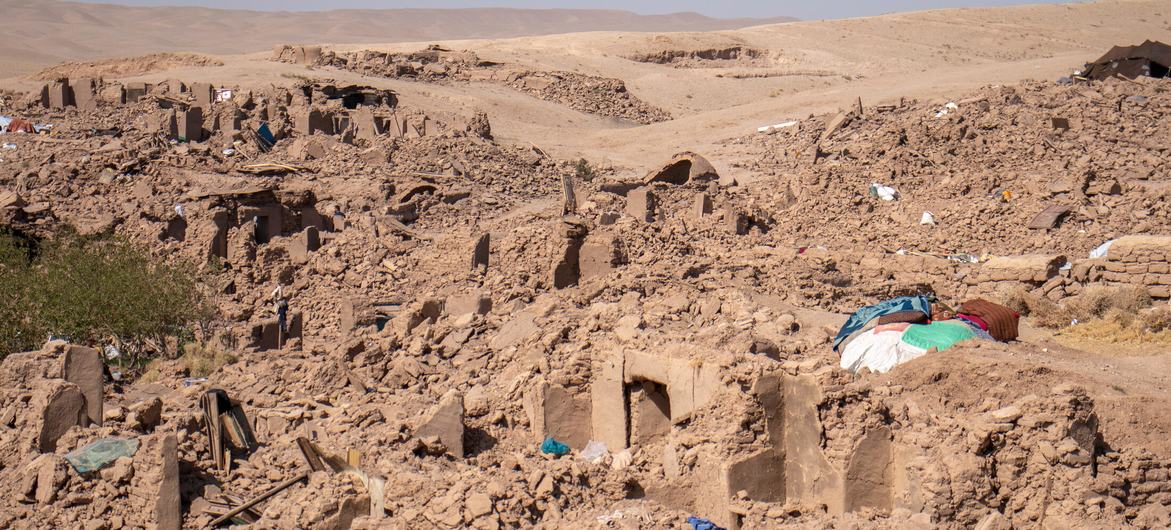
A scene of utter devastation in a village in Zinda Jan district, Afghanistan. Almost all homes in the village were destroyed in the October earthquakes.
© UNICEF/Khayyam
 
A scene of utter devastation in a village in Zinda Jan district, Afghanistan. Almost all homes in the village were destroyed in the October earthquakes.
16 October 2023
Humanitarian Aid

A powerful earthquake struck western Afghanistan again on Sunday, making it the fourth to hit the impoverished region since 7 October, causing more suffering for families left with little to survive on as the hard winter approaches, UN agencies have reported.

The latest, 6.3 magnitude earthquake struck areas northeast of Herat city Sunday morning local time.

According to the UN Office for Coordination of Humanitarian Affairs (OCHA), as of Monday evening local time, two people were reported to have been killed and over 150 injured in the latest quake.

In total, about 1,500 people have died, and a further 2,000 injured.

Race against time

Daniel Peter Endres, acting UN Humanitarian Coordinator for Afghanistan, described the situation there as “a race against time” for aid organisations to deliver assistance before the onset of winter.

“These earthquakes have struck some of the most vulnerable communities in Afghanistan, they have already been grappling with decades of conflicts and under development,” he told journalists in New York, via video link.

“The affected communities have little resilience to cope with the multiple and simultaneous shocks, and especially with the cold winter coming, when households have limited food resources and are most constrained in capacity.”

Nightly temperatures have dipped considerably, he said, noting that many whose homes were damaged are sleeping outside, afraid their dwellings might collapse completely.

Tweet URL

Initial response plan

He mentioned that local communities and aid organizations are helping those in need by providing food and non-food relief items, including tents, blankets and heating supplies. However, more help is needed.

The humanitarian community in Afghanistan has created an initial response plan for recovery, focusing on 114,000 people whose homes were destroyed or badly damaged. The plan may be revised as necessary.

Mr. Endres said the crisis response will be absorbed within the 2023 Afghanistan Response Plan, which is itself severely underfunded.

Impoverished region

The powerful earthquakes, have added to “a mountain of hardship” facing Afghans, the UN World Food Programme (WFP) said on Monday.

“These are communities that are already barely able to feed themselves, and every one of these crises pounds them back into utter destitution,” added Philippe Kropf, an agency spokesperson in Afghanistan, who went to affected villages after the first earthquakes struck last week.

“This comes on the back of nearly 40 years of near uninterrupted conflict,” he stressed, “of high levels of food insecurity, of five years of drought or drought-like conditions – and an economic downturn two years ago that has destroyed livelihoods and jobs.”

Damage till date

About 43,000 people (7,165 families) are reported to have been directly affected by the earthquakes and their aftershocks across the region, according to OCHA. More than 3,300 homes are reported to have been destroyed, 2,100 severely damaged, and 1,700 moderately damaged.

Aid facilities, homes, water sources, and offices have also sustained damage of varying severity, and engineering assessments are ongoing to ascertain structural damage, and to allow traumatized residents to return to their homes.


https://news.un.org/en/story/2023/10/1142402


https://creativecommons.org/licenses/by/3.0/legalcode

четверг, 5 октября 2023 г.

Afghanistan: Aid efforts rapidly expand as post-quake death toll rises


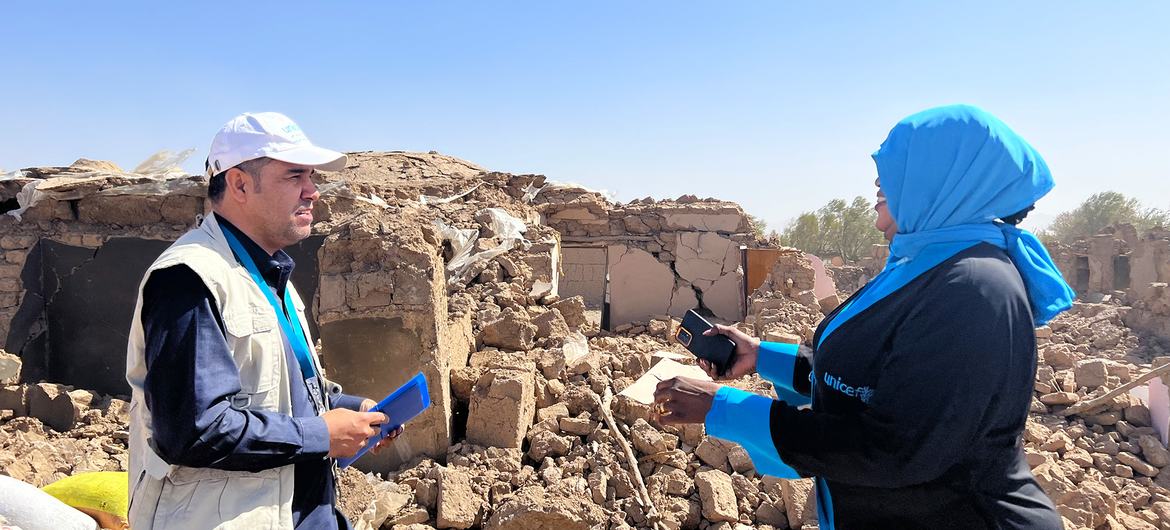
UNICEF staff are providing support following the earthquake in Herat province in Afghanistan.
© UNICEF/Rebecca Phwitiko
 
UNICEF staff are providing support following the earthquake in Herat province in Afghanistan.
8 October 2023
Humanitarian Aid

The death toll from the major earthquake that pummelled western Afghanistan soared to more than 1,000 overnight as rescue operations continued to fan out over affected villages, UN agencies said on Sunday.

“The United Nations and our partners in Afghanistan are coordinating with the de facto authorities to swiftly assess needs and provide emergency assistance,” UN Spokesperson Stéphane Dujarric said.

Tweet URL

UN agencies, partners, and the de facto authorities continued to mount emergency operations. Initial assessments indicated that the 6.3 magnitude quake that struck 40 kilometres west of Herat on Saturday caused deaths across eight villages, according to the UN humanitarian office (OCHA).

By Sunday evening, the agency released a new update showing 1,023 people were reported killed and another 1,663 injured across 11 villages of Zindajan district of Herat province, where 100 per cent of homes are estimated to have been completely destroyed.

A further 516 people (203 men and 213 women) were reported to be missing from the district, OCHA said.

To support the ongoing response, the UN Humanitarian Coordinator approved a $5 million emergency reserve allocation from the Afghanistan Humanitarian Fund, which OCHA will launch and fully process within 24 hours with eligible partners able to utilize their grants effective 9 October.

Humanitarian partners will also develop an emergency appeal, the agency said.

More UN teams deployed

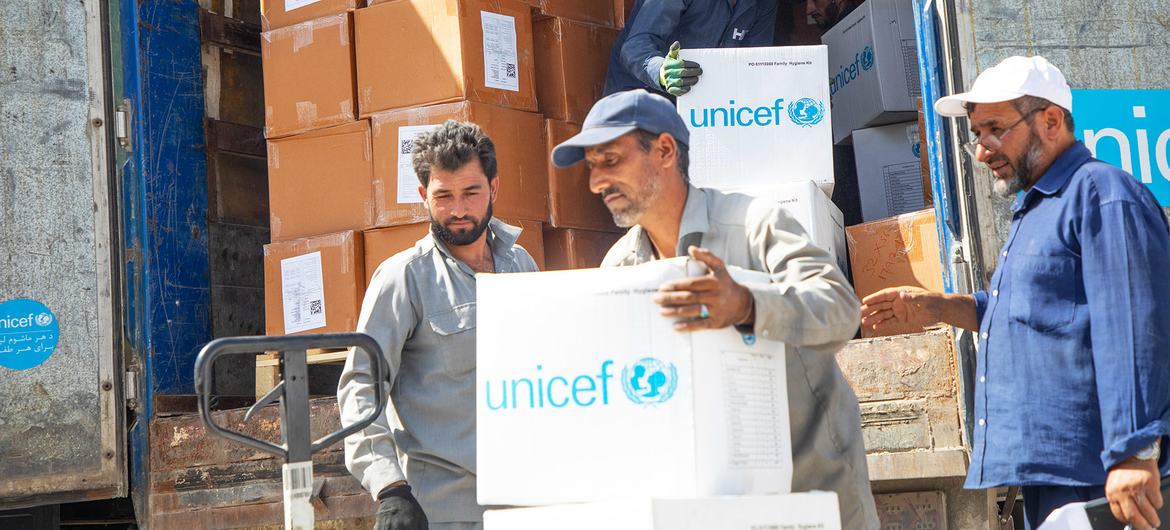
On the ground, the UN Children’s Fund (UNICEF) deployed more teams to join ongoing humanitarian efforts. The agency dispatched 10,000 hygiene kits, 5,000 family kits, 1,500 sets of winter clothes, blankets, 1,000 tarpaulins, and basic household items, which will complement support provided by other UN agencies and partners.

“Together with our partners, we will make every effort to bring quick relief to those affected,” said Fran Equiza, the UNICEF Representative in Afghanistan.

The injured were being treated in nearby health facilities, with emergency drugs provided by UNICEF and partners, according to the agency, which also provided emergency tents for overburdened health clinics.

Working with the de-facto authorities, the International Organization for Migration (IOM), World Food Programme (WFP), and partners sent emergency assessment teams as part of an initial response. The UN refugee agency, UNHCR, and the World Health Organization (WHO) continued to provide assistance.

Relief aid is dispatched to earthquake-affected western Afghanistan.
© UNICEF/Sharifa Khan
 
Relief aid is dispatched to earthquake-affected western Afghanistan.

International community must ‘come together’

UN Secretary-General António Guterres expressed his solidarity with the people of Afghanistan, extended his sincere condolences to the families of the victims, and wished a swift recovery to those injured, the UN Spokesperson said. 

“As winter approaches, the UN Secretary-General calls on the international community to come together and support people impacted by the earthquake, many of whom were already in need before this crisis,” he said.


https://news.un.org/en/story/2023/10/1142042

https://creativecommons.org/licenses/by/3.0/legalcode

понедельник, 18 сентября 2023 г.

Taliban urged to uphold Afghan girls’ right to education

Taliban urged to uphold Afghan girls’ right to education
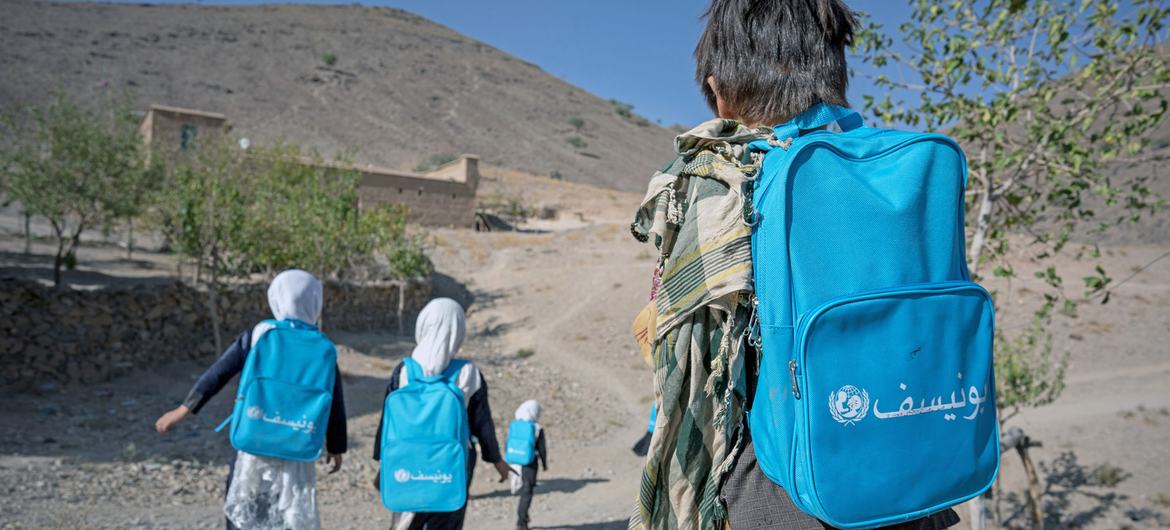
Primary school girls and boys walk to a UNICEF-supported community centre in Shahristan District in central Afghanistan.
© UNICEF/Mark Naftalin
 
Primary school girls and boys walk to a UNICEF-supported community centre in Shahristan District in central Afghanistan.
Culture and Education

The international community must ensure that every girl in Afghanistan has an opportunity to learn, the head of the UN fund for education in emergencies said on Monday – the second anniversary of the Taliban’s edict banning secondary education for girls. 

“Denying education to girls is a violation of universal human rights,” said Yasmine Sherif, Executive Director of Education Cannot Wait (ECW).

“The de facto authorities can do the right thing for the long-suffering people of Afghanistan by ensuring that every girl in Afghanistan can access quality education and contribute to rebuilding their war-torn country,” she added.

2.5 million girls affected

Ms. Sherif reported that 80 per cent of school-age Afghan girls are currently not in the classroom. 

"That’s 2.5 million girls denied their right to the safety, protection, opportunity of education – their inherent human right,” she said.

Uplifting #AfghanGirlsVoices 

Education Cannot Wait (ECW) has expressed solidarity with all girls in Afghanistan who are courageously speaking up for the right to education.

The fund recently launched a campaign, #AfghanGirlsVoices which will highlight the issue throughout the year.

“Together, we must ensure that, through education, every girl in Afghanistan can emerge from the shadows so they can contribute to a brighter future which every Afghan so deserves,” said Ms. Sherif.

Learning under pressure

ECW runs a multi-year resilience programme in Afghanistan that aims to support more than 250,000 children and young people across some of the most remote and underserved areas of the country.

It has appealed for urgent additional funding to fill a $30 million shortfall to fully implement the programme, and the $670 million required to fully finance a new strategic plan to reach 20 million crisis-affected children worldwide over the next three years. 

https://news.un.org/en/story/2023/09/1140937

https://creativecommons.org/licenses/by/3.0/legalcode

четверг, 18 мая 2023 г.

Children bearing the brunt of Afghanistan crisis: UNICEF


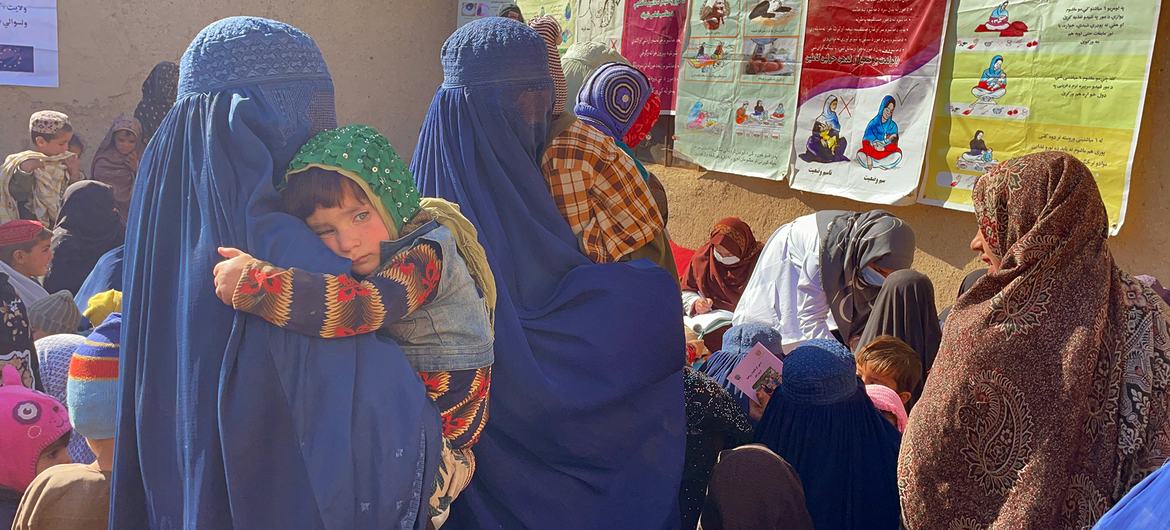
Women and children wait to be seen by members of a UNICEF-supported mobile health and nutrition team in Kandahar, Afghanistan.
© UNICEF/Salam Al-Janabi
 
Women and children wait to be seen by members of a UNICEF-supported mobile health and nutrition team in Kandahar, Afghanistan.
18 May 2023
Humanitarian Aid

Roughly 90 per cent of the population in Afghanistan is on the brink of poverty “and children bear the brunt of it,” the Representative of the UN Children’s Fund (UNICEF) in the country, Fran Equiza, told journalists in New York on Thursday. 

“Because, in what is a deeply troubled country - grappling with humanitarian catastrophe, climate related disasters, and egregious human rights abuses - too many people have forgotten that Afghanistan is a children's rights crisis,” he said, warning that the situation is getting worse. 

Young lives at risk 

This year, some 2.3 million Afghan boys and girls are expected to face acute malnutrition.  Of this number, 875,000 will need treatment for severe acute malnutrition, a life-threatening condition. 

Furthermore, around 840,000 pregnant women and breastfeeding mothers are likely to experience acute malnutrition, jeopardising their ability to give their babies the best start in life. 

Mr. Equiza added that although fighting has mostly stopped, decades of conflict mean that every day, children’s rights are violated “in the most appalling ways”.   

Escalating danger 

He said Afghanistan is among the most “weapons-contaminated countries” in the world, and most of the casualties are children. 

He cited preliminary data which suggests that 134 children were killed or maimed by explosive devices between January and March of this year. 

“This is the reality of the escalating danger faced by Afghan children as they explore areas that were previously inaccessible due to fighting,” he said. 

"Many of those killed and maimed are children collecting scrap metal to sell. Because that’s what poverty does. It compels you to send your children to work - not because you want to, but because you have to.”  

Trapped in child labour 

Meanwhile, roughly 1.6 million Afghan children – some as young as six - are trapped in child labour, working in dangerous conditions just to help their parents put food on the table. 

"And where education used to be a symbol of hope, children’s right to learn is under attack,” Mr. Equiza added. 

“Girls across Afghanistan have been denied their right to learn for over three years now – first, due to COVID-19 and then, since September 2021, because of the ban on attending secondary school. I don’t need to tell you of the impact of these absences on their mental health.” 

Staying and adapting 

He underlined UNICEF’s commitment to stay and deliver for the women and children in Afghanistan, where it has had a presence for nearly 75 years. 

“We’re adapting to the fast-changing realities on the ground, finding solutions to reach the children that need us the most, while ensuring that Afghan women employed by UNICEF can continue their invaluable contribution to our work for children,” he said. 

With needs growing every day, he called for greater support from the international community, noting that UNICEF’s Humanitarian Action for Children Appeal is only 22 percent funded. 


 https://news.un.org/en/story/2023/05/1136797


https://creativecommons.org/licenses/by/3.0/legalcode

среда, 19 апреля 2023 г.

Afghanistan: UN predicts restrictions on women’s rights will worsen economic catastrophe


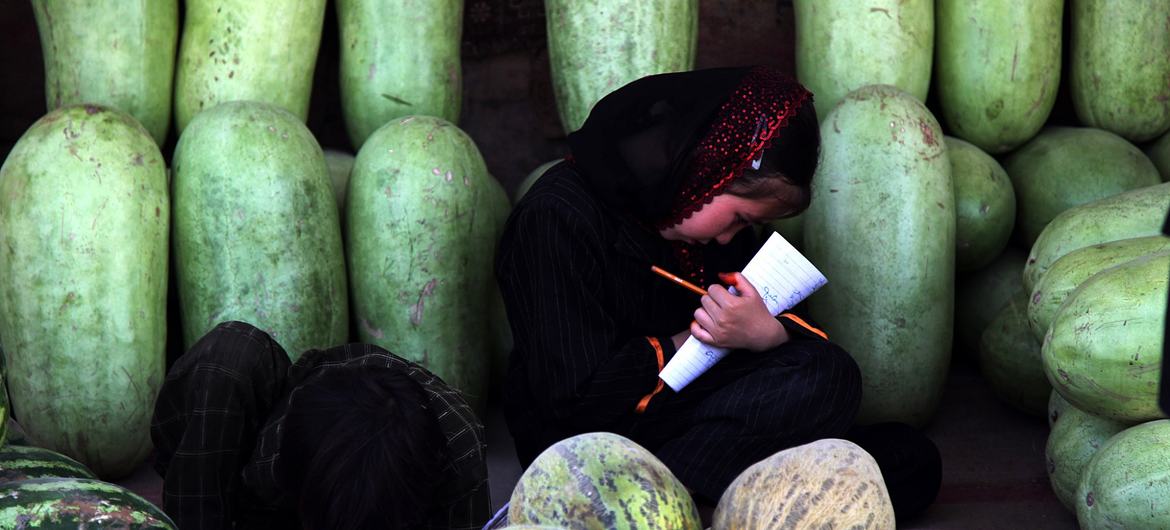
An Afghan girl snatches a moment away from her watermelon selling duties to work on her homework
UNAMA/Farzana Zeba Kalam
 
An Afghan girl snatches a moment away from her watermelon selling duties to work on her homework
18 April 2023
Economic Development

The draconian restrictions on women’s ability to study and work have contributed to the calamitous socio-economic situation in Afghanistan, with devastating consequences for the population, according to a UN report released on Tuesday.

The Afghanistan Socio-Economic Outlook 2023, released by the UN Development Programme (UNDP), provides an overview of the fallout resulting from the takeover of Afghanistan by its present-day de facto rulers, the Taliban, in August 2021.

Immediately after the Taliban assumed power, the Afghan economy collapsed, accelerating Afghanistan’s decade-long slide into poverty; with a population estimated by the UN at about 40 million and GDP of $14.3 billion in 2021, Afghanistan is among the countries with the lowest per capita income in the world, with around 85 per cent of the population estimated to be living below the poverty line.

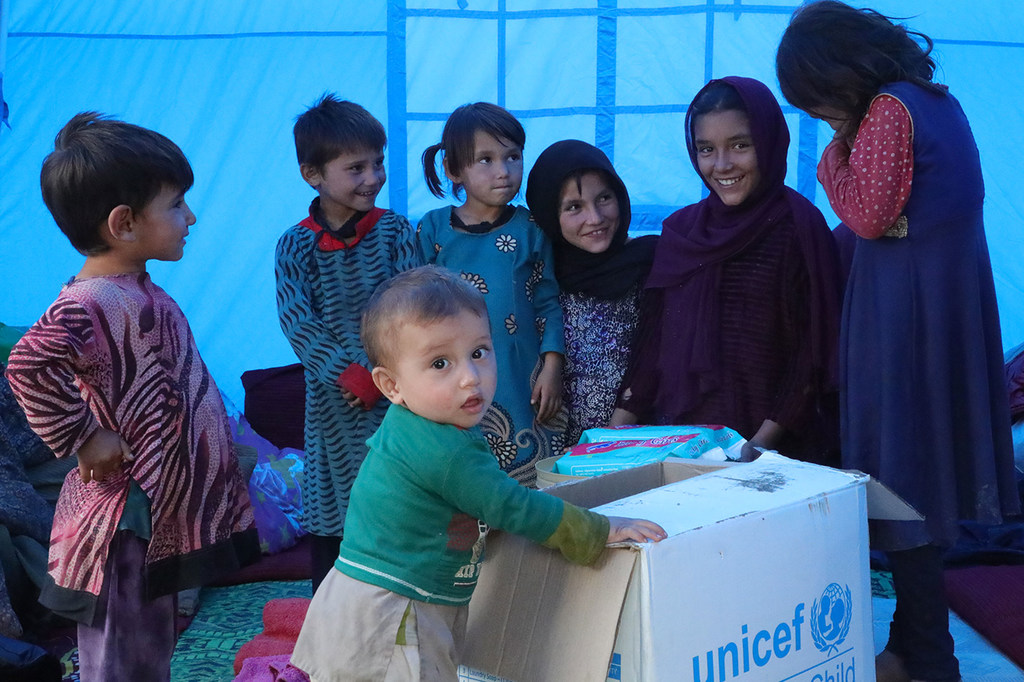
Displaced children livingi in Khoshi District in Afghanistan receive hygeine kits.
© UNICEF/Arezo Haidary
 
Displaced children livingi in Khoshi District in Afghanistan receive hygeine kits.

Overwhelming dependence on international aid

Whilst the report points to some encouraging signs (a rise in exports, an expected eight percent increase in domestic fiscal revenue, stabilization of the exchange rate, and a reduction in inflation), it explains that this is largely down to the large-scale international aid funding ($3.7 billion in 2022, $3.2 billion of which was provided by the UN) sent to Afghanistan in 2022.

This does not point to a lasting recovery: income per person is expected to decline this year and in 2024: UNDP modelling suggests that, if aid drops by 30 per cent, inflation could reach 10 percent in 2024, and average incomes could fall by 40 per cent.

Any reduction in international aid will worsen the economic prospects of Afghanistan, and extreme poverty will perpetuate for decades: the UN aid appeal of $4.6 billion for international assistance in 2023 is therefore the minimum required to help Afghans in need.

No escape from poverty without women in the workplace

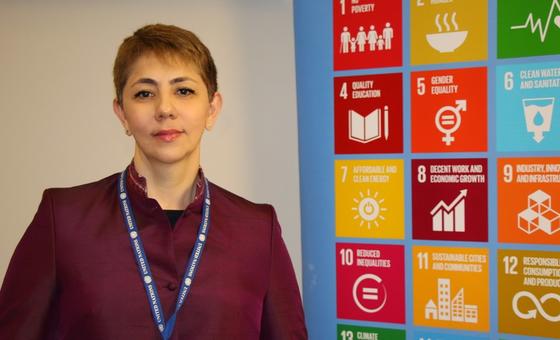
Surayo Buzurukova, Deputy Resident Representative, UNDP Afghanistan, at the UNDP office in Kabul.

Surayo Buzurukova, the UNDP Deputy Resident Representative in Afghanistan, told UN News that the Taliban’s decision to highly restrict women’s ability to study and work is an important reason for the economic woes of the country.


“We have run simulations to see how the removal of women from the workforce will affect the economy going forward,” said Ms. Buzurukova. “We calculated that it will not be possible to achieve growth and reduce poverty without women. That’s the message we try to deliver when we speak to the de facto authorities.”


Ms. Buzurukova remains hopeful that the situation will, eventually become less oppressive for women, particularly in the provinces, where the support of women aid workers is in high demand.

“After August 2021, it was difficult to work here, and it took time to be able to engage with the Taliban and ensure that they listened to me. But now I have created a network of trust with senior members of the de facto authorities, at the provincial as well as the national level; it’s very important that they understand the importance of women to the economy.

We continue to deliver services across the country, through our NGO partners, and we have exemptions for the health and education sector, where women can continue to work but, of course the ban is a challenge and staff morale is affected.”

A child is vaccinated against polio during a polio mobillisation campaign in Kandahar, Afghanistan.
© UNICEF/Frank Dejongh
 
A child is vaccinated against polio during a polio mobillisation campaign in Kandahar, Afghanistan.

UNDP in Afghanistan

  • UNDP has been working in Afghanistan for more than 50 years on climate change and resilience, gender, governance, health, livelihoods, and rule of law.

  • Under the broader framework of the Sustainable Development Goals (SDGs) and in close coordination with other UN agencies, UNDP is supporting the Afghan people’s aspiration for peace, prosperity, and sustainability.

  • UNDP is currently implementing its flagship crisis response programme, ABADEI (Area Based Approach to Development Emergency Initiatives), as part of the ongoing UN-led response to prevent a humanitarian catastrophe and the breakdown of Afghanistan’s economy following the August 2021 shift in power.

  • Find out more about UNDP’s work in Afghanistan here.


 https://news.un.org/en/story/2023/04/1135762
https://creativecommons.org/licenses/by/3.0/legalcode