Избранное сообщение

Показаны сообщения с ярлыком women. Показать все сообщения

среда, 14 августа 2024 г.

Afghanistan: Taliban rule has erased women from public life, sparked mental health crisis


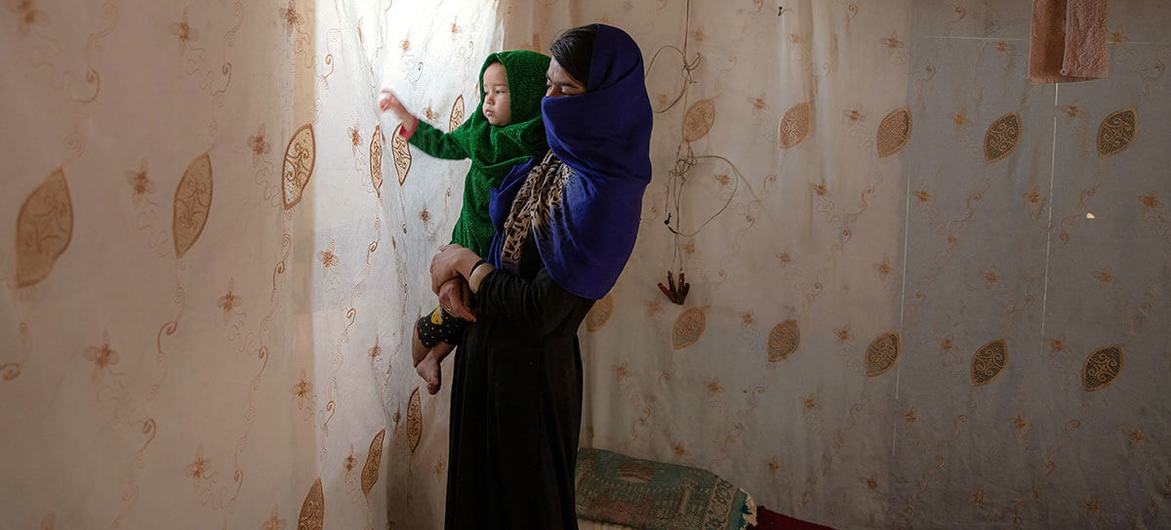
An Afghan mother holds her daughter, staring at the light from behind her obscured window.
© UN Women/Sayed Habib Bidell
 
An Afghan mother holds her daughter, staring at the light from behind her obscured window.


By Dianne Penn
13 August 2024
 Women

Three years of Taliban rule in Afghanistan has led to the “striking” erasure of women from public life, which is also reflected at the community and household levels, a senior official with the UN agency championing gender equality said on Tuesday. 

Alison Davidian, UN Women Country Representative in Afghanistan, briefed journalists in New York on their latest report addressing the plight of women and girls since the de facto authorities returned to power in August 2021.

She described this period as “three years’ worth of countless decrees, directives, and statements targeting women and girls – stripping them of their fundamental rights and eviscerating their autonomy.”

‘The horrors have not stopped’

Taliban edicts have denied girls from getting an education beyond the sixth grade and banned women from working for non-governmental organization (NGOs).

“Three years ago, the world was watching a takeover that was livestreaming horror after horror,” she said, speaking via videoconference from the Afghan capital, Kabul.

“And three years later, while the world’s attention may have turned elsewhere, the horrors have not stopped for Afghan women and girls, but nor has their conviction to stand against the oppression.” 
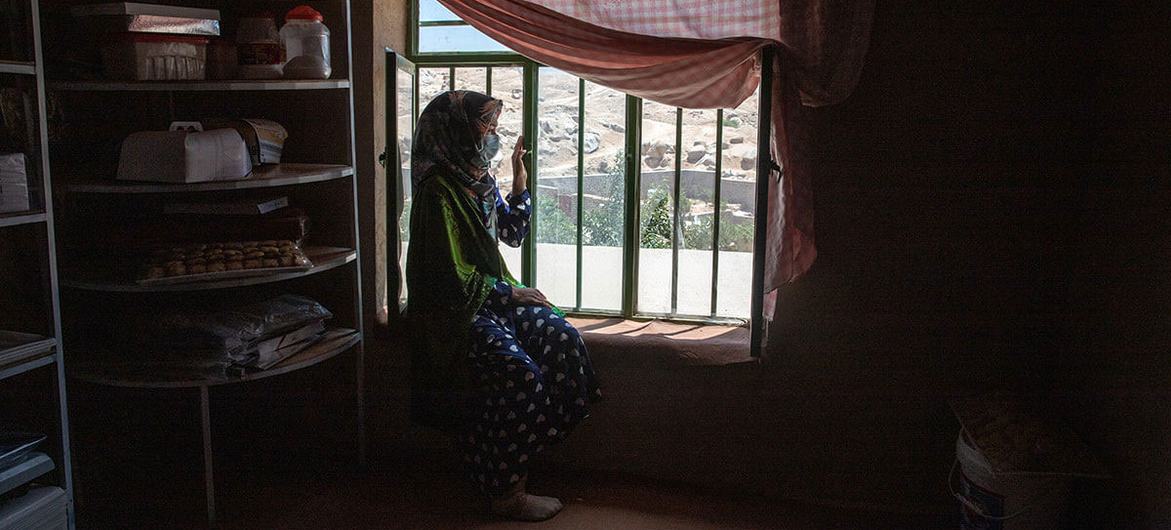
A 31-year-old woman sits by the window. She used to be an entrepreneur before the Taliban takeover.
© UN Women/Sayed Habib Bidell
 
A 31-year-old woman sits by the window. She used to be an entrepreneur before the Taliban takeover.

Monitoring other women

The UN Women report details trends based on consultations with thousands of women across Afghanistan – from provincial capitals to rural areas – since the Taliban’s return.

“And the first most striking trend is the erasure of Afghan women from public life,” said Ms. Davidian.

“To date, no woman in Afghanistan is in a leadership position anywhere that has influence politically, either at national or provincial level. When women are engaged in the Taliban’s structures, their roles are largely to monitor compliance of other women with their discriminatory decrees.”

No longer heard, even at home

This political erasure is also mirrored at the social level as a staggering 98 per cent of women surveyed felt they had limited or zero influence over decisions made in their communities.

Furthermore, the percentage of women who feel they have a say in decisions made in their own homes has dropped by nearly 60 per cent over the past year.

“To give some context, three years ago an Afghan women could technically decide to run for President. Now, she may not even be able to decide when to go and buy groceries,” said Ms. Davidian.

“Now, I’m not saying that three years ago it was perfect. It was not perfect. But it wasn’t this.”

When asked about the finding, she responded: “I think when you take away women’s right to education and restrict their rights to work and public life, it affects all rights and affects women’s agency more generally.”

Mental health crisis

The UN Women data also revealed an escalating mental health crisis linked to the loss of rights.  Sixty-eight per cent of women reported having “bad” or “very bad” mental health, and eight per cent said they knew at least one other woman or girl who had attempted suicide.

Ms. Davidian was adamant that the Taliban’s restrictions on women and girls will affect generations to come.

“Our analysis shows that by 2026, the impact of leaving 1.1 million girls out of school, and 100,000 women out of university, correlates to an increase in early childbearing by 45 per cent and an increase in maternal mortality by up to 50 per cent,” she said.

Invest in women

In the face of the deepening women’s rights crisis in Afghanistan, UN Women are calling for continued investment in the country’s women and girls.

“Nothing undermines the Taliban’s vision for society more than empowering the very part of the population that it seeks to oppress,” Ms. Davidian told reporters.

She said investment means allocating long-term sustainable funding to women’s organizations, designing programmes that directly counter their erasure – such as initiatives focused on education, livelihoods and entrepreneurship – and facilitating spaces “where Afghan women can tell us directly on what their priorities are and what their recommendations are.” 

Regarding entrepreneurship, she explained that Afghan women can run businesses, though mainly home-based, in sectors such as carpet weaving, tailoring and food processing.  However, access to markets and financing are key challenges.

In this regard, UN Women are supporting Afghan women entrepreneurs to overcome these hurdles, in addition to helping them with business development skills “so that in the space that they have, they’re able to utilize it as much as possible.”
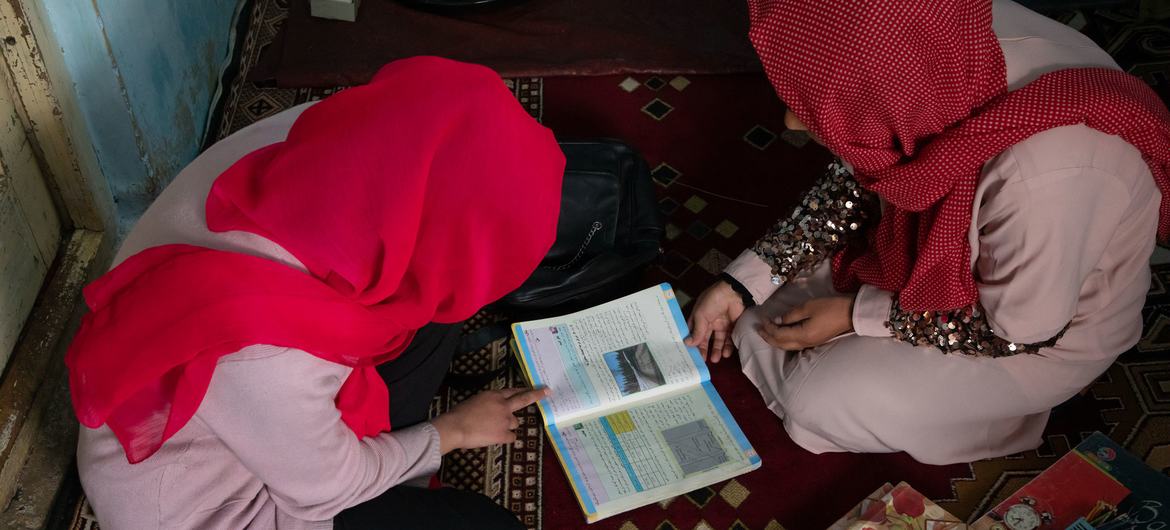
An Afghan girl studies at home with the help of her father after being denied the right to carry on studying at school.
© UNICEF/Munir Tanwee/Daf recor
 
An Afghan girl studies at home with the help of her father after being denied the right to carry on studying at school.

‘The world is watching’

Overall, the agency’s report shows that “Afghan women want to represent themselves, but one meeting, one participation option, is not enough,” Ms. Davidian said.

“In every and any form of engagement, we need to be asking how do we meaningfully include Afghan women?  And how do we break the pattern of women’s exclusion?” 

She also looked at the wider picture as “we are at a real inflection point” in the fight for women’s rights globally, and not just in Afghanistan.

“The world is watching what happens to Afghan women and girls,” she said. “In some cases, it watches to condemn, but in others, it watches to emulate the Taliban’s systematic oppression.” 

She insisted that the international community cannot leave Afghan women to fight alone, because “if we do, we have no moral ground to fight for women’s rights anywhere else. Their fate determines the fate of women everywhere.”  


https://news.un.org/en/story/2024/08/1153151
https://creativecommons.org/licenses/by/4.0/legalcode

суббота, 29 июня 2024 г.

UN rights chief calls time on ‘economic violence’ against women and girls

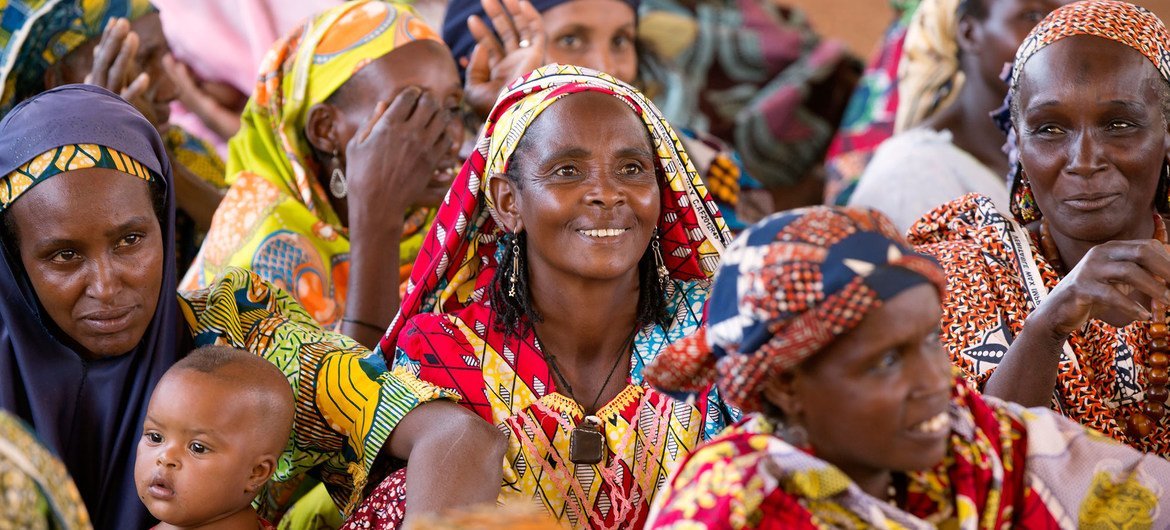
Women attend a community meeting in Cameroon.
UN Women/Ryan Brown
 
Women attend a community meeting in Cameroon.


28 June 2024 

Human Rights

On Friday, at the UN Human Rights Council's (OHCHR) first panel for the annual full-day discussion on women's rights, The UN human rights chief Volker Türk on Friday told a Human Rights Council panel that it’s time to eliminate laws and practices that contribute to “economic violence” against women and girls.

During his opening statement to the all-day panel dedicated to women and human rights, Mr. Türk said there had been “extraordinary progress” thanks to the worldwide women’s movement.

But the very fact that a separate panel needed to be convened on gender-based violence shows that progress has been “hard-won and fragile”, he added.

The meeting’s focus on so-called economic violence as a part of a wider pattern of gender-based violence occurs when a woman or girl is denied access to financial resources as a form of abuse or control.

Tweet URL

Mr. Türk noted that one in three women have been subjected to some form of violence – physical, sexual, psychological or economic – at least once in their life.

“If one in three men globally were subject to such devastating and pervasive harm, an emergency summit would be convened,” he said.

Unseen, unregulated

The High Commissioner said economic violence often goes unseen or unregulated but could be just as harmful as physical violence, as it usually includes forms of control, exploitation and sabotage.

“While economic violence most commonly occurred in the home, it could also be enabled and perpetrated by the State through discriminatory legal frameworks which restricted women’s access to credit, employment, social protection, or property and land rights,” he said.

Mr. Türk declared that so far, global efforts to deliver on gender equality have failed, pointing out that 3.9 billion women worldwide faced legal barriers affecting their economic participation and women earn only 77 cents for every dollar paid to men, among other inequities.

Time to start over

Mr. Türk said there needed to be a thorough revision of discriminatory laws and practices to put a stop to economic violence.

“Gender equality needed to be positively fostered through laws governing all areas of life and there needed to be policy measures to ensure these laws were applied,” he said.

Further, he said there needed to be a stronger effort to ensure survivors of economic violence could seek justice and assistance.

“There needed to be better complaint mechanisms, economic and social support systems, more widely available psychological assistance, and for perpetrators to be brought to justice,” the High Commissioner said.

He emphasised that violence against women and girls was “abhorrent and inexcusable.”

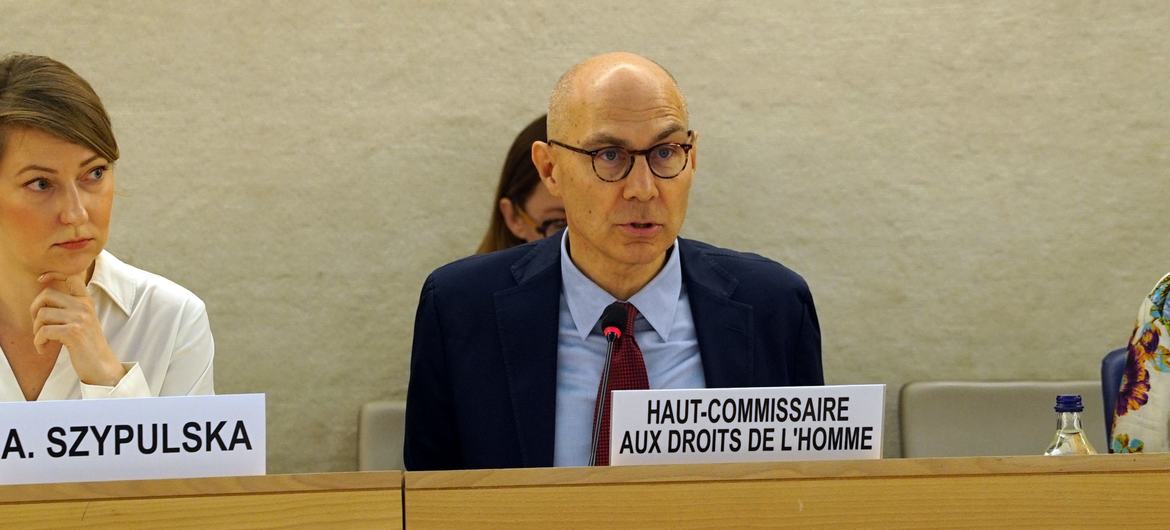
Volker Türk, UN High Commissioner for Human Rights, speaks at the UN Human Rights Council's (OHCHR) discussion on women's rights in Geneva.
UN Human Rights Council/Rajab Safarov
 
Volker Türk, UN High Commissioner for Human Rights, speaks at the UN Human Rights Council's (OHCHR) discussion on women's rights in Geneva.

Civil

During the forum, members of civil society also weighed in on the harm caused by economic violence.

Esther Waweru, Senior Legal Advisor at Equality Now, said inequality in the family was one of the main reasons for economic violence, paired with “retrogressive patriarchal gender norms.”

She said that 1.4 billion women globally lived in countries where economic violence was not recognised and where there are no protections; a practice she believes could leave more women and girls vulnerable to exploitation.

Ms. Waweru recommends that Member States enact comprehensive laws to criminalise sexual and gender-based violence and intimate partner violence – along with economic violence.

She called for laws to “repeal and revoke marital power clauses designating husbands as the head of the households” to “ensure equitable sharing of the joint property deriving from marriage” and equal labour rights.


https://news.un.org/en/story/2024/06/1151616


https://creativecommons.org/licenses/by/4.0/legalcode.en

среда, 13 марта 2024 г.

‘The patriarchy may be pushing back, but so are we’, UN chief tells CSW68


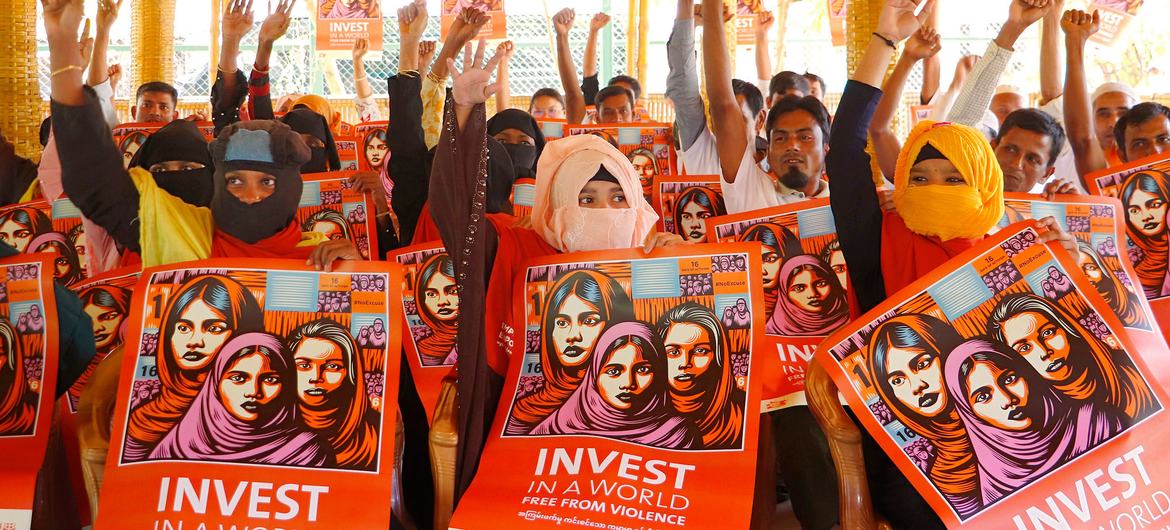
Women in Cox's Bazar in Bangladesh participate in an Orange the World event to end violence against women. (file)
© UN Women/Magfuzur Rahman Shana
 
Women in Cox's Bazar in Bangladesh participate in an Orange the World event to end violence against women. (file)


13 March 2024
Women

Women’s rights are under attack, and governments must act to reverse that dangerous trend, the UN chief told a his annual town hall event with civil society activists on Wednesday, as the Commission on the Status of Women (CSW68) session continued its first week, with a host of side events highlighting deteriorating conditions around the world.

“After decades of progress, women’s rights are being undermined and reversed,” said Secretary-General António Guterres.

Pointing to several ominous examples, he said women’s rights are severely restricted in Afghanistan, sexual violence is being reported during the ongoing Israel-Palestine conflict and the patriarchy is pushing back against hard-won rights women have striven to achieve.

“The women of my generation did not win the fight for their rights only to see their daughters and granddaughters fight the same battle,” he said at the town hall meeting.

Tweet URL
UN_CSW

‘Equality requires investment’

From inequalities in political power to the male-dominated artificial intelligence field, Mr. Guterres said governments and civil society must work together to ensure efforts include women at the table - in peacebuilding, bridging the digital divide and ensuring gender equality.

“The patriarchy may be pushing back, but so are we,” he said, encouraging governments to “put their money where their mouth is” by funding equal rights and opportunities for women and girls.

“Equality requires investment,” the UN chief said, emphasizing the need to urge governments to take action to reduce poverty and inequalities.

In this regard, the Summit of the Future is a chance to advance progress, he said, adding that women and girls have been a constant priority in the planning process.

“I will never stop fighting for a world that works for women and girls,” he said. “The question is of gender equality is a question of power. In my experience, power is never given; power has to be taken.”

Over 50 women dying each day in Gaza

Among a plethora of events held on the sidelines of CSW68, a gathering on Wednesday morning saw UN agencies and partners lead a discussion on the situation of women and children in war-torn Gaza, which faces growing hunger alongside the ongoing besiegement, bombardment and invasion by Israeli armed forces responding to Hamas attacks on Israel in October.

Heli Uusikyla of the UN agency for Palestine, UNRWA, provided a grim snapshot of the current situation on the ground, saying that women and girls remain extremely vulnerable amid continued bombing and attacks.

Since the start of the conflict, more than 31,000 civilians have been killed, among them were 9,000 women and 13,000 children, she said, briefing participants on the humanitarian impact of the conflict. Every day, about 53 women are killed, she said, citing UN Women reports.

Unhygienic living conditions have seen the spread of disease, and overcrowding in shelters currently sees 888 people per toilet and 5,400 people for each available shower room.

“People go days without eating,” Ms. Uuikyla said, with 155,000 pregnant women facing malnutrition.

‘One step away from famine’

Providing a close look at the current situation, Laila Baker of the UN reproductive health agency, UNFPA, said that tens of thousands of pregnant or nursing women are unable to access the food they need and 180 give birth every day.

At the same time, malnutrition rates for children under two has risen from under one per cent in October to an unprecedented 15 per cent today, she reported.

“Hunger is a deadly threat at the moment; every day is a fight for survival,” she said. “More than half a million people are one step away from famine in a society where famine was unheard of.”

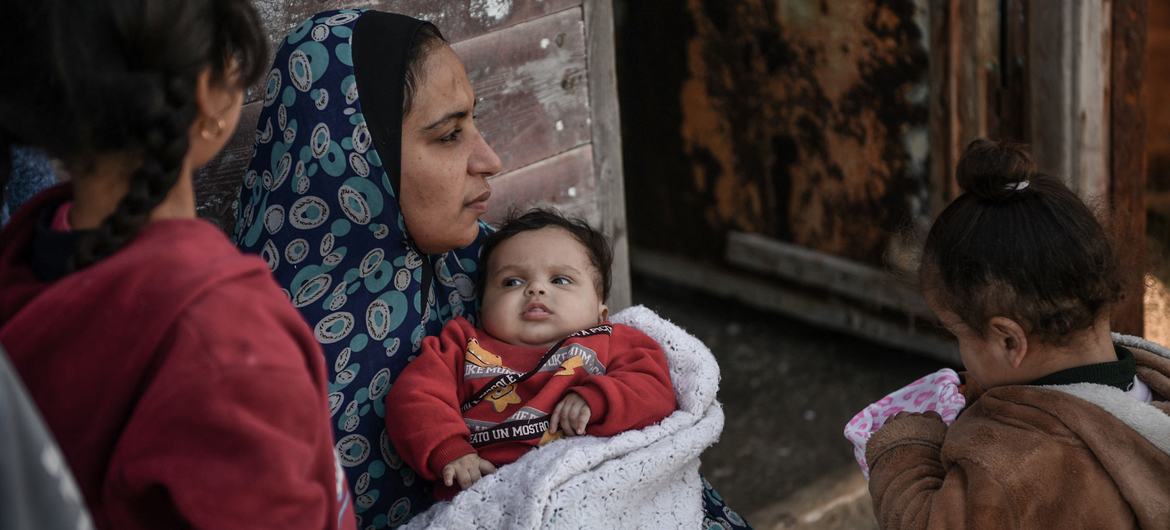
A family forced to evacuate their home in Gaza now live in a refugee camp in Rafah.
© UNICEF/Abed Zaqout
 
A family forced to evacuate their home in Gaza now live in a refugee camp in Rafah.

Ceasefire needed now

All efforts to address concerns of women and girls before October “have turned to dust”, she said, calling for the immediate, safe delivery of humanitarian aid, in line with the provisions of the order issued by the International Court of Justice (ICJ) in January.

As UNFPA works tirelessly with partners, but some are under attack and medical staff lack the safe conditions, medicine and supplies to treat their patients.

“The only way to address that is to call for an immediate ceasefire,” she said, also calling for equal protection for all.

An estimated 7,000 delegates are participating in CSW68, which runs from 11 to 22 March. Read our explainer here and find out about the dozens of side events being held here.

SDG 5
United Nations
 
SDG 5

SDG 5: EMPOWER ALL WOMEN AND GIRLS


  • End all forms of discrimination and violence against women and girls
  • Eliminate such harmful practices as early and forced marriages and female genital mutilation
  • Adapt and strengthen legislation to promote gender equality and empower women and girls
  • Ensure women’s full and effective participation and equal opportunities for leadership in political, economic and public life
  • Ensure universal access to sexual and reproductive health care


Globally, almost half of all married women currently lack decision-making power over their sexual and reproductive health and rights.


https://news.un.org/en/story/2024/03/1147537

https://creativecommons.org/licenses/by/3.0/legalcode