Избранное сообщение

Показаны сообщения с ярлыком Hurricane Beryl. Показать все сообщения

четверг, 11 июля 2024 г.

UN emphasizes gender-sensitive approach in response to Hurricane Beryl


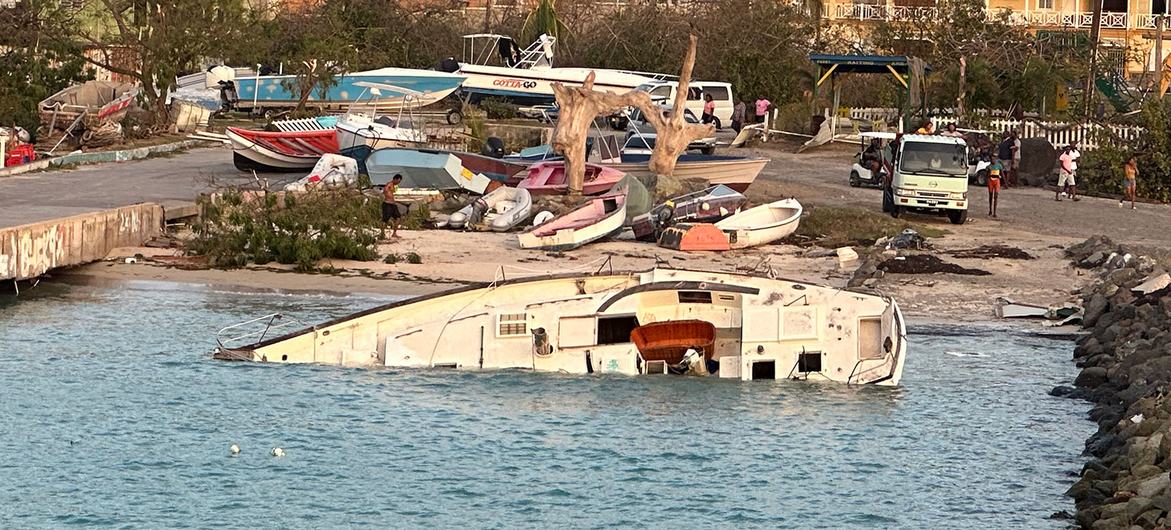
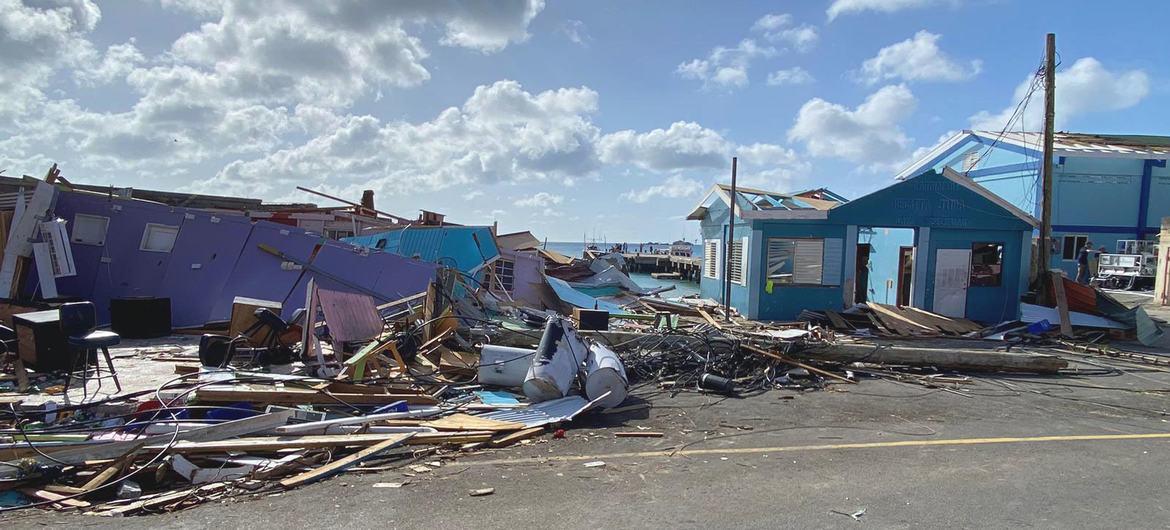
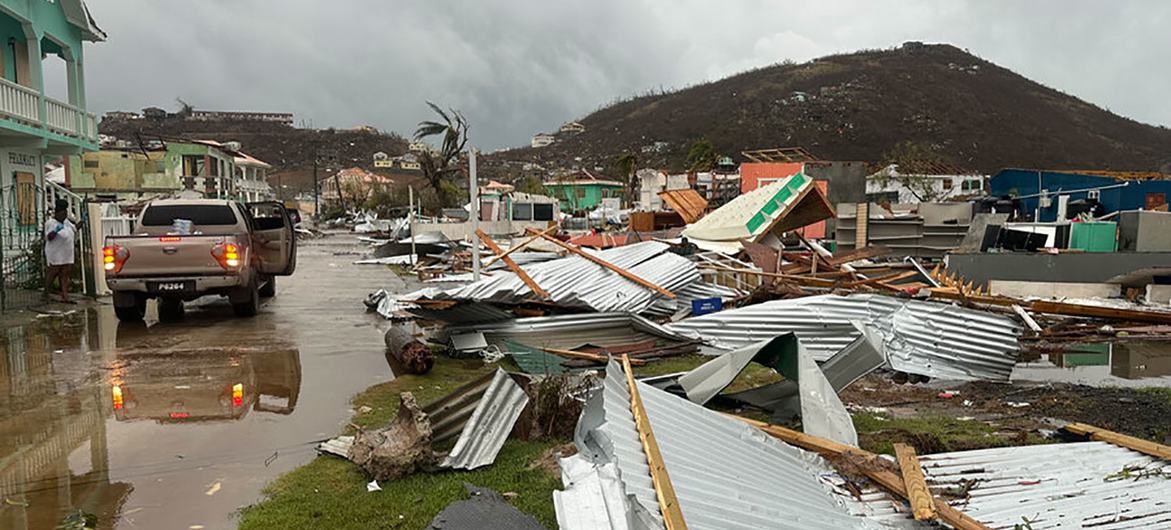
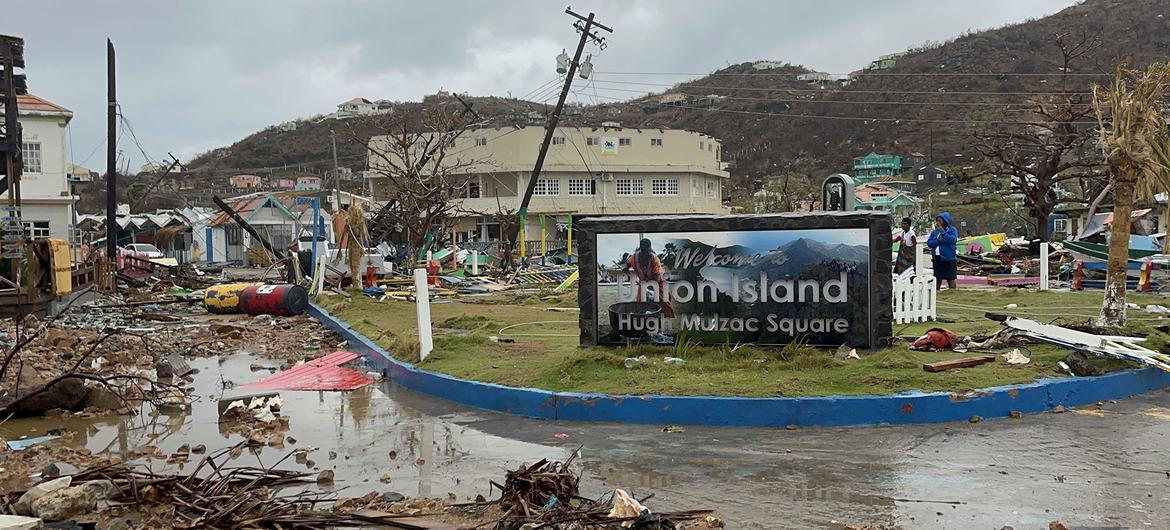
Hurricane Beryl caused massive destruction on Union Island in Saint Vincent and the Grenadines.
© WFP/Fedel Mansour
 
Hurricane Beryl caused massive destruction on Union Island in Saint Vincent and the Grenadines.


By Vibhu Mishra
10 July 2024 

Humanitarian Aid

The United Nations has announced a regional response plan to support communities in the islands worst affected by Hurricane Beryl, which swept through the Caribbean last week, leaving a trail of devastation.

The response plan, unveiled on Tuesday, estimates initial requirements at $9 million and targets support for about 43,000 people in Grenada and Saint Vincent and the Grenadines. These estimates may change as detailed assessments are ongoing.

The plan aims to provide lifesaving multisectoral assistance, complementing Government-led efforts, while ensuring the protection of women, girls and other vulnerable groups from gender-based violence.

It will also support the rapid delivery and resumption of essential services and livelihoods in affected areas, including restoring health, water and sanitation, education and agriculture services.

Tweet URL

Gender sensitivity crucial

The plan emphasizes that gender sensitivity will be critical in analyzing the needs, and in

the response, as both countries have a significant proportion of female-headed households.

Nearly half of all households in Grenada, and 39 per cent in Saint Vincent and the Grenadines, are headed by women.

The region is also prone to high levels of violence against women and girls, with almost 39 per cent of women in Grenada having experienced violence in a relationship.

Response phases

The initial humanitarian response is expected to take place in two main phases which may overlap in practice, depending on the situation on the ground. This approach will ensure that immediate needs are met while laying the groundwork for long-term recovery.

In the immediate term, humanitarians will work rapidly to expand the scope and scale of aid efforts, including rapid assessments, ramping up delivery, restoring key sectors such as healthcare, and water and sanitation, and addressing protection risks.

Focus will then shift to helping people resume their lives. This phase would include recovery and reconstruction, restoring livelihoods, building resilience, and transiting to longer-term activities.

International solidarity

To kickstart the response, the UN Secretary-General last week allocated $4 million from the Organization’s Central Emergency Response Fund (CERF), including $1.5 million for Grenada and Saint Vincent and the Grenadines.

According to the UN Office for the Coordination of Humanitarian Affairs (OCHA), Canada announced $1 million in assistance, to be channeled through UN agencies and the Red Cross. It is also supporting the Caribbean Disaster Emergency Management Agency (CDEMA).

OCHA also urged interested individual donors to make financial contributions to reputable charities or aid agencies and to refrain from in-kind donations, which may not correspond to identified needs or meet required quality standards, potentially creating administrative burdens and undermining local markets.

Contributions can also be made to CERF, the OCHA-UNDP Connecting Business initiative (CBi), or by supporting public advocacy and outreach. Support or contribution provided can be reported online to the Financial Tracking Service to ensure coherence and minimize duplication.
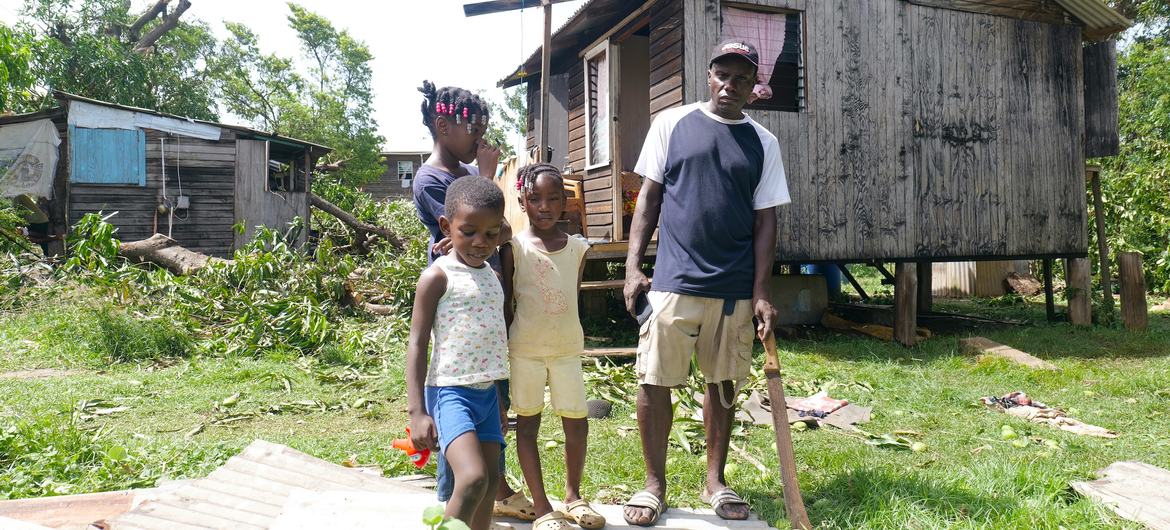
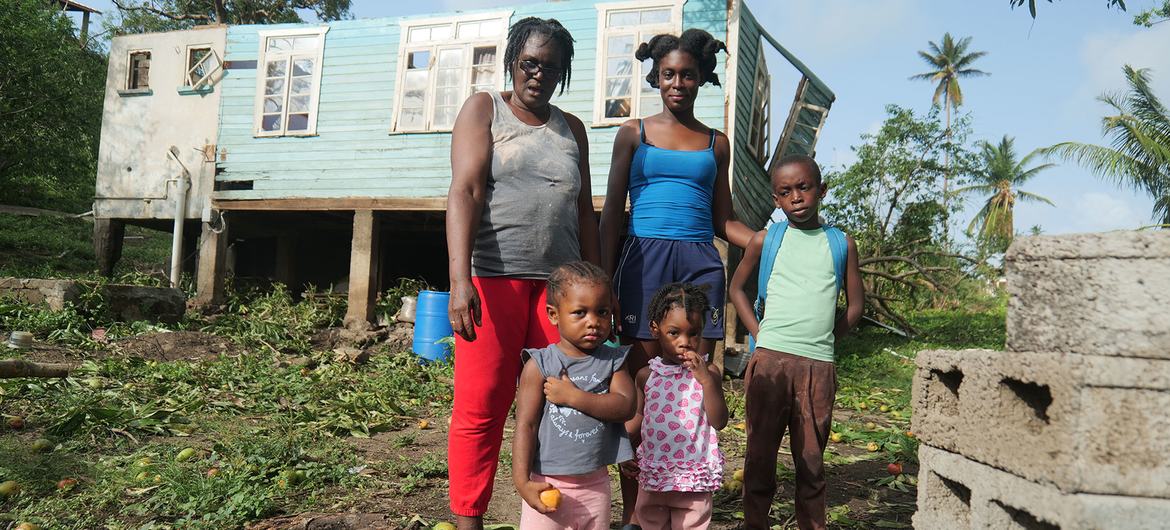
A family stands outside their home damaged by Hurricane Beryl in St. Andrews, Grenada.
© UNICEF/Sam Ogilvie
 
A family stands outside their home damaged by Hurricane Beryl in St. Andrews, Grenada.

Strongest hurricane ever in June

Hurricane Beryl was the strongest hurricane in history to form in June in the Atlantic Ocean.

Initially a tropical depression, it rapidly intensified into a Category 4 storm and briefly reached Category 5 status, with winds up to 240 km/h (150 mph).

UN World Meteorological Organization (WMO) experts have warned of a “very intense” hurricane season this year, with near-record ocean temperatures and the shift to La Niña conditions.

The agency has predicted up to 25 named storms expected through November. Among them, eight to 13 could develop into hurricanes.


https://news.un.org/en/story/2024/07/1151946

https://creativecommons.org/licenses/by/4.0/legalcode

понедельник, 8 июля 2024 г.

Hurricane Beryl highlights need for robust early warning systems


Hurricane Beryl has caused near total devastation on Union Island in Saint Vincent and the Grenadines.
© WFP/Fedel Mansour
 
Hurricane Beryl has caused near total devastation on Union Island in Saint Vincent and the Grenadines.


By Vibhu Mishra
2 hours ago Humanitarian Aid

Hurricane Beryl, which left a trail of destruction from the Caribbean to Mexico – and now the United States – has once again underscored the urgent need for robust early warning systems, the UN meteorological agency (WMO) said on Monday.

Beryl is the strongest hurricane ever to form in the Atlantic during June and rapidly intensified from a tropical depression to a Category 4 storm, briefly reaching Category 5 with winds up to 240 km/h (150 mph).

It made landfall in Texas early Monday morning local time as a Category 1 hurricane, causing a dangerous storm surge and the risk of flash flooding.

It is expected to weaken rapidly as it moves further inland, according to the UN World Meteorological Organization (WMO) specialized regional centre Miami, which is operated by the US National Hurricane Center (NHC).

Tweet URL

Extra vigilance needed

WMO also warned of a very intense hurricane season, with up to 25 named storms expected through November. Among them, eight to 13 could develop into hurricanes.  

“We need to be especially vigilant this year due to near-record ocean heat in the region where Atlantic hurricanes form and the shift to La Niña conditions, which together create the conditions for increased storm formulation,” said Ko Barrett, WMO Deputy Secretary-General.

“This is why WMO and its partners have prioritized early warning action in small islands under the international Early Warnings For All initiative.”

‘Sobering picture’ in Jamaica

As access improves, the full impact of Hurricane Beryl is becoming clear.  

UN humanitarian teams in Jamaica, where the hurricane made landfall at 5:00 PM on July 3, report a “sobering picture of widespread damage and destruction.”

More than 250 roads together with critical infrastructure have been extensively damaged by fallen trees, flooding, and storm surges. Many houses have lost their roofs, according to a humanitarian bulletin issued on Sunday.

“[A UN team] visited Old Harbor Bay, Portland Cottage, Rocky Point, Alligator Pond and Treasure Beach. They witnessed many families in need of water, food, cleaning, and reconstruction supplies for their homes, as well as psychological support.”

About 160,000 people, including 37,000 children, are estimated to require humanitarian assistance.

Devastation caused by Hurricane Beryl on Carriacou Island in Grenada.
© WFP/Jean Paul Laveau
 
Devastation caused by Hurricane Beryl on Carriacou Island in Grenada.

‘Significant destruction’

In the eastern Caribbean, where Hurricane Beryl first made landfall on 1 July, islands have reported “severe damage” and “significant destruction.”

“Exact numbers remain a challenge, as assessments are ongoing amid damage to logistics, power and communications services, as well as power cuts,” the UN Office for the Coordination of Humanitarian Affairs (OCHA) said in a bulletin, also issued on Sunday.

Damage to small airstrips and reliance on smaller boats are hampering logistics efforts, complicating assessments, and delivery of aid.

In Grenada, Carriacou and Petite Martinique, as well as northern areas, are among the hardest-hit, with limited public transportation links between Carriacou and the mainland.

Union Island in Saint Vincent and the Grenadines is also severely affected. Authorities are housing vulnerable people in tourism facilities and conducting assessments. An unknown number of people have evacuated the island.

UN responding rapidly

Meanwhile, UN teams are supporting national and regional authorities in ongoing assessment and assistance missions.  

Specialist UN Disaster Assessment and Coordination (UNDAC) teams have also deployed to Grenada, and Saint Vincent and the Grenadines to aid the response.

In Jamaica, the UN Children’s Fund (UNICEF) has finalized its response plan and submitted funding requests to key humanitarian donors to meet immediate needs for children and affected families. The agency is also collaborating with other agencies under the leadership of the UN Humanitarian Coordinator to prepare a joint appeal to raise emergency funds.


https://news.un.org/en/story/2024/07/1151856


https://creativecommons.org/licenses/by/4.0/legalcode

суббота, 6 июля 2024 г.

UN official describes total devastation in Carriacou following Hurricane Beryl


Hurricane Beryl has caused devastation on Union Island in Saint Vincent and the Grenadines.
© WFP/Fedel Mansour
 
Hurricane Beryl has caused devastation on Union Island in Saint Vincent and the Grenadines.


By Vibhu Mishra, with additional reporting by Daniel Johnson in Geneva
7 hours ago


 Humanitarian Aid

The island of Carriacou in Grenada has been virtually “flattened” by the devastating Hurricane Beryl, a senior UN official there reported on Friday, as humanitarian teams ramp up their support to communities affected across the Caribbean.

Speaking via video link from Grenada, Simon Springett, UN Resident Coordinator in Barbados and the Eastern Caribbean, outlined a scene of total devastation in Carriacou – where Beryl first made landfall on 1 July.

“The entire island is completely affected … that is literally 100 per cent of the population,” he stressed.

Hurricane Beryl is the strongest hurricane in history to form in June in the Atlantic Ocean. Initially a tropical depression, it rapidly intensified into a Category 4 storm and briefly reached Category 5 status, with winds up to 240 km/h (150 mph).

On Friday morning (New York time), it made landfall in Mexico’s Yucatán Peninsula, and is reportedly tracking west-northwest, projected to make landfall in southern Texas, United States on Monday morning.

‘Very complicated crisis’

Mr. Springett highlighted the situation as a “very complicated crisis”, one that is marked by severe logistical and access challenges.  

Four days after the hurricane hit, roads on the island are impassable and communications were only restored last night, he said.

“Directly after the hurricane, the seas were exceptionally rough, which made it nearly impossible to get there. The air control towers are out – so there is only fly by visibility. But also, even when things get to the airport, there no roads to access the goods.”

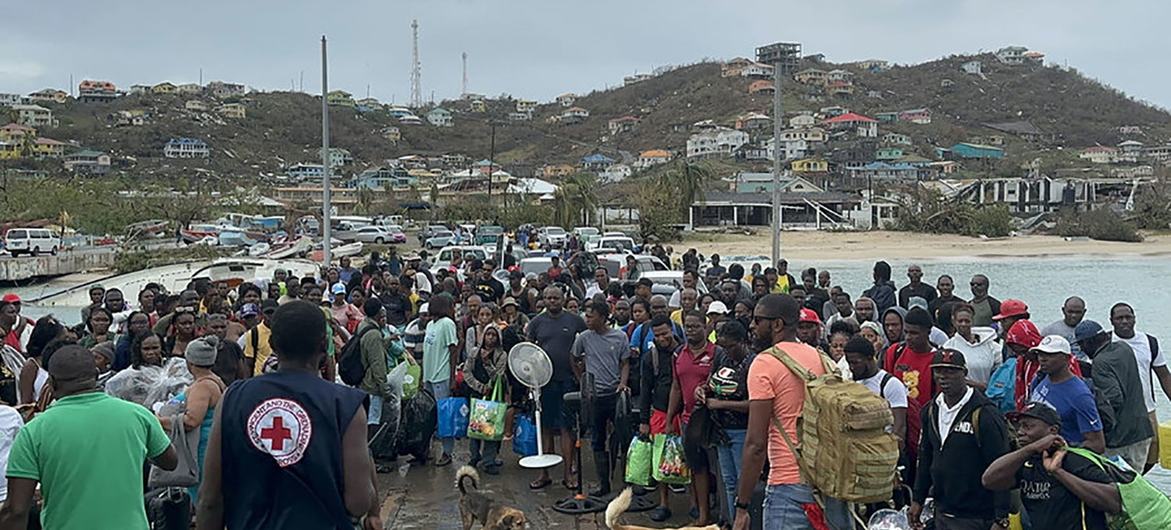
Residents of Union Island in Saint Vincent and the Grenadines prepare to board a ferry to reach shelter in the wake of Hurricane Beryl.
© WFP/Fedel Mansour
 
Residents of Union Island in Saint Vincent and the Grenadines prepare to board a ferry to reach shelter in the wake of Hurricane Beryl.

International response

Nations near and far are dispatching aid, with a French ship arriving in Carriacou later in the day as well as assistance from Guyana, and Trinidad and Tobago, Mr. Springett said.

“We have a large outpouring of international response … it is really an international effort, and the UN is really proud to be to be a part of this,” he said.

Also speaking, via video link from Bahamas, Dennis Zulu, the Resident Coordinator for Jamaica and Bahamas, echoed international collaboration.

He highlighted that the UN is working in coordination with Caribbean Disaster Emergency Management Agency (CDEMA), the regional emergency and disaster response agency to ensure a coherent regional response.

“We are poised to mount a coordinated humanitarian response with the international development partner community and are already engaging international partners and organizations in Jamaica,” he added.

Widespread damage

Detailed assessment of damage in Jamaica and in other island nations supported by his office are ongoing, Mr. Zulu said.

“The damage is widely apparent and is felt by people from all walks of life, especially in rural Jamaica, including in the southern parishes of Clarendon, Manchester and Saint Elizabeth, and for those in vulnerable housing,” he added.

He also noted that the Government of Jamaica has put in place an effective response plan, supported by UN and partners, including shelters for those who lost their homes.

Alongside, other key requirements include clean drinking water, access to communication and data and livelihood support.

A family stands outside their home destroyed by Hurricane Beryl in Grenada.
© UNICEF/Sam Ogilvie
 
A family stands outside their home destroyed by Hurricane Beryl in Grenada.

‘Pledge to be there for children’

According to the UN Children’s Fund (UNICEF), over 650,000 people – including 150,000 children – in Barbados, Grenada, Saint Lucia, Saint Vincent and the Grenadines, and Tobago were in the path of Hurricane Beryl.

Many have lost homes and are being housed in temporary shelters.

The UN agency for its part had pre-positioned life-saving supplies before the storm and is mobilizing supplies and funds for the response.

“[We are] deeply concerned at the plight of those affected by Hurricane Beryl, especially the most vulnerable – children and women … we pledge to be there for children of the affected countries,” said Pieter Bult, UNICEF Representative for the Eastern Caribbean Area.

Similarly, the UN World Food Programme (WFP) has also deployed teams to the affected islands, supporting authorities with assessments and early response.

In Saint Vincent and the Grenadines, the agency has been asked to provide emergency telecommunications and logistics support, while in Barbados it is assisting with emergency food kits that will be shipped and distributed to people in the affected islands.

‘Very intense’ hurricane season looms

Earlier in the day in Geneva, Vanessa Huguenin, a spokesperson for the UN Office for the Coordination of Humanitarian Affairs (OCHA), said that while humanitarians have been preparing for this hurricane season, “such a strong storm this early is extremely rare.”

“It is also a warning for the anticipated very intense hurricane season that is coming,” she said at the regular media briefing at the UN Office at Geneva (UNOG).

The Atlantic storm season runs from June through the end of November, with 17 to 25 named storms expected. The average is 14 storms a year.

Of those, the UN World Meteorological Organization (WMO) said that eight to 13 are forecast to become hurricanes – above the average of seven – including four to seven major hurricanes.

A major hurricane is category three, four or five on the Saffir Simpson scale, with winds of 110 mph winds (177 km/h), or higher.

“This new reality of unprecedented hurricanes is becoming an annual and ever-present reality for the Caribbean countries while facing the brunt of climate change,” said Rhea Pierre, Disaster Manager at the International Federation of Red Cross and Red Crescent Societies (IFRC).

“The severity of damages in the aftermath of Hurricane Beryl are tangible and devastating.”


https://creativecommons.org/licenses/by/4.0/legalcode

среда, 3 июля 2024 г.

UN urges international solidarity as Hurricane Beryl devastates Caribbean islands


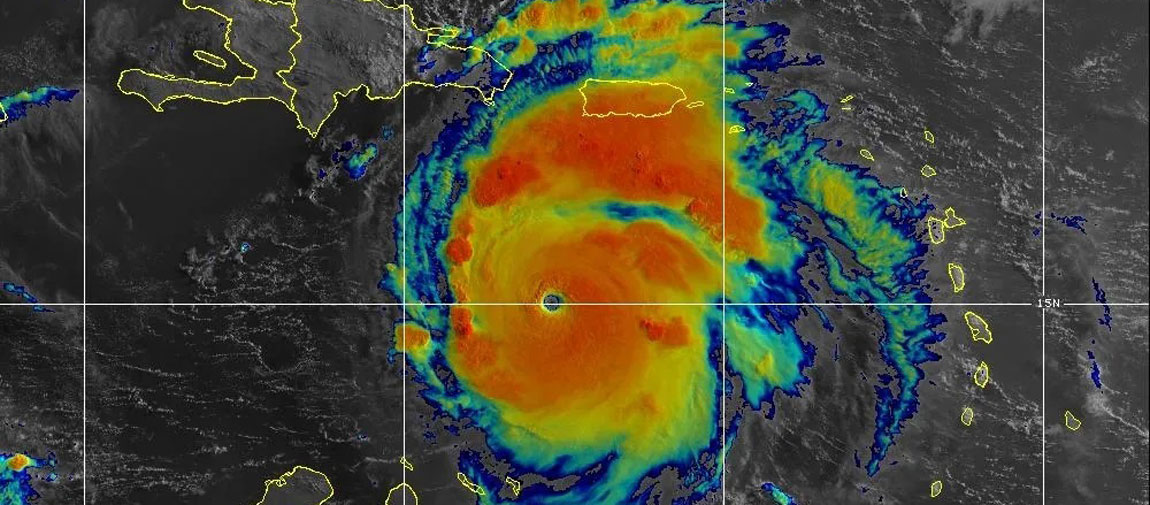
Satellite image of Hurricane Beryl in the Caribbean, a category 5 storm with 165-mph winds as of  8:00 AM on July 2, 2024.
© NOAA
 
Satellite image of Hurricane Beryl in the Caribbean, a category 5 storm with 165-mph winds as of 8:00 AM on July 2, 2024.


1 hour ago 
Humanitarian Aid

The United Nations has called for international solidarity with Grenada, the Saint Vincent and the Grenadines, and other Caribbean islands hit hard by Hurricane Beryl.

A Category 5 storm, Hurricane Beryl has claimed at least six lives as it barrels through the Caribbean Sea. Initial reports indicate severe damage to homes, infrastructure and power and communications.

Tweet URL

UN Spokesperson Stephané Dujarric told journalists at the regular press briefing in New York that seven agencies based in Grenada and nine in Saint Vincent and the Grenadines “will be augmented by additional UN emergency teams in the coming days.”

“Logistics are going to be a challenge, given the islands’ dispersal, damaged infrastructure and limited accessibility,” he said.

Solidarity crucial

Mr. Dujarric added that the Secretary-General is “very much appealing for strong international solidarity” with Grenada, Saint Vincent and the Grenadines and the other islands that have been hit by the hurricane.

“These small island states that the Secretary-General has often visited are again bearing the brunt of natural disasters. And it is critical that we see international solidarity,” he added.

Hurricane Beryl is only just the start of what is forecast to be extremely intense 2024 hurricane season, amid worsening impacts of climate change.

Worries for Haiti

The UN Spokesperson also voiced concern for Haiti, which was already in a dire situation before the hurricane.

“The security situation is not making it any better. We are prepositioning, we are ready to help as soon as the storm hits and before,” he said.

According to the UN Office for the Coordination of Humanitarian Affairs (OCHA), aid agencies there are in close contact with Haitian authorities, who have amplified early warning messages.

“UN agencies, of course, stand ready to assist and have already taken anticipatory measures,” Mr. Dujarric said.

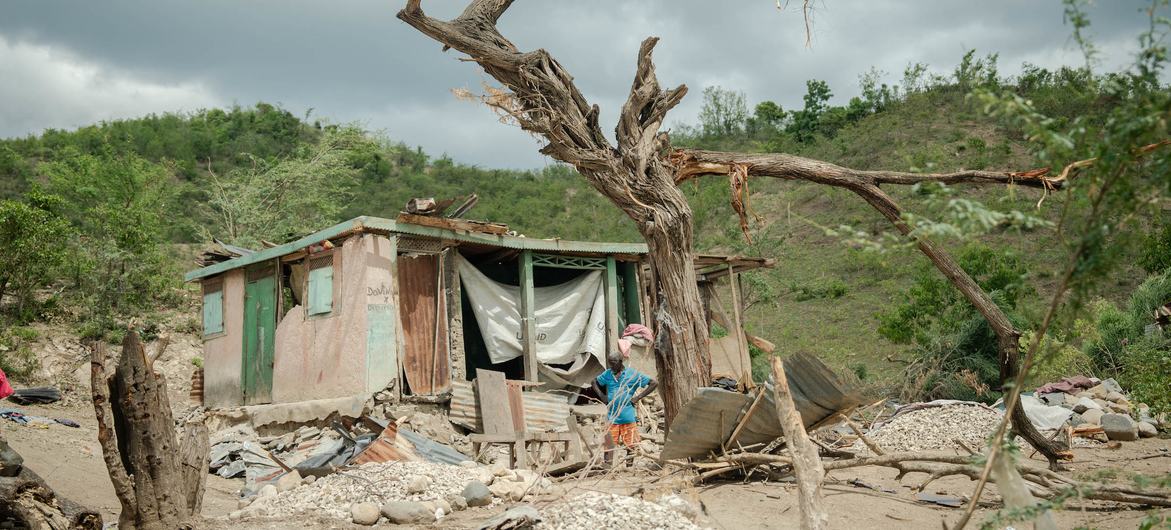
A home destroyed in a tornado that struck Bassin Bleu, northern Haiti.
© UNICEF/Maxime Le Lijour
 
A home destroyed in a tornado that struck Bassin Bleu, northern Haiti.

‘Explosive’ intensification

Also on Tuesday, the UN World Meteorological Organization (WMO) raised alarm over the rate at which Hurricane Beryl intensified from a tropical depression to a Category 3 in 42 hours, and Category 4 in 48 hours.

“This is unprecedented for June but is in line with the recent trend towards very rapid intensification,” the agency said, recalling that such was the case with Hurricane Otis which grew to a Category 5 hurricane overnight and hit the Mexican resort of Acapulco last October.

At least 52 people were reported to have been killed by Hurricane Otis and a further 32 remain missing.

WMO noted “record high” sea surface temperatures, warning that the stage is set for an “especially active and dangerous” hurricane season for the entire basin – Atlantic, Caribbean and Central America.  

“It takes just one landfalling hurricane to set back years of socio-economic development. For example Hurricane Maria in 2017 cost Dominica 800 per cent of its Gross Domestic Product (GDP),” said Ko Barrett, WMO Deputy Secretary-General.


https://news.un.org/en/story/2024/07/1151721


https://creativecommons.org/licenses/by/4.0/legalcode