Избранное сообщение

Показаны сообщения с ярлыком floods. Показать все сообщения

пятница, 22 августа 2025 г.

Monsoon floods kill more than 700 in Pakistan, with heavy rains set to continue

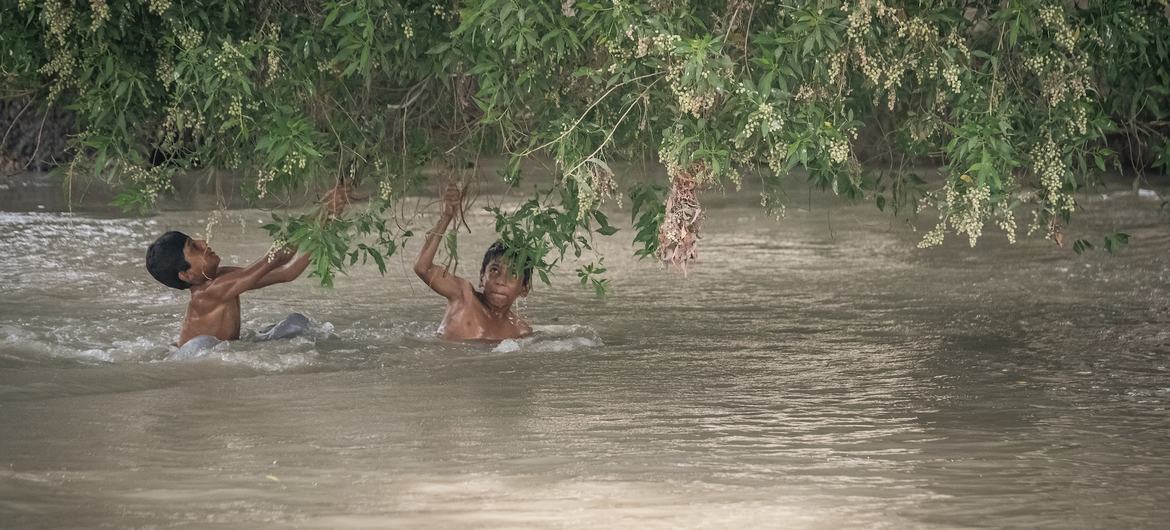
Children wade through a flooded canal in Pakistan, where this year’s monsoon rains have left many families without homes, safe water or schooling. (file photo)
© UNICEF/Vlad Sokhin
 
Children wade through a flooded canal in Pakistan, where this year’s monsoon rains have left many families without homes, safe water or schooling. (file photo)


By Vibhu Mishra
21 August 2025
 Climate and Environment

Heavy monsoon rains and flash floods have killed at least 739 people across Pakistan since late June, displacing thousands and destroying homes and crops, with more severe weather expected in the weeks ahead, according to UN agencies and national authorities. 


The National Disaster Management Authority has also reported 978 injuries and the destruction or damage of more than 2,400 houses, while over 1,000 livestock have been lost as of Thursday, 21 August.

Severe weather is forecast to continue into early September, raising the risk of further flooding, landslides and crop losses, according to the UN Office for the Coordination of Humanitarian Affairs (OCHA).

Khyber Pakhtunkhwa hit hardest

The northwestern province of Khyber Pakhtunkhwa has borne the brunt of the disaster. 

Authorities declared a state of emergency in nine districts, including Buner, Shangla and Mansehra, after torrential rains between 15 and 19 August left 368 people dead, 182 injured and damaged more than 1,300 homes. Nearly 100 schools were also destroyed.

The international charity CARE said its teams found widespread devastation in Buner, where families reported homes and livelihoods swept away within minutes by torrents of floodwater carrying boulders and debris.

Children most affected

The toll on children has been particularly severe, with displacement, loss of schooling and limited access to safe water putting their health and well-being at grave risk. 

According to the UN Children’s Fund (UNJCEF), at least 21 children were among those killed in Khyber Pakhtunkhwa since 15 August.

Many schools have been destroyed or are now being used as temporary shelters, further restricting access to education and safe spaces.

Urban flooding in Karachi

In Sindh province, heavy rains on 19 August triggered urban flooding in Karachi – Pakistan’s largest city – where at least six people were killed in wall collapses and electrocutions. Rainfall reached up to 145 millimetres (about 5.75 inches) in parts of the city, inundating roads and leaving many neighbourhoods without power for hours.

The province of Punjab also suffered extensive flooding along the Indus and Chenab rivers, which has displaced more than 2,300 families and damaged cash crops across thousands of acres.

Scaling up support

Federal and provincial authorities are leading the response, having mobilized over 2,000 personnel for rescue and evacuation. In coordination with the UN and partners, they have dispatched key relief items, including food, tents and medical supplies to affected areas.

OCHA said it has deployed field coordinators to the hardest-hit districts and activated emergency mechanisms, including the release of funds from its regional humanitarian envelope for Pakistan – prioritising life-saving assistance in health, water, food security and shelter.

For its part, UNICEF has dispatched essential medicines and hygiene kits to affected districts. Each kit includes soap, water containers and other hygiene supplies to help prevent disease outbreaks.

Worrying trend

Pakistan has endured devastating monsoon seasons in recent years. In 2022, unprecedented floods killed more than 1,700 people, displaced millions, and caused an estimated $40 billion in economic losses.

Erratic and intensified rainfall patterns, amplified by climate change, are compounding the country’s vulnerability, threatening lives, livelihoods and long-term recovery across southern Asia. 


https://news.un.org/en/story/2025/08/1165699


https://creativecommons.org/licenses/by/4.0/legalcode

вторник, 22 июля 2025 г.

Deadly floods show need for faster, wider warnings, UN agency says


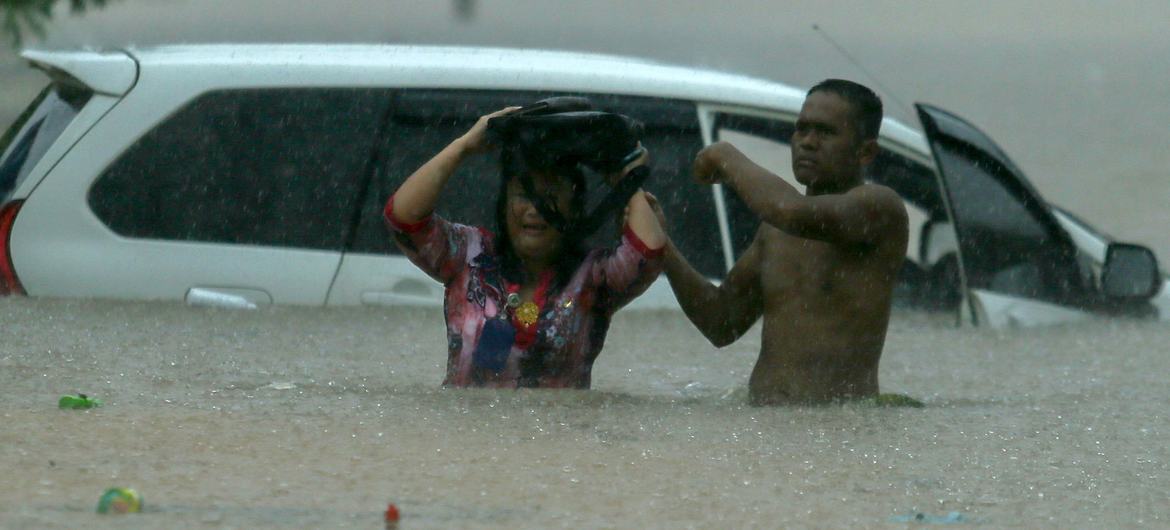
A man helps a woman after her car is stranded in waist-deep water. Globally rains are being more extreme due to impacts of climate change.
© WMO/Teguh Prihatna
 
A man helps a woman after her car is stranded in waist-deep water. Globally rains are being more extreme due to impacts of climate change.


By Vibhu Mishra
21 July 2025 
Climate and Environment

From the Himalayas to rural Texas, deadly floods this month have killed hundreds and exposed dangerous gaps in early warning systems, the UN’s weather agency warned, linking the devastation to rapid urbanization, land-use change and a warming climate that traps more moisture in the atmosphere.

The UN World Meteorological Organization (WMO) said on Monday that more intense downpours and glacier outburst floods are becoming increasingly frequent, with deadly consequences for communities caught off guard.

Flash floods are not new, but their frequency and intensity are increasing in many regions due to rapid urbanization, land-use change and a changing climate,” said Stefan Uhlenbrook, WMO Director of Hydrology, Water and Cryosphere.

Each additional degree Celsius of warming enables the air to hold about 7 per cent more water vapour.

This is increasing the risk of more extreme rainfall events. At the same time, glacier-related flood hazards are increasing due to enhanced ice melting in a warmer climate,” he added.

Thousands of lives lost every year

Floods and flash floods claim thousands of lives each year and cause billions of dollars in damage. In 2020, severe flooding across South Asia killed more than 6,500 people and caused $105 billion in economic losses.

Two years later, catastrophic floods in Pakistan left over 1,700 people dead, 33 million affected and losses exceeding $40 billion, reversing years of development gains.

This year, the onslaught has continued. In July alone, South Asia, East Asia and the United States have seen a string of deadly events, from monsoon rains to glacial lake bursts and sudden flash floods.

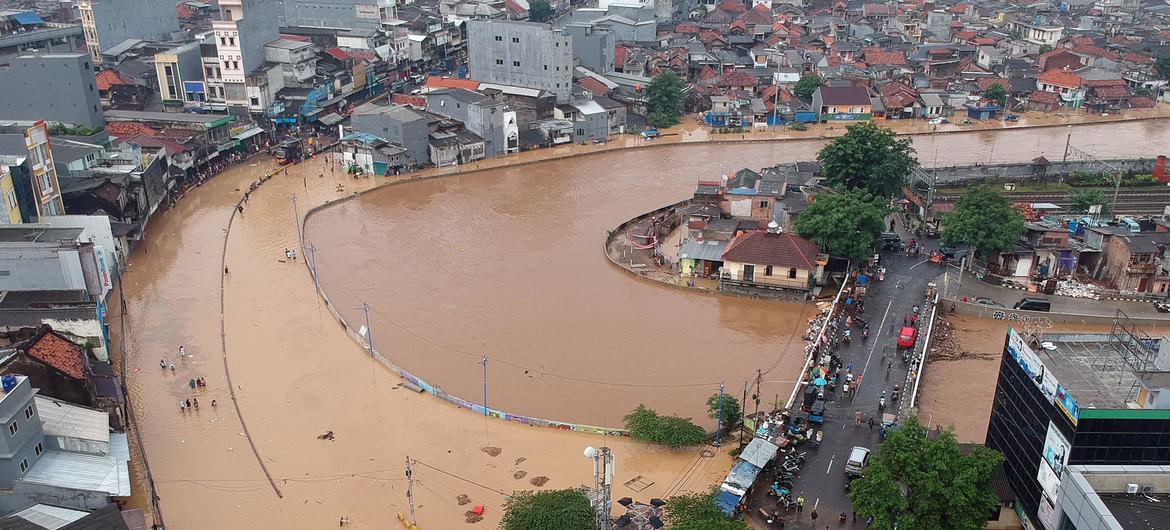
Each year, extreme weather and climate events take a massive toll on lives and economies worldwide.
© WMO/Arya Manggala
 
Each year, extreme weather and climate events take a massive toll on lives and economies worldwide.

Asia reels from monsoon onslaught

In India and Pakistan, heavy monsoon rains have severed transport links, washed away homes and triggered landslides. Pakistan declared a state of emergency in its worst-hit areas, deploying military helicopters for rescue missions after forecasters warned of exceptional flood risk along the upper Jhelum River.

The Republic of Korea suffered record-breaking downpours between 16-20 July, with rainfall exceeding 115 mm per hour in some locations. At least 18 people were killed and more than 13,000 were evacuated.

In southern China, authorities issued flash flood and landslide alerts on 21 July, just a day after Typhoon Wipha battered Hong Kong, underscoring the compound risks of sequential storms.

Texas flash flood strikes overnight

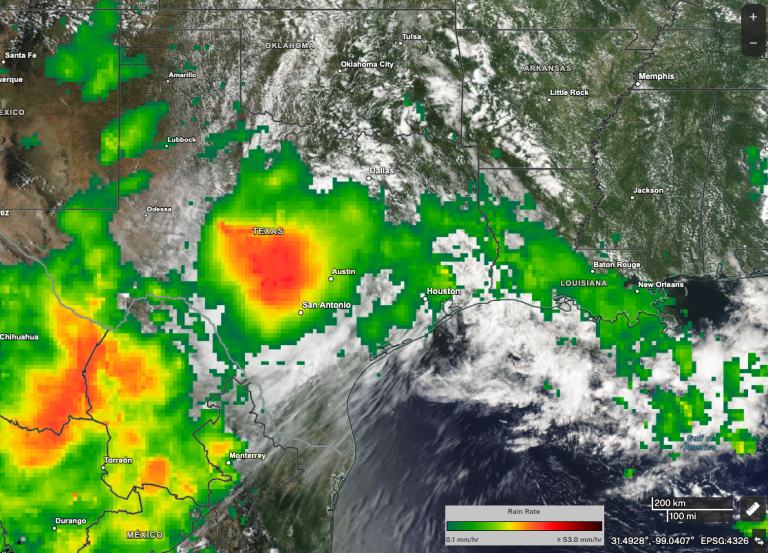
Overnight 3 into 4 July, a sudden deluge turned Texas Hill Country into a disaster zone, killing more than 100 people and leaving dozens missing. In a few hours, 10-18 inches (25–46 cm) of rain swamped the Guadalupe River basin, sending the river surging 26 feet (8 metres) in just 45 minutes.

1-day precipitation totals from NASA’s IMERG multi-satellite precipitation product show heavy rainfall over central Texas on July 4, 2025.
© NASA
 
1-day precipitation totals from NASA’s IMERG multi-satellite precipitation product show heavy rainfall over central Texas on July 4, 2025.

Many of the victims were young girls at a summer camp, caught unaware as floodwaters tore through sleeping quarters around 4 AM. Although the US National Weather Service issued warnings ahead of time, local sirens were lacking and the final alerts came when most were asleep.

Glacier outburst floods surge

Not all floods this month were caused by rain.

In Nepal’s Rasuwa district, a sudden outburst from a supraglacial lake – formed on a glacier’s surface – swept away hydropower plants, a major bridge and trade routes on 7 July. At least 11 people were killed and more than a dozen are reported missing.

Scientists at the International Centre for Integrated Mountain Development (ICIMOD), a WMO partner, say glacial-origin floods in the Hindu Kush-Himalaya region are occurring far more often than two decades ago, when one might strike every five to 10 years.

In May and June 2025 alone, three glacial outburst floods hit Nepal, Afghanistan and Pakistan, with two more in Nepal on 7 July. If warming continues, the risk of such floods could triple by the century’s end.

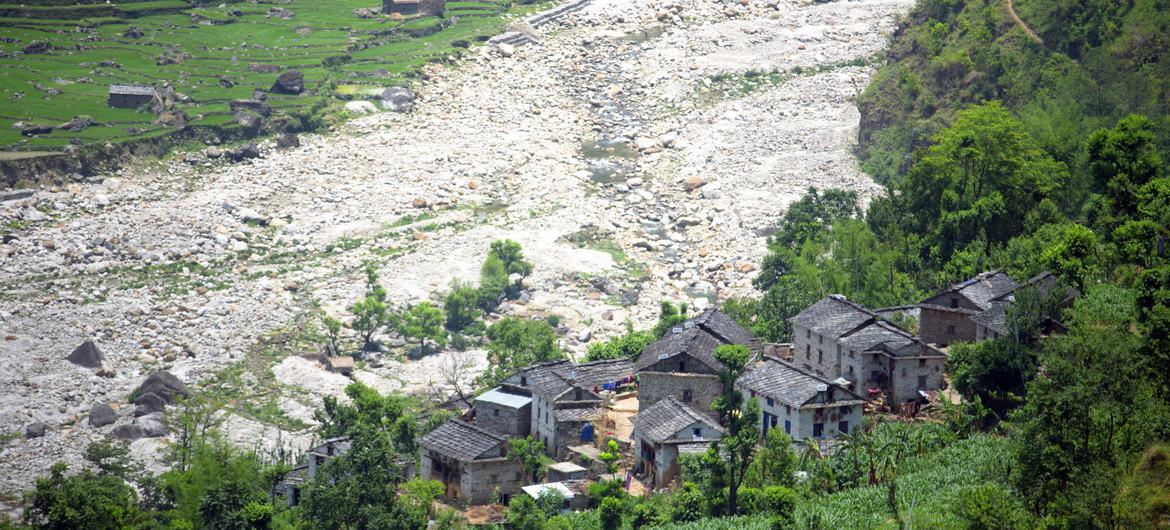
Aftermath of a flood that swept through a high-altitude village in Nepal.
© UNICEF
 
Aftermath of a flood that swept through a high-altitude village in Nepal.

Closing the warning gap

The WMO is stepping up efforts to improve flood forecasting through its global initiative and real-time guidance platform, now used in over 70 countries.

The system integrates satellite data, radar and high-resolution weather models to flag threats hours in advance and is being expanded into a country-led, globally interoperable framework.

A 2022 World Bank study estimated that 1.81 billion people – nearly a quarter of the world’s population – are directly exposed to 1-in-100-year flood events, with 89 per cent living in low- and middle-income countries.

The UN’s Early Warnings for All initiative aims to ensure that everyone, everywhere, is protected by early warning systems by 2027.


https://news.un.org/en/story/2025/07/1165455


https://creativecommons.org/licenses/by/4.0/legalcode

пятница, 30 августа 2024 г.

Floods, landslides wreak havoc across South Asia


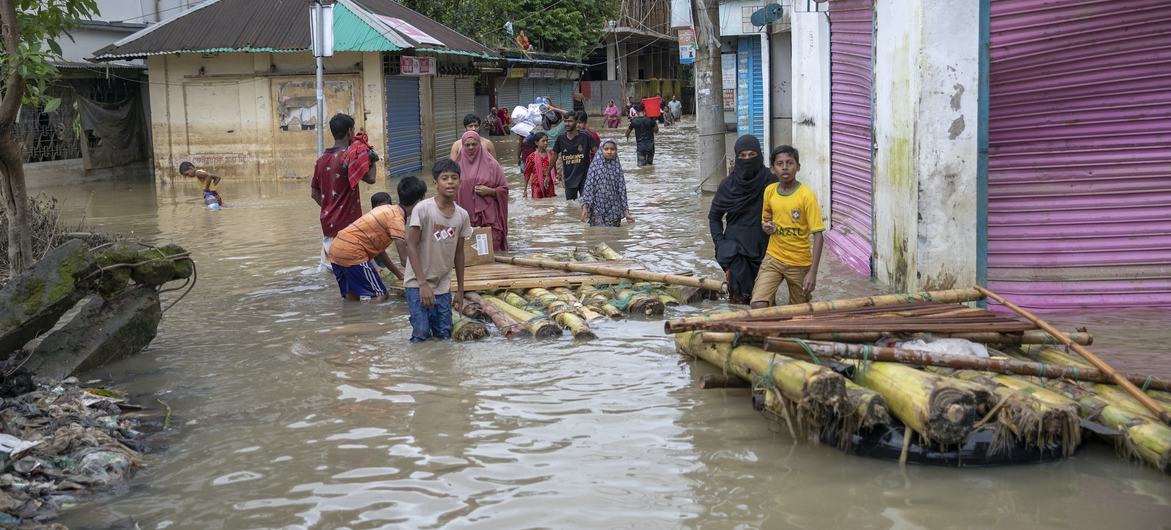
Flood-affected residents construct makeshift bamboo rafts to navigate submerged streets in Feni district, southeast Bangladesh.
© UNICEF/Salahuddin Ahmed Paulash
 
Flood-affected residents construct makeshift bamboo rafts to navigate submerged streets in Feni district, southeast Bangladesh.


By Vibhu Mishra
29 August 2024

 Humanitarian Aid

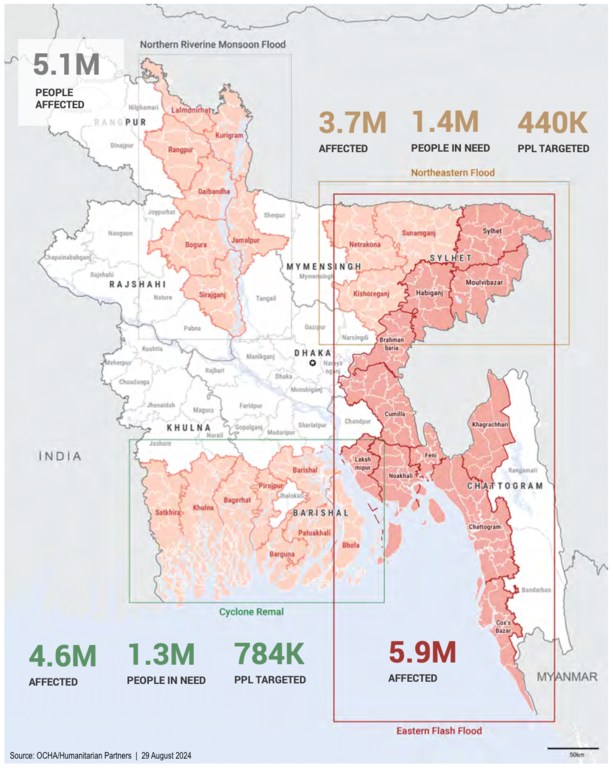
Over 18 million people in Bangladesh have been affected by severe monsoon conditions, with more than 1.2 million families trapped as flash floods submerge vast areas of the country’s east and southeast.

The worst affected regions are Chattogram and Sylhet, where major rivers are “flowing well above danger levels”, further aggravating the situation, according to the UN Children’s Fund (UNICEF).

Initial estimates suggest that around five million people - including two million children - have been affected, many stranded without food and relief.

Impact of cyclone and monsoon floods in Bangladesh (May to August 2024)
Source: OCHA
 
Impact of cyclone and monsoon floods in Bangladesh (May to August 2024)

Twenty deaths have been reported as of Tuesday, and a further 285,000 have sought refuge in more than 3,500 shelters, UNICEF added.

Massive damage has also been reported to roads, croplands, and fisheries, severely impacting livelihoods.

Government-led search and rescue operations are ongoing, with some areas inaccessible.

UN-partners in some places have reported that water levels are not expected to recede for at least a week, with risk of persistent waterlogging and accompanying threat of water- and vector-borne diseases.

Extraordinary rainfall in eastern India

The state of Tripura in eastern India was hit by extraordinary rainfall for over 72 hours roughly ten days ago, resulting in some of the most severe floods since 1983, according to local media.

The rains along with over 2,000 resulting landslides, reportedly affecting 1.7 million people, including around 117,000 who have been displaced to relief camps set up by district authorities.

Some 26 people are said to have been killed, the UN Office for the Coordination of Humanitarian Affairs (OCHAsaid, citing officials.

A Government-led response is ongoing, with floodwater levels said to have been receding.

Multiple landslides were also reported in the northern state of Himanchal Pradesh since late July, leading to several casualties.

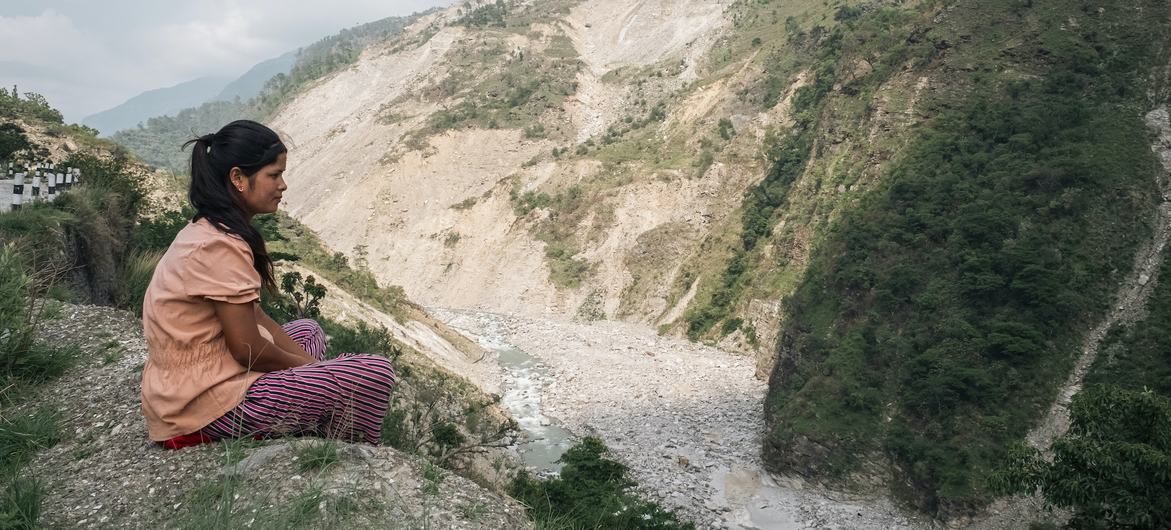
In western Nepal, a girl sits on the edge of a cliff, overlooking a massive landslide brought on by the monsoon rains in 2023.
© UNICEF/Vlad Sokhin
 
In western Nepal, a girl sits on the edge of a cliff, overlooking a massive landslide brought on by the monsoon rains in 2023.

Climate change impacts in Nepal

The monsoon season also wreaked havoc in Nepal, a country on the frontlines of climate change, experiencing more erratic and intense weather and rapid warming of glaciers, leading to severe flash floods and landslides.

A glacial lake outburst flood (GLOF) in the country’s Everest region wiped off the village of Thame, situated at an altitude of about 3,800 metres (12,500 feet) and popular with trekkers.

Though no deaths or serious injuries were reported, more than a dozen houses and small hotels, a school and a health clinic were washed away.

Elsewhere in the country, however, the 2024 monsoon season led to more than 200 deaths, including in the capital, Kathmandu.

In a particularly tragic incident, about 65 people died when two buses were pushed into a swollen river last month. Authorities have been able to recover the remains of only three people, with search efforts ongoing.

Response continues in Pakistan

In Pakistan, disasters claimed the lives of 243 people since July – about half of them children, underscoring their heightened vulnerability, OCHA reported.

Floods also resulted in “extensive damage” to livelihoods and vital infrastructure, including schools and bridges.

Assessments and response continue, with humanitarian partners and authorities reporting food, clean water, medical supplies and hygiene kits as key needs.


https://news.un.org/en/story/2024/08/1153726


https://creativecommons.org/licenses/by/4.0/legalcode

вторник, 13 августа 2024 г.

UN migration agency steps up support to families affected by deadly Yemen floods


The heavy rains in Hudaydah, Yemen, have impacted and damaged health facilities in the area, further impeding access to healthcare.
OCHA Yemen
 
The heavy rains in Hudaydah, Yemen, have impacted and damaged health facilities in the area, further impeding access to healthcare.


12 August 2024 

Humanitarian Aid

The International Organization for Migration (IOM) is ramping up emergency operations in Yemen to support thousands of families affected by relentless rains and catastrophic flooding that has wreaked havoc across the country. 

The floods began in late June and intensified through early August.  At least 57 people were killed and over 34,000 families impacted, as torrential rains devastated Hudaydah, Taiz, Marib and other regions, according to the UN humanitarian affairs office, OCHA.

Tweet URL

War, displacement and poverty

The crisis is unfolding amid the ongoing war between Government forces, backed by a Saudi-led coalition, and Houthi rebels, which began a decade ago.

The devastation caused by the floods and windstorms has worsened the already dire humanitarian situation in Yemen, where millions are grappling with the impacts of the prolonged conflict as well as displacement and poverty. 

The situation for internally displaced persons has become even more critical as the destruction of shelters, coupled with limited access to essential services, further hampers their recovery.

Donor support needed

Matt Huber, IOM Yemen’s Acting Chief of Mission, said the magnitude of the disaster is overwhelming and needs are enormous.

“Our teams are on the ground, working tirelessly to provide life-saving assistance to those in need, but the resources at our disposal are limited,” he said.

“Without significant and sustained support from international donors and partners, the ability to meet the needs of those affected will remain severely limited.”

Families displaced, farmland destroyed, landmines dislodged

The floods have displaced over 6,000 families and caused severe infrastructure damage in Hudaydah governorate, among the hardest-hit areas. 

The flood waters have buried wells, washed away farmlands and caused widespread destruction of homes and essential public services. Roads have been closed and access to affected areas remains challenging, which is further complicating relief efforts.

IOM said the situation is equally dire in three districts on Yemen’s west coast- Hays, Mokha and Al Khokha - where 5,800 families have been affected and thousands displaced.  Crops and critical infrastructure have been destroyed, including roads and water supply systems. 

Meanwhile in Hays, the flooding has swept landmines into new areas, thus complicating access and increasing risks of those trying to reach communities in need.

Assistance and assessments

In response to the crisis, IOM has provided aid to more than 300 families in Hays and Al Khokha districts. The agency has distributed shelter materials to 83 households as well as 3,000 hygiene kits.  Teams are also conducting assessments, including in Water, Sanitation, and Hygiene (WASH), protection, and shelter/non-food items.

In Marib, recent windstorms and floods have caused extensive damage, with broken electrical poles, widespread power outages, and severe impact on shelters. 

IOM manages 21 displacement sites there and preliminary assessments reveal that 600 shelters were fully damaged and 2,800 partially damaged, affecting over 20,000 people. Four deaths and several injuries were reported, with 12 people referred to IOM-supported hospitals in Marib city for urgent care.

Disease fears

The flooding has also raised serious health concerns as the combination of stagnant water and poor sanitation provide a breeding ground for mosquitoes, which could lead to diseases such as malaria and dengue fever.  Contaminated water sources also may exacerbate the risk of waterborne diseases and the current cholera outbreak.

In response, IOM’s teams have been conducting initial assessments, activating emergency response committees and restoring critical infrastructure, such as water and sanitation systems.  Teams have also been deployed to open channels for water discharge and construct embankments to prevent further damage. 

Appeal to the international community

Yet despite these efforts, IOM said the scale of the disaster has exposed critical gaps in resources, particularly among partners supplying shelter and non-food items, due to low contingency stocks. 

IOM is closely coordinating with local authorities and humanitarian partners to ensure a comprehensive and effective response. 

With more rain and wind expected in the coming days, the agency urgently called for the international community to significantly increase support to address the overwhelming needs in Yemen. 


https://news.un.org/en/story/2024/08/1153061


https://creativecommons.org/licenses/by/4.0/legalcode

среда, 13 сентября 2023 г.

UN launches flash appeal to aid 250,000 Libyans hit by devastating floods

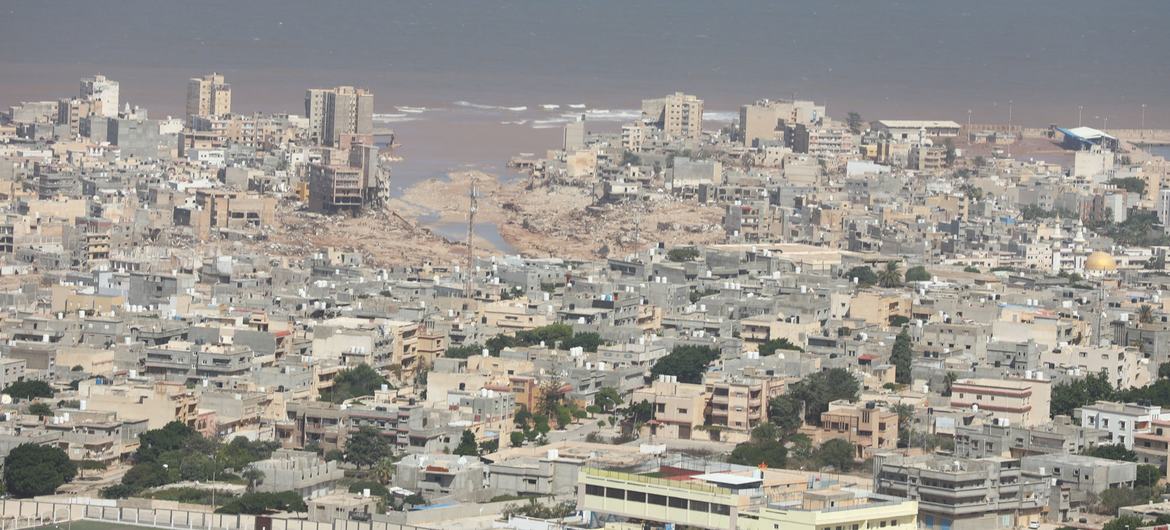
Darna city in the aftermath of the devastating floods.
© UNICEF/Abdulsalam Alturki
 
Darna city in the aftermath of the devastating floods.
Humanitarian Aid

UN humanitarians are working flat out on the ground in Libya, providing desperately needed aid to thousands of survivors of the flood disaster that has left thousands dead and thousands more unaccounted for.

Disaster struck on Sunday when torrential rains from Storm Daniel led two dams close to the now devastated port city of Derna to burst, pushing entire neighbourhoods into the sea.

“The situation is quite terrible as you can imagine”, UN Children’s Fund UNICEF’s Libya Representative, Michele Servadei, told UN News.

‘Drop in the ocean’

“As UNICEF, we have sent medical kits and medical supplies for 10,000 people. This was the first couple of days. We sent 1,100 hygiene kits, we sent clothing kits, but that is still a drop in the ocean.”

Soundcloud

He said psychosocial support was urgently needed besides lifesaving supplies, “not only for the displaced but also for the ones that are in shelters”, or who remain stranded having lived through “that terrible night.”

The UN World Food Programme (WFP) has already provided food assistance to more than 5,000 families displaced by the catastrophic floods.

“These devastating floods have struck in a country where a profound political crisis has already left so many in a desperate situation," WFP Executive Director, Cindy McCain said.

Libya is particularly vulnerable to the impact of natural disasters as it has no unified government. The country has been split since 2014 between an interim, internationally recognized Government operating from the capital, Tripoli, and another in the east, with many armed groups also operating on its territory. 

Tweet URL

Appeal for $71 million

UN aid coordination office OCHA, on Thursday issued an urgent appeal to donors for $71.4 million to respond to the needs of around 250,000 people impacted by the floods in Libya over the next three months, saying death tolls could rise without more help.

OCHA estimates that more than 880,000 people, in five provinces, live in areas directly affected by the storm and flash floods.

"All hands are on deck to get as much help and support to people as we can. The UN is deploying a robust team to support and resource the international response, in coordination with first responders and Libya's authorities", the head of OCHA, and UN relief chief Martin Griffiths said.

Meanwhile, it is a race against time for emergency teams searching through piles of debris for survivors.

"The scale of the flood disaster is shocking, with entire neighborhoods having been wiped off the map and whole families, taken by surprise, swept away in the deluge of water," Mr. Griffiths said.

"Alongside the tragic loss of life, thousands of families in Derna are now without food or shelter", Ms. McCain noted. 

WFP said its planned emergency operation will aim to provide monthly food assistance to 100,000 people in flood-affected areas for the next three months.

What role did climate change play?

The deadly storm comes in an unprecedented year of climate disasters and record-breaking weather events, from devastating wildfires to excessive heatwaves.

Professor Petteri Taalas, the head of the World Meteorological Organization (WMO) on Wednesday said the tragedy in Libya highlights the devastating and cascading consequences of extreme weather on fragile States.

He stressed it shows the need for multi-hazard early warning systems which embrace all levels of government and society, in line with the UN’s drive to make them universal by 2027.

https://creativecommons.org/licenses/by/3.0/legalcode

https://news.un.org/en/story/2023/09/1140767