Избранное сообщение

Показаны сообщения с ярлыком UNESCO. Показать все сообщения

пятница, 26 апреля 2024 г.

UNESCO report spotlights harmful effects of social media on young girls


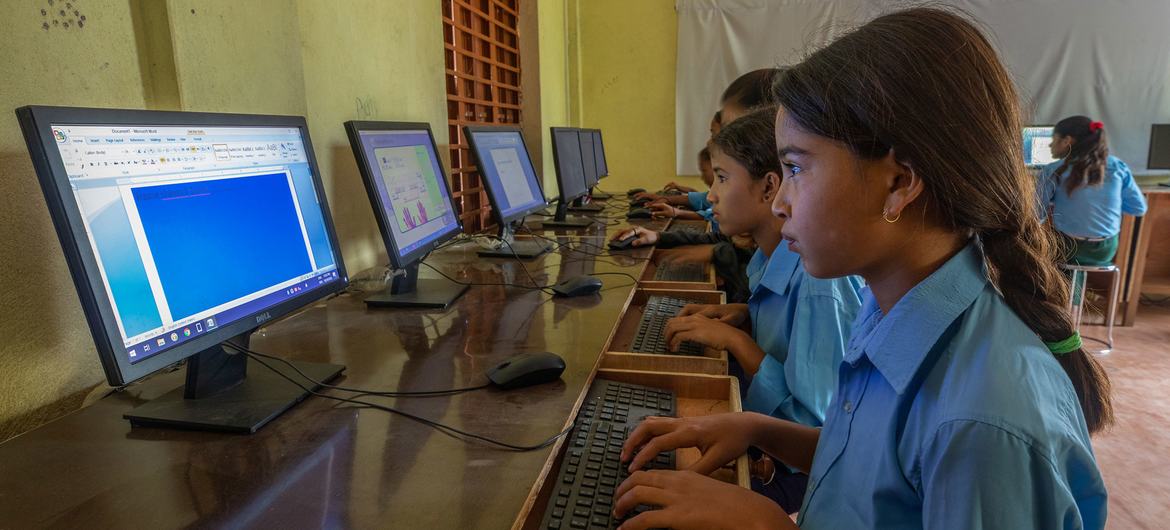
Students attend a computer class at a secondary school in Kailali, Nepal.
© ADB/Narendra Shrestha
 
Students attend a computer class at a secondary school in Kailali, Nepal.


25 April 2024

Culture and Education

Digital technologies and algorithm-driven software - especially social media - present high risks of privacy invasion, cyberbullying and distraction from learning to young girls, according to the UN Educational, Scientific and Cultural Organization’s (UNESCO) latest Global Education Monitor (GEM) report released on Thursday.

In an interview with UN News, Senior Policy Analyst from the GEM report team Anna D’addio said the report examines the issue of technology in education through a gender lens.

She said the report highlights progress in the reversal of discrimination against girls over the past two decades but also exposes the negative impact of technology on girls' education opportunities and outcomes.

Harassment online

Girls on social media are much more exposed to different forms of harassment. Cyber cyberbullying is much more frequent among girls than among boys,” Ms. D’Addio said.

“It's something that affects their well-being, and their well-being is important for learning”, she added.

Guterres stresses internet access

Tweet URL
antonioguterres

The report coincides with the UN telecoms agency (ITU) led International Girls in ICT Day.  

In a post on his Twitter account, the Secretary-General called for more equipment and support for girls in the Information and Communication Technology field, pointing out that fewer women than men have access to the internet – and that stands in their way of getting an equal opportunity for work. 

Mental health, body disorders

Based on the report’s findings, social media exposes young girls to a range of unsuitable video material including sexual content - and the promotion of unhealthy and unrealistic body standards that negatively affect mental health and wellbeing.

It was reported that adolescent girls are twice as likely to feel lonely than boys and suffer from an eating disorder.

There is increasing evidence that shows that increased exposure to social media is related to mental health problems, eating disorders and many other issues that condition and distract social media users, and particularly girls, from education which affects their academic achievement,” Ms. D’Addio said.

Instagram has reportedly accounted for 32 per cent of teenage girls' feeling worse about their bodies after consuming the platform’s content, according to a Facebook statistic cited in the report.

The Senior Policy Analyst said social media usage can have positive effects on young girls, especially when used to increase knowledge and raise awareness on social issues.

“I think what is important is…to teach how to use social media and technology,” Ms. D’Addio said.

Girls in STEM

Tweet URL
GEMReport

She said the report calls attention to the fact that girls are at a disadvantage in accessing science, technology, engineering and mathematical (STEM) careers which shows a lack of diversity in the production and development of cutting edge tech.

Data from the UNESCO Institute for Statistics (IUS) showed that women only make up 35 per cent of tertiary education STEM graduates globally, and only hold 25 per cent of science, engineering and information and communication technology (ICT) jobs.

“There are still too few girls and women that choose…the STEM subjects and work there,” the Senior Policy Analyst said.

She said having more diversity will allow stronger contributions to science and developments without bias.

How does it get better?

The report’s results reveal the need for a greater investment in education and smarter regulation of digital platforms.

Ms. D’Addio said UNESCO is constantly working on remedying the exclusion of girls' access and attainment to education that remains by advocating for policies that make the education system more inclusive, and “promoting laws and regulations that guarantee equal access to education for girls and protect them from discrimination.


https://news.un.org/en/story/2024/04/1149021

https://creativecommons.org/licenses/by/3.0/legalcode

понедельник, 18 сентября 2023 г.

UNESCO: 250 million children now out of school


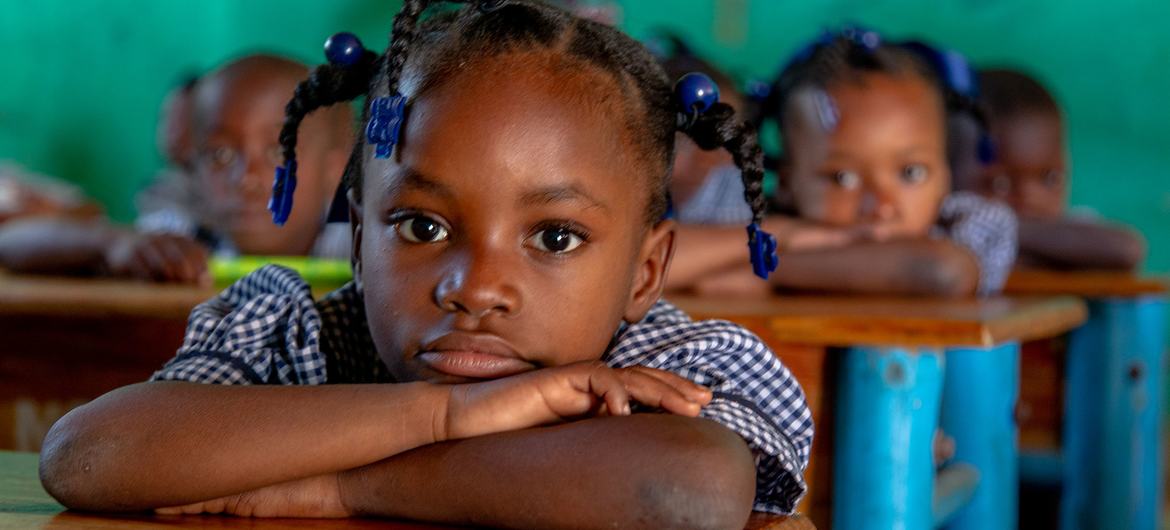
Students attend classes at a school in southwestern Haiti.
© UNICEF/Georges Harry Rouzier
 
Students attend classes at a school in southwestern Haiti.
18 September 2023
Culture and Education

The number of children missing out on any schooling has increased by six million, bringing the total to 250 million, according to new figures released on Monday by the UN Education, Science, and Cultural Organization (UNESCO).

The increase is partly due to the mass exclusion of women and girls from education in Afghanistan but can also be attributed to broader stagnation in education provision worldwide.

The findings undermine UN Sustainable Development Goal 4, which sets the goal of quality education for all by 2030.

Way off track

If countries were on track with their national SDG 4 targets, six million more children would be in pre-school, 58 million more children and adolescents would be in school, and at least 1.7 million more primary school teachers would have been trained, according to the report.

“Education is in a state of emergency,” said UNESCO Director-General Audrey Azoulay.

“While considerable efforts were made over the past decades to ensure quality education for all, UNESCO data demonstrates that the number of children out of school is now rising.

“States must urgently remobilize if they do not want to sell out the future of millions of children.”

Future ‘in your hands’

One year ago, 141 countries committed at the UN Transforming Education Summit to accelerate progress towards SDG 4. 

Four out of five countries aimed to advance teacher training and professional development, seven out of 10 committed to increasing or improving their investment in education, and one in four committed to increase financial support and school meal provision.

Tweet URL

For countries to achieve their SDG 4 targets, however, millions more children must be enrolled in early childhood education every year until 2030, and the progress in primary completion rates needs to almost triple. 

“These commitments must now be reflected in acts. There is no more time to lose. To achieve SDG 4, a new child needs to be enrolled in school every 2 seconds between now and 2030,” said the Director-General.

“The future of millions of children is in your hands”, she emphasised to Member States.

Insufficient growth

The report highlights that, since 2015, the number of children completing primary education has increased by less than three percentage points to 87 per cent. 

The number completing secondary education, meanwhile, has increased by less than five per cent to just 58 per cent. 

In the 31 low and lower-middle-income countries that measure learning progress at the end of primary school, Viet Nam is the only country where the majority of its children are achieving minimum proficiency in both reading and mathematics. 

Global framework

The Education 2030 Framework for Action calls on countries to set intermediate benchmarks for SDG 4 indicators. In an inclusive approach, countries were assisted in setting benchmarks to achieve by 2025 and 2030 for seven SDG 4 benchmarks on pre-primary education, school attendance, completion and learning, gender equity, learning proficiency, trained teachers, and public expenditure.

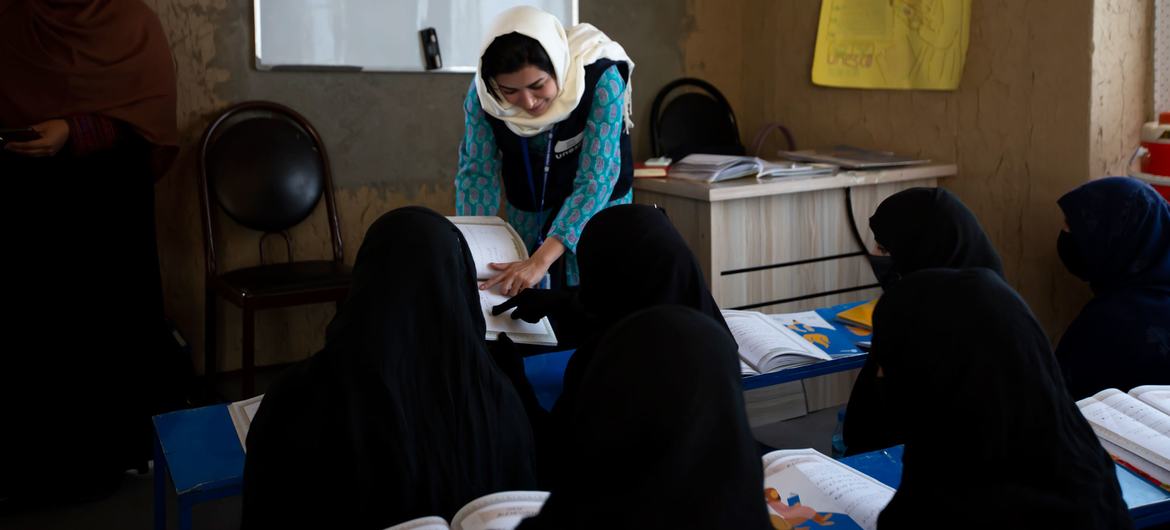
Students attending UNESCO's community-based literacy classes are experiencing schooling for the first time in their lives.
© UNESCO/Navid Rahi
 
Students attending UNESCO's community-based literacy classes are experiencing schooling for the first time in their lives.


https://news.un.org/en/story/2023/09/1140882
https://creativecommons.org/licenses/by/3.0/legalcode

четверг, 7 сентября 2023 г.

UNESCO calls for regulations on AI use in schools


Publicly available GenAI platforms are used by hundreds of millions around the world, including many students.
© UNICEF/Mary Gelman
 
Publicly available GenAI platforms are used by hundreds of millions around the world, including many students.
7 September 2023
SDGs

The UN Educational, Scientific and Cultural Organization (UNESCO) on Thursday called on governments to regulate the use of Generative Artificial Intelligence (GenAI) in education and research, including age limits for users.

The agency is also calling for guardrails on data protection and user privacy.

Publicly available GenAI tools, such as ChatGPT, can produce automated text, images, videos, music and software code. The platforms have evolved rapidly and are already in use by hundreds of millions around the world, including many students.  

However, very few countries have policies in place to ensure safe and ethical use of AI tools.

Soundcloud

‘Harm and prejudice’

“Generative AI can be a tremendous opportunity for human development, but it can also cause harm and prejudice,” Audrey Azoulay, UNESCO Director-General, said in a news release.

Tweet URL

“It cannot be integrated into education without public engagement, and the necessary safeguards and regulations from governments. This UNESCO Guidance will help policymakers and teachers best navigate the potential of AI for the primary interest of learners.”

Key steps  

UNESCO’s guidance, the first attempt to create a global standard, suggests immediate steps that can be taken to ensure a human-centric vision for new technology use.

This includes mandating the protection of data privacy and considering an age limit of 13 for their use in the classroom. It also outlines requirements for GenAI providers for ethical and effective use.

The guidance stresses the need for educational institutions to validate AI systems for student use.  

Digital Learning Week

The Guidance was released during the first ever Digital Learning Week, a flagship UNESCO’s event.

Over 1,000 participants discuss public digital learning platforms and GenAI and their use to reinforce and enrich learning.

The event also highlighted other important guidance produced by UNESCO in education, including information and communication technologies (ICT) in education policieseducation and blockchains, and an assessment of government-endorsed K-12 AI curricula.


https://news.un.org/en/story/2023/09/1140477

https://creativecommons.org/licenses/by/3.0/legalcode

четверг, 25 мая 2023 г.

UNESCO unveils new AI roadmap for classrooms


UNESCO calls out to implement its recommendations on the ethics of artificial intelligence to avoid its misuse.
Unsplash/D koi
 
UNESCO calls out to implement its recommendations on the ethics of artificial intelligence to avoid its misuse
Unsplash/D koi
 
UNESCO calls out to implement its recommendations on the ethics of artificial intelligence to avoid its misuse
Unsplash/D koi
 
UNESCO calls out to implement its recommendations on the ethics of artificial intelligence to avoid its misuse.
26 May 2023
Culture and Education

The UN convened the first ever global meeting with education ministers from around the world to explore risks and rewards of using chatbots in classrooms, announcing on Friday a new roadmap to chart a safer digital path for all.

Less than 10 per cent of schools and universities follow formal guidance on using wildly popular artificial intelligence (AI) tools, like the chatbot software ChatGPT, according to the UN Educational, Scientific and Cultural Organization (UNESCO), which hosted more than 40 ministers at an groundbreaking online meeting on Thursday.

Tweet URL

The ministers exchanged policy approaches and plans while considering the agency’s new roadmap on education and generative AI, which can create data and content based on existing algorithms, but can also make alarming factual errors, just like humans.

“Generative AI opens new horizons and challenges for education, but we urgently need to take action to ensure that new AI technologies are integrated into education on our terms,” said Stefania Giannini, UNESCO’s Assistant Director-General for Education. “It is our duty to prioritize safety, inclusion, diversity, transparency and quality.”

Institutions are facing myriad challenges in crafting an immediate response to the sudden emergence of these powerful AI apps, according to a new UNESCO survey of more than 450 schools and universities.

Rapidly evolving landscape

At the same time, governments worldwide are in the process of shaping appropriate policy responses in a rapidly evolving education landscape, while further developing or refining national strategies on AI, data protection, and other regulatory frameworks, according to UNESCO.

However, they are proceeding with caution. Risks to using these tools can see students exposed to false or biased information, some ministers said at the global meeting.

The debate revealed other common concerns, including how to mitigate the chatbots’ inherent flaws of producing glaring errors. Ministers also addressed how best to integrate these tools into curricula, teaching methods, and exams, and adapting education systems to the disruptions which generative AI is quickly causing.

Many highlighted the vital role teachers play in this new era as learning facilitators.

But, teachers need guidance and training to meet these challenges, according to UNESCO.

Adding to existing frameworks

Teachers need guidance and training to meet these challenges. — UNESCO

For its part, the agency will continue to steer the global dialogue with policy makers, partners, academia, and civil society, in line with its paper, AI and education: A guide for policy-makers and Recommendation on the Ethics of AI, as well as the Beijing Consensus on Artificial Intelligence and Education.

UNESCO is also developing policy guidelines on the use of generative AI in education and research, as well as frameworks of AI competencies for students and teachers for classrooms.

These new tools will be launched during Digital Learning Week, to be held at UNESCO Headquarters in Paris on 4 to 7 September, the agency said.

Learn more about UNESCO’s work in digital learning and education here.


 https://news.un.org/en/story/2023/05/1137117

https://creativecommons.org/licenses/by/3.0/legalcode

суббота, 22 апреля 2023 г.

UNESCO's Global Education Coalition launches the Digital Transformation Collaborative at annual meeting


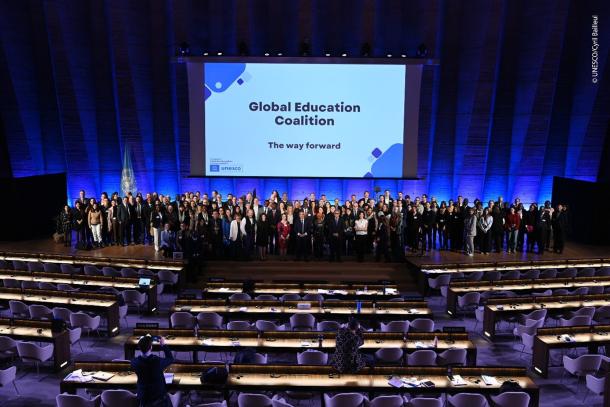
GEC - launch of the Digital Transformation Collaborative

A new collaborative to accelerate digital transformation in education was launched as UNESCO brought together representatives from more than 70 partner organizations and over 40 Member States for the third annual meeting of the Global Education Coalition.

The event, which took place on 28 March at the UNESCO headquarters in Paris, was the first in-person meeting of the Coalition. On the occasion, the Coalition’s annual report - Transforming education together: the Global Education Coalition in action - was launched, highlighting how Members are supporting countries’ efforts to achieve SDG 4 and the commitments made during the Transforming Education Summit.

Opening the meeting, Stefania Giannini, UNESCO Assistant Director-General for Education, thanked the more than 200 Coalition Members for their contributions to transform education while noting the opportunities promised by new technologies and how these can accelerate the group’s efforts.

 “The next five years will be critical to invest in the digital transformation of national education systems … As the Coalition moves forward, steering the digital and green transitions in and through education will increasingly be at the heart of all that it does,” Ms Giannini added. 

The future of the Coalition

Throughout the day, Members discussed important questions on the future of the Coalition, including how the group can respond in crisis while also supporting sustainable pathways to scale, and how it can collectively overcome the challenges to creating successful and sustainable multi-stakeholder partnerships.

Firmin Edouard Matoko, Assistant-Director General, Priority Africa and External Relations at UNESCO, stressed the importance of multi-stakeholder partnerships in meeting global goals for education and in addressing ongoing crises – including environmental and economic – that undermine efforts to achieve universal access to quality education.

“The situation demands that we bond together - that we forge bolder partnerships and that we harness the power of collective action to overcome the barriers to learning, to bridge the gaps that exist, and to transform education in ways that will benefit all learners,” said Mr Matoko.

Jane Lawrie, Global Head of Corporate Affairs at KPMG, suggested that Coalition Members should join forces and focus on a shared outcome by identifying and investing in a handful of programmes that have the greatest impact. “I think everyone in this room has a unique skill set [and] by putting their skills towards one outcome, that's where I think we make the biggest difference to young people,” said Ms Lawrie.

Meanwhile, Benjamin Marteau, CEO of Pix, suggested that increased collaboration with education institutions in every country is needed for initiatives to have long term impact. The Coalition, he said, can facilitate the relationships between private sector players and relevant Ministries to make this happen.

The contribution of the private sector in providing access to education was also discussed. Andreas Schleicher, Director for the Directorate of Education and Skills at the OECD, praised the Coalition for encouraging a “culture of public [working] with private in service of the public good.”

“Most of the technological and also social innovation in education has actually come from private sector engagement in the public education system,” said Mr Schleicher. “The Global Education Coalition has really been able to really mobilize that … the question to me really is how can we move from a moment of managing crisis to actually working together to build a future.” 

The launch of the Digital Transformation Collaborative

The newly formed Digital Transformation Collaborative, which was officially launched at the event last Tuesday, will play an important role in guiding the work of the Coalition in 2023 and beyond.

Having emerged from the private sector and donor conversations during the Transforming Education Summit last year, the DTC is made up of 30 Coalition partners with on-the-ground digital technology resources and expertise.

Borhene Chakroun, Director for the Division for Policies and Lifelong Learning Systems with UNESCO’s Education Sector, said “The Digital Transformation Collaborative can collectively steer digital transformation education towards equity, inclusion, sustainability, in partnership with member states.” It will do this by focusing on “five keys” - coordination and leadership, cost and sustainability, connectivity and infrastructure, capacities and culture, and content and curriculum.

“We have a theory of change - if we come together and coordinate resources in a smart way, we have the potential to move the needle from small scale pockets of good practises to scale … [and build] ecosystem and sustainable policies, plans and programmes for digital transformation education at a system level and national scale,” Mr Chakroun explained.

Google is one of the founding members of the DTC. William Florance, the company’s Government Relations Program Lead for EMEA, encouraged a more holistic approach to transforming education systems - one which involves working with Ministries of finance, economy and human resource development, as well as education.

Florence also suggested that funding for education should come from a variety of sources - not only national budgets - and that countries need support in making smart investments in scalable technology. “Too often we see heavy investments in technology that maybe is more than what's needed to meet the basic needs of the education system,” he said. But the DTC can support Ministries in investing in the appropriate technologies to facilitate education transformation.

Dina Ghobashy, Senior Manager for Digital Transformation Leadership at Microsoft, another member of the Collaborative, suggested that Member States think of Coalition partners as “innovation labs” that can mobilize research and help design solutions to their country-specific challenges.

 “We feel responsible to share what's possible, to amplify the best practises that we're seeing, to help governments leapfrog and even avoid some of the common pitfalls,” said Ms Ghobashy. “It is really important for us to be part of this Collaborative and the Coalition [because] a country's success is our success, and we share the same goals.”


https://www.unesco.org/en/articles/unescos-global-education-coalition-launches-digital-transformation-collaborative-annual-meeting

https://creativecommons.org/licenses/by/3.0/legalcode

четверг, 13 апреля 2023 г.

New UNESCO report reveals $97 billion barrier to reaching education targets

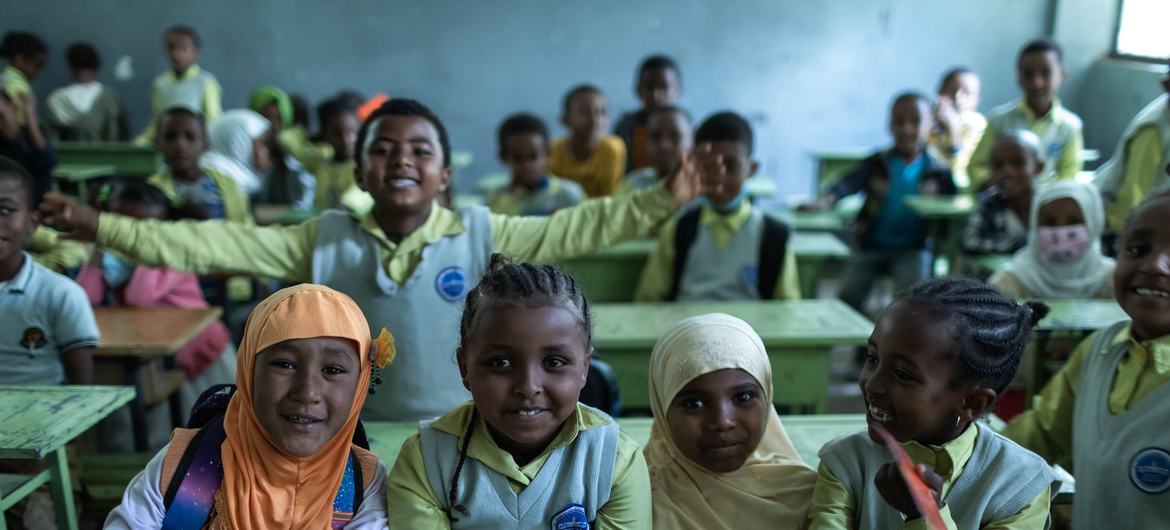
Children at Goro Pre-Primary and Elementary School in Ethiopia were excited to return to classes in September 2022.
© UNICEF/Mulugeta Ayene
 
Children at Goro Pre-Primary and Elementary School in Ethiopia were excited to return to classes in September 2022.
14 April 2023
SDGs

Without $97 billion in extra funding, a range of countries will fail to meet their 2030 national education targets, a new UN report revealed on Friday, calling for an urgent review of financing.

The paper Can countries afford their national SDG4 benchmarks? by the Global Education Monitoring (GEM) Report of the UN Educational, Scientific and Cultural Organization (UNESCO) was written as input for the spring meetings of the World Bank and the International Monetary Fund (IMF). 

Tweet URL

It focused on Goal 4 of the 2030 Agenda for Sustainable Development, which aims at ensuring inclusive and equitable quality education and promoting lifelong learning opportunities for all.

Findings showed that the education sector will need an injection of funds if countries are to meet their targets.

New strategies needed

In addition to mobilizing additional resources, strategies are needed to increase the effectiveness of funding.

The largest financing gap is in sub-Saharan Africa: $70 billion per year. The region has the furthest distance to travel, with 20 per cent of primary school age children and almost 60 per cent of upper secondary school age youth not in school.

Around one third of the gap could be filled if donors fulfilled their aid commitments and prioritized basic education in the poorest countries, the report found.

Wanted: More teachers

Other key findings emphasize that costs include the need to triple the number of pre-primary teachers in low-income countries and double them in lower-middle income countries by 2030. The number of primary school teachers needs to increase by nearly 50 per cent in low-income countries.

While the full impact of COVID-19 pandemic disruptions remains unknown, the report found that costs also include making up for massive learning losses that exacerbated the pre-existing learning crisis. Only half of children and adolescents are now prepared for the future having completed their education and with minimum proficiency in reading.

Meanwhile, two thirds of low and lower-middle-income countries had cut their public education spending in the first year following the onset of the pandemic in 2020.

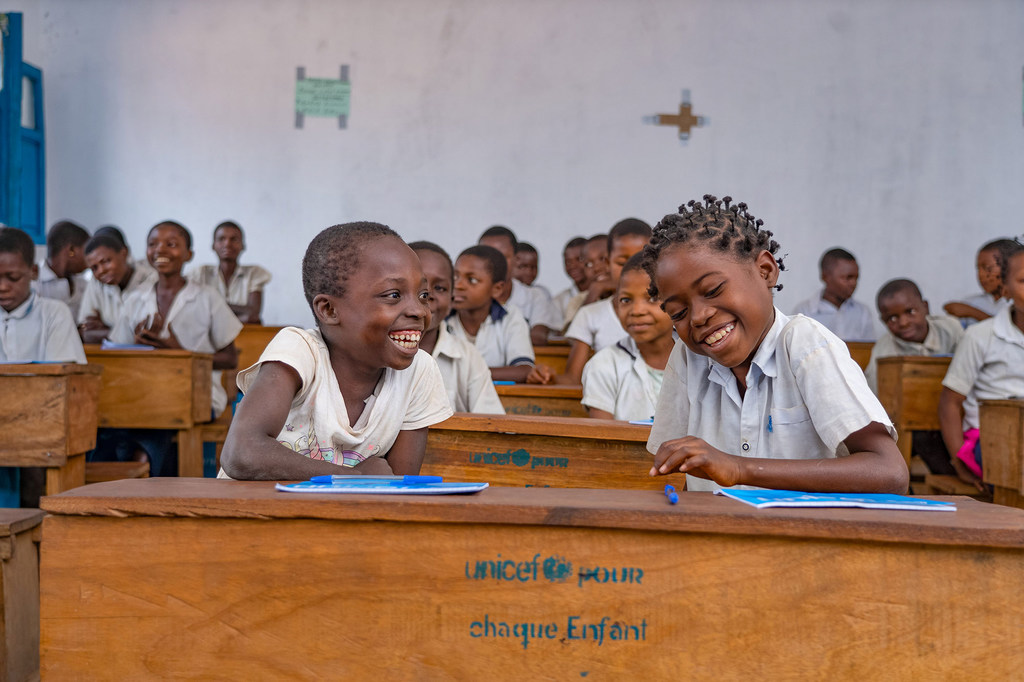
Fourth-grade students attend class at their new school, which was rebuilt after it was destroyed by fighting in the Kasai-Oriental province of DR Congo.
© UNICEF/Josue Mulala
 
Fourth-grade students attend class at their new school, which was rebuilt after it was destroyed by fighting in the Kasai-Oriental province of DR Congo.


 https://news.un.org/en/story/2023/04/1135697

https://creativecommons.org/licenses/by/3.0/legalcode