Избранное сообщение

Показаны сообщения с ярлыком Culture and Education. Показать все сообщения

пятница, 27 сентября 2024 г.

$1.5 billion commitment for education and skills training in lower-middle-income countries


Today, globally, some 250 million children are out of school.
© UNIC Pakistan
 
Today, globally, some 250 million children are out of school.


26 September 2024 

Culture and Education

A new $1.5 billion investment, announced on Thursday, will boost education and skills development for millions of the world’s children and youth most in need. 

The commitment by the International Finance Facility for Education (IFFEd) will address the dire but often forgotten global education emergency. Currently, 250 million children do not attend school while more than 800 million young people – more than half of the world’s youth – will leave school without any skills for the modern workforce. 

It will also help bridge the enormous education funding gap, pegged at some $97 billion annually through to 2030. 

A historic investment 

The commitment, which covers the period through 2025, represents “the largest one-off investment in global education and skills in decades,” said UN Special Envoy for Global Education Gordon Brown, who spearheaded IFFEd’s development. 

The public-private, non-partisan international finance facility specifically focuses on education financing for lower-middle-income countries (LMICs), home to 1.2 billion children and young people, or nearly half the global total.  

LMICs – which include India, Pakistan, Nigeria and Kenya - are caught in the so-called “missing middle”. These nations are no longer able eligible to receive grants, but non-concessional financing remains unaffordable, while limited domestic resources mean education and skills  skills are often hit the hardest.

Soundcloud

‘Innovative financing at its best’ 

 IFFEd turbocharges the financing power of multilateral development banks (MDBs) by leveraging a mix of grants and sovereign guarantees in a new way to increase funding for human capital development. 

Every one dollar in donor cash will deliver $7 in education and skills financing at the country level. As a result, LMICs will be able to prioritise investment in these two areas, even in the face of competing needs for climate, health, and infrastructure.  

Mr. Brown called the $1.5 billion commitment “innovative finance at its best”, saying that “aligning guarantees with grants and loans offers a way ahead to maximise resources for international development generally.” 

He called for “governments and private partners to join IFFEd’s financing innovation that turns millions into billions to unlock opportunity for the world’s children and youth who need it most.” 

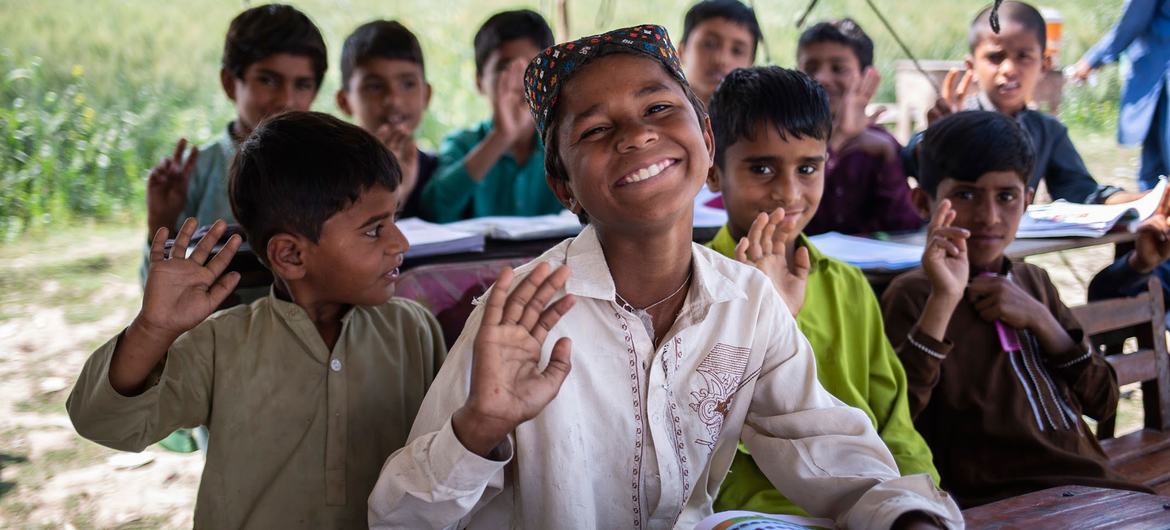
Happy students in a school in the Maasai community in the Kajiado County, in Kenya.
© UNICEF/Frank Dejongh
 
Happy students in a school in the Maasai community in the Kajiado County, in Kenya.

Transforming millions of lives 

IFFEd's founding donors Canada, Sweden, and the United Kingdom have committed $342 million in guarantees and paid-in capital, plus $100m in grants.  

Several global philanthropic foundations have provided critical seed funding, including the Atlassian Foundation, Jacobs Foundation, Porticus, The Rockefeller Foundation, and the Soros Economic Development Fund (the impact investment arm of Open Society Foundations).  

“Inspired by Gordon Brown's vision I am delighted that we have now reached the point that we can bring positive change to the life chances of millions of children and young people worldwide,” said IFFEd’s Board Chair Sir Julian Smith. 

“We look forward to working with our first MDB partner, the Asian Development Bank, to begin our programme of delivery.” 

Meanwhile, 10 countries in the Asia-Pacific region have been approved as eligible for IFFEd financing: Bangladesh, India, Mongolia, Pakistan, Papua New Guinea, Philippines, Sri Lanka, Timor-Leste, Uzbekistan, and Vietnam.  

IFFEd is also actively engaged in conversations with additional donors and other MDBs including the World Bank and the African Development Bank. 

https://news.un.org/en/story/2024/09/1154976

https://creativecommons.org/licenses/by/4.0/legalcode

суббота, 25 мая 2024 г.

Nations agree landmark treaty on traditional knowledge, protecting Indigenous Peoples’ rights


Nations agree landmark treaty on traditional knowledge, protecting Indigenous Peoples’ rights

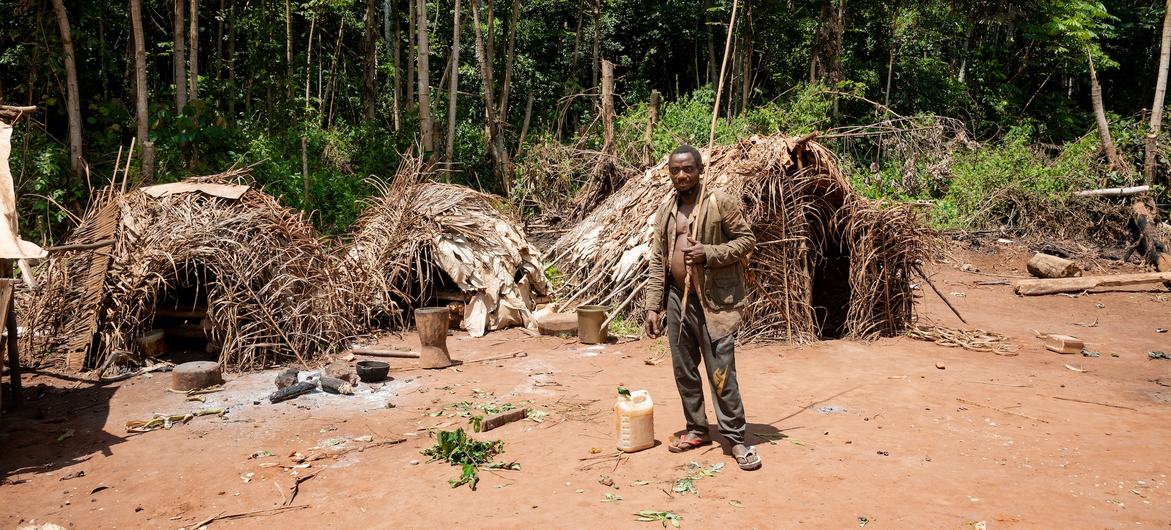
Indigenous Peoples possess valuable knowledge passed down through generations. Pictured here, a community in the Republic of the Congo.
© UNICEF/Lebon Chansard ZIAVOULA
 
Indigenous Peoples possess valuable knowledge passed down through generations. Pictured here, a community in the Republic of the Congo.


24 May 2024

Culture and Education

Member States of the World Intellectual Property Organization (WIPO) – a specialized UN agency – on Friday agreed to a groundbreaking new treaty addressing intellectual property (IP) in relation to genetic resources and associated traditional knowledge.

The Treaty on Intellectual Property, Genetic Resources and Associated Traditional Knowledge also includes key provisions aimed at protecting the rights of Indigenous Peoples and local communities.

Its approval by consensus, in Geneva, marked the conclusion of negotiations that began in 2001.

“Today we made history in many ways. This is not just the first new WIPO Treaty in over a decade but also the first one that deals with genetic resources and traditional knowledge held by Indigenous Peoples as well as local communities,” said Daren Tang, the agency’s Director-General.

“Through this, we are showing that the IP system can continue to incentivize innovation while evolving in a more inclusive way, responding to the needs of all countries and their communities.”

Carefully calibrated solution

Guilherme de Aguiar Patriota, Brazil’s Permanent Representative to the World Trade Organization (WTO), president of the Diplomatic Conference adopting the Treaty, highlighted the achievement.

It represented “a very carefully balanced outcome” of the Conference, he said.

“It constitutes the best possible compromise and a carefully calibrated solution, which seeks to bridge and to balance a variety of interests, some very passionately held and assiduously expressed and defended over the course of decades.”

Genetic resources, found plants and crops, are often utilized in research and inventions.
ADB/Tengo Giorbelidze
 
Genetic resources, found plants and crops, are often utilized in research and inventions.

About the treaty

The Treaty mandates that, where a patent application involves genetic resources, the applicant must disclose the country of origin or source.

If traditional knowledge associated with genetic resources is involved, the applicant must disclose the Indigenous Peoples or local community that provided it.

Genetic resources, found in entities such as medicinal plants and agricultural crops, are often utilized in patented inventions, although they themselves cannot be patented.

The traditional knowledge associated with these resources, conserved and used by Indigenous Peoples and local communities over generations, plays a crucial role in scientific research and the development of new inventions.

Next steps

Once ratified by 15 contracting parties, the Treaty will establish an international legal framework requiring patent applicants to disclose the origin of genetic resources and the associated traditional knowledge used in their inventions.


https://news.un.org/en/story/2024/05/1150231


https://creativecommons.org/licenses/by/3.0/legalcode

суббота, 4 мая 2024 г.

Guterres demands better protection for journalists on environment beat


Guterres demands better protection for journalists on environment beat

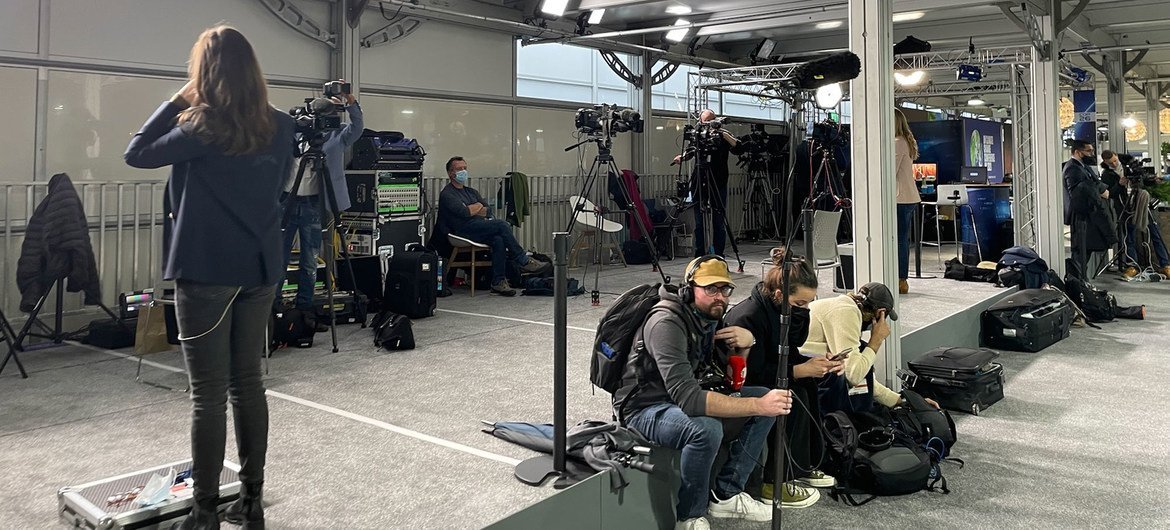
Journalists take a rest after a busy day at the COP26 Climate Conference in Glasgow, Scotland, in November 2021.
UN News/Laura Quiñones
 
Journalists take a rest after a busy day at the COP26 Climate Conference in Glasgow, Scotland, in November 2021.


2 May 2024

Culture and Education

Friday marks World Press Freedom Day and UN Secretary-General António Guterres is highlighting an uptick in violence faced by journalists covering environmental issues, which has made the profession increasingly dangerous. 

Tweet URL
UN_News_Centre

The UN chief said journalists and media professionals “have a key role in informing and educating” the public about the world’s current environmental and climate emergency which stands as a threat to future generations.

It is through this work that people can have a greater understanding of environmental factors affecting the world and advocate for change, he said. 

However, based on recent UN Educational, Scientific and Cultural Organization (UNESCO) reports, journalists, especially environmental journalists, face violent attacks, and even death, for simply doing their job.  

Dozens of journalists covering illegal mining, logging, poaching and other environmental issues have been killed in recent decades,” Mr. Guterres said. But, “In the vast majority of cases, no one has been held to account.” 

Sounding the alarm

UNESCO’s report analyzed the violence environmental journalists face.

The report found that journalists and news outlets reporting on environmental issues dealt with about 750 attacks in the past 15 years, the Secretary-General said.

In an interview with UN News, Guilherme Canela, UNESCO’s Chief of Freedom of Expression and Safety of Journalists, said the report found that 70 per cent of journalists doing environmental reporting dealt with at least one form of violence, and a quarter of the surveyed journalists dealt with legal attacks. 

Additionally, Mr. Canela said that over the past 50 years, 44 journalists covering environmental stories were killed.

He said it is important to remember that journalists are important observers of conflict zones and that they provide life-saving information for civilian populations affected by these conflicts.

Mr. Canela said, “UNESCO is sounding the alarm that we need to take care of the protection of those journalists covering environmental issues, because raising that awareness about what's going on in the environment and holding powerful actors accountable is absolutely essential to face the current environmental challenges that the planet is having.” 

Safety for all journalists 

In a statement for World Press Freedom Day, Volker Türk, UN High Commissioner for Human Rights, said losing a journalist means losing a human rights defender, and that the world needs “independent, ethical and quality journalism perhaps now more than ever.

Mr. Türk said journalists – emphasising environmental journalists – need “stronger commitments from their governments and their employers to protect them”, safer work environments, and the right to work without attacks.

The Secretary-General also recognized journalists’ “invaluable” work and their efforts to keep the public informed and engaged and is calling on governments, private sectors and civil societies to recommit to protecting press freedom and the rights of journalists and media professionals globally.

Without press freedom, we won't have any freedom,” he said. “A free press is not a choice, but a necessity.

♦ Receive daily updates directly in your inbox - Subscribe here t


https://news.un.org/en/story/2024/05/1149296


https://creativecommons.org/licenses/by/3.0/legalcode

пятница, 26 апреля 2024 г.

UNESCO report spotlights harmful effects of social media on young girls


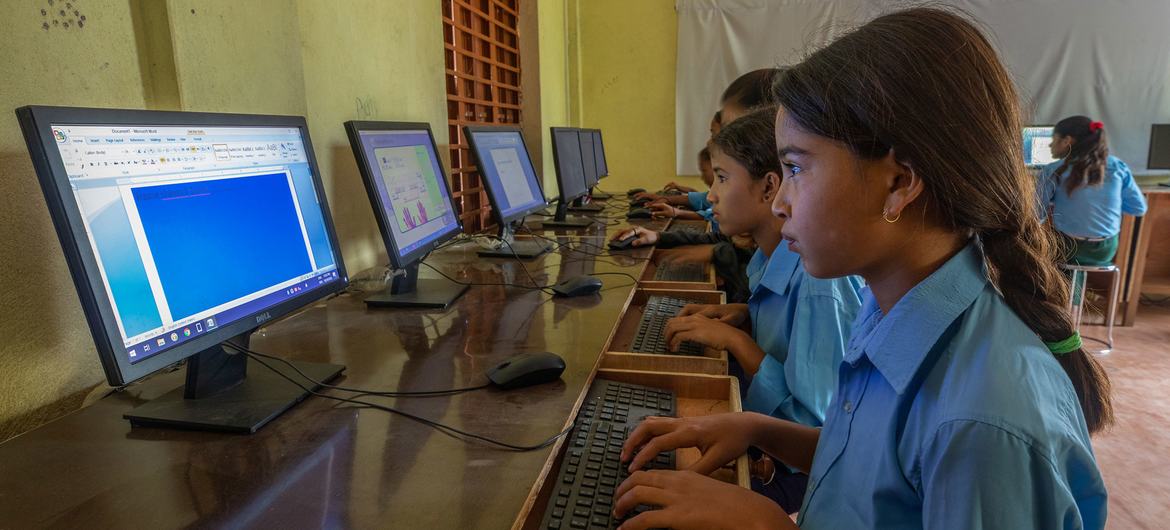
Students attend a computer class at a secondary school in Kailali, Nepal.
© ADB/Narendra Shrestha
 
Students attend a computer class at a secondary school in Kailali, Nepal.


25 April 2024

Culture and Education

Digital technologies and algorithm-driven software - especially social media - present high risks of privacy invasion, cyberbullying and distraction from learning to young girls, according to the UN Educational, Scientific and Cultural Organization’s (UNESCO) latest Global Education Monitor (GEM) report released on Thursday.

In an interview with UN News, Senior Policy Analyst from the GEM report team Anna D’addio said the report examines the issue of technology in education through a gender lens.

She said the report highlights progress in the reversal of discrimination against girls over the past two decades but also exposes the negative impact of technology on girls' education opportunities and outcomes.

Harassment online

Girls on social media are much more exposed to different forms of harassment. Cyber cyberbullying is much more frequent among girls than among boys,” Ms. D’Addio said.

“It's something that affects their well-being, and their well-being is important for learning”, she added.

Guterres stresses internet access

Tweet URL
antonioguterres

The report coincides with the UN telecoms agency (ITU) led International Girls in ICT Day.  

In a post on his Twitter account, the Secretary-General called for more equipment and support for girls in the Information and Communication Technology field, pointing out that fewer women than men have access to the internet – and that stands in their way of getting an equal opportunity for work. 

Mental health, body disorders

Based on the report’s findings, social media exposes young girls to a range of unsuitable video material including sexual content - and the promotion of unhealthy and unrealistic body standards that negatively affect mental health and wellbeing.

It was reported that adolescent girls are twice as likely to feel lonely than boys and suffer from an eating disorder.

There is increasing evidence that shows that increased exposure to social media is related to mental health problems, eating disorders and many other issues that condition and distract social media users, and particularly girls, from education which affects their academic achievement,” Ms. D’Addio said.

Instagram has reportedly accounted for 32 per cent of teenage girls' feeling worse about their bodies after consuming the platform’s content, according to a Facebook statistic cited in the report.

The Senior Policy Analyst said social media usage can have positive effects on young girls, especially when used to increase knowledge and raise awareness on social issues.

“I think what is important is…to teach how to use social media and technology,” Ms. D’Addio said.

Girls in STEM

Tweet URL
GEMReport

She said the report calls attention to the fact that girls are at a disadvantage in accessing science, technology, engineering and mathematical (STEM) careers which shows a lack of diversity in the production and development of cutting edge tech.

Data from the UNESCO Institute for Statistics (IUS) showed that women only make up 35 per cent of tertiary education STEM graduates globally, and only hold 25 per cent of science, engineering and information and communication technology (ICT) jobs.

“There are still too few girls and women that choose…the STEM subjects and work there,” the Senior Policy Analyst said.

She said having more diversity will allow stronger contributions to science and developments without bias.

How does it get better?

The report’s results reveal the need for a greater investment in education and smarter regulation of digital platforms.

Ms. D’Addio said UNESCO is constantly working on remedying the exclusion of girls' access and attainment to education that remains by advocating for policies that make the education system more inclusive, and “promoting laws and regulations that guarantee equal access to education for girls and protect them from discrimination.


https://news.un.org/en/story/2024/04/1149021

https://creativecommons.org/licenses/by/3.0/legalcode

понедельник, 18 сентября 2023 г.

UNESCO: 250 million children now out of school


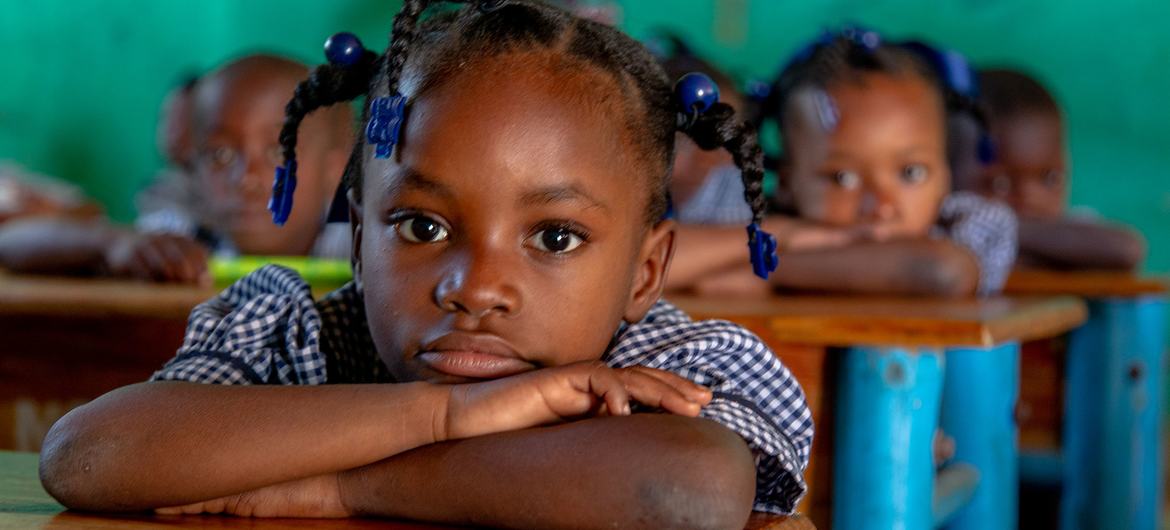
Students attend classes at a school in southwestern Haiti.
© UNICEF/Georges Harry Rouzier
 
Students attend classes at a school in southwestern Haiti.
18 September 2023
Culture and Education

The number of children missing out on any schooling has increased by six million, bringing the total to 250 million, according to new figures released on Monday by the UN Education, Science, and Cultural Organization (UNESCO).

The increase is partly due to the mass exclusion of women and girls from education in Afghanistan but can also be attributed to broader stagnation in education provision worldwide.

The findings undermine UN Sustainable Development Goal 4, which sets the goal of quality education for all by 2030.

Way off track

If countries were on track with their national SDG 4 targets, six million more children would be in pre-school, 58 million more children and adolescents would be in school, and at least 1.7 million more primary school teachers would have been trained, according to the report.

“Education is in a state of emergency,” said UNESCO Director-General Audrey Azoulay.

“While considerable efforts were made over the past decades to ensure quality education for all, UNESCO data demonstrates that the number of children out of school is now rising.

“States must urgently remobilize if they do not want to sell out the future of millions of children.”

Future ‘in your hands’

One year ago, 141 countries committed at the UN Transforming Education Summit to accelerate progress towards SDG 4. 

Four out of five countries aimed to advance teacher training and professional development, seven out of 10 committed to increasing or improving their investment in education, and one in four committed to increase financial support and school meal provision.

Tweet URL

For countries to achieve their SDG 4 targets, however, millions more children must be enrolled in early childhood education every year until 2030, and the progress in primary completion rates needs to almost triple. 

“These commitments must now be reflected in acts. There is no more time to lose. To achieve SDG 4, a new child needs to be enrolled in school every 2 seconds between now and 2030,” said the Director-General.

“The future of millions of children is in your hands”, she emphasised to Member States.

Insufficient growth

The report highlights that, since 2015, the number of children completing primary education has increased by less than three percentage points to 87 per cent. 

The number completing secondary education, meanwhile, has increased by less than five per cent to just 58 per cent. 

In the 31 low and lower-middle-income countries that measure learning progress at the end of primary school, Viet Nam is the only country where the majority of its children are achieving minimum proficiency in both reading and mathematics. 

Global framework

The Education 2030 Framework for Action calls on countries to set intermediate benchmarks for SDG 4 indicators. In an inclusive approach, countries were assisted in setting benchmarks to achieve by 2025 and 2030 for seven SDG 4 benchmarks on pre-primary education, school attendance, completion and learning, gender equity, learning proficiency, trained teachers, and public expenditure.

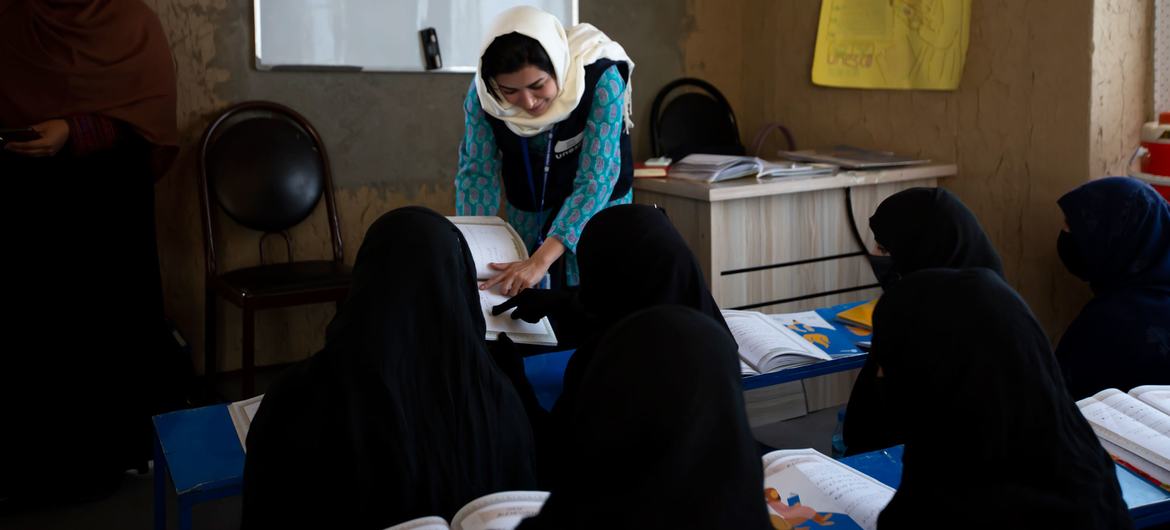
Students attending UNESCO's community-based literacy classes are experiencing schooling for the first time in their lives.
© UNESCO/Navid Rahi
 
Students attending UNESCO's community-based literacy classes are experiencing schooling for the first time in their lives.


https://news.un.org/en/story/2023/09/1140882
https://creativecommons.org/licenses/by/3.0/legalcode

четверг, 25 мая 2023 г.

UNESCO unveils new AI roadmap for classrooms


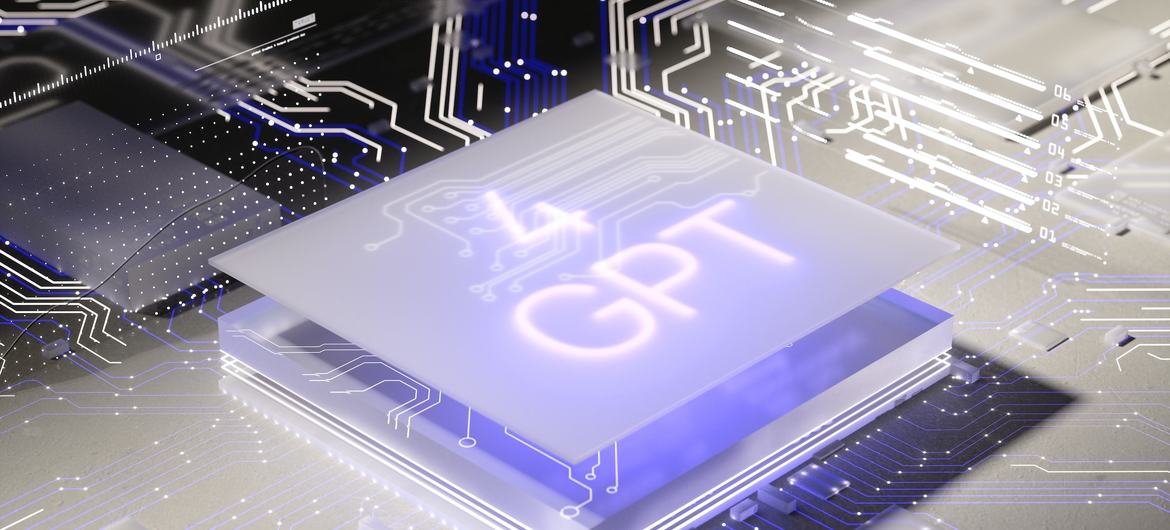
UNESCO calls out to implement its recommendations on the ethics of artificial intelligence to avoid its misuse.
Unsplash/D koi
 
UNESCO calls out to implement its recommendations on the ethics of artificial intelligence to avoid its misuse
Unsplash/D koi
 
UNESCO calls out to implement its recommendations on the ethics of artificial intelligence to avoid its misuse
Unsplash/D koi
 
UNESCO calls out to implement its recommendations on the ethics of artificial intelligence to avoid its misuse.
26 May 2023
Culture and Education

The UN convened the first ever global meeting with education ministers from around the world to explore risks and rewards of using chatbots in classrooms, announcing on Friday a new roadmap to chart a safer digital path for all.

Less than 10 per cent of schools and universities follow formal guidance on using wildly popular artificial intelligence (AI) tools, like the chatbot software ChatGPT, according to the UN Educational, Scientific and Cultural Organization (UNESCO), which hosted more than 40 ministers at an groundbreaking online meeting on Thursday.

Tweet URL

The ministers exchanged policy approaches and plans while considering the agency’s new roadmap on education and generative AI, which can create data and content based on existing algorithms, but can also make alarming factual errors, just like humans.

“Generative AI opens new horizons and challenges for education, but we urgently need to take action to ensure that new AI technologies are integrated into education on our terms,” said Stefania Giannini, UNESCO’s Assistant Director-General for Education. “It is our duty to prioritize safety, inclusion, diversity, transparency and quality.”

Institutions are facing myriad challenges in crafting an immediate response to the sudden emergence of these powerful AI apps, according to a new UNESCO survey of more than 450 schools and universities.

Rapidly evolving landscape

At the same time, governments worldwide are in the process of shaping appropriate policy responses in a rapidly evolving education landscape, while further developing or refining national strategies on AI, data protection, and other regulatory frameworks, according to UNESCO.

However, they are proceeding with caution. Risks to using these tools can see students exposed to false or biased information, some ministers said at the global meeting.

The debate revealed other common concerns, including how to mitigate the chatbots’ inherent flaws of producing glaring errors. Ministers also addressed how best to integrate these tools into curricula, teaching methods, and exams, and adapting education systems to the disruptions which generative AI is quickly causing.

Many highlighted the vital role teachers play in this new era as learning facilitators.

But, teachers need guidance and training to meet these challenges, according to UNESCO.

Adding to existing frameworks

Teachers need guidance and training to meet these challenges. — UNESCO

For its part, the agency will continue to steer the global dialogue with policy makers, partners, academia, and civil society, in line with its paper, AI and education: A guide for policy-makers and Recommendation on the Ethics of AI, as well as the Beijing Consensus on Artificial Intelligence and Education.

UNESCO is also developing policy guidelines on the use of generative AI in education and research, as well as frameworks of AI competencies for students and teachers for classrooms.

These new tools will be launched during Digital Learning Week, to be held at UNESCO Headquarters in Paris on 4 to 7 September, the agency said.

Learn more about UNESCO’s work in digital learning and education here.


 https://news.un.org/en/story/2023/05/1137117

https://creativecommons.org/licenses/by/3.0/legalcode