Избранное сообщение

Показаны сообщения с ярлыком SDGs. Показать все сообщения

вторник, 18 февраля 2025 г.

Scaling up or losing steam?


 Parliamentarians debate the future of the SDGs

13 February 2025
As the clock ticks toward 2030, parliamentarians gathered at UN Headquarters in New York on Thursday to assess the state of the Sustainable Development Goals (SDGs) – and the verdict was anything but unanimous.

 CONFIGURE YOUR TEXT TO SPEECH VOICE CONFIGURE TRANSLATION
Amid deepening global debt, taxation disputes and a widening gap between ambition and action, tensions flared over how (and whether) the SDGs can still be salvaged.The meeting, themed Scaling up Action for the Sustainable Development Goals: Finance, Institutions and Politics, underscored the urgency of rebooting the 2030 Agenda.“We are far behind from where we need to be on almost every single one of the SDGs,” said President of the General Assembly Philémon Yang.With only 17 percent of SDG targets reportedly on track, the discussions revealed sharp divides over priorities and outlook.Some called for renewed commitment; others questioned whether the goals should be replaced entirely.

Debt and developmentDebt emerged as a key sticking point, with countries like Malta and Morocco pointing to the “great difficulty” of accessing financial mechanisms designed to support SDG implementation. The Benin delegate went further, arguing that global wealth remains unevenly distributed, requiring structural concessions for heavily indebted nations.But there was little consensus on solutions.
Cyprus defended its tailored tax system, arguing that small service-based economies cannot afford high taxes without stunting growth essential to development.Meanwhile, Chile warned of the increasing use of tariffs as leverage in global decision-making, raising concerns about economic coercion in an already unequal system.US economist Jeffrey Sachs, a leading voice on global development, called for action based on “fundamental fairness”, emphasising that many developing nations bear no historical responsibility for climate change yet struggle to access funding for basic needs.“The money is there, believe me, it's there” he said, “but it's not flowing to the low income and lower middle-income countries right now.

”Political will: Commitment or fatigue?Despite the financial hurdles, UN officials insisted that a lack of political will remains a fundamental barrier.Guy Ryder, Under-Secretary-General for Policy challenged the perception of weak national ownership of the SDGs, noting that while commitment exists, it has not translated into sufficient results.“17 percent doesn’t look like a pass rate,” he admitted.

 Nevertheless, “What would the figures have been like if there never had been the SDGs? What would the world look like?”, he put to the room.Still, frustrations ran high. Some delegates questioned the effectiveness of existing frameworks.A delegate from Sweden called for replacing the SDGs with new, more relevant goals, arguing that the 17 goals agreed amid fanfare in 2015 had run their course.

Morocco pushed back, warning that abandoning existing commitments before they are achieved would be futile. “We must achieve what we adopted in 2015,” the delegate stated.Nigeria offered a middle ground, suggesting a redesigned approach to align national interests with global multilateralism.

Meanwhile, a parliamentarian from Qatar reflected on lessons from the SDGs’ predecessor, the Millennium Development Goals (MDGs), noting that while many targets were unmet, they laid the groundwork for future progress.Where next for the SDGs?As the meeting wrapped up, it was clear that while the SDGs remain the most ambitious global development framework, the road ahead is fraught with challenges.

National priorities continue to clash with multilateral ambitions and financial constraints risk derailing progress even further.But if there was one point of agreement, it was that inaction is not an option.As President of the Inter-Parliamentary Union (IPU) Tulia Ackson reminded delegates, “We must be willing to think less in terms of our own political interest and more in terms of the common good.”Citing Nelson Mandela, she added: “It always seems impossible until it’s done.”


https://news.un.org/ru/story/2025/02/1461211

https://creativecommons.org/licenses/by/4.0/legalcode

вторник, 13 августа 2024 г.

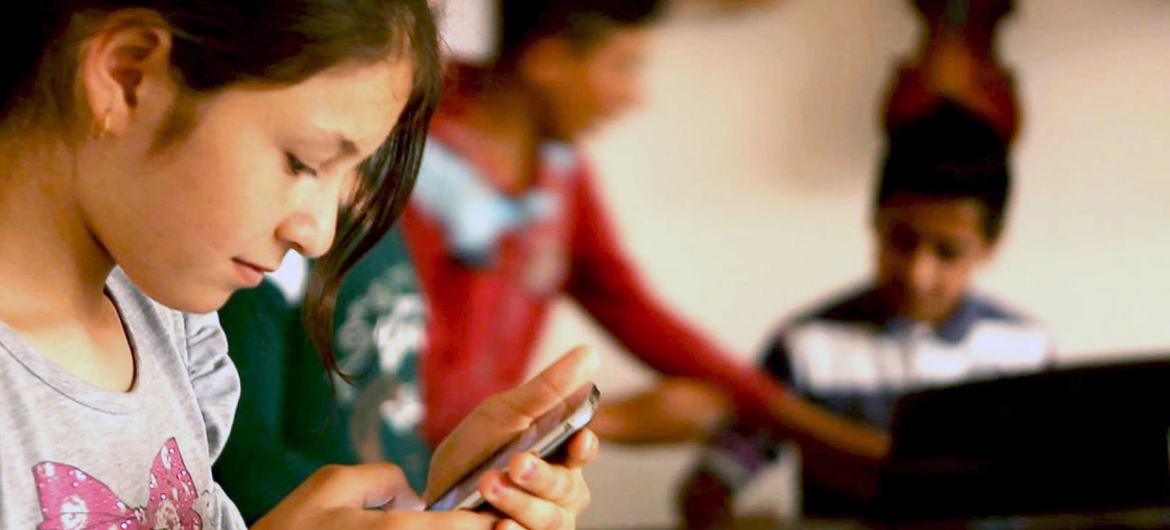
Youth digital engagement crucial for achieving SDGs: Guterres


Internet connectivity in schools is essential for strengthening education systems.
© UNICEF
 
Internet connectivity in schools is essential for strengthening education systems.


12 August 2024 

SDGs

As the world celebrates International Youth Day on Monday, the UN chief is emphasising the importance of empowerment and equality for young people to reach the ambitious Sustainable Development Goals (SDGs).

Under the theme, From Clicks to Progress: Youth Digital Pathways for Sustainable Development, the Day focuses “on the pivotal role of youth in harnessing technology to advance sustainable development.”

International Youth Day is recognised each 12 August and highlights youth issues and the extraordinary potential of young people as a force for social good.

It was proposed to the UN General Assembly in 1991 by the World Youth Forum and officially established in 1999 to promote awareness and offer support.

Tweet URL

Achieving SDGs

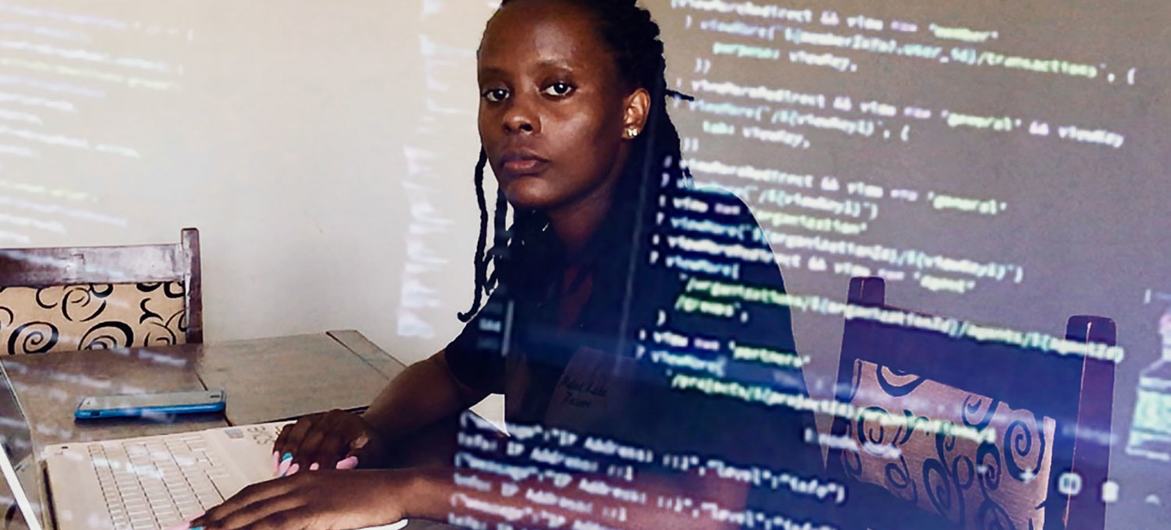
UN Secretary-General António Guterres pointed to the ways young people have been using digital tools effectively to tackle local and global challenges including climate change and mental health issues, praising “digital natives” in the younger generations.

Data from the UN in 2022 reveals that digital adoption and innovation are led by the 15 to 24 demographic. Yet, there are still recognisable disparities in low-income countries and among women who have less access to the Internet.

The UN chief said achieving the SDGs requires a “seismic shift” which will require “bridging digital divides, boosting investments in education, critical thinking and information literacy” as well as tackling gender biases in the tech industry and encouraging young people to expand digital solutions.

“As Artificial Intelligence reshapes our world, young people must also be front and centre in shaping digital policies and institutions,” Mr. Guterres said.

A UN statement further said that “by celebrating the digital contributions of youth, we can inspire further innovation and collaboration towards achieving sustainable development.”

Summit of the Future

At next month’s Summit of the Future, world leaders will gather to establish ideas and solutions for a more sustainable future for all.

The UN is encouraging all governments to use this opportunity to advance

youth participation at the summit at every level.

“You can count on the UN Youth Office and the entire UN family to stand with and for young people,” Mr. Guterres said. “Together, let us draw on their energy and ideas to shape a more sustainable future for all.”

https://news.un.org/en/story/2024/08/1153086

https://creativecommons.org/licenses/by/4.0/legalcode

четверг, 6 июня 2024 г.

New UNICEF report reveals severe child food poverty amid world crises


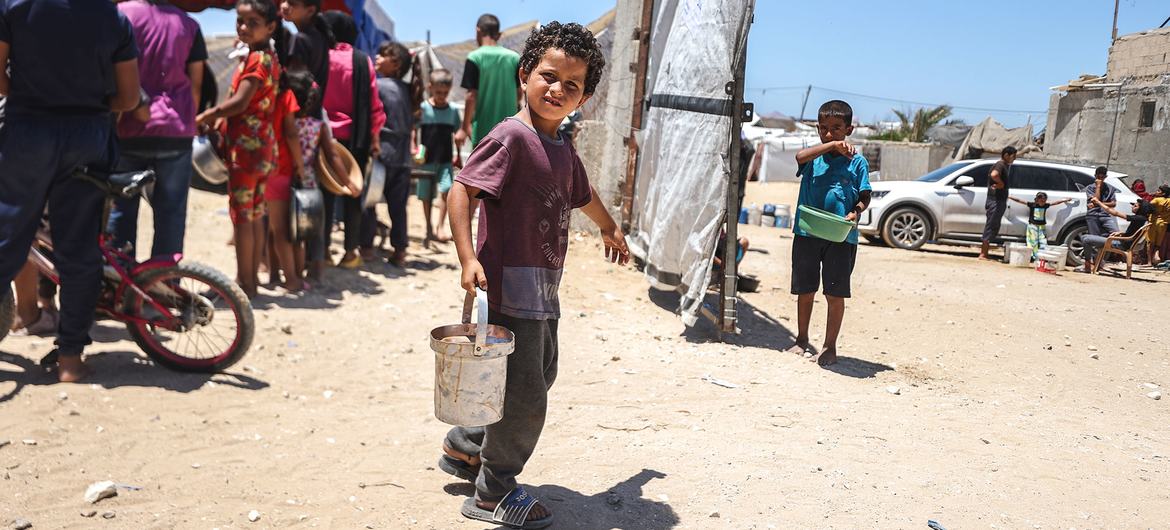
A child receives food at a WFP-supported kitchen in Khan Younis, Gaza.
© WFP/Ali Jadallah
 
A child receives food at a WFP-supported kitchen in Khan Younis, Gaza.


5 June 2024

SDGs

The UN Children’s Fund (UNICEF) released a new report on Thursday that highlights alarming levels of child food poverty due to inequity, conflict, and climate crises. 

The report warned that millions of children under five have difficulty accessing nutritious and diverse diets necessary for developmental growth and that food prices and living costs have hit record-high levels as countries continue to recover from the impacts of the COVID-19 pandemic.

UNICEF Nutrition Specialist, Harriet Torlesse – who was also a lead writer on the report – said one in four children globally are surviving on extremely poor diets, consuming just two or fewer of the major food groups. 

“So, for a child in Afghanistan, for example, that's just some bread or perhaps a milk in the whole day, and almost certainly no vegetables and fruits and no good sources of protein,” she told UN News ahead of the launch. “And this is very troubling because these children cannot survive in such poor diets.” 

Millions affected worldwide

The report found that 65 per cent of the 181 million children worldwide experiencing child food poverty reside in 20 countries – about 64 million are in South Asia and 59 million are in Sub-Saharan Africa.

Even further, nearly half of all cases are linked to households where income poverty is prominent.

 However, many other factors fuel this crisis including, “food systems that fail to provide children with nutritious, safe and accessible options, families’ inability to afford nutritious foods, and parent’s inability to adopt and sustain positive child feeding practices."

'Horrific impact' of Gaza conflict

More than half of children in Somalia experience child food poverty amid conflict and natural disasters. 

Similarly in Gaza, nine out of 10 children are dealing with high levels of food poverty as fighting continues.

"This is evidence of the horrific impact the conflict and restrictions are having on families’ ability to meet children’s food needs – and the speed at which it places children at risk of life-threatening malnutrition,”  the report stated.

However, it noted that other countries dealing with their own crises, like Burkina Faso, significantly reduced their levels of child food poverty. Burkina Faso has halved the number of cases there.

“It shows that with the right type of action, countries can make progress, including low-income countries,” Ms. Torlesse said. “[These countries] have all made a deliberate effort to improve the supply of local nutritious foods, be it pulses or vegetables or poultry.” 

Appeal to governments 

UNICEF appealed for action to make nutritious foods more accessible for young children, activate social protection systems to address income poverty, and leverage health systems to deliver necessary nutrition services to assist children.

“UNICEF is calling on all governments development and humanitarian partners to act now to prioritize actions to end child food poverty,” Ms. Torlesse said. “We must position the elimination of child food poverty as a policy imperative, particularly to achieve the sustainable development goals of malnutrition.”

She said it is also important for health systems to be strengthened so that they can advise and support families on how to feed their children.

“There's no reason why children should grow up in child food poverty,” Ms. Torlesse said. “Not when we know the consequences for children's abilities to grow and thrive, and especially not when we have the solutions and we know what works.” 


https://news.un.org/en/story/2024/06/1150706


https://creativecommons.org/licenses/by/3.0/legalcode

пятница, 31 мая 2024 г.

AI for Good Summit: Digital and technological divide is no longer acceptable


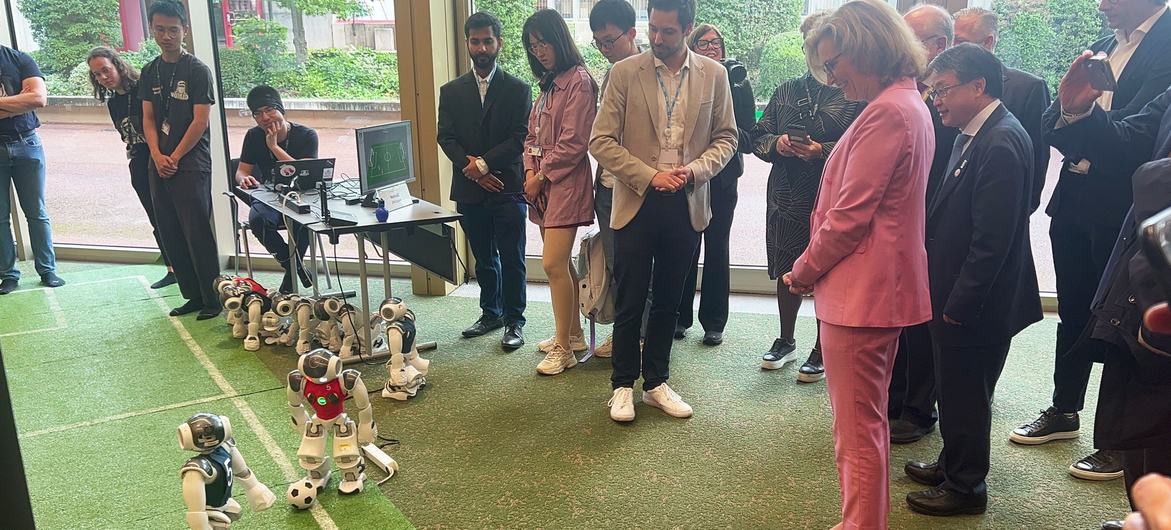
ITU Secretary-General Doreen Bogdan-Martin greeted by robot footballers at AI for Good Global Summit 2024, Geneva.
UN News/Anton Uspensky
 
ITU Secretary-General Doreen Bogdan-Martin greeted by robot footballers at AI for Good Global Summit 2024, Geneva.


30 May 2024
SDGs

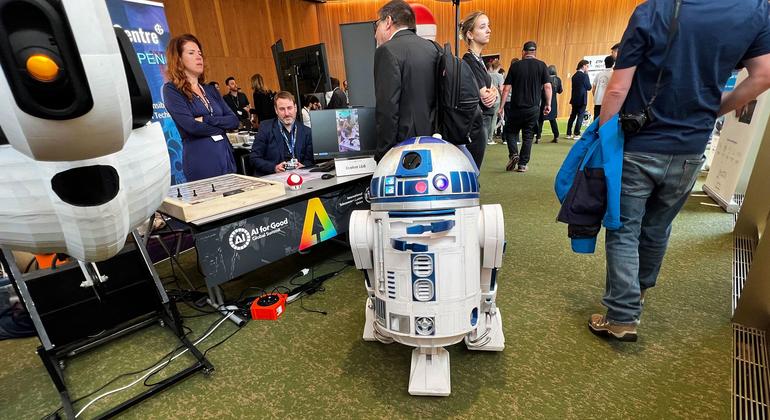
With robots greeting delegates at the entrance to the venue, the AI for Good Global Summit opened on Thursday in Geneva, bringing together thousands of participants from all sectors around the world to discuss the hopes and fears about artificial intelligence (AI) development.

Organised by the International Telecommunications Union (ITU), the annual forum is the place where humans meet artificial intelligence. It is popular to the extent of being oversubscribed for attendance, with the queue to enter stretched for hundreds of metres, along one of Geneva’s biggest conference centres, and internet bandwidth barely coping with the flood of digital information.

The venue has become a showcase for advanced technology, including AI-powered robots, brain-controlled tools, generative AI solutions as well as the hardware, the backbone of the global AI ecosystem.

However attractive to the eye and entertaining, the machines are not the highlight of the summit.

With people in mind

On the centre stage, both metaphorically and literally, are the people. The two-day summit’s main stage will see a tight line-up of presentations and panels discussing all aspects of human interaction with artificial intelligence, both pros and cons.

Tweet URL
ITU

Opening the summit, Doreen Bogdan-Martin, the ITU Secretary-General, underscored the transformative potential of AI and emphasised the necessity for inclusive and secure AI governance.

"In 2024 — in the age of AI and unimaginable opportunities — one-third of humanity remains offline, excluded from the AI revolution, and without a voice,“ Ms. Bogdan-Martin stated. “This digital and technological divide is no longer acceptable.”

Underlining the critical digital divide – with 2.6 billion people globally still without internet access – she urged collective action to bridge this gap, stressing that equitable access to AI technology is essential for inclusive progress.

Global coordination

“We are in a race against time. Recent developments in AI have been nothing short of extraordinary,” she said. 

To secure global coordination in building safe and inclusive AI accessible to all, the ITU chief said, three key aspects should be observed – risk and security management, infrastructure and resource development and international collaboration.

Ms. Bogdan-Martin praised initiatives like the UN General Assembly’s historic resolution promoting trustworthy AI systems and ITU’s collaboration with UNESCO on applying existing laws to AI. She called for continued momentum, particularly highlighting the upcoming UN Summit of the Future.

Bionic limbs and prenatal care

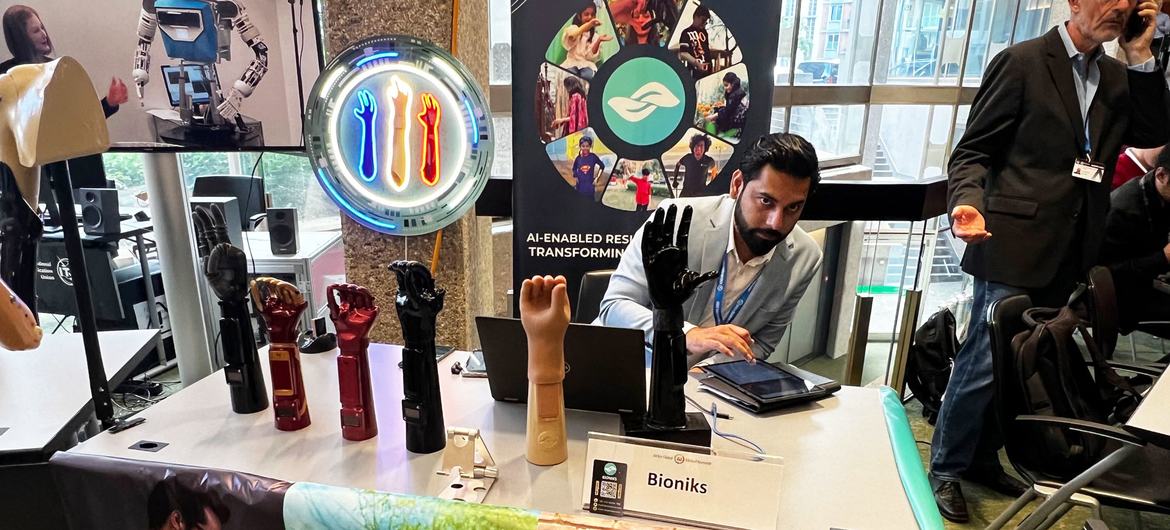
The ITU chief shared inspiring examples from the AI for Good Innovation Factory, including the start-ups Bioniks, a Pakistani-led initiative designing artificial limbs, and Ultrasound AI, a US-based women-led effort improving prenatal care.

Speaking to UN News at the forum, founder and CVO (Chief Visionary Officer) of Bioniks Anas Niaz explained that the idea behind his start-up was to produce affordable prosthetics for amputees, including children. Use of a smartphone for scanning, brain-controlled technology and simplified fitting process, which does not require travelling to a hospital, help to reduce costs, making the company’s products ‘the world’s most affordable bionic limbs”.

Bioniks startup from Pakistan presents brain-controlled bionic limbs at ITU's annual AI for Good Global Summit 2024.
UN News/Anton Uspensky
 
Bioniks startup from Pakistan presents brain-controlled bionic limbs at ITU's annual AI for Good Global Summit 2024.

“You can send the measurements by a mobile phone, and we send your prosthetics to your doorstep. These prosthetics are waterproof, and people in humid climate can use them for practically anything. Kids are writing with them,” Mr. Niaz explained, adding that being a social enterprise, Bioniks helps find sponsors for those who need a bionic limb, but cannot afford to buy it.

Fighting fake news during world’s largest election year

As 2024 marks the largest election year across the world in history, Ms. Bogdan-Martin warned of the threats posed by deepfakes and disinformation. She announced ITU’s commitment to developing robust standards for AI watermarking and digital content verification, stressing that “standards build trust; they’re the cornerstone of responsible AI.”

Some of such solutions are already used by the UN Development Programme (UNDP), who helps governments to apply AI to identify misinformation and disinformation attacks.

“When we deliver electoral support to countries during their elections, we have an AI-based platform that serves as a misinformation detection platform and flags suspicious content for [further] human fact check,” UNDP’s chief digital officer Robert Opp told UN News.

Soundcloud

‘AI Generation’

ITU chief Ms. Bogdan-Martin called on the global community to embrace its role as the “AI generation”, advocating for a future where artificial intelligence serves humanity’s best interests.

“Let’s remember that the future starts not with algorithms, but with us,” she said. “Right here, in our brain…the most complex, powerful and creative computer the world has ever known.”

Turbocharging sustainable development

Addressing the AI for Good Summit through a video message, UN Secretary-General António Guterres emphasised the transformative potential of AI in advancing sustainable development worldwide.

Highlighting the dual nature of AI, Guterres outlined its immense promise and underscored the necessity for its responsible and inclusive governance.

“Artificial intelligence is changing our world and our lives,” Mr. Guterres declared. “And it can turbocharge sustainable development.”

ITU's annual AI for Good Global Summit 2024, Geneva.
UN News/Anton Uspensky

He elaborated on AI’s multifaceted applications, noting its capability to revolutionise sectors such as education, healthcare, agriculture, housing and disaster management. He also illustrated how AI could deliver educational and healthcare services to remote areas, enhance agricultural productivity, design eco-friendly housing and transportation systems and provide early warnings for natural disasters.

“AI could be a game-changer for the Sustainable Development Goals (SDGs),” UN chief asserted. However, he cautioned that realizing AI’s full potential requires addressing its risks, including bias, misinformation and security threats.

“We need global coordination to build safe and inclusive AI that is accessible to all,” he said, commending ITU for its early work on AI standards and for convening the summit.

Business community aboard

These calls by leaders of international organisations are well-heard by the digital community. Talking to UN News, Melike Yetken Krilla, head of international organisations at Google, discussed a handful of projects that the data giant is assisting the UN with.

That includes one where Google data and AI are used to track progress toward the SDGs and to map it around the globe, and a project developed jointly with the World Meteorological Organization (WMO) to create a flood hub, allowing users to forecast natural disasters up to seven days in advance as part of an early warning system.

“Last year, with the creation and launch of large language models and generative AI, it was the year of ‘Wow!’ I would assert that this year is the year of ‘How?’ How we are going to partner with international organisations to identify and establish AI rules of the road and the guardrails,” Ms. Yetken Krilla said, adding that the UN is leading the process by drafting and creating the Global Digital Compact and other initiatives, including the Summit of the Future.


https://news.un.org/en/story/2024/05/1150451


https://creativecommons.org/licenses/by/3.0/legalcode

четверг, 7 сентября 2023 г.

UNESCO calls for regulations on AI use in schools


Publicly available GenAI platforms are used by hundreds of millions around the world, including many students.
© UNICEF/Mary Gelman
 
Publicly available GenAI platforms are used by hundreds of millions around the world, including many students.
7 September 2023
SDGs

The UN Educational, Scientific and Cultural Organization (UNESCO) on Thursday called on governments to regulate the use of Generative Artificial Intelligence (GenAI) in education and research, including age limits for users.

The agency is also calling for guardrails on data protection and user privacy.

Publicly available GenAI tools, such as ChatGPT, can produce automated text, images, videos, music and software code. The platforms have evolved rapidly and are already in use by hundreds of millions around the world, including many students.  

However, very few countries have policies in place to ensure safe and ethical use of AI tools.

Soundcloud

‘Harm and prejudice’

“Generative AI can be a tremendous opportunity for human development, but it can also cause harm and prejudice,” Audrey Azoulay, UNESCO Director-General, said in a news release.

Tweet URL

“It cannot be integrated into education without public engagement, and the necessary safeguards and regulations from governments. This UNESCO Guidance will help policymakers and teachers best navigate the potential of AI for the primary interest of learners.”

Key steps  

UNESCO’s guidance, the first attempt to create a global standard, suggests immediate steps that can be taken to ensure a human-centric vision for new technology use.

This includes mandating the protection of data privacy and considering an age limit of 13 for their use in the classroom. It also outlines requirements for GenAI providers for ethical and effective use.

The guidance stresses the need for educational institutions to validate AI systems for student use.  

Digital Learning Week

The Guidance was released during the first ever Digital Learning Week, a flagship UNESCO’s event.

Over 1,000 participants discuss public digital learning platforms and GenAI and their use to reinforce and enrich learning.

The event also highlighted other important guidance produced by UNESCO in education, including information and communication technologies (ICT) in education policieseducation and blockchains, and an assessment of government-endorsed K-12 AI curricula.


https://news.un.org/en/story/2023/09/1140477

https://creativecommons.org/licenses/by/3.0/legalcode

понедельник, 12 июня 2023 г.

UN chief calls for new era of social media integrity in bid to stem misinformation


There has been a sharp increase in the use of hate speech on Twitter after its recent acquisition.
© Unsplash
 
There has been a sharp increase in the use of hate speech on Twitter after its recent acquisition.
12 June 2023
SDGs

Countries must address the “grave global harm” caused by the proliferation of hate and lies online, UN Secretary-General António Guterres said on Monday, launching a key report designed to shore up information integrity on digital platforms.  

Alarm over the potential threat posed by the rapid development of generative artificial intelligence (AI) must not obscure the damage already being done by digital technologies that enable the spread of online hate speech, as well as mis- and disinformation, he said.  

The policy brief argues that they should be integral players in upholding the accuracy, consistency and reliability of information shared by users.  

“My hope is that it will provide a gold standard for guiding action to strengthen information integrity,” he wrote in the introduction. 

Tweet URL

Connecting and dividing 

Digital platforms – which include social media channels, search engines and messaging apps – are connecting billions of people across the planet, with some three billion users of Facebook alone. 

They have brought many benefits, from supporting communities in times of crisis and struggle, to helping to mobilize global movements for racial justice and gender equality.  They are also used by the UN to engage people worldwide in pursuit of peace, dignity and human rights on a healthy planet.   

Yet these same digital platforms are being misused to subvert science and spread disinformation and hate, fuelling conflict, threatening democracy and human rights, and undermining public health and climate action.  

"Some of our own UN peacekeeping missions and humanitarian aid operations have been targeted, making their work even more dangerous," he said.

Deceitful, dangerous and deadly 

Although misinformation, disinformation and hate speech are related and overlap, they are distinct phenomena.  

Hate speech refers to abusive or threatening language against a group or person, simply because of their race, colour, religion, ethnicity, nationality, or similar grounds. 

The difference between mis- and disinformation is intent, though the distinction can be difficult to determine. In general, misinformation refers to the unintentional spread of inaccurate information, while disinformation is not only inaccurate but intended to deceive

Regardless, they have all proved to be dangerous and even deadly. 

“While traditional media remain an important source of news for most people in conflict areas, hatred spread on digital platforms has also sparked and fuelled violence,” the report said.  “Some digital platforms have faced criticism of their role in conflicts, including the ongoing war in Ukraine.” 

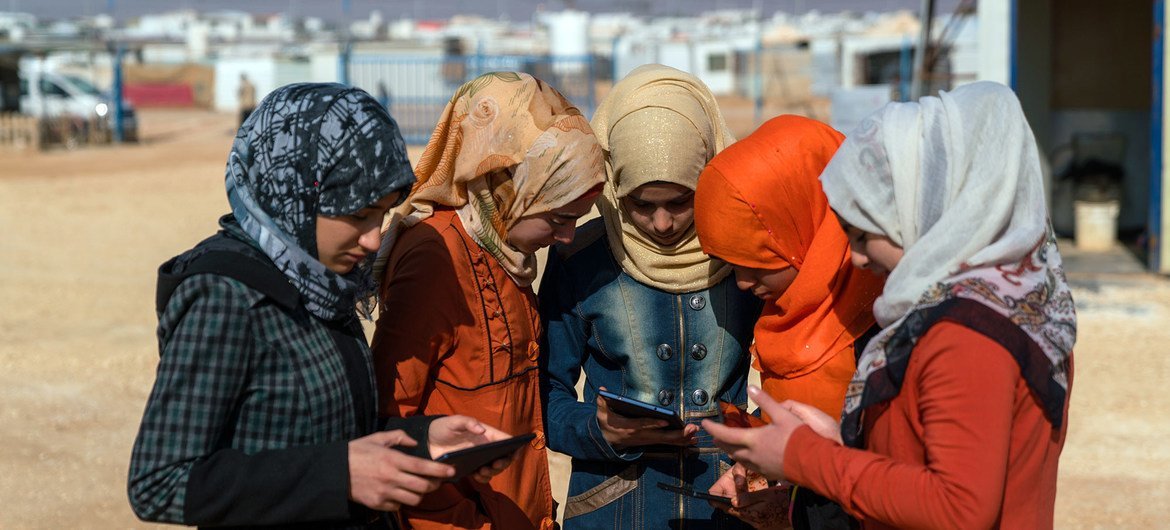
Adolescent girls use cellphones and tablets in the Za’atari camp for Syrian refugees (file).
© UNICEF/UN051302/Herwig
 
Adolescent girls use cellphones and tablets in the Za’atari camp for Syrian refugees (file).

Safer digital space 

Given the threat, the Secretary-General has called for coordinated international action to make the digital space safer and more inclusive while also protecting human rights. 

Constructive responses have largely been lacking. Some tech companies have done far too little to prevent their platforms from contributing to the spread of violence and hatred, while Governments have sometimes resorted to drastic measures – including internet shutdowns and bans – that lack any legal basis and infringe on human rights.  

Code of Conduct 

The report puts forward the framework for global action though a Code of Conduct for information integrity on digital platforms, that outlines potential guardrails while safeguarding the rights to freedom of expression and information.  

It will build on principles that include respect for human rights, support for independent media, increased transparency, user empowerment and strengthened research and data access. 

The Secretary-General also provided recommendations that could inform the Code of Conduct. 

They include a call for Governments, tech companies and other stakeholders to refrain from using, supporting, or amplifying disinformation and hate speech for any purpose.  

Governments should also guarantee a free, viable, independent, and plural media landscape, with strong protections for journalists

Meanwhile, digital platforms should ensure safety and privacy by design in all products, alongside consistent application of policies and resources across countries and languages. 

All stakeholders should take urgent and immediate measures to ensure that all AI applications are safe, secure, responsible and ethical, and comply with human rights obligations, he added. 

Advertisers and digital platforms should ensure that ads are not placed next to online mis- or disinformation or hate speech, and that ads containing disinformation are not promoted. 

Our common future 

The policy brief is the latest in a series of 11 reports based on proposals contained in Our Common Agenda, the Secretary-General’s 2021 report that outlines a vision for future global cooperation and multilateral action.  

They are intended to inform discussions ahead of the SDG Summit in September, marking the midpoint towards achieving the Sustainable Development Goals by 2030, and the related Summit of the Future next year.


https://creativecommons.org/licenses/by/3.0/legalcode

четверг, 18 мая 2023 г.

‘Weak and insufficient’ progress made towards disaster risk reduction

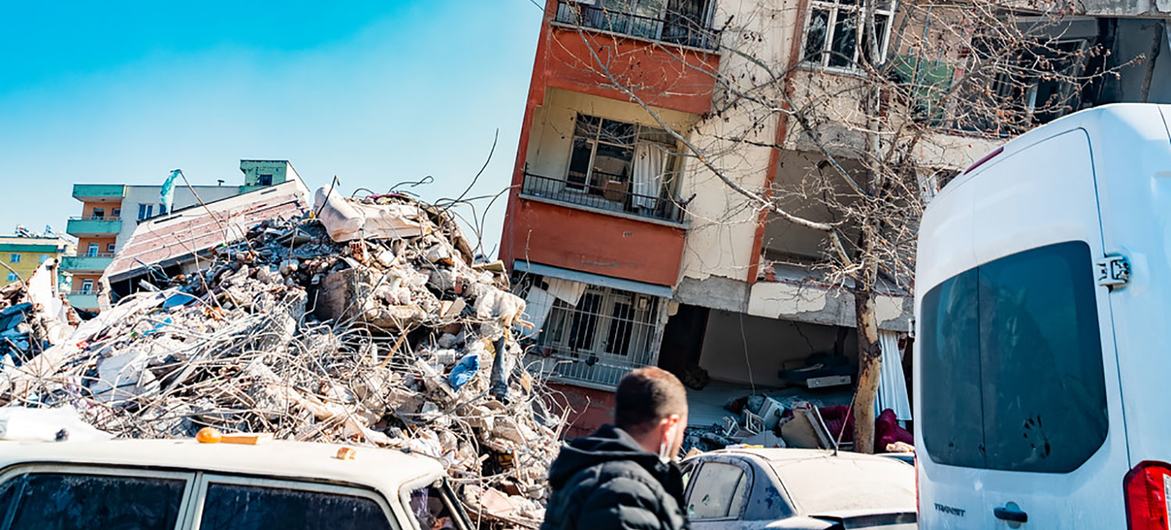
A building in Kahramanmaraş, Türkiye, destroyed by the earthquake.
© UNOCHA/Matteo Minasi
 
A building in Kahramanmaraş, Türkiye, destroyed by the earthquake.
18 May 2023
SDGs

Global progress towards disaster risk management has been weak and insufficient, putting at risk the 2030 Sustainable Development Goals (SDGs), UN Deputy Secretary-General Amina Mohammed told the  General Assembly on Thursday. 

Countries met to review progress on implementing the Sendai Framework for Disaster Risk Reduction - a landmark 2015 agreement to reduce damage, losses and deaths from natural and man-made hazards by the end of the decade. 

Tweet URL

During the meeting, they adopted a political declaration which in part calls for improving national mechanisms to share disaster risk data and analysis, including at the regional and international levels. 

Change course now 

For General Assembly President Csaba Kőrösi, the midterm review was “our last chance before 2030 to collectively change course”, underscoring the critical need for action. 

“Eight years on, we must admit that our progress has not kept pace with the urgency of our days. The known number of people affected by disasters has jumped 80-fold since 2015,” he said

A defining point 

Managing risk is not an option but a global commitment, the UN Deputy Secretary-General told the gathering. 

“Our world is at a defining point in history. As we review our journey halfway to 2030, we must acknowledge that progress has been weak and insufficient,” Ms. Mohammed said. 

As countries did not meet climate and sustainable development commitments, natural disasters that could have been prevented have claimed hundreds of thousands of lives and forced millions to be uprooted, mainly women, children, and other vulnerable groups, she said. 

The situation has been exacerbated by the COVID-19 pandemic, the “triple crisis” of climate change, biodiversity loss and pollution, the rising cost of living, skyrocketing inequality and the war in Ukraine. 

Further threats stem from structural governance omissions within the banking and global financial systems, while scientists warn of cascading and irreversible impacts of global warning. 

“Addressing these challenges means changing our response to risk through systemic thinking, collaborative action, and the smart, agile deployment of responses to prevent, manage and mitigate global risks,” she said.


Unequal progress 

The head of the UN Office on for Disaster Risk Reduction (UNDRR), Mami Mizutori, noted that it has not been all storm and strife since 2015.  

For example, a growing number of governments have established or upgraded national loss accounting systems, and there has been a significant increase in the number of countries with national strategies for disaster risk reduction.  

However, progress remains unequal.  Furthermore, risks that become disasters continue to disproportionately impact the world’s least developed countries, small island developing States, landlocked developing and African countries, as well as middle-income countries.  

“As risks are left unattended, disasters are materializing faster, surpassing our ability to cope, with increasingly dire consequences for people, livelihoods, society and the ecosystems on which we depend,” she said. 

“The imperative to realise the outcome, goal and targets of the Sendai Framework is more important today than ever before.”


A survivor’s story 

This point was further emphasized by Mustafa Kemal Kılınç from Türkiye, who survived the devastating earthquake in February that killed upwards of 50,000 people.  

The 23-year-old university student was visiting his family in his hometown, Hatay, when the disaster struck, reducing thousands of buildings to rubble and leaving countless people homeless. 

“I am here today because our building did not collapse. This is because our contractor had applied high standards to make our building earthquake resistant,” he said. 

Mustafa and his family – seven people in total – lived in their car for a week, amid freezing temperatures and heavy rain, before moving to a train wagon. They eventually settled with relatives across the country and returned to Hatay several weeks later. 

“We cannot predict natural disasters. But we can certainly be prepared whenever and wherever they happen,” he said.  “I hope that as a result of your work, there will be less disaster victims like myself around the world.” 


 https://news.un.org/en/story/2023/05/1136782


https://creativecommons.org/licenses/by/3.0/legalcode

четверг, 13 апреля 2023 г.

New UNESCO report reveals $97 billion barrier to reaching education targets

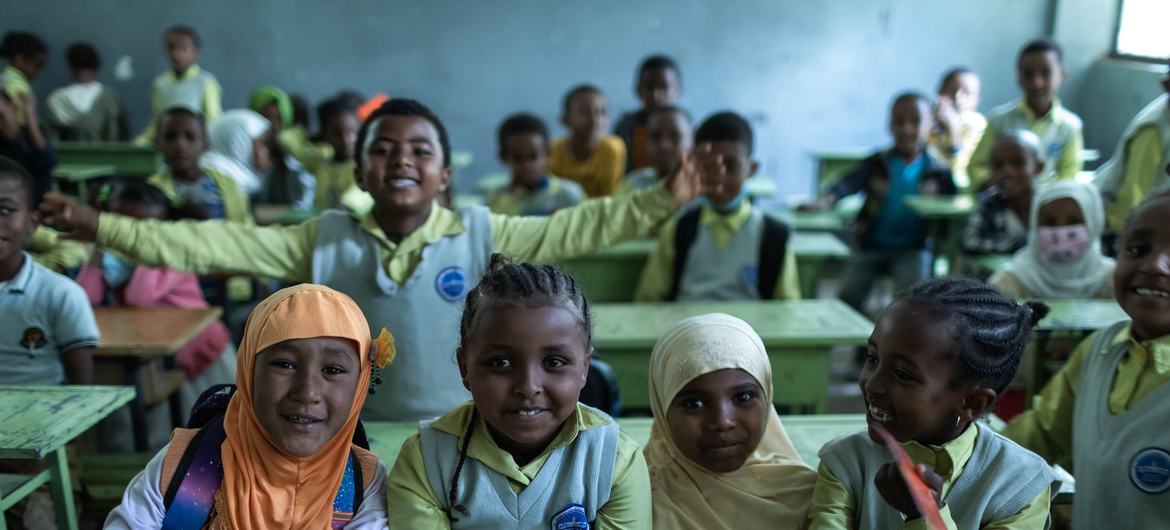
Children at Goro Pre-Primary and Elementary School in Ethiopia were excited to return to classes in September 2022.
© UNICEF/Mulugeta Ayene
 
Children at Goro Pre-Primary and Elementary School in Ethiopia were excited to return to classes in September 2022.
14 April 2023
SDGs

Without $97 billion in extra funding, a range of countries will fail to meet their 2030 national education targets, a new UN report revealed on Friday, calling for an urgent review of financing.

The paper Can countries afford their national SDG4 benchmarks? by the Global Education Monitoring (GEM) Report of the UN Educational, Scientific and Cultural Organization (UNESCO) was written as input for the spring meetings of the World Bank and the International Monetary Fund (IMF). 

Tweet URL

It focused on Goal 4 of the 2030 Agenda for Sustainable Development, which aims at ensuring inclusive and equitable quality education and promoting lifelong learning opportunities for all.

Findings showed that the education sector will need an injection of funds if countries are to meet their targets.

New strategies needed

In addition to mobilizing additional resources, strategies are needed to increase the effectiveness of funding.

The largest financing gap is in sub-Saharan Africa: $70 billion per year. The region has the furthest distance to travel, with 20 per cent of primary school age children and almost 60 per cent of upper secondary school age youth not in school.

Around one third of the gap could be filled if donors fulfilled their aid commitments and prioritized basic education in the poorest countries, the report found.

Wanted: More teachers

Other key findings emphasize that costs include the need to triple the number of pre-primary teachers in low-income countries and double them in lower-middle income countries by 2030. The number of primary school teachers needs to increase by nearly 50 per cent in low-income countries.

While the full impact of COVID-19 pandemic disruptions remains unknown, the report found that costs also include making up for massive learning losses that exacerbated the pre-existing learning crisis. Only half of children and adolescents are now prepared for the future having completed their education and with minimum proficiency in reading.

Meanwhile, two thirds of low and lower-middle-income countries had cut their public education spending in the first year following the onset of the pandemic in 2020.

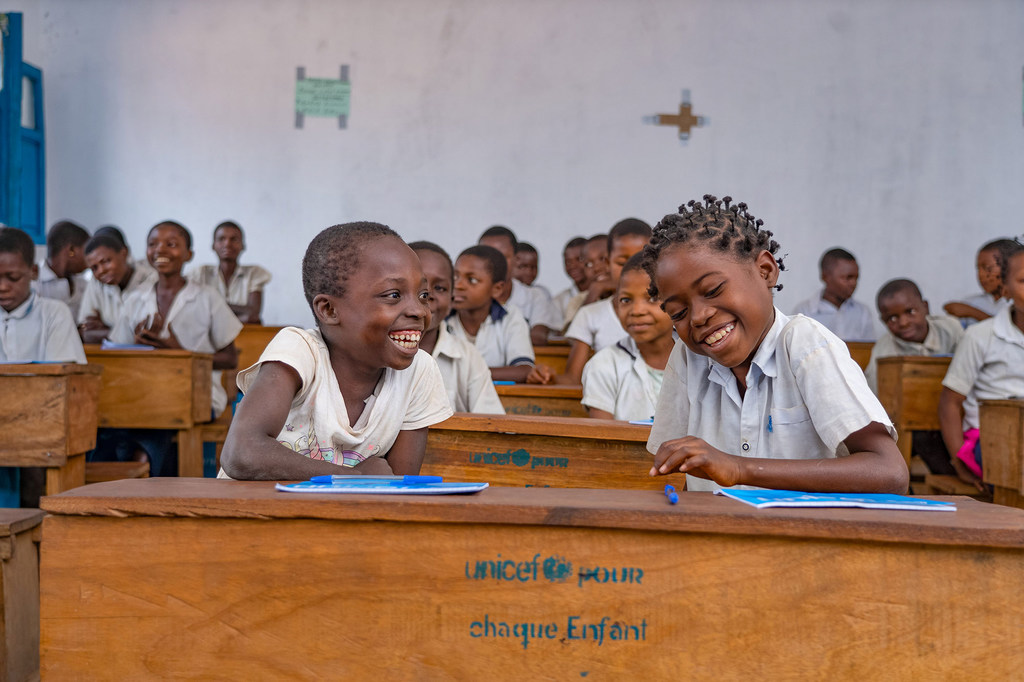
Fourth-grade students attend class at their new school, which was rebuilt after it was destroyed by fighting in the Kasai-Oriental province of DR Congo.
© UNICEF/Josue Mulala
 
Fourth-grade students attend class at their new school, which was rebuilt after it was destroyed by fighting in the Kasai-Oriental province of DR Congo.


 https://news.un.org/en/story/2023/04/1135697

https://creativecommons.org/licenses/by/3.0/legalcode