Избранное сообщение

Показаны сообщения с ярлыком disaster. Показать все сообщения

суббота, 16 сентября 2023 г.

Morocco and Libya: UN scales up support for disaster relief


Floods devastated the northern coastal Libyan city of Darna.
© UNICEF/Abdulsalam Alturki
 
Floods devastated the northern coastal Libyan city of Darna.
15 September 2023
Humanitarian Aid

Two very different catastrophes in Morocco and in Libya united by the “unimaginable trauma” of bereaved families, continue to mobilize the UN’s relief efforts, the Organisation’s top aid official Martin Griffiths said on Friday.

He called for solidarity with the people of the two countries and spoke of the tragedy of people looking desperately for their loved ones for days on end. 

In Libya, “some have lost 50 or more family members”, he said. 

Immediate deployment

Asked whether the UN was “ready” when disaster struck, Mr. Griffiths answered: “unequivocally, yes.” 

He told reporters that within 24 hours of the earthquake which shook Morocco’s Atlas Mountain range last Friday, the UN deployed a disaster assessment and coordination (UNDAC) team of 15 people out of Geneva and key staff from the region. 

Need for coordination

That team was now being redeployed to Libya with the consent of the Moroccan authorities to support essential coordination of the humanitarian response to the deadly floods.

“If you don’t have coordination, there’s chaos. And that loses lives,” Mr. Griffiths insisted.

Morocco: Second phase

The UN Emergency Relief Coordinator said that in Morocco, the earthquake had claimed nearly 3,000 lives. Although the early figures were “terrible enough”, they are likely to be overtaken by events as rescuers work through the rubble.

He highlighted the country’s “distinguished history” of building up response capacities in recent years.

The UN humanitarian chief stressed that the response in the country was moving from the initial phase, when the focus is on finding survivors and providing for the internment of those killed, to phase two, where supporting the survivors with aid – shelter, food, medicine – becomes the main priority.

Tweet URL

Libya: 900,000 people affected

In Libya, where the UN already had a humanitarian presence on the ground, a “completely different catastrophe” unfolded, Mr. Griffiths said, that was “appalling, shocking, unimaginable in its consequences”.

There was speculation that some 20,000 people may have lost their lives in the massive flooding triggered by Storm Daniel over the weekend. Access to the city of Derna, the epicentre of the tragedy, remained difficult.

The UN relief chief said that 900,000 people in the country had been affected, “on top of a situation where 300,000 people in Libya already needed humanitarian aid”.

Helping humanitarians do their job

Mr. Griffiths described the challenges on the ground in the response to the disaster in Libya.

Those included coordinating with the internationally recognized Government and the de facto authorities in the east, discovering the “full extent” of the disaster, as floods and torrents have destroyed buildings and sludge was still concealing the “level of death and need”, as well as “getting the right aid to the right people at the right time”. 

“That’s why coordination is so important,” he said. “It’s not a bureaucratic issue, it’s a prioritization issue. Helping key humanitarian agencies to do the job they do so well.”
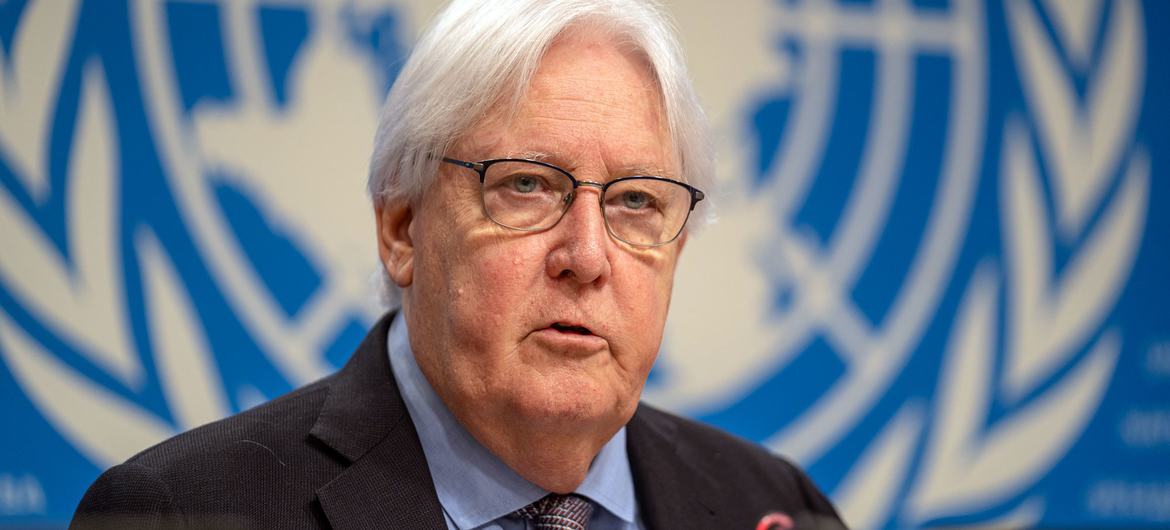
Martin Griffiths, UN Emergency Releif Coordinator in Geneva, Switzerland.
UN News/Daniel Johnson
 
Martin Griffiths, UN Emergency Releif Coordinator in Geneva, Switzerland.

Urgent appeal

On Thursday, the UN launched a flash appeal for Libya just over $71 million targeting 250,000 people for the next three months.

The UN Resident and Humanitarian Coordinator in the country, Georgette Gagnon, was leading the organisation’s response efforts and a coordination hub has been established in Benghazi.

Mr. Griffiths detailed the most urgent needs in Libya: equipment to find people in the sludge and the damaged buildings, shelter, food, clean water and sanitation, as well as key primary medical care, as the threat of cholera looms large.

He said the possibility of opening a maritime route to bring in aid to Derna, as requested by the city’s mayor, made “complete sense”, and stressed the urgency of simultaneously supporting people fleeing to the south, away from the disaster area. 

The UN relief chief also underscored the need for psychosocial care, a “huge issue” given the extent of the trauma caused by the disaster.

“Massive reminder” of climate challenges

Mr. Griffiths stressed that in Libya, “climate and capacity have collided to cause this terrible tragedy”.

He called the disasters in both countries a “deeply shocking” and “massive” reminder of climate and its presence. 

“We face a really difficult year ahead and government capacities will be stretched to the limit in both these countries,” he said.


https://news.un.org/en/story/2023/09/1140787


https://creativecommons.org/licenses/by/3.0/legalcode

четверг, 18 мая 2023 г.

‘Weak and insufficient’ progress made towards disaster risk reduction

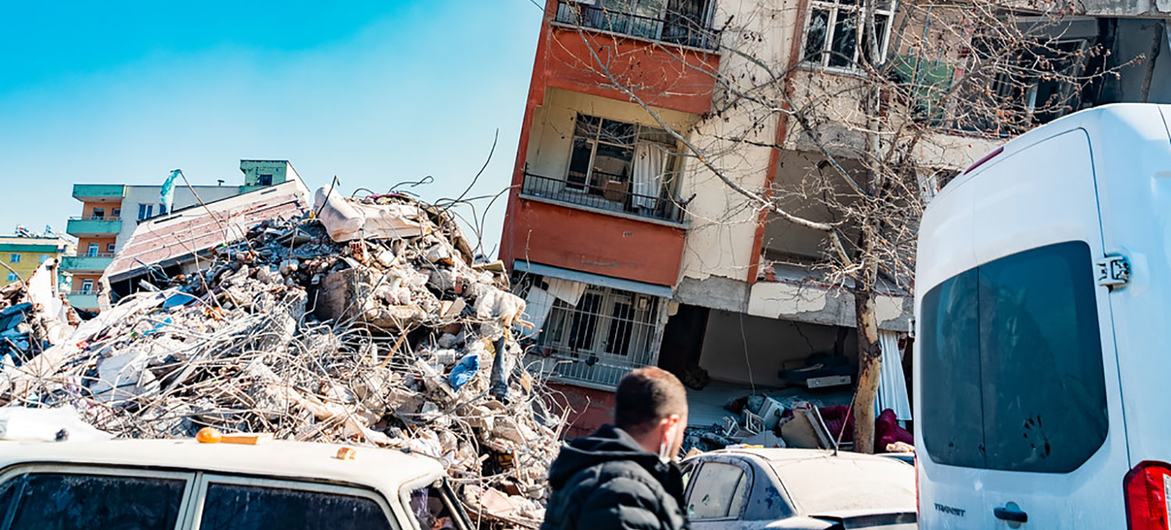
A building in Kahramanmaraş, Türkiye, destroyed by the earthquake.
© UNOCHA/Matteo Minasi
 
A building in Kahramanmaraş, Türkiye, destroyed by the earthquake.
18 May 2023
SDGs

Global progress towards disaster risk management has been weak and insufficient, putting at risk the 2030 Sustainable Development Goals (SDGs), UN Deputy Secretary-General Amina Mohammed told the  General Assembly on Thursday. 

Countries met to review progress on implementing the Sendai Framework for Disaster Risk Reduction - a landmark 2015 agreement to reduce damage, losses and deaths from natural and man-made hazards by the end of the decade. 

Tweet URL

During the meeting, they adopted a political declaration which in part calls for improving national mechanisms to share disaster risk data and analysis, including at the regional and international levels. 

Change course now 

For General Assembly President Csaba Kőrösi, the midterm review was “our last chance before 2030 to collectively change course”, underscoring the critical need for action. 

“Eight years on, we must admit that our progress has not kept pace with the urgency of our days. The known number of people affected by disasters has jumped 80-fold since 2015,” he said. 

A defining point 

Managing risk is not an option but a global commitment, the UN Deputy Secretary-General told the gathering. 

“Our world is at a defining point in history. As we review our journey halfway to 2030, we must acknowledge that progress has been weak and insufficient,” Ms. Mohammed said. 

As countries did not meet climate and sustainable development commitments, natural disasters that could have been prevented have claimed hundreds of thousands of lives and forced millions to be uprooted, mainly women, children, and other vulnerable groups, she said. 

The situation has been exacerbated by the COVID-19 pandemic, the “triple crisis” of climate change, biodiversity loss and pollution, the rising cost of living, skyrocketing inequality and the war in Ukraine. 

Further threats stem from structural governance omissions within the banking and global financial systems, while scientists warn of cascading and irreversible impacts of global warning. 

“Addressing these challenges means changing our response to risk through systemic thinking, collaborative action, and the smart, agile deployment of responses to prevent, manage and mitigate global risks,” she said.


Unequal progress 

The head of the UN Office on for Disaster Risk Reduction (UNDRR), Mami Mizutori, noted that it has not been all storm and strife since 2015.  

For example, a growing number of governments have established or upgraded national loss accounting systems, and there has been a significant increase in the number of countries with national strategies for disaster risk reduction.  

However, progress remains unequal.  Furthermore, risks that become disasters continue to disproportionately impact the world’s least developed countries, small island developing States, landlocked developing and African countries, as well as middle-income countries.  

“As risks are left unattended, disasters are materializing faster, surpassing our ability to cope, with increasingly dire consequences for people, livelihoods, society and the ecosystems on which we depend,” she said. 

“The imperative to realise the outcome, goal and targets of the Sendai Framework is more important today than ever before.”


A survivor’s story 

This point was further emphasized by Mustafa Kemal Kılınç from Türkiye, who survived the devastating earthquake in February that killed upwards of 50,000 people.  

The 23-year-old university student was visiting his family in his hometown, Hatay, when the disaster struck, reducing thousands of buildings to rubble and leaving countless people homeless. 

“I am here today because our building did not collapse. This is because our contractor had applied high standards to make our building earthquake resistant,” he said. 

Mustafa and his family – seven people in total – lived in their car for a week, amid freezing temperatures and heavy rain, before moving to a train wagon. They eventually settled with relatives across the country and returned to Hatay several weeks later. 

“We cannot predict natural disasters. But we can certainly be prepared whenever and wherever they happen,” he said.  “I hope that as a result of your work, there will be less disaster victims like myself around the world.” 


 https://news.un.org/en/story/2023/05/1136782


https://creativecommons.org/licenses/by/3.0/legalcode

пятница, 12 мая 2023 г.

Avoiding disaster in a dangerous world

People flee their homes as Cyclone Freddy hits Blantyre city in Malawi.

Avoiding disaster in a dangerous world

© UNICEF
 
People flee their homes as Cyclone Freddy hits Blantyre city in Malawi.
13 May 2023
Humanitarian Aid

More people globally are being affected by disasters than ever before, despite the adoption of a UN-backed international disaster reduction agreement in 2015. Experts from around the world are gathering at UN Headquarters to speed up efforts to fully implement that agreement to bring about a safer world.

For Malawians, Cyclone Freddy was an unmitigated disaster. In March this year, the storm ripped through the African country twice during its record-breaking month-long destructive rampage through southern Africa.

The unprecedented duration of the extreme weather event would have been difficult for any country to deal with, but for Malawi, one of the most vulnerable developing nations in the world, it was devastating. Hundreds were killed, more than half a million people were displaced, and thousands of hectares of crops were washed away.

As of early April, hundreds of people remained missing, and some 1.1 million people were in need of humanitarian support. The severe storm hit during Malawi’s worst cholera outbreak in two decades, adding to the pressures on a health system that was already severely stretched.

That same month, a group of independent UN rights experts called for more humanitarian aid, but also for Malawi to “develop durable solutions to avert, minimize, and address disaster displacement through climate adaptation measures, preparedness and disaster risk reduction.”

A woman is tested for COVID-19 in Shenzhen, China.
© Unsplash/Shengpengpeng Cai
 
A woman is tested for COVID-19 in Shenzhen, China.

More severe, costly, and deadly disasters

The impact of Freddy is just one example of the growing number of complex and costly disasters affecting increasing numbers of people, that prompted 187 countries to sign up to an international disaster risk reduction agreement in 2015.

The Sendai Framework, named after the Japanese city in which it was adopted, is an international UN agreement designed to reduce disaster losses. It targets substantially fewer deaths from disasters, a reduction in the disaster damage to infrastructure, and improved early warning systems – all by 2030.

However, eight years on, little progress has been made: according to the UN Office for Disaster Risk Reduction (UNDRR), there has been an 80 per cent increase in the number of people affected by disasters since 2015. What’s more, UNDRR finds that many of the lessons from past disasters seem to have been ignored.

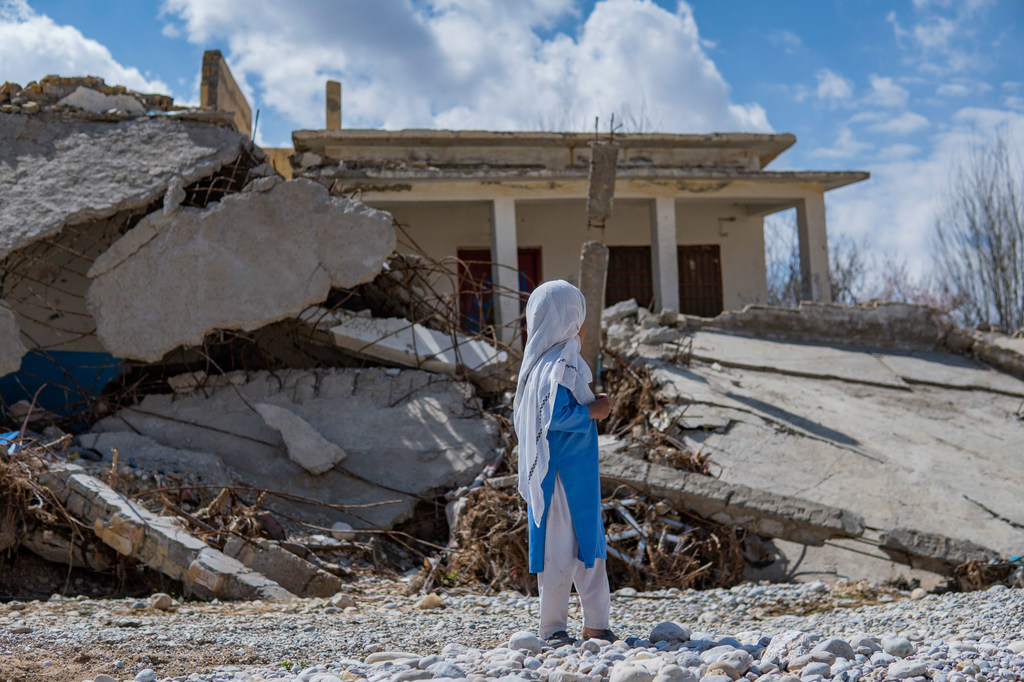
An eight-year-old girl stands near a school destroyed by floods in Quetta, Pakistan.
© UNICEF/Muhammad Sohail
 
An eight-year-old girl stands near a school destroyed by floods in Quetta, Pakistan.

Half-time report

From 18 to 19 May, a High-Level meeting at UN Headquarters in New York will provide an opportunity to lay out the many challenges that have stalled progress, and chart a course towards a safer world.

Delegates at the event will have pored over the report of the Midterm Review of the Framework’s implementation, which lays bare the scale of the problem. Released in April to mark the half-way point between the launch of the Framework and the 2030 deadline, it does not make for comfortable reading.

The report emphasizes the growing impacts of climate change since 2015, and the brutally unequal consequences, which are much more severe in developing countries; a case in point is the flooding in Pakistan in 2022, which affected more than 33 million people and damaged millions of acres of agricultural land, causing widespread food insecurity.

The growing interconnectedness of the world’s societies, environments, and technologies means that disasters can spread extremely quickly. The report points to the COVID-19 pandemic as a prime example, beginning as a local outbreak in China in 2019, before rapidly spreading around the world, leading to the death of some 6.5 million people by the end of 2022.

“One doesn’t have to look hard to find examples of how disasters are becoming worse’” says Mami Mizutori, Special Representative of the UN Secretary-General for Disaster Risk Reduction and head of UNDRR. “The sad fact is that many of these disasters are preventable because they are caused by human decisions. The call to action of the Midterm Review is that countries need to reduce risk in every decision, action, and investment they make.

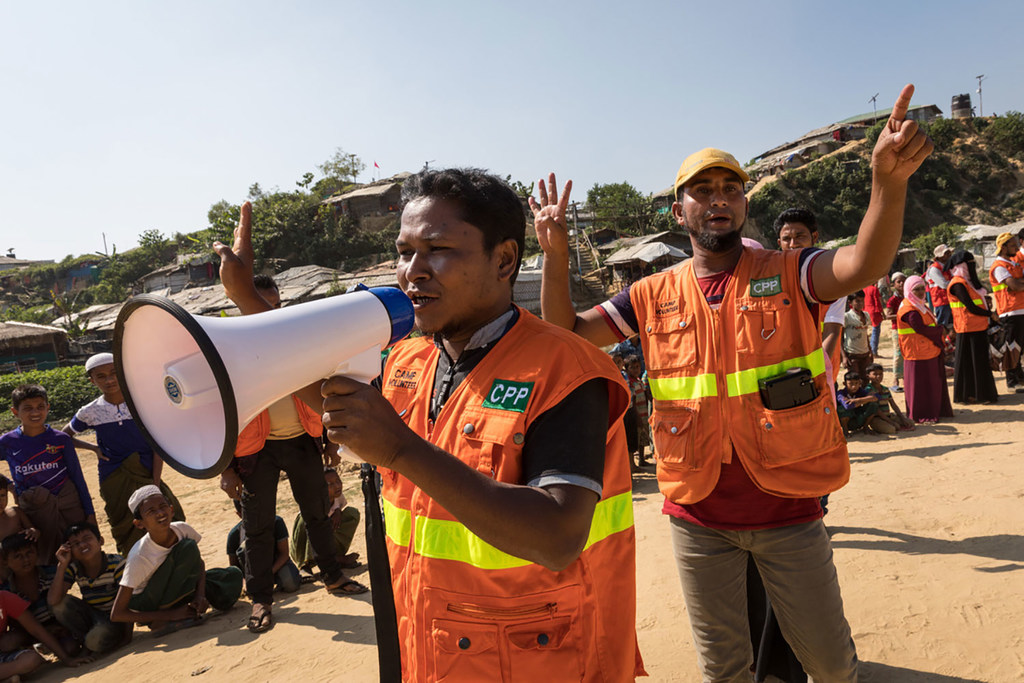
Less than half of the Least Developed Countries and only one-third of Small Island Developing States have a multi-hazard early warning system.
UNDRR/Chris Huby
 
Less than half of the Least Developed Countries and only one-third of Small Island Developing States have a multi-hazard early warning system.

Countries taking the lead

Clearly, not enough is being done: the costs of disasters continue to rise, but funding for disaster risk reduction is not going up at anywhere near the rate needed to tackle them.

Nevertheless, as the report shows, there are many examples of countries, at a national level, putting plans in place to protect their citizens from the risk of disasters.

To date, disaster preparedness plans have been enacted in 125 countries. They range from legislation in Costa Rica that allows all institutions to allocate budgets for prevention and emergency response, to Australia’s Disaster Ready Fund, which will invest up to A$200 million per year from 2023 - 2024 in disaster prevention and resilience initiatives, and Barbados’s disaster clauses that allow for debt to be immediately frozen in the event of an economic impact caused by disaster.

And, whilst the number of people affected by disasters is going up, the proportion being killed has more than halved. The disaster-related mortality rate in the decade 2005-2014 was 1.77 per 100,000 global population, and in the decade 2012-2021 it had dropped to 0.84 (barring the impact of COVID-19).

The recommendations in the Mid-Term Report, and the measures being taken at a national level will form the basis of the discussions at the High-Level Meeting: they contain proof that a safer world is achievable, between now and 2030, if the necessary investments in risk reduction are made.


Reducing the risk of disasters at the UN

  • The UN Office for Disaster Risk Reduction (UNDRR) helps decision makers across the globe better understand and change their attitude to risk.

  • UNDRR’s authoritative expertise and presence in five regional offices is used to build and nurture relationships with national and local governments, intergovernmental organizations, civil society and the private sector.

  • The Office collects, collates, and shares the latest high quality technical information and data about reducing risk and building resilience more effectively. Hundreds of experts work in UNDRR’s science and tech advisory groups, essential partners for governments and other stakeholders all over the world.

  • The development and roll-out of inclusive and accessible multi-hazard early warning systems is a key part of their work. Such systems save lives: on average, when disaster strikes, fatality rates in countries without them are eight times higher than in countries that have put them in place. 

 https://news.un.org/en/story/2023/05/1136087

https://creativecommons.org/licenses/by/3.0/legalcode