Избранное сообщение

пятница, 30 августа 2024 г.

Floods, landslides wreak havoc across South Asia


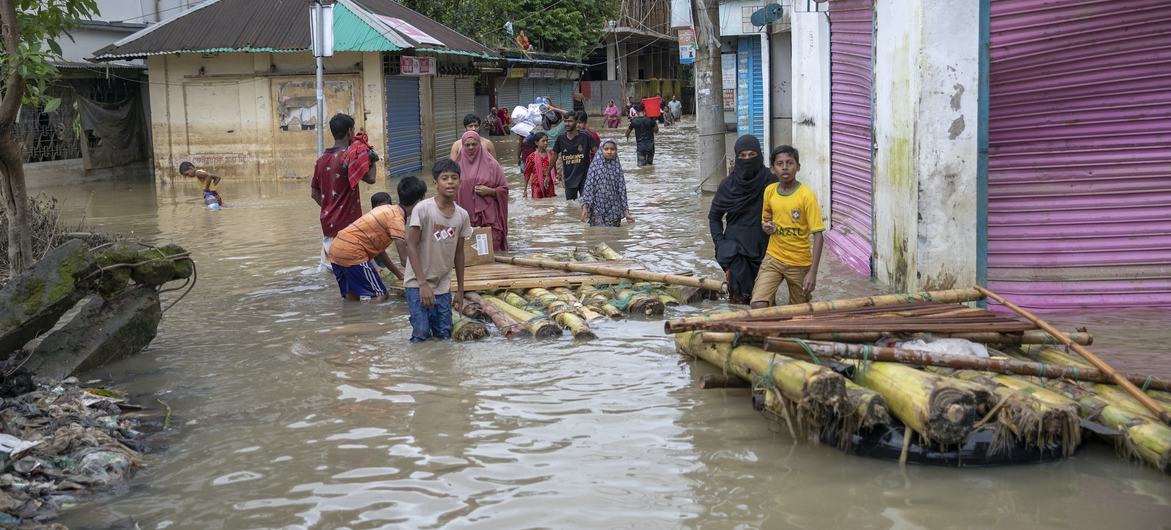
Flood-affected residents construct makeshift bamboo rafts to navigate submerged streets in Feni district, southeast Bangladesh.
© UNICEF/Salahuddin Ahmed Paulash
 
Flood-affected residents construct makeshift bamboo rafts to navigate submerged streets in Feni district, southeast Bangladesh.


By Vibhu Mishra
29 August 2024

 Humanitarian Aid

Over 18 million people in Bangladesh have been affected by severe monsoon conditions, with more than 1.2 million families trapped as flash floods submerge vast areas of the country’s east and southeast.

The worst affected regions are Chattogram and Sylhet, where major rivers are “flowing well above danger levels”, further aggravating the situation, according to the UN Children’s Fund (UNICEF).

Initial estimates suggest that around five million people - including two million children - have been affected, many stranded without food and relief.
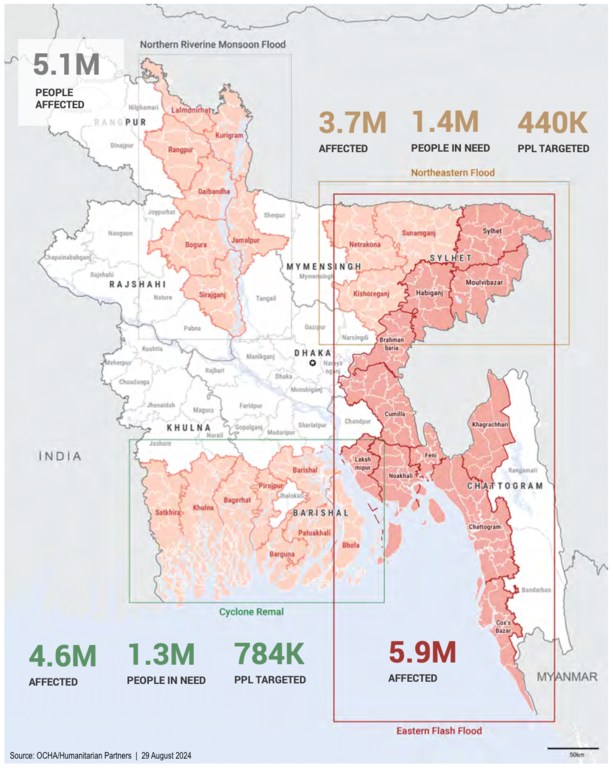
Impact of cyclone and monsoon floods in Bangladesh (May to August 2024)
Source: OCHA
 
Impact of cyclone and monsoon floods in Bangladesh (May to August 2024)

Twenty deaths have been reported as of Tuesday, and a further 285,000 have sought refuge in more than 3,500 shelters, UNICEF added.

Massive damage has also been reported to roads, croplands, and fisheries, severely impacting livelihoods.

Government-led search and rescue operations are ongoing, with some areas inaccessible.

UN-partners in some places have reported that water levels are not expected to recede for at least a week, with risk of persistent waterlogging and accompanying threat of water- and vector-borne diseases.

Extraordinary rainfall in eastern India

The state of Tripura in eastern India was hit by extraordinary rainfall for over 72 hours roughly ten days ago, resulting in some of the most severe floods since 1983, according to local media.

The rains along with over 2,000 resulting landslides, reportedly affecting 1.7 million people, including around 117,000 who have been displaced to relief camps set up by district authorities.

Some 26 people are said to have been killed, the UN Office for the Coordination of Humanitarian Affairs (OCHAsaid, citing officials.

A Government-led response is ongoing, with floodwater levels said to have been receding.

Multiple landslides were also reported in the northern state of Himanchal Pradesh since late July, leading to several casualties.
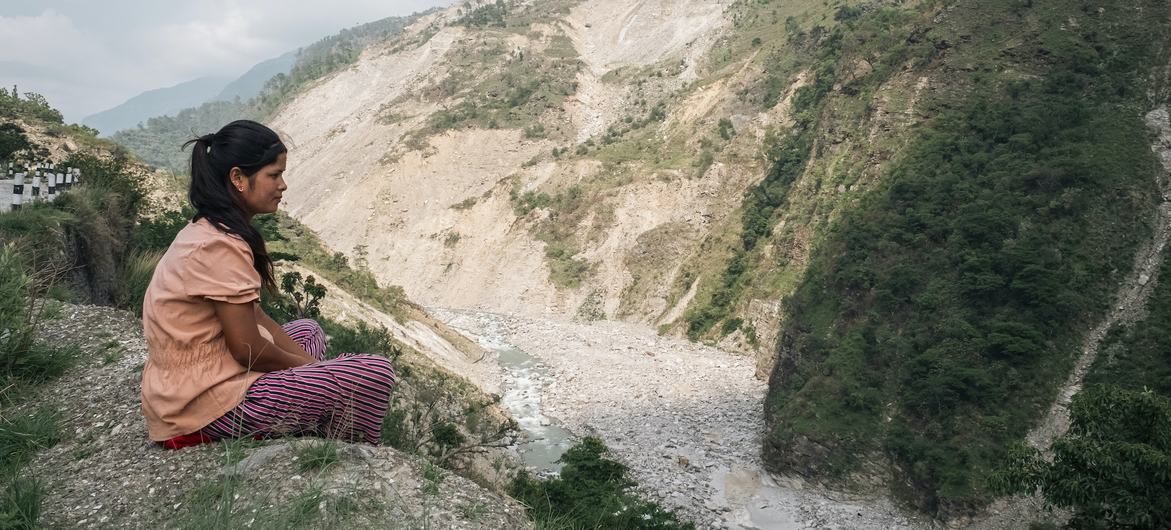
In western Nepal, a girl sits on the edge of a cliff, overlooking a massive landslide brought on by the monsoon rains in 2023.
© UNICEF/Vlad Sokhin
 
In western Nepal, a girl sits on the edge of a cliff, overlooking a massive landslide brought on by the monsoon rains in 2023.

Climate change impacts in Nepal

The monsoon season also wreaked havoc in Nepal, a country on the frontlines of climate change, experiencing more erratic and intense weather and rapid warming of glaciers, leading to severe flash floods and landslides.

A glacial lake outburst flood (GLOF) in the country’s Everest region wiped off the village of Thame, situated at an altitude of about 3,800 metres (12,500 feet) and popular with trekkers.

Though no deaths or serious injuries were reported, more than a dozen houses and small hotels, a school and a health clinic were washed away.

Elsewhere in the country, however, the 2024 monsoon season led to more than 200 deaths, including in the capital, Kathmandu.

In a particularly tragic incident, about 65 people died when two buses were pushed into a swollen river last month. Authorities have been able to recover the remains of only three people, with search efforts ongoing.

Response continues in Pakistan

In Pakistan, disasters claimed the lives of 243 people since July – about half of them children, underscoring their heightened vulnerability, OCHA reported.

Floods also resulted in “extensive damage” to livelihoods and vital infrastructure, including schools and bridges.

Assessments and response continue, with humanitarian partners and authorities reporting food, clean water, medical supplies and hygiene kits as key needs.


https://news.un.org/en/story/2024/08/1153726


https://creativecommons.org/licenses/by/4.0/legalcode

вторник, 27 августа 2024 г.

What is sea level rise and why does it matter to our future?


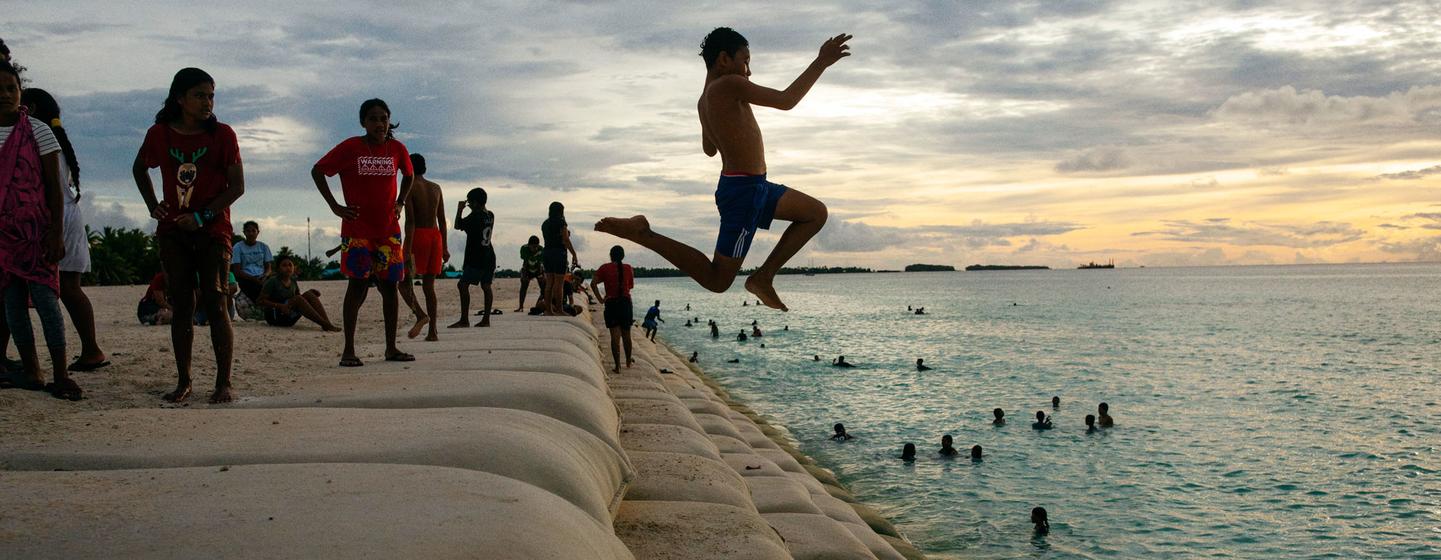
Children in the Pacific Ocean island of Tuvalu play at a coastal area protected by sandbags.


© UNICEF/Lasse Bak Mejlvang
 
Children in the Pacific Ocean island of Tuvalu play at a coastal area protected by sandbags.


By Daniel Dickinson
26 August 2024

 Climate and Environment

The level of the sea globally is rising faster and higher than ever before, creating what the United Nations has described as an “urgent and escalating threat” to people around the world.

The UN Secretary-General António Guterres has been visiting the Pacific Ocean nations, Tonga and Samoa, where sea level rise has been one of the key issues he has been discussing with the communities he has met.

On 25 September, global leaders and experts will gather at the UN to discuss how best to address the threat.

Here’s what you need to know about sea level rise:

High water mark

It is estimated that the oceans have risen by approximately 20-23 centimetres (8-9 inches) since 1880.

In 2023, the average sea level globally reached a record high the UN’s World Meteorological Organization (WMO) confirmed, according to satellite records kept since 1993.

Worryingly, the rate of increase over the last 10 years is more than twice the rate of sea level rise in the first decade of the satellite record, from 1993 to 2002.

What causes sea levels to rise?

Rising sea levels are the result of ocean warming and the melting of glaciers and ice sheets, phenomena which are the direct consequences of climate change.

Even if global warming is limited to 1.5°C above pre-industrial levels, which is the goal that countries around the world set as part of the Paris Agreement of 2015, the planet will see a sizeable increase in sea water levels.

It is worth noting that ocean circulation patterns, such as the Gulf Stream, can lead to regional differences in sea level rise.

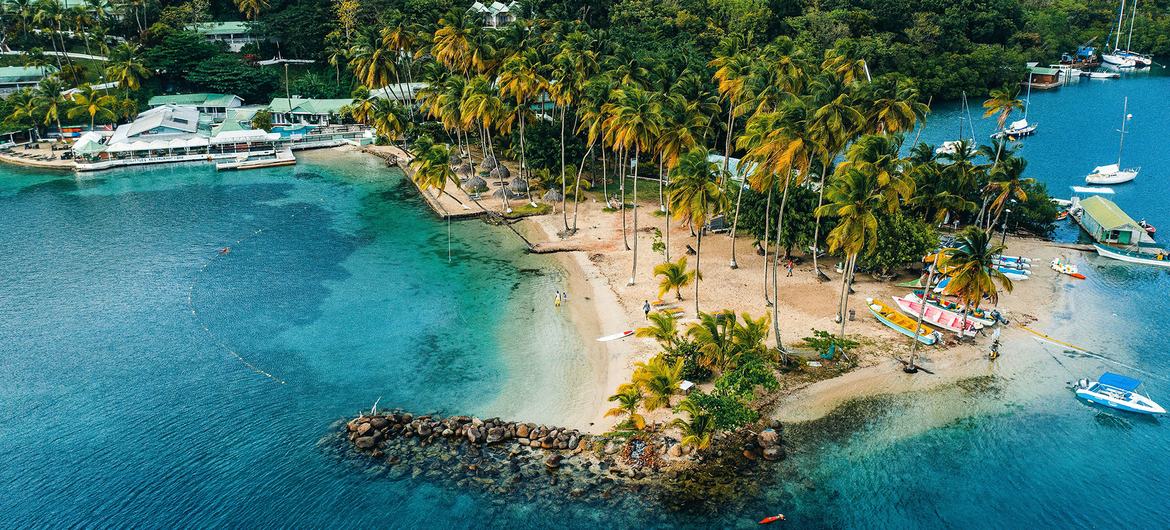
Sea level rise is threatening the tourism industry in places like St Lucia in the Caribbean.
© Unsplash/Omar Eagle
 
Sea level rise is threatening the tourism industry in places like St Lucia in the Caribbean.

What are the consequences?

Rising sea levels have wide-reaching implications not just on the physical environment, but also the economic, social and cultural fabric of vulnerable nations across the world.

Saltwater flooding can damage coastal habitats, including coral reefs and fish stocks, agricultural lands as well as infrastructure, including housing, and can impact the ability of coastal communities to sustain their livelihoods.

Flooding can contaminate fresh water supplies, promote waterborne diseases threatening people’s health and lead to stress and mental health problems.

At the same time, tourism revenues, a key economic driver especially in many small island developing States (SIDS), can suffer as beaches, resorts and other tourist attractions like coral reefs are damaged.

The combination of so many factors can force people to leave their homes, relocate to higher ground where available or ultimately migrate, which in turn disrupts economies, livelihoods and communities.

It is perhaps not surprising the UN Secretary-General, Antonio Guterres, has described the phenomenon as a “threat multiplier”.

What is the link between rising sea levels and climate change?

Quite simply, sea level rise is a symptom of climate change.

As global temperatures increase due to climate change, the oceans absorb much of this excess heat. Warmer water grows in volume, a process known as thermal expansion, which is a significant contributor to sea level rise.

Rising sea levels also create a catastrophic circular feedback loop.

For example, mangrove forests, which protect coastal habitats and store damaging carbon gases that contribute to climate change, can quickly become overwhelmed losing their protective qualities. Fewer mangroves means more harmful gases in the environment, which drives climate change, and with increased temperatures, sea levels will rise even further.

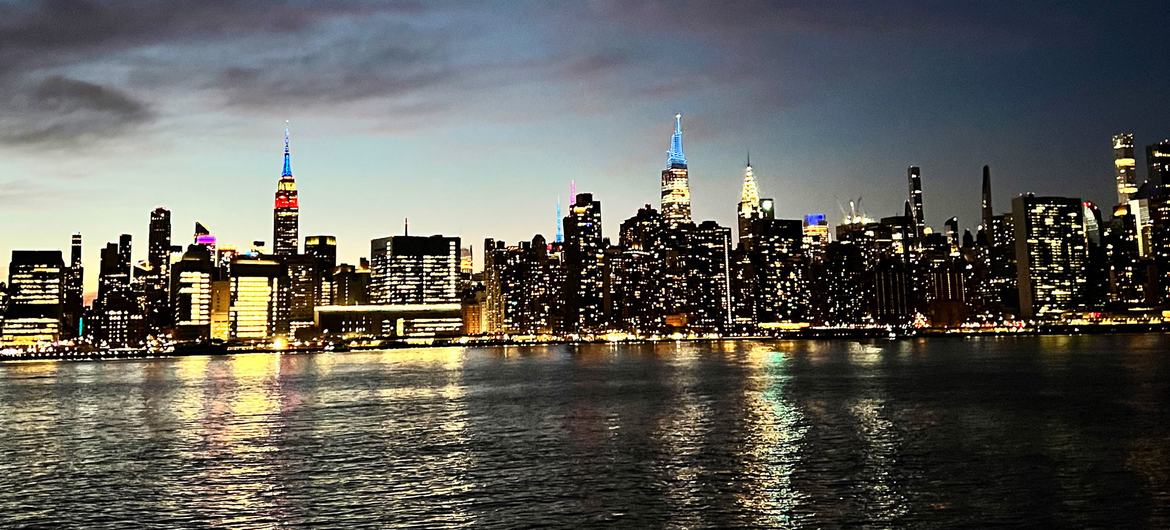
Rising sea levels threaten global cities like New York.
UN News/Daniel Dickinson
 
Rising sea levels threaten global cities like New York.

Which countries are most affected?

It’s estimated that around 900 million people, that is one out of every 10 people on earth, live in close proximity to the sea.

People living in the coastal zones of densely populated countries like Bangladesh, China, India, the Netherlands and Pakistan will be at risk and potentially suffer catastrophic flooding. Also at risk are major cities on every continent, including Bangkok, Buenos Aires, Lagos, London, Mumbai, New York and Shanghai.

Small islands with low-lying land areas are arguably facing the most critical threats. Sea level rise and other climate impacts are already forcing people in such Pacific Ocean nations as Fiji, Vanuatu and the Solomon islands to relocate.

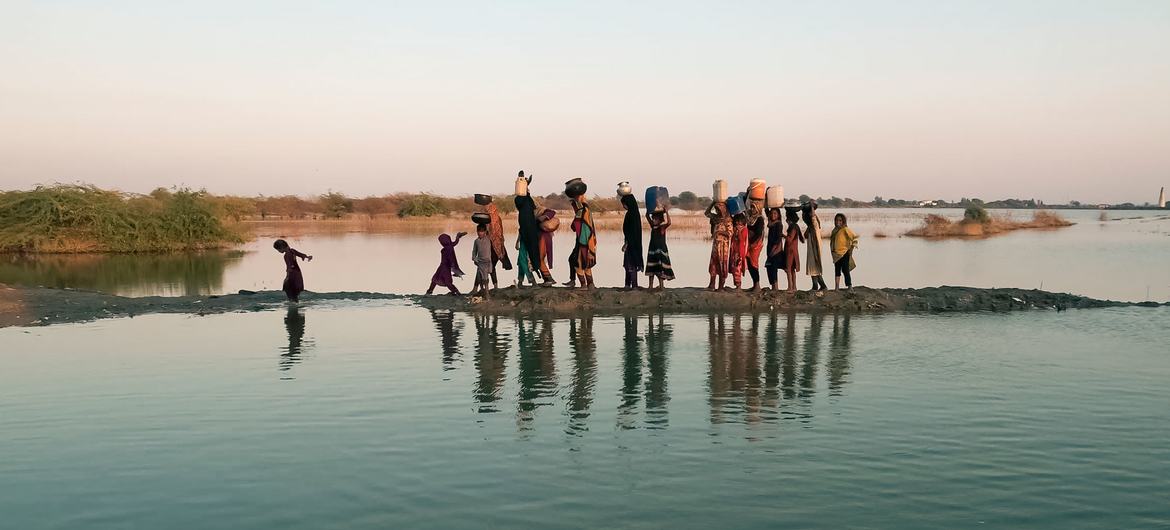
Women and girls fetch water following floods in the southern Pakistani province of Sindh.
© UNICEF/Vlad Sokhin
 
Women and girls fetch water following floods in the southern Pakistani province of Sindh.

What can be done to counter sea level rise?

The single most consequential action that can be taken is to slow down global warming by reducing greenhouse gas emissions, the primary driver of climate change.

Meanwhile, mitigating and adapting to higher sea levels has taken on new importance.

A wide range of solutions, which obviously come at a cost, are available including: building infrastructure, such as sea walls and storm surge barriers, to protect against flooding and erosion; improving drainage systems and constructing flood resistant buildings; restoring natural barriers like mangroves; and protecting wetlands and coral reefs to absorb wave energy and reduce the impact of storm surges.

Many countries are also stepping up their disaster risk reduction plans as well as through UN-supported early warning systems to deal with sea level-related incidents.

In some cases, communities may also be relocated from vulnerable coastal areas as part of adaptation measures, an approach known as managed retreat.

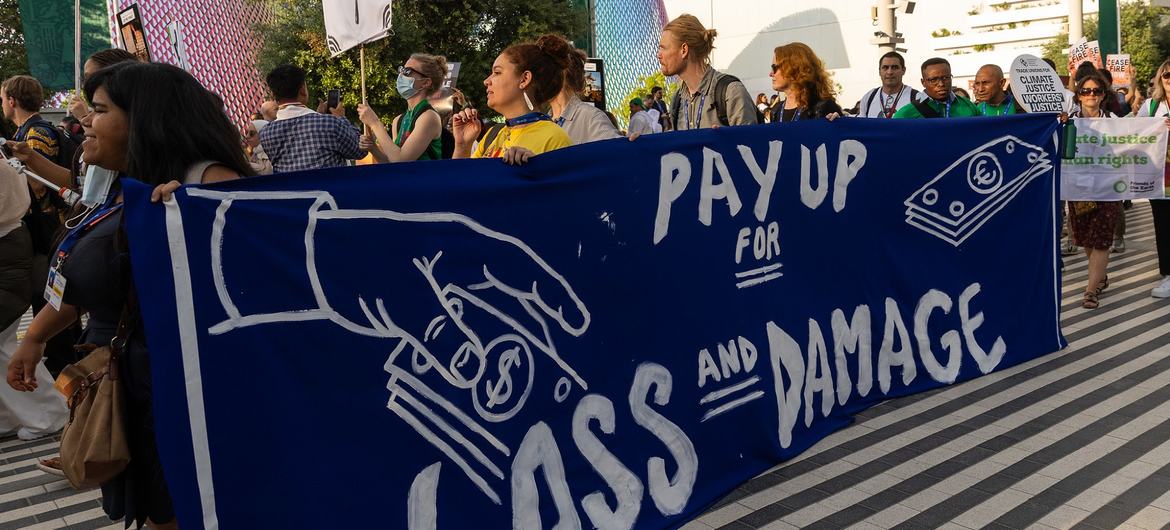
Civil society organizations attending UN climate negotiations in Dubai in 2023 demand reparations for the loss and damage caused by climate change.
UNFCCC/Kiara Worth
 
Civil society organizations attending UN climate negotiations in Dubai in 2023 demand reparations for the loss and damage caused by climate change.

How the UN helps

Countering sea level rise requires a comprehensive and internationally coordinated approach, which the United Nations is uniquely equipped to lead.

The UN Framework Convention on Climate Change (UNFCCC) facilitated the Paris Agreement to limit global warming which is essential for reducing the extent of future sea level rise.

The UN also provides support to SIDS and is working with the global community to provide financial support especially through the Loss and Damage Fund to the most vulnerable countries and to help them adapt to climate change impacts.

Learn more about how the UN helps tackle the challenge of rising sea levels here.


https://news.un.org/en/story/2024/08/1153596


https://creativecommons.org/licenses/by/4.0/legalcode

Secretary-General, at Pacific Island Forum Opening Ceremony, Says Greater Financial, Technological Support for Region Crucial to Protect Climate, Save World


SG/SM/22342

Secretary-General, at Pacific Island Forum Opening Ceremony, Says Greater Financial, Technological Support for Region Crucial to Protect Climate, Save World

Following are UN Secretary-General António Guterres’ remarks to the Pacific Islands Forum Opening Ceremony, in Tonga today: 

It is a great pleasure to address the Pacific Islands Forum. And allow me to express my deep gratitude to the Government and the people of Tonga for their incredible hospitality.

We meet at a turbulent time for our world.  Raging conflicts, an escalating climate crisis, inequalities and injustices everywhere, and the 2030 Agenda is faltering.  But, this region is a beacon of solidarity and strength, environmental stewardship and peace.

The world has much to learn from the Pacific and the world must also step up to support your initiatives.  This is a region of fearless seafarers, expert fishers and deep ancestral knowledge of the ocean.

But, humanity is treating the sea like a sewer.  Plastic pollution is choking sea life.  Greenhouse gases are causing ocean heating, acidification and a dramatic and accelerating rise in sea levels.

Pacific islands are showing the way to protect our climate, our planet and our ocean:  By declaring a climate emergency and pushing for action, and with your Declarations on Sea Level Rise, and aspirations for a just transition to a fossil-fuel-free Pacific.

The young people of the Pacific have taken the climate crisis all the way to the International Court of Justice.  You have also rightly recognized that this is a security crisis — and taken steps to manage those risks together.

I want to express my full support to the 2050 Strategy for the Blue Pacific Continent, and I will do my best to help mobilize international resources for the Pacific Resilience Facility and to engage with all the relevant initiatives the Pacific Island Forum.

The survival plan for our planet is simple:  Establishing a just transition for the phaseout of the fossil fuels that are responsible for 85 per cent of the emissions of greenhouse gases.  All countries must produce national climate plans — nationally determined contributions — by next year, aligning with the 1.5°C upper limit of global heating.

The Group of 20 (G20) — the biggest emitters responsible for 80 per cent of those emissions — must step up and lead, by phasing out the production and consumption of fossil fuels and stopping their expansion immediately.

When Governments sign new oil and gas licenses, they are signing away our future.  The Pacific Island States’ ambition for a fossil-fuel-free Pacific is a blueprint for the G20 and for the world.

But, the region urgently needs substantial finance, capacities and technology to speed up the transition and to invest in adaptation and resilience.

That is why we have been calling for the reform of the international financial architecture, for a massive increase in the lending capacity of multilateral development banks, for debt-relief programmes that work, including for middle-income countries that are in distress, and an enhanced redistribution of special drawing rights, to benefit developing countries and in particular small island developing States.

The decisions world leaders take in the coming years will determine the fate, first of Pacific Islanders — but also of everyone else. In other words: If we save the Pacific, we save the world.

Pacific Island States have a moral and practical imperative to take your leadership and your voice to the global stage.  You demonstrated this leadership once again with the General Assembly’s endorsement of the Multidimensional Vulnerability Index.  We must now make sure that international financial institutions include them in their criteria for operations.

The Summit of the Future in New York next month will be an opportunity to reform and update global institutions, so they are fit for the world of today and tomorrow.

Across the board, the Summit aims to provide developing countries with a greater voice on the global stage, including at the UN Security Council and in international financial institutions.

I urge Pacific Island States to make your voices heard and heard loudly because the world needs your leadership.


https://press.un.org/en/2024/sgsm22342.doc.htm

https://creativecommons.org/licenses/by/4.0/legalcode

пятница, 23 августа 2024 г.

Driving Progress: Botswana prepares for historic UN conference on landlocked countries


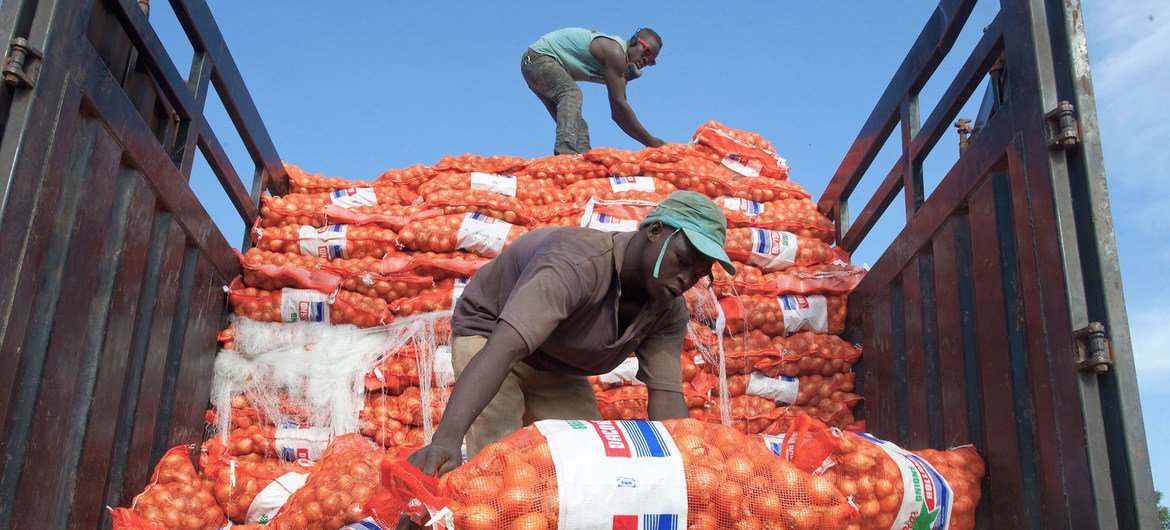
Men unload sacks of onions from a truck in Bamako, Mali, a landlocked developing country. Their lack of direct access to the vital trade links often result in landlocked countries paying high transport and transit costs.
World Bank/Dominic Chavez
 
Men unload sacks of onions from a truck in Bamako, Mali, a landlocked developing country. Their lack of direct access to the vital trade links often result in landlocked countries paying high transport and transit costs.


22 August 2024 

Economic Development

Leaders from landlocked developing countries, (LLDCs) will gather in Gaborone, Botswana, this December to tackle challenges, explore solutions, and build alliances for a more equitable and prosperous future.

At the Third UN Conference on Landlocked Developing Countries, known as LLDC3, innovative solutions and strategic partnerships will be outlined and leveraged to “unlock the full potential of these nations.”

LLDC3 is set to take place from 10-13 December.

Here’s what you need to know about LLDCs and plans for this year’s conference:

What are LLDCs?

LLDCs, according to the UN Office that deals with issues related to some of the world’s most vulnerable nations (OHRLLS), are countries that lack direct access to the sea, which isolates them and hinders their ability to engage in international trade, connectivity, and economic development.

OHRLLS said the average distance of LLDCs to the seaport is about 851 miles.

Therefore, these countries are forced to depend on “neighbouring transit countries” for accessing international markets which results in higher transportation trade costs – double the transport costs of their neighbours – and delays in commodities movement.

Their dependency on neighbouring nations for transport trade often leaves them with the possibility of political and economic instability in transit countries.

The challenges faced by LLDCs often leave them with “reduced foreign direct investment, limited export opportunities, and slower economic growth.”

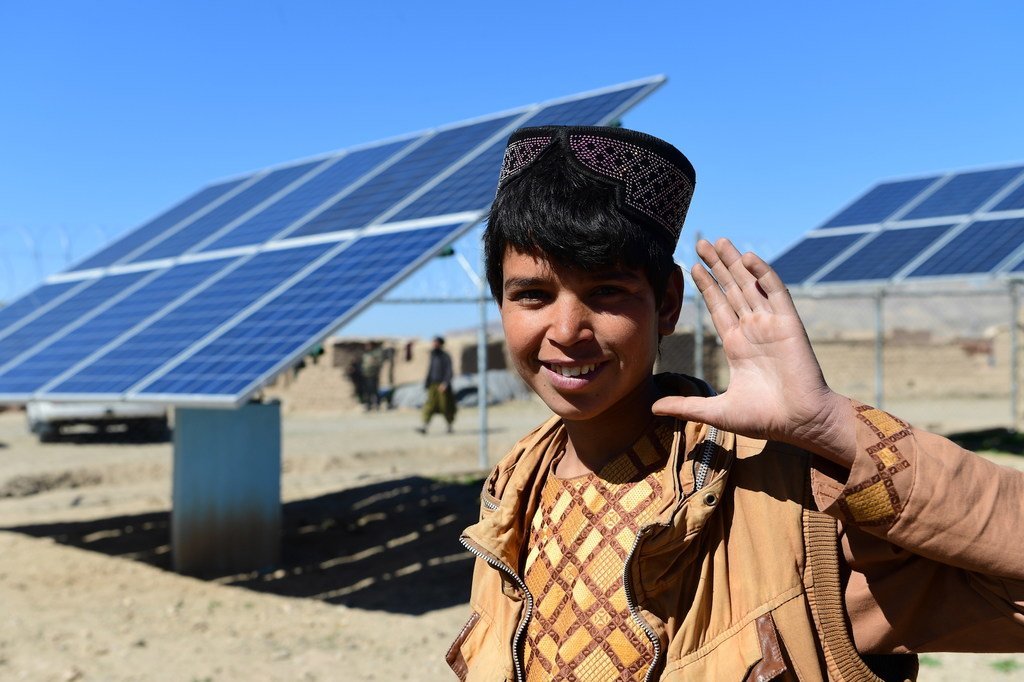
A boy stands in front of solar panels that provide electricity to pump water, in Herat, western Afghanistan.
UNICEF/Frank Dejongh
 
A boy stands in front of solar panels that provide electricity to pump water, in Herat, western Afghanistan.

Which countries are LLDCs?

There are 32 LLDCs across Asia, Africa, Europe, and South America. These include countries like Afghanistan, Botswana, Ethiopia, and Paraguay. Ethiopia is the largest, with a population of around 115 million, while Bhutan is the smallest, with fewer than one million people.

OHRLLS has reported that about 40 per cent of LLDC populations live in slums and nearly half of the countries experience severe food crises.

Further, the working populations of LLDCs reportedly earn just $1,500 annually which is significantly lower than the global average of about $11,000 annually.

What is the history of the LLDC conference?

The LLDC conferences began when the international community, especially the UN, recognised that landlocked countries required special attention and policies to address their unique challenges.

Tweet URL

The first conference, held in 2003 in Almaty, Kazakhstan, was primarily driven by the UN through the OHRLLS.

That conference marked the launch of the LLDC agenda, focusing on improving transit cooperation and trade facilitation to better integrate LLDCs into the global economy. The Almaty Programme of Action, adopted at this conference, set the framework for ongoing international cooperation, leading to subsequent conferences that built on its progress.

The second conference, held in Vienna, Austria in 2014, which culminated in the Vienna Programme of Action, aimed to thoroughly evaluate the progress of the Almaty Programme of Action and review trade and transit cooperation policies in light of new challenges and opportunities. 

It also sought to renew global commitment to supporting LLDCs by developing a new partnership framework for the next decade.

The Third UN Conference on LLDCs will serve under the theme “Driving Progress through Partnerships.”

Rabab Fatima, the Under Secretary-General and High Representative for LLDCs said this year’s theme captures the underlying need for the accelerated advancement of LLDCs.

“Given their unique territorial constraints, partnerships are not just beneficial but indispensable,” Ms. Fatima said.

“By collaborating closely with international organizations, the private sector, and neighbouring countries, LLDCs can develop integrated transportation networks, enhance trade, share best practices, and ultimately overcome their inherent challenges to achieve sustainable development,” she continued.

The High Representative further said as the time for the conference approaches, there needs to be an acknowledgement of the “persistent challenges” LLDCs face.

She said a new programme of action will address the concrete issues experienced by the landlocked developing countries with practical solutions. Ms. Fatima was appointed by the UN chief to serve as Secretary General of the LLDC3 conference.

“This programme represents not only a strategic roadmap but also a commitment to ensuring real, impactful change for the millions of people living in LLDCs,” she said.

What are the hopes for this year’s conference?

Permanent Representative of Botswana to the UN for LLDC3, Gladys Mokhawa, said this year’s conference marks a “historic moment not to be missed” as this is the first such event focused on landlocked nations held in Africa.

Tweet URL

“Botswana is ready to offer her unique hospitality and a platform for shaping a transformative decade of Action for Landlocked Developing Countries,” Ms. Mokhawa said.

The UN Resident Coordinator in Botswana, Zia Choudhury, said the country is excited to host the conference and together with governments, civil societies, and other partners will create the Gaborone Programme of Action – a 10-year plan which will outline what LLDCs and partners will do to overcome structural challenges of the landlocked countries.

Mr. Choudhury said the key to a successful conference is to ensure “we get the right people into the room,” which would include a diverse range of people from government officials to members of youth organizations.

“One thing personally, I’ll be asking the young people of Botswana to do is to make sure you know what the targets are set by the government here and other places and make sure that you are holding government and other players to account are the implementing the plan,” Mr. Choudhury said.

“So, this is the role for future generations,” he continued.

The Resident Coordinator said he hopes people will leave the conference with a sense that LLDCs are part of the future of development in Africa and across the globe.

“People will see how much we have to offer,” Mr. Choudhury said.

https://news.un.org/en/story/2024/08/1153461

https://creativecommons.org/licenses/by/4.0/legalcode

суббота, 17 августа 2024 г.

НАСА разместило штаб-квартиру новой лунной программы в Алабаме


16 Август, 2019 23:27

Reuters


США планируют запустить космический корабль с астронавтами к Луне в 2024 году

Директор американского аэрокосмического агентства НАСА Джим Брайденстайн заявил в пятницу, что штаб-квартира нового лунного проекта США будет размещена в Центре космических полетов имени Маршалла в Хантсвилле, штат Алабама. Соединенные Штаты планируют отправить своих астронавтов на Луну в 2024 году.

Брайденстайн сообщил об этом в Хантсвилле в присутствии местных законодателей. Эта новость, которая подразумевает появление новых высокооплачиваемых рабочих мест и повышение престижа штата, расстроило законодателей из Техаса, которые убеждали НАСА в том, что центр управления новой лунной программой должен быть учрежден в Центре космических полетов в Хьюстоне.

«Система посадки [на Луну] будет запущена из Центра космических полетов имени Маршалла – прямо отсюда, из Хантсвилла, штат Алабама», - заявил глава НАСА. Он объяснил это решение тем, что именно здесь, в Хантсвилле полвека назад были созданы модули аппаратов для высадки астронавтов в рамках первой лунной программы «Аполлон».

В разработке и производстве компонентов лунного космического корабля примут участие частные компании, включая SpaceX Илона Маска, Lockheed Martin Corp и Blue Origin, которая принадлежит миллиардеру Джеффу Безосу. НАСА примет окончательное решение о том, кто будет задействован в программе, в конце этого года, после проведения соответствующего конкурса.

Брайденстайн еще в мае рассказал, что новую лунную программу решили назвать «Артемида» в честь древнегреческой богини охоты, сестры-близнеца бога Аполлона. Глава НАСА попросил Конгресс увеличить бюджет аэрокосмического агентства на 2020 финансовый год на 1,6 млрд долларов. Большая часть этих средств будет потрачена на строительство системы для высадки астронавтов на лунную поверхность.

В общем и целом новая лунная миссия обойдется США в сумму от 20 до 30 млрд долларов в ближайшие пять лет.

Вице-президент Майк Пенс в мае сообщил, что НАСА планируют вновь доставить астронавтов на Луну в 2024 году. Ранее власти страны намечали старт лунной программы на 2028 год. Дональд Трамп в июне призвал НАСА сфокусироваться на «более грандиозных» инициативах, к примеру, на реализации полета к Марсу. Ранее президент высказывался в поддержку развития лунной программы.


https://www.golos-ameriki.ru/a/nasa-alabama/5045488.html http://creativecommons.org/licenses/by/3.0/legalcode

Guterres appeals for ‘Polio Pause’ in Gaza


Two rounds of a polio vaccination campaign are expected to be launched at the end of August and September 2024 across the Gaza Strip.
© WHO
 
Two rounds of a polio vaccination campaign are expected to be launched at the end of August and September 2024 across the Gaza Strip.


16 August 2024 

UN Secretary-General António Guterres called on Friday for warring parties in Gaza to lay down their arms so that humanitarians can safely vaccinate more than half a million children against polio. 

“I am appealing to all parties to provide concrete assurances right away guaranteeing humanitarian pauses for the campaign,” he said, speaking to reporters at UN Headquarters in New York. 

“Let’s be clear: The ultimate vaccine for polio is peace and an immediate humanitarian ceasefire. But in any case, a Polio Pause is a must.”

Tweet URL

‘Polio does not wait’

Mr. Guterres described Gaza as being in “a humanitarian freefall” because “just when it seems the situation could not get worse for Palestinians in Gaza, the suffering grows – and the world watches.”

Poliovirus was recently detected in sewage samples in two locations, Khan Younis and Deir Al-Balah, meaning that the disease – which can cause paralysis - is circulating in the enclave and putting thousands of children at risk.

“Polio does not care about dividing lines – and polio does not wait,” he said.

Vaccines at the ready

Starting at the end of the month, the UN is set to launch a two-phase campaign to vaccinate more than 640,000 children in Gaza under the age of 10.

The World Health Organization (WHO) has already approved the release of 1.6 million doses of the polio vaccine and the UN Children’s Fund (UNICEF) is coordinating delivery efforts and the cold chain equipment needed for storage.

Meanwhile, medical teams from the UN Palestine refugee agency, UNRWA – the largest primary healthcare provider in Gaza – are ready to administer the vaccines and assist with logistics.

Challenges to the campaign

Mr. Guterres outlined the grave challenges these efforts face.

He said Gaza’s health, water and sanitation systems “have been decimated”, most hospitals and primary care facilities are not functional, and people are constantly forced to run to seek safety.

Furthermore, routine immunizations have been severely disrupted due to the conflict, thus increasing the spread of measles, hepatitis A and other preventable diseases.

“We know how an effective polio vaccination campaign must be administered,” he said.

“Given the wholesale devastation in Gaza, at least 95 per cent vaccination coverage will be needed during each round of the two-round campaign to prevent polio’s spread and reduce its emergence.”

Safety first

The campaign will involve 708 teams at hospitals and primary healthcare centres, he said, again noting that many are barely functioning, and 316 community outreach teams throughout Gaza. 

It requires effective transport routes for the vaccines and cold chain equipment, the entry of polio experts into Gaza and fuel so that health teams can carry out their work.

Reliable internet and phone services for communications outreach, and an increase in the amount of cash allowed into Gaza to pay health workers, are also needed.

Above all, a successful polio vaccination campaign needs safety,” the UN chief said. 

“Safety for health workers to do their jobs.  Safety for children and families to get to the health facilities. And safety for those health facilities to be protected from bombardment.” 

Soundcloud

A shared obligation

Stressing that “it is impossible to conduct a polio vaccination campaign with war raging all over,” Mr. Guterres warned of the potential for wider consequences. 

“Polio goes beyond politics. It transcends all divisions. And so it is our shared obligation to come together. To mobilize – not to fight people, but to fight polio,” he said.

He stressed the need to “defeat a vicious virus that, left unchecked, would have a disastrous effect not only for Palestinian children in Gaza, but also in neighboring countries and the region.


https://news.un.org/en/story/2024/08/1153276


https://creativecommons.org/licenses/by/4.0/legalcode

четверг, 15 августа 2024 г.

Extreme heat increasingly disrupting child health, UNICEF warns


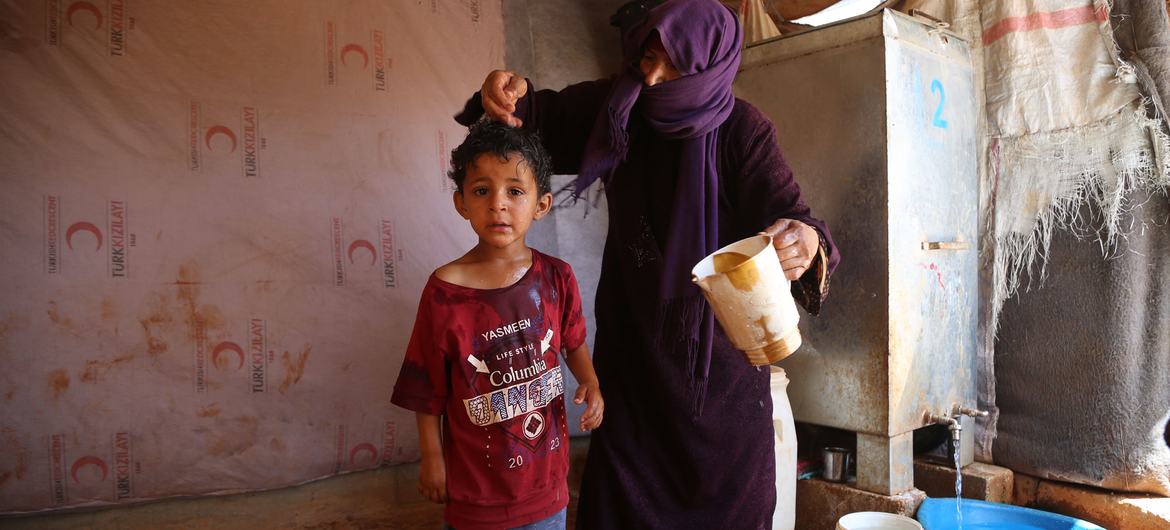
Water is poured on a child to help him cope with scorching heat in Syria.
© UNOCHA/Bilal Al-Hammoud
 
Water is poured on a child to help him cope with scorching heat in Syria.


14 August 2024

 Climate and Environment

One in five children – or 466 million –  live in areas that experience at least double the number of extremely hot days every year compared with their grandparents’ generation, according to a new UNICEF analysis released on Wednesday.

Extreme heat is increasing, disrupting children’s health, well-being and daily routines,” said UNICEF Executive Director Catherine Russell.

The study compared averages in the 1960s with the period 2020-2024, measuring the days which exceeded 35 degrees Celsius (95 degrees Fahrenheit).

It presents a stark warning over the speed and scale at which such days are increasing for almost half a billion children worldwide - many without the infrastructure or services to endure it.

Tweet URL

Country-level findings

In examining country-level data, the analysis also found that in 16 countries, children now experience more than a month of additional extremely hot days compared with six decades ago.

In South Sudan, for example, children are living through a yearly average of 165 extremely hot days this decade, compared to 110 days in the 1960s, while in Paraguay it has jumped to 71 days from 36.

Globally, children in West and Central Africa face the highest exposure to extremely hot days and the most significant increases over time, according to the analysis. 123 million children – or 39 per cent of children in the region – now experience an average of more than one third of the year – or at least 95 days – in temperatures above 35°C, reaching as many as 212 days in Mali, 202 days in Niger, 198 days in Senegal, and 195 days in Sudan.

In Latin America and the Caribbean, almost 48 million children live in areas that are experiencing twice the number of extremely hot days.

‘Children are not little adults’

Heat stress within the body, caused by exposure to extreme heat, poses unique threats to the health of children.

Excess levels of heat stress contribute to child malnutrition, non-communicable diseases such as heat-related illnesses, and leave children more vulnerable to infectious diseases that spread in high temperatures, such as malaria and dengue.

Evidence also shows that neurodevelopment, mental health, and overall well-being are being impacted.

“Children are not little adults. Their bodies are far more vulnerable to extreme heat. Young bodies heat up faster, and cool down more slowly. Extreme heat is especially risky for babies due to their faster heart rate, so rising temperatures are even more alarming for children,” Ms. Russell said.

The impact of climate-related hazards on child health is exacerbated by how such hazards affect food and water security, damage infrastructure, disrupt services for children, and drive displacement.

Pregnant women are also particularly vulnerable to the effects of extreme heat. Heat stress has been linked to pregnancy complications such as gestational chronic diseases and adverse birth outcomes including stillbirth, low birth weight, and preterm birth.

New national climate plans

In the coming months, all countries committed to the Paris Agreement on climate change will submit new national climate plans which will set the course of climate action for a decade. They are a time bound opportunity to set out concrete plans to realise the goals of the Paris agreement.

UNICEF is calling on leaders, governments and the private sector to seize this opportunity to deliver urgent and bold climate action which upholds the right of every child to a clean, healthy and sustainable environment.

“As governments are currently drafting their national climate action plans, they can do so with the ambition and knowledge that today’s children and future generations will have to live in the world they leave behind,” Ms. Russell added.


https://news.un.org/en/story/2024/08/1153171


https://creativecommons.org/licenses/by/4.0/legalcode