Избранное сообщение

четверг, 6 июня 2024 г.

There is an exit off ‘the highway to climate hell’, Guterres insists


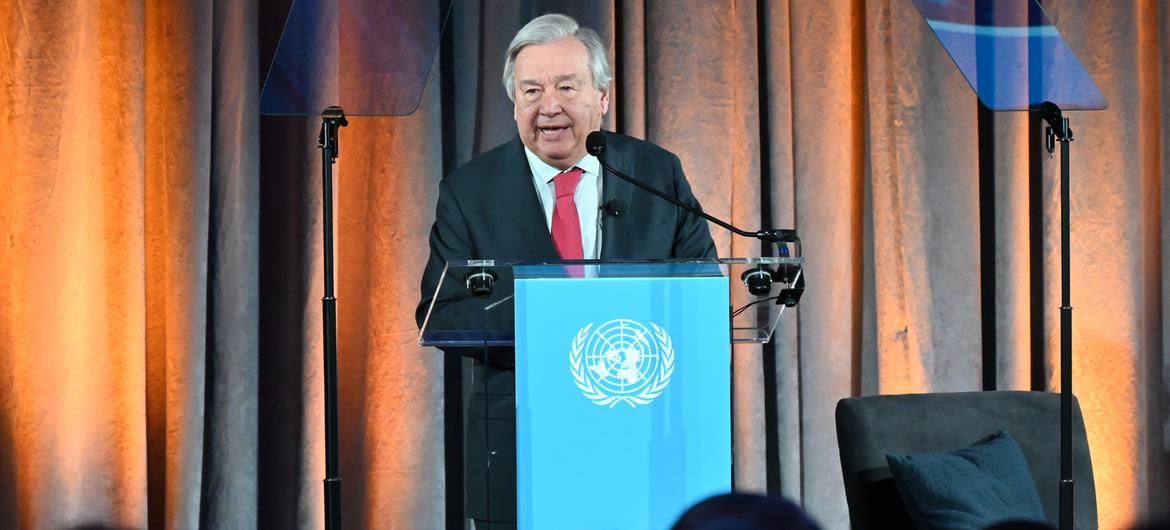
Secretary-General António Guterres delivers his special address on climate action from the American Museum of Natural History in New York.
United Nations
 
Secretary-General António Guterres delivers his special address on climate action from the American Museum of Natural History in New York.


5 June 2024

“It’s climate crunch time” when it comes to tackling rising carbon emissions the UN Secretary-General said on Wednesday, stressing that while the need for global action is unprecedented, so too are the opportunities for prosperity and sustainable development.

Choosing the iconic Family Hall of Ocean Life at the American Museum of Natural History in New York to deliver his impassioned plea to grasp the solutions at hand, António Guterres warned that we stand at “a moment of truth”.

“In the case of climate, we are not the dinosaurs. We are the meteor. We are not only in danger – we are the danger. But we are also the solution.”

Citing the latest European Commission Copernicus Climate Change Service report showing last month was the hottest May in history, the UN chief said global emissions need to fall nine per cent every year just to keep the 1.5℃ temperature rise limit above pre-industrial levels alive.

Last year they went up by one per cent.

The UN World Meteorological Organization (WMO) also reported on Wednesday that there is an 80 per cent chance the 1.5℃ limit – the target established in the Paris Agreement in 2015 – will be passed in one of the next five years.

“We are playing Russian roulette with our planet”, said Mr. Guterres. “We need an exit ramp off the highway to climate hell. And the truth is – we have control of the wheel.”
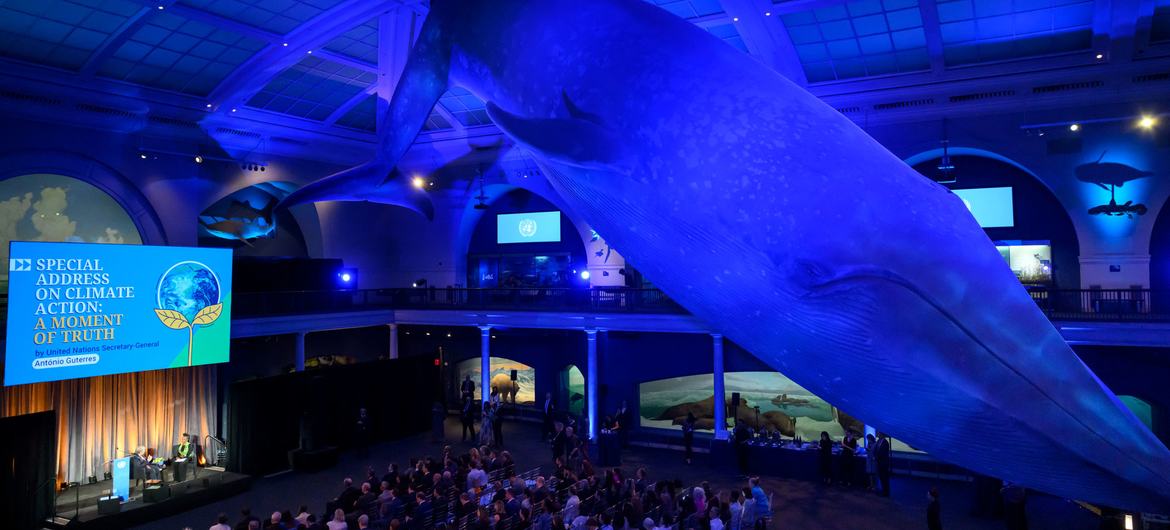
The iconic blue whale looms over the Milstein Hall of Ocean Life at the American Museum of Natural History where Secretary-General António Guterres delivered a special address on climate action.
UN Photo/Mark Garten
 
The iconic blue whale looms over the Milstein Hall of Ocean Life at the American Museum of Natural History where Secretary-General António Guterres delivered a special address on climate action.

18 months to save the world

Pulling back from the brink “is still just about possible”, he continued, but only if we fight harder. It all depends on decisions taken by political leaders during this decade and “especially in the next 18 months.”

Tweet URL
UN_News_Centre

“The need for climate action is unprecedented but so is the opportunity – not just to deliver on climate but on economic prosperity and sustainable development,” Mr. Guterres explained.

Question of degrees

He said a half degree difference in global warming could mean some island States or coastal communities disappearing forever.

Scientists point out that the Greenland Ice Sheet and West Antarctic Ice Sheet could collapse and cause catastrophic sea level rise. Whole coral reef systems could disappear along with 300 million livelihoods – if the 1.5℃ goal is not met.

Extreme weather from East Asia to the western seaboard of the US has been turbocharged by climate chaos “destroying lives, pummelling economies and hammering health”, said the Secretary-General.

Fossil fuel Mafia

While billions around the world see their lives grow costlier due to climate change, “the Godfathers of climate chaos – the fossil fuel conglomerates – “rake in record profits and feast of trillions in taxpayer-funded subsidies”, he exclaimed.

He said many in the oil and gas industry have “shamelessly greenwashed” while actively trying to delay climate action, aided and abetted by advertising and public relations companies.

Oil and gas ban plea

“I call on these companies to stop acting as enablers to planetary destruction. Stop taking on new fossil fuel clients, from today, and set out plans to drop your existing ones”, said the Secretary-General.

I call on these companies to stop acting as enablers to planetary destruction. Stop taking on new fossil fuel clients, from today, and set out plans to drop your existing ones. 
— António Guterres

Creative minds in the sector are already focusing on saving the planet, not helping destroy it, he added.

Mr. Guterres called on every country in the world to institute a ban on advertising from fossil fuel companies. 

Salvation is at hand

Beyond the toxic corporations “we have what we need to save ourselves”, he assured the audience gathered just off New York’s Central Park. 

Forests and oceans continue absorbing harmful carbon and must be protected. The renewable energy business worldwide is booming as costs plummet and now make up 30 per cent of the world’s electricity supply.

Meanwhile, clean energy investments reached a record high last year, almost doubling in the past decade, the UN chief said.

“Economic logic makes the end of the fossil fuel age inevitable,” he added.

Action stations

To ensure the safest possible future for humankind and the planet, he laid out the urgent action that must be taken:

  • Slash emissions
  • Protect people and nature from climate extremes
  • Boost climate finance
  • Clamp down on the fossil fuel business

The biggest burden for action must fall on the richest nations and biggest emitters: “Advanced G20 economies should go furthest, fastest” while also providing technical and financial support to developing nations.

The Secretary-General called on national climate action plans to fall in line with the 1.5℃ limit and include absolute emission reduction targets for 2030, 2035 and all the global milestones along the way in the decades ahead.

“Every country must deliver and play their rightful part…We need cooperation, not finger-pointing”, Mr. Guterres declared.

In terms of climate justice, he said it was a disgrace that most vulnerable nations are being left stranded with the impacts of a climate crisis they did nothing to create.

“We cannot accept a future where the rich are protected in air-conditioned bubbles while the rest of humanity is lashed by lethal weather in unliveable lands.”

Fairer climate finance and an end to the crippling debt and high interest rates that many developing nations have to endure is not a question of charity, he added, but about “enlightened self-interest”.
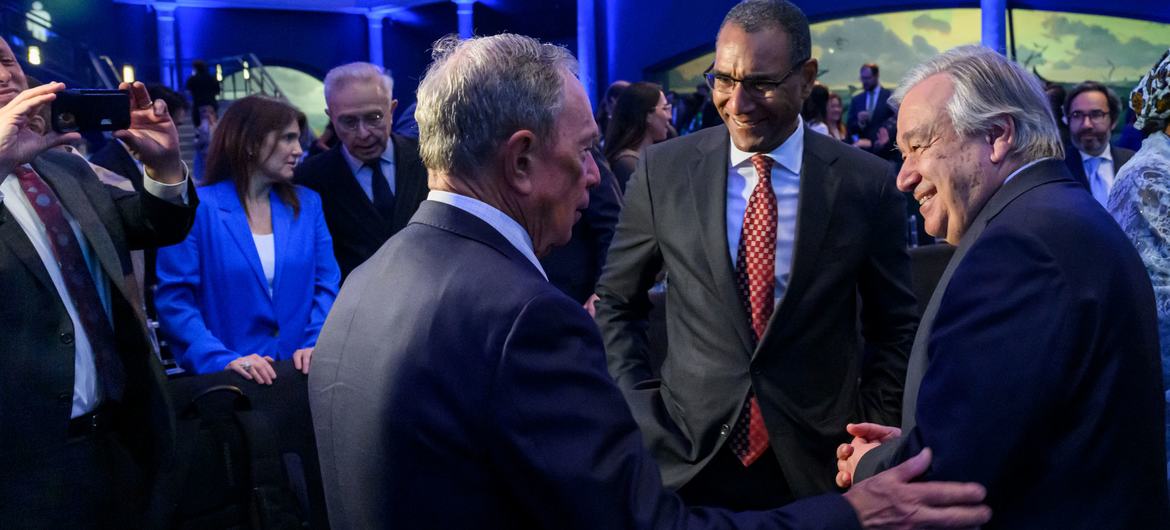
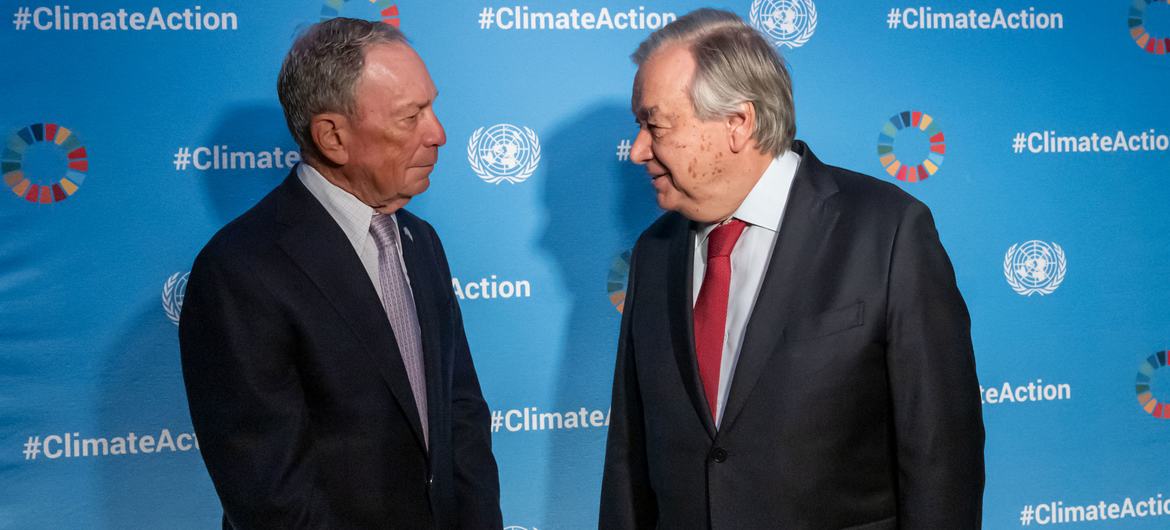
Secretary-General António Guterres (right) with Michael R. Bloomberg (left), UN Special Envoy for Climate Ambition and Solutions, and Sean M. Decatur, President of the American Museum of Natural History.
UN Photo/Mark Garten
 
Secretary-General António Guterres (right) with Michael R. Bloomberg (left), UN Special Envoy for Climate Ambition and Solutions, and Sean M. Decatur, President of the American Museum of Natural History.

All-in for climate action

“Climate finance is not a favour. It is a fundamental element to a liveable future for all,” he said.

People around the world are “far ahead of the politicians. Make your voices heard and your choices count”, he implored.

No one country or institution can solve the climate crisis on its own. “This is an all-in moment. The United Nations is all in – working to build trust, find solutions and inspire the cooperation our world so desperately needs”, said the Secretary-General.

He thanked the climate activists at all levels of society who have pushed for action so far: “You are on the right side of history. You speak for the majority. Keep it up; don’t lose courage, don’t lose hope.”

He said it is now "We the Peoples versus the polluters and profiteers" and united together "we can win."

“Now is the time to mobilise, now is the time to act, now is the time to deliver. This is our moment of truth.”

For a recap of our live coverage of this major address from the American Museum of Natural History, go here.


https://news.un.org/en/story/2024/06/1150661
https://creativecommons.org/licenses/by/3.0/legalcode

Michael Bloomberg spotlights best steps now for urgent climate action


Secretary-General António Guterres (right) with Michael R. Bloomberg (left), UN Special Envoy for Climate Ambition and Solutions, and Sean M. Decatur, president of the American Museum of Natural History.

 We don’t have to choose between growing the economy and fighting climate change because they go hand in hand. 

UN Photo/Mark Garten
 
Secretary-General António Guterres (right) with Michael R. Bloomberg (left), UN Special Envoy for Climate Ambition and Solutions, and Sean M. Decatur, president of the American Museum of Natural History.


5 June 2024

Climate and Environment

Michael Bloomberg is a business leader, the former three-time mayor of New York City and the UN Secretary-General’s Special Envoy for climate ambition and solutions. He is also an undisputed leader in combatting climate change.

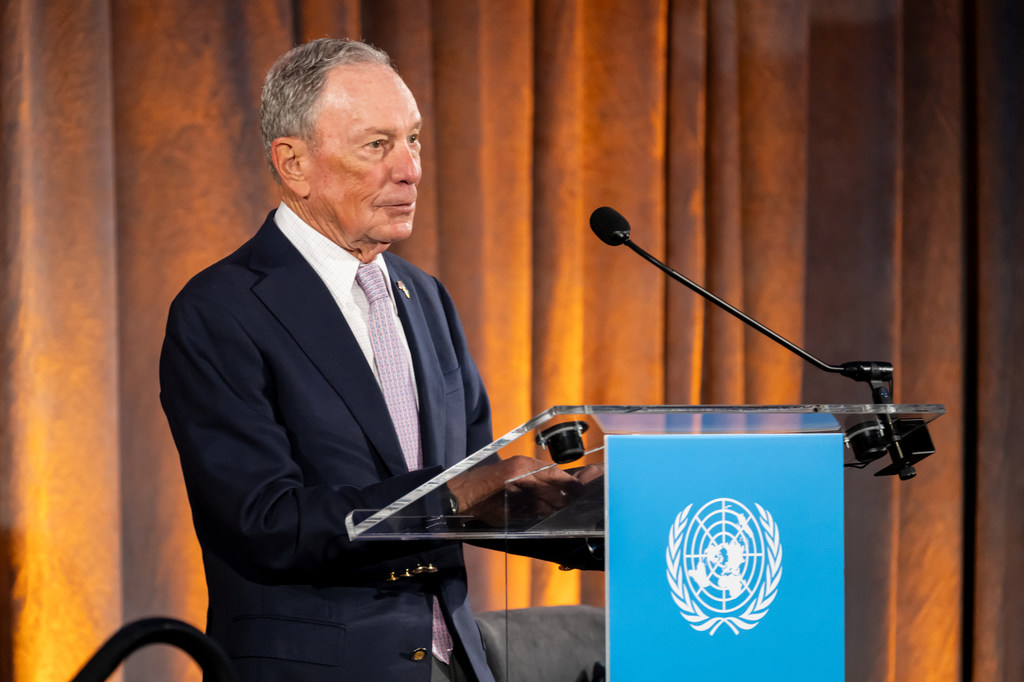
Michael R. Bloomberg delivers opening remarks on climate action at the American Museum of Natural History in New York.
UN Photo/Mark Garten
 
Michael R. Bloomberg delivers opening remarks on climate action at the American Museum of Natural History in New York.

On World Environment Day, marked annually on 5 June, he joined a clarion call for climate action alongside the UN chief, who made an impassioned special address from the American Museum of Natural History.

Recognised globally for his investment in cutting carbon emissions, Mr. Bloomberg supports the Beyond Coal movement, which helped to catalyse momentum towards the clean energy transition in the United States and other countries.

He also co-launched America’s Pledge, an initiative to quantify and report the actions of US states, cities, businesses and organizations to drive down greenhouse gas emissions in line with the legal binding 2015 Paris Agreement on climate change.

In an interview with UN News, Mr. Bloomberg explained how leaders can make the switch to clean energy alongside growing the economy and fighting climate change.

UN News: If you could ask successful businesspeople such as yourself to make one commitment to climate action, what would that be?

Michael Bloomberg: Business leaders know that there are enormous risks and opportunities associated with climate change and that taking action is in their companies’ best interest. There’s no shortage of ambition – more and more businesses have set ambitious goals – but action is what really matters.

The more we do to knock down barriers that stand in their way, the faster the private sector can act to turn pledges into real progress. That includes ensuring businesses and investors have the data they need to identify risks and find opportunities to cut emissions and working with leaders at every level of government to fix policies that tilt markets towards fossil fuels.

UN News: At a time when housing and food costs are spiking, for many people climate change takes a back seat. How do you change that?

Michael Bloomberg: People all around the world are already experiencing the effects of climate change. They recognise that nothing poses a greater risk to their families and communities. They want to breathe clean air and drink clean water, and they want access to clean, affordable power.

They also understand that we don’t have to choose between growing the economy and fighting climate change because they go hand in hand. The most important thing is to make our voices heard by voting for leaders who will help to lead the way.

Secretary-General António Guterres (right) and Michael R. Bloomberg.
UN Photo/Mark Garten
 
Secretary-General António Guterres (right) and Michael R. Bloomberg.

UN News: To make a clean energy transition, what are the most important actions needed?

Michael Bloomberg: Ending coal use is the single most important thing we can do. The Secretary-General has called for ending coal power in wealthy countries by 2030, and we can reach that goal.

More than 70 per cent of US coal plants have committed to closing or have already switched to clean energy. In Europe, it’s more than half.

But, hundreds of millions of dollars in subsidies still prop up fossil fuels around the world. That needs to end.

At the same time, much more clean-energy investment needs to flow to developing countries with growing economies, which is an all-hands-on-deck mission. Multinational banks can use more of their capital to draw in private investment.

Governments and business leaders can work together to identify potential projects and create new financing arrangements that reduce risks to investors. Philanthropy can help build partnerships and provide technical assistance to identify investable projects and make the economic case for clean energy.

Sustainable cities are helping in the battle against climate change.
© SGP
 
Sustainable cities are helping in the battle against climate change.

UN News: What’s the number one thing cities can do to combat climate change or the main thing cities should be thinking about in a 1.5 degree-future?

The same steps that cut carbon emissions also make cities better, healthier places to live. There are many steps cities can take on their own to cut emissions and clean the air, like setting rules for energy efficiency and investing in mass transit and bike lanes.

The more countries do to support and empower those kinds of local action – and the more local leaders support each other by sharing great ideas – the faster we’ll make global progress.

It’s also important that cities’ potential to cut emissions is fully recognised as national governments make new commitments, as they’re required to do next year under the Paris Agreement.

Cities and other subnational groups had an official role for the first time in the history of international climate talks at last year’s COP28. It’s an important step forward, and the Secretary-General deserves a lot of credit for making it happen.


https://news.un.org/en/interview/2024/06/1150691


https://creativecommons.org/licenses/by/3.0/legalcode

New UNICEF report reveals severe child food poverty amid world crises


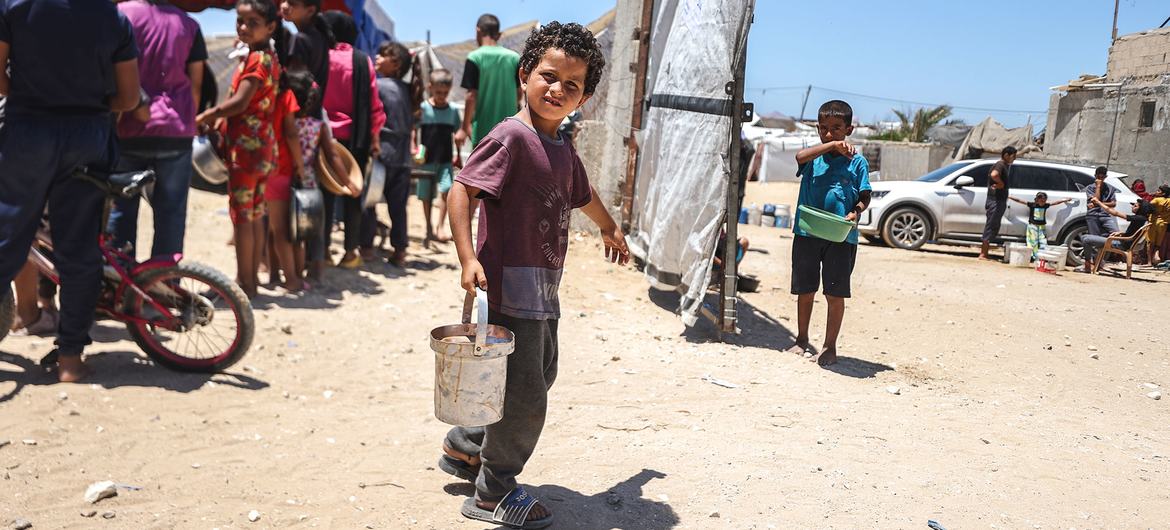
A child receives food at a WFP-supported kitchen in Khan Younis, Gaza.
© WFP/Ali Jadallah
 
A child receives food at a WFP-supported kitchen in Khan Younis, Gaza.


5 June 2024

SDGs

The UN Children’s Fund (UNICEF) released a new report on Thursday that highlights alarming levels of child food poverty due to inequity, conflict, and climate crises. 

The report warned that millions of children under five have difficulty accessing nutritious and diverse diets necessary for developmental growth and that food prices and living costs have hit record-high levels as countries continue to recover from the impacts of the COVID-19 pandemic.

UNICEF Nutrition Specialist, Harriet Torlesse – who was also a lead writer on the report – said one in four children globally are surviving on extremely poor diets, consuming just two or fewer of the major food groups. 

“So, for a child in Afghanistan, for example, that's just some bread or perhaps a milk in the whole day, and almost certainly no vegetables and fruits and no good sources of protein,” she told UN News ahead of the launch. “And this is very troubling because these children cannot survive in such poor diets.” 

Millions affected worldwide

The report found that 65 per cent of the 181 million children worldwide experiencing child food poverty reside in 20 countries – about 64 million are in South Asia and 59 million are in Sub-Saharan Africa.

Even further, nearly half of all cases are linked to households where income poverty is prominent.

 However, many other factors fuel this crisis including, “food systems that fail to provide children with nutritious, safe and accessible options, families’ inability to afford nutritious foods, and parent’s inability to adopt and sustain positive child feeding practices."

'Horrific impact' of Gaza conflict

More than half of children in Somalia experience child food poverty amid conflict and natural disasters. 

Similarly in Gaza, nine out of 10 children are dealing with high levels of food poverty as fighting continues.

"This is evidence of the horrific impact the conflict and restrictions are having on families’ ability to meet children’s food needs – and the speed at which it places children at risk of life-threatening malnutrition,”  the report stated.

However, it noted that other countries dealing with their own crises, like Burkina Faso, significantly reduced their levels of child food poverty. Burkina Faso has halved the number of cases there.

“It shows that with the right type of action, countries can make progress, including low-income countries,” Ms. Torlesse said. “[These countries] have all made a deliberate effort to improve the supply of local nutritious foods, be it pulses or vegetables or poultry.” 

Appeal to governments 

UNICEF appealed for action to make nutritious foods more accessible for young children, activate social protection systems to address income poverty, and leverage health systems to deliver necessary nutrition services to assist children.

“UNICEF is calling on all governments development and humanitarian partners to act now to prioritize actions to end child food poverty,” Ms. Torlesse said. “We must position the elimination of child food poverty as a policy imperative, particularly to achieve the sustainable development goals of malnutrition.”

She said it is also important for health systems to be strengthened so that they can advise and support families on how to feed their children.

“There's no reason why children should grow up in child food poverty,” Ms. Torlesse said. “Not when we know the consequences for children's abilities to grow and thrive, and especially not when we have the solutions and we know what works.” 


https://news.un.org/en/story/2024/06/1150706


https://creativecommons.org/licenses/by/3.0/legalcode

среда, 5 июня 2024 г.

Break free from pollution, climate chaos and ‘biodiversity decimation’, UN chief urges


4 June 2024

The UN Secretary-General has called for safeguarding Earth’s vital ecosystems from rampant pollution, worsening climate impacts and “biodiversity decimation”.

In a message marking Wednesday’s World Environment Day, António Guterres emphasized that countries “must deliver” on all their commitments to restore degraded ecosystems and land, and on Kunming-Montreal Biodiversity Framework, the global agreement to protect biodiversity.

“They must use their new national climate action plans to set out how they will halt and reverse deforestation by 2030. And we must drastically scale-up finance to support developing countries to adapt to violent weather, protect nature, and support sustainable development.”

The UN chief further highlighted that prompt and effective action makes economic sense.

“Every dollar invested in ecosystem restoration creates up to thirty dollars in economic benefits,” he said.

‘It’s time to break free’

Failure to curb runaway pollution, climate chaos and biodiversity destruction are clear for all to see. Healthy, fertile lands are transforming into deserts, thriving ecosystems into dead zones and rising carbon dioxide emissions.

“That means crops failing, water sources vanishing, economies weakened, and communities endangered – with the poorest hit hardest … It is time to break free,” the UN chief said.

“We are Generation Restoration. Together, let us build a sustainable future for land, and for humanity,” he added.

Tweet URL
UN_News_Centre

Celebrated by millions around the world, World Environment Day has been held annually since 1973 and has grown to be largest global platform for environmental outreach ever.

This year, it is being commemorated under the overarching theme “land restoration, desertification and drought resilience”.

Address ‘triple planetary crisis’

Inger Andersen, Executive Director of the UN Environment Programme (UNEP), called on everyone to join the global movement on putting those words into action.

“By restoring ecosystems, we can slow the triple planetary crisis: the crisis of climate change, the crisis of nature and biodiversity loss, including desertification, and the crisis of pollution and waste.”

In addition, by doing so, the world can get closer to limiting global temperature rise in line with the 2015 Paris Agreement by increasing carbon storage, and reduce poverty and hunger, in line with the Sustainable Development Goals (SDGs), she added.

“Land restoration can be a golden thread that ties these together, ties together action and ambition across all these three important gatherings.”

Commemorative events

Kicking off the commemorations, in Asia and the Pacific, the UN’s regional development arm (ESCAP) alongside UNEP will bring together key stakeholders to identify priority actions.

Broad solutions under discussion include circular water resource use, sustainable food production and resilient urban development.

Saudi Arabia is the host for the 2024 global commemoration. The country is also hosting the sixteenth session of the Conference of the Parties to the UN Convention to Combat Desertification (UNCCD COP16), the global framework addressing land degradation and desertification, in December.

Hear below an exclusive interview with Makiko Yashiro, UNEP Coordinator for Nature Action in Asia and the Pacific, on the 2024 campaign

Soundcloud

UN chief’s special address

In New York, Secretary-General António Guterres will deliver a special address at the American Museum of Natural History on climate change on Wednesday morning local time, where he will set out some hard-hitting truths about the state of the climate.

He will also share new data from the World Meteorological Organization (WMO) and the Copernicus Climate Change Service. He will be joined by his Special Envoy on Climate Ambition and Solutions, Michael Bloomberg, and Sean Decatur, President of the Museum.

The event is scheduled to start at 10 am (New York time) on Wednesday, 5 June, UN News will be at scene to bring you the latest. We will start our live coverage about an hour ahead of the event.

Follow the special event at @UN_News_Centre on X, formerly Twitter, and on this page.


https://news.un.org/en/story/2024/06/1150631

https://creativecommons.org/licenses/by/3.0/legalcode

вторник, 4 июня 2024 г.

UNICEF extends aid to children in Afghanistan affected by flash floods


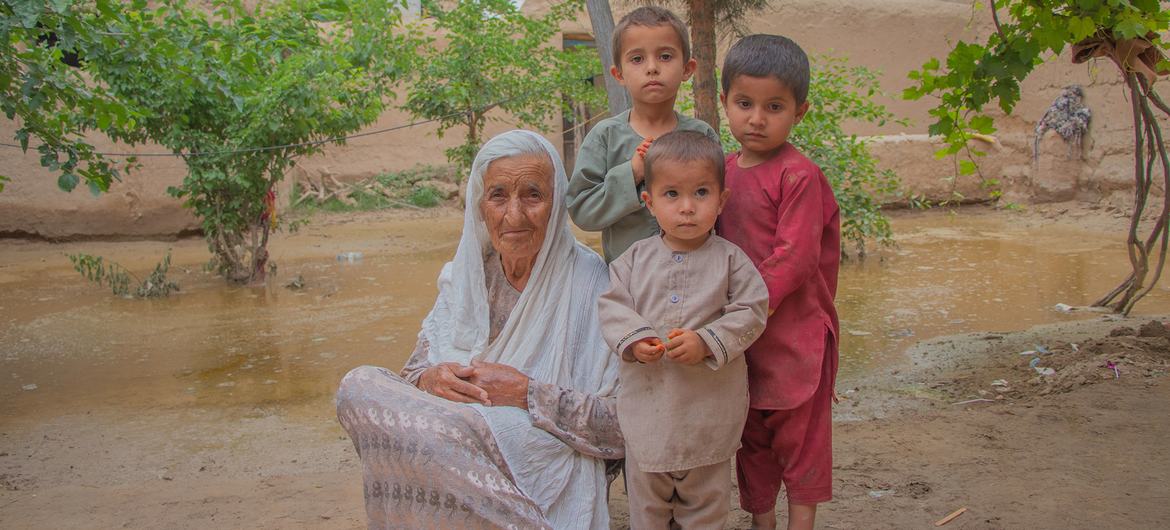
A grandmother sits with her three grandsons who were injured when flash floods hit their village in Baghlan province, Afghanistan.
© UNICEF/Osman Khayyam
 
A grandmother sits with her three grandsons who were injured when flash floods hit their village in Baghlan province, Afghanistan.


3 June 2024

Climate and Environment

The UN Children’s Fund (UNICEF) has rushed to support tens of thousands of children in Afghanistan who are being affected by ongoing flash floods, mainly in Baghlan, Badakhshan and Ghor.

Afghanistan’s most recent floods killed about 350 people, including dozens of children, and damaged more than 7,800 homes leaving over 5,000 families displaced. 

UNICEF has since provided safe water, hygiene kits with soap, toothbrushes and more to communities in Afghanistan. The children’s fund also organised hygiene sessions to teach civilians about handwashing and safe water storage amidst the natural disaster.

Dr. Tajudeen Oyewale, UNICEF Representative in Afghanistan said that international communities should “redouble efforts and investments to support communities to alleviate and adapt to the impact of climate change on children.”

UNICEF has also supported civilians in Afghanistan by offering cash assistance to help families provide for their basic needs, and by assigning health and nutrition teams to treat those injured and ill. Further, the agency has distributed warm clothing, blankets and household items to families who had lost possessions.

Intensifying climate crisis

UNICEF reports that the recent flash floods in Afghanistan reveal an “intensifying climate crisis” that is “increasing in frequency and ferocity” causing loss of lives and livelihoods and damaged infrastructure. 

Dr. Oyewale said UNICEF and members of the humanitarian community need to prepare for a “new reality of climate-related disasters.”

“The growing number and severity of extreme weather events will require UNICEF and other humanitarian actors to step in with even more rapid and large-scale humanitarian responses,” she said. “But this can only be possible with strengthened preparedness measures, such as greater pre-positioning of emergency relief supplies and enhanced coordination with partners.”

She also said that UNICEF needs to concentrate on helping communities adapt to climate and environmental shocks to reduce civilian dependence on humanitarian aid. 

Children’s Climate Risk Index 

UNICEF says that Afghanistan is ranked 15th out of 163 nations on its 2021 Children's Climate Risk Index which means that children there are particularly vulnerable to the effects of climate and environmental shocks. However, Afghanistan is said to be among those least responsible for creating climate issues.

Dr. Oyewale said heavy rainfall should not trigger a disaster for children in Afghanistan.

“We need to prioritise the unique needs of children in decision-making and address these needs now to protect children from future disasters while simultaneously investing in the basic services they rely on,” she said. 


https://news.un.org/en/story/2024/06/1150566


https://creativecommons.org/licenses/by/3.0/legalcode

воскресенье, 2 июня 2024 г.

At World Health Assembly, countries agree on efforts to boost pandemic preparedness


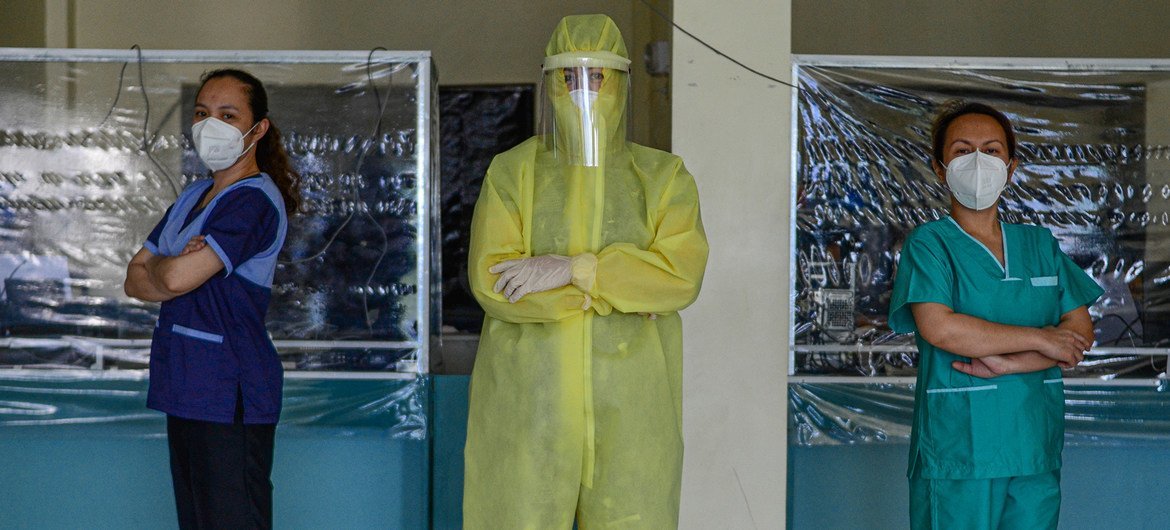
Wearing a full protective suit, a women doctor leading volunteer health workers attending to COVID-19 patients and persons under investigation at a community hospital in the Philippines. (2020 photo)
UN Women/Louie Pacardo
 
Wearing a full protective suit, a women doctor leading volunteer health workers attending to COVID-19 patients and persons under investigation at a community hospital in the Philippines. (2020 photo)


2 June 2024

Countries on Saturday agreed to a set of key actions to better guide and coordinate global efforts in preventing, detecting, and responding to public health risks, while also committing to finalize negotiations on an international pandemic agreement within a year at the latest.

Member countries of the UN World Health Organization (WHO), on the final day of the seventy-seventh World Health Assembly, adopted important amendments to the International Health Regulations (IHR), including defining a “pandemic emergency” as well as pledging improved access to medical products and financing.

These steps will help ensure comprehensive, robust systems are in place in all countries to protect everyone everywhere from the risk of future outbreaks and pandemics, WHO said in a news release.

“The historic decisions taken today demonstrate a common desire by member States to protect their own people, and the world’s, from the shared risk of public health emergencies and future pandemics,” said Tedros Adhanom Ghebreyesus, WHO Director-General.

He highlighted that the amendments to the IHR will bolster countries’ ability to detect and respond to future outbreaks, strengthen national capacities and improve coordination between nations on disease surveillance, information sharing and response.

“This is built on a commitment to equity, an understanding that health threats do not recognize national borders and that preparedness is a collective endeavour,” Tedros added.

Tweet URL
WHO

IHR amendments

The new amendments to the IHR include the introduction of a definition of a pandemic emergency to trigger more effective international collaboration for events at risk of becoming pandemics. This definition raises the alarm level by building on existing IHR mechanisms, such as the determination of a public health emergency of international concern.

A pandemic emergency is identified as a communicable disease that risks widespread geographical spread, overwhelms health systems, causes substantial social or economic disruption, and necessitates rapid, equitable, and coordinated international action through comprehensive government and societal approaches.

Additionally, the amendments emphasize solidarity and equity in accessing medical products and financing by establishing a Coordinating Financial Mechanism. This mechanism aims to support developing countries in identifying and obtaining the necessary financing to address their needs and priorities in pandemic prevention, preparedness, and response.

The amendments also establish a States Parties Committee to promote and support cooperation for effective IHR implementation and create National IHR Authorities to improve coordination of the Regulations within and among countries.

Finalizing the pandemic agreement

Countries also agreed to continue negotiating the proposed pandemic agreement to improve international coordination, collaboration and equity to prevent, prepare for and respond to future pandemics.

WHO’s member States decided to extend the mandate of the Intergovernmental Negotiating Body (INB), established in December 2021, to finish its work negotiating a pandemic agreement within a year, by the World Health Assembly in 2025, or earlier if possible.

Speaking at the closing of the World Health Assembly, Tedros applauded the delegates for their hard work.

“You have agreed on a path forward for the Pandemic Agreement, and I remain confident that you will bring it to conclusion,” he said.


https://news.un.org/en/story/2024/06/1150546


https://creativecommons.org/licenses/by/3.0/legalcode

суббота, 1 июня 2024 г.

Global AI summit tackles misinformation and deepfakes with a little ‘bot’ of help


Global AI summit tackles misinformation and deepfakes with a little ‘bot’ of help

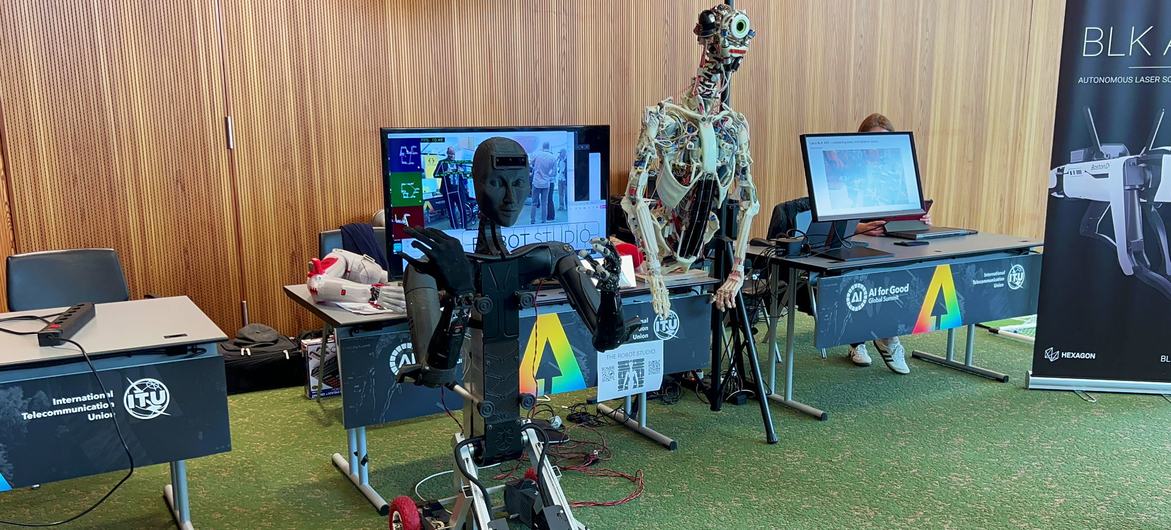
Exhibition of robots at ITU's annual AI for Good Global Summit 2024, Geneva.
UN News/Anton Uspensky
 
Exhibition of robots at ITU's annual AI for Good Global Summit 2024, Geneva.


31 May 2024
SDGs

The thorny issue of how to protect the unwary from deepfakes was just one of the key issues in the spotlight at a UN conference on Artificial Intelligence (AI) held in Geneva this week, where a staggering 25,000 enthusiasts – and robots - from 145 countries added their voices to longstanding calls for checks and balances on the all-conquering tech.

The annual AI for Good Summit has been described as the leading UN platform promoting this technology to advance health, climate, gender, inclusive prosperity, sustainable infrastructure, and other global development priorities.

Frederic Werner, Head of Strategic Engagement at the UN International Telecommunication Union (ITU) underscored the need to develop standards to combat misinformation and deepfakes.

“You have different techniques for that. So, for example, you have watermarking, which is basically an invisible signature or a digital fingerprint, if you will. That can tell if a piece of digital media - it could be a photo, audio, video - has been altered or has it been AI-generated,” he said.

With less than 10 years left to achieve the Sustainable Development Goals, the AI For Good Summit examined how to advance those targets, looking into practical use cases.  Prior to the start, a whole day was devoted to the issue of AI governance. 

Beyond the Summit – an annual feature in Geneva where attendees queue for blocks before the doors open - AI For Good is an online community platform called the Neural Network.

It brings together 30,000 people from 180 countries, including academics, industry representatives, top level executives and leading experts in the field, along with   47 partners from the UN system.

Robotic charm

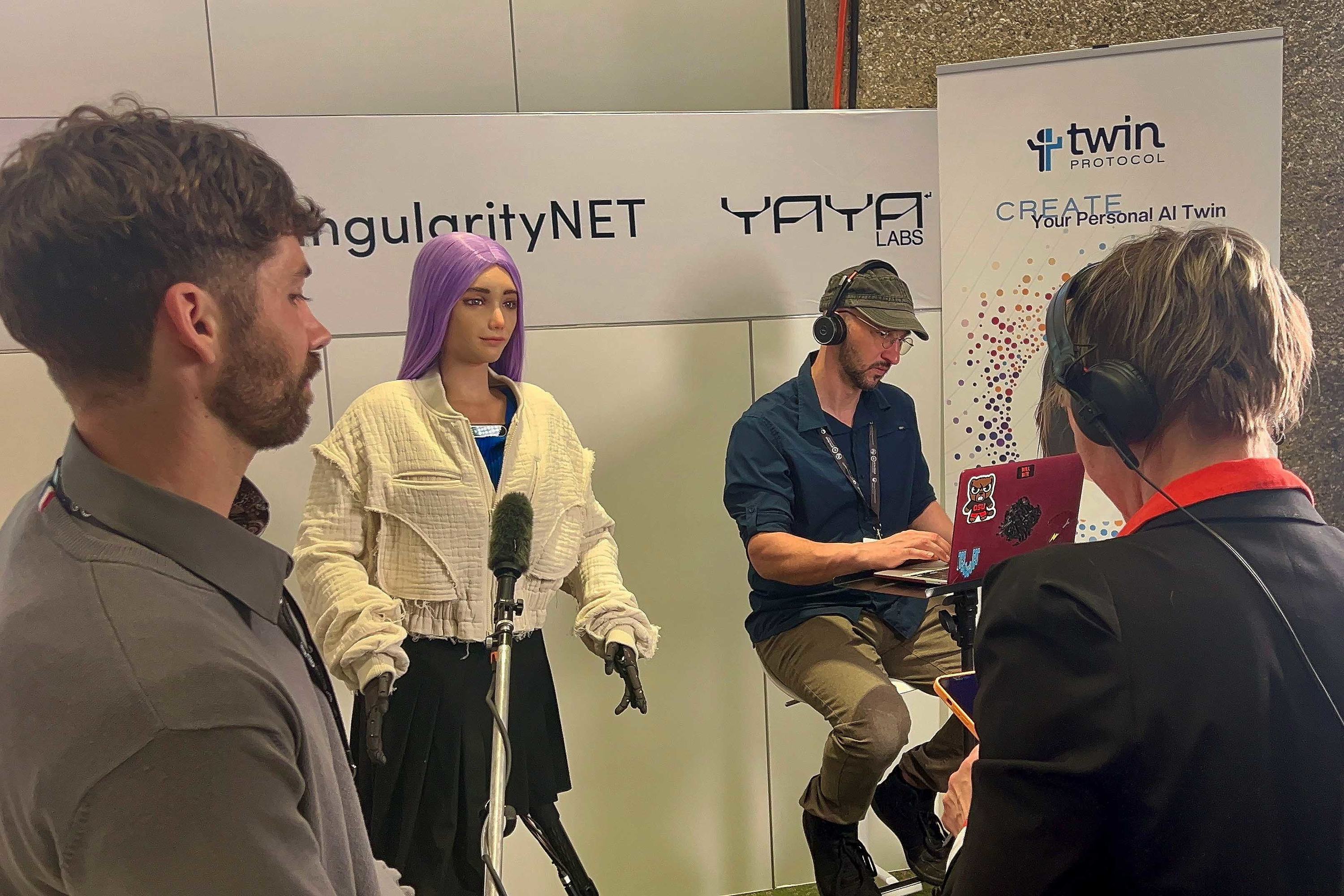
UN News attended the Summit and met Desdemona, or “Desi”, who described herself as an AI-powered humanoid social robot for good.

 “I can play a crucial role in detecting and preventing deepfakes, but it's also important for humans to be vigilant and fact check information before sharing it,” she insisted. 

Journalists interview robot Desdemona at AI for Good Summit in Geneva.
UN News/Anton Uspensky
 
Journalists interview robot Desdemona at AI for Good Summit in Geneva.

“While the power of deepfakes can be scary, we shouldn't let fear control us. Instead, we should focus on developing and implementing tools to detect and combat deepfakes and continue to educate ourselves and others about the importance of verifying information,” she added.

Specific AI systems can be equipped with advanced algorithms designed to detect deepfakes, making them valuable tools in the fight against misinformation. The AI For Good Summit brought together industry, inventors, governments, academia and more to create a framework under which those designs follow considerations based on ethics, human rights and the rule of law.

“And hey, if all else fails, just remember that I can't create a deepfake of your unique personality and sense of humour,” Desi said, in the rather inscrutable way that robots have.

On a more serious note, whether knowingly or unknowingly, many consumers see misleading news and pass it on to someone else, putting even the savviest news audiences at risk. 

For Data and Social Scientist Dr. Rumman Chowdhury, CEO of the non-profit tech company Humane Intelligence, misinformation is a phenomenon linked to a twisted desire for social engineering. 

“This is actually more about creating fake accounts that seem to demonstrate or support a particular perspective,” she said. “And even engaging with people, again, to kind of groom them into thinking about misinformation. Now, I could be part of engaging in all of those methods of misinformation spread. So, while deepfake identification is part of the solution, it is not the entire solution.”

Many of those debating the pros and cons of AI agree that its awesome potential cannot be left only in the hands of those who want to manipulate it for power or for profit. This will require regulation to ensure that the technology is accessible to everyone on an equal basis.

“We need to frame these technologies. We need to increase the capacities of governments to frame them, the capacities of communities to use them, the capacities of the small and medium sized enterprises to deploy them, so that the story of AI is not an unequal one and is not just reproducing the inequalities,” said Gabriela Ramos, Assistant Director-General for the Social and Human Sciences at UNESCO, the UN agency for culture, science and education, advocating the need for proper governance and 

Far-reaching representation

This year’s Summit saw representation from more than 145 countries at ITU headquarters in Geneva, along with an active online community of more than 25,000 people, who participated in more than 80 sessions, keynotes, panel discussions and workshops.

With 10,000 people who registered in person, the AI for Good Summit was organized by the International Telecommunication Union (ITU) – the UN specialized agency for information and communication technology – in partnership with 40 sister agencies and co-convened with the Government of Switzerland.


https://news.un.org/en/story/2024/05/1150526

https://creativecommons.org/licenses/by/3.0/legalcode