Избранное сообщение

Показаны сообщения с ярлыком Climate action. Показать все сообщения

четверг, 20 июня 2024 г.

Global survey reveals ‘truly astonishing’ consensus for stronger climate action


People in polluted places like Hanoi, Viet Nam, are calling for greater action by governments to tackle climate change.
© UNICEF/Pham Ha Duy Linh
 
People in polluted places like Hanoi, Viet Nam, are calling for greater action by governments to tackle climate change.


20 June 2024
Climate and Environment

The overwhelming majority of people around the world want an end to geopolitical differences when it comes to fighting climate change, the results of a landmark public opinion poll conducted by the UN Development Programme (UNDP) has shown.

Peoples’ Climate Vote 2024, the biggest ever standalone public opinion survey on climate change, also showed that 80 per cent of the respondents support more ambitious climate action.

“The Peoples’ Climate Vote is loud and clear,” said UNDP Administrator Achim Steiner.  

“Global citizens want their leaders to transcend their differences, to act now and to act boldly to fight the climate crisis.”

The second edition of the survey polled communities around the world on how nations are tackling climate change that is triggering extreme weather, flooding, and temperature spikes across the planet, affecting countries large and small.

Tweet URL
UNDP

‘Truly astonishing’ consensus

The UNDP chief said the survey results “reveal a level of consensus that is truly astonishing”.

“We urge leaders and policymakers to take note, especially as countries develop their next round of climate action pledges – or ‘nationally determined contributions (NDCs)’ under the Paris Agreement,” Mr. Steiner said.  

“This is an issue that almost everyone, everywhere can agree on.”

Quick transition to clean energy

Conducted with Oxford University and GeoPoll, the survey polled more than 75,000 people speaking 87 different languages across 77 countries with 15 questions on climate change.

The results offer a country-by-country snapshot of where the world’s citizens stand, including on moving towards sustainability.

A majority of people in 62 of the 77 countries surveyed said they supported a quick transition away from fossil fuels to clean energy.

Climate anxiety

People across the world also reported that climate change was on their minds.

Globally, 56 per cent said they were thinking about it daily or weekly, including some 63 per cent of those from least developed countries (LDCs).

More than half of people globally said they were more worried than last year about climate change.  

The corresponding figure was 59 per cent in LDCs, and up to 71 per cent across nine small island developing States (SIDS) expressed the same sentiment.

A total of 69 per cent of people surveyed said their big decisions like where to live or work were being impacted by climate change, with varied results across regions, from 74 per cent in least developed countries to 52 per cent in western and northern Europe and 42 per cent in North America.

The message is clear

At the global launch at UN Headquarters, in New York, Cassie Flynn, UNDP Global Director for Climate Change, said “the message is clear”, explaining what’s to come.

“As we move forward is to bring the voice of the people to the debate [on climate change],” she said.

“The next two years stand as one of the best chances we have as the international community to ensure that warming stays under 1.5°,” she said. “We stand ready to support policymakers in stepping up their efforts as they develop their climate action plans through our Climate Promise initiative.”

The first Peoples’ Climate Vote took place in 2021 and surveyed people across 50 countries through advertisements in popular mobile gaming apps. Click here for the results of that survey.

Launch of the results of UNDP’s Peoples’ Climate Vote 2024

https://news.un.org/en/story/2024/06/1151271
https://creativecommons.org/licenses/by/4.0/legalcode

четверг, 6 июня 2024 г.

Michael Bloomberg spotlights best steps now for urgent climate action


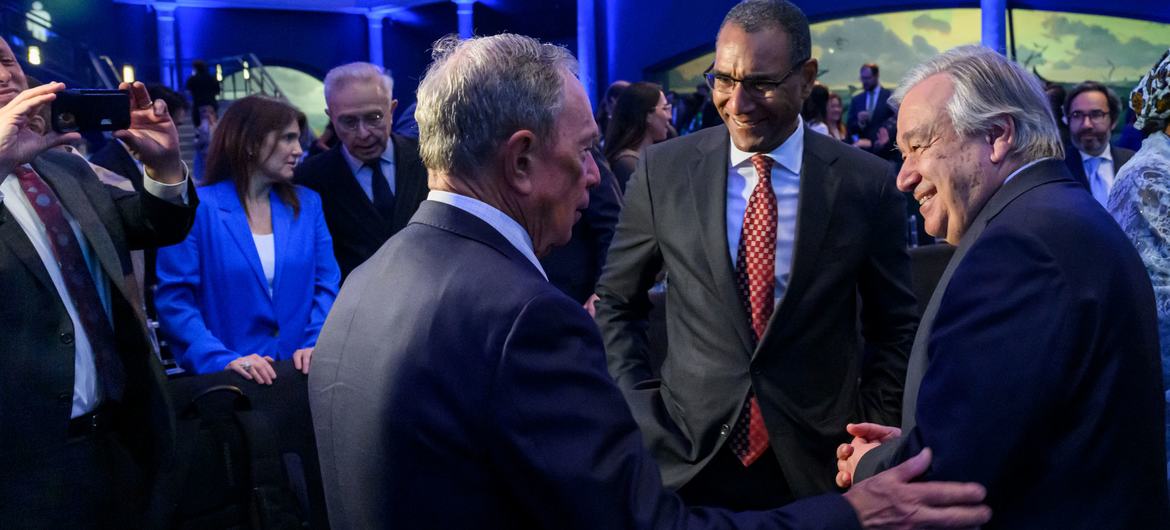
Secretary-General António Guterres (right) with Michael R. Bloomberg (left), UN Special Envoy for Climate Ambition and Solutions, and Sean M. Decatur, president of the American Museum of Natural History.

 We don’t have to choose between growing the economy and fighting climate change because they go hand in hand. 

UN Photo/Mark Garten
 
Secretary-General António Guterres (right) with Michael R. Bloomberg (left), UN Special Envoy for Climate Ambition and Solutions, and Sean M. Decatur, president of the American Museum of Natural History.


5 June 2024

Climate and Environment

Michael Bloomberg is a business leader, the former three-time mayor of New York City and the UN Secretary-General’s Special Envoy for climate ambition and solutions. He is also an undisputed leader in combatting climate change.

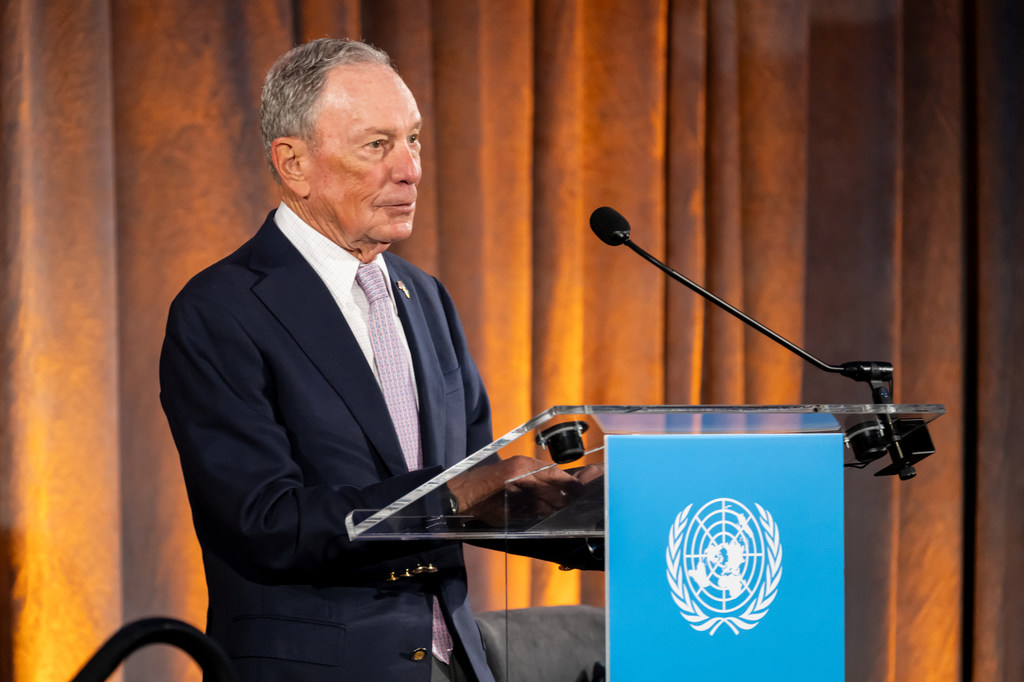
Michael R. Bloomberg delivers opening remarks on climate action at the American Museum of Natural History in New York.
UN Photo/Mark Garten
 
Michael R. Bloomberg delivers opening remarks on climate action at the American Museum of Natural History in New York.

On World Environment Day, marked annually on 5 June, he joined a clarion call for climate action alongside the UN chief, who made an impassioned special address from the American Museum of Natural History.

Recognised globally for his investment in cutting carbon emissions, Mr. Bloomberg supports the Beyond Coal movement, which helped to catalyse momentum towards the clean energy transition in the United States and other countries.

He also co-launched America’s Pledge, an initiative to quantify and report the actions of US states, cities, businesses and organizations to drive down greenhouse gas emissions in line with the legal binding 2015 Paris Agreement on climate change.

In an interview with UN News, Mr. Bloomberg explained how leaders can make the switch to clean energy alongside growing the economy and fighting climate change.

UN News: If you could ask successful businesspeople such as yourself to make one commitment to climate action, what would that be?

Michael Bloomberg: Business leaders know that there are enormous risks and opportunities associated with climate change and that taking action is in their companies’ best interest. There’s no shortage of ambition – more and more businesses have set ambitious goals – but action is what really matters.

The more we do to knock down barriers that stand in their way, the faster the private sector can act to turn pledges into real progress. That includes ensuring businesses and investors have the data they need to identify risks and find opportunities to cut emissions and working with leaders at every level of government to fix policies that tilt markets towards fossil fuels.

UN News: At a time when housing and food costs are spiking, for many people climate change takes a back seat. How do you change that?

Michael Bloomberg: People all around the world are already experiencing the effects of climate change. They recognise that nothing poses a greater risk to their families and communities. They want to breathe clean air and drink clean water, and they want access to clean, affordable power.

They also understand that we don’t have to choose between growing the economy and fighting climate change because they go hand in hand. The most important thing is to make our voices heard by voting for leaders who will help to lead the way.

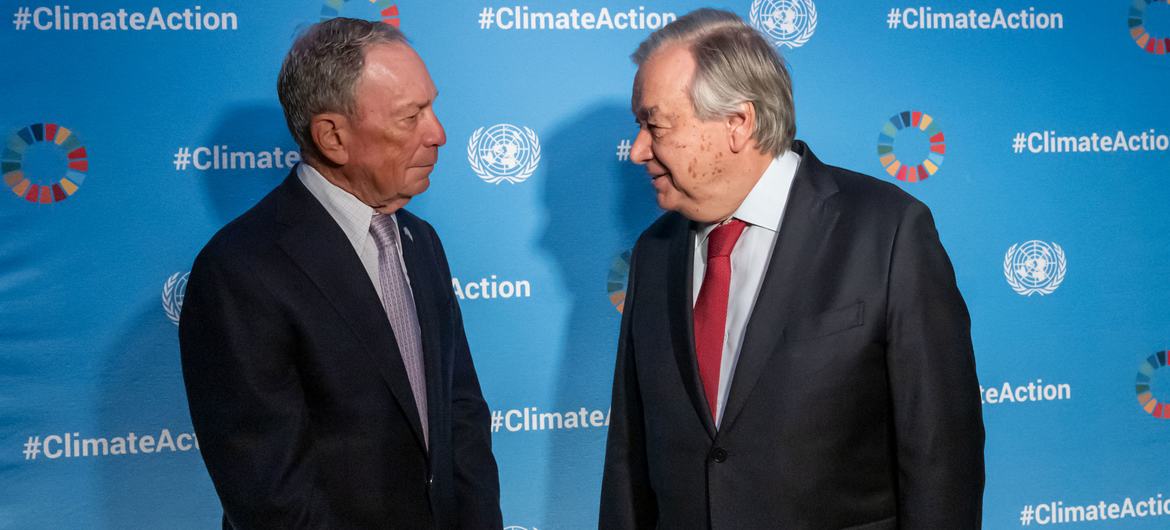
Secretary-General António Guterres (right) and Michael R. Bloomberg.
UN Photo/Mark Garten
 
Secretary-General António Guterres (right) and Michael R. Bloomberg.

UN News: To make a clean energy transition, what are the most important actions needed?

Michael Bloomberg: Ending coal use is the single most important thing we can do. The Secretary-General has called for ending coal power in wealthy countries by 2030, and we can reach that goal.

More than 70 per cent of US coal plants have committed to closing or have already switched to clean energy. In Europe, it’s more than half.

But, hundreds of millions of dollars in subsidies still prop up fossil fuels around the world. That needs to end.

At the same time, much more clean-energy investment needs to flow to developing countries with growing economies, which is an all-hands-on-deck mission. Multinational banks can use more of their capital to draw in private investment.

Governments and business leaders can work together to identify potential projects and create new financing arrangements that reduce risks to investors. Philanthropy can help build partnerships and provide technical assistance to identify investable projects and make the economic case for clean energy.

Sustainable cities are helping in the battle against climate change.
© SGP
 
Sustainable cities are helping in the battle against climate change.

UN News: What’s the number one thing cities can do to combat climate change or the main thing cities should be thinking about in a 1.5 degree-future?

The same steps that cut carbon emissions also make cities better, healthier places to live. There are many steps cities can take on their own to cut emissions and clean the air, like setting rules for energy efficiency and investing in mass transit and bike lanes.

The more countries do to support and empower those kinds of local action – and the more local leaders support each other by sharing great ideas – the faster we’ll make global progress.

It’s also important that cities’ potential to cut emissions is fully recognised as national governments make new commitments, as they’re required to do next year under the Paris Agreement.

Cities and other subnational groups had an official role for the first time in the history of international climate talks at last year’s COP28. It’s an important step forward, and the Secretary-General deserves a lot of credit for making it happen.


https://news.un.org/en/interview/2024/06/1150691


https://creativecommons.org/licenses/by/3.0/legalcode

пятница, 26 апреля 2024 г.

Climate action ‘cannot trample over the poor’ says Guterres, launching new initiative to protect key minerals for clean energy transition


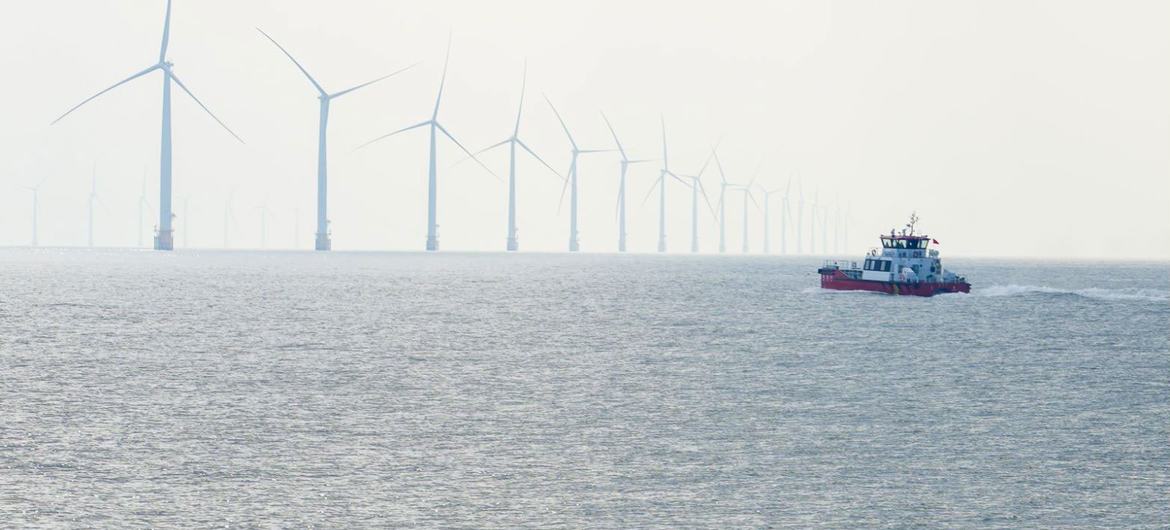
A boat passes in front of an offshore wind power project close to Yancheng in eastern China.
© Ruichen Hu
 
A boat passes in front of an offshore wind power project close to Yancheng in eastern China.


26 April 2024

Climate and Environment

The UN Secretary-General on Friday launched an initiative focusing on ensuring fairness, sustainability, and respect for human rights throughout the entire process of sourcing and using critical minerals needed for the clean energy transition.

The newly established Panel on Critical Energy Transition Minerals brings together a diverse group of governments, organizations and UN bodies to develop a set of common and voluntary principles to protect environmental and social standards aimed at embedding justice in the energy transition.

“A world powered by renewables is a world hungry for critical minerals,” Secretary-General António Guterres said at the launch of the Panel.

For developing countries this new demand presents a big opportunity to create new jobs, diversify economies, and dramatically boost revenues, he continued, stressing that this requires effective management.

“The race to net zero cannot trample over the poor…the renewables revolution is happening, but we must make sure that it is done in a way that moves us towards justice,” he added.

Mr. Guterres had announced his plan to set up the Panel at the COP28 climate summit, held in Dubai in early December. It is expected to provide initial recommendations ahead of the high-level General Assembly Week in September. 

Tweet URL
UNCTAD

Skyrocketing demand

As the climate emergency worsens, demand for minerals vital for renewable energy technology such as solar panels, wind turbines and electric vehicles (EV), is soaring.

For instance, lithium is required to manufacture high efficiency batteries, electronics and EVs, with demand expected to rise by over 1,500 per cent, according to the UN Trade and Development body (UNCTAD).

Similar increasing demand is anticipated for nickel, cobalt and copper.

The rising demand could be a big boost for many developing countries, especially in Africa – which boasts over a fifth of the world’s reserves for a dozen metals essential to the energy transition.

Cornerstone of UN’s response

Mr. Guterres highlighted that developing countries cannot be relegated to the bottom of the clean energy value chain – merely as suppliers of basic raw materials.

“Little wonder that resource-rich developing countries are calling for urgent action to ensure that they, and their communities, benefit from the production and trade of critical minerals; and that people and nature are protected,” he said.

The UN chief offered the Organization’s full support for the new panel.

“This work is extremely complex, but the world cannot wait,” he said.

Panel membership

The Panel is co-chaired by Ambassador Nozipho Joyce Mxakato-Diseko of South Africa and Director-General for Energy Ditte Juul Jørgensen of the European Commission.

Its members include Australia, Botswana, Brazil, Chile, China, Colombia, the Democratic Republic of the Congo (DRC), Egypt, India, Indonesia, Japan, Kazakhstan, Namibia, South Africa, United Arab Emirates (UAE), the United Kingdom (UK), Viet Nam, Zambia and Zimbabwe, alongside the African Union (AU), the European Union (EU), UN and intergovernmental entities, and non-governmental organizations.


https://news.un.org/en/story/2024/04/1149066


https://creativecommons.org/licenses/by/3.0/legalcode