Избранное сообщение

среда, 28 мая 2025 г.

Climate change: World Likely to Breach 1.5°C limit in next five years


Glaciers are retreating due to climate change including in Chile .
   

28 May 2025 
Climate and Environment

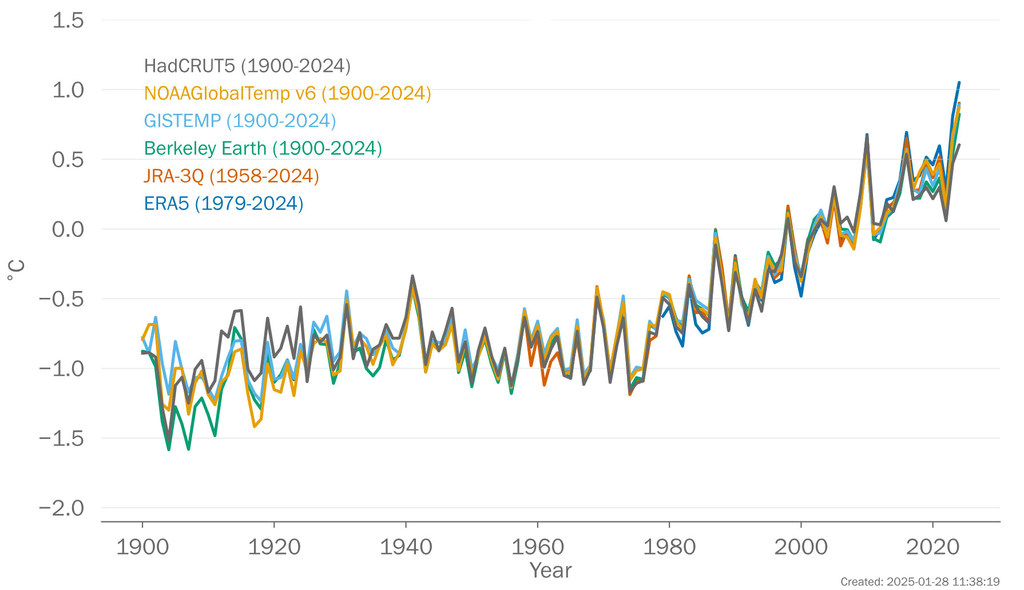
2024 was the warmest year on record – but the heat is far from over. A new report from the World Meteorological Organization (WMO) warns that global temperatures are likely to continue rising, with an 80 per cent chance that at least one year between 2025 and 2029 will surpass the 2024 record.

According to the Global Annual to Decadal Climate Update, the planet is predicted to experience temperatures between 1.2°C and 1.9°C above pre-industrial levels (1850–1900) over the next five years.

Breaching critical thresholds
In 2024, the WMO estimated that the average global temperature was between 1.34°C and 1.41°C higher than pre-industrial levels (1850-1900). The WMO now projects the 20-year average warming for 2015–2034 to reach around 1.44°C above pre-industrial levels.

The report finds a staggering 86 per cent chance that global average temperatures will exceed 1.5°C above pre-industrial levels in at least one of the next five years, and a one per cent chance of one of those years exceeding 2°C of warming.

There is a 70 per cent chance that the five-year average itself will exceed this 1.5 degree threshold.

The WMO stressed that the 1.5°C Paris Agreement target refers to long-term averages over 20 years, meaning its threshold has not been breached quite yet.

However, these near-term spikes are warning signs of an accelerating climate crisis.

The forecast also highlights regional precipitation impacts, including wetter-than-average conditions expected in the African Sahel, northern Europe, and South Asia. Conversely, the Amazon region could see continued drought.

Arctic Warming Accelerates
The situation is even more catastrophic in the Arctic than in the rest of the world. The average Arctic temperature over the next five winters (November to March) is expected to be 2.4°C warmer than the 1991–2020 average, more than three and a half times the increase in the global average temperature.

Sea ice is expected to keep shrinking, particularly in the Barents, Bering, and Okhotsk Seas, contributing to rising sea levels and disrupted weather patterns worldwide.

As the world enters this critical window, the UN agency urged climate action to prevent even more dangerous warming in the decades ahead and keep long-term warming below the 1.5°C limit

https://news.un.org/en/story/2025/05/1163751

https://creativecommons.org/licenses/by/4.0/legalcode

UN aims to transform urgency into action at Nice Ocean Conference


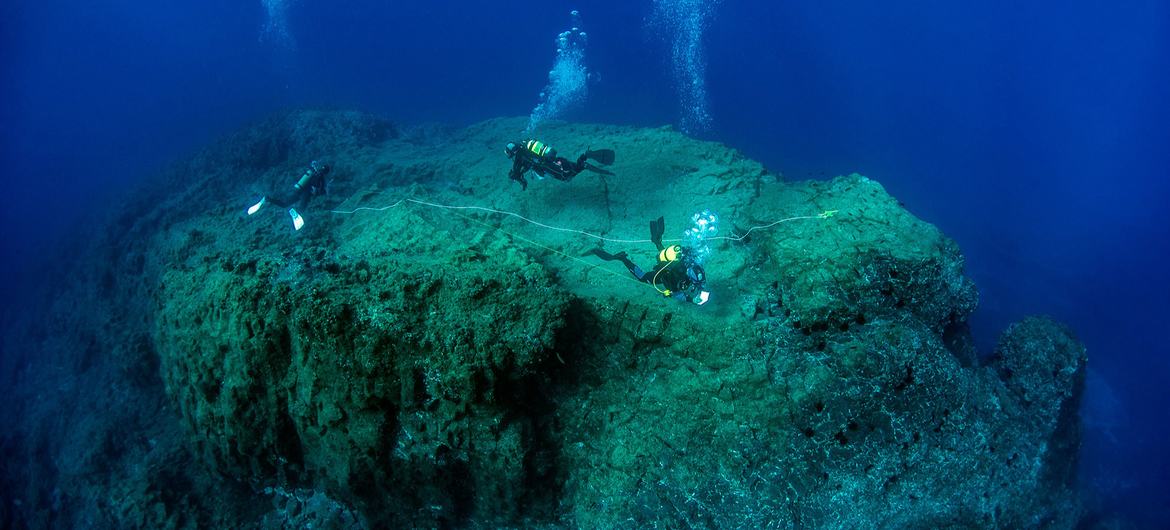
A team of scientific divers assess the marine biodiversity on the top of a seamount in Porto Santo, Madeira, Portugal.
© Nuno Vasco Rodrigues/UN World Oceans Day 2023
 
A team of scientific divers assess the marine biodiversity on the top of a seamount in Porto Santo, Madeira, Portugal.


27 May 2025
 Climate and Environment

Countries are uniting in the French city of Nice next month to save the marine environment. 

The third United Nations Ocean Conference (UNOC 3) from 9-13 June will bring together Heads of State, scientists, civil society and business leaders around a single goal: to halt the silent collapse of the planet's largest – and arguably most vital – ecosystem.

The ocean is suffocating due to rising temperatures, rampant acidification, erosion of biodiversity, plastic invasion, predatory fishing.

‘A state of emergency’

Our planet’s life support system is in a state of emergency,” said Li Junhua, head of the UN Department of Economic and Social Affairs (DESA) and the Secretary-General of the upcoming summit. 

Tweet URL

He insisted that there is still time to change course.

The future of the ocean is not predetermined.  It will be shaped by the decisions and actions that we are making now,” Mr. Li said on Tuesday during a press briefing at UN Headquarters in New York. 

In the eyes of the senior official, UNOC 3 “will not be just another routine gathering.” 

“We hope that it proves to be the pivotal opportunity to accelerate action and mobilize all stakeholders across the sectors and borders.”

World-class conference

More than 50 world leaders are expected on the Côte d’Azur, alongside 1,500 delegates from nearly 200 countries. 

The programme includes 10 plenary meetings, 10 thematic roundtables, a blue zone reserved for official delegations, and a series of parallel forums during five days of negotiations.

For France, which is co-hosting the conference alongside Costa Rica, the challenge is clear: to make Nice a historic milestone. 

“This is an emergency,” declared Jérôme Bonnafont, Permanent Representative of France to the UN, during the press conference.

“An ecological emergency: we are witnessing the deterioration of the quality of the oceans as an environment, as a reservoir of biodiversity, as a carbon sink.”

France hopes to make the conference a turning point and the goal “is to produce a Nice agreement that is pro-oceans, as the Paris Agreement 10 years ago now was for the climate.” 

This agreement will take the form of a Nice Action Plan for the Ocean, a “concise action-oriented declaration,” according to Mr. Li, accompanied by renewed voluntary commitments.

Three milestones

Three events will prepare the ground for UNOC 3.

The One Ocean Science Congress, from 4-6 June, will bring together several thousand researchers. The Summit on Ocean Rise and Coastal Resilience to be held the following day will explore responses to rising sea levels. Finally, the Blue Economy Finance Forum, on 7-8 June in Monaco, will mobilize investors and policymakers.

For Costa Rican Ambassador Maritza Chan Valverde, there is no more time for procrastination.

We're expecting concrete commitments with clear timelines, budgets and accountability mechanisms. What is different this time around, zero rhetoric, maximum results,” she said.

'Transform ambition into action'

The conference's theme Accelerating Action and Mobilizing All Stakeholders to Conserve and Sustainably Use the Ocean will address several topics, ranging from sustainable fishing to marine pollution and the interactions between climate and biodiversity.

This is our moment to transform ambition into action,” Mr. Li concluded, calling for governments, businesses, scientists, and civil society to come together in a common spirit. 

He also praised the “visionary leadership” of France and Costa Rica, without whom this large-scale mobilization would not have been possible.

A slogan promoted by Costa Rica seems to sum up the spirit of the summit: “Five days. One ocean. One unique opportunity.” 


https://creativecommons.org/licenses/by/4.0/legalcode


https://news.un.org/en/story/2025/05/1163746

четверг, 22 мая 2025 г.

Biodiversity loss demands urgent global action, says UN chief

A tiger cools off in a stream on a hot day in Chitwan National Park, Nepal. Thanks to efforts by local communities and the government, the park’s tiger population has rebounded but the species remains critically endangered.
UN News/Vibhu Mishra
 
A tiger cools off in a stream on a hot day in Chitwan National Park, Nepal. Thanks to efforts by local communities and the government, the park’s tiger population has rebounded but the species remains critically endangered.
By Vibhu Mishra
21 May 2025 
Climate and Environment

UN Secretary-General António Guterres has called on countries to radically rethink their relationship with nature, warning that biodiversity loss is a global crisis no nation can ignore.

In a message marking Thursday’s International Day for Biological Diversity, the UN chief raised alarm over the “lightning pace” of degradation of the natural world.

Biodiversity is the bedrock of life and a cornerstone of sustainable development,” Mr. Guterres said.

Yet humanity is destroying biodiversity at lightening pace, the result of pollution, climate crisis, ecosystem destruction and – ultimately – short-term interests fuelling the unsustainable use of our natural world.”

He stressed that no country, “however rich or powerful,” can address the crisis in isolation, nor thrive without the ecological richness that defines life on Earth.

Alarm bells ringing

The International Day comes amid stark concern for the future: one million species are at risk of extinction, 75 per cent of land ecosystems and two-thirds of marine environments have been significantly altered by human activity.

Furthermore, if current trends continue, progress towards eight of the 17 Sustainable Development Goals (SDGs) could be jeopardized.

Mr. Guterres called for urgent implementation of the Kunming-Montreal Global Biodiversity Framework, the landmark agreement adopted to halt and reverse nature loss by 2030.

This includes delivering on national biodiversity action plans, scaling finance for conservation, shifting harmful subsidies, and supporting local communities, Indigenous Peoples, women and youth.

Live in harmony with nature

Biological diversity underpins food security, livelihoods, health and climate resilience.

Roughly three billion people eat fish for 20 a per cent of their animal protein intake, and 80 per cent of rural populations in developing countries rely on plant-based medicine.

Yet the destruction of natural habitats is also increasing the risk of zoonotic disease transmission, making biodiversity preservation a key factor in global health.

Living in harmony with nature and sustainable development is humanity’s path to a better world for all,” Mr. Guterres said, echoing this year’s theme.

“Together, let us take it.”

The International Day

The UN officially designated 22 May as the International Day for Biological Diversity in 2000 to increase understanding and awareness of biodiversity issues.

The date marks the adoption of the Convention on Biological Diversity in 1992.

https://news.un.org/en/story/2025/05/1163561

https://creativecommons.org/licenses/by/4.0/legalcode

суббота, 17 мая 2025 г.

‘On thin ice’: UN chief sounds alarm over rapid Himalayan glacier melt


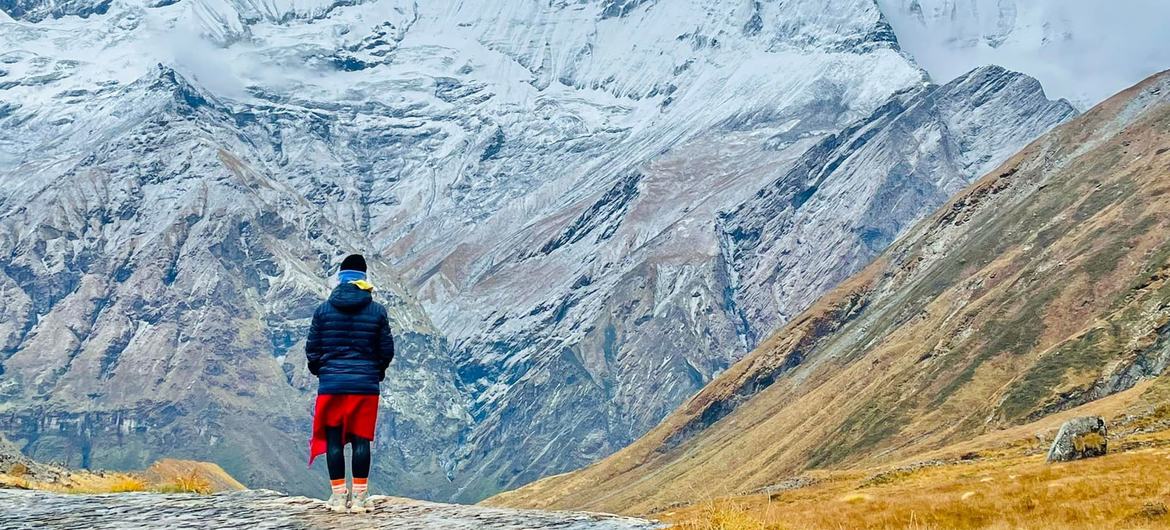
Mountains in Nepal’s Annapurna range, where glaciers are retreating and snow lines are rising due to climate change.
UN News/Vibhu Mishra
 
Mountains in Nepal’s Annapurna range, where glaciers are retreating and snow lines are rising due to climate change.


By Vibhu Mishra
16 May 2025 
Climate and Environment

The United Nations Secretary-General warned on Friday that Himalayan glaciers are “caving in,” urging immediate action to address the climate crisis, especially in the world’s most fragile ecosystems.

António Guterres issued the warning in a video message to the inaugural Sagarmatha Sambaad, or “Everest Dialogue,” convened by the Government of Nepal in Kathmandu.

Record temperatures have meant record glacier melt,” he said.

“Nepal today is on thin ice – losing close to one-third of its ice in just over thirty years. And your glaciers have melted 65 per cent faster in the last decade than in the one before.”

Named after Mount Everest (Sagarmatha in Nepali), the international platform convened ministers, parliamentarians, climate experts, and civil society to focus on climate change, mountain ecosystems, and sustainability.

Secretary-General's video message.

Two billion futures at stake

Glaciers in the region have served for centuries as vital freshwater reservoirs. Their accelerated melt now threatens not only local communities but vast populations downstream who rely on Himalayan-fed rivers.

Reduced water flow in river systems such as the Ganges, Brahmaputra and Indus threatens not only water but also food production for nearly two billion people across South Asia.

Combined with saltwater intrusion, this could trigger collapsing deltas and mass displacement, the UN chief warned.

“We would see low-lying countries and communities erased forever,” he said.

Children raise their voices

Ahead of the summit, Nepal’s children and youth stepped into the spotlight with their own call to action.

In a declaration submitted to the dialogue, over 100 children and young people demanded urgent and inclusive climate action that recognizes them as rights-holders and climate actors – not just passive victims.

Among their key demands: ensuring child participation in climate decisions, supporting youth-led programmes, and promoting their innovations and climate action.

The climate crisis is a child rights crisis – disproportionately impacting their health, nutrition, education and well-being,” said Alice Akunga, head of the UN Children’s Fund (UNICEF) in Nepal, which supported the deliberations.

“Listening to the voices of the ‘future of humanity’ is critical to designing and implementing meaningful and lasting solutions to address the adverse effects of climate change on children and youth.”

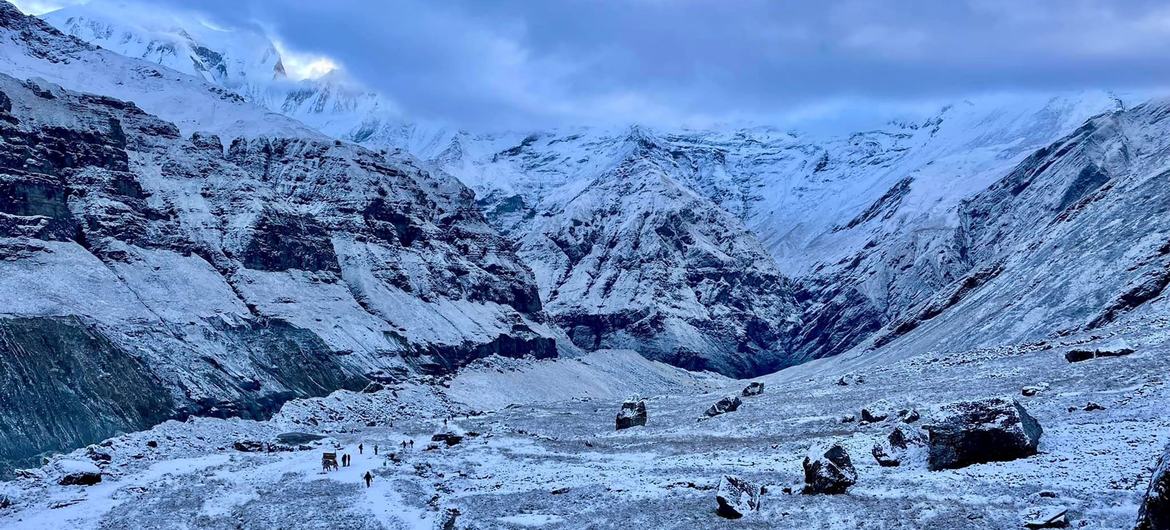
Glaciers in the high Himalayas, like those in Nepal’s Langtang region (pictured), feed major South Asian river systems sustaining tens of millions of lives and livelihoods downstream
UN News/Vibhu Mishra
 
Glaciers in the high Himalayas, like those in Nepal’s Langtang region (pictured), feed major South Asian river systems sustaining tens of millions of lives and livelihoods downstream

Stop the madness

In his message, Mr. Guterres reiterated his call on the world to “stop the madness” of fossil fuel-driven global warming, a warning he made during his previous visit to the Everest region in 2023.

At the time, he stood amid glacial basins in the Himalayas, warning that the “rooftops of the world” were rapidly vanishing.

“And that is why you are gathered together focused on Sambaad – dialogue,” the UN chief said on Friday, applauding Nepal’s climate leadership, including reforestation programmes, early warning systems and its goal to achieve net-zero emissions by 2045.

Act now

The world must act without delay to limit global temperature rise to 1.5°C, he continued – the target set by the Paris Agreement on climate change – with the biggest emitters leading the way.

This includes investing in renewable energy, fulfilling the $1.3 trillion climate finance goal agreed at COP29, doubling adaptation finance to at least $40 billion this year as pledged by developed countries, and providing robust, sustained support to the Loss and Damage Fund.

Achieving these goals demands bold collaboration,” Mr. Guterres concluded. “The United Nations is your ally in this essential task.”


https://news.un.org/en/story/2025/05/1163376


https://creativecommons.org/licenses/by/4.0/legalcode

вторник, 13 мая 2025 г.

Climate change takes increasingly extreme toll on African countries


Africa faces "urgent and escalating realities" of climate change such as persistent drought and deadly flooding, warned Celeste Saulo, head of the World Meteorological Organization (WMO), which supports adaptation efforts.
© Unsplash/Florian Berger
 
Africa faces "urgent and escalating realities" of climate change such as persistent drought and deadly flooding, warned Celeste Saulo, head of the World Meteorological Organization (WMO), which supports adaptation efforts.


By Juliette Maigné
12 May 2025 

Climate and Environment

Devastating floods in South Sudan in recent months left thousands of herders without their most precious possessions: goats, cows and cattle. The animals are central to people’s lives and age-old customs including marriage and cultural traditions. All risk being swept away or scorched by the ravages of climate change.

Extreme weather and climate change impacts are hitting every single aspect of socio-economic development in Africa and exacerbating hunger, insecurity and displacement,” the UN World Meteorological Organization (WMO) said on Monday.

WMO said that average surface temperature across Africa in 2024 was approximately 0.86°C above the 1991–2020 average.

Tweet URL

North Africa recorded the highest temperature change at 1.28°C above the 1991-2020 average, making it the fastest-warming sub-region of Africa.

Marine heat spike

Sea surface temperatures were also the highest on record. “Particularly large increases in sea surface temperatures have been observed in the Atlantic Ocean and Mediterranean Sea,” WMO said.
Data shows that almost the entire ocean area around Africa was affected by marine heatwaves of strong, severe or extreme intensity last year and especially the tropical Atlantic.

Head of WMO, Celeste Saulo, warned that climate change is an urgent and escalating problem across the African continent “with some countries grappling with exceptional flooding caused by excessive rainfall and others enduring persistent droughts and water scarcity”.

El Niño influence

Highlighting Africa’s particular vulnerability to our warming planet – caused mainly by rich nations burning fossil fuels – the UN agency said that floods, heatwaves and droughts forced 700,000 people out of their homes across the continent last year.

WMO also noted that the El Niño phenomenon was active from 2023 into early 2024 and “played major roles in rainfall patterns” across Africa.

In northern Nigeria alone, 230 people died in floods last September that swept across the capital of Borno state, Maiduguri, displacing 600,000, severely damaging hospitals and contaminating water in displacement camps.

Regionally, rising waters caused by torrential rains ravaged West Africa and impacted a staggering four million people. 

Conversely, Malawi, Zambia and Zimbabwe suffered the worst drought in at least two decades, with cereal harvests in Zambia and Zimbabwe 43 per cent and 50 per cent below the five-year average, respectively.

Heat shock

Heatwaves are also a growing threat to health and development and Africa, WMO said, noting that the past decade has also been the warmest on recordDepending on the dataset, 2024 was the warmest or second-warmest year.

Blistering temperatures already impact children’s education, with schools closing in March 2024 in South Sudan as temperatures reached 45°C. Worldwide, at least 242 million pupils missed school because of extreme weather in 2024, many of them in sub-Saharan Africa, according to the UN Children’s Fund, UNICEF.

Beyond education, rising temperatures across the continent are making Africa more water-scarce and food-insecure, with North African countries the hardest-hit.

Annual Regional mean temperature for WMO RA 1 Africa from 1900-2024.
© WMO
 
Annual Regional mean temperature for WMO RA 1 Africa from 1900-2024.

South Sudan focus

Erratic weather patterns across Africa are also hindering farming, driving food insecurity and displacing people who have already had to flee war already, WMO explained.

Last October, for example, flooding affected 300,000 people in South Sudan – a hefty figure for a nation of 13 million, scarred by years of civil strife and where infrastructure is poor.

The disaster wiped out cattle, adding up to between 30 and 34 million farm animals – roughly two per inhabitant – and stagnant water fuelled diseases. Families who had been self-sufficient had to seek help once again.

“When someone slides back into being fed, it affects their dignity,” said Meshack Malo, South Sudan Country Representative for the UN Food and Agriculture Organization (FAO).

At the forefront of climate change, the troubled East African country is already dealing with a crippling economic crisis, mass displacement made worse by the war in neighbouring Sudan, as well as escalating tensions at home and pervasive violence.

Fighting in Sudan has derailed the South Sudanese economy, which relies on oil exports for 90 per cent of its national revenue, reports indicate.

Destructive cycle

When South Sudan is not hit by floods, it is plagued by drought.

“This cyclic change between floods and drought, makes the country affected almost a good part of the year,” said Mr. Malo.  

Flooding has worsened and become more intense and frequent in recent years.

“That means that any short rain then can easily trigger the flooding, because water and the soil remain quite saturated,” Mr. Malo added. “So that intensity and frequency makes this situation worse.”

With road access disrupted for aid trucks, UN agencies such as the World Food Programme (WFP) must airlift food assistance – a costly, impractical solution, as humanitarian funding dwindles.

Pushing back  

In the South Sudanese town of Kapoeta, the FAO has helped to reduce the number of dry months from six to two, by harvesting and storing water to protect crops at risk from climate change.  

“The impact of drought is no longer felt as much,” FAO’s Mr. Malo said, speaking to UN News from the capital, Juba.

Soundcloud

Worth its salt

In countries that lack water resources for crop irrigation, climate resilience and adaptation are critical, Dr. Ernest Afiesimama of the WMO Regional Office for Africa in Addis Ababa, told journalists.

And while desalination – the process of removing salt from seawater – may be a solution for some, for many African nations it is not viable.

Rather than turning to desalination as a panacea, investing in adaptation measures including early warning systems for action and preparedness is urgently needed, environmental scientists say.  “Considering the challenges in sub-Saharan Africa, [desalination] presents a complex economic, environmental and social challenge, and there is a question about its long-term sustainability and equity,” said Dr. Dawit Solomon, Contributor at Accelerating Impacts of CGIAR Climate Research for Africa (AICCRA).  

“Africa is facing a high climate change bill. Imagine the continent which is struggling economically and then facing this additional risk multiplier,” Dr. Salomon added.


https://news.un.org/en/story/2025/05/1163126


https://creativecommons.org/licenses/by/4.0/legalcode

суббота, 10 мая 2025 г.

UN warns copper shortage risks slowing global energy and technology shift


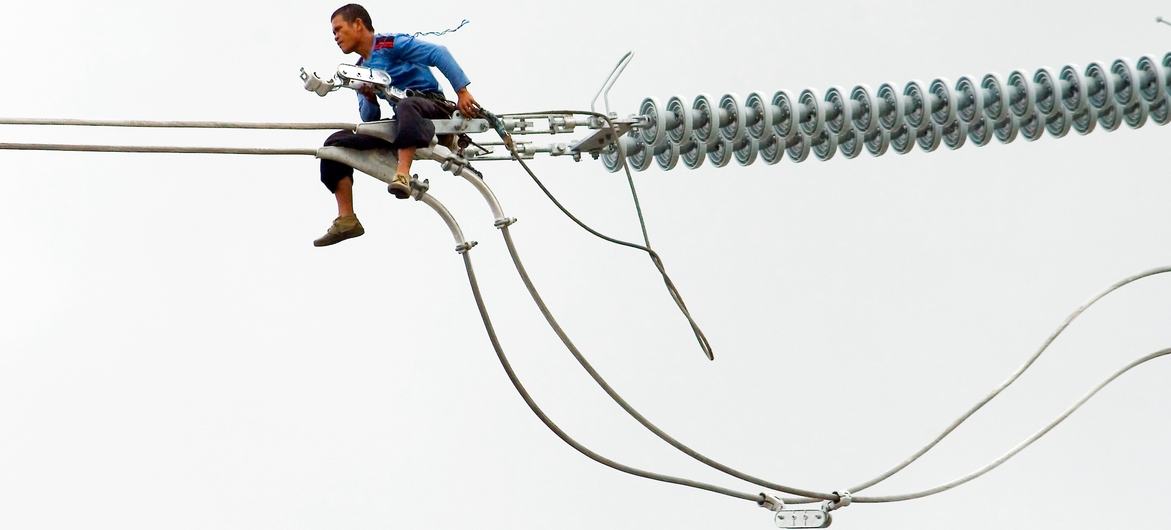
A worker in the Philippines installs a new electric cable atop a pylon. High-tension power lines made of copper are the backbone of electricity infrastructure worldwide.
© ILO/Bobot Go
 
A worker in the Philippines installs a new electric cable atop a pylon. High-tension power lines made of copper are the backbone of electricity infrastructure worldwide.


By Vibhu Mishra
9 May 2025

 Economic Development

A looming global copper shortage could stall the world’s transition to clean energy and digital technologies unless smarter trade and investment strategies are adopted, the UN’s trade and development body, UNCTAD, has warned.

In its latest Global Trade Update, released this week, UNCTAD describes copper as “the new strategic raw material” at the heart of the rapidly electrifying and digitising global economy.  

But with demand set to rise more than 40 per cent by 2040, copper supply is under severe strain – posing a critical bottleneck for technologies ranging from electric vehicles and solar panels to AI infrastructure and smart grids.

More than just metal

Copper is no longer just a commodity,” said Luz María de la Mora, Director of the International Trade and Commodities Division at UNCTAD.

Valued for its high conductivity and durability, copper is essential to power systems and clean energy technologies. It runs through homes, cars, data centres and renewable infrastructure.

Yet developing new mines is a slow and expensive process, and fraught with environmental risks – often taking up to 25 years from discovery to operation.

Meeting projected demand by 2030 could require $250 billion in investment and at least 80 new mining projects, according to UNCTAD estimates.

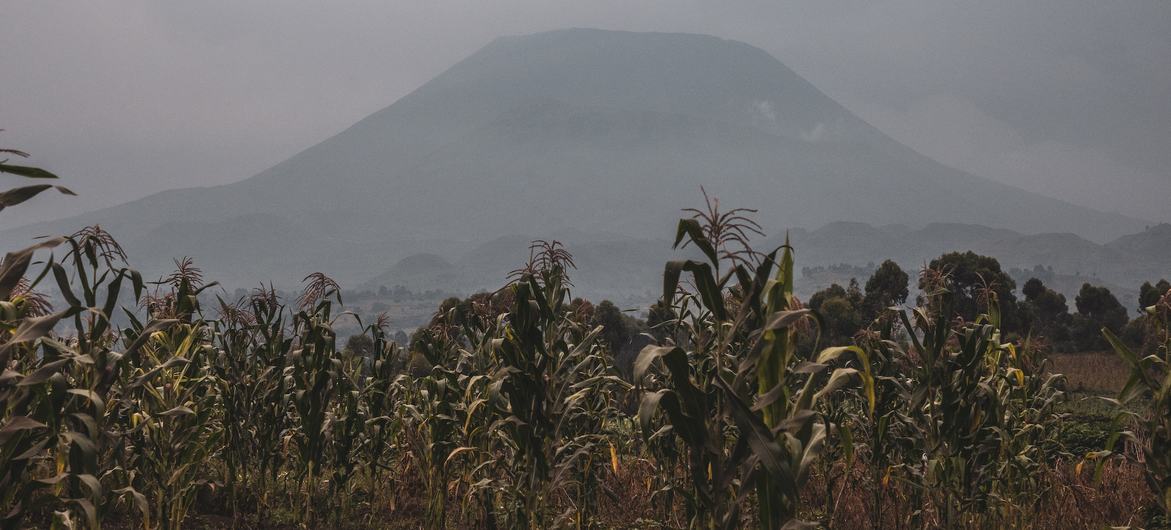
The Democratic Republic of the Congo holds some of the world’s largest copper reserves, yet most of the metal is exported, limiting the country’s ability to benefit fully from this valuable resource.
© UNICEF/Vincent Trem
 
The Democratic Republic of the Congo holds some of the world’s largest copper reserves, yet most of the metal is exported, limiting the country’s ability to benefit fully from this valuable resource.

Uneven geography, unequal gains

Over half of the world’s known copper reserves are concentrated in just five countries – Chile, Australia, Peru, the Democratic Republic of the Congo and Russia.

However, much of the value-added production occurs elsewhere, particularly in China, which now imports 60 per cent of global copper ore and produces over 45 per cent of the world’s refined copper, says the UN.

This imbalance leaves many developing countries stuck at the bottom of the value chain, unable to fully benefit from their resources.

“Digging and shipping copper is not enough,” the report states.

To move up the ladder, copper-rich developing countries must invest in refining, processing and manufacturing – this means strengthening infrastructure and skills, establishing industrial parks, offering tax incentives and pursuing trade policies that support higher-value production.”

Tariff and trade barriers

UNCTAD also highlights the challenge of tariff escalation, where duties on refined copper are relatively low – typically below two per cent – but can rise to as high as eight per cent for finished products like wires, tubes and pipes.

These trade barriers discourage investment in higher-value industries and lock countries into roles as raw material suppliers, the report warns.

To address this, UNCTAD is urging governments to streamline permitting, reduce trade restrictions, and develop regional value chains to help developing economies climb the industrial ladder.

Tweet URL

Scrappy solution

With new mining projects facing long lead times, recycling is emerging as a vital part of the solution.

In 2023, secondary sources accounted for 4.5 million tonnes – nearly 20 per cent of global refined copper output. The United States, Germany and Japan are the top exporters of copper scrap, while China, Canada and the Republic of Korea are major importers.

“For developing countries, copper scrap could be a strategic asset,” UNCTAD notes.

“Investing in recycling and processing capacity can reduce import dependence, support value-added trade and advance a more circular, sustainable economy.”

Test case for critical materials

Copper, UNCTAD says, is a likely “test case” for how global trade systems handle rising demand for critical materials amid growing pressures.

“The age of copper has arrived…but without coordinated trade and industrial strategies, supply will remain under strain and many developing countries risk missing out,” the report concludes.


https://news.un.org//en/story/2025/05/1163111

https://creativecommons.org/licenses/by/4.0/legalcode

пятница, 9 мая 2025 г.

More than 50 million in West and Central Africa at risk of hunger


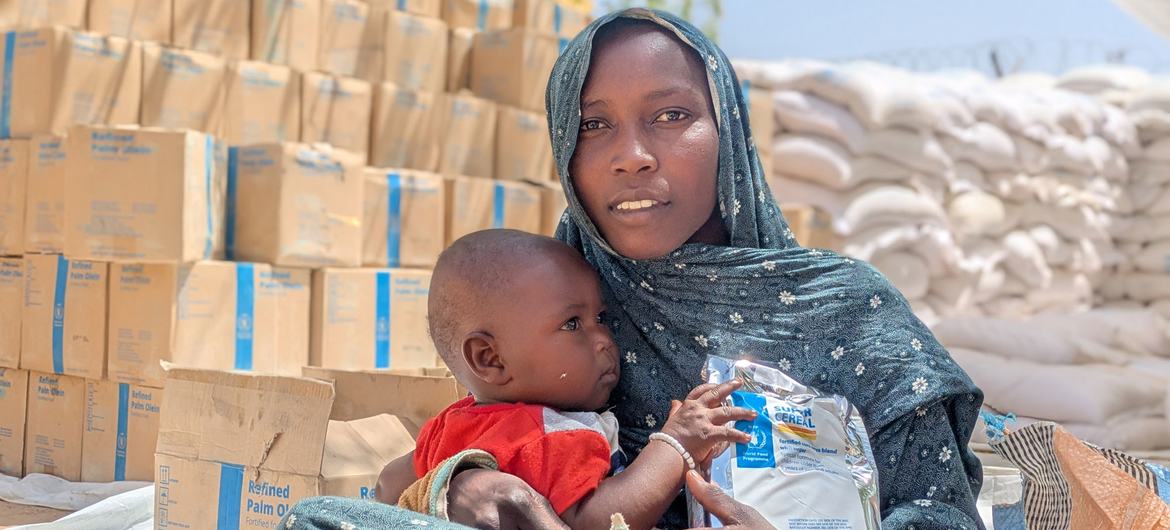
Oumalis Abdraman and her six-month-old baby arrived from Western Darfur in Koulbus where they were WFP treated for malnutrition.
© WFP/Lena von Zabern
 
Oumalis Abdraman and her six-month-old baby arrived from Western Darfur in Koulbus where they were WFP treated for malnutrition.


9 May 2025 

Humanitarian Aid

The UN World Food Programme (WFP) has warned that millions of people in West and Central Africa are facing record hunger as conflict, displacement, economic hardship and repeated extreme weather push the region towards a major crisis. 

More than 36 million are struggling to meet their basic food needs, which is projected to rise to over 52 million during the lean season from June to August, latest analysis reveals.

This includes almost three million people facing emergency conditions, and 2,600 people in Mali who are at risk of catastrophic hunger.

Tweet URL

Although needs are at a historic high, resources are limited, with millions of lives at stake. 

Without immediate funding, WFP will be forced to scale down even further both in the number of people reached and the size of food rations distributed,” said Margot van der Velden, Regional Director for West and Central Africa. 

‘Extremely difficult and dire’ 

In 2019, only four per cent of the population was food insecure compared to 30 per cent today, according to Ollo Sib, a senior research adviser with WFP.

“We hope that our voice will be heard because this food security situation in the Sahel remains extremely difficult and dire,” he said, speaking from Dakar to journalists in Geneva.

Mr. Sib recently travelled to some of the affected areas, such as communities in northern Ghana grappling with unprecedented drought.

“They were forced to replant two to three times, and for them, each failed sowing is an additional financial burden as the cost of fertilisers and seeds were extremely high in those locations,” he said.

The assessment team also went to northern Mali, which is the only place in the region where people are facing catastrophic food security conditions.

“We had the opportunity to interact with pastoralist elders who typically sell their livestock to buy cereals,” he said. 

“This year they were worried because the cost of food rose by 50 per cent compared to the five-year average. But at the same time, they are not able to access markets to sell their goods.” 

Fighting, food inflation and floods

WFP said unyielding conflict is among the factors driving deepening hunger in West and Central Africa.  

Fighting has displaced more than 10 million of the most vulnerable people across the region, including more than two million refugees and asylum seekers, in Chad, Cameroon, Mauritania and Niger. 

Nearly eight million more have been internally displaced, mainly in Nigeria and Cameroon. 

Meanwhile, food inflation exacerbated by rising food and fuel costs are pushing hunger levels to new highs.

At the same time, recurrent extreme weather “erodes the ability of families to feed themselves,” WFP said. 

Five million at risk

WFP stands ready to respond and scale up vital assistance in West Africa and the Sahel. The UN agency is seeking $710 million to support its life-saving operations through the end of October.

The aim is to reach almost 12 million people this year with critical assistance.

So far, teams have already reached three million of the most vulnerable including refugees, internally displaced people, malnourished children under five, and pregnant or breastfeeding women and girls.

The agency said that five million risk losing assistance unless urgent funding is found.

Address root causes

WFP also called for governments and partners to invest in sustainable solutions aimed at building resilience and reducing long-term dependency on aid.

Since 2018, the UN agency has been working with regional governments to address the root causes of hunger through a programme that has rehabilitated over 300,000 hectares of land to support over four million people in more than 3,400 villages. 


https://news.un.org/en/story/2025/05/1163086


https://creativecommons.org/licenses/by/4.0/legalcode