Избранное сообщение

среда, 19 июня 2024 г.

WFP increases response in West and Central Africa to address rising hunger

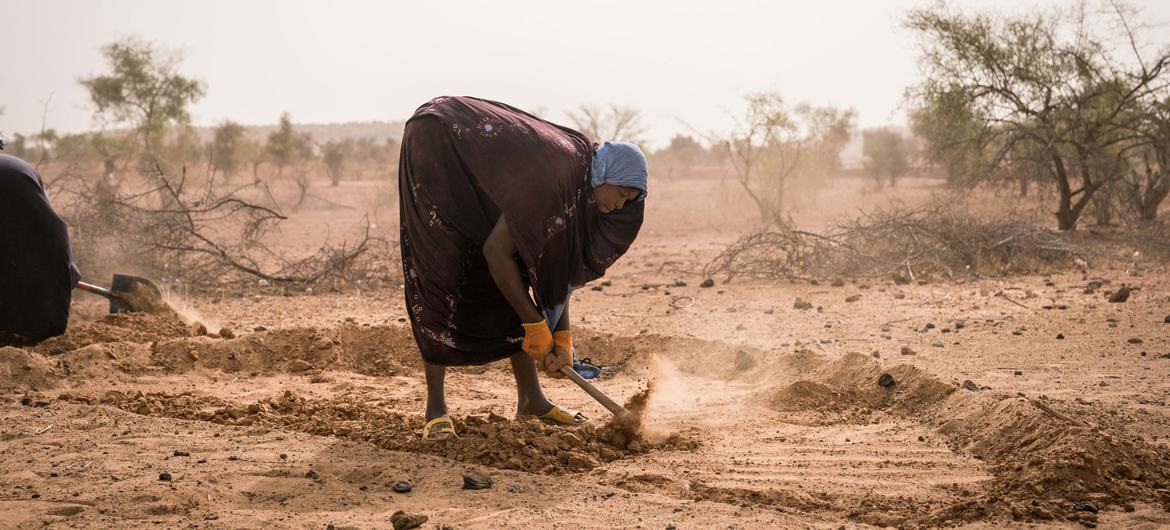
In Mauritania, community members are engaged in a soil rehabilitation project.
© WFP/Evelyn Fey
 
In Mauritania, community members are engaged in a soil rehabilitation project.


18 June 2024
Humanitarian Aid

The World Food Programme (WFP) will increase its food and nutrition assistance programme this month in West and Central Africa in hopes of reaching 7.3 million people as the June-August lean season is under way at a time when hunger levels are high and food resources are low.

The programme will aid the response plans of national governments in Burkina Faso, Cameroon, Central African Republic, Chad, Mali, Mauritania, Niger and Nigeria.

With the right amount of funding, WFP’s initiative can reach 12 million people, but with diminishing resources available, humanitarians working with the programme have reached fewer people than anticipated.

This comes as malnutrition in West and Central Africa is reaching alarming levels along with a projection that 55 million people will face acute hunger during the lean season.

Chris Nikoi, WFP’s Regional Director for Western Africa, said that this crisis exposes the need for “transformative solutions” to assist vulnerable families with food and other needs.

“We need to continue prioritising emergency response for those most in need,” Mr. Nikoi said. “But, we need more investment in sustainable solutions to help strengthen food security, improve agricultural productivity and purchasing power of families at the right time and cushion economic and climate shocks.”

Response aims

Many dealing with acute hunger in West and Central Africa have been left without assistance and risk having their situation worsened since funding for the programme has not kept “apace” with increasing crises in the region.

WFP said this is worrying since the 2024 seasonal forecast reveals weather that could disrupt farming and prolong the next lean season.

“The escalation of humanitarian needs far outstrips available resources,” Mr. Nikoi said. “The only way out of this cycle is to prioritise durable solutions.”

WFP’s current aid

Currently, WFP said it is supporting “long-term transformative hunger solutions” and working on improving government systems that increase communities’ shock resilience via social protection and investments in inclusive food systems.

WFP programmes have helped to, among other things, restore degraded lands to food and fodder production, support children’s education, improve access to food and boost incomes across the Sahel and provide more frequent and diversified meals to civilians in Nigerian villages.

The programme said initiatives including “strengthening poor families’ purchasing power with timely shock-responsive social protection schemes need to be prioritised and expanded as a humanitarian response alone is financially not sustainable and does not address the root causes of hunger and malnutrition.”


https://news.un.org/en/story/2024/06/1151181


https://creativecommons.org/licenses/by/3.0/legalcode

Deadly and growing impact of air pollution laid bare in new UNICEF-backed report

.
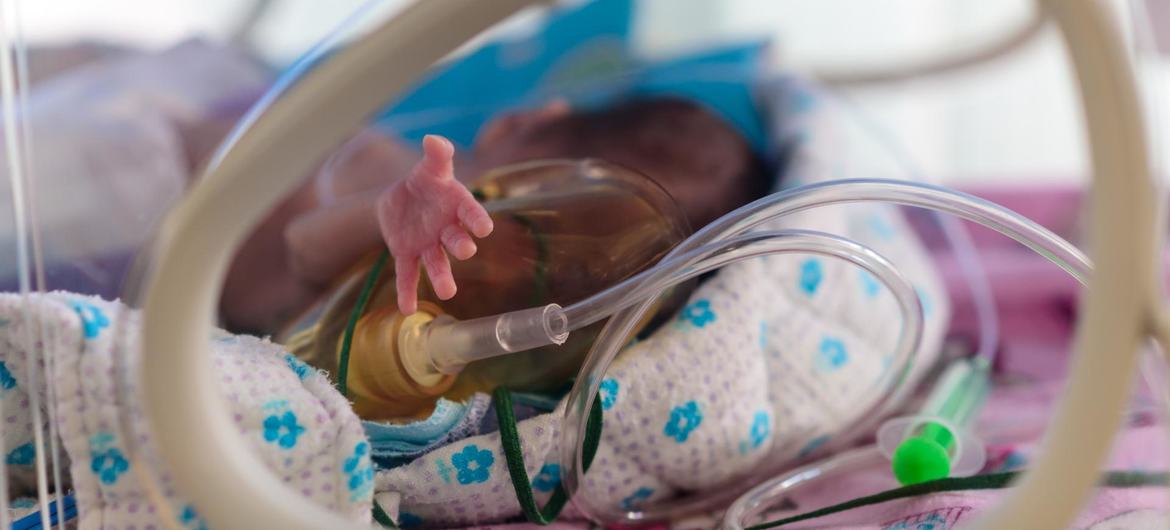
Air pollution is a major environmental health risk for children.
© UNICEF/E.Osipova
 
Air pollution is a major environmental health risk for children.


18 June 2024
Climate and Environment

The State of Global Air (SoGA) report published in partnership with the UN Children’s Fund (UNICEF) warns on Wednesday that air pollution is increasingly impacting human health - and is now the second leading global risk factor for premature death.

The fifth edition of the report, released by the Health Effects Institute (HEI), revealed that air pollution caused 8.1 million deaths worldwide in 2021 and many millions are dealing with debilitating chronic diseases, leaving healthcare systems, economies, and societies.

Further, it found that children under five are particularly vulnerable to air pollution, leaving over 700,000 in this age group dead in 2021.

‘Accurate predictor’

The SoGA report found that pollutants like outdoor fine particulate matter (PM2.5) - which comes from burning fossil fuels and biomass in sectors like transportation, residential homes, wildfires, and more - caused more than 90 per cent of global air pollution deaths and were found to be the “most consistent and accurate predictor of poor health outcomes around the world.”

Other pollutants like household air pollution, ozone (O3), and nitrogen dioxide (NO2) - which can be found in traffic exhaust - also contribute to the global deterioration of human health.

 HEI President Dr. Elena Craft said she hopes the information in the report will inspire change.

 “Air pollution has enormous implications for health. We know that improving air quality and global public health is practical and achievable,” she said.

 In addition to affecting people’s health, pollutants like PM2.5 add to greenhouse gases that are warming the planet. As the earth warms, regions with high levels of NO2 will experience great levels of ozone, which can result in greater health effects.

 Dr. Pallavi Pant, HEI’s Head of Global Health said, “This new report offers a stark reminder of the significant impacts air pollution has on human health, with far too much of the burden borne by young children, older populations, and low- and middle-income countries.”

 She continued, “This points sharply at an opportunity for cities and countries to consider air quality and air pollution as high-risk factors when developing health policies and other noncommunicable disease prevention and control programmes.”

Children ‘uniquely vulnerable’

The report reveals that children are “uniquely vulnerable” to air pollution and effects can begin in the womb. It states that young children’s exposure to air pollution has resulted in one in five deaths globally, pneumonia and asthma and affects children with inequities more than it does those in high-income countries.

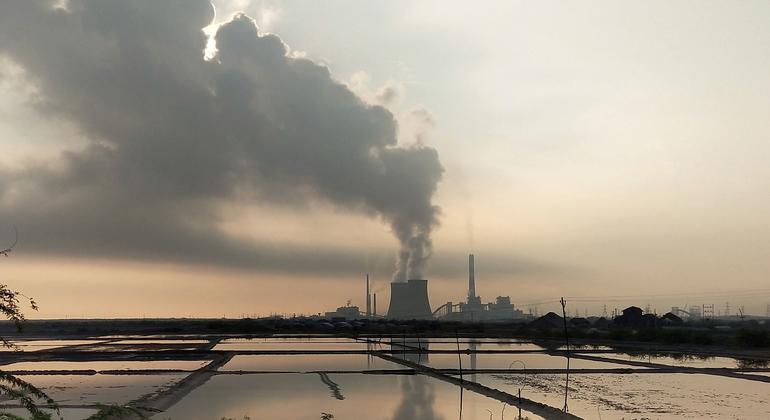
Air pollution, primarily from the burning of fossil fuels, is a serious problem in Indian cities.
Unsplash/Hassan Afridhi

UNICEF Deputy Executive Director Kitty van der Heijden said that nearly 2,000 children under five die every day due to the effects of air pollution.

‘The global urgency is undeniable,” she said. “It is imperative governments and businesses consider these estimates and locally available data and use it to inform meaningful, child-focused action to reduce air pollution and protect children’s health.”

Progress made

In addition to sharing details on the negative effects of air pollution on human health, the SoGA report also claims that there has been better awareness about the harms of being exposed to household air pollution and a 53 per cent decrease in the death rate of children under five since 2000 due to increased access to clean energy for cooking.

Also, regions experiencing the highest levels of air pollution have begun to address the issue by installing air pollution monitoring networks, implementing stricter air quality policies and more - particularly in Africa, Latin America and Asia.


https://news.un.org/en/story/2024/06/1151191


https://creativecommons.org/licenses/by/3.0/legalcode

понедельник, 17 июня 2024 г.

INTERVIEW: Sustainable energy offers ‘hope’ in fight against desertification and land loss


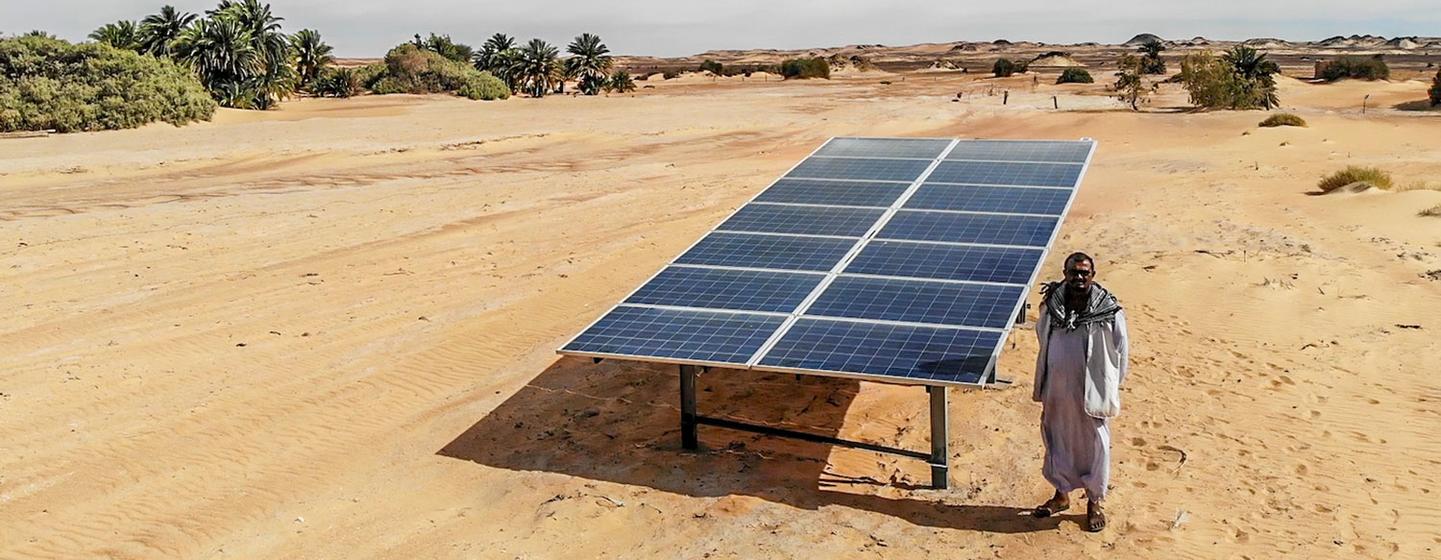
The availability of solar energy has enabled farmers in north Sudan to continue farming


UNDP/Muhanad Sameer
 
The availability of solar energy has enabled farmers in north Sudan to continue farming


17 June 2024
Climate and Environment

Sustainable sources of energy, including solar and wind power, can help communities across the world to reverse desertification and land loss, according to Ibrahim Thiaw, the Executive Secretary of the UN Convention to Combat Desertification. 

Mr. Thiaw spoke to UN News ahead of the World Day to Combat Desertification and Drought, marked annually on 17 June

Ibrahim Thiaw: Desertification is happening at the local level as much as it is global. Unless we address this at the local level, we will never be able to actually control it at the global level. Global policies and global decisions are needed. 

The impacts are huge in terms of food security and food sovereignty.

It also drives forced migration. If people can no longer produce food on their land then they will migrate. As we have seen for example in the Sahel or Haiti, there can be severe consequences for global security. When people fight over access to land and water, it leads to more conflicts. We are seeing more of this, and it has consequences on the homogeneity of communities and on national economies.

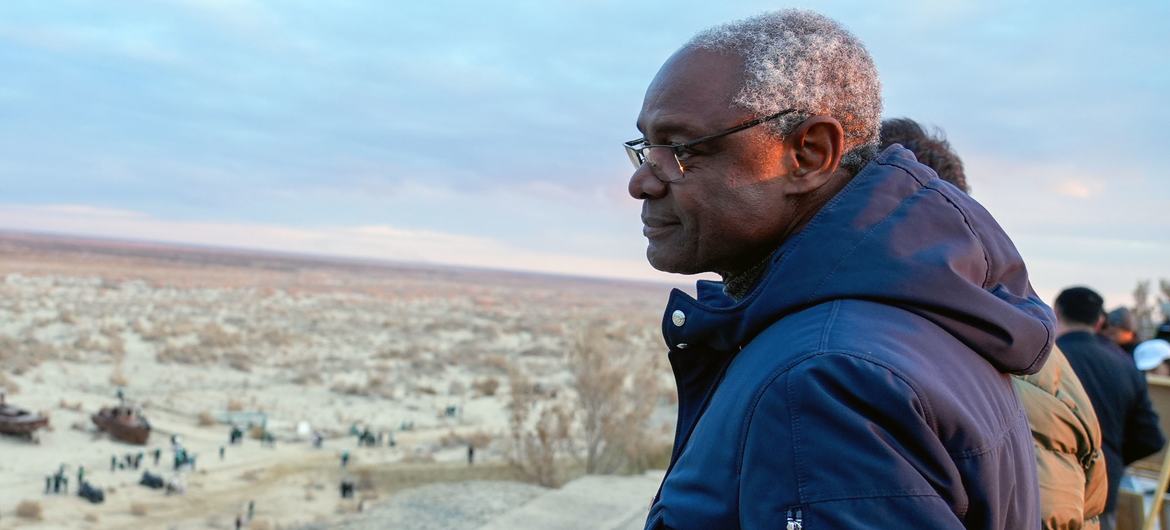
UNCCD Executive Secretary Ibrahim Thiaw visits the Aral Sea in Uzbekistan, which is suffering the effects of drought.
UNCCD
 
UNCCD Executive Secretary Ibrahim Thiaw visits the Aral Sea in Uzbekistan, which is suffering the effects of drought.

It is estimated that up to 50 per cent of the global GDP might lost by 2050 due to challenges with agriculture and food production unless we address the issue of land loss and desertification. 

UN News: What is the trend right now in terms of land loss?

Ibrahim Thiaw: Land loss is happening all over the world and land degradation is affecting both arid and less arid lands.

But in terms of drylands and desertification, it is estimated that 45 per cent of the land surface is affected by desertification. Maybe it is more striking to say that 3.2 billion people or one third of the world population are affected by that. 

Every year a hundred million hectares of land is being degraded, an area the size of Egypt. We need to halt land degradation, but we also need to restore 1.5 billion hectares of land.

UN News: How are you going to do that? 

Ibrahim Thiaw: By improving the techniques of agriculture, reducing the impact we are having on land in terms of extraction of minerals and other extractive industries. It is also important that we reduce the pressure in terms of people activities in some parts of the world so as to diversify the economy and create more opportunities to create income.

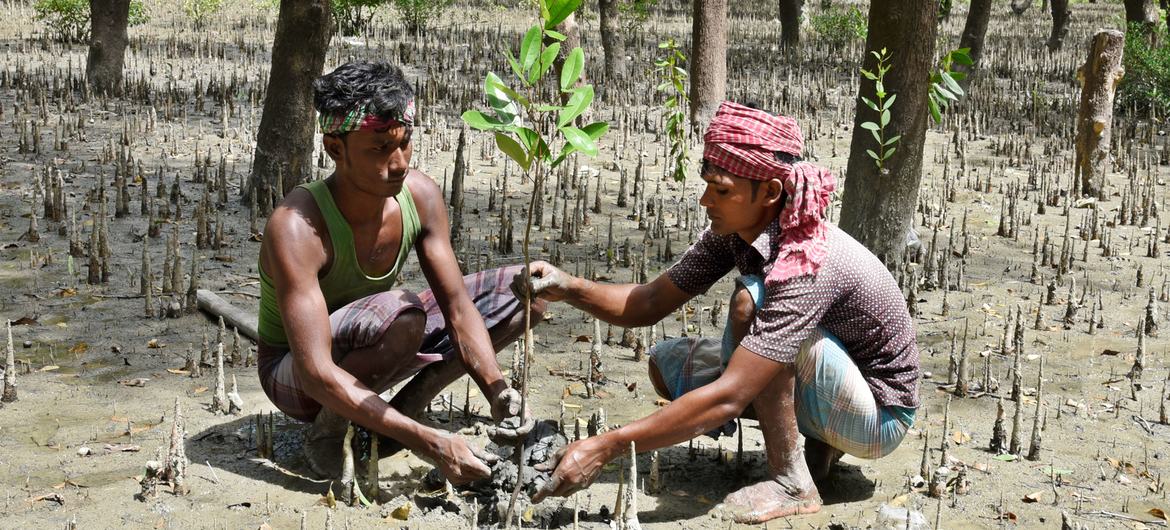
Two men plant trees as part of a reforestation initiative in coastal areas of Bangladesh.
© Global Commission on Adaptation (GCA)
 
Two men plant trees as part of a reforestation initiative in coastal areas of Bangladesh.

Restoring degraded land is not an expensive activity to undertake, but it is absolutely essential to provide more food security and to reduce conflicts. Every single dollar invested in land restoration can generate up to $30 in economic benefits, so investment in restoration activities is quite profitable from the economic point of view.

This is not just the responsibility of local communities but also of governments and crucially of the private sector because the largest driver of land use in the world is big agriculture.

UN News: Are we talking mainly about small developing countries? 

Ibrahim Thiaw: No. It's a global phenomenon that is affecting all countries including the United States, India, China, India or Pakistan.

But the impact is much more severe in small countries, and small economies that do not have reserves, nor the insurance systems to protect their people. And the level of vulnerability is much higher in communities whose revenues are only based on the income they can generate from land. 

UN News Desertification doesn't exist in isolation. How does it relate to climate change?

Ibrahim Thiaw: Desertification is an amplifier of climate change. Climate change is an amplifier of desertification because of course, with extreme events, you also have severe impact on land and on communities and local economies. 

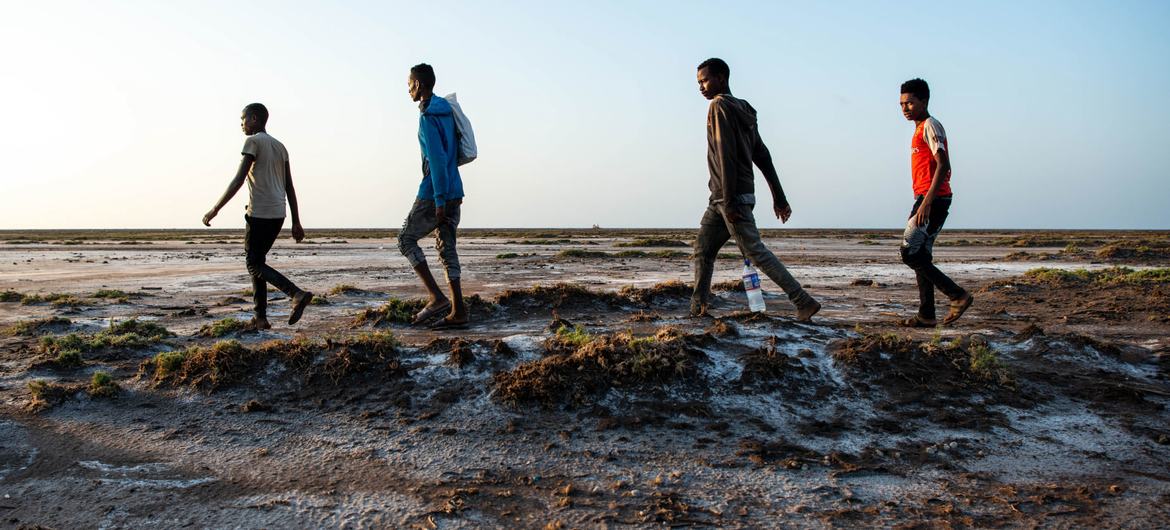
Many migrants, like these ones in Djibouti, are leaving home because they can no longer live off their land.
© IOM/Alexander Bee
 
Many migrants, like these ones in Djibouti, are leaving home because they can no longer live off their land.

So basically, they are mutually interacting and it is therefore important to have a more comprehensive global picture. It is wrong to think that you can protect biodiversity or the land without tackling the climate issue and vice versa. 

UN News: The small-scale interventions at a local level are very important, but it sounds as though it's going to need a huge push from governments, from the private sector to make a real difference?

Ibrahim Thiaw: Yes, we should not discard all of the efforts that are being made by the local communities day in, day out. They need much more support from governments. They also need to see less subsidies for the agriculture industry, that is destroying the environment. Public money that, in some cases, is destroying the environment should be used to actually rebuild economies. 

So, it is not necessarily that we need to inject more money, but we need to better spend the money that we have.

UN News: I guess some would say that's quite an over optimistic view that governments will be changing the way they spend their money? 

Ibrahim Thiaw: Well, no, it makes sense politically. As a taxpayer, I would like to see where my money is going. If it is being invested in activities that are destroying my environment and creating eco-anxiety for my children, destroying the livelihoods of my communities, then as a voter, I would insist that my government invests my money in other areas that would be generating more income for me and creating more sustainability.

UN News: You're from Mauritania in the Sahel. Have you seen this land degradation happen in real time? 

Ibrahim Thiaw: The situation is very sad. I've seen land degradation in my lifetime. But at the same time, I also have a lot of hope because I see positive changes coming. I see the younger generation being conscious of the fact that they need to reverse the trend.

I see more farmers and pastoralists trying to do their bit. I see more interventions from the international community, including from the humanitarian world that are investing in land restoration. So, I see a movement which gives me some hope that if we join our efforts and if we work in a collaborative manner, it would be possible to actually reverse the trend.

And the best hope I have is energy, which was the missing link for development and for small and medium enterprises. Energy is now accessible in remote places thanks to our ability to harness solar and wind energy. 

And the possibility of combining energy and agriculture is very positive, as you can harvest water, store food, reduce the food loss. You can process that food to create chains at the local level.


https://news.un.org/en/story/2024/06/1151066


https://creativecommons.org/licenses/by/3.0/legalcode

суббота, 15 июня 2024 г.

Climate change fuels tensions in Nigeria


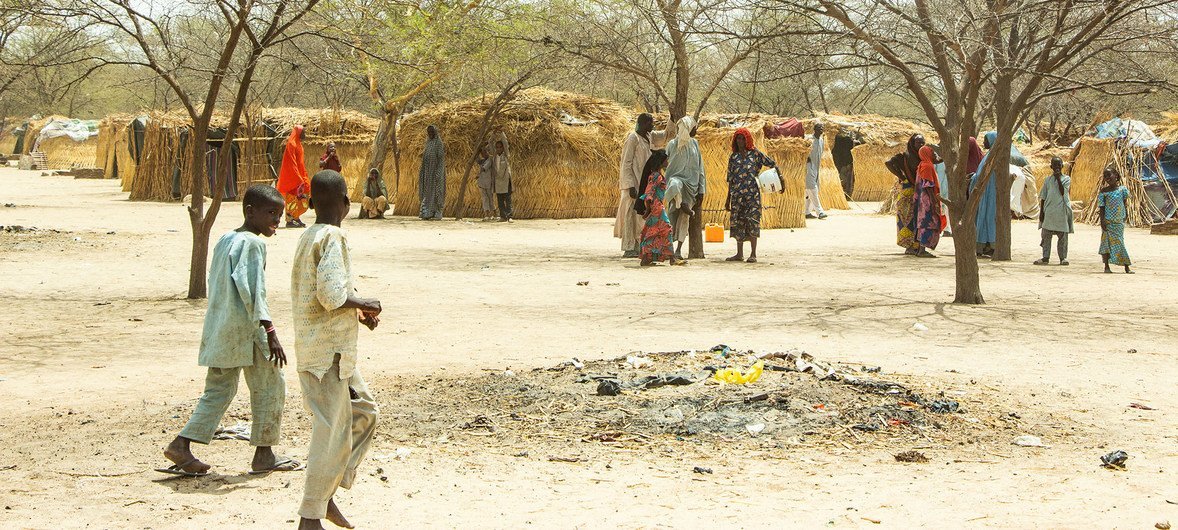
Climate change impacts continue to fuel tensions and drive displacement in Nigeria.
IOM/Jorge Galindo
 
Climate change impacts continue to fuel tensions and drive displacement in Nigeria.


14 June 2024
Humanitarian Aid

Despite its huge potential, Nigeria, Africa’s most populous country, continues to grapple with a host of challenges which are impacting people’s lives and triggering conflict over key resources, a senior UN official in the country said on Friday.

Speaking to reporters at UN Headquarters in New York, UN Resident and Humanitarian Coordinator in Nigeria Mohamed Malick Fall highlighted the worrying impact of climate change.

The country is witnessing climate-related shocks which are triggering displacement and driving conflict, he said, singling out clashes over dwindling resources between farmers and herdsmen.

This conflict is exacerbated by the climate crisis, which is forcing herding communities to leave their traditional lands in search of better grazing options.

Mohamed Malick Fall, the UN Resident and Humanitarian Coordinator in Nigeria
UN Photo/Loey Felipe
 
Mohamed Malick Fall, the UN Resident and Humanitarian Coordinator in Nigeria

Improvements in the northeast

The Boko Haram insurgency in Nigeria’s northeast has been controlled to some extent, Mr. Fall reported, with the situation there showing signs of improvement.

That sentiment is reflected in a recent survey carried out by the UN International Organization for Migration (IOM) looking at the aspirations of people displaced by conflict in the region.

Around 37 per cent taking part expressed a desire to return to their places of origin. Areas once worst affected by Boko Haram, such as Borno state, showed an even higher percentage willing to go back - two in three (67 per cent).

Similarly, about 38 per cent expressed the intention to stay in their current locations and integrate with local communities.

Primary factors influencing both groups include the reconstruction of homes destroyed in places of origin and the favourable security situation in areas where they have been displaced to, according to the IOM survey.

Inflation concerns

Mr. Fall further informed journalists of the Government’s efforts to institute economic reforms, such as through its “Renewed Hope” agenda which was launched last year.

Economists predict that inflation – a concern at present – could turn the corner and start falling by the end of the year.

“But in the meantime, we are seeing prices getting higher. Mainly food prices, which is impacting negatively on the possibility of people to access a decent life,” Mr. Fall said.

Two-track support

The Resident and Humanitarian Coordinator said the UN was aligning its operations with the Government’s priorities, taking a two-track approach.

One is the humanitarian response, helping save and improve lives of regular Nigerians, and reducing vulnerabilities.

The other, he added, is supporting efforts to spur development in pursuit of the Sustainable Development Goals (SDGs).


https://news.un.org/en/story/2024/06/1151106

https://creativecommons.org/licenses/by/3.0/legalcode

пятница, 14 июня 2024 г.

‘Without nuclear, it will be almost impossible to decarbonize by 2050’, UN atomic energy chief

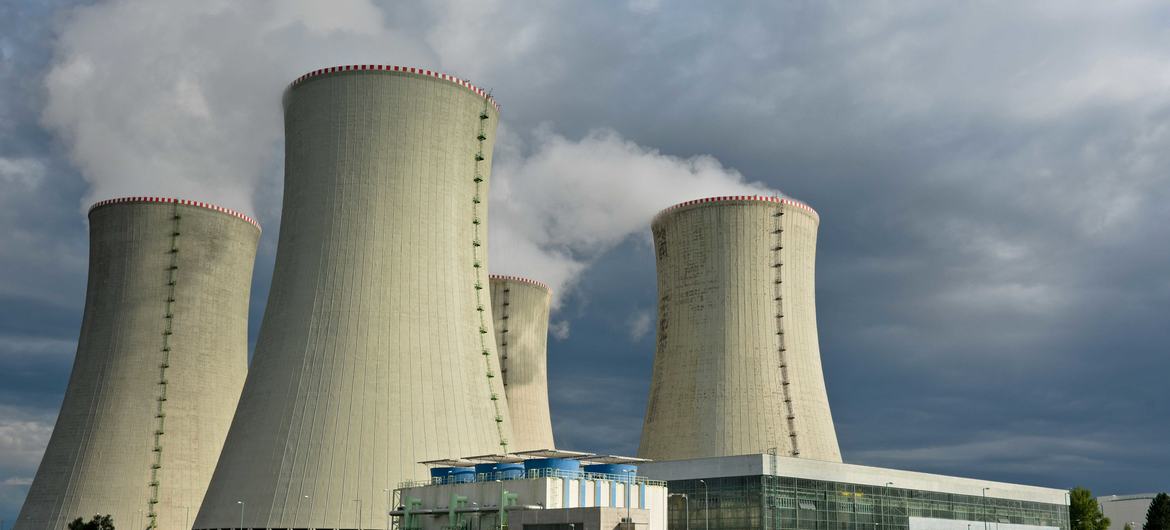
Nuclear power plant.

 Nuclear is already playing a big role in clean energy delivery. It is already part of the solution. 

Unsplash/Lukáš Lehotský
 
Nuclear power plant.

Conflict( the war)

13 June 2024

Although nuclear energy is widely used for electricity production, it has often faced an image problem, particularly in the wake of accidents such as the 1985 Chernobyl disaster, the 2011 Fukushima accident or, more recently, the occupation by Russian forces of the Zaporizhzhia nuclear power plant in Ukraine.

The issue of spent fuel, the highly radioactive waste produced by the process of producing energy in nuclear power plants, has also been periodically raised as a cause for concern.

But the image of nuclear power got a boost at the 2023 UN climate conference in Dubai (COP28), when 198 countries included nuclear energy in the list of low emission technologies that need to be scaled up if we're to end our reliance on fossil fuels.

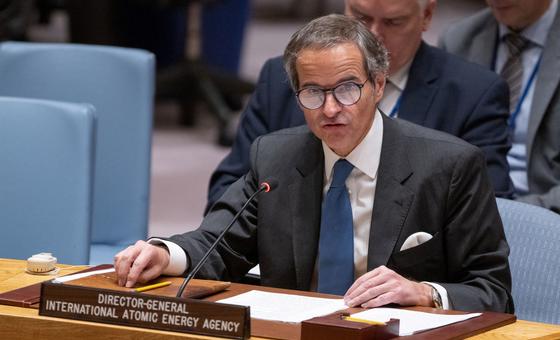
Ahead of an international conference on the safe management of spent fuel, UN News spoke to Rafael Mariano Grossi, the Director General of the International Atomic Energy Agency (IAEA) to discuss the growth of nuclear energy, and the difference the COP28 declaration is likely to make to the way it is perceived. 

Rafael Mariano Grossi, Director General of the International Atomic Energy Agency (IAEA), briefs members of the UN Security Council on protecting the Zaporizhzhia nuclear power plant in Ukraine.

Rafael Grossi It's been very important, in terms of public perception, policies, and understanding.

Nuclear is already playing a big role in clean energy delivery; more than a third of clean, CO2 free energy produced today in the world is nuclear. In Europe, where I live, it’s half. So, it is already part of the solution. 

The problem is that for many years, for a variety of reasons that have to do with Chernobyl or, later, Fukushima, there has been a lot of push back and misinformation about nuclear energy.

This has reverberated in the conferences and meetings and policy gatherings about energy in general; at the UN Climate Conferences, nuclear was resisted, not mentioned, and even rejected. 

The fact the nuclear energy was included alongside renewables at the 2023 Dubai conference was a major step. A number of important countries pledged to triple their own percentage of nuclear in their energy mix.

I don’t think that this a renaissance of nuclear, but a return to realism. The International Panel on Climate Change, which is a gathering of the greatest and the brightest scientists from all over the world studying climate issues, has recognized that, without nuclear energy, it will be almost impossible to decarbonize by 2050.

So, there will be more nuclear power and the IAEA, along with the UN System in general, will make sure this happens in a safe and secure way, and does not lead to the proliferation of nuclear weapons.

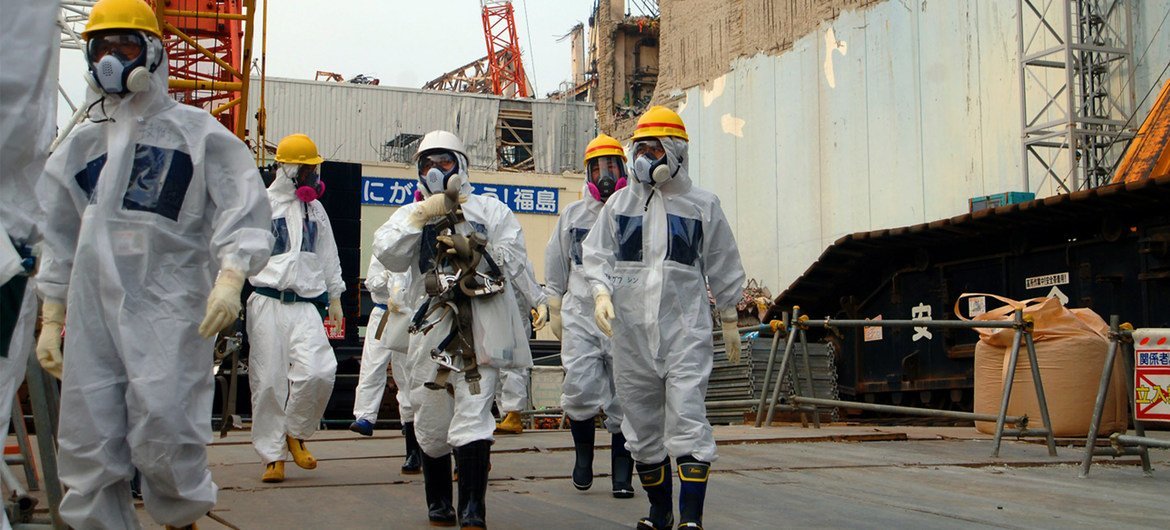
IAEA experts depart Unit 4 of TEPCO's Fukushima Daiichi Nuclear Power Station on 17 April 2013.
IAEA/Greg Webb
 
IAEA experts depart Unit 4 of TEPCO's Fukushima Daiichi Nuclear Power Station on 17 April 2013.

UN News When you say misinformation surrounding nuclear energy, what do you mean?

Rafael Grossi For example, the conventional wisdom is that thousands of people died because of the Fukushima nuclear accident. Whilst it’s true that thousands of people were killed by the tsunami [that hit Japan in March 2011], not a single person died from radiation. 

When you look at the statistics, you will see that in terms of mortality, nuclear is even lower than some renewable energies. Many people die in air accidents, but we don’t stop flying in aircraft. National governments have a responsibility to keep societies well-informed, and set the record straight. 

There has been a certain narrative surrounding nuclear for many decades, but now there are environmental or green parties that are pro-nuclear in places like Scandinavia, which have a strong very strong tradition of protecting the environment. 

This doesn’t mean that we will go 100 per cent nuclear: we believe in intelligent energy mixes, where nuclear is the baseload energy. It’s very stable, it’s available come rain or shine, you can regulate it, and you can integrate it with renewables. 

UN News One of the big issues that comes up at UN climate conferences is financing for developing countries. A lot of upfront money is needed to pay for nuclear power stations. Where is that money going to come from?

Rafael Grossi At the moment there is no international financing for nuclear, partly because of policies that are hostile to the technology. But that is starting to change, and international financial institutions are starting to review these policies.

We are seeing the growth of nuclear energy in the global South, from India and China, to Argentina, Brazil, Mexico, Bangladesh, and South Africa. Several African countries are interested, due to the development of small modular reactors, which are more affordable.

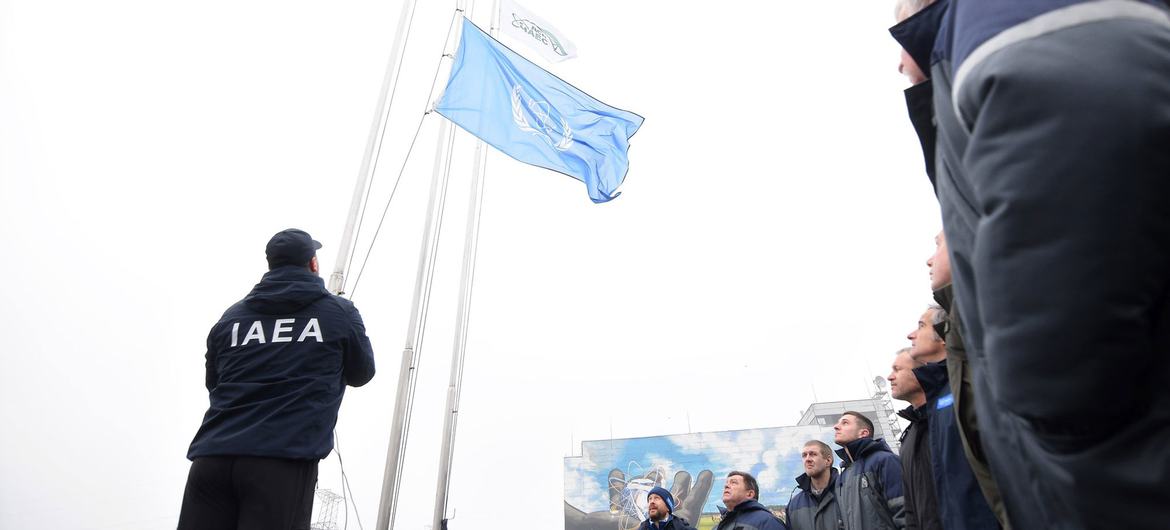
IAEA inspectors help ensure safety at Ukrainian nuclear power plants. .
© State Specialized Enterprise
 
IAEA inspectors help ensure safety at Ukrainian nuclear power plants. .

UN News The IAEA talks up the benefits and potential of nuclear energy, but you’re also responsible for nuclear security. How do you reconcile these seemingly contradictory mandates?

Rafael Grossi I would look at it differently. In Ukraine, nuclear infrastructure [the Zaporizhzhia nuclear power plant] has been occupied. The problem is not with the technology, it lies with the war and what is happening around it. 

We have around 440 nuclear reactors operating around the world without any hiccup or problem. This is why the agency has been so proactive in Ukraine, to avoid an accident. We take it very seriously, but it is an aberration.

Like any important industrial activity, nuclear energy does carry risks. Nuclear waste is a good example: it is well managed, and the amounts of waste are limited. After 70 years of commercial operation, there has never been a problem with waste. Compare that to the waste from fossil fuels, which is killing the planet.

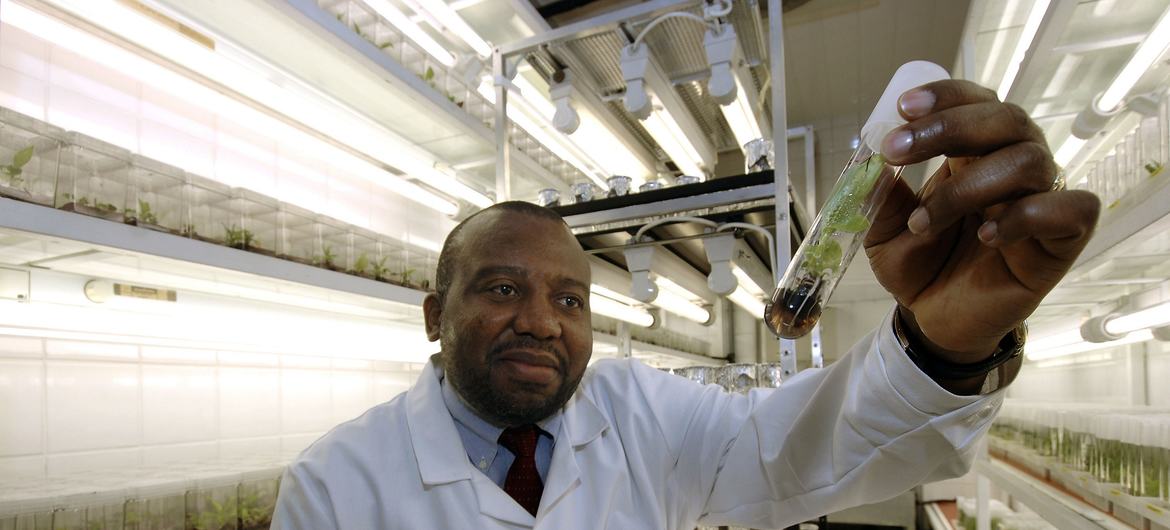
Technological and scientific innovations are revolutionizing the agrifood sector
© FAO/IAEA
 
Technological and scientific innovations are revolutionizing the agrifood sector

UN News The IAEA has its own labs. What are the main areas of scientific and nuclear research you’re involved in?

Rafael Grossi In areas such as oncology and radiotherapy, we provide the capacity building to allow developing countries to use the technology. Nuclear energy is also providing food security through irradiation techniques that prevent harvests from rotting, allow the development of seeds that are drought resistant and sterilize insects, lowering the threat of zika virus, or malaria. And, since the COVID-19 pandemic, we’ve been working on the early detection of pathogens and zoonosis. That is the other side of the IAEA; nuclear technology for development. 


https://news.un.org/en/interview/2024/06/1151006
https://creativecommons.org/licenses/by/3.0/legalcode

среда, 12 июня 2024 г.

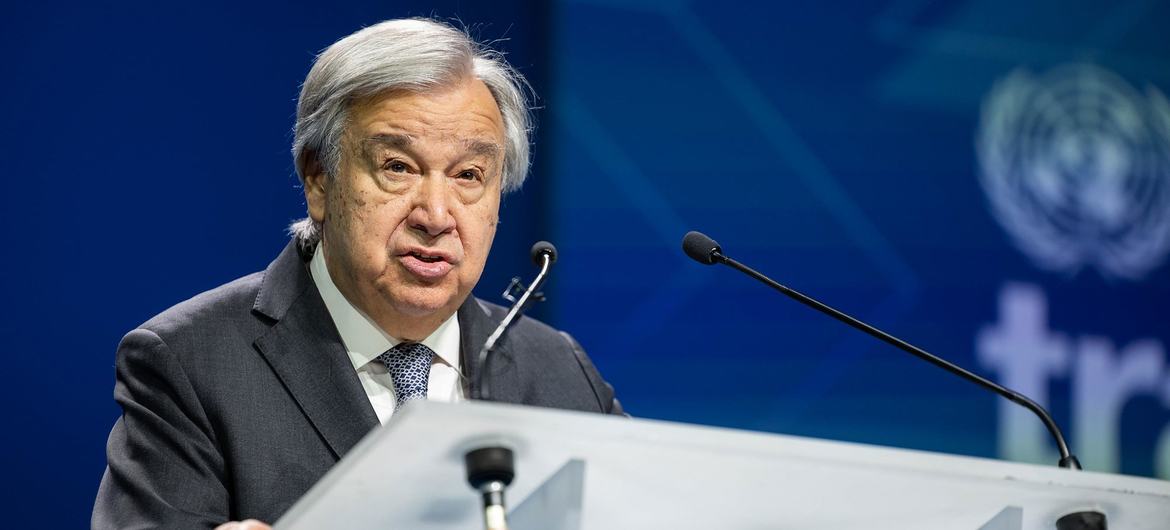
A. Guterres hails 60 years of UN trade and development action


UN Secretary-General António Guterres addresses the UNCTAD Global Leaders Forum in Geneva.
UNCTAD/Pierre Albouy
 
UN Secretary-General António Guterres addresses the UNCTAD Global Leaders Forum in Geneva.


12 June 2024
Economic Development

The right to development is inextricably linked with trade which the world’s poorest countries - now “mired in debt” through no fault of their own - have every right to pursue on much fairer terms, UN chief António Guterres insisted on Wednesday.

In a speech marking 60 years of UN Trade and Development – the agency previously known by the acronym UNCTAD - the UN Secretary-General highlighted the multiple challenges standing in the way of a more sustainable and inclusive global economy for all.

Tweet URL
UN

“New and protracted conflicts are having a ripple effect across the global economy. Global debt has soared while key development indicators, including poverty and hunger, have regressed,” Mr. Guterres told the UN Trade and Development Global Leaders Forum.

Global system’s flaws exposed

On a flying visit to Switzerland, Mr. Guterres reprised previous warnings that the world’s international financial architecture “has been exposed as outdated, dysfunctional, and unjust”. 

It has “failed to provide a safety net for developing countries mired in debt”, the UN chief insisted, as he issued the worrying assessment that the international trading system faces pressure “on all sides”, to the extent that it is now “teetering on the verge of fragmentation”. 

Taking sides

Against this deeply concerning backdrop, and amid escalating geopolitical tensions, rising inequality and soaring debt, Mr. Guterres insisted that the role of the Geneva-based agency UN Trade and Development was “more relevant than ever” in working for a more sustainable and inclusive global economy, through trade and investment.

The UN agency cannot be neutral on development problems – “just as the World Health Organization could not be neutral on malaria”, the UN chief said, referencing the famous words of Raul Prebisch, UNCTAD’s first Secretary-General. 

 “Trade has become a double-edged sword: a source of both prosperity and inequality; interconnection and dependence; economic innovation and environmental degradation,” Mr. Guterres said, as he urged greater dialogue between nations in the face of a near-tripling of trade barriers since 2019, “many driven by geopolitical rivalry, with no concern for their impact on developing countries”.

He added: “The world cannot afford splits into rival blocs. To implement the Sustainable Development Goals (SDGs) - and to ensure peace and security – we need one global market and one global economy, in which there is no place for poverty and hunger.”


https://news.un.org/en/story/2024/06/1150951


https://creativecommons.org/licenses/by/3.0/legalcode

вторник, 11 июня 2024 г.

UPDATING LIVE: From AI to war zones, UN hosts largest global meeting on disability issues

UPDATING LIVE: From AI to war zones, UN hosts largest global meeting on disability issues
Human Rights
7 June 2024
Welcome to this first ever guest-edited UN News live page. We’re reporting from the opening day of the 17th session of the Conference of States Parties (COSP17) to the game-changing Convention on the Rights of Persons with Disabilities. Our blogger-in-chief this morning is Nick Herd, an activist, actor and talk show host with Down syndrome whose mission is to amplify voices and drive change.


https://news.un.org/en/story/2024/06/1150786

https://creativecommons.org/licenses/by/3.0/legalcode