Избранное сообщение

пятница, 17 мая 2024 г.

Global economic growth improves but ‘downsides’ lurk


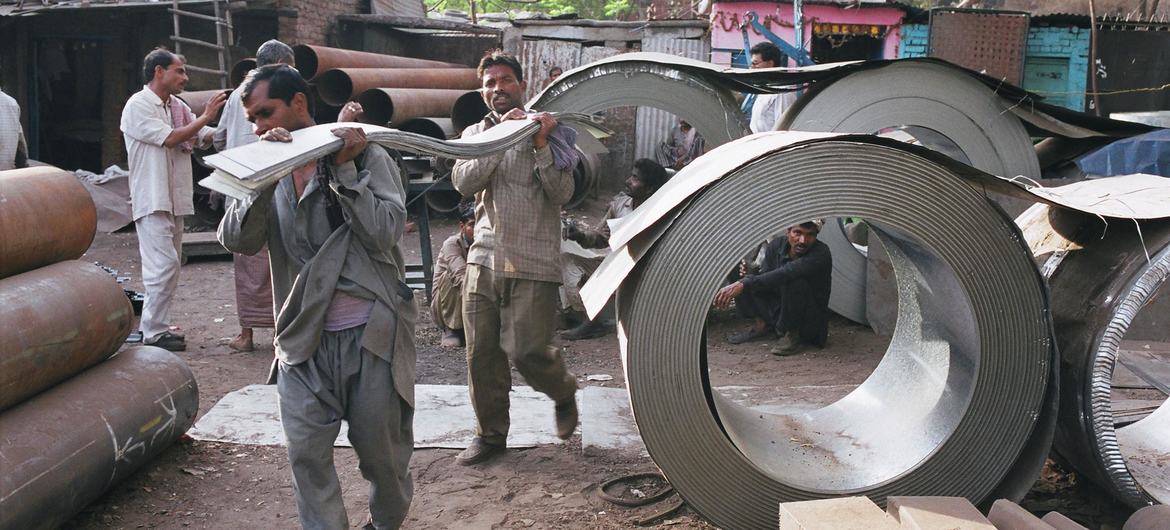
Porters work at a metal market in Narayana in New Delhi, India.
© ILO/Marcel Crozet
 
Porters work at a metal market in Narayana in New Delhi, India.


16 May 2024

Economic Development

The global economic picture has improved since January, but vulnerabilities remain, the mid-year update of the World Economic Situation and Prospects report published on Thursday has revealed.

The world economy is forecast to grow by 2.7 per cent in 2024, up from 2.4 per cent projected at the start of the year. Growth will reach 2.8 per cent in 2025, representing a slight increase.

These changes are mainly due to better-than-expected performance in some large developed and emerging countries, notably Brazil, India, Russia and the United States.

Inflation down, wages up 

Inflation is also down from the 2023 peak, said Shantanu Mukherjee of the UN Department of Economic and Social Affairs (DESA), presenting the report to journalists in New York. 

“In developed countries, tight labour markets are seeing wage increases for some parts of the population and also drawing people into the labor force, which is important,” he added. 

However, the outlook is only cautiously optimistic in the face of higher-for-longer interest rates, debt sustainability risks and continuing geopolitical tensions.  

Islands at risk 

Ever-worsening climate shocks are also a challenge, threatening decades of development gains, especially for the world’s Least Developed Countries (LDCs) and small island developing States (SIDS). 

Even though prospects for SIDS are being revised upwards to about 3.3 per cent each year, Mr. Mukherjee said this is still below the pre-pandemic average, meaning that “lost ground is still not being made up.”  

In the case of Africa and LDCs in general, prospects are revised downward to about 3.3 per cent growth in 2024. 

Concern for the continent 

“This is particularly worrying because Africa is home to about 430 million living in extreme poverty and close to 40 per cent share of the global undernourished population,” he explained. Furthermore, two-thirds of the high inflation countries listed in the report are on the continent. 

“At the same time, cause for concern is that African governments’ room to maneuver is also shrinking,” he continued. 

“In 2024, over a quarter of public revenues on average in this continent went towards interest payments. That's again about 10 percentage points more than the average over the years immediately preceding the pandemic.” 

For developing countries, on average, the debt situation is not as dire, but he was concerned that investment growth continues to fall. 

These “downsides” are further compounded by risks such as inflation, which is both a symptom of the underlying fragility and a concern on its own. 

Break the ‘resource curse’ 

The report also contains a special section on critical minerals such as lithium, nickel, cobalt and copper, that are essential for the transition to clean energy. 

Countries that possess these resources will, however, need smart policies, as well as effective implementation capacities to reap the benefits. 

Mineral-sector driven grown has in the past often been associated with environmental damage, stunted development of other sectors, poverty, conflict and other adverse outcomes collectively known as the “resource curse”. 

“It is imperative for developing countries to design and implement well-targeted and timely economic, social, and environmental policies to optimize the benefits of their critical minerals endowments and avoid another cycle of resource curse,” the report said.


https://news.un.org/en/story/2024/05/1149851

https://creativecommons.org/licenses/by/3.0/legalcode

четверг, 16 мая 2024 г.

Изменение климата: апрель продемонстрировал очередные температурные рекорды


Изменение климата: апрель продемонстрировал очередные температурные рекорды

В ВМО ожидают, что глобальное потепление и другие долгосрочные тенденции изменения климата будут продолжаться.
© ВМО/Б. Хржик
 
В ВМО ожидают, что глобальное потепление и другие долгосрочные тенденции изменения климата будут продолжаться.
10 мая 2024 г.Климат и окружающая среда

Минувший апрель стал самым теплым за всю историю наблюдений – метеорологи фиксируют рекордные глобальные температуры одиннадцатый месяц подряд. Об этом сообщают в пятницу из Всемирной метеорологической организации (ВМО) со ссылкой на данные Европейской службы по изменению климата программы «Коперник». Температура поверхности моря была рекордно высокой за последние 13 месяцев.

Продолжительная жара

В ежемесячном докладе подчеркивается необычайная продолжительность рекордных температур, вызванных природным явлением Эль-Ниньо, а также дополнительной энергией, удерживаемой в атмосфере и океане парниковыми газами, образующимися в результате деятельности человека. Аналогичная тенденция наблюдалась и во время явления Эль-Ниньо в 2015-2016 годах.

Жаркий апрель

Средняя температура приземного воздуха в апреле 2024 года составила 15,03 °C, что на 0,67 °C выше среднего значения за апрель 1991-2020 годов и на 0,14 °C выше предыдущего максимума, установленного в апреле 2016 года.

Месяц был на 1,58 °C теплее, чем оценка среднего апрельского показателя за 1850-1900 годы – этот период ученые называют «доиндустриальным». Специалисты поясняют, что ежемесячные превышения температуры на 1,5 °C не означают, что цель, заложенная в Парижском соглашении по климату, невыполнима. В документе речь идет о долгосрочном повышении температуры в течение десятилетий.

Рекордные температуры сопровождались серьезными погодными явлениями, в том числе сильной жарой во многих частях Азии, засухой на юге Африки и экстремальными осадками на Аравийском полуострове. Постоянные проливные дожди в Восточной Африке и на юге Бразилии усилились в первую неделю мая, что привело к разрушительным и смертоносным наводнениям.

«Большое число экстремальных погодных и климатических явлений (включая рекордные дневные и месячные температуры и количество осадков) более вероятно в более теплом мире», – сказал эксперт ВМО по климату Альваро Сильва. 

По его словам, температура поверхности моря в нескольких океанических бассейнах, в том числе в тропическом поясе, продолжает оставаться рекордно высокой, высвобождая больше тепла и влаги в атмосферу и, таким образом, усугубляя ситуацию. 

Экстремальные погодные явления 

На территории Европы в апреле наблюдались большие перепады температур. Температура была выше средней на севере и северо-востоке Северной Америки, в Гренландии, на востоке Азии, на северо-западе Ближнего Востока, в некоторых частях Южной Америки и на большей части Африки.

Индия страдала от волн жары в апреле и начале мая, при этом Метеорологический департамент Индии выпустил многочисленные рекомендации и предупреждения для защиты здоровья людей. Самая высокая максимальная температура 47,2 °C была зарегистрирована в Ганге, Западная Бенгалия, 30 апреля. В Бангладеш в качестве меры предосторожности против опасной жары были закрыты школы.

По данным Метеорологического департамента Таиланда, 27 апреля в стране было зарегистрировано много новых температурных рекордов – в некоторых местах жара превысила 44 ºC, а в Мьянме был установлен новый температурный рекорд в 48,2°C. 

В Мексике также зафиксированы необычно высокие температуры – 45,8 °C. Ожидается, что волна тепла там продолжится с максимальными температурами выше 40 °C.


https://news.un.org/ru/story/2024/05/1452116


https://creativecommons.org/licenses/by/3.0/legalcode

70-я годовщина Гаагской конвенции: ЮНЕСКО выдвигает новые инициативы по защите культурных ценностей


70-я годовщина Гаагской конвенции: ЮНЕСКО выдвигает новые инициативы по защите культурных ценностей

В связи с празднованием 70-летия Конвенции о защите культурных ценностей в случае вооруженного конфликта ЮНЕСКО отмечает значительный прогресс, достигнутый благодаря этой Конвенции. В ходе международной конференции в Гааге, организованной совместно с Нидерландами, ЮНЕСКО объявляет о новых инициативах.

©UNESCO
15 мая 2024

14 мая 1954 года, по следам разрушений, которые причинила Вторая мировая война, международное сообщество под эгидой ЮНЕСКО приняло Конвенцию о защите культурных ценностей в случае вооруженного конфликта, известную как Гаагская конвенция.

Впервые была создана единая глобальная правовая база для обеспечения защиты культурных ценностей от боевых действий и привлечения к ответственности лиц, виновных в преднамеренном разрушении таких ценностей.

Эта Конвенция не только укрепила международное право и установила постоянный диалог между специалистами в области культуры и военными структурами, но и привела к принятию весьма ощутимых превентивных мер, осуществляемых в мирное время во всех регионах мира

Одрэ АзулеГенеральный директор ЮНЕСКО

70 лет активных действий на местах

Эти меры включают в себя проведение локальных инвентаризаций культурных ценностей, маркировку этих ценностей эмблемой «Голубой щит», обучение военного персонала и поддержку создания подразделений, специализирующихся на сохранении культурных объектов. Только за последние пять лет в разных странах прошли обучение более 7 500 военнослужащих.

ЮНЕСКО также оказала финансовую помощь десятку стран, чтобы они могли лучше предвидеть риски, предпринимать решительные действия во время конфликтов и сокращать сроки постконфликтного восстановления. Среди получателей помощи — Буркина-Фасо, Ливия, Мали, Парагвай и Украина.

Конвенция 1954 года также привела к созданию Списка культурных ценностей, находящихся под усиленной защитой, который в настоящее время включает 55 культурных объектов. Этот статус влечет за собой принятие дополнительных мер защиты и предупреждает все международное сообщество о непосредственной опасности нанесения ущерба. Он также предоставляет широкие полномочия судебной системе для преследования лиц, виновных в нанесении ущерба или разрушении.


Три новые инициативы, поддержанные ЮНЕСКО

Спустя 70 лет со дня принятия Всеобщей декларации прав человека ЮНЕСКО и Нидерланды организовали в Гааге международную конференцию экспертов, чтобы подвести итоги достигнутого к настоящему времени и решить оставшиеся проблемы. По этому случаю ЮНЕСКО объявила о трех новых инициативах в соответствии с текущими потребностями и техническими ресурсами.

Во-первых, это создание международной программы подготовки судей и прокуроров в области сбора данных, анализа и расследования случаев разрушения наследия. После того как в 2016 году Международный уголовный суд вынес первый обвинительный приговор, ознаменовавший исторический перелом, ЮНЕСКО продолжает стремиться к дальнейшему укреплению правовых механизмов защиты культурных ценностей. Эта учебная программа будет создана по образцу существующей схемы, в рамках которой уже более десяти лет ведется подготовка работников судебной системы по вопросам свободы печати.

Во-вторых, это создание «военно-гражданского альянса по защите культурных ценностей», задачей которого будет ускорить создание подразделений, специализирующихся на защите наследия, особенно в Африке, и наладить их связи с экспертами по наследию для обмена опытом и передовой практикой.

Наконец, это подготовка управляющих объектами и военных в области передовых технологий, которые могут помочь в деле охраны наследия. ЮНЕСКО будет поддерживать государства-участники Конвенции в их усилиях по более широкому использованию дистанционного зондирования с помощью спутниковых снимков, искусственного интеллекта и превентивной оцифровки культурных ценностей.

О ЮНЕСКО

Организация Объединенных Наций по вопросам образования, науки и культуры содействует укреплению мира и безопасности путем расширения международного сотрудничества в области образования, науки, культуры, коммуникации и информации. В ЮНЕСКО входят 194 государства-члена и работает более 2300 сотрудников, которые координируют работу сети из более чем 2000 охраняемых объектов всемирного наследия, биосферных заповедников и глобальных геопарков; сети творческих, обучающихся, инклюзивных и устойчивых городов; а также более 13 000 ассоциированных школ, университетских кафедр, учебных и исследовательских учреждений. Организация имеет представительства в 54 странах, а ее штаб-квартира располагается в Париже. Генеральный директор ЮНЕСКО — Одрэ Азуле


 https://www.unesco.org/ru/articles/70-ya-godovschina-gaagskoy-konvencii-yunesko-vydvigaet-novye-iniciativy-po-zaschite-kulturnykh

https://creativecommons.org/licenses/by/3.0/legalcode

UN forum in Bahrain endorses declaration on entrepreneurship and innovation for the SDGs


UN forum in Bahrain endorses declaration on entrepreneurship and innovation for the SDGs

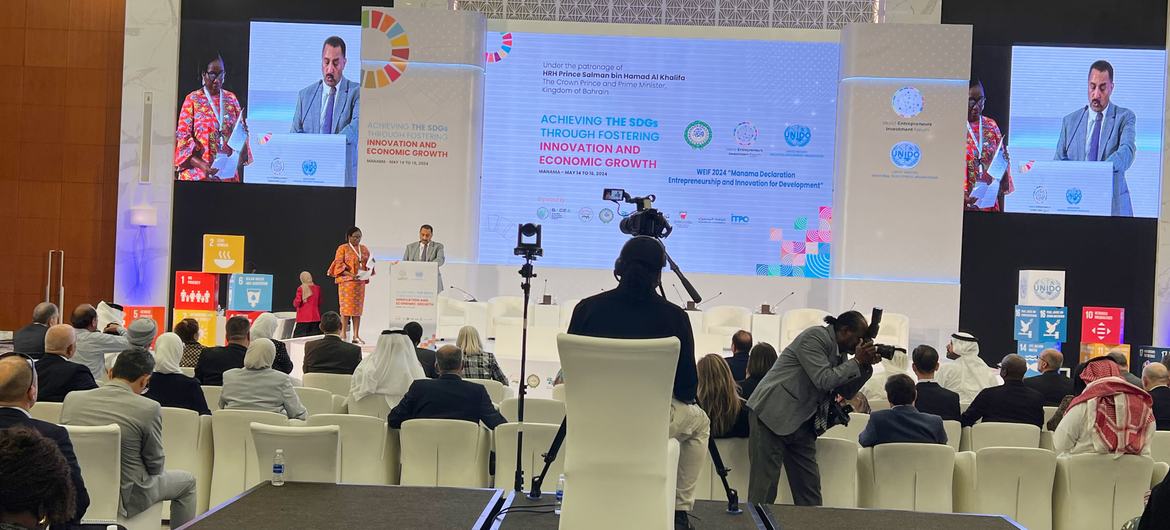
Dr. Hashim Hussein (on screen), Head of UNIDO’s International Technology and Innovation Promotion Office (ITPO) in Bahrain, presents the Manama declaration.
UN News/Abdelmonem Makki
 
Dr. Hashim Hussein (on screen), Head of UNIDO’s International Technology and Innovation Promotion Office (ITPO) in Bahrain, presents the Manama declaration.
15 May 2024Economic Development

Delegates attending a UN forum in Bahrain endorsed on Wednesday a declaration calling on the international community to harness the power of entrepreneurship and innovation in pursuit of the Sustainable Development Goals (SDGs), with a strong emphasis on including women, youth, persons with disabilities and productive families in these efforts. 

The fifth Manama Declaration, named after the Bahraini capital where the 2024 World Entrepreneurship Investment Forum (WEIF) has been running since Tuesday, echoed the gathering’s theme: innovation can drive development of technologies and products to help address socioeconomic and environmental challenges.  

The resulting economic advances can provide the resources needed to invest in sustainable development.

In a message to the Forum, UN Secretary-General António Guterres, looking ahead to the highly anticipated UN Summit of the Future in September, encouraged delegates in Manama to “find ways to harness the power of entrepreneurship and innovation to make our world a better place for all people and the planet we share.”

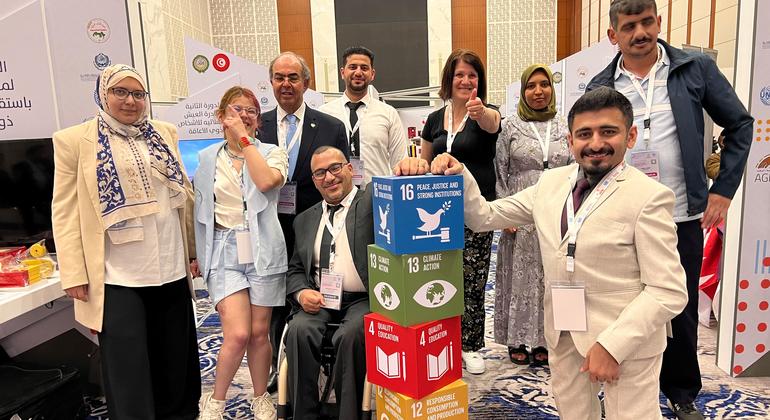
The issue of innovation and entrepreneurship as a vehicle to fast-track achievement of the SDGs was highlighted on the margins of the forum, where persons with disabilities showcased how technology helps them overcome obstacles and ultimately, build inclusive communities.

A group people with disabilities who are participating in WEIF 2024.
UN News/Abdelmonem Makki

Inclusive society

WEIF is facilitated by the UN Industrial Development Organization (UNIDO) in partnership with local, regional and international partners.

Hashim Hussein, who heads up that Office, noted earlier stated that 15 per cent of people in the Arab region have disabilities, so innovation and entrepreneurship are important to ensure an inclusive society.

On Wednesday Tarek Salem, Co-founder and CEO of Egypt-based AccessLife, which offers a range of assistive technology for persons with disabilities and older persons, told UN News: “I have quadriplegia and cannot move my legs or fingers. I faced a great challenge in relying on myself.”

He went on to explain the three stages of the AccessLife programme: “The first stage is to bring all medical tools under one platform, and we also prepare video clips to educate persons with disabilities as they may not know these tools exist nor how they can help [with self-reliance]. For the second stage, we conduct a survey to find out the tools that [are needed] most, with the aim of manufacturing them. [Thirdly], and most important, is that we create an inclusive society for people with disabilities.”

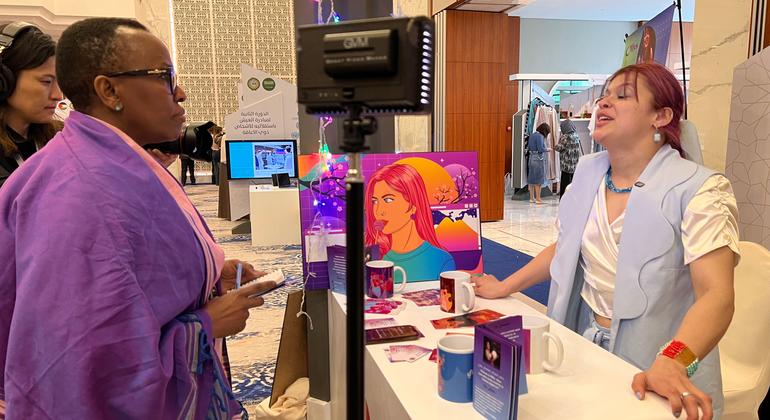
UN News’s Assumpta Masoi interviews Olfa Dabbabi, a young woman from Tunisia who founded the company OLFUS, which uses digital art to convey various messages, including encouraging people facing challenges.
UN News/Abdelmonem Makki

Innovation and disability 

Olfa Dabbabi, a young Tunisian woman with a disability of the nervous system, came to WEIF to spotlight OLFUS, the company she founded, which uses digital art to convey various messages, including encouraging people facing challenges.  

She told UN News that she refused to let her disability deprive her of the right to contribute to her community. This was especially relevant as people are increasingly being judged by their appearances and as the plague of online bullying is only making matters worse.

“I was bullied as a kid. I have a disability and [was bullied because of that] but my family was with me,” she stated.

Speaking from a booth showcasing her digital artwork, Ms. Dabbabi said: “Even though I have a disability...it did not hinder me but rather inspired me to confront it and become the woman I am now. Innovation and technology are not only my passion but enablers of the work I am doing now... [they] enable me to serve others.”

She went on to say: “I like to talk about bullying because it is not a good thing to do. I also talk about the importance of accepting who we are and rejecting body shaming, as well as [about] mental health.”

Ms. Dabbabi uses computer technology and artificial intelligence (AI) to create her art and print the images on T-shirts and mugs. She wants to share messages that can help those facing similar challenges.

Abdullah Shabana, who hails from Saudi Arabia, focuses on participatory design, which is an idea initiated by MIT and the Saudi Authority for Intellectual Property.

“Participatory design is an initiative that brings together designers and persons with disabilities...starting from the research idea through to the production idea. Through participatory design, more than one project is produced,” he told UN News.

At WEIF the project he was presenting was a voice application that serves people who have difficulty communicating. “The application enables people with disabilities to communicate in the language of the people of the country.”

A beacon of hope in Palestine

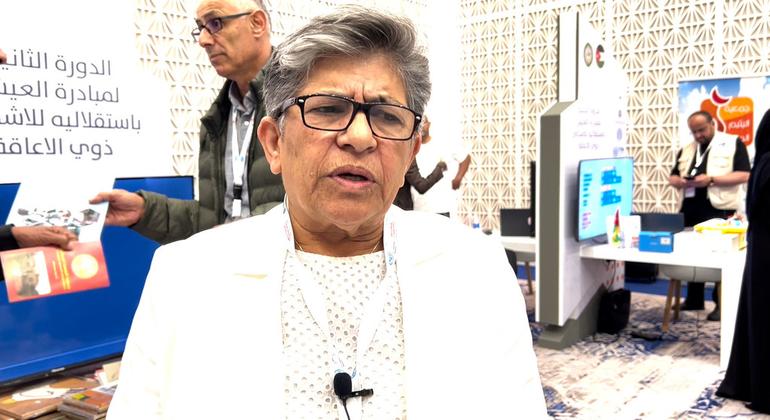
Also speaking to UN News was Nadia Musleh, President of the Women’s Renaissance Association, established in Ramallah in 1925 as the first project to care for people with disabilities in Palestine.  

“We have a rehabilitation center that serves between 45 and 60 disabled people daily. We provide them with daily plans and programmes. The center teaches people with disabilities how to make various hand tools, coloring and drawing. We came here to highlight what we have in Palestine,” Ms. Musleh told UN News.

“With us here is Anton, who joined the association at the age of 3 years. He is now 40 years old and specializes in making games,” she explained.

Nadia Musleh is the President of the Women's Renaissance Association in Ramallah, which was established in 1925.
UN News/Abdelmonem Makki

Innovation and the ‘orange economy’

The Manama Declaration also calls on the international community to promote and leverage promising new sectors such as the creative or ‘orange economy’, embrace digital transformation, including artificial intelligence, and instill smart farming practices that would create jobs and attain economic development.

Governments, the private sector, academia, civil society, media, and international organizations, as well as all ecosystem operators, are called upon to cooperate in facilitating the promotion of entrepreneurship and innovative enterprises towards achieving the Sustainable Development Goals and the outlook towards the year 2050.

The two-page document calls on all stakeholders to work together to promote entrepreneurship and innovation towards achievement of the SDGs. It looks ahead to 2050 and concludes with a call to the international community “to end conflicts and extend swift support to women and youth in post-conflict areas.”

The Manama Declaration will be presented to the UN General Assembly.

The WEIF will wind up tomorrow with focus on ‘women, peace and security’, including promoting stability in conflict-affected countries by funding female entrepreneurs.


https://news.un.org/en/story/2024/05/1149791


https://creativecommons.org/licenses/by/3.0/legalcode

понедельник, 13 мая 2024 г.

UN teams dispatch aid as deadly flash floods hit northern Afghanistan


UN teams dispatch aid as deadly flash floods hit northern Afghanistan

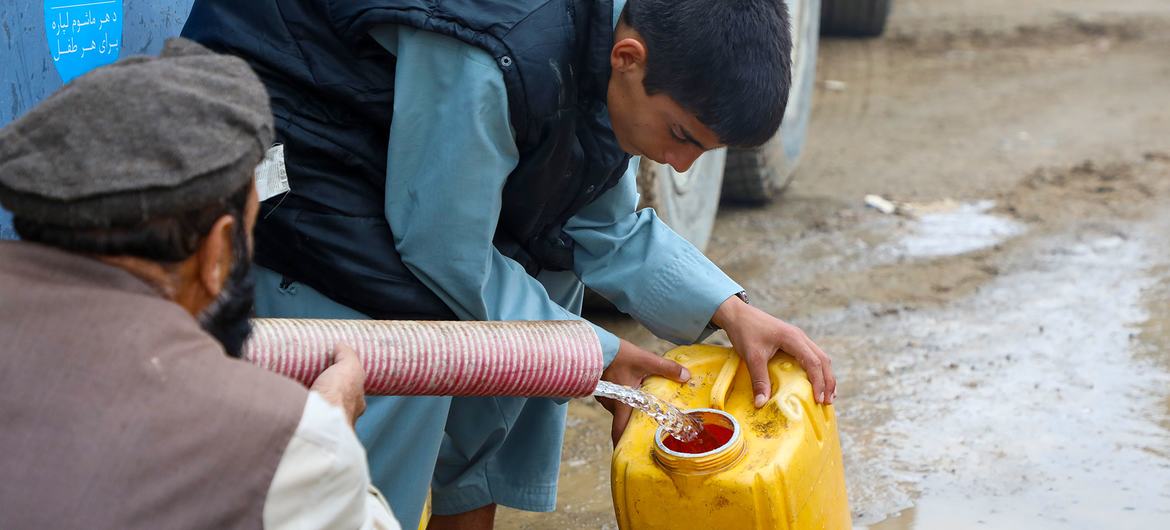
UN agencies worked with local authorities in Afghanistan to distribute aid and emergency services following floods in 2023. (file)
© UNICEF/Hasinullah Qayoumi
 
UN agencies worked with local authorities in Afghanistan to distribute aid and emergency services following floods in 2023. (file)


12 May 2024

Humanitarian Aid

UN humanitarian teams scrambled to get lifesaving aid to communities devastated by deadly flash floods in northeastern Afghanistan over the weekend.

Flash floods in the area have reportedly killed at least 300 people, including 51 children, with many more injured, with these figures expected to increase as additional reports come in, according to UN agencies.

Tweet URL
IOMAfghanistan

UN chief António Guterres expressed his condolences to the families of the victims.

“The United Nations and its partners in Afghanistan are coordinating with the de facto authorities to swiftly assess needs and provide emergency assistance,” said his spokesperson in a statement, extending wishes for a swift recovery to those injured and condolences to the families of the victims.

Most of the casualties were reported in Baghlan province, where heavy rains destroyed an estimated 3,000 houses, flooded farmland, washed away livestock, closed schools and damaged health centres.

Takhar and Badakhshan provinces were also impacted with initial reports of at least 300 houses damaged, according to the UN Children’s Fund (UNICEF).

UN teams mobilise on the ground

“UNICEF and our partners are on the ground and are making every effort to bring quick relief to the affected families and communities,” Dr. Tajudeen Oyewale, UNICEF Representative in Afghanistan, said on Sunday, expressing condolences to the families mourning the loss of loved ones.

A UNICEF-supported mobile health and nutrition team has also been dispatched and teams are on the ground to help conduct additional assessments.

“The heavy rains and subsequent floods have disrupted lives and pose a significant risk to children in the affected provinces,” Dr. Oyewale said. “As families cope with the loss, maintaining access to safe water, health and protection services is paramount. As always, UNICEF stands with the children and people of Afghanistan during this difficult time.”

Aid swiftly deployed

Working with partners, UN agencies are already distributing aid.

UNICEF has dispatched 450 family kits, 500 hygiene kits, 476 blankets for adults and babies and 100 clothing kits alongside support provided by other UN agencies and partners.

Meanwhile, the UN migration organisation (IOM) has been distributing aid packages that include temporary shelters, essential non-food items, solar modules, clothing and tools for repairs to their damaged shelters.

The UN World Food Programme (WFP) is currently distributing energy biscuits to survivors of the floods, according to the agency’s post on social media on Sunday.

WFP also said this flood is one of the many events in recent weeks caused by unusually heavy rains.

Extreme weather highlights need for resilient efforts

UN relief chief Martin Griffiths said “this extreme weather event underscores the need for climate-resilient humanitarian efforts.”

Meanwhile, the UN relief agency, OCHA, is working with partners and national authorities to provide shelter, food and healthcare, he said in a post on X on Sunday.

Afghanistan is among the 10 most vulnerable countries to climate change and has been experiencing a rise in extreme weather conditions, notably floods, drought and sand and dust storms, resulting in the loss of lives and livelihoods and significant damage to infrastructure.


https://news.un.org/en/story/2024/05/1149636


https://creativecommons.org/licenses/by/3.0/legalcode

пятница, 10 мая 2024 г.

World News in Brief: Vaccine ‘patches’ trial shows promise, lowering catheter infection risk


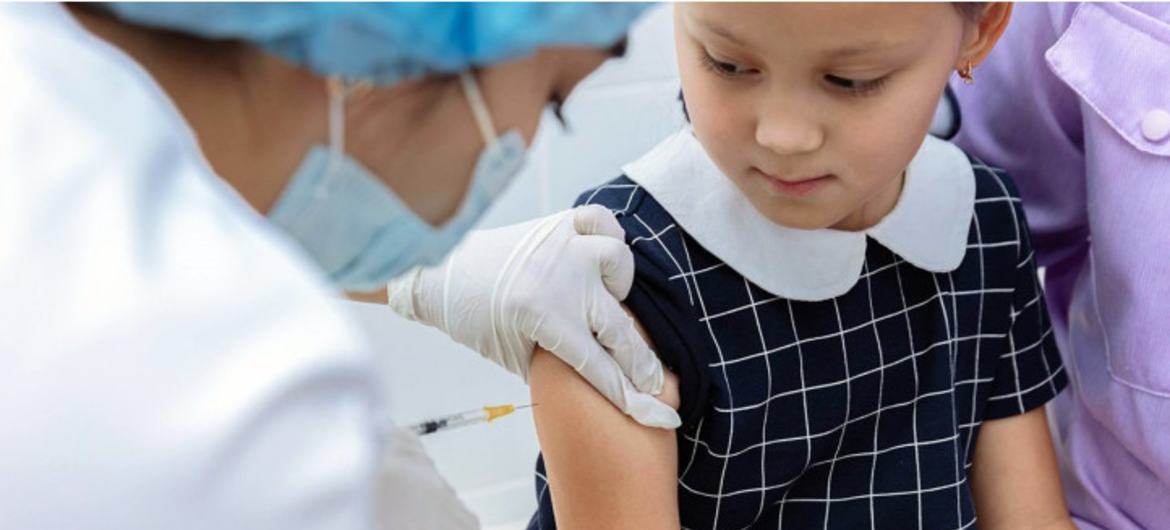
A girl in Kazakhstan receives a measles vaccine. New trials of a vaccine patch instead of shots, are showing promise.
© WHO
 
A girl in Kazakhstan receives a measles vaccine. New trials of a vaccine patch instead of shots, are showing promise.


9 May 2024
Health

Few enjoy having injections and if you have children, you probably like them even less when it’s time for their mandated vaccine shots.

But now, there could be an easier alternative in the form of patches that can be simply applied to the skin, much like a sticking plaster.

Early data from a vaccine patch trial in the Gambia has shown promising indications that it could be effective in protecting children from measles.

Tweet URL
WHOAFRO

The UN World Health Organization (WHO) has been helping to develop these vaccine microarray patches – or MAPS – as they are known, for several years already.

Birgitte Giersing, team lead at WHO’s Vaccine Product and Delivery Research Unit, said that the patches could be a major breakthrough in protecting vulnerable populations from preventable diseases.

Groundbreaking potential

“They are potentially groundbreaking vaccine delivery technology that could really contribute to increasing the coverage of life saving vaccines like measles and rubella…especially in low resource settings”, she told reporters in Geneva.

“And this is because they can be more easily delivered than vaccines that need to be injected, especially in outbreaks or in humanitarian emergency situations.”

Dr. Giersing explained that the patches could be especially useful in combating measles and rubella. Vaccines for both of these diseases have been available for decades but coverage levels dropped during the COVID-19 pandemic and now there are many millions of susceptible children in many countries.

“People may be more willing to be vaccinated by a patch than by a needle, so there's really an acceptability advantage” to the patches, Dr Giersing said.

First ever guidelines to lower infection rates due to catheters published

In further health news, WHO on Thursday published the first global guidelines to prevent bloodstream and other infections caused by use of catheters placed in minor blood vessels while patients are undergoing minor procedures.

Poor practices in the routine use of catheters – how they are inserted and removed in the arm for example – can lead to a high risk of infections entering the system via the blood.

Serious consequences

This can lead to serious conditions such as sepsis, and difficult-to-treat complications in major organs like the brain and kidneys, WHO said.

Soft tissue infections at the insertion site of the catheter can also occur.

People who receive treatments through catheters are often particularly vulnerable to infections, as they might be seriously ill or have low immunity.

WHO estimates that from 2000 to 2018, average mortality among patients affected by healthcare-associated sepsis was 24.4 per cent, increasing to 52.3 per cent among patients treated in intensive care units.

“Infections associated with health care delivery represent a preventable tragedy and a serious threat to the quality and safety of health care,” said Dr. Bruce Aylward, WHO Assistant Director-General.

“Implementing clean care and infection prevention and control recommendations is critical to saving lives and alleviating a great deal of avoidable suffering experienced by people around the world.”

The new guidelines include 14 good practice statements and 23 recommendations on key areas for health workers, including better education and training for health workers.


https://news.un.org/en/story/2024/05/1149561

https://creativecommons.org/licenses/by/3.0/legalcode

First UN civil society forum held in Africa heralds ‘inclusive’ Summit of the Future


First UN civil society forum held in Africa heralds ‘inclusive’ Summit of the Future

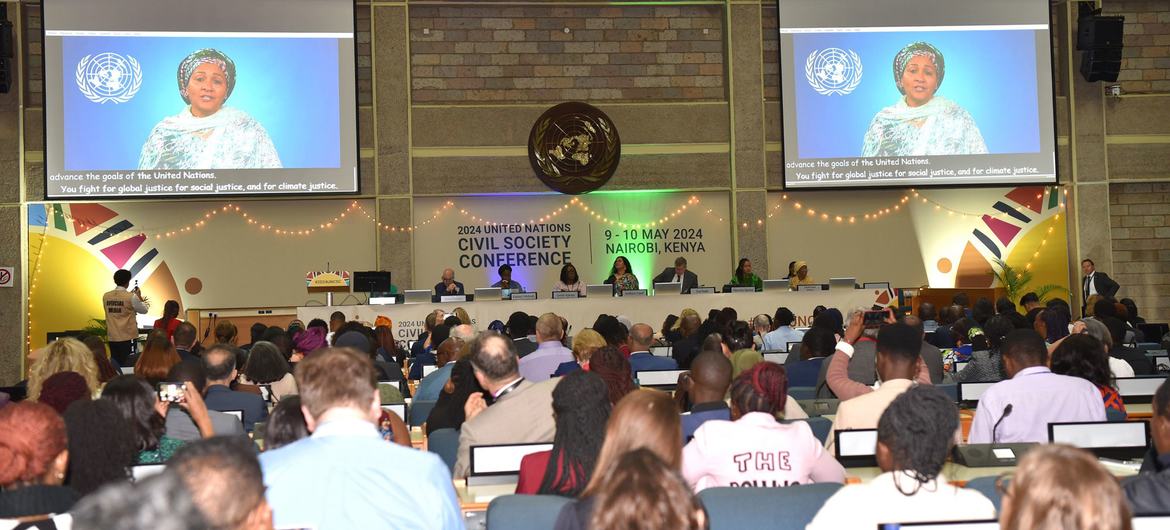
Delegates at the opening of the UN Civil Society Conference in Nairobi, Kenya. On-screen, UN Deputy Secretary-General Maina Mohammad.
UN Nairobi
 
Delegates at the opening of the UN Civil Society Conference in Nairobi, Kenya. On-screen, UN Deputy Secretary-General Maina Mohammad.


9 May 2024

UN Affairs

‘Meaningful participation’ and ‘inclusion’ were the buzzwords at the opening on Thursday of a major UN conference in Nairobi, Kenya, where governments were urged to heed the diverse voices of civil society, which were well-placed to work alongside them in building a fairer and more just future.

Bringing together civil society actors, government representatives, senior UN officials, young changemakers, academic and other stakeholders, the UN Civil Society Conference is the premier event on the civil society calendar at the United Nations, ahead of the Summit of the Future, set for this coming September. 

Amina Mohammed, Deputy Secretary-General, in a video message to the event, began by expressing deep condolences to the victims of the devasting floods in Kenya and reiterating the United Nation’s continued commitment to supporting the Kenyan Government during this challenging time. 

Tweet URL
UN

Civil society’s ‘strong voice’

She underscored how every day, civil society groups around the world work tirelessly to advance the goals of the United Nations. 

“You fight for global justice, for social justice and for climate justice.  For peace, for gender equality, for human rights and for the SDGs [Sustainable Development Goals],” said Ms. Mohammed, said, adding: “You stand in solidarity with the vulnerable and the marginalized.” 

“This Conference is a testament to the strong voice of civil society, despite rising threats and shrinking space.”

Ms. Mohammed went on to explain the Conference reaffirmed that the upcoming Summit of the Future must resonate with civil societies priorities, concerns and expectations. September’s Summit was a generational opportunity to update international institutions and build a more inclusive multilateralism that served the interests of all peoples.

Organized by the UN Department of Global Communications, the Civil Society Conference will run for two days over May 9 and 10 at the UN Office at Nairobi (UNON). 

‘We need you, civil society’ 

Opening the event, Maher Nasser, Director of the UN communication department’s Outreach Division, said that more than 3,600 civil society representatives from 2,750 entities had registered for the Conference, along with around 400 representatives of 64 governments, seven inter-governmental organizations (IGOs), 37 UN entities and over 100 media reporters.  

In addition, 70 per cent of those registered were from Africa and 40 per cent of all registrations were youth, in the age group 18 to 34. Climate was the top issue for youth registrants. Before handing over to the Co-Chairs, Mr. Nasser implored the audience to remember that “today is yesterday’s tomorrow and last year’s future.”

Dennis Francis, President of the UN General Assembly, speaking via video message, said: “For the Summit to serve as a catalyst for impactful global action, we need robust collaboration and buy-in from those directly affected to drive its action-oriented outcomes.”

Referring to the documents that are expected to emerge from the Summit – the Pact for the Future, the Global Digital Compact and the Declaration on Future Generations – the Assembly President said, “we need you, civil society, to play a critical role in this process.” 

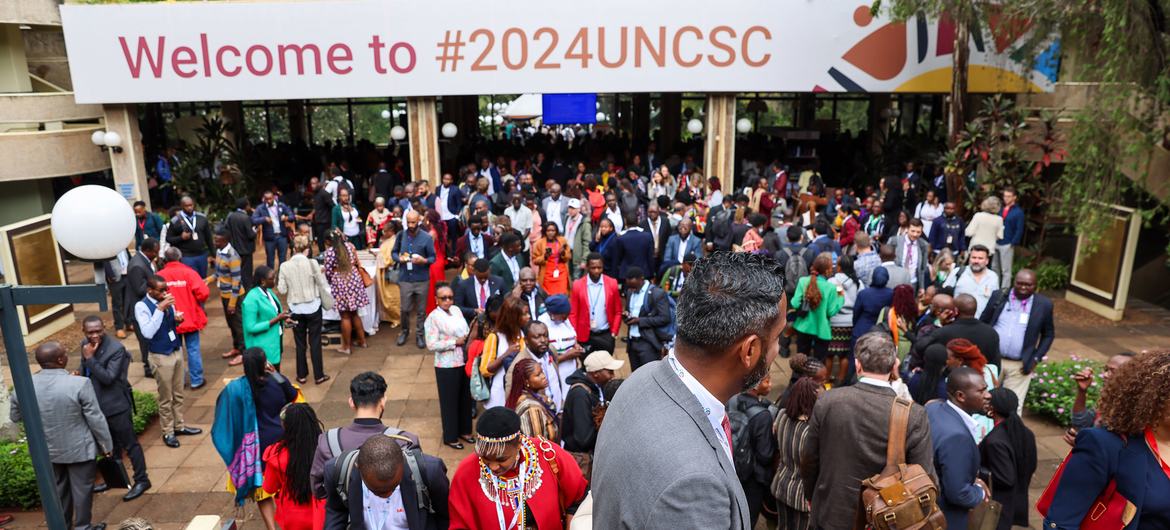
Participants gathering at the opening of the UN Civil Society Conference, which is being held at the UN Office in Nairobi, Kenya, from 9-10 May 2024.
UN Nairobi
 
Participants gathering at the opening of the UN Civil Society Conference, which is being held at the UN Office in Nairobi, Kenya, from 9-10 May 2024.

Guy Ryder, UN Under-Secretary-General for Policy, said the next two days were a vital step in the journey towards the Summit of the Future. The insights, commitment, and call for action were indispensable to the processes that lay ahead. 

“We are all acutely aware that we need to work together, if we were to have any chance of meeting today’s global challenges; ongoing conflicts, escalating geopolitical tensions; multiplying humanitarian crisis; rising inequalities…the climate emergency and so much more,” he stated.

Moreover, cooperation and solidarity were needed at all levels. 

“And for that, we need systems, institutions, mindsets that are up to the task and reflect contemporary realities,” Mr. Ryder said, urging everyone, especially young people, to get involved and encouraged everyone to ramp up engagement with their governments in the lead up to September.  

‘We want real change’

A highlight of the opening session was a keynote address from Karimot Odebode, SDG Young Leader, one of the 17 young leaders for the Sustainable Development Goals, who leads a civil society organization in Nigeria. 

She read a poem entitled The Journey Ahead. 

“My generation is tired,” she said, stressing, “we want real change. Are you ready to commit to peace? Are you ready? Because I commit. Do you?”

Ms. Odebode said that civil society had gathered today as a matter of urgency, to develop a roadmap towards a sustainable future. Civil society leaders had a unique responsibility in shaping the future of global and sustainable progress, she stressed. 

Florence Syevuo, another SDG Young Leader, said the Conference was a call from civil society to address global inequality once and for all, particularly those between the Global North and South. Some 70 per cent of the participants hailed from Africa, which was important; those left out of the ‘New York bubble’ could not meaningfully engage in conversations on sustainable development.

“No future UN civil society conference should be held where the UN only sits for administrative purposes...we are hoping we can go to many Global South countries,” Ms. Syevuo said.

UN officials and civil society leaders presiding at the opening of the UN Civil Society Conference, which is being held at the UN Office in Nairobi, Kenya, from 9-10 May 2024.
UN Nairobi
 
UN officials and civil society leaders presiding at the opening of the UN Civil Society Conference, which is being held at the UN Office in Nairobi, Kenya, from 9-10 May 2024.

‘Raise the bar on multilateralism’ 

Carole Agengo, co-chair of the Planning Committee of the 2024 Civil Society Conference and Africa Regional Representative at HelpAge International, said civil society in the Global South faced challenges in accessing previous conferences for various reasons, mostly due to visas.  

Reflecting on this, the current Conference had set a premium on inclusion and participation. Ms. Agengo said it was vital for organizations in the Global South to unleash the power in their numbers and collaborate, as they moved forward towards the Summit of the Future. 

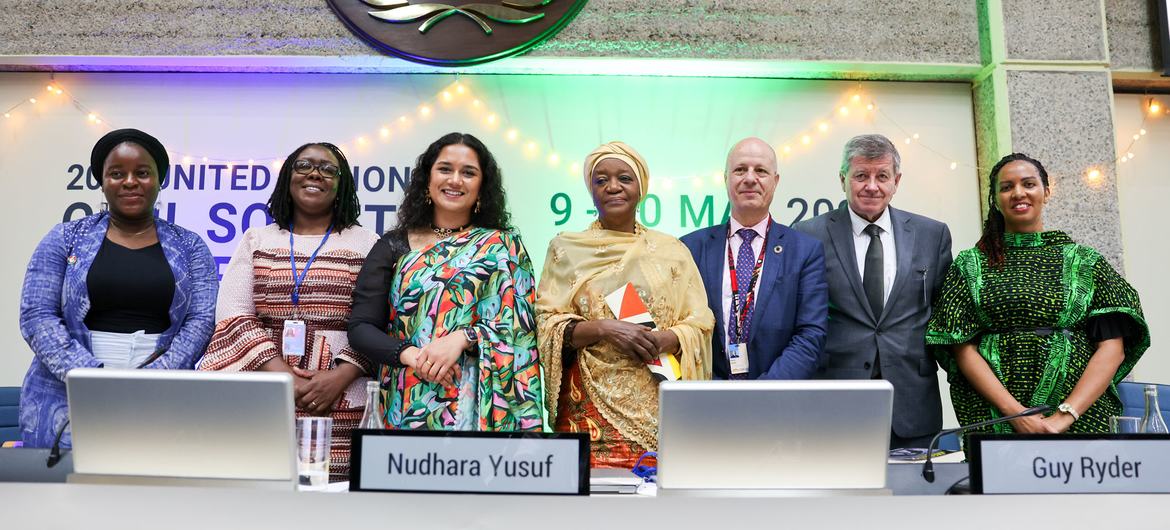
For her part, Nudhara Yusuf, Co-Chair of the Planning Committee of the 2024 Civil Society Conference, Global Governance Innovation Network and Youth Coordinator, Coalition for the UN We Need, said the Conference aimed to meaningfully support the Summit of the Future, which would be held at a critical moment.

Tweet URL
ODG_UNON

During that Summit, civil society would ask UN Member States to raise the bar on multilateralism. In turn, civil society needed to be willing to push the envelope on how they engaged with multilateral and intergovernmental processes, he said. 

The work of the Conference

The Conference on Thursday also featured 37 on-site workshops, co-organized by stakeholders, including civil society and United Nations entities and attended by various participants including UN Member States. 

This was followed with the discussion on civil society recommendations on the Pact for the Future, Declaration on Future Generations, and Global Digital Compact and an interactive dialogue on those proposed outcomes and related issues.

Friday is expected to kick off with an interactive dialogue, Looking ahead to the Summit and Beyond and a panel discussion, with responses from UN agencies, philanthropic groups and UN Member States. 

The closing session will take place in the afternoon and will be attended by UN Secretary-General António Guterres and the President of Kenya, William Ruto.

https://news.un.org/en/story/2024/05/1149566
https://creativecommons.org/licenses/by/3.0/legalcode