Избранное сообщение

среда, 23 апреля 2025 г.

Local leaders raise temperature on action to fight climate change


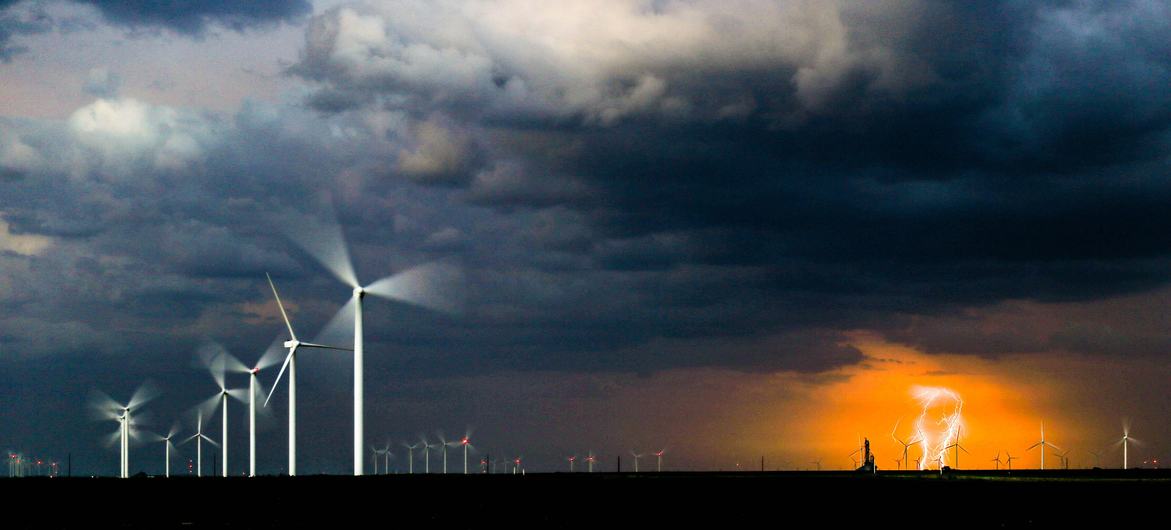
Windmills generate electrify in the US state of Indiana as a storm approaches.
© Unsplash/Cassie Boca
 
Windmills generate electrify in the US state of Indiana as a storm approaches.

22 April 2025 .


City officials, state governors and other leaders across the world are ensuring their localities can benefit from initiatives that tackle climate change and can prosper in an uncertain future. 

From Morocco to Maharastra, California to Quebec, the UN’s Local Leaders series highlights how strong leadership is positively impacting on people’s lives in both developing and developed countries.

On  International Mother Earth Day which is celebrated annually on 22 April, the series aims to encourage broader climate action and demonstrate the importance of local leadership in tackling global challenges.

Meet some of the local leaders inspiring change.

Maharashta, India: Pankaja Munde, Minister for Environment and Climate Change of Maharashtra

“Maharashtra is one of the five states in the country most vulnerable to the impacts of climate change. Our state witnessed 142 extreme weather events in 2024.  

Our initiatives focus on decarbonising the building sector, incentivising electric vehicles, expanding green areas, fostering climate-resilient farming and promoting bamboo cultivation as an alternative to fossil fuels. 

The Mazi Vasundhara Abhiyan (My Earth Mission), the state government’s flagship climate initiative…. demonstrates the power of grassroots mobilization in addressing the climate challenge and underscores the vital role communities can play in furthering the climate agenda.”

Read more here.

California, USA: Gavin Newsom, Governor 

“This year started with catastrophic firestorms in Los Angeles, but Californians have long seen the intensifying impacts of climate change firsthand — hotter hots, drier dries, and stronger, more severe storms.

 Since 2014, the [cap-and-trade] programme has driven over $11 billion in climate investments, with more than 75 per cent of those dollars flowing directly into low-income and frontline communities. 

California is showing that you don’t have to choose between a strong economy and bold climate leadership.

Read more here.

Guelmim-Oued Noun, Morocco: Mbarka Bouaida, President of the Regional Council

“The region is experiencing increasingly irregular rainfall, prolonged droughts, and advancing desertification. This is placing significant stress on our water resources, ecosystems, and agricultural productivity. 

Our strategy includes investments in seawater desalination, hill dams, artificial aquifer recharge, and wastewater reuse.

This initiative delivers measurable environmental and social benefits. It strengthens climate resilience by improving water security, promoting the circular use of resources, and reducing vulnerability in rural communities, which also helps reduce regional disparities.” 

Read more here.

Read more from other Local leaders


https://news.un.org/en/story/2025/04/1162496

https://creativecommons.org/licenses/by/4.0/legalcode

вторник, 15 апреля 2025 г.

Ecuador oil spill affects 150,000, UN assessment finds

A massive oil spill in Ecuador last month has left at least 150,000 people in need of humanitarian assistance, according to an assessment by UN aid coordination office OCHA.

The disaster was caused by the rupture of the SOTE pipeline in Esmeraldas province in March, resulting in the spilling of over 25,000 barrels of oil.

The UN Disaster Assessment and Coordination (UNDAC) team, which is part of OCHA, carried out the assessment.

In addition to the thousands affected, the team also pointed to a concerning increase in respiratory and gastrointestinal diseases, as well as limited access to safe drinking water.

People’s livelihoods have been particularly hit hard, especially in fishing, agriculture and shellfish harvesting. 

OCHA said more than 37,000 women have lost their means of earning a living. Many are shellfish gatherers and now face growing health risks and exposure to gender-based violence.

The UN is testing water from affected rivers, treatment plants and seafood from the ocean for hydrocarbons and heavy metals, as it could have long term environmental and health repercussions.

UN Resident Coordinator in Ecuador, Lena Savelli, has shared the findings and recommendations with Government ministers and the national humanitarian forum.

The top official also reiterated the UN’s commitment to support the Government with technical assistance.


https://news.un.org/en/story/2025/04/1162231


https://creativecommons.org/licenses/by/4.0/legalcode

суббота, 12 апреля 2025 г.

Countries reach historic deal to cut shipping emissions


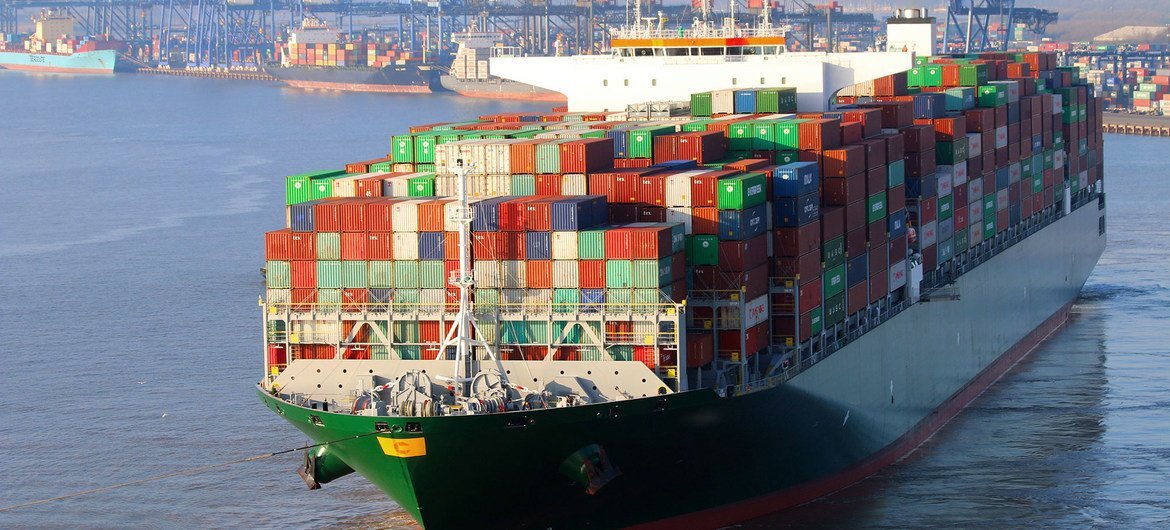
A cargo-laden container ship approaches a port.
IMO
 
A cargo-laden container ship approaches a port.


By Vibhu Mishra
11 April 2025 
Climate and Environment

After years of intense negotiations, countries on Friday reached a landmark deal to cut greenhouse gas emissions from global shipping, setting mandatory fuel standards and introducing an industry-wide carbon pricing mechanism.

The framework – agreed during the UN International Maritime Organization (IMO) Marine Environment Protection Committee – aims for net-zero emissions from the sector by 2050 and will be formally adopted in October before coming into force in 2027.

They will apply to large ocean-going vessels over 5,000 gross tonnage, which collectively account for 85 per cent of carbon dioxide emissions from the marine shipping fleet.

Tweet URL

IMO Secretary-General Arsenio Dominguez hailed the breakthrough, emphasising the collaborative spirit that led to the deal.

“The approval of draft amendments to MARPOL Annex VI mandating the IMO net-zero framework represents another significant step in our collective efforts to combat climate change, to modernize shipping and demonstrates that IMO delivers on its commitments.”

MARPOL Annex VI refers to provisions in the International Convention for the Prevention of Pollution from Ships, specifically addressing air pollution.

It already includes mandatory energy efficiency requirements for ships and has 108 Parties covering roughly 97 per cent of the world’s merchant shipping fleet by tonnage.

Intense negotiations

Negotiations – which culminated on Friday in London – were particularly challenging.

According to media reports, around a dozen countries – including the United States – were opposed to the framework. The proposal was ultimately put to a vote and passed.

A turning point for the shipping industry

The framework introduces a dual approach: a global fuel standard that will progressively lower the annual greenhouse gas fuel intensity of marine fuels, and a greenhouse gas pricing mechanism requiring high-emitting ships to pay for their excess pollution.

Under the new system, ships that exceed emissions limits will need to acquire remedial units to offset their excess pollution. Meanwhile, vessels operating with zero or near-zero emissions will be eligible for financial rewards, creating a market-driven push toward cleaner maritime transport.

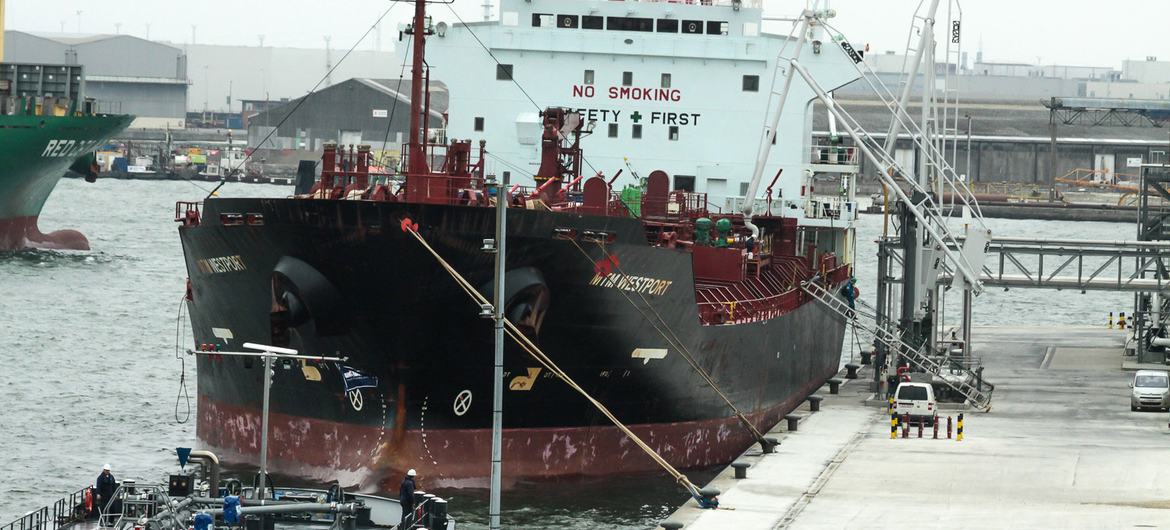
A cargo ship moored at a port in Europe.
© IMO
 
A cargo ship moored at a port in Europe.

Supporting vulnerable countries

A key element of the new framework is the IMO Net-Zero Fund, which will collect revenues from the carbon pricing mechanism.

These funds will support innovation, research, infrastructure and transition initiatives in developing countries.

It will also be used to mitigate negative impacts on vulnerable nations, such as small island developing States (SIDS) and least developed countries (LDCs), which bear the brunt of both climate change and economic pressures in the shipping sector.

Next steps: Adoption and implementation

The draft regulations will undergo formal adoption in October 2025.

If ratified during the IMO session, as expected, the measures will enter into force in 2027, giving the industry time to adapt to new requirements and invest in alternative fuels and technologies.

The International Maritime Organization

The International Maritime Organization (IMO) is the UN specialized agency responsible for the safety and security of global shipping and the prevention of marine and atmospheric pollution by ships.

Established in 1948 and headquartered in London, it develops international treaties, such as the International Convention for the Safety of Life at Sea (SOLAS) or the International Convention for the Prevention of Pollution from Ships (MARPOL).


https://news.un.org/en/story/2025/04/1162176

https://creativecommons.org/licenses/by/4.0/legalcode

суббота, 29 марта 2025 г.

WHO Air Pollution and Health conference seeks to reinvigorate global action


28 March 2025

WMO is participating in a major international conference on air pollution and health, which seeks to revitalize commitment to clean air and clean energy and to improve public and environmental well-being.  

A serene lake reflecting a dense forest with a wooden structure and people at the water's edge, surrounded by tall evergreen trees.
Pure Water of Jiuzhaigou - Xin Li
WMO 2025 Calendar Competition

The Second Global Conference on Air Pollution and Health, from 25-27 March, will call on countries to pledge voluntary actions to achieve a 50% reduction in the health impacts of air pollution by 2040. The event is co-organized by the World Health Organization and the Government of Colombia with the support of the Government of Spain and other UN agencies such as UNEP, WMO, World Bank and others.  

Air pollution remains one of the greatest environmental threats to human health, causing millions of premature deaths each year. Rising temperatures and environmental changes – extreme heat, more frequent wildfires and sand and dust storms- – exacerbate the risk. This exposes communities—especially the most vulnerable—to severe health risks, disrupts key economic sectors and harms ecosystems.  

“Protecting  human health and saving lives is central to the mission of the World Meteorological Organization,” WMO Secretary-General Celeste Saulo said in a video message to the high-level segment of the conference.

She recalled WMO’s 75 year history of transforming science into action that empower decision-making.

The UN Secretary-General's Early Warnings for All initiative seeks to ensure that every person is covered by early warning systems against weather and climate-related hazards, including the dangerous combination of heat and poor air quality, Celeste Saulo said.

“WMO is advancing operational warning and advisory systems for sand and dust storms and wildfires to help countries mitigate health, economic and environmental impacts. WMO seeks to strengthen atmospheric composition monitoring to track transboundary pollution and inform policies that safeguard public health,” she said.  

Infographic showing overlapping circles: "Reduce Climate Change," "Reduce Air Pollution," with "Protect Health" in center. Illustrations include factories, trees, and transportation. WHO logo present.
Clean Air for Health
WHO

WMO’s Global Atmosphere Watch through its Global Air Pollution and Forecasting Information System initiative seeks to provide the necessary tools and knowledge at both regional and global levels.  

WMO co-organized dedicated sessions on air quality monitoring, wildfires, sand and dust storms at the conference. WMO has issued new Guidelines on sand and dust storm mitigation- which contain a review of monitoring, forecasting and impact assessment.  

But technology alone is not enough. Building local capacity is key, ensuring the translation of air quality data into effective policies and life-saving actions.  

Bridging air quality, public health, and climate action is essential. Some air pollutants are also greenhouse gases, and tackling them requires coordinated policies that deliver benefits on multiple fronts.  

To inform decision-making, WMO publishes annual bulletins on greenhouse gases, air quality and climate, airborne dust, and ozone and UV.  

Participants at the conference in Colombia include Ministers of Health, respective Ministers of Environment, Energy and officials of national, intergovernmental and development agencies; health professionals; mayors, local authorities and planners; representatives of critical sectors such as energy, transport, industry, waste and land-use; as well as delegates from research, academia and civil society 


https://wmo.int/media/news/who-air-pollution-and-health-conference-seeks-reinvigorate-global-action

https://creativecommons.org/licenses/by/4.0/legalcode

UN teams ramp up response to deadly quake in Myanmar and Thailand


The 7.7 magnitude earthquake has caused significant damage to buildings in Mandalay region, in central Myanmar.
© UNICEF
 
The 7.7 magnitude earthquake has caused significant damage to buildings in Mandalay region, in central Myanmar.


28 March 2025

 Humanitarian Aid

Amid reports of hundreds dead or missing following a 7.7 magnitude earthquake with its epicentre in central Myanmar, UN teams in the region are “responding fast”, said UN relief chief Tom Fletcher on Friday.

The Emergency Relief Coordinator tweeted that UN teams are being “supported by expertise across our global network”.

Tweet URL

News reports quoting sources in the Burmese city of Mandalay, close to the epicentre of the quake, indicate that hundreds have died. In neighbouring Thailand more than 80 construction workers are missing, according to the Thai deputy prime minister, with a search and rescue operation underway.

UN chief António Guterres sent condolences to all those in the region impacted and underlined that the UN system is mobilising as fast as possible in support. 

Mr. Fletcher, who heads aid coordination office, OCHA, made an intial allocation from the Central Emergency Response Fund of $5 million to support life-saving assistance.

‘Significant damage’

The UN Resident Coordinator’s Office in Myanmar told UN News in a statement that reports indicate “significant damage” has occurred in Mandalay state, as well as Nay Pyi Taw, Bago, Magway, Sagaing, Shan “and possibly other areas”.

Our thoughts are with everyone impacted by this event…We are gathering information about the people impacted, infrastructure damage, and immediate humanitarian needs to guide a response and will share more updates as information becomes available."

Sheela Matthew of the UN World Food Programme (WFP) said the quake had hit Myanmar “at the worst possible time. With one in four in the country already facing acute food insecurity, Myanmar just can't afford another disaster."

She said WFP has stocks of ready-to-eat food available in warehouses "and we are ready to respond as needed."

Speaking from Myanmar’s largest city of Yangon, Marie Manrique, Programme Coordinator for the Myanmar country team of the International Federation of Red Cross and Red Crescent Societies (IFRC), told journalists at the UN in Geneva that the quake had also been felt in China, Thailand, and India.

She said that beyond damage to buildings and infrastructure, there was concern over potential dam bursts. Electricity and communications have been cut off in parts of the country.

She said the Myanmar Red Cross Society had launched an emergency operation to help people in need and assess the situation.

Myanmar has been in the grip of an increasingly brutal civil war since a military coup more than four years ago. Around 20 million people – a third of the population are expected to need humanitarian assistance this year. Around 15 million are projected to face acute food insecurity during 2025.

Fighting between junta forces and opposition armed groups has displaced more than 3.5 million people within the country.

People gather in front of collapsed buildings in the Mandalay region of central Myanmar, following the 7.7 magnitude earthquake.
© UNICEF
 
People gather in front of collapsed buildings in the Mandalay region of central Myanmar, following the 7.7 magnitude earthquake.

Aid operation underway

Speaking for the World Health Organization (WHO) in Geneva, Dr. Margaret Harris said relief efforts were underway in coordination with country offices in Myanmar and Thailand.

She said the agency had activated its logistics hub in Dubai to primarily provide trauma supplies and a health needs assessment is underway.

Babar Baloch, for the UN refugee agency, UNHCR, said that the central and northwest parts of Myanmar had the highest number of internally displaced people (IDPs) due to the conflict.

Some 1.6 million IDPs out of the total 3.5 million live in these areas and the catastrophe will only exacerbate hardships, he told journalists.

More to come on this developing story…

https://news.un.org/en/story/2025/03/1161646


https://creativecommons.org/licenses/by/4.0/legalcode

пятница, 21 марта 2025 г.

End of eternal ice: Many glaciers will not survive this century, climate scientists say


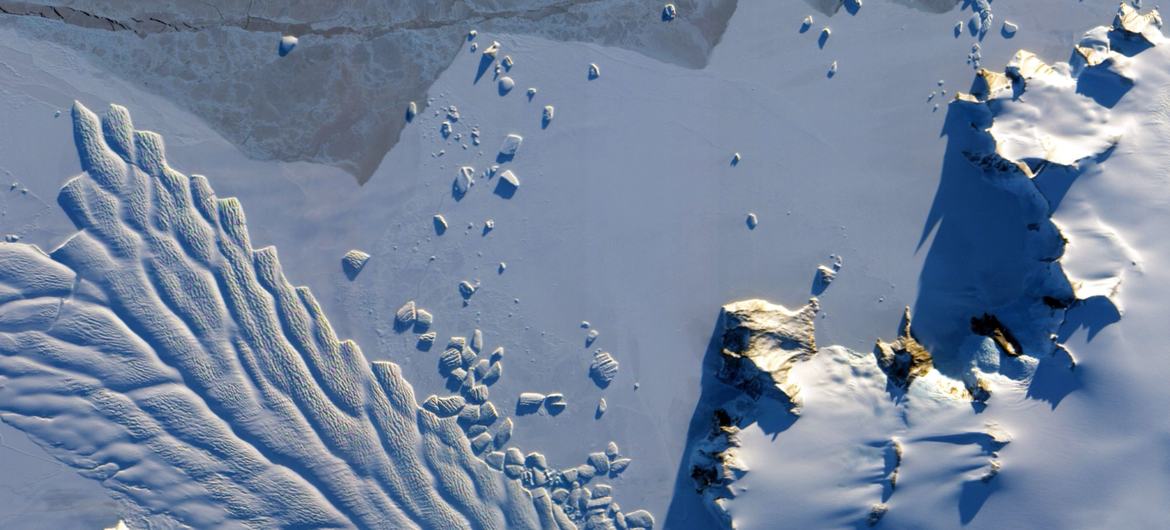
Natural-colour satellite image of the margin of Matusevich Glacier in East Antarctica. (file)
© NASA Earth Observatory
 
Natural-colour satellite image of the margin of Matusevich Glacier in East Antarctica. (file)


20 March 2025 

Climate and Environment

Glaciers in many regions will not survive the 21st century if they keep melting at the current rate, potentially jeopardising hundreds of millions of people living downstream, UN climate experts said on the first World Day for Glaciers.

Together with ice sheets in Greenland and Antarctica, glaciers lock up about 70 per cent of the world’s freshwater reserves. They are striking indicators of climate change as they typically remain about the same size in a stable climate.

But, with rising temperatures and global warming triggered by human-induced climate change, they are melting at unprecedented speed, said Sulagna Mishra, a scientific officer at the World Meteorological Organization (WMO).

Hundreds of millions of livelihoods at risk

Last year, glaciers in Scandinavia, the Norwegian archipelago of Svalbard and North Asia experienced the largest annual loss of overall mass on record. Glaciologists determine the state of a glacier by measuring how much snow falls on it and how much melt occurs every year, according to UN partner the World Glacier Monitoring Service (WGMS) at the University of Zurich.

In the 500-mile-long Hindu Kush mountain range, located in the western Himalayas and stretching from Afghanistan to Pakistan, the livelihoods of more than 120 million farmers are under threat from glacial loss, Ms. Mishra explained.

The mountain range has been dubbed the “third pole” because of the extraordinary water resources it holds, she noted.

‘Irreversible’ retreat

Despite these vast freshwater reserves, it may already be too late to save them for future generations.

Large masses of perennial ice are disappearing quickly, with five out of the past six years seeing the most rapid glacier retreat on record, according to WMO.

The period from 2022 to 2024 also experienced the largest-ever three-year loss.

“We are seeing an unprecedented change in the glaciers,” which in many cases may be irreversible, said Ms. Mishra.

Tweet URL

Ice melt the size of Germany

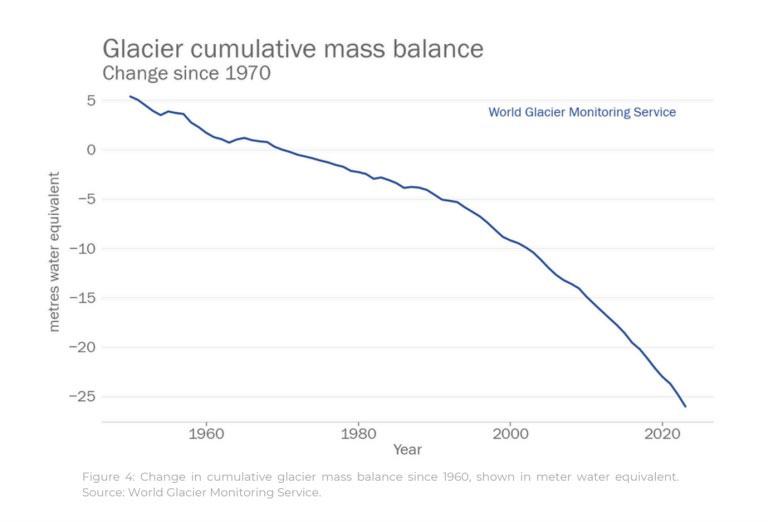
WGMS estimates that glaciers, which do not include the Greenland and Antarctica ice sheets, have lost more than 9,000 billion tonnes of mass since 1975.

“This is equivalent to a huge ice block of the size of Germany with a thickness of 25 metres,” said WGMS director Michael Zemp. The world has lost 273 billion tonnes of ice on average every year since 2000, he added, highlighting the findings of a new international study into glacier mass change.

“To put that into context, 273 billion tonnes of ice lost every year corresponds about to the water intake of the entire [world] population for 30 years,” Mr. Zemp said. In central Europe, almost 40 per cent of the remaining ice has melted. If this continues at the current rate, “glaciers will not survive this century in the Alps.”

Echoing those concerns, WMO’s Ms. Mishra added that if emissions of warming greenhouse gases are not slowed “and the temperatures are rising at the rate they are at the moment, by the end of 2100, we are going to lose 80 per cent of the small glaciers” across Europe, East Africa, Indonesia and elsewhere.

A trigger for large-scale floods

Glacial melt has immediate, large-scale repercussions for the economy, ecosystems and communities.

The latest data indicates that 25 to 30 per cent of sea level rise comes from glacier melt, according to the World Glacier Monitoring Service.

Melting snowcaps are causing sea levels to rise about one millimetre higher every year, a figure that might seem insignificant, yet every millimetre will flood another 200,000 to 300,000 persons every year.

“Small number, huge impact,” glaciologist Mr. Zemp said.

Glacier cumulative mass balance change since 1970.
© WMO
 
Glacier cumulative mass balance change since 1970.

Everyone is affected

Floods can affect people’s livelihoods and compel them to emigrate from one place to another, WMO’s Ms. Mishra continued.

“When you ask me how many people are actually impacted, it’s really everyone,” she stressed.

From a multilateral perspective, “it is really high time that we create awareness, and we change our policies and...we mobilise resources to make sure that we have good, policy frameworks in place, we have good research in place that can help us to mitigate and also adapt to these new changes,” Ms. Mishra insisted.

A day to consider world’s glaciers

Providing added momentum to this campaign, the World Day for Glaciers on 21 March aims to raise awareness about the critical role that these massive frozen rivers of snow and ice play in the climate system. It coincides with World Water Day.

To mark the occasion, which is one of the highlights of the 2025 International Year of Glaciers’ Preservation, global leaders, policymakers, scientists and civil society representatives are due to gather at UN Headquarters in New York to highlight the importance of glaciers and to boost worldwide monitoring of the cryospheric processes of freezing and melting that affect them.

WGMS’s Mr. Zemp, who also teaches glaciology at the University of Zurich, is already preparing for a world without glaciers.

“If I think of my children, I am living in a world with maybe no glaciers. That’s actually quite alarming,” he told UN News.  

“I really recommend going with your children there and having a look at it because you can see the dramatic changes that are going on, and you will also realise that we are putting a big burden on our next generation.”

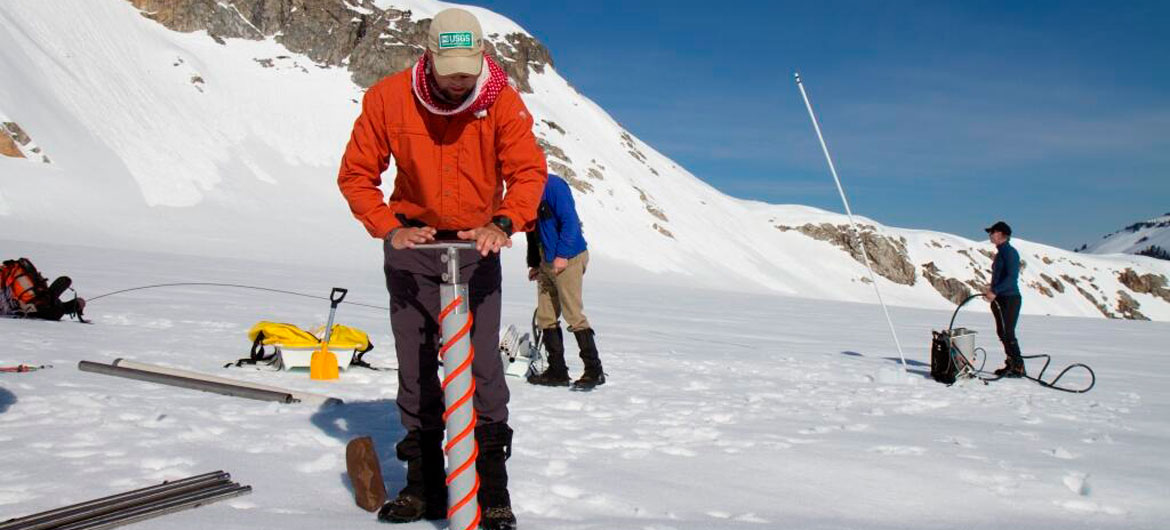
Scientists collecting data on South Cascade Glacier in the US state of Washington.
© USGS
 
Scientists collecting data on South Cascade Glacier in the US state of Washington.

Glacier of the Year

This year’s Glacier of the Year 2025 is South Cascade Glacier in the US state of Washington.

The body of ice, which has been continuously monitored since 1952, provides one of the longest uninterrupted records of glaciological mass balance in the western hemisphere.

“South Cascade Glacier exemplifies both the beauty of glaciers and the long-term commitment of dedicated scientists and volunteers who have collected direct field data to quantify glacier mass change for more than six decades,” said Caitlyn Florentine, from the U.S. Geological Survey

https://news.un.org/en/story/2025/03/1161296.

https://creativecommons.org/licenses/by/4.0/legalcode
среда, 19 марта 2025 г.

Climate change: Paris Agreement goals still within reach, says UN chief


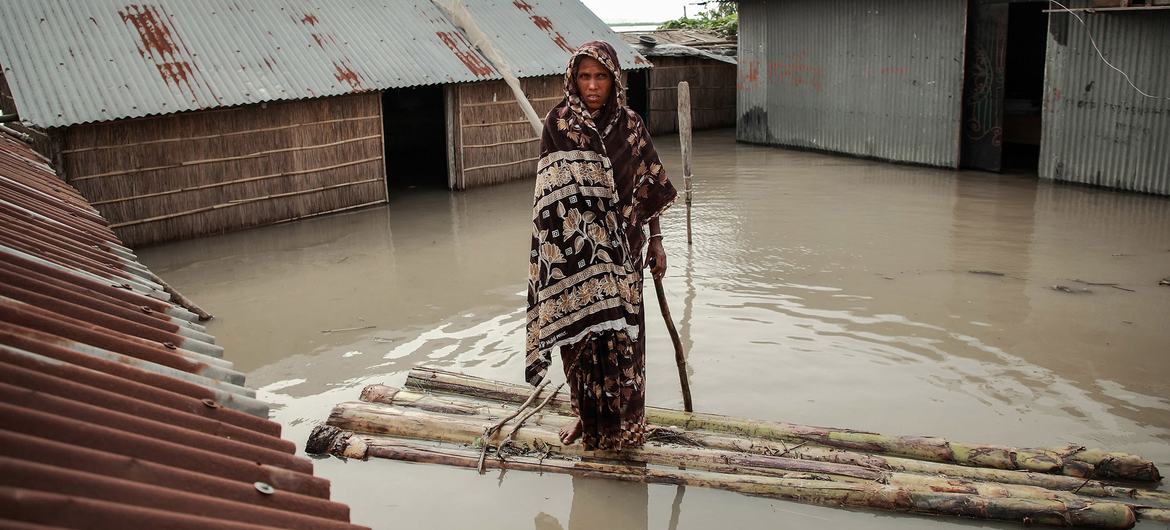
Extreme weather events in 2024 led to the highest number of new displacements recorded in a year since 2008.
© WMO/Muhammad Amdad Hossain
 
Extreme weather events in 2024 led to the highest number of new displacements recorded in a year since 2008.


18 March 2025

 Climate and Environment

The effects of human-driven climate change surged to alarming levels in 2024, with some consequences likely to be irreversible for centuries - if not millennia – according to a new report from the World Meteorological Organization (WMO). 

The latest State of the Global Climate report confirms 2024 as the hottest year since records began 175 years ago, with a global mean temperature of 1.55°C above pre-industrial levels – surpassing the critical warming threshold of 1.5°C for the first time.  

While a single year above 1.5°C doesn't break the Paris Agreement's long-term goals (a long-term average below 1.5°C), it is a stark warning of the urgent need for emissions reduction.

Multiple climate indicators also set new records. Atmospheric carbon dioxide concentrations are at their highest in 800,000 years, and the oceans continue to warm at unprecedented rates.  

Glaciers and sea ice are rapidly melting, contributing to a rise in global sea levels that threatens coastal ecosystems and infrastructure worldwide.

Furthermore, tropical cyclones, floods, droughts, and other hazards last year led to the highest number of new displacements recorded in 16 years, contributing to worsening food crises, and fuelling massive economic losses.  

Leveraging renewables and early warning systems

Despite these alarming trends, UN Secretary-General António Guterres said that the Paris Agreement goals are still achievable and called on world leaders to step up their efforts in response to the mounting crisis.

Our planet is issuing more distress signals – but this report shows that limiting long-term global temperature rise to 1.5 degrees Celsius is still possible. Leaders must step up to make it happen –seizing the benefits of cheap, clean renewables for their people and economies – with new national climate plans due this year’’, he urged.

WMO Secretary-General Celeste Saulo called the report findings a “wake-up call” to the increasing level of deadly risk facing human life, economies and the planet.

“WMO and the global community are intensifying efforts to strengthen early warning systems and climate services to help decision-makers and society at large be more resilient to extreme weather and climate. We are making progress but need to go further and need to go faster”, she said.  

Irreversible changes

The report explains that the record-breaking global temperatures in 2023 and 2024 were primarily driven by increasing greenhouse gas emissions, amplified by the transition from La Niña to El Niño.  

Other factors that might have contributed include solar cycle variation, volcanic activity and changes in ocean circulation.

Scientists also underscore the urgency of taking action, outlining some already irreversible changes – including the rate of sea level rise – that has doubled since satellite measurements began.

Projections show that ocean warming, which reached its highest level on record, will continue over the rest of the 21st century and beyond, even if the world were to significantly reduce emissions. Similarly, ocean acidification will continue to increase for the rest of this century, at rates dependent on future emissions.

Other key findings

  • Globally, each of the past ten years were individually the ten warmest years on record.
  • Each of the past eight years has set a new record for ocean heat content.
  • The 18 lowest Arctic sea-ice extents on record were all in the past 18 years.
  • The three lowest Antarctic ice extents were in the past three years.
  • The largest three-year loss of glacier mass on record occurred in the past three years.
  • In 2024, ocean heat content reached its highest level in the 65-year observational record.
  • Tropical cyclones were responsible for many of the highest-impact events of 2024. These included Typhoon Yagi in Viet Nam, the Philippines and southern China.

https://news.un.org/en/story/2025/03/1161251


https://creativecommons.org/licenses/by/4.0/legalcode