Избранное сообщение

Показаны сообщения с ярлыком water. Показать все сообщения

вторник, 8 октября 2024 г.

Water is ‘canary in the coalmine’ of climate change: WMO


A group of women fill water pots and containers in Barki village, located in the Karauli district of Rajasthan, India.
© UNICEF/Faisal Magray
 
A group of women fill water pots and containers in Barki village, located in the Karauli district of Rajasthan, India.


7 October 2024 

The year 2023 marked the driest year in over three decades for rivers around the world, according to a new report coordinated by the UN’s World Meteorological Organization (WMO).

The State of Global Water Resources report released on Monday also highlights that over the last five years below-normal conditions for river flows have been recorded with less water reaching reservoirs.The reduction in supplies has reduced the amount of water available for communities, agriculture and ecosystems.

Currently, 3.6 billion people worldwide face inadequate access to water at least a month per year and this is expected to increase to more than five billion by 2050, according to UN Water.

The report also reveals that glaciers suffered the largest loss of mass ever registered in the last five decades. Every region in the world where glaciers are present reported ice loss.

The ice loss has produced more than 600 gigatonnes of water, much of which has ended up in the ocean as well as some riverways.

Meanwhile, 2023 was recorded as the hottest year on record, leading to elevated temperatures and widespread dry conditions, which contributed to prolonged droughts.

Unprecedented stress

Water is the canary in the coalmine of climate change. We receive distress signals in the form of increasingly extreme rainfall, floods and droughts which wreak heavy toll on lives, ecosystems and economies said WMO Secretary-General Celeste Saulo.

The report also paints a stark picture of the world’s freshwater resources, highlighting unprecedented stress, exacerbated by climate change and increasing demand.

Climate change intensifies

A significant number of floods across the world are highlighted in the report.

The surge in extreme hydrological events has been influenced by naturally occurring climate conditions including the transition from La Niña to El Niño weather patterns in mid-2023 as well as human induced climate change.

As a result of rising temperatures, the hydrological cycle has accelerated. It has also become more erratic and unpredictable, and we are facing growing problems of either too much or too little water,” Ms. Saulo explained.

Africa battered

Africa was the most impacted in terms of human casualties. In Libya, two dams collapsed due to the major flood in September 2023, claiming more than 11,000 lives and affecting 22 per cent of the population.

Floods also affected the Greater Horn of Africa, the Democratic Republic of the Congo as well as Rwanda, Mozambique and Malawi.

Meanwhile, the southern United States, Central America, Argentina, Uruguay, Peru and Brazil were affected by widespread drought conditions, which led to the lowest water levels ever observed in the Amazon and in Lake Titicaca on the border of Bolivia and Peru.

Monitoring and data sharing

Far too little is known about the true state of the world’s freshwater resources. We cannot manage what we do not measure,” Ms. Saulo stated.

“This report seeks to contribute to improved monitoring, data-sharing, cross-border collaboration and assessments. This is urgently needed,” she added.

WMO said the report seeks to enhance the accessibility and availability of observational data, through better monitoring and improved data sharing, particularly in the Global South.

Early warning

The report aligns with the focus of the UN’s global Early Warnings for All initiative in addressing water-related challenges.

The global effort aims to improve data quality and access for water-related hazard monitoring and forecasting, with the goal of providing Early Warning systems for all by 2027.

The WMO has emphasised the urgent need for action to address water-related challenges, calling for improved monitoring, data sharing and cross-border collaboration to better understand and manage global water resources.


https://news.un.org/en/story/2024/10/1155401


https://creativecommons.org/licenses/by/4.0/legalcode

пятница, 10 мая 2024 г.

Haiti: UNICEF ensures thousands have safe drinking water


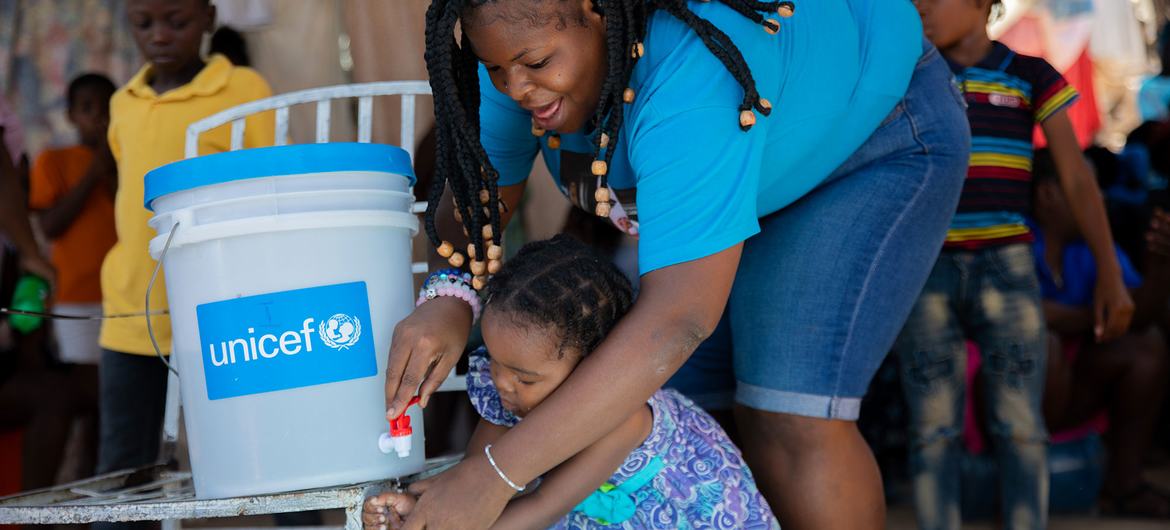
A mother and daughter attend a handwashing training session in Port-au-Prince, Haiti.
© UNICEF/Ralph Tedy Erol
 
A mother and daughter attend a handwashing training session in Port-au-Prince, Haiti.


9 May 2024

Humanitarian Aid

More than 30,000 people displaced by gang violence in Haiti’s capital, Port-au-Prince, have access to safe drinking water thanks to the UN Children’s Fund (UNICEF) and partners. 

Port-au-Prince has been in the grip of armed groups for several years now, and roughly two months ago they launched coordinated attacks which paralyzed the metropolitan area. 

Since then, UNICEF, alongside the National Directorate for Water and Sanitation (DINEPA) and partners, has provided more than 2.6 million litres of safe drinking water to children and families across 20 sites housing those displaced.

Tweet URL
UNICEF

Dire conditions, disease threat 

The recent escalation of violence has compounded the already dire situation faced by children and families, who already lack essential support and facilities.

The current rainy season has only added to their plight, leading to major flooding in lowland areas of the capital and the resurgence of cholera cases in Cité Soleil, an extremely impoverished neighbourhood. 

"With no drinking quality water and adequate sanitation and hygiene facilities, displaced children are exposed to water-borne diseases, more specifically to a widespread cholera outbreaksaid Ruben Um Bayiha, Chief of UNICEF's Water, Sanitation, and Hygiene (WASH) Programme. 

‘Navigating a war zone’ 

Furthermore, he said “operating in such an insecure and volatile environment is akin to navigating a war zone every day.”   

Despite the challenges, UNICEF and partners are stepping up efforts to protect children and families and provide the lifesaving support they desperately need, he stressed. 

Supporting displaced families 

UNICEF leads WASH response in Haiti, providing over half of overall support, ensuring safe drinking water, sanitation, and hygiene services at all displacement sites.  

Initiatives include trucking water, treating piped water, repairing water supply and sanitation systems, building temporary latrines, providing essential hygiene items, and delivering hygiene messages. 

UNICEF said its WASH efforts “yielded significant outcomes” during March, with over 700,000 gallons (2.66 million litres) of chlorinated water distributed to displaced families and children.  

Collaborative efforts with partners such as the aid organizations Solidarités International, ORRAH, and ACTED, have ensured that essential needs were met even in the most challenging circumstances. 

Furthermore, UNICEF and partners have distributed hygiene kits to almost 11,000 internally displaced persons (IDPs) across six sites.  

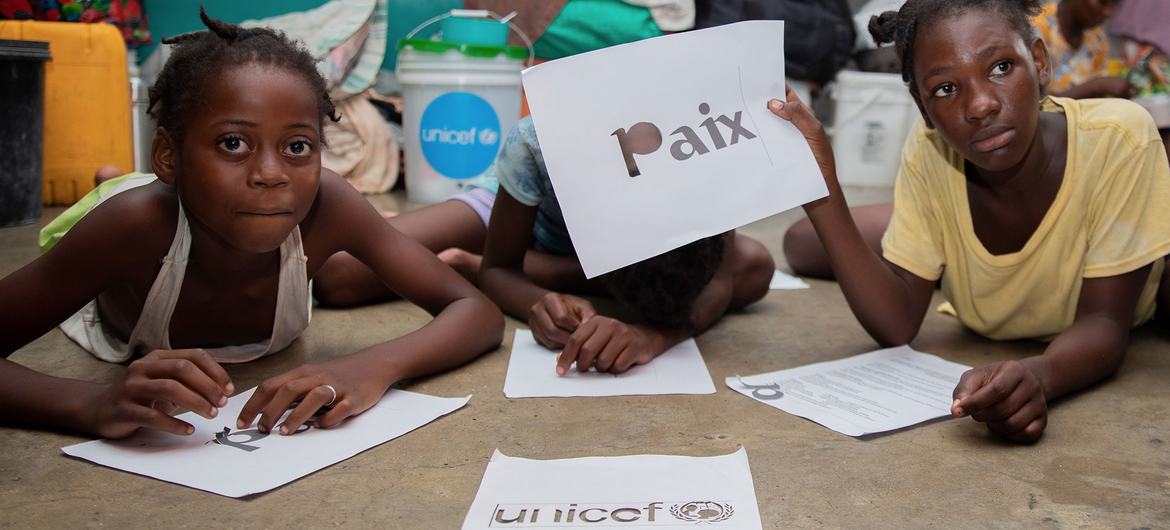
A schoolgirl in Port-au-Prince holds up a sign in French which reads 'peace'.
© UNICEF/Ralph Tedy Erol
 
A schoolgirl in Port-au-Prince holds up a sign in French which reads 'peace'.

‘Crisis will worsen’ 

UNICEF has also prioritized improving sanitary conditions in the high-risk IDP sites, including removing and safely disposing about 78 cubic metres of fecal sludge from three sites accommodating roughly 7,000 people. 

Mr. Um Bayiha upheld the agency’s commitment to addressing evolving needs, particularly as the region braces for the upcoming hurricane season. 

Yet, he warned that "this crisis will worsen unless the response is scaled up urgently,” underscoring the need for funding. 

UNICEF aims to support more than 884,000 people across Haiti this year to access quality water for drinking and domestic needs, as well as appropriate sanitation services and critical WASH supplies.

Thousands receive meals

Meanwhile, UN humanitarians and partners been supporting people affected by recent gang clashes in Delmas commune in Port-au-Prince.

Meals, shelter and other supplies have been provided to displaced persons and the host community, and the hope is that assistance will ramp up as soon as security allows.

This week, the World Food Programme distributed food to 264,000 schoolchildren and more than 5,600 displaced people in the capital.

WFP also distributed food in Cité Soleil, reaching some 26,000 people this week.

Teams have reached more than 680,000 people since the beginning of March and provided more than 800,000 hot meals to more than 94,000 displaced people in the Port-au-Prince metropolitan area. 

WFP has also distributed school meals to more than 330,000 school children across Haiti.


https://news.un.org/en/story/2024/05/1149551


https://creativecommons.org/licenses/by/3.0/legalcode

понедельник, 22 мая 2023 г.

Advocating for sustainable water ‘gamechangers’, Kőrösi goes West


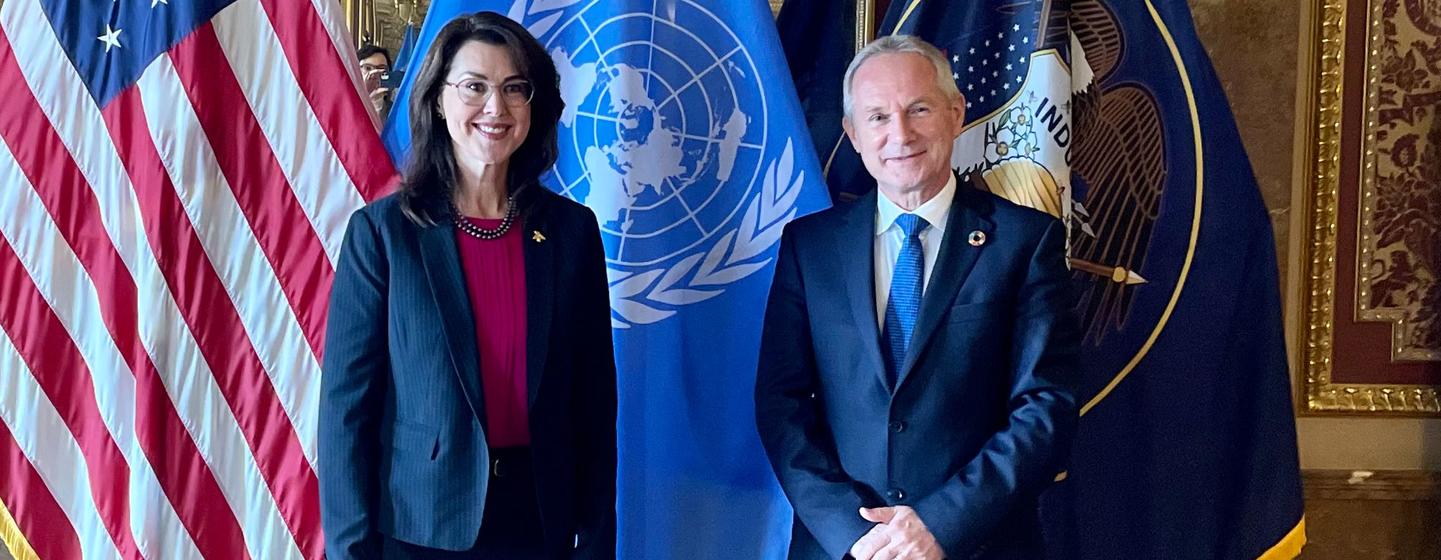
General Assembly President Csaba Kőrösi (right) and Utah Lieutenant Governor Deidre Henderson during his official visit to Salt Lake City.


© Paulina Kubiak
 
General Assembly President Csaba Kőrösi (right) and Utah Lieutenant Governor Deidre Henderson during his official visit to Salt Lake City.

21 May 2023
Climate and Environment

The water challenges confronting the western United States as a result of climate change and declining water supply, are similar to those of other countries, and if the international community takes urgent action on the outcomes of the recent UN Water Conference, there could be a big payoff. 

That was the message from the President of the UN General Assembly, Csaba Kőrösi, on an official visit to Salt Lake City in Utah, where he met with top state officials, students and academics, and local community members.

“There are commonalities because the entire world is in a water crisis, which is ignited by climate change and changing our water cycle,” Mr. Kőrösi said in a meeting with Lieutenant Governor Deidre Henderson.

Climate migrants

“I don’t want to scare anyone, but unless we solve the water management crisis, in the coming 60 to 70 years, hundreds of millions of people will have to move,” he added.

The senior UN official urged support for a global water information system, created as part of the UN system. A new study published in Science magazine on Thursday showed that climate change was a key factor in the shrinkage of more than half the world's lakes and reservoirs since the 1990s.

This is one of the nine gamechangers agreed to at the UN Water Conference held in New York in March, which also includes:

  • Integrating water and climate policy at national and global levels
  • An early warning-for-all system
  • Decoupling agriculture, energy production and water
  • Valuing water accurately
  • A global water education network
  • Support for transboundary cooperation
  • Creating a unified water architecture managed by a Special Envoy with an independent scientific advisory panel
  • A follow-up to the UN Water Conference.
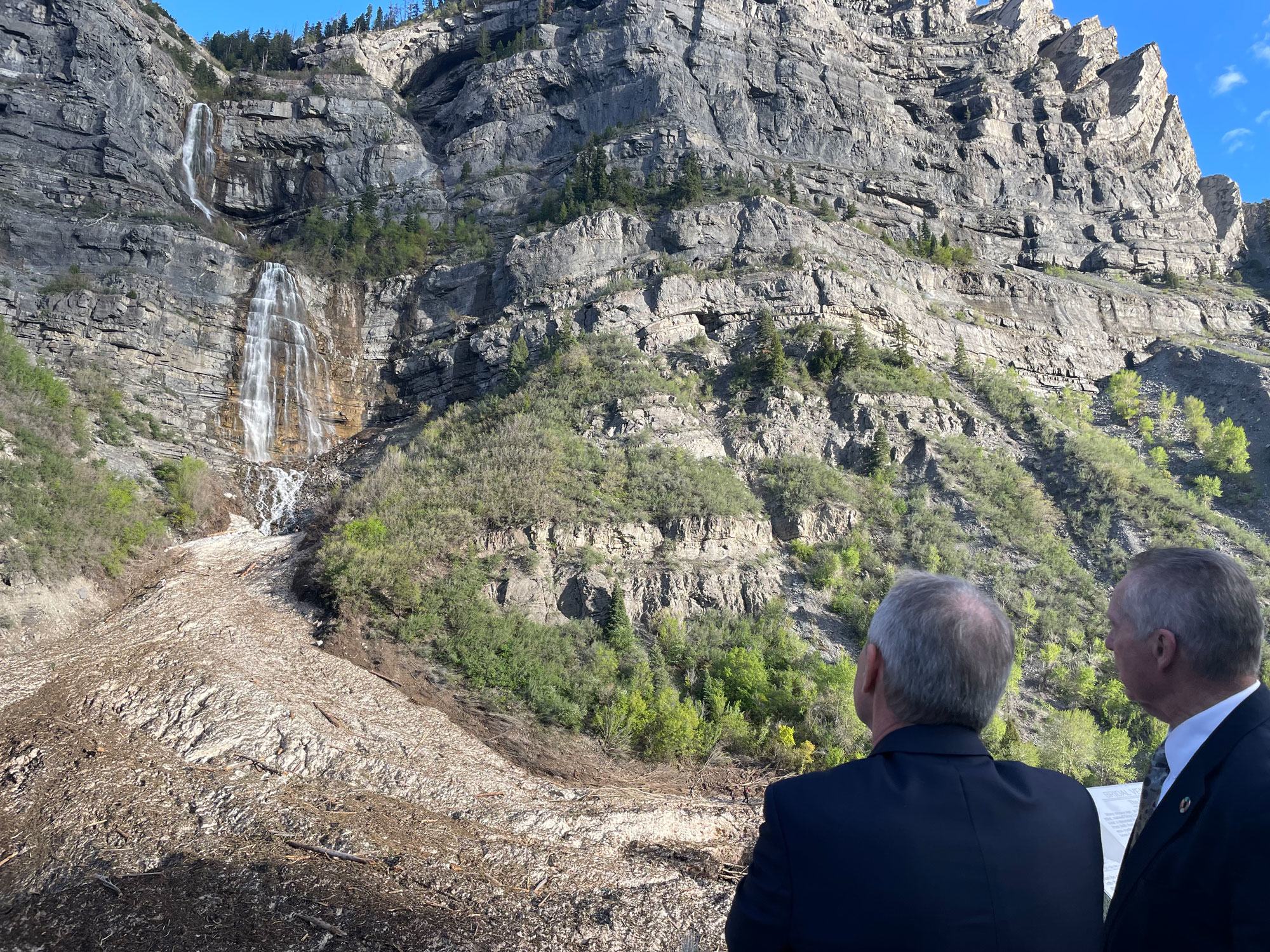
General Assembly President Csaba Kőrösi admires the beauty of a waterfall in Provo, Utah, during his official visit to the state.
© Paulina Kubiak
 
General Assembly President Csaba Kőrösi admires the beauty of a waterfall in Provo, Utah, during his official visit to the state.

Colorado River and Great Salt Lake

The President made the ask after meeting with water experts from the Utah Department of Natural Resources. He was informed that Utah is now in its 23rd year of drought because of climate change, with significant consequences for the Colorado River and Great Salt Lake; the largest saltwater lake in the Western Hemisphere.

And while higher air temperatures have brought with it more precipitation, the heat also means there is more evaporation, and more runoff, as parched land is simply unable to absorb the water.

Historic floods

Drought-stricken Utah is currently facing flooding after an historic amount of rain and snow during early spring.

Complicating matters further is that the management of the Colorado River system is firmly anchored in the Colorado River Compact of 1922, giving rights to two countries and seven states, and stipulating water levels that – due to climate change and overuse – are no longer possible

Local officials said that they are focused on “balanced solutions that are long-term,” with discussions touching on agriculture use, water treatment and reuse, and promotion of water conservation through legislative and public information means.

Sustainable development peaks

While in Utah, Mr. Kőrösi also focused on sustainable development on mountains, which is a topic highlighted in a 2022 Secretary-General report on that topic and the International Year of Sustainable Mountain Development.

One of the challenges highlighted by representatives from rural communities was the lack of social development and inclusion, heightened by shutdowns and cut-offs enforced during the COVID pandemic.

Everyone needs to be considered in policies,” said Alitha Thompson, a 36-year-old non-traditional student at Utah Valley University, who lives in a rural community of Gunnison Valley, about 1.5 hours outside the University.

Just because you’re different doesn’t make you wrong. Everyone’s voice needs to be heard,” said Ms. Thompson, who because she didn’t have daycare that day, brought the youngest of her five children to the meeting with the President.

She said that about one-third of Utah’s population lives in mountain areas; some of the communities suffer levels of poverty more commonly experienced in developing countries.


https://creativecommons.org/licenses/by/3.0/legalcode