Избранное сообщение

среда, 30 апреля 2025 г.

Favourable weather fuels desert locust surge in North Africa


Unusually high levels of desert locust infestations have been reported during the current breeding season, raising alarms across affected regions, the UN Food and Agriculture Organization (FAOwarned on Tuesday.

Tweet URL

“Desert locusts remain among the most devastating migratory pests on the planet,” said UN Spokesperson Stéphane Dujarric, emphasising the threat they pose to food security and livelihoods.

A single swarm of locusts can cover anywhere from one to several hundred square kilometres and may contain up to 80 million adult locusts. In just 1 km², they can eat as much food in a day as 35,000 people.

Feeding on crops and pastureland, they pose a threat to crops grown for both people and livestock, risking starvation in communities that depend on agriculture for survival.

Clement weather for pests

According to the FAO, favourable weather conditions have created suitable breeding grounds for the flying pests. Winds and rainfall patterns have facilitated the movement of desert locusts from the Sahel to North Africa.

The FAO recommends conducting intensive ground surveys across key areas where locust breeding is likely to occur.

The area spanning from south of the Atlas Mountains in Morocco, through the Sahara in Algeria, and extending to southern Tunisia and western Libya is particularly at risk.

“Surveys and control operations are particularly urgent in locations where winter and early spring rains have created suitable breeding conditions,” said Cyril Piou, the FAO’s Locust Monitoring and Forecasting Officer.

Early detection and rapid response are critical to preventing a wider crisis, the UN food agency underscores


https://news.un.org/en/story/2025/04/1162731


https://creativecommons.org/licenses/by/4.0/legalcode

вторник, 29 апреля 2025 г.

Marine Biodiversity Treaty Preparatory Commission Concludes First Session, Noting Summer of Work to Come


The commission tasked with preparing for the entry into force of a new treaty on marine biodiversity concluded its first session today, completing its deliberations on issues including governance, the instrument’s Clearing-House Mechanism, financial and procedural rules, subsidiary bodies established by the accord and arrangements to enhance cooperation with other bodies.

The gathering, formally known as the “Preparatory Commission for the Entry into Force of the Agreement under the United Nations Convention on the Law of the Sea on the Conservation and Sustainable Use of Marine Biological Diversity of Areas beyond National Jurisdiction and the Convening of the First Meeting of the Conference of the Parties to the Agreement”, is held from 14 to 25 April in New York.  The Commission is scheduled to hold its second session from 18 to 29 August 2025 and its third session from 23 March to 2 April 2026.

The Agreement under the United Nations Convention on the Law of the Sea on the Conservation and Sustainable Use of Marine Biological Diversity of Areas beyond National Jurisdiction, as it is formally known, was adopted on 19 June 2023.  (Coverage of the Commission’s first session is available here.)

Before the first session began, the Agreement had 112 signatories, 21 of whom had also ratified the accord. Thailand announced on 17 April that it had become the 113th signatory to the Agreement.  Today, the representative of Cameroon announced that his delegation would be signing the Agreement in the coming days.

The Agreement will enter into force 120 days after the date of deposit of the sixtieth instrument of ratification, approval, acceptance or accession thereto.  Pursuant to the Agreement, the first meeting of the Conference of the Parties shall be convened by the United Nations Secretary-General no later than one year after the Agreement’s entry into force.

Commission Co-Chairs Present Oral Summaries of Session’s Deliberations

At the meeting’s outset, the Commission’s Co-Chairs, Janine Coye‑Felson (Belize) and Adam McCarthy (Australia), presented oral reports summarizing discussions to date, highlighting points of convergence and divergence among delegates and presenting the way forward — including further documentation to be produced — ahead of the Commission’s second session in August.

Speakers Urge Recognition of Developing States’ Needs

Later, several delegations — echoing sentiments heard throughout the session — underscored the need to address the special needs of developing States.  Sierra Leone’s representative, speaking for the African Group, said that activities related to the signing, ratification and implementation of the Agreement must be carried out in a way that “maintains the universal confidence, integrity and progress collectively achieved”.  She called for recognition of the unique needs of developing State Parties, including small island developing States, least developed countries, landlocked developing countries and coastal African States.

“The UN system should make sure that the Agreement is enforced with transparency, equity and fairness,” underscored Haiti’s representative.  He appealed for assistance to developing countries to ensure their full participation in the work of the Conference of the Parties and subsidiary bodies established under the Agreement.  Similarly, the representative of Bangladesh urged that the final outcome [of the Commission’s work] reflect developing countries’ interests and priorities.

Tuvalu’s delegate, speaking for the Pacific small island developing States, likewise noted that those countries are “custodians of large ocean spaces”, and their special circumstances must remain central throughout the entire Agreement.  He called for enhanced cooperation to ensuring an accessible and fit-for-purpose financial mechanism, and in designing reporting that is achievable for all. Further, he said that his group looks forward to a second Commission session that delivers an Agreement that is “fair, inclusive and responsive to the needs of all”.

For his part, the observer for the International Indian Treaty Council — an organization representing over 300 Indigenous Peoples — voiced appreciation that  Indigenous Peoples and civil society had the opportunity to contribute meaningfully during the Commission’s first session.

Speakers Also Point to Early Implementation Efforts, Upcoming Events

Delegations also spotlighted their efforts to advance the Agreement.  Chile’s representative said that his country’s “BBNJ First Movers” initiative, which was launched in 2024, aims to develop a portfolio of marine-protected areas in the high seas and to provide for the sharing of information and experiences to accelerate international cooperation.  He invited all delegations — especially those that may be considering specific marine-protected areas in the high seas and therefore have relevant experience — to join in the initiative’s efforts towards early implementation of the Agreement.

In that vein, the representative of the European Union, in its capacity as observer, spotlighted the bloc’s partnership with Seychelles and Palau.  Further, the “High Ambition Coalition on Biodiversity Beyond National Jurisdiction”, launched in Brest, France, in 2022, aims to boost support for the Agreement’s ratification and implementation, she said.  Voicing hope that 60 States will ratify the treaty — the threshold for its entry into force — in time for the 2025 United Nations Ocean Conference in June in Nice, she invited others to join the coalition to ensure that the treaty is implemented rapidly and ambitiously.

Relatedly, the representative of the Republic of Korea announced that the tenth “Our Ocean Conference” will be held in Busan immediately after the Commission’s first session, from 28 to 30 April, on the theme “Our Ocean, Our Action”.  During the conference — an annual event where ocean leaders from around the world gather to discuss how to protect those resources — delegates will discuss ways to “implement actions for the healthy use and conservation of the oceans”, she stated.

The observer for the High Seas Alliance, observing that “a lot of work is still to be done” ahead of the Commission’s second session, also looked forward to further signatures and ratifications before June “to bring this Agreement into force as early as possible”.  Doing so will help address the very real threats to the ocean by achieving the 30-by-30 goal of the Kunming-Montreal Global Biodiversity Framework, which aims to protect 30 per cent of the world’s land and ocean area by 2030.  The Agreement should serve as “the lighthouse of multilateralism”, she stated.

Several delegations — including those of Iraq, speaking for the Group of 77 developing countries and China, and Saint Lucia, speaking for the Caribbean Community (CARICOM) — also took the floor to express their thanks and commend the Commission’s bureau for its leadership and guidance during this first session.

Co-Chairs Deliver Closing Statement, Conclude First Session

Following that, the Commission’s Co-Chairs jointly delivered a closing statement that will be issued as an official document after it is finalized following today’s meeting.

They reported that the relevant trust fund facilitated the participation of 29 delegates from developing countries in the Commission’s work, 19 of whom were from least developed countries, landlocked developing countries or small island developing States.  On behalf of the Commission, they expressed their gratitude to those who donated to the fund — namely, Chile, Cyprus, European Union, Finland, France, Germany, Ireland and Portugal.

Notwithstanding the human and financial constraints posed by the “present and real” liquidity crisis facing the United Nations, they appealed to delegations to “exercise flexibility, demonstrate open-mindedness and contribute creative ideas” on how the Commission can effectively advance its work.  They also thanked participants for their engagement, trust, support, flexibility and cooperation during the Commission’s first session.

And while welcoming points of agreement in various deliberations, “we urge delegations to seek to find ways to bridge divergences” so that the entry into force of the Agreement and the convening of the first meeting of the Conference of the Parties thereto may be realized, they said.

The first session of the Preparatory Commission was then declared closed.  It will hold its second session in New York in August.


https://press.un.org/en/2025/sea2216.doc.htm


https://creativecommons.org/licenses/by/4.0/legalcode

среда, 23 апреля 2025 г.

Local leaders raise temperature on action to fight climate change


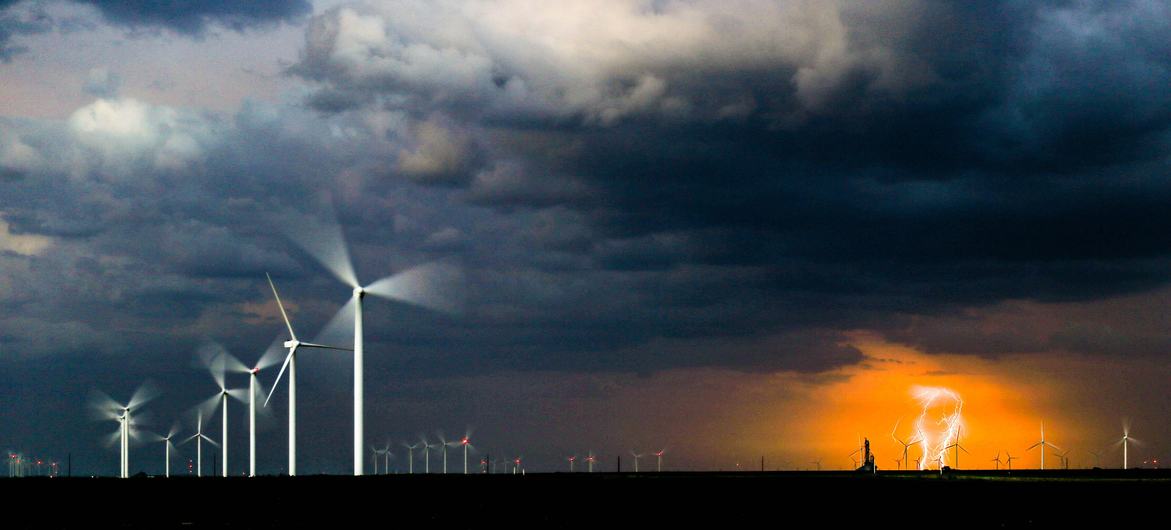
Windmills generate electrify in the US state of Indiana as a storm approaches.
© Unsplash/Cassie Boca
 
Windmills generate electrify in the US state of Indiana as a storm approaches.

22 April 2025 .


City officials, state governors and other leaders across the world are ensuring their localities can benefit from initiatives that tackle climate change and can prosper in an uncertain future. 

From Morocco to Maharastra, California to Quebec, the UN’s Local Leaders series highlights how strong leadership is positively impacting on people’s lives in both developing and developed countries.

On  International Mother Earth Day which is celebrated annually on 22 April, the series aims to encourage broader climate action and demonstrate the importance of local leadership in tackling global challenges.

Meet some of the local leaders inspiring change.

Maharashta, India: Pankaja Munde, Minister for Environment and Climate Change of Maharashtra

“Maharashtra is one of the five states in the country most vulnerable to the impacts of climate change. Our state witnessed 142 extreme weather events in 2024.  

Our initiatives focus on decarbonising the building sector, incentivising electric vehicles, expanding green areas, fostering climate-resilient farming and promoting bamboo cultivation as an alternative to fossil fuels. 

The Mazi Vasundhara Abhiyan (My Earth Mission), the state government’s flagship climate initiative…. demonstrates the power of grassroots mobilization in addressing the climate challenge and underscores the vital role communities can play in furthering the climate agenda.”

Read more here.

California, USA: Gavin Newsom, Governor 

“This year started with catastrophic firestorms in Los Angeles, but Californians have long seen the intensifying impacts of climate change firsthand — hotter hots, drier dries, and stronger, more severe storms.

 Since 2014, the [cap-and-trade] programme has driven over $11 billion in climate investments, with more than 75 per cent of those dollars flowing directly into low-income and frontline communities. 

California is showing that you don’t have to choose between a strong economy and bold climate leadership.

Read more here.

Guelmim-Oued Noun, Morocco: Mbarka Bouaida, President of the Regional Council

“The region is experiencing increasingly irregular rainfall, prolonged droughts, and advancing desertification. This is placing significant stress on our water resources, ecosystems, and agricultural productivity. 

Our strategy includes investments in seawater desalination, hill dams, artificial aquifer recharge, and wastewater reuse.

This initiative delivers measurable environmental and social benefits. It strengthens climate resilience by improving water security, promoting the circular use of resources, and reducing vulnerability in rural communities, which also helps reduce regional disparities.” 

Read more here.

Read more from other Local leaders


https://news.un.org/en/story/2025/04/1162496

https://creativecommons.org/licenses/by/4.0/legalcode

вторник, 15 апреля 2025 г.

Ecuador oil spill affects 150,000, UN assessment finds

A massive oil spill in Ecuador last month has left at least 150,000 people in need of humanitarian assistance, according to an assessment by UN aid coordination office OCHA.

The disaster was caused by the rupture of the SOTE pipeline in Esmeraldas province in March, resulting in the spilling of over 25,000 barrels of oil.

The UN Disaster Assessment and Coordination (UNDAC) team, which is part of OCHA, carried out the assessment.

In addition to the thousands affected, the team also pointed to a concerning increase in respiratory and gastrointestinal diseases, as well as limited access to safe drinking water.

People’s livelihoods have been particularly hit hard, especially in fishing, agriculture and shellfish harvesting. 

OCHA said more than 37,000 women have lost their means of earning a living. Many are shellfish gatherers and now face growing health risks and exposure to gender-based violence.

The UN is testing water from affected rivers, treatment plants and seafood from the ocean for hydrocarbons and heavy metals, as it could have long term environmental and health repercussions.

UN Resident Coordinator in Ecuador, Lena Savelli, has shared the findings and recommendations with Government ministers and the national humanitarian forum.

The top official also reiterated the UN’s commitment to support the Government with technical assistance.


https://news.un.org/en/story/2025/04/1162231


https://creativecommons.org/licenses/by/4.0/legalcode

суббота, 12 апреля 2025 г.

Countries reach historic deal to cut shipping emissions


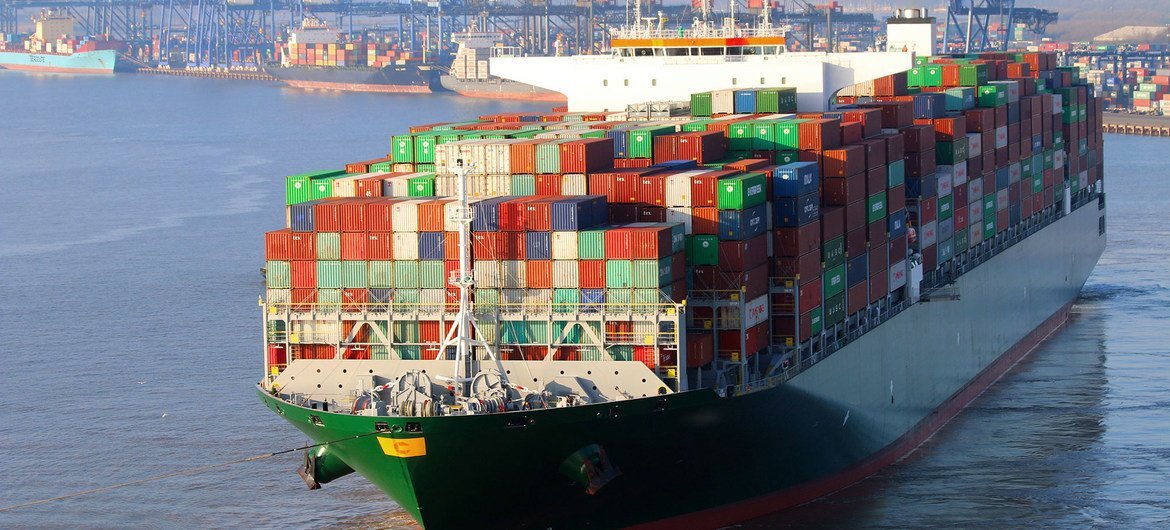
A cargo-laden container ship approaches a port.
IMO
 
A cargo-laden container ship approaches a port.


By Vibhu Mishra
11 April 2025 
Climate and Environment

After years of intense negotiations, countries on Friday reached a landmark deal to cut greenhouse gas emissions from global shipping, setting mandatory fuel standards and introducing an industry-wide carbon pricing mechanism.

The framework – agreed during the UN International Maritime Organization (IMO) Marine Environment Protection Committee – aims for net-zero emissions from the sector by 2050 and will be formally adopted in October before coming into force in 2027.

They will apply to large ocean-going vessels over 5,000 gross tonnage, which collectively account for 85 per cent of carbon dioxide emissions from the marine shipping fleet.

Tweet URL

IMO Secretary-General Arsenio Dominguez hailed the breakthrough, emphasising the collaborative spirit that led to the deal.

“The approval of draft amendments to MARPOL Annex VI mandating the IMO net-zero framework represents another significant step in our collective efforts to combat climate change, to modernize shipping and demonstrates that IMO delivers on its commitments.”

MARPOL Annex VI refers to provisions in the International Convention for the Prevention of Pollution from Ships, specifically addressing air pollution.

It already includes mandatory energy efficiency requirements for ships and has 108 Parties covering roughly 97 per cent of the world’s merchant shipping fleet by tonnage.

Intense negotiations

Negotiations – which culminated on Friday in London – were particularly challenging.

According to media reports, around a dozen countries – including the United States – were opposed to the framework. The proposal was ultimately put to a vote and passed.

A turning point for the shipping industry

The framework introduces a dual approach: a global fuel standard that will progressively lower the annual greenhouse gas fuel intensity of marine fuels, and a greenhouse gas pricing mechanism requiring high-emitting ships to pay for their excess pollution.

Under the new system, ships that exceed emissions limits will need to acquire remedial units to offset their excess pollution. Meanwhile, vessels operating with zero or near-zero emissions will be eligible for financial rewards, creating a market-driven push toward cleaner maritime transport.

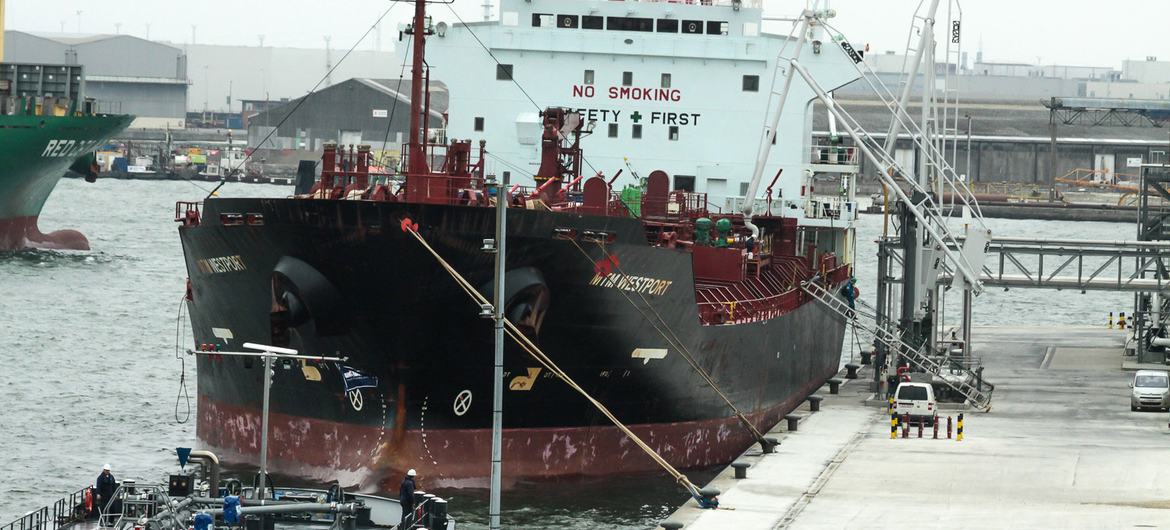
A cargo ship moored at a port in Europe.
© IMO
 
A cargo ship moored at a port in Europe.

Supporting vulnerable countries

A key element of the new framework is the IMO Net-Zero Fund, which will collect revenues from the carbon pricing mechanism.

These funds will support innovation, research, infrastructure and transition initiatives in developing countries.

It will also be used to mitigate negative impacts on vulnerable nations, such as small island developing States (SIDS) and least developed countries (LDCs), which bear the brunt of both climate change and economic pressures in the shipping sector.

Next steps: Adoption and implementation

The draft regulations will undergo formal adoption in October 2025.

If ratified during the IMO session, as expected, the measures will enter into force in 2027, giving the industry time to adapt to new requirements and invest in alternative fuels and technologies.

The International Maritime Organization

The International Maritime Organization (IMO) is the UN specialized agency responsible for the safety and security of global shipping and the prevention of marine and atmospheric pollution by ships.

Established in 1948 and headquartered in London, it develops international treaties, such as the International Convention for the Safety of Life at Sea (SOLAS) or the International Convention for the Prevention of Pollution from Ships (MARPOL).


https://news.un.org/en/story/2025/04/1162176

https://creativecommons.org/licenses/by/4.0/legalcode