Избранное сообщение

среда, 31 декабря 2025 г.

ГА ООН приняла резолюцию "Международное десятилетие действий "Вода для жизни"


2014-12-25 09:50:55 | Russian.News.Cn


Душанбе, 24 декабря /Синьхуа/ -- На 69-й сессии Генеральной Ассамблеи ООН единогласно принята резолюция "Международное десятилетие действий "Вода для жизни", 2005–2015 годы, и дальнейшие усилия по обеспечению устойчивого освоения водных ресурсов".

Как сообщили сегодня в МИД Таджикистана, данная резолюция была подготовлена и вынесена на обсуждение по инициативе Таджикистана. В соответствии с ней планируется проведение двух мероприятий - диалога высокого уровня в ходе 69-й сессии ГА ООН в марте 2015 года и международной конференции высокого уровня в Душанбе в июне 2015 года.

Резолюция является продолжением глобальных инициатив Таджикистана, нацеленных на устойчивое управление водными ресурсами.


http://russian.news.cn/world/2014-12/25/c_133877234.htm
http://creativecommons.org/licenses/by/3.0/legalcode

вторник, 9 декабря 2025 г.

Humanitarians launch $33 billion appeal for 2026

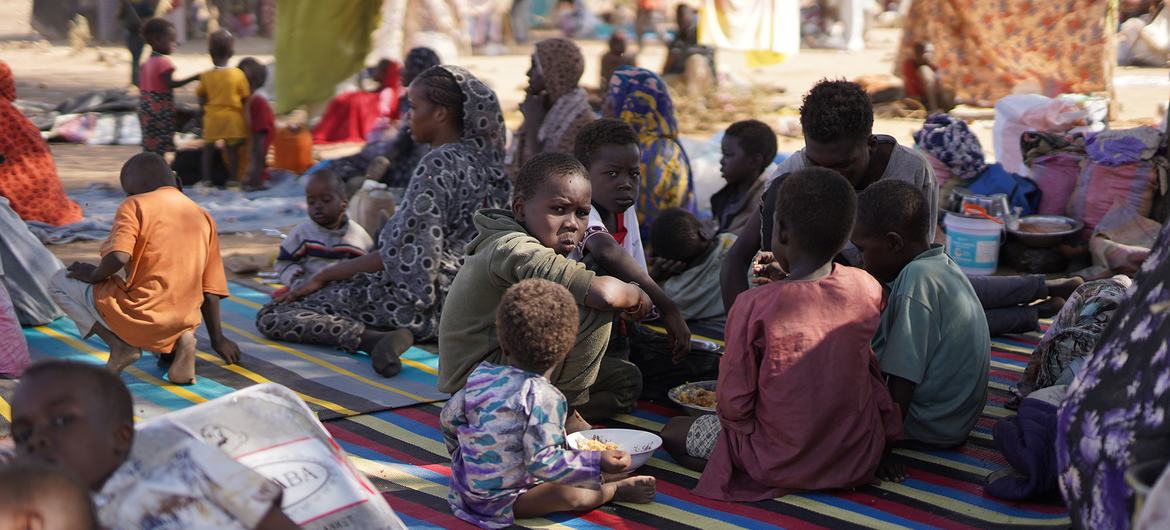
Families fleeing violence in Darfur, Sudan, arrive at a camp for displaced people.
© UNICEF/Mohammed Jamal
 
Families fleeing violence in Darfur, Sudan, arrive at a camp for displaced people.


8 December 2025 
Humanitarian Aid

The UN and partners are seeking $23 billion to provide lifesaving support next year to 87 million people worldwide affected by war, climate disasters, earthquakes, epidemics and crop failures. 

Tweet URL

This is the immediate priority of the $33 billion Global Humanitarian Overview 2026, launched on Monday, which aims to reach 135 million people overall in 50 countries.

“This appeal sets out where we need to focus our collective energy first: life by life,” said UN humanitarian chief Tom Fletcher.

Millions in need

The updated GHO follows a year marked by brutal cuts to humanitarian operations and a record number of deadly attacks against aid workers.

It includes 29 detailed plans, and the largest is for the Occupied Palestinian Territory, where $4.1 billion is needed to reach some three million people.

In Sudan, $2.9 billion is required to provide lifesaving aid to 20 million people caught in the world’s largest displacement crisis, with another $2 billion for the seven million Sudanese who have fled the country.

The largest of the regional plans is for Syria, at $2.8 billion for 8.6 million people.

Cuts and consequences

Mr. Fletcher recalled that the 2025 appeal received only $12 billion – the lowest funding in a decade. As a result, humanitarians reached 25 million less people than during the previous year.

The consequences were immediate, including rising hunger and strained health systems – “even as famines hit parts of Sudan and Gaza,” he said at a press briefing prior to this year's launch.

“Programmes to protect women and girls were slashed, hundreds of aid organizations shut. And over 380 aid workers were killed – the highest on record.”

Humanitarians under attack

The UN relief chief described humanitarians as “overstretched, underfunded and under attack” – something he has stressed on several occasions.

“Only 20 per cent of our appeals are supported. And we drive the ambulance towards the fire on your behalf,” he said.

“But we are also now being asked to put the fire out. And there is not enough water in the tank. And we are being shot at.”

Member State support

Humanitarians will now take the appeal to UN Member States and ask for their backing.

This will happen over the next 87 days – “one for each of the million lives that we will set out to save,” he said.

Countries will also be urged to step up protection for humanitarians, “not with statements of concern, but by holding to account those killing us – and those arming those killing us,” he added.


https://news.un.org/en/story/2025/12/1166526

https://creativecommons.org/licenses/by/4.0/legalcode

понедельник, 1 декабря 2025 г.

Cyclone Ditwah brings worst flooding in decades to Sri Lanka, killing hundreds


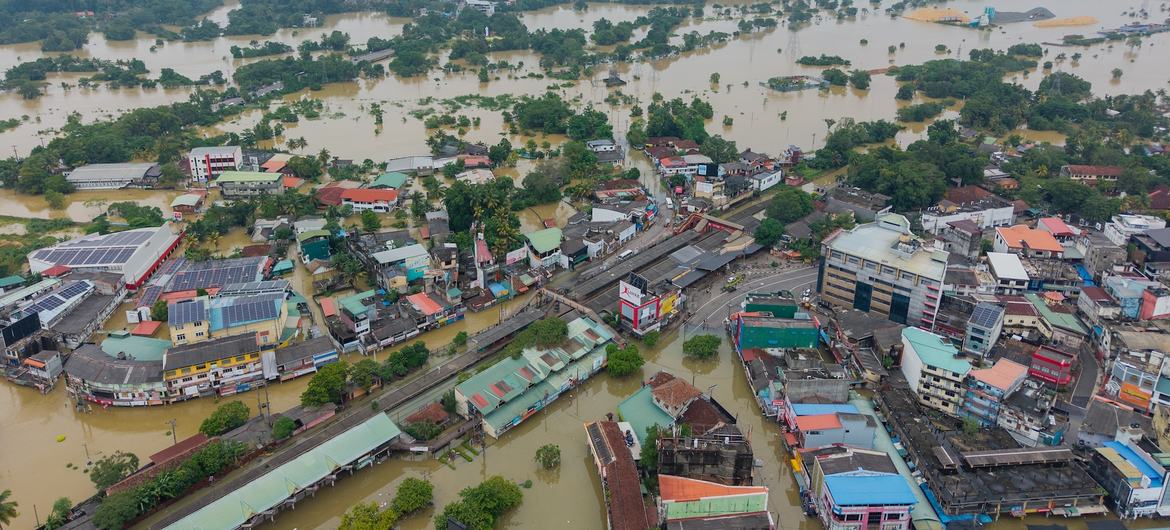
Gampaha (pictured), a district on Colombo's outskirts, has been among the areas hardest hit by flooding after Cyclone Ditwah.© UNICEF/InceptChange
 
Gampaha (pictured), a district on Colombo's outskirts, has been among the areas hardest hit by flooding after Cyclone Ditwah.


By Vibhu Mishra
30 November 2025 
Humanitarian Aid

Sri Lanka is facing one of its worst flood disasters in two decades, with nearly one million people affected and more than 400 reported dead or missing after Cyclone Ditwah unleashed catastrophic flooding and landslides across the island.

According to the UN relief coordination office, OCHA, 998,918 people across all 25 districts have now been affected, with 212 deaths reported and 218 people missing. More than 180,000 people from over 51,000 families are sheltering in 1,094 government-run safety centres as search and rescue efforts continue.

Cyclone Ditwah made landfall on 28 November before moving back over the Bay of Bengal, triggering some of the most severe flooding Sri Lanka has seen since the early 2000s.

The hardest-hit districts include Gampaha, Colombo, Puttalam and Mannar, as well as Trincomalee and Batticaloa, while deadly landslides in the central hill country have devastated Kandy, Badulla and Matale.

Tweet URL

Homes destroyed, infrastructure shattered

Initial assessments indicate that more than 15,000 homes have been destroyed. Over 200 roads remain impassable, at least 10 bridges have been damaged, and sections of the rail network and national power grid affected.

Flooding along the Kelani River, which runs through Colombo and surrounding low-lying areas, continues to hamper access and disrupt information flow from affected communities, complicating rescue and relief operations.

Severe disruption to electricity, mobile and communications, and transport networks are reported in northern districts such as Jaffna, with entire villages isolated. 

Access to clean water also remains a major concern, with several areas reporting little or no supply.

Health system under strain, food insecurity looms

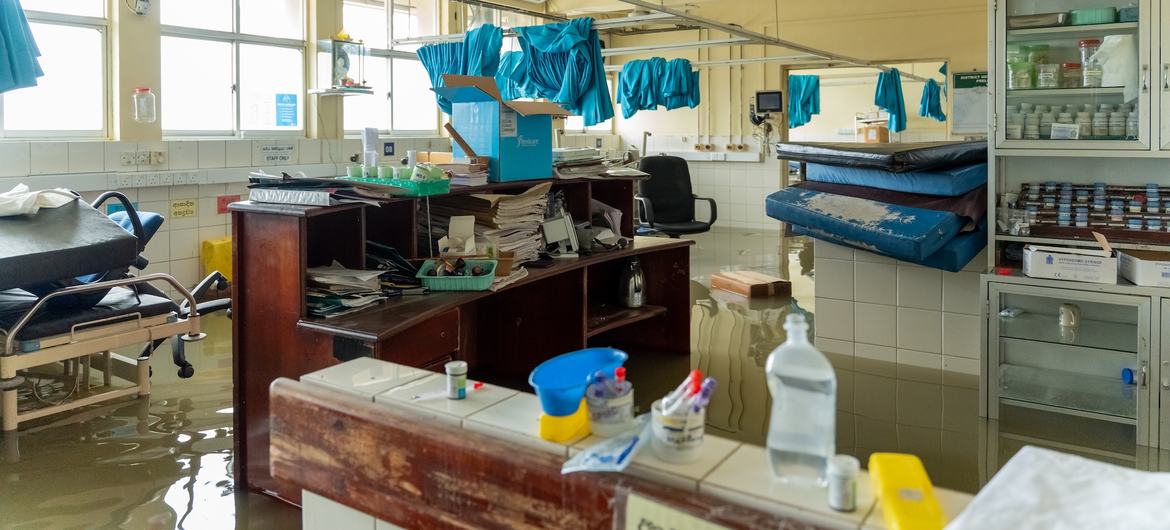
Sri Lanka’s already fragile health system is under severe pressure, OCHA said. Several district hospitals remain flooded and are receiving only limited supplies, with critically ill patients being airlifted to functioning facilities.

Response is further hindered by recurring landslides and the breach of multiple tank bunds (embankments or barriers), including at Mavilaaru, heightening risks in Trincomalee and Batticaloa.

Authorities have also warned of rising food insecurity, as submerged farmland, damaged storage facilities and severed supply routes threaten shortages and price increases in the weeks ahead.

The World Health Organization (WHO) warned that floods significantly raise the risk of vector-borne, food-borne and water-borne diseases, urging communities to prevent mosquito bites, ensure food safety and use safe drinking water wherever possible.

Floodwaters have entered several hospitals across Sri Lanka, further straining the health system.
© UNICEF/ InceptChange
 
Floodwaters have entered several hospitals across Sri Lanka, further straining the health system.

UN mobilises coordinated response

The United Nations in Sri Lanka activated its emergency coordination system on Sunday to scale up a unified response with government agencies and humanitarian organizations.

Sector coordination has been set up across food security, health, water and sanitation (WASH), education, protection, shelter and early recovery, while a multi-sector needs assessment is under way with disaster management authorities to identify the most urgent gaps.

“The UN in Sri Lanka is mobilising its teams across the system to support national rescue and early recovery efforts, in coordination with authorities. We stand in solidarity with all affected communities,” said UN Resident Coordinator Marc-André Franche.

Despite access challenges, the UN Children’s Fund (UNICEF) has delivered portable water to 25 safety centres in Badulla in the central hills, which had been cut off from the rest of the country by floods and infrastructure damage.

To support government-led efforts, India and Pakistan have deployed emergency teams to work alongside Sri Lanka’s armed forces in the worst-hit districts.

Meanwhile, in the wider Asian region

Severe monsoon flooding continues across Thailand and Malaysia, affecting more than two million people in southern Thailand alone and displacing nearly 25,000 people in Malaysia, according to OCHA. People have been evacuated in several hard-hit Thai provinces, while the rainfall is expected to ease in coming days.

In Indonesia, media reports cite at least 440 deaths from floods and landslides, with more than 400 people missing, particularly in parts of Sumatra, where thousands remain stranded without access to food and water.


https://creativecommons.org/licenses/by/4.0/legalcode

https://news.un.org/en/story/2025/11/1166474

воскресенье, 23 ноября 2025 г.

Belém COP30 delivers climate finance boost and a pledge to plan fossil fuel transition


Civil Society Actions


Civil Society Actions


By Felipe de Carvalho, in Belém
22 November 2025 Climate and Environment

In a pivotal outcome at COP30 in Belém, Brazil, countries agreed on a sweeping package to scale up climate finance and accelerate implementation of the Paris Agreement – but without a clear commitment to move away from fossil fuels.

“A new economy is rising, while the old polluting one is running out of road.”

That was the message from UN climate chief Simon Stiell as COP30 wrapped up following marathon talks on Friday night which stretched into sunrise Saturday – signaling a turning point for climate ambition and global solidarity. 

What was decided:

  • Finance at scale: Mobilise $1.3 trillion annually by 2035 for climate action.
  • Adaptation boost: Double adaptation finance by 2025 and triple by 2035.
  • Loss and damage fund: Operationalisation and replenishment cycles confirmed.
  • New initiatives: Launch of the Global Implementation Accelerator and Belém Mission to 1.5°C to drive ambition and implementation.
  • Climate disinformation: Commitment to promote information integrity and counter false narratives.

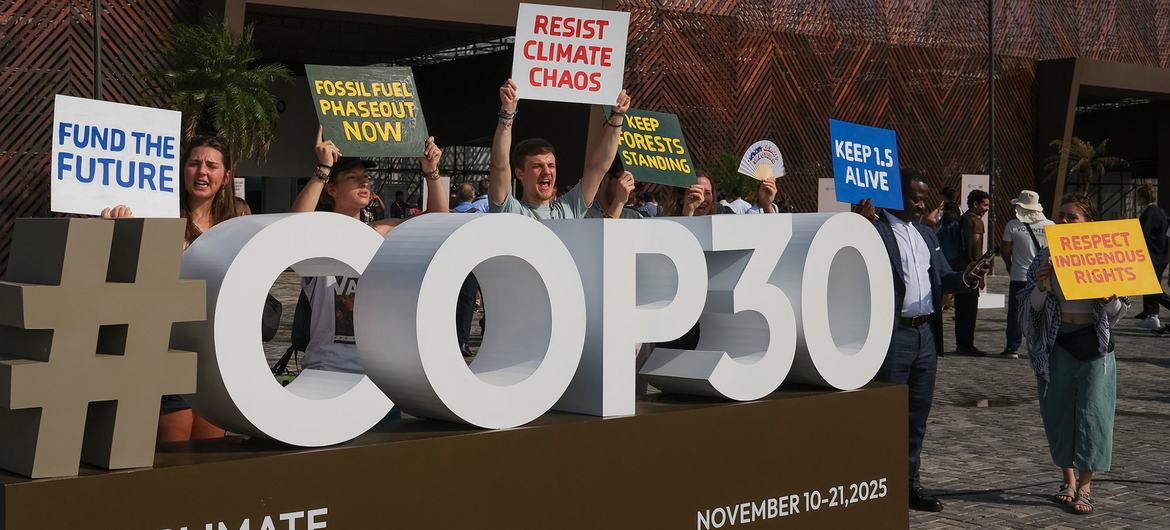
The final decision emphasises solidarity and investment, setting ambitious financial targets while leaving energy transition for later discussion. The burning of fossil fuels emits greenhouse gases that are by far the largest contributors to global warming, making this omission a point of concern for many nations, including negotiators from South America and the EU, as well as civil society groups.

Expectations were high that COP30's final decision would include explicit reference to phasing out fossil fuels. More than 80 countries backed Brazil’s proposal for a formal ‘roadmap.’

A draft text had included it – until the final hours of talks. The adopted outcome refers only to the ‘UAE Consensus’, the COP28 decision calling for “transitioning away from fossil fuels.”

Before the final plenary, Brazilian scientist Carlos Nobre issued a stark warning: fossil fuel use must fall to zero by 2040 – 2045 at the latest to avoid catastrophic temperature rises of up to 2.5°C by mid-century. That trajectory, he said, would spell the near-total loss of coral reefs, the collapse of the Amazon rainforest and an accelerated melt of the Greenland ice sheet.

A closer look

After two weeks of intense negotiations, the adopted text calls for mobilizing at least $1.3 trillion per year by 2035 for climate action, alongside tripling adaptation finance and operationalizing the loss and damage fund agreed at COP28.  

It also launches two major initiatives – the Global Implementation Accelerator and the Belém Mission to 1.5°C – to help countries deliver on their nationally determined contributions (NDCs) and adaptation plans.

For the first time, the decision acknowledges the need to tackle climate disinformation, pledging to promote information integrity and counter narratives that undermine science-based action.  

Last week, Brazil’s President, Luiz Inácio Lula da Silva, opened the summit declaring it would be known as “the COP of truth,” and this landmark decision marks a significant step toward safeguarding public trust in climate policy – even as the absence of fossil fuel transition language underscores the complexity of energy negotiations.

Two new roadmaps

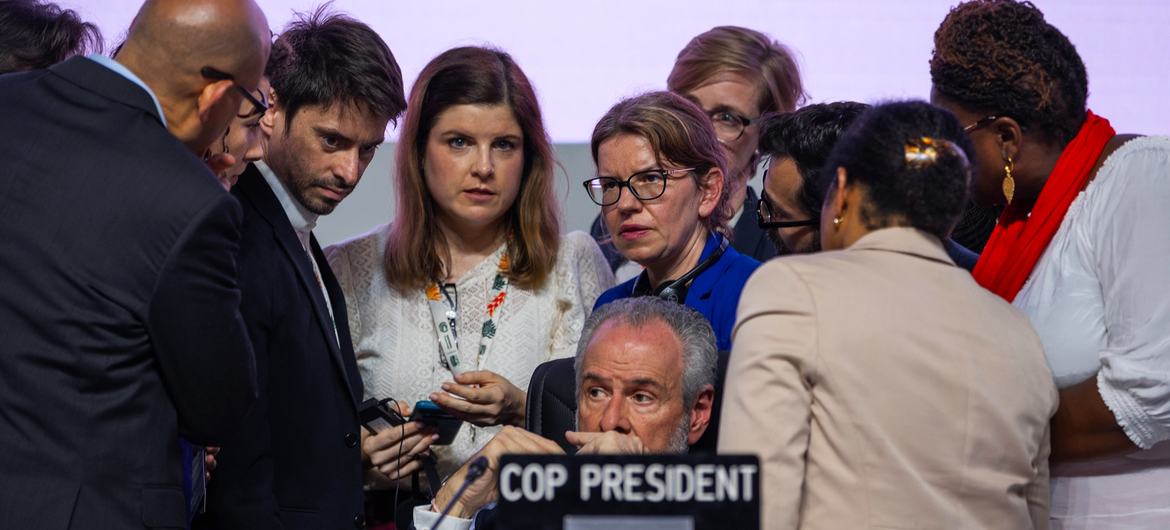
In the closing meeting, COP30 President André Corrêa do Lago acknowledged what was left out of the deal:  

“We know some of you had greater ambitions for some of the issues at hand,” he said, adding, “I know the youth civil society will demand us to do more to fight climate change. I want to reaffirm that I will try not to disappoint you during my presidency.”  

Reflecting on President Lula’s call at the opening of COP30 for ambition, Mr. do Lago announced plans to create two roadmaps: one to halt and reverse deforestation; and another to transition away from fossil fuels in a just, orderly and equitable manner, mobilizing resources for these purposes in a “just and planned manner.”

COP30 President André Corrêa do Lago (centre) confers with his team at the closing of the UN Climate Conference.
© UNFCCC/Kiara Worth
 
COP30 President André Corrêa do Lago (centre) confers with his team at the closing of the UN Climate Conference.

The road to consensus

The road to consensus at the latest Conference of the Parties to the UN Framework Convention on Climate Change (UNFCCC), as the annual COPs are formally known, was anything but smooth.  

Late last week, Indigenous groups staged blockades demanding stronger protections for the Amazon, and late Thursday afternoon, a fire at the conference venue disrupted talks during a critical phase. 

Negotiators worked through the night on Friday – to bridge gaps on finance and ambition, with Brazil’s presidency steering discussions toward a politically workable outcome focused on support and implementation of agreements from past COPs.

‘Multilateralism is alive’

From the G20 Summit in Johannesburg, UN Secretary-General António Guterres sent a clear message to COP30: At the gateway of the Amazon, Parties reached an agreement that shows nations can still unite to confront challenges no country can solve alone.  

The UN chief said that COP30 delivered progress, such as the launch of the Global Implementation Accelerator to close ambition gaps and reaffirmed the UAE Consensus, including a just, orderly and equitable transition away from fossil fuels.

“But COPs are consensus-based – and in a period of geopolitical divides, consensus is ever harder to reach. I cannot pretend that COP30 has delivered everything that is needed.” Overshoot of 1.5°C is a stark warning: deep, rapid emission cuts and massive climate finance are essential. “COP30 is over, but the work is not,” he said.  

Tweet URL

The UN Secretary-General vowed to keep pushing for higher ambition and solidarity, urging all who marched, negotiated and mobilized: “Do not give up. History – and the United Nations – are on your side.

Holding the line at 1.5 in ‘turbulent geopolitical waters’

UN climate chief Simon Stiell pointed to a series of major gains as COP30 closed in Belém: new strategies to accelerate Paris Agreement implementation, a push to triple adaptation finance, and commitments toward a just energy transition.

And despite what he called “turbulent geopolitical waters” – marked by polarization and climate denial – 194 nations stood together, “keeping humanity in the fight for a livable planet, determined to hold the line at 1.5°C.”

At the heart of this momentum is COP30’s flagship outcome: the Mutirão text, a sweeping deal that bundles four contentious negotiation tracks – from mitigation to finance and trade barriers – into a single, consensus-based agreement. Seventeen additional decisions were adopted alongside it.

The final document declares that the global shift toward low-emissions and climate-resilient development is “irreversible and the trend of the future.” It reaffirms that the Paris Agreement is working – and must “go further and faster” – strengthening the role of multilateral climate cooperation.

The text also recognizes the economic and social benefits of climate action, from growth and job creation to improved energy access, security and public health. Stiell pointed to a decisive trend: investments in renewable energy now outpace fossil fuels two to one – “a political and market signal that cannot be ignored,” he said.

A robust action agenda beyond negotiations

The Brazilian Presidency underscored that COP30’s success extends beyond negotiated agreements, highlighting a wave of voluntary commitments under the Action Agenda.

Among them:

  • Tropical Forests Forever Fund: Raised $5.5 billion and now includes 53 participating countries; at least 20 per cent of resources go directly to Indigenous Peoples and local communities.
  • Belém Health Action Plan: The first global initiative targeting climate-related health threats, launched with $300 million from 35 philanthropic organizations.
  • UNEZA Alliance: Public utility companies pledged $66 billion annually for renewable energy and $82 billion for transmission and storage.
  • Cities, regions and companies: A coalition spanning 25,000 buildings reported cutting over 850,000 tons of CO₂ in 2024.

Climate justice at the forefront

Countries also agreed to develop a just transition mechanism, enhancing cooperation, technical support and capacity-building.


https://creativecommons.org/licenses/by/4.0/legalcode

https://news.un.org/en/story/2025/11/1166433

воскресенье, 9 ноября 2025 г.

COP30 kicks off with urgent call to deliver on climate promises and scale up finance


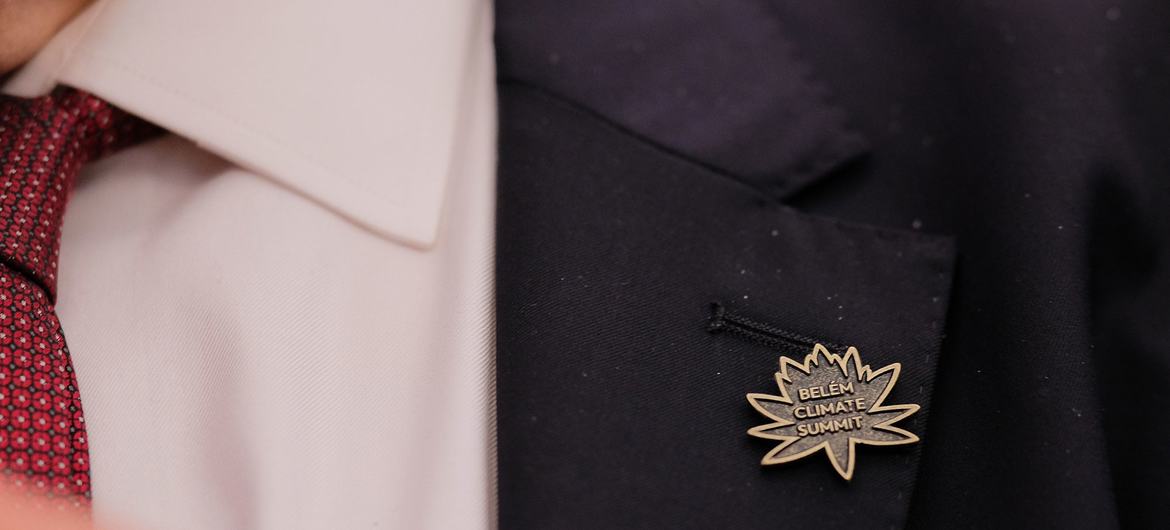
The Belém Climate Summit opens on 10 November 2025.


By Felipe de Carvalho
8 November 2025 
Climate and Environment

Thousands of diplomats and climate experts are heading to Belém, in Brazil’s Amazon, for COP30 – the latest round of UN climate talks. Their task couldn’t be clearer: turn promises into action and agree on tougher plans to cut greenhouse gas emissions. 

After decades of pledges and annual summits from Kyoto to Sharm el-Sheikh, the planet keeps getting hotter and pressure on governments and big business to act – not just talk – has never been greater.

Holding COP30 in Belém, at the edge of the world’s largest tropical rainforest, underscores the stakes: the Amazon region is both a vital carbon sink and a frontline in the fight against deforestation and climate change.

So, this year’s meeting aims to shift gears. Delegates will review national climate plans, push for $1.3 trillion a year in climate finance, adopt new measures to help countries adapt, and advance a ‘just transition’ to cleaner economies.

‘It’s time for implementation’

COP30 has been billed as a turning point – a moment of truth and a test of global solidarity. The summit opens on Monday in Belém against a stark backdrop: scientists say the planet is on course to temporarily breach the 1.5°C warming limit set by the Paris Agreement.

That overshoot could still be short-lived, experts warn, but only if countries act fast to ramp up efforts on cutting emissions, adapting to climate impacts, and mobilizing finance.

Speaking at the Leaders’ Summit, UN Secretary-General António Guterres was blunt: “It’s no longer time for negotiations. It’s time for implementation, implementation and implementation.”

Under Brazil’s presidency, COP30 will revolve around an action agenda of 30 key goals, each driven by an ‘activation group’ tasked with scaling up solutions. 

The effort has been dubbed a mutirão – an Indigenous word meaning “collective task” – reflecting Brazil’s push to spotlight Indigenous leadership and participation at the conference and in the global fight against climate change.

The government says it wants all sectors – from Indigenous communities to business leaders – to help deliver on past climate promises.

Financing the transition

Action agendas at COPs are built on voluntary pledges rather than binding law. But the scale of change needed is enormous: at least $1.3 trillion in climate investments every year by 2035.

Without urgent action, scientists warn global temperatures could climb between 2.3°C and 2.8°C by the end of the century, leaving vast regions uninhabitable through flooding, extreme heat and ecosystem collapse.

At the heart of talks in Belém will be the Baku-to-Belém Roadmap Report for $1.3 Trillion, prepared by the COP29 and COP30 presidencies. It sets out five priorities for mobilizing resources, including boosting six multilateral climate funds, strengthening cooperation on taxing polluting activities, and converting sovereign debt into climate investment – a move that could unlock up to $100 billion for developing countries.

The report also calls for dismantling barriers such as investment treaty clauses that let corporations sue governments over climate policies. Those disputes have already cost governments $83 billion across 349 cases.

Delegates ae gathering for the Climate Summit which is taking place in Belém, Brazil.
© UNFCCC/Diego Herculano
 
Delegates ae gathering for the Climate Summit which is taking place in Belém, Brazil.

What else is on the agenda at COP30?

Another key focus in Belém is the latest round of Nationally Determined Contributions (NDCs) – national climate plans that spell out how countries intend to cut emissions. To keep warming below 1.5°C, global emissions must fall by 60 per cent by 2030. Current NDCs would deliver only a 10 per cent cut.

Of the 196 Parties to the Paris Agreement, just 64 had submitted updated NDCs by the end of September. At preparatory talks in Germany in June, many countries warned that this ambition gap must be closed at COP30.

Delegates are also expected to approve 100 global indicators to track progress on climate adaptation, making results measurable and comparable across nations. 

Today, 172 countries have at least one adaptation policy or plan, though 36 are outdated. The new indicators should help shape more transparent and effective policies.

With the planet heating faster than ever, adaptation is now a central pillar of climate action. But the UN Environment Programme (UNEP) warns adaptation finance must rise twelvefold by 2035 to meet developing countries’ needs.

COP30 will also push forward the Just Transition Work Programme – aimed at ensuring climate measures don’t deepen inequality. Civil society groups are calling for a “Belém Action Mechanism” to coordinate just transition efforts and expand access to technology and finance for the most vulnerable nations.

Why COPs matter

The Conference of the Parties to the UN Framework Convention on Climate Change (UNFCCC) – known simply as COP – remains the world’s leading forum for tackling the climate crisis. Decisions are made by consensus, driving cooperation on mitigation, adaptation and finance.

Over the years, COPs have delivered landmark deals. In 2015, the Paris Agreement set the goal of keeping global temperature rise “well below 2°C” while striving for 1.5°C. 

At COP28 in Dubai, countries agreed to transition away from fossil fuels “in a just, orderly and equitable manner” and to triple renewable energy capacity by 2030. Last year in Baku, COP29 raised the annual climate finance target for developing nations from $100 billion to $300 billion, with a roadmap to scale up to $1.3 trillion.

Taken together, the legal framework built over three decades under the UNFCCC has helped avert a projected 4°C temperature rise by the end of this century.

COP30 opens Monday, 10 November, and runs through Friday, 21 November.

https://news.un.org/en/story/2025/11/1166313

https://creativecommons.org/licenses/by/4.0/legalcode

четверг, 6 ноября 2025 г.

2025 set to be second or third warmest year on record, continuing exceptionally high warming trend


06 November 2025

The alarming streak of exceptional temperatures continued in 2025, which is set to be either the second or third warmest year on record, according to the State of the Global Climate Update from the World Meteorological Organization (WMO). 


The past 11 years, 2015 to 2025, will individually have been the eleven warmest years in the 176-year observational record, with the past three years being the three warmest years on record. The mean near-surface temperature in January-August 2025 was 1.42 °C ± 0.12 °C above the pre-industrial average, said the WMO report.

Concentrations of heat-trapping greenhouse gases and ocean heat content, which both reached record levels in 2024, continued to rise in 2025. Arctic sea ice extent after the winter freeze was the lowest on record, and Antarctic sea ice extent tracked well below average throughout the year. The long-term sea level rise trend continued despite a small and temporary blip due to naturally occurring factors, said the report.

Weather and climate-related extreme events to August 2025 – ranging from devastating rainfall and flooding to brutal heat and wildfires - had cascading impacts on lives, livelihoods and food systems. This contributed to displacement across multiple regions, undermining sustainable development and economic progress.

"This unprecedented streak of high temperatures, combined with last year's record increase in greenhouse gas levels, makes it clear that it will be virtually impossible to limit global warming to 1.5 °C in the next few years without temporarily overshooting this target. But the science is equally clear that it’s still entirely possible and essential to bring temperatures back down to 1.5 °C by the end of the century.” said WMO Secretary-General Celeste Saulo.

“Each year above 1.5 degrees will hammer economies, deepen inequalities and inflict irreversible damage. We must act now, at great speed and scale, to make the overshoot as small, as short, and as safe as possible – and bring temperatures back below 1.5°C before the end of the century,” said UN Secretary-General António Guterres, who cited the WMO report in his statement to the Belém Climate Summit.

WMO released the State of the Global Climate Update 2025 for the Summit at the UN Climate Change Conference, COP30, in Belem, Brazil. It is a science-based reference to anchor COP negotiations in authoritative evidence. It highlights key climate indicators and their relevance to support policymaking and is a bridge to more detailed but less frequent scientific reports.

The report also provides a snapshot of how the WMO community is supporting decision-makers with weather and climate intelligence.

Since 2015, the number of countries reporting multi-hazard early warning systems (MHEWSs) has more than doubled – from 56 to 119 in 2024. However, 40% of countries still lack MHEWSs, and urgent action is needed to close these remaining gaps.

National Meteorological and Hydrological Services (NMHSs) have a growing role in climate action plans which increasingly recognize the importance of climate services such as seasonal outlooks in key sectors like agriculture, water, health and energy. Nearly two thirds of NMHSs now provide some form of climate services – varying from essential to advanced level – compared to approximately 35% just five years ago.

As climate-related drivers shape renewable energy supply and demand, it is essential to anticipate these influences to build reliable and flexible clean energy systems. 


https://wmo.int/media/news/2025-set-be-second-or-third-warmest-year-record-continuing-exceptionally-high-warming-trend


https://creativecommons.org/licenses/by/4.0/legalcode

четверг, 30 октября 2025 г.

Hurricane Melissa: Devastation in Jamaica at levels ‘never been seen before’

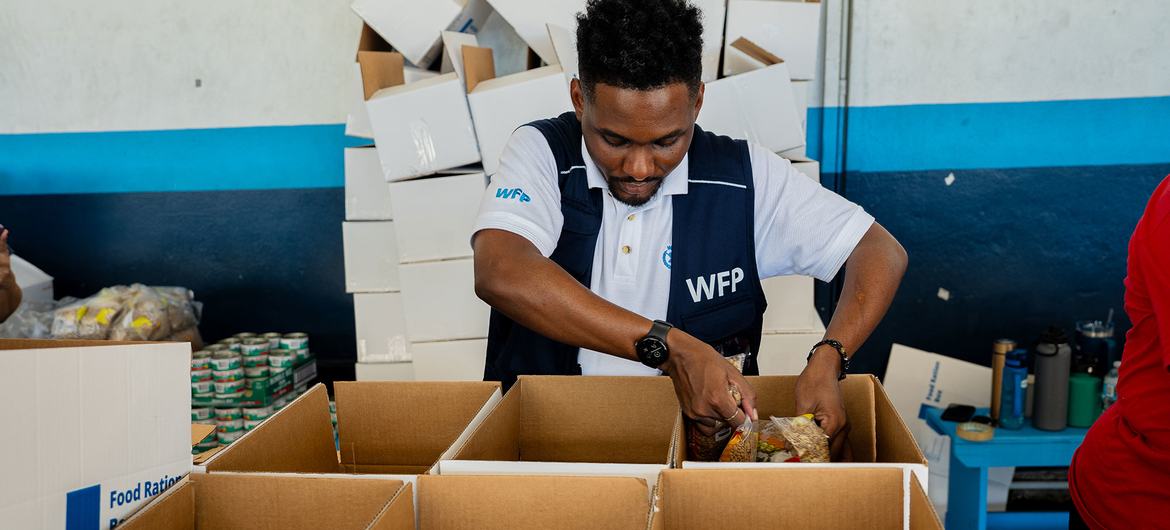
Food is packed for distribution to people affected by Hurricane Melissa in Jamaica.
© UN/Lovell
 
Food is packed for distribution to people affected by Hurricane Melissa in Jamaica.


By Charlotte Frantz
29 October 2025
 Climate and Environment

As Hurricane Melissa moved north of Jamaica on Wednesday, the head of the UN team there said that preliminary damage assessments from the category 5 storm showed a level of devastation “never seen before” on the Caribbean island.

As Hurricane Melissa moved north of Jamaica on Wednesday, the head of the UN team there said that preliminary damage assessments from the category 5 storm showed a level of devastation “never seen before” on the Caribbean island.

UN Resident Coordinator Dennis Zulu emphasised the UN remains closely engaged with governments across the region, on-the-ground UN agencies, and the Caribbean Disaster Emergency Management Agency (CDEMA), noting the “tremendous and unprecedented destruction of infrastructure,” across Jamaica where Melissa made landfall on Tuesday.

Tweet URL

Looking to the months-long reconstruction and recovery effort ahead, he told correspondents in New York via video conference that it would take “a lot of resources” to rebuild and put the thriving economy back on its feet.

“I don't think there's any single soul on this island that was not affected by Hurricane Melissa", highlighted the resident coordinator.

‘Terrible tragedy’

UN World Food Programme (WFP) Director for the Caribbean Multi-Country Office, Brian Bogart, told UN News from the capital, Kingston: “This is a terrible tragedy and there is a real sense of urgency here on the ground. What we're really focused on now is trying to get food and logistics support to enable the entire humanitarian community to respond in coordination with the government”. 

Mr. Bogart said the agency’s primary focus is to deliver 2,000 emergency food boxes which are ready to be airlifted from Barbados as soon as the airport reopens, which would be enough to support 6,000 people for a week. 

As the leading logistical agency, WFP is also loading a vessel in Barbados from the Logistics Hub run alongside the CDEMA, with essentials – such as hygiene kits, shelter, generators – and other items from UN agencies and partners to support the humanitarian effort in Jamaica.

Hurricane barrels on

Early Wednesday morning, Hurricane Melissa crossed into Cuba, bringing 120 mph winds, heavy rain, and a warning of “life-threatening” storm surges, according to news reports. It’s due to move on to The Bahamas, followed by Bermuda.

The storm weakened to a category 2 reaching Cuba, but the National Hurricane Centre (NHC) there said Melissa would “remain a powerful hurricane when it moves across the Bahamas later today.”

The UN Deputy Secretary-General Amina Mohammed said the slow-moving storm was “yet another demonstration of climate science and why we must fight for a world at 1.5 degrees Celsius.”

Data from the UN aid coordination office (OCHA) shows Melissa ranks among the most intense storms to strike Cuba in recent decades, with maximum sustained winds near 138 mph (222 km/h) and two-day rainfall totals approaching 145 millimetres. 

On Wednesday, the UN allocated $4 million each to Haiti and Cuba from its Central Emergency Fund to help communities prepare for the storm and reduce its impact. 

According to news reports, at least 20  Haitians – including 10 children – died due to river flooding as Melissa barrelled across the region. 

UN working ‘hand in hand’ with authorities

Conveying his heartfelt condolences to the families of those who have lost their lives, the UN Secretary-General António Guterres reiterated his solidarity with the governments and communities affected by the hurricane. 

“Guided by Resident Coordinators on the ground, the UN is working hand in hand with authorities and humanitarian partners to assess needs, assist those impacted, and prepare in areas that may yet face the storm’s impact,” he said. 

UN General Assembly President Annalena Baerbock tweeted that for small island developing States “the climate crisis is a lived reality, and the cost of inaction is measured in lives and livelihoods. Adaptation isn’t optional, it’s survival. Solidarity must become sustained, scaled-up climate action.”


https://news.un.org/en/story/2025/10/1166217

https://creativecommons.org/licenses/by/4.0/legalcode