Избранное сообщение

пятница, 11 июля 2025 г.

Overlooked and underestimated: Sand and dust storms wreak havoc across borders


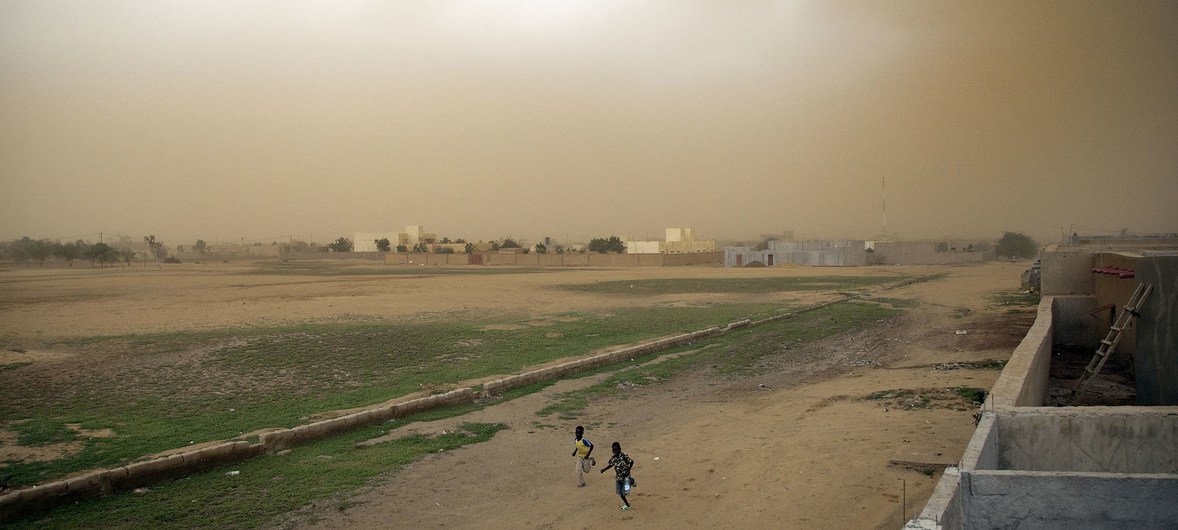
Children run from an approaching sand storm in Gao, Mali.
UN Photo/Marco Dormino
 
Children run from an approaching sand storm in Gao, Mali.


10 July 2025 
Climate and Environment

There are three Great Pyramids at Giza in Egypt - but imagine if there were 307 of the mighty edifices. And then imagine that they had dissolved into over two billion tons of sand and dust particles. 

That’s how much sand and dust enters the atmosphere on an annual basis according to the World Meteorological Organization (WMO)’s annual report on the storms which scatter such particles across borders worldwide.

The UN weather agency’s reports warns that while the amount of dust decreased marginally in 2024, the impact on humans and economies is increasing.

WMO estimates that over 330 million people across 150 countries are affected by sand and dust storms, leading to premature deaths and other health consequences in addition to steep economic costs.

More than just a dark sky 

Sand and dust storms do not just mean dirty windows and hazy skies. They harm the health and quality of life of millions of people and cost many millions of dollars,” said Celeste Saulo, the Secretary-General of WMO.

While the movement of sand and dust is a natural weather process, increased land degradation and water mismanagement have, in the past few decades, exacerbated the prevalence and geographic spread.

Dust and sand particles – 80 per cent of which come from North Africa and the Middle East – can be transported thousands of kilometres across borders and oceans.

Tweet URL

“What begins in a storm in the Sahara, can darken skies in Europe. What is lifted in Central Asia, can alter air quality in China. The atmosphere does not recognize borders,” said Sara Basart, WMO Scientific Officer, at a briefing in Geneva.

And this is precisely what happened in 2024. Dust and sand from the Western Sahara travelled all the way to Spain’s Canary Islands. And fierce winds and drought in Mongolia brought dust to Beijing and northern China.

Fast-growing challenge

“These extreme weather events are not local anomalies. Sand and dust storms are fast becoming one of the most overlooked yet far-reaching global challenges of our time,” said a senior official on Thursday morning speaking on behalf of Philémon Yang, President of the General Assembly.

The storms can obscure sunlight, altering ecosystems on land and in the ocean. In addition to environmental impacts, these weather occurrences have profound impacts on humans and their economies.

“Once considered seasonal or localised, sand and dust storms have escalated into a persistent and intensifying global hazard,” said Rola Dashti, the co-chair of the UN Coalition on Combating Sand and Dust Storms.

Between 2018-2022, over 3.8 billion people were exposed to dust particles, with the worst-affected regions experiencing dust exposure 87 per cent of the time during that same period.

These particles exacerbate cardiovascular diseases and have other adverse health effects, leading to 7 million premature deaths each year especially among already vulnerable populations.

Mr. Yang referred to this as the “staggering human toll”: from an economic perspective, storms can lead to a 20 per cent reduction in crop production among rural communities, pushing them towards hunger and poverty.

In the Middle East and North Africa alone, economic losses in 2024 as a result of sand and dust storms accounted for 2.5 per cent of the regional GDP.

Can’t go it alone

WMO is calling on the international community to invest more in early warning systems and data tracking.

No country, no matter how prepared, can face this challenge alone. Sand and dust storms are a trans-boundary threat that demands coordinated, multisectoral and multilateral action,” said Ms. Dashti.

With 2025-2034 declared the Decade on Combating Sand and Dust Storms, Mr. Yang said this should prove a turning point. He urged Member States to move from awareness to action – and fragmentation to coordination.


https://news.un.org/en/story/2025/07/1165363


https://creativecommons.org/licenses/by/4.0/legalcode

пятница, 4 июля 2025 г.

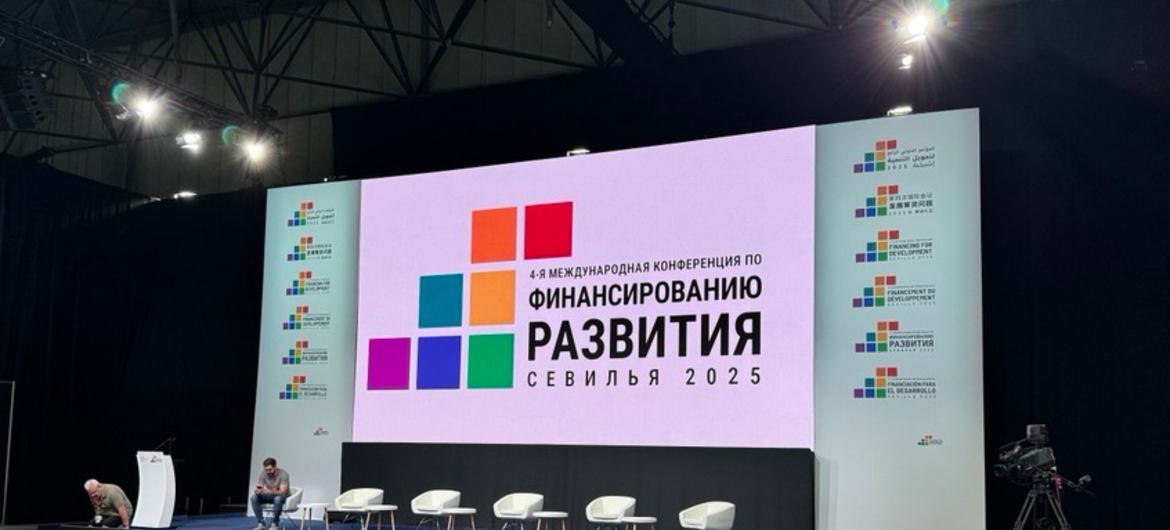
Конференция ООН в Севилье: новая надежда на достижение Целей устойчивого развития


Конференция в Севилье завершила свою работу.
Служба новостей ООН/M. Уэллс
 
Конференция в Севилье завершила свою работу.


3 июля 2025
 Экономическое развитие

Четвертая международная конференция по финансированию развития завершилась сегодня в Севилье, Испания, с конкретными шагами по преобразованию амбиций в реальные действия. Более 130 инициатив, запущенных за четыре дня, призваны превратить принятое странами-участницами Севильское соглашение в эффективную платформу по преодолению финансового кризиса и ускорению достижения Целей устойчивого развития (ЦУР).

Принятые на конференции решения обозначают конкретные шаги по сокращению дефицита финансирования ЦУР, который в развивающихся странах составляет около 4 триллионов долларов в год.

В форуме приняли участие более 15 тысяч человек, включая почти 60 глав государств и правительств. Было проведено более 470 параллельных и специальных мероприятий, включая Международный бизнес-форум и Ярмарку инвестиций в ЦУР.

Решительный ответ на кризис

«Последствия растущих долговых обязательств, обостряющихся торговых разногласий и резкого сокращения официальной помощи на цели развития стали предельно очевидны на этой неделе, – заявила в своем заключительном выступлении первый заместитель Генерального секретаря ООН Амина Мохаммед.  – И все же, несмотря на эту тревожную картину, конференция в Севилье дала решительный ответ – объединяющий итоговый документ, сосредоточенный на конкретных решениях, который подтверждает обязательства, принятые в Аддис-Абебе десять лет назад, возрождает надежду на достижение ЦУР и доказывает, что многостороннее сотрудничество все еще важно и эффективно».

Читайте также:

ИНТЕРВЬЮ | Севильское соглашение: без развития не может быть безопасности

По словам Генерального секретаря конференции и Заместителя Генерального секретаря ООН по экономическим и социальным вопросам Ли Цзюньхуа, конференция в Севилье продемонстрировала способность ООН не только служить пространством для диалога, но и становиться платформой для реальных решений.

Севильское соглашение стало первым с 2015 года межправительственным соглашением по вопросам финансирования развития. Оно обозначает три ключевых направления дальнейших действий: масштабное привлечение инвестиций в устойчивое развитие, решение долгового и финансового кризиса в странах с низким и средним уровнем дохода, а также глубокую реформу международной финансовой системы.

Инновационные механизмы финансирования

В рамках Севильской платформы действий были представлены многочисленные инициативы, охватывающие широкий спектр задач. Среди них – новые механизмы обмена долговых обязательств на инвестиции в развитие, налоговые инициативы, направленные на увеличение поступлений от сверхбогатых и от премиальных форм потребления, платформы для технической помощи и содействие в подготовке проектов, а также меры по расширению кредитования в национальных валютах.

В частности, была учреждена международная коалиция по включению «пунктов приостановки» в кредитные соглашения, позволяющих временно приостановить обслуживание долга во время кризисов. Также было объявлено о формировании Севильского форума по вопросам долга, который будет координировать усилия стран в управлении и реструктуризации долга.

Для стимулирования притока инвестиций в устойчивое развитие было представлено несколько новых решений. Особое внимание было уделено развитию национальных платформ финансирования, выстраиваемых на основе стратегий, сформированных самими странами, а также механизмам по расширению доступа к превентивному финансированию на случай чрезвычайных ситуаций.

Вклад частного сектора

Впервые на полях конференции прошел Международный бизнес-форум, в рамках которого частный сектор выразил готовность активнее участвовать в достижении ЦУР. Его участники представили практические решения по привлечению капитала к реализации целей, особенно в развивающихся странах, через политические диалоги высокого уровня, сессии по инновациям и лучшим практикам, а также тематические круглые столы.

В ходе Ярмарки инвестиций в ЦУР развивающиеся страны представили инвесторам и международным финансовым организациям проекты на общую сумму более 10 миллиардов долларов.

Ключевые результаты

На фоне растущих глобальных вызовов конференция в Севилье стала важным сигналом: международное сообщество по-прежнему способно находить общий язык и предпринимать коллективные шаги ради устойчивого будущего для всех. Среди ключевых инициатив:

Для решения долговых проблем

  • Центр обмена долга на развитие (Debt Swaps for Development Hub), при поддержке Испании и Всемирного банка, для усиления потенциала и масштабирования программ по обмену долга;
  • Программа обмена долга на развитие от Италии на сумму 230 миллионов евро, направленная на инвестирование в проекты в африканских странах;
  • Альянс по введению «пунктов приостановки платежей» (Debt “Pause Clause” Alliance), в рамках которого страны-доноры и многосторонние банки развития (Канада, Франция, Испания, Великобритания, Межамериканский банк развития, Европейский инвестиционный банк, Африканский банк развития, Азиатский банк развития и Банк развития Латинской Америки и Карибского бассейна) договорились включать в кредиты положения о приостановке платежей в случае кризиса;
  • Форум по вопросам долга — площадка для обмена опытом и координации усилий стран в управлении и реструктуризации долга, при секретариате одной из структур ООН и при поддержке Испании.

Для стимулирования инвестиций с социальным эффектом

  • Коалиция за глобальные налоги солидарности, возглавляемая Францией, Кенией и Барбадосом (при поддержке Бенина, Сомали, Замбии и Испании), выступила с инициативой обложить налогами полеты бизнес-класса и частные самолеты для финансирования климатических инициатив и устойчивого развития;
  • Платформа смешанного финансирования SCALED, при участии стран (Германия, Канада, Франция, Великобритания, Дания, Южная Африка) и финансовых институтов (Allianz, AXA SA, CDPQ, Zurich Insurance Group), для масштабирования и репликации эффективных моделей смешанного финансирования;
  • Новый инструментарий FX EDGE от многосторонних банков развития по управлению валютными рисками, а также платформа Delta от Европейского банка реконструкции и развития для поддержки кредитования в местной валюте;
  • Инициатива по эффективному налогообложению состоятельных лиц, во главе с Бразилией и Испанией, для обеспечения справедливого налогообложения;
  • Центр технической поддержки от государственных банков развития (во главе с Finance in Common и IDFC), а также объединенная платформа МБР для подготовки проектов, координируемая Азиатским инфраструктурным инвестиционным банком.

Для реформы финансовой архитектуры на национальном и глобальном уровнях

  • Новое поколение национальных платформ с государственным управлением финансированием, при поддержке стран (включая ЮАР и Египет), Фонда интегрированных национальных финансовых стратегий и банков развития;
  • Коалиция под руководством Великобритании и проекта Bridgetown Initiative по увеличению доли заранее подготовленного финансирования в случае стихийных бедствий с 2 до 20 процентов к 2035 году

https://creativecommons.org/licenses/by/4.0/legalcode

https://news.un.org/ru/story/2025/07/1465901?_gl=1*xpihmt*_ga*MjU1NjY3ODguMTc1MTYwNjM5NA..*_ga_TK9BQL5X7Z*czE3NTE2MDYzOTQkbzEkZzEkdDE3NTE2MDY0MDIkajUyJGwwJGgw

суббота, 21 июня 2025 г.

Электросети стран Балтии отключат от энергосистем России


20 июня 2019, 22:13


© Фото ИА «Росбалт», Иван Шалёв


Страны Балтии и ЕС отключатся от энергосистемы России к 2025 году. Соответствующий план утвердили Латвия, Литва, Эстония и Польша, а также председатель Еврокомиссии Жан-Клод Юнкер, говорится в сообщении на сайте ЕК.

Уточняется, что подписана дорожная карта синхронизации электросетей с Континентальной европейской сетью. В тексте отмечается, что Балтийский регион связан с европейскими партнерами через линии электропередач, но энергосистема Балтийских стран по-прежнему работает в синхронном режиме с российской и белорусской.

Так, согласно договору, подписанному в 2001 году, энергетические системы Прибалтики работают в синхронном режиме кольца БРЭЛЛ (Белоруссия, Россия, Эстония, Латвия и Литва).


http://www.rosbalt.ru/world/2019/06/20/1787994.html http://creativecommons.org/licenses/by/3.0/legalcode

воскресенье, 8 июня 2025 г.

Humans can't survive without a healthy Ocean: UN


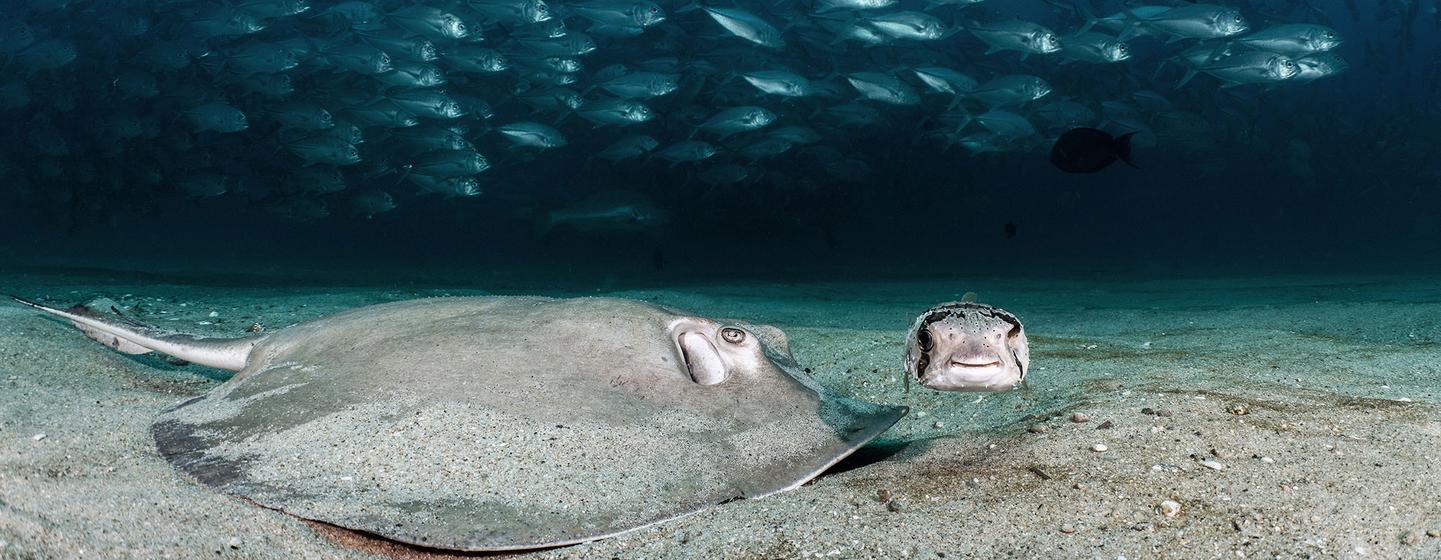
A Diamond Stingray and a one-eyed Porcupine fish search for a meal in the sand as hundreds of Big Eye Jacks school behind them.

Humans can't survive without a healthy Ocean: UN envoy

© Nicolas Hahn
 
A Diamond Stingray and a one-eyed Porcupine fish search for a meal in the sand as hundreds of Big Eye Jacks school behind them.


By Conor Lennon
6 June 2025 Climate and Environment

The Ocean is in deep crisis. Factors such as acidification, declining fish stocks, rising temperatures and widespread pollution are contributing to a catastrophic decline in biodiversity: over half of marine species are at risk of extinction this century.

The urgent need to restore the Ocean will be the focus of a major international conference taking place in Nice, France, this June. This will be the first UN Ocean Conference since the adoption of a legal agreement for the conservation and sustainable use of marine biodiversity and the protection of life in the Ocean will be a key topic.

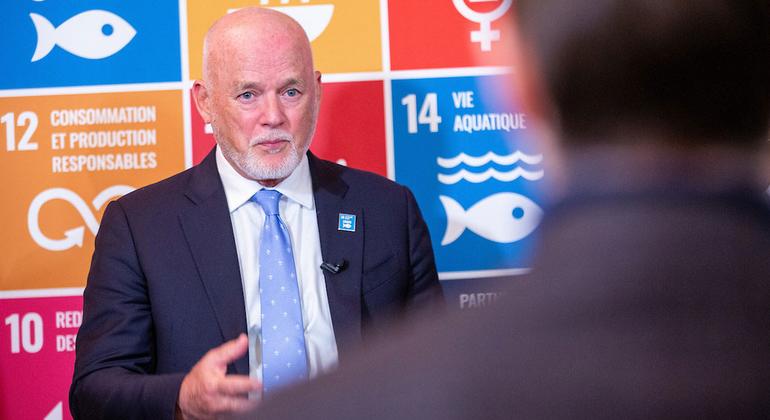
Peter Thompson, the Secretary General's Envoy for the Ocean, Alfredo Giron, Head of the Ocean Action Agenda at the World Economic Forum (WEF), and Minna Epps, who runs the Ocean Program at the International Union for the Conservation of Nature (IUCN), spoke to UN News ahead of the Conference, to talk about UN-led initiatives designed to protect marine biodiversity.

UN News: How serious is the marine biodiversity crisis?

Minna Epps, Head of the Ocean Program at the International Union for the Conservation of Nature (IUCN)
IUCN

Minna Epps: We’re in really dire straits. If we don't protect and restore the Ocean this is going to have devastating consequences for all those services that we are dependent on. The entire climate is dependent on the Ocean as a climate regulator. However, we don't want the Ocean to absorb more carbon dioxide, because that's what makes it acidic, so we need to start by cutting emissions.

If you are in an airplane and you fly over a forest, you can see deforestation, that a habitat has been lost. The same thing is happening in the Ocean, but we can't really see it. Another effect of climate change is marine heat waves, when water temperature increases over an extended period. A marine heat wave in Panama wiped out around 75 per cent of coral diversity.

Or take coral reefs. These make up less than one per cent of the Ocean, but almost 25 per cent of marine species depend on them. Reefs also protect against storm surges and extreme weather events.

Peter Thomson: Fossil fuels are causing man-made global warming, which is heating the Ocean at an alarming rate, which is causing changes in ecosystems, rising sea levels and the death of coral.

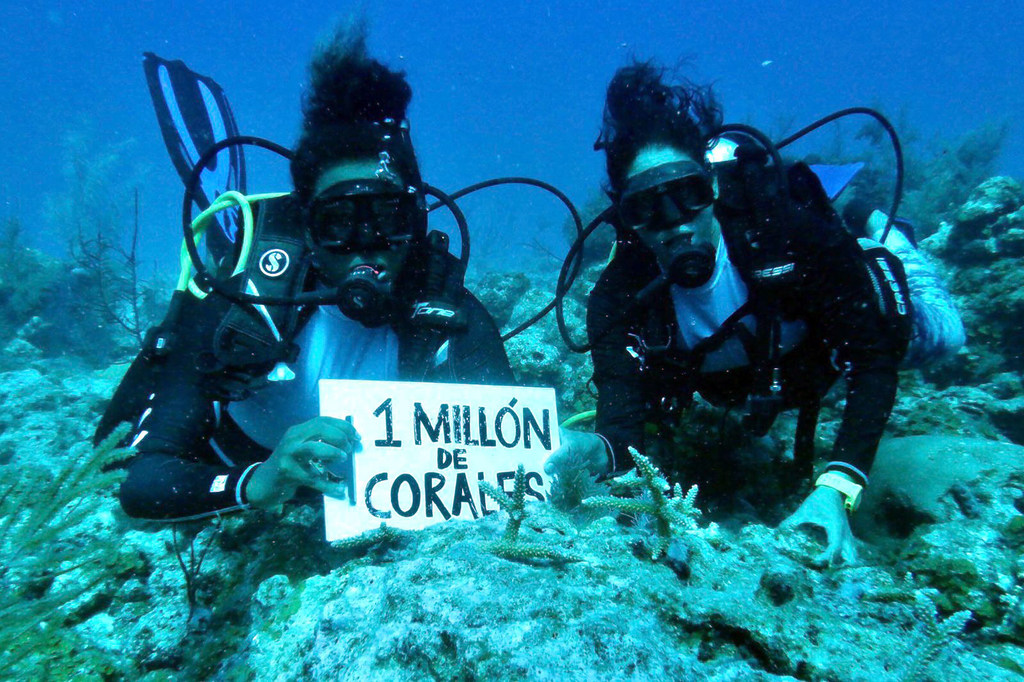
Divers pose with transplanted corals and a 'One Million Corals for Colombia' sign, the name of the biggest ocean restoration project in Latin-America.
Colombian Environment Ministry
 
Divers pose with transplanted corals and a 'One Million Corals for Colombia' sign, the name of the biggest ocean restoration project in Latin-America.

How can Homo sapiens survive on a healthy planet if you don't have a healthy Ocean? And how can you have a healthy Ocean if you don't have a coral in it? So, my message is, leave fossil fuels in the ground. Get as fast as we can to an electrified world, an equitably electrified world powered by renewable energy.

Alfredo Giron: So many things in our daily lives depend on the Ocean. How we eat, how we move and transport goods. Your Amazon delivery package probably went on a ship at some point in the supply chain. How we power our activities: offshore wind is the fastest expanding renewable energy source today. Or how we communicate: the deep-sea cables that we depend on for so many transactions are having an impact on marine biodiversity.

UN News: What is the 30x30 biodiversity initiative and how could it help to restore the Ocean?

Alfredo Giron, Head of the Ocean Action Agenda at the World Economic Forum (WEF)
WEF

Alfredo Giron: 30x30 is about protecting and restoring thirty percent of the Ocean and of land by 2030. Many countries that have stepped up and achieved their targets of protecting thirty per cent of their national waters. And we finally have the Biodiversity Beyond National Jurisdiction Agreement, the High Seas Treaty, which is giving us, for the first time, the legal instruments to actually protect waters that are outside of national jurisdictions.

We have protected close to ten percent of the Ocean at this point. So, as we go into the last five years of the decade, the important question that we should be asking ourselves is, how are we going to protect that other 20 per cent? Do we have the right instruments? Do we have the right incentives? Do we have the right amount of money and ambition to achieve it?

Peter Thomson: The best of our scientists told us that if we don’t protect 30 per cent of the planet by 2030, we are going to begin seeing a great cascading away of species on this planet and extinctions, including the extinction of Homo sapiens.

That's why this 30 per cent protection assumes such great importance, and the Ocean community stood up and committed to protecting 30 per cent of the Ocean. Whether we get there or not is a big question, but at least we're going to have a plan to get there.

UN News: This is the first UN Ocean Conference since the adoption of the High Seas Treaty. Why is this important?

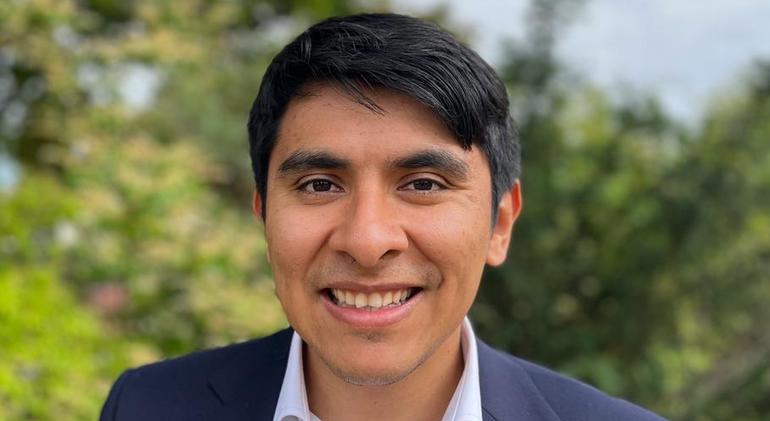
Peter Thomson (file)
UN Global Compact/Elma Okic

Peter Thomson: The Treaty brings in a multilateral regime for the exploitation of genetic resources and sharing technology. We are very hopeful that, by the time of the UN Ocean Conference, we will have got the sixty ratifications required for the Treaty to come into force.

Equally important to me are the World Trade Organisation Harmful Fisheries Subsidies. We are very close to an agreement. This is about up to $30 billion of public money funding industrial fleets each year, to go out and chase diminishing stocks of fish.

It is human madness. That money should be going towards the development of coastal communities or adaptation to sea level rise, rather than subsidizing industrial fishing fleets.

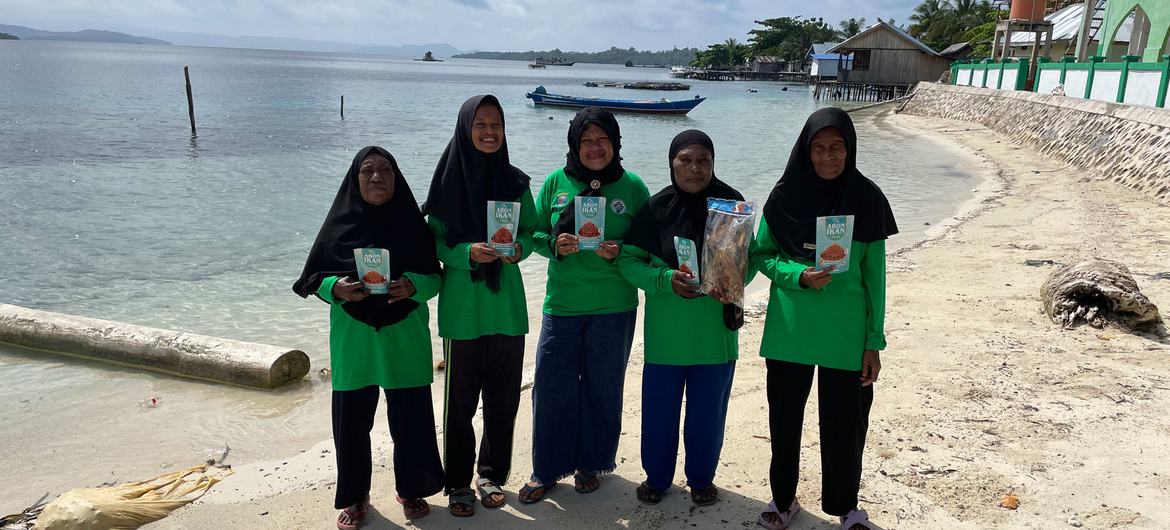
Women on the remote island of Bianci, Southwest Papua, have doubled their income by moving from selling raw fish to selling fish-based products.
© UN Indonesia/M. Gaspar
 
Women on the remote island of Bianci, Southwest Papua, have doubled their income by moving from selling raw fish to selling fish-based products.

UN News: What role should the private sector play in the protection of the Ocean?

Alfredo Giron: It is not enough to think about sustainable use. Now we need to think about regeneration. For example, if you install an offshore wind farm, can you make sure that you use the right materials so that you can build a coral reef around it? Or, if you build a new port, can you use mangroves to protect and stabilise the coastline, while making sure that the waves are not as strong and that the ships can interact more easily with the port itself?

If we stop thinking about the private sector as the flip side of conservation but rather as one more stakeholder that will really benefit from a healthy Ocean, then we start unlocking a lot of opportunities. The WEF is partnering with the UN to bring in the private sector and help them to navigate and understand what is going on in this space.

Minna Epps: We also must stop thinking about the private sector as a homogenous group, and distinguish between the big corporations that we can we need to work with, and the small to medium enterprises that we need to invest in.

We want this conference to be a game changer. We are focusing on initiatives such as the International Panel of Ocean Sustainability, which is gathering both scientific and Indigenous knowledge. Then there is finance: how do we move the needle in a decisive manner? Because without that happening, the conference will not have a strong legacy. 

https://news.un.org/en/story/2025/06/1163771

https://creativecommons.org/licenses/by/4.0/legalcode

суббота, 7 июня 2025 г.

Green gold beneath the waves: How seaweed – and one man’s obsession – could save the world


Vincent Doumeizel, a senior adviser to the UN Global Compact, has become one of the faces of the so-called “seaweed revolution.”


© Courtesy of Vincent Doumeizel
 
Vincent Doumeizel, a senior adviser to the UN Global Compact, has become one of the faces of the so-called “seaweed revolution.”


By Fabrice Robinet, our correspondent in Nice
6 June 2025
 Climate and Environment

As world leaders gear up for the Third UN Ocean Conference in Nice, one policy expert is making waves with an ancient marine organism he believes could help feed the planet, clean the air, and transform coastal economies. 

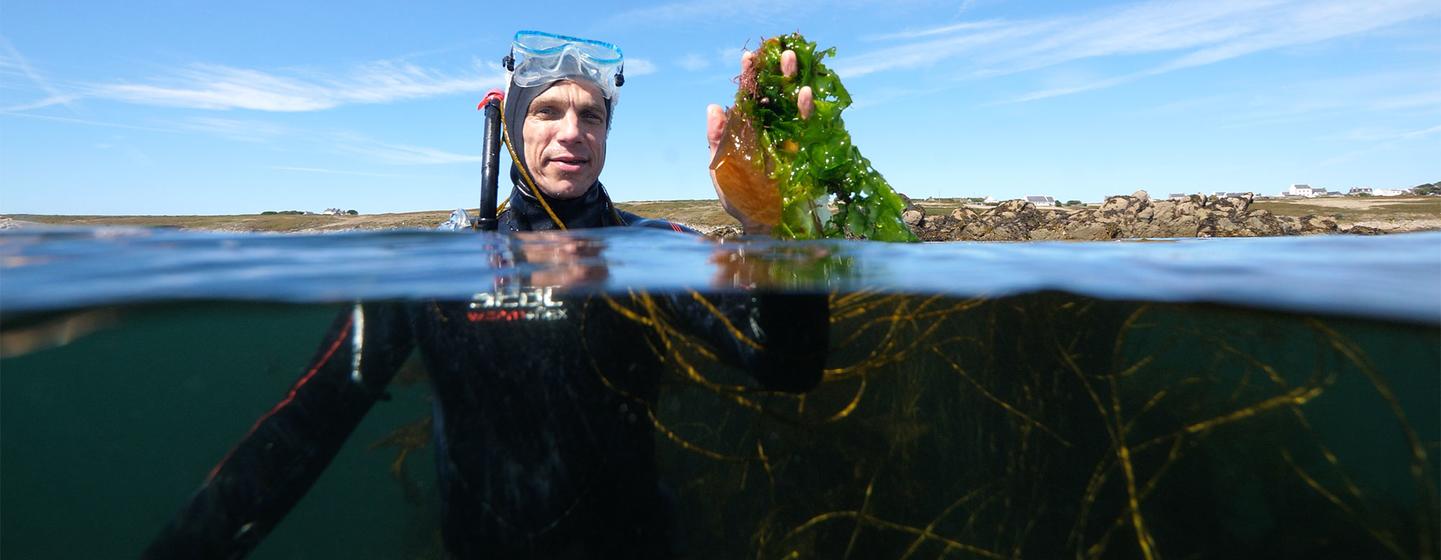
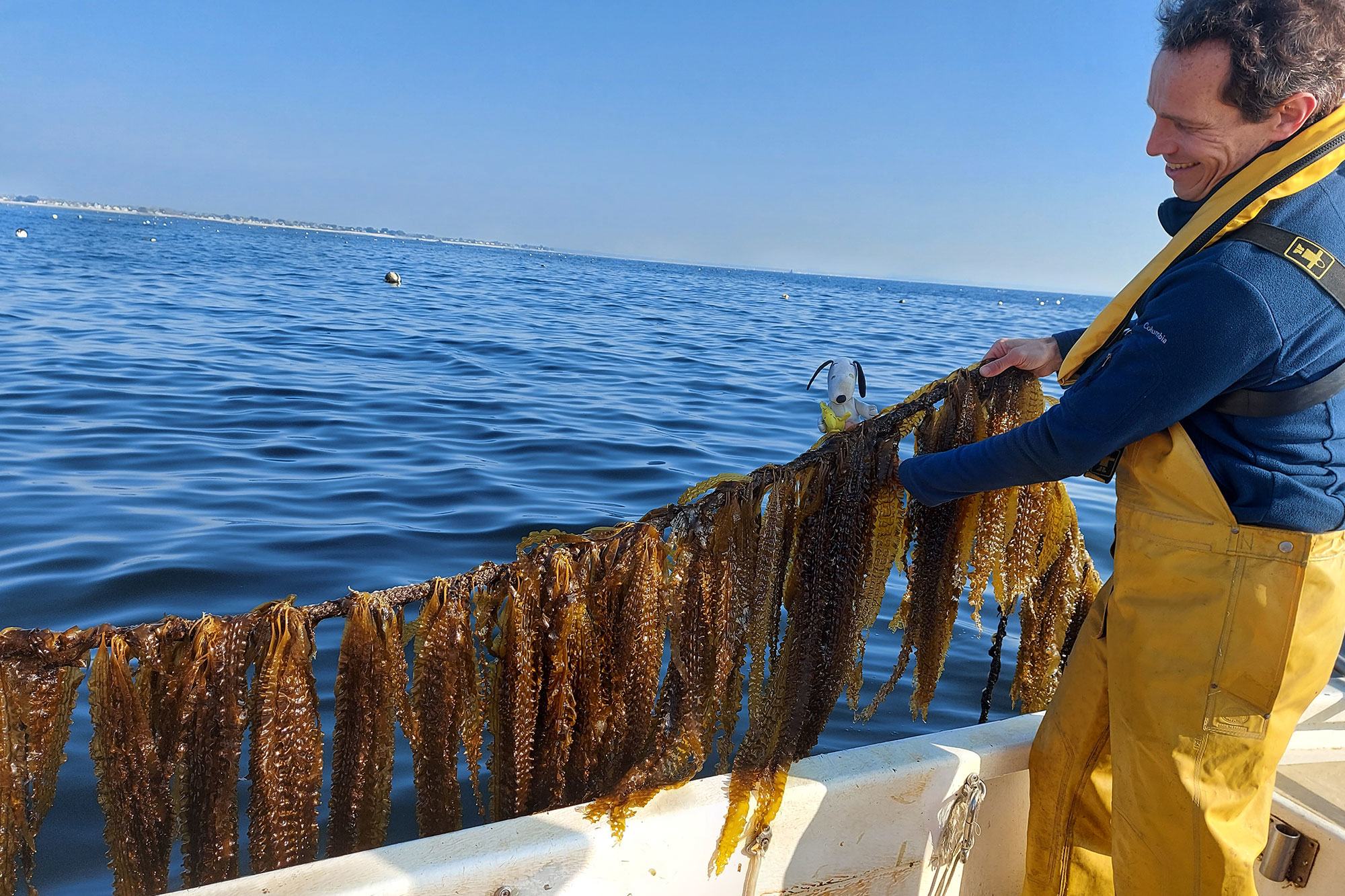
Lesconil, a salt-bitten fishing port tucked into the coast of Brittany, in northern France, stirs slowly under the pale Atlantic dawn. Tide pools shimmer, breathing with the sea — undisturbed but for the cries of seabirds and a lone figure in yellow waders, knee-deep in a forest of seaweed. The man, Vincent Doumeizel, gently lifts a strand of Saccharina latissima from the brine, waving it above the waterline like a revolutionary banner.

“It’s not slimy,” he says of the olive-brown frond glistening in his fingers. “It’s magnificent.”

For Doumeizel, seaweed is more than a marine curiosity. This diverse family of green, red, and brown algae is a cornerstone of his life’s work – a vehicle for feeding the planet, restoring oceans, fighting climate change, and even replacing plastic.

It is, as he likes to say, “not just a superfood, but a super solution.”

A senior adviser to the UN Global Compact, a platform advocating for sustainable corporate practices, the 49-year-old Frenchman has become one of the faces of the so-called “seaweed revolution.”

In 2020, he co-authored The Seaweed Manifesto, a collaborative document involving the Food and Agriculture Organization (FAO), the World Bank and other partners. Its premise is bold: harness the humblest of marine organisms to tackle some of the planet’s most complex problems.

Algae, the manifesto argues, can help solve a quartet of crises – climate, environmental, food, and social. Doumeizel’s personal conviction borders on the messianic. “Undoubtedly,” he wrote in a 2023 book outlining his vision, seaweed is “the world's greatest untapped resource.”

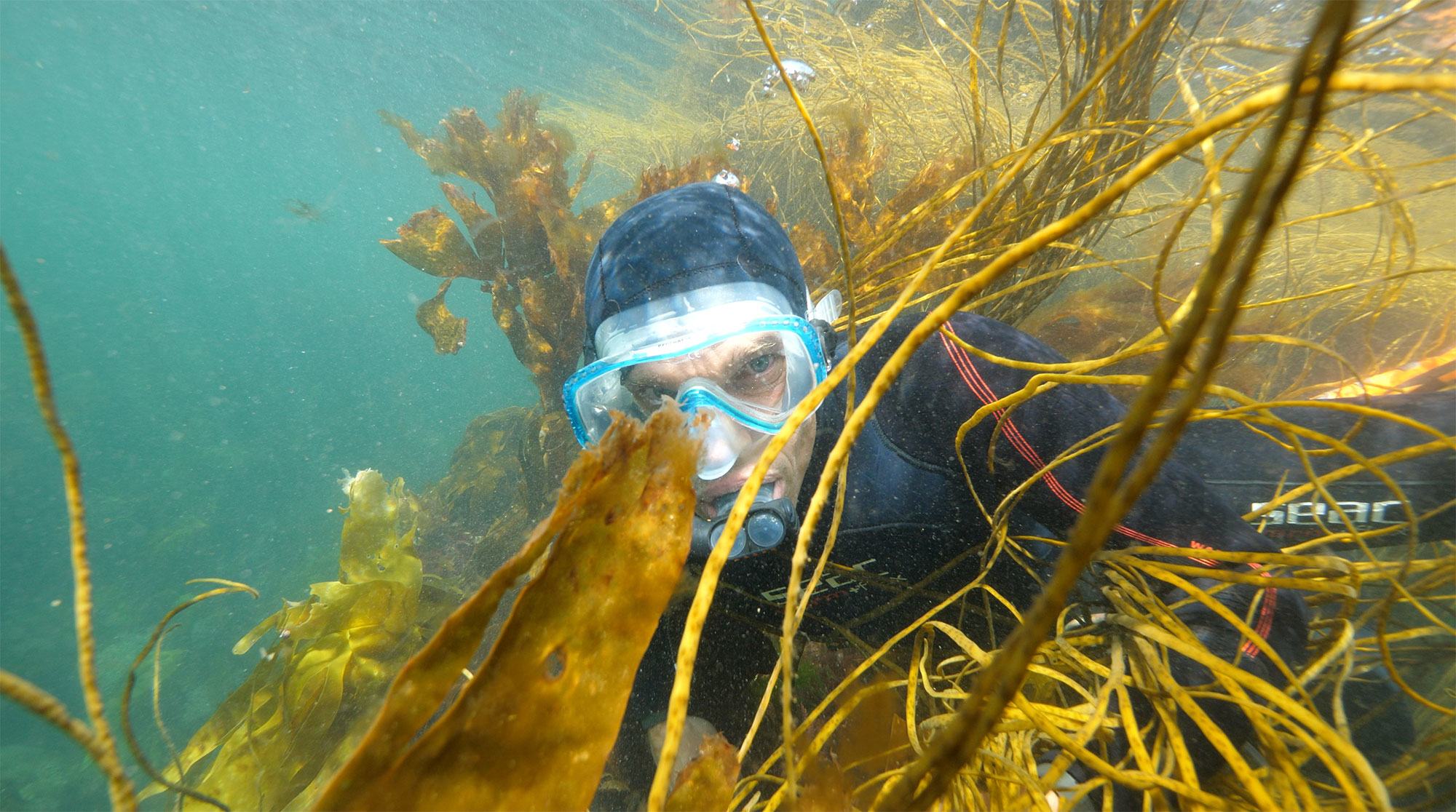
Vincent Doumeizel sometimes speaks of “sea forests” rather than “seaweed” – a linguistic sleight of hand designed to counter the Western bias that sees seaweed as stinky pollution waste.
© Courtesy of Vincent Doumeizel
 
Vincent Doumeizel sometimes speaks of “sea forests” rather than “seaweed” – a linguistic sleight of hand designed to counter the Western bias that sees seaweed as stinky pollution waste.

Algae against apocalypse

Long before trees shaded Pangaea and dinosaurs thundered across its land, seaweed was already swaying in the sunlit shallows of ancient oceans – a silent architect of Earth’s transformation. Born more than a billion years ago, marine algae were among the first complex organisms to harness sunlight through photosynthesis, oxygenating the atmosphere and shaping the conditions for multicellular life.

But Doumeizel is neither a marine biologist nor an agronomist. His background is in food policy.

“I came across world hunger during an early deployment to Africa,” he told UN News. “It left a strong mark.”

Seaweed first sparked Doumeizel’s interest on a subsequent trip to the Japanese island of Okinawa, whose residents have exceptionally long lifespans. He noticed that people there ate a lot of seaweed.

“It was delicious,” he recalled. “And visibly healthy.”

From the northeast Atlantic “sea spaghetti” (Himanthalia elongata), to the Indo-Pacific “green caviar” (Caulerpa lentillifera), and the ubiquitous “sea lettuce” (Ulva lactuca), algae are rich in vitamins, omega-3 fatty acids, fibers, and even proteins.

Humble and often overlooked, these marine vegetables may be one of our most underappreciated sources of nutrition. Despite covering more than 70 per cent of the planet, the ocean contributes only a sliver to the global food supply in terms of calories – a gap that seaweed could help close.

And while agriculture contributes to roughly a quarter of global greenhouse gas emissions, in part due to deforestation for pastures and crops, seaweed cultivation does not require any land, fertilizers or freshwater.

Recent research even suggests that feeding red seaweed to cows could reduce their methane emissions by up to 90 per cent – a potential game-changer in the fight against climate change.

The implications go far beyond the barnyard. The ocean has generated more than half the oxygen we breathe, and it absorbs about a third of all man-made emissions. Seaweed plays a part in this process, capturing more carbon per acre than land vegetation. Some species, like “giant kelp” (Macrocystis pyrifera), can grow at an astonishing rate of two feet per day, making them powerful carbon sinks.

Seaweed can also be extracted and transformed into bioplastics, biofuels, textiles, and even pharmaceuticals.

“We can change the paradigm by encouraging seaweed cultivation,” Doumeizel said.

Algolesko, off the coast of Lesconil, in Brittany, is one of the largest seaweed farms in continental Europe, with 150 hectares of organic Laminaria culture.
© Courtesy of Vincent Doumeizel
 
Algolesko, off the coast of Lesconil, in Brittany, is one of the largest seaweed farms in continental Europe, with 150 hectares of organic Laminaria culture.

A growing, yet under-regulated industry

When we met Doumeizel in Nice ahead UNOC3, the shorthand by which the third UN Ocean Conference is known, he was coming from the launch, two days earlier, of his comic book. The Seaweed Revolution is a 128-page dive into the life of an algae enthusiast also named Vincent “involved with the UN Ocean Forum.”

In real life, Doumeizel is as passionate and buoyant as on his TED Talk videos or keynote addresses.

“I could eat those,” he says, holding up a pair of sunglasses — sleek, black, and entirely made from plankton. Perched on a sunlit ledge above the Mediterranean, Doumeizel becomes part showman, part prophet, as he unpacks a series of seaweed-born wonders: a biodegradable garbage bag that looks indistinguishable from plastic, a soft green T-shirt spun from algae fibers, and, with a grin, an edible copy of his own book, The Seaweed Revolution. “All of this,” he says, gesturing to the strange little tableau at his feet, “could be made of seaweed.”

While the world’s salty waters are home to 12,000 different known species of seaweed, so far humans are only able to actively cultivate less than a couple dozen of them – a practice known as kelp farming.

Algolesko, in Brittany, is one of the largest seaweed farms in continental Europe. The morning when Doumeizel could be seen lifting a brown algae from the Atlantic Ocean, he was doing so from the farm’s 150 hectares of organic culture.

As co-head of the Global Seaweed Coalition, which is roughly 2,000-members strong and hosted by the UN Global Compact, Doumeizel travels around the world for speaking engagements, from Patagonia to Tunisia, Madagascar, and Australia. Each stop is also an opportunity to explore local seaweed production.

According to a concept paper written by the UN ahead of Nice’s Ocean Conference, the seaweed industry is on the rise. Production of marine algae more than tripled since 2000, up to 39 million tonnes a year, the overwhelming majority of which comes from aquaculture. It has become a $17 billion market, and current investments in bio stimulants, bioplastics, animal and pet foods, fabrics, and methane reducing additives could add another $12 billion annually by 2030.

Yet the path forward is not simple. “There is generally a lack of legislation and guidance,” notes the UN document. “There are currently no Codex Alimentarius standards establishing any food safety criteria for seaweed or other algae.”

Doumeizel agrees. The global seaweed industry, he said, is still fragmented and largely dominated by Asia, where the production of nori, the kind of seaweed used in sushi, was already a hugely profitable business. But, he added, so much more could be done with the resource.

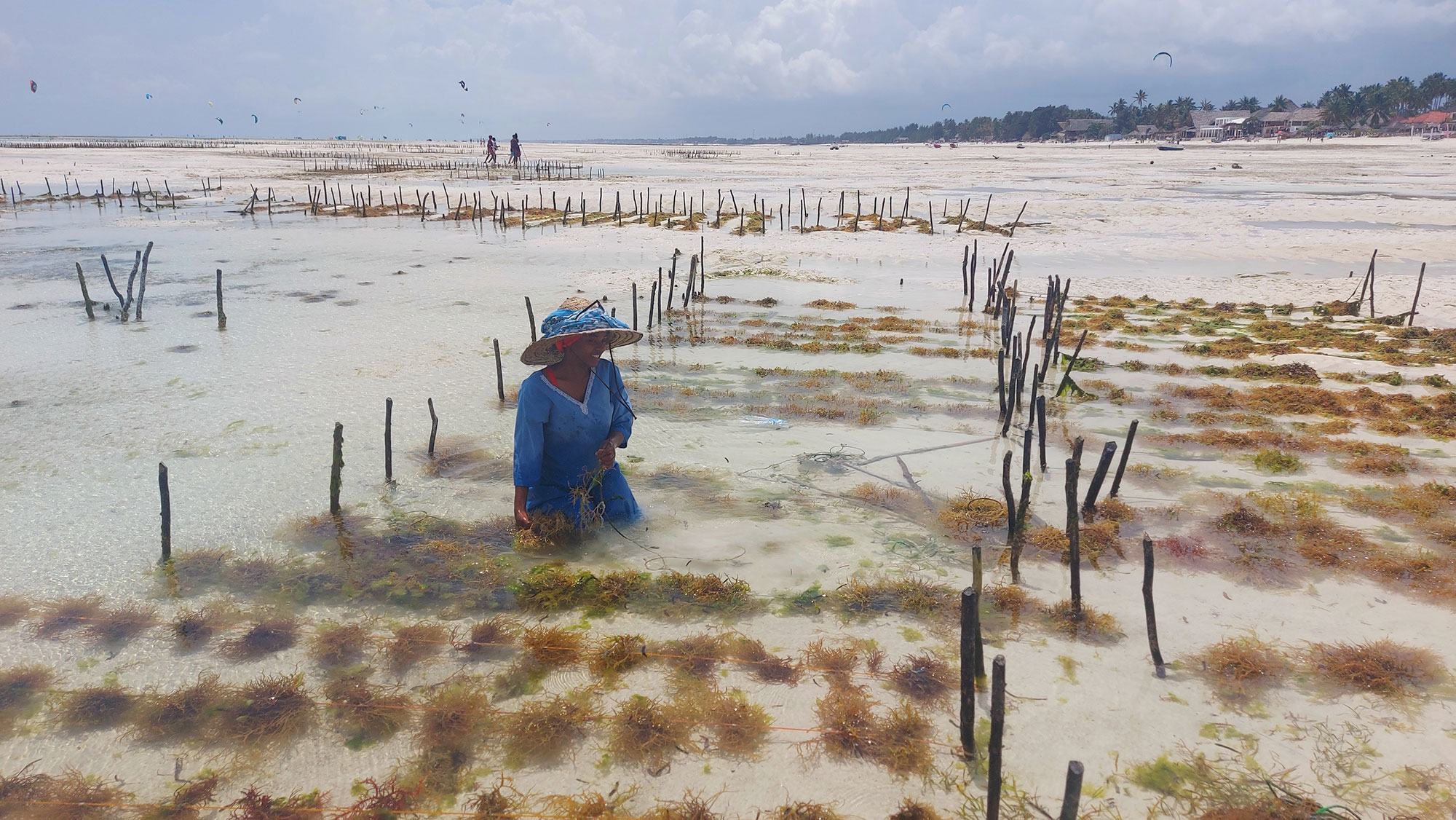
On the island of Zanzibar, the seaweed boom began with a surge in demand for food texturizers made of algae. Widows and single women quickly stepped up.
© Courtesy of Vincent Doumeizel
 
On the island of Zanzibar, the seaweed boom began with a surge in demand for food texturizers made of algae. Widows and single women quickly stepped up.

Reducing gender inequality

Beyond its environmental promise and nutritional punch, seaweed is quietly driving a feminist transformation. According to the concept paper, about 40 per cent of seaweed start-ups worldwide are led by women.

“In Tanzania, a largely patriarchal society, the seaweed trade has changed lives,” said Doumeizel. The boom began with a surge in demand for food texturizers made of algae. Widows and single women quickly stepped up. On the island of Zanzibar, seaweed is now the third-largest resource, and women retain nearly 80 per cent of the profits.

“They built schools. They sent their daughters to those schools. They fought for a place in the markets to sell their harvests,” Doumeizel said. “They even bought motorcycles.”

The ripple effects have reached the highest levels of power: the current President of Tanzania is a woman from Zanzibar.

But climate change is pushing the industry into deeper waters – quite literally. As sea temperatures rise, the algae can no longer be cultivated close to shore. “Now, women have to venture farther out,” Doumeizel explained. “But most don’t know how to swim or steer a boat.”

To help preserve both livelihoods, the Global Seaweed Coalition is funding a new initiative to teach women maritime skills – swimming, boating, navigation. “We have to make sure this revolution leaves no one behind,” the Frenchman said.

The threat of climate change

If seaweed offers a promising solution to climate change, it is also one of its quietest victims. As atmospheric carbon dioxide climbs, the ocean grows warmer and more acidic – conditions that are already eroding marine ecosystems and triggering the widespread loss of seaweed habitats.

In places like California, Norway, and Tasmania, more than 80 per cent of kelp expanses have vanished in recent years, driven not only by climate change, but also pollution, and overfishing.

In interviews, Doumeizel sometimes speaks of “sea forests” rather than “seaweed” – a linguistic sleight of hand designed to counter the Western bias that sees seaweed as stinky pollution waste rather than threatened organisms.

“Preserving them is just as necessary to life on Earth as saving the forests of the Amazon,” he wrote in his book.

At UNOC3, which opens on Monday, Doumeizel will unveil a new initiative: the creation of a UN Seaweed Task Force. Designed to consolidate global efforts around regulation, research, and development, the task force would bring together six UN agencies – the Food and Agriculture Organization (FAO), the Global Compact, the UN Environment Programme (UNEP), the UN trade and development body (UNCTAD), the United Nations Educational, Scientific and Cultural Organization (UNESCO), and the UN Industrial Development Organization (UNIDO).

Its aim is ambitious: to give seaweed the institutional muscle it has long lacked. By centralizing expertise and setting global standards, the task force could help scale up the industry responsibly – and sustainably.

The proposal already has the backing of several countries, including Madagascar, Indonesia, South Korea, and France. Together, they plan to introduce a draft resolution at the UN General Assembly this fall, with a vote expected in 2026.

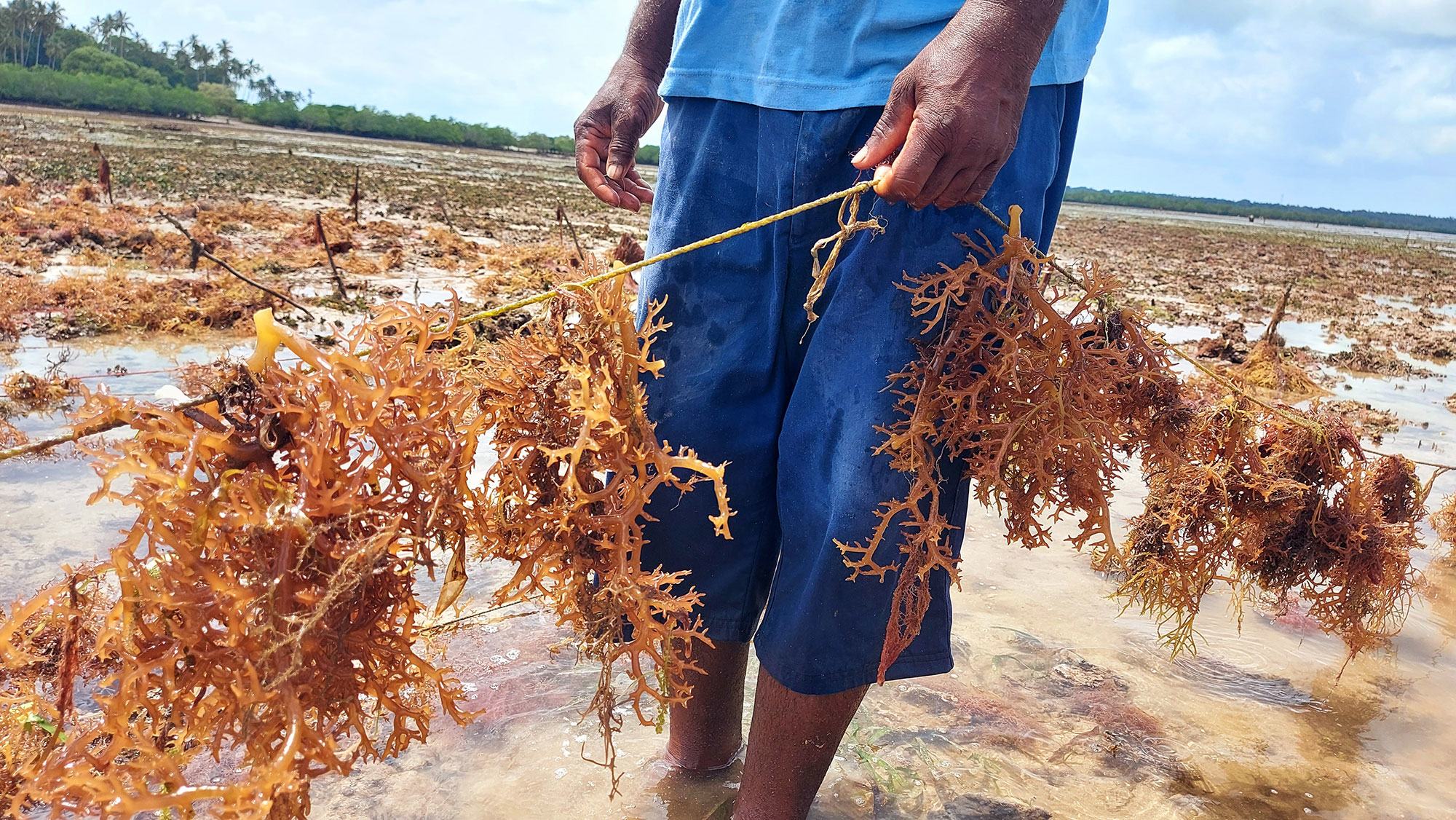
On the island of Zanzibar, seaweed is now the third-largest resource.
© Courtesy of Vincent Doumeizel
 
On the island of Zanzibar, seaweed is now the third-largest resource.

From bloom to boom

Sometimes, the revolution doesn’t arrive in neat rows of aquafarms. It comes in 6,000-mile-wide blobs.

In the spring of 2025, a vast bloom of sargassum – a free-floating brown algae known for its sprawling mats – blanketed the Atlantic, clogging beaches from the Gulf of Mexico to the shores of West Africa. Florida's shore became inundated with the plant, whose pungent smell was deterring tourists. Coastal communities scrambled to manage the deluge.

Yet, Vincent Doumeizel saw not just crisis but opportunity. “These massive blooms are caused by pollution and climate change,” he noted. “But if we manage and understand them properly, they could become a sustainable resource, turned into fertilizers, bricks, even textiles.”

The vision is part redemption, part alchemy. Turning oceanic overgrowth into solutions may seem far-fetched. But then again, so does the idea that seaweed could replace beef – or plastic.

Roughly 12,000 years ago in the Middle East, Homo sapiens ceased to be hunter-gatherers. “We became farmers cultivating plants to feed our animals and our families,” Doumeizel wrote in his book. “Meanwhile, at sea, we are still Stone Age hunter-gatherers.”

But what if we could farm the ocean – not to exploit it, but to heal it? It’s not just a rhetorical question. It’s an invitation. And perhaps, a final warning.


https://news.un.org/en/story/2025/06/1164131


https://creativecommons.org/licenses/by/4.0/legalcode
воскресенье, 1 июня 2025 г.

‘This is not just ice’: Glaciers support human livelihoods, UN deputy chief says

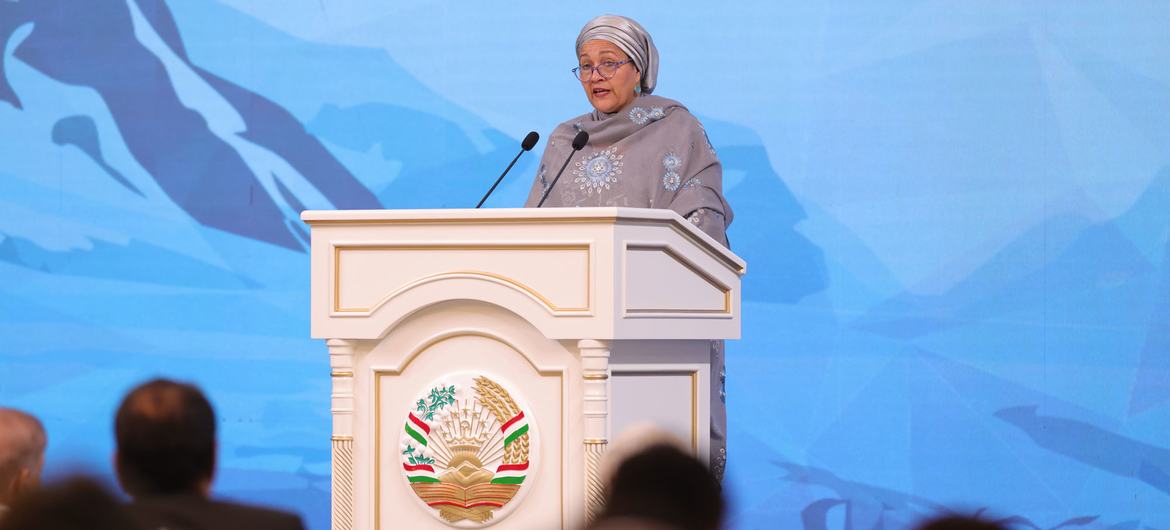
Deputy Secretary-General Amina Mohammed delivers remarks at the opening ceremony of the International  Conference on Glacier's Preservation in Tajikistan.
UN Tajikistan
 
Deputy Secretary-General Amina Mohammed delivers remarks at the opening ceremony of the International Conference on Glacier's Preservation in Tajikistan.


30 May 2025

 Climate and Environment

UN Deputy Secretary-General Amina Mohammed called for urgent action to protect water-related ecosystems in remarks to the International Conference on Glaciers’ Preservation in Dushanbe, Tajikistan, on Friday.

She said that since 1975, glaciers have lost more than 9,000 billion tons of ice -  equivalent to a 25-metre-thick block covering all of Germany.

“At current rates, many glaciers may not survive this century, reshaping landscapes, ecosystems, livelihoods and water security on a global scale,” she warned.

“This is not just a mountain crisis – it is a slow-moving global catastrophe with far-reaching consequences for planet and people.”

Not just ice

Ms. Mohammed was speaking a day after visiting the Vanj Yakh Glacier in north-central Tajikistan where she witnessed the “breathtaking beauty” of this crucial mass of dense ice.  

The glacier is a vital water source for many communities in Central Asia, feeding rivers and helping to sustain millions of lives and livelihoods.

But due to climate change, it is melting. Quickly. Over the past 80 years, it lost the equivalent of 6.4 million Olympic sized pools of water.

Tweet URL

The International Conference on Glaciers’ Preservation, held 29 May to 1 June in Tajikistan’s capital, is highlighting the ways in which glacier retreat threatens lives and livelihoods worldwide.

“This is not just ice. This is food, water and security for generations to come,” said Ms. Mohammed.

‘Our glaciers are dying’

Glaciers, along with ice sheets, store approximately 70 per cent of the world’s freshwater, making them essential for human survival and economies. But five of the past six years have witnessed the most rapid glacier retreat on record.

“Our glaciers are dying,” said Celeste Saulo, Secretary-General of the World Meteorological Organization (WMO), a co-organizer of the conference.

“The death of a glacier means much more than the loss of ice. It is a mortal blow to our ecosystems, economies, and social fabric.”

Melting glaciers increase the likelihood and severity of floods and mudslides, in addition to impacting various industries such as agriculture and forestry.  

Bridging science and action 

Ms. Mohammad said that the rate of glacier retreat means that the international community must take immediate action. 

“The time to act is now for our people and our planet,” she said.  

The conference in Dushanbe has worked to elevate glacier preservation to the top of the worldwide climate agenda ahead of the UN COP30 climate change conference in Brazil this November.

Ms. Saulo emphasized that strengthening glacier monitoring and improving warning systems for glacier collapse will help “bridge science and services.” She also said that this must all translate into concrete action to slow glacier retreat.  

In Tajikistan specifically, Parvathy Ramaswami — the UN Resident Coordinator in the country — said that they have focused on supporting farmers through training and knowledge transfer for local communities.  

“[The training] means that more children are safe from disasters, they can go to school, learn and grow,” she explained. “Families and communities become resilient and prosper.” 

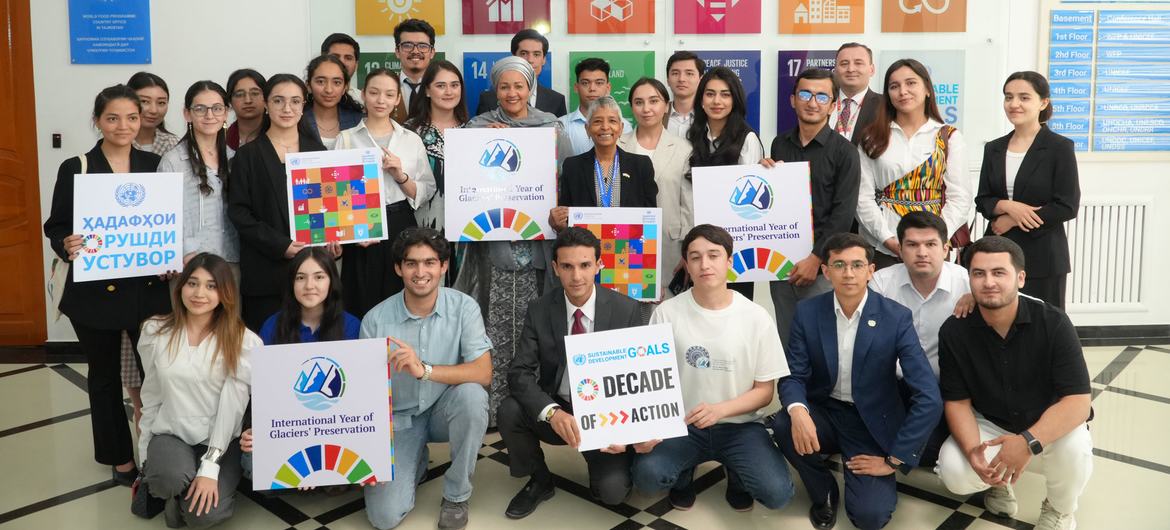
Deputy Secretary-General Amina Mohammed (centre) with Model UN youths and Ambassador for a Day in Tajikistan.
UN Tajikistan
 
Deputy Secretary-General Amina Mohammed (centre) with Model UN youths and Ambassador for a Day in Tajikistan.

Intergenerational conversations

In Tajikistan, the Deputy Secretary-General met with many youth climate activists. She emphasized that actions to address glacier retreat must be intergenerational, much like the conversations which the conference encouraged. 

“The global decisions we are shaping today will affect [young people’s] lives. So to think that we can begin to shape a person's future without them, really doesn't bode well for the rights that they have to determine their future, their aspirations,” she said.

In giving advice to younger generations, she expressed hope that young activists would continue to advocate for their vision of the future. 

“They should continue to raise their voices, they should continue to have their courage of conviction, they should remember that this is about a life journey and they need to make every step count.” 

https://news.un.org/en/story/2025/05/1163896

https://creativecommons.org/licenses/by/4.0/legalcode

среда, 28 мая 2025 г.

Climate change: World Likely to Breach 1.5°C limit in next five years


Glaciers are retreating due to climate change including in Chile .
   

28 May 2025 
Climate and Environment

2024 was the warmest year on record – but the heat is far from over. A new report from the World Meteorological Organization (WMO) warns that global temperatures are likely to continue rising, with an 80 per cent chance that at least one year between 2025 and 2029 will surpass the 2024 record.

According to the Global Annual to Decadal Climate Update, the planet is predicted to experience temperatures between 1.2°C and 1.9°C above pre-industrial levels (1850–1900) over the next five years.

Breaching critical thresholds
In 2024, the WMO estimated that the average global temperature was between 1.34°C and 1.41°C higher than pre-industrial levels (1850-1900). The WMO now projects the 20-year average warming for 2015–2034 to reach around 1.44°C above pre-industrial levels.

The report finds a staggering 86 per cent chance that global average temperatures will exceed 1.5°C above pre-industrial levels in at least one of the next five years, and a one per cent chance of one of those years exceeding 2°C of warming.

There is a 70 per cent chance that the five-year average itself will exceed this 1.5 degree threshold.

The WMO stressed that the 1.5°C Paris Agreement target refers to long-term averages over 20 years, meaning its threshold has not been breached quite yet.

However, these near-term spikes are warning signs of an accelerating climate crisis.

The forecast also highlights regional precipitation impacts, including wetter-than-average conditions expected in the African Sahel, northern Europe, and South Asia. Conversely, the Amazon region could see continued drought.

Arctic Warming Accelerates
The situation is even more catastrophic in the Arctic than in the rest of the world. The average Arctic temperature over the next five winters (November to March) is expected to be 2.4°C warmer than the 1991–2020 average, more than three and a half times the increase in the global average temperature.

Sea ice is expected to keep shrinking, particularly in the Barents, Bering, and Okhotsk Seas, contributing to rising sea levels and disrupted weather patterns worldwide.

As the world enters this critical window, the UN agency urged climate action to prevent even more dangerous warming in the decades ahead and keep long-term warming below the 1.5°C limit

https://news.un.org/en/story/2025/05/1163751

https://creativecommons.org/licenses/by/4.0/legalcode