Избранное сообщение

Показаны сообщения с ярлыком hunger. Показать все сообщения

вторник, 30 мая 2023 г.

UN humanitarians complete first food distribution in Khartoum as hunger, threats to children, intensify


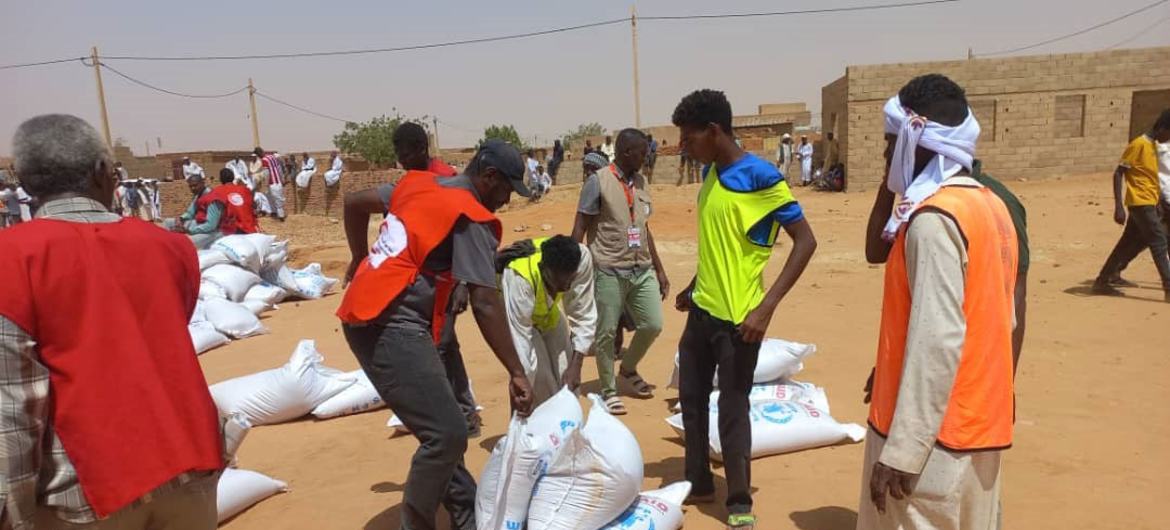
Food is distributed in Omdurman, close to the Sudanese capital, Khartoum.
© Sudanese Red Crescent Society
 
Food is distributed in Omdurman, close to the Sudanese capital, Khartoum.
30 May 2023
Humanitarian Aid

For the first time since fighting broke out in Sudan on 15 April, humanitarians have been able to reach desperate families trapped in the conflict’s epicentre, Khartoum, with food assistance, the UN’s World Food Programme (WFP) said on Tuesday.

WFP’s Country Director in Sudan, Eddie Rowe, told reporters in Geneva that in a major breakthrough, the agency distributed food assistance to 15,000 people in both Sudanese Armed Forces (SAF) and Rapid Support Forces (RSF) controlled areas of Omdurman, part of the Khartoum metropolitan area, beginning on Saturday.

Tweet URL

Speaking from Port Sudan, Mr. Rowe highlighted other recent food distributions, in Wadi Halfa in Northern State to reach 8,000 people fleeing Khartoum and on their way to Egypt, as well as to 4,000 newly displaced people in Port Sudan.

Rapidly scaling up support

In total, WFP has been able to reach 725,000 people across 13 states in the country since it resumed its operations on 3 May, following a pause brought on by the killing of three aid workers at the start of the conflict.

Mr. Rowe said that WFP was rapidly scaling up its support, which they expected to expand depending on progress in negotiations for humanitarian access for all regions, including the Darfurs and Kordofans, strongly impacted by violence and displacement.

Hunger on the rise

In addition to the 16 million Sudanese who were already finding it “very difficult to afford a meal a day” before the fighting started, Mr. Rowe warned that the conflict compounded by the upcoming hunger season, could increase the food insecure population by about 2.5 million people in the coming months.

With the lean season fast approaching, WFP’s plan was to reach 5.9 million people across Sudan over the next six months, he said.

He stressed that WFP needed a total of $730 million to provide required assistance as well as telecommunications and logistics services to the humanitarian community, including all of the UN agencies operating in Sudan.

17,000 tonnes of food lost to looting

He also reiterated the humanitarian community’s call on all parties to the conflict to enable the safe delivery of urgently needed food aid, and deplored that so far, WFP had lost about 17,000 metric tonnes of food to widespread looting across the country, particularly in the Darfurs.

Just two days ago, he said, the agency’s main hub in El Obeid, North Kordofan, came under threat and looting of assets and vehicles was already confirmed.

Some 10,000 people are due to receive food aid in a first distribution in Omdurman, Sudan.
© Sudanese Red Crescent Society
 
Some 10,000 people are due to receive food aid in a first distribution in Omdurman, Sudan.

Over 13 million children in need

The UN Children’s Fund (UNICEF) reported that “more children in Sudan today require lifesaving support than ever before”, with 13.6 million children in need of urgent assistance. “That’s more than the entire population of Sweden, of Portugal, of Rwanda,” UNICEF spokesperson James Elder told reporters in Geneva.

According to reports received by UNICEF, hundreds of girls and boys have been killed in the fighting. “While we are unable to confirm these due to the intensity of the violence, we also have reports that thousands of children have been maimed,” Mr. Elder said.

‘Death sentence’

He also pointed out that reports of children killed or injured are only those who had contact with a medical facility, meaning that the reality is “no doubt much worse” and compounded by a lack of access to life-saving services including nutrition, safe water, and healthcare.

Mr. Elder alerted that “all these factors combined, risk becoming a death sentence, especially for the most vulnerable”.

UNICEF called for funding to the tune of $838 million to address the crisis, an increase of $253 million since the current conflict began in April, to reach 10 million children. Mr. Elder stressed that only 5 per cent of the required amount had been received so far, and that without the therapeutic food and vaccines which this money would allow to secure, children would be dying.


Healthcare under attack

The dire situation of healthcare in the country has been aggravated by continuing attacks on medical facilities. From the start of the conflict on 15 till 25 May, the World Health Organization (WHO) verified 45 attacks on healthcare, which led to eight deaths and 18 injuries, the agency’s spokesperson Tarik Jašarević said.

He also cited reports of military occupation of hospitals and medical supplies warehouses, which made it impossible for people in need to access chronic disease medicines or malaria treatment. Mr. Jašarević recalled that attacks on healthcare are a violation of international humanitarian law and must stop.

Tweet URL

Keep borders open: Grandi

The UN High Commissioner for Refugees, Filippo Grandi, concluded a three-day visit to Egypt on Tuesday, with an urgent call for support for people fleeing Sudan – and the countries hosting them – insisting that the borders must remain open.

More than 170,000 people have entered Egypt since the conflict started – many through Qoustul, a border crossing that Grandi visited close to the end of his trip. The country hosts around half of the more than 345,000 people who have recently fled Sudan.

Mr. Grandi met newly arrived refugees and Egyptian border officials, to get a sense of the hardships being endured.

Loss ‘on a huge scale’

“I heard harrowing experiences: loss of life and property on a huge scale,” Grandi said. “People spoke of risky and expensive journeys to arrive here to safety. Many families have been torn apart. They are traumatized and urgently need our protection and support.“

The UNHCR chief also held talks with the Egyptian President, Abdel Fattah Al-Sisi, and discussed how best to support refugees and mobilize resources for host countries, not least Egypt.

“I commend Egypt for its long-standing commitment to providing a safe haven to those fleeing violence,” Mr. Grandi said. “The Government, the Egyptian Red Cresent and the people, have been very generous in supporting arrivals. We urgently need to mobilize more resources to help them to maintain this generosity.”

Prior to this conflict, Egypt was already host to a large refugee population of 300,000 people from 55 different nationalities.

After registering with UNHCR, refugees and asylum-seekers have access to a wide range of services including health and education. UNHCR’s emergency cash assistance programme started during the last week.


 https://news.un.org/en/story/2023/05/1137137

https://creativecommons.org/licenses/by/3.0/legalcode

воскресенье, 28 мая 2023 г.

UN agencies warn of rising hunger risk in 18 'hotspots'


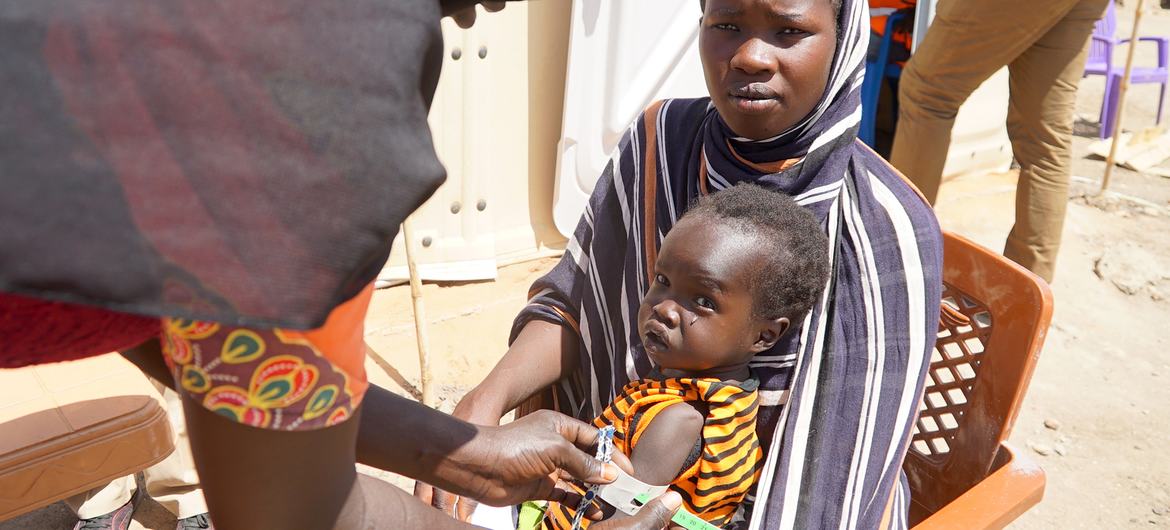
Over two million people in Sudan are expected to slip into hunger in the coming months as a result of the ongoing violence in the country.
© WFP/Peter Louis
 
Over two million people in Sudan are expected to slip into hunger in the coming months as a result of the ongoing violence in the country.
Humanitarian Aid

Hunger is set to worsen in 18 “hotspots” worldwide including Sudan, where fighting is putting people at risk of starvation, the Food and Agriculture Organization (FAO) and the World Food Programme (WFP) warned in a report published on Monday.

Sudan, Burkina Faso, Haiti and Mali have been elevated to the highest alert level, joining Afghanistan, Nigeria, Somalia, South Sudan and Yemen.

Tweet URL

Additionally, a likely El Niño – a naturally occurring climatic phenomenon that has a warming effect on ocean surface temperatures in the central and east Pacific - is also raising fears of climate extremes in vulnerable nations.

Against ‘business-as-usual’

The report calls for urgent humanitarian action to save lives and livelihoods, and to prevent starvation and death.

“Business-as-usual pathways are no longer an option in today’s risk landscape if we want to achieve global food security for all, ensuring that no one is left behind,” said Dongyu Qu, the FAO Director-General.

He underlined the need for immediate interventions in the agricultural sector “to pull people from the brink of hunger, help them rebuild their lives, and provide long-term solutions to address the root causes of food insecurity.”

Worse than ever

Acute food insecurity is set to potentially increase in 18 hunger “hotspots”, comprising a total of 22 countries, according to the report.

“Not only are more people in more places around the world going hungry, but the severity of the hunger they face is worse than ever,” said Cindy McCain, WFP Executive Director.

The Sudan conflict is already driving mass displacement and hunger. More than one million citizens and refugees are expected to flee the country, while an additional 2.5 million inside its borders are set to face acute hunger in the coming months.

The report warned that a possible spillover of the crisis raises the risk of negative impacts in neighbouring countries.  If the conflict continues, it could spark further displacement and disruptions to trade and humanitarian aid flows.

Economic shocks continue

Meanwhile, economic shocks and stressors continue to drive acute hunger in almost all the hotspots, carrying over trends seen globally in 2022, largely due to fallout from the COVID-19 pandemic and the war in Ukraine.

Afghanistan, Nigeria, Somalia, South Sudan and Yemen remain at the highest alert level for acute hunger.

Alongside Sudan, three other countries - Haiti, Burkina Faso and Mali – also have been elevated to this level because of movement restrictions affecting people and goods.

“All hotspots at the highest level have communities facing or projected to face starvation, or are at risk of sliding towards catastrophic conditions, given they have already emergency levels of food insecurity and are facing severe aggravating factors. These hotspots require the most urgent attention,” the UN agencies said.

The report listed the Central African Republic, the Democratic Republic of the Congo, Ethiopia, Kenya, Pakistan and Syria as hotspots with very high concern, along with Myanmar.

All of these countries have a large number of people facing critical acute food insecurity, coupled with worsening drivers that are expected to further intensify life‑threatening conditions in the coming months. 

The other hotspots are Lebanon, Malawi, El Salvador, Guatemala, Honduras and Nicaragua. 

Sudan food distributions

Meanwhile in Sudan, WFP began distributing food assistance on Saturday to thousands of people trapped in the capital, Khartoum, since fighting broke out six weeks ago.

The distributions came in the last days of the seven-day ceasefire agreed by the army, which was set to expire on Monday evening, local time

“This is a major breakthrough. We have finally been able to help families who are stuck in Khartoum and struggling to make it through each day as food and basic supplies dwindle,” said Eddie Rowe, WFP Country Director.

Staff have been working round the clock to reach people in the city since the conflict between the Sudanese Armed Forces (SAF) and rival military group, the Rapid Support Forces (RSF), erupted in mid-April.

“A window opened late last week which allowed us to start food distributions,” Mr. Rowe said, adding that  “WFP must do more, but that depends on the parties to the conflict and the security and access they realistically guarantee on the ground.”

Stepping up support

WFP is rapidly expanding distribution of emergency food assistance across Sudan.

Latest updates including distributions to some 12,445 people in locations controlled by both sides in Omdurman, part of the Khartoum metropolitan area.

More food assistance has been prepositioned to continue distributions in the capital for as long as the security situation allows, with the goal of reaching at least 500,000 people.

Food and nutrition distributions also began over the weekend in Wadi Halfa in Northern State to around 8,000 Sudanese who have fled Khartoum and are making the long journey to Egypt. Last week WFP also began distributions to 4,000 newly displaced people in Port Sudan, a city on the Red Sea Coast.

The UN agency has rapidly scaled up support to reach 675,000 people so far with emergency food and nutrition assistance in 13 of Sudan’s 18 states since resuming operations earlier this month. Activities were halted after three staff were killed in North Darfur on 15 April, the first day of the conflict.

As hunger rises, WFP is expanding to support 5.9 million people across the country  and requires $731 million to reach them.


 https://news.un.org/en/story/2023/05/1137127

https://creativecommons.org/licenses/by/3.0/legalcode