Избранное сообщение

пятница, 22 августа 2025 г.

Monsoon floods kill more than 700 in Pakistan, with heavy rains set to continue

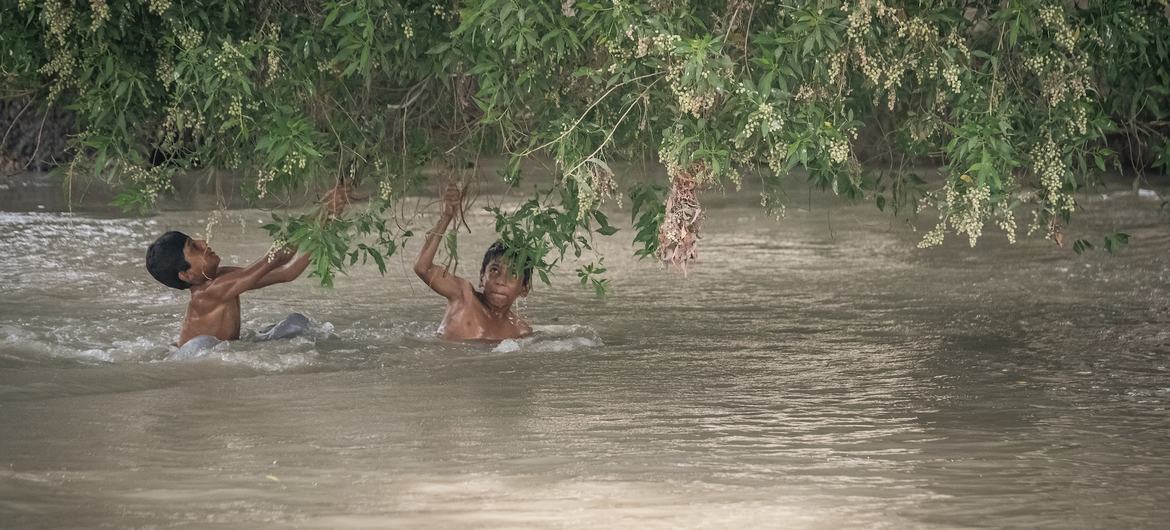
Children wade through a flooded canal in Pakistan, where this year’s monsoon rains have left many families without homes, safe water or schooling. (file photo)
© UNICEF/Vlad Sokhin
 
Children wade through a flooded canal in Pakistan, where this year’s monsoon rains have left many families without homes, safe water or schooling. (file photo)


By Vibhu Mishra
21 August 2025
 Climate and Environment

Heavy monsoon rains and flash floods have killed at least 739 people across Pakistan since late June, displacing thousands and destroying homes and crops, with more severe weather expected in the weeks ahead, according to UN agencies and national authorities. 


The National Disaster Management Authority has also reported 978 injuries and the destruction or damage of more than 2,400 houses, while over 1,000 livestock have been lost as of Thursday, 21 August.

Severe weather is forecast to continue into early September, raising the risk of further flooding, landslides and crop losses, according to the UN Office for the Coordination of Humanitarian Affairs (OCHA).

Khyber Pakhtunkhwa hit hardest

The northwestern province of Khyber Pakhtunkhwa has borne the brunt of the disaster. 

Authorities declared a state of emergency in nine districts, including Buner, Shangla and Mansehra, after torrential rains between 15 and 19 August left 368 people dead, 182 injured and damaged more than 1,300 homes. Nearly 100 schools were also destroyed.

The international charity CARE said its teams found widespread devastation in Buner, where families reported homes and livelihoods swept away within minutes by torrents of floodwater carrying boulders and debris.

Children most affected

The toll on children has been particularly severe, with displacement, loss of schooling and limited access to safe water putting their health and well-being at grave risk. 

According to the UN Children’s Fund (UNJCEF), at least 21 children were among those killed in Khyber Pakhtunkhwa since 15 August.

Many schools have been destroyed or are now being used as temporary shelters, further restricting access to education and safe spaces.

Urban flooding in Karachi

In Sindh province, heavy rains on 19 August triggered urban flooding in Karachi – Pakistan’s largest city – where at least six people were killed in wall collapses and electrocutions. Rainfall reached up to 145 millimetres (about 5.75 inches) in parts of the city, inundating roads and leaving many neighbourhoods without power for hours.

The province of Punjab also suffered extensive flooding along the Indus and Chenab rivers, which has displaced more than 2,300 families and damaged cash crops across thousands of acres.

Scaling up support

Federal and provincial authorities are leading the response, having mobilized over 2,000 personnel for rescue and evacuation. In coordination with the UN and partners, they have dispatched key relief items, including food, tents and medical supplies to affected areas.

OCHA said it has deployed field coordinators to the hardest-hit districts and activated emergency mechanisms, including the release of funds from its regional humanitarian envelope for Pakistan – prioritising life-saving assistance in health, water, food security and shelter.

For its part, UNICEF has dispatched essential medicines and hygiene kits to affected districts. Each kit includes soap, water containers and other hygiene supplies to help prevent disease outbreaks.

Worrying trend

Pakistan has endured devastating monsoon seasons in recent years. In 2022, unprecedented floods killed more than 1,700 people, displaced millions, and caused an estimated $40 billion in economic losses.

Erratic and intensified rainfall patterns, amplified by climate change, are compounding the country’s vulnerability, threatening lives, livelihoods and long-term recovery across southern Asia. 


https://news.un.org/en/story/2025/08/1165699


https://creativecommons.org/licenses/by/4.0/legalcode

воскресенье, 17 августа 2025 г.

Plastic pollution treaty talks adjourn, but countries want to ‘remain at the table’: UNEP chief


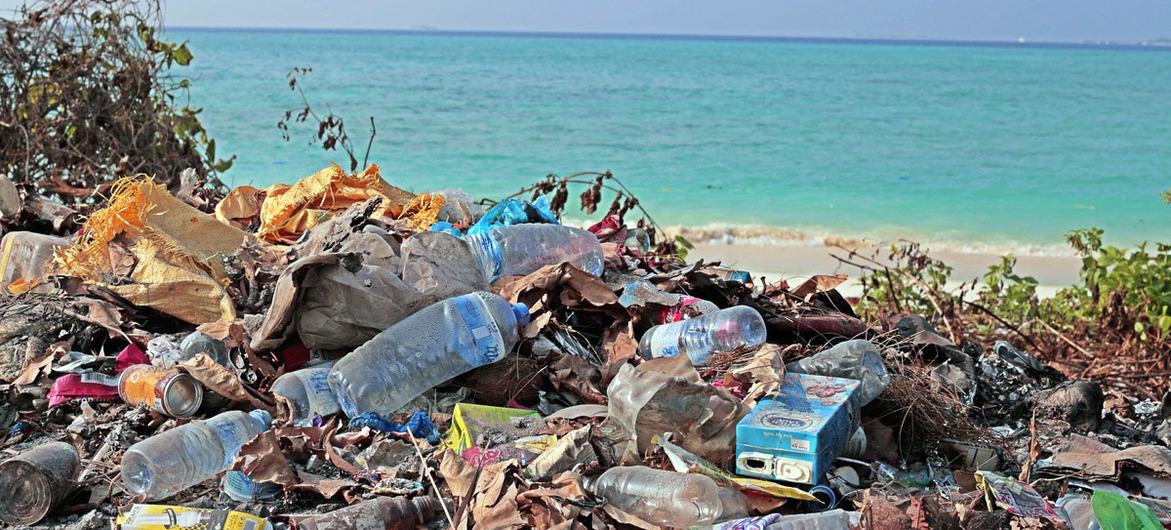
Plastic waste washes ashore in the Maldives archipelago.
© UNDP
 
Plastic waste washes ashore in the Maldives archipelago.


15 August 2025

 Climate and Environment

The international push for consensus on a legally binding deal to end plastic pollution proved beyond the grasp of weary UN Member States meeting in Geneva on Friday, as they agreed to resume discussions at a future date.

“This has been a hard-fought 10 days against the backdrop of geopolitical complexities, economic challenges and multilateral strains,” said Inger Andersen, Executive Director of the UN Environment Programme (UNEP). “However, one thing remains clear: despite these complexities, all countries clearly want to remain at the table.”   

‘Deep regret’: Guterres

Responding to news of the failure to reach agreement, UN Secretary-General António Guterres said: “I deeply regret that, despite earnest efforts, negotiations to reach an international legally binding instrument on plastic pollution, including in the marine environment, concluded without achieving a consensus.

I welcome the determination of Member States in continuing to work to beat plastic pollution and keep engaged in the process, united in purpose, to deliver the treaty the world needs to tackle this monumental challenge to people and the environment.”

Search for consensus continues

Speaking to media at the end of Intergovernmental Negotiating Committee (INC) talks at the UN in the Swiss city, Ms. Andersen emphasized how Member States had expressed a clear wish to continue engaging in the process, recognising their significant differences regarding plastic pollution.

“While we did not land the treaty text we hoped for, we at UNEP will continue the work against plastic pollution – pollution that is in our groundwater, in our soil, in our rivers, in our oceans and yes, in our bodies,” she said.

World view

“People are demanding a treaty,” the UN agency head continued, before underscoring the hard work that lies ahead to maintain the momentum needed to ink a binding international accord.

Delegates from 183 nations attested to the convening power and importance of the proposed agreement, with some Pacific island representatives - complete with dazzling fresh blooms in their hair - rubbing shoulders with other participants, drained by the final all-night negotiating session.

The resumed fifth session of talks – referred to as INC-5.2, after previous talks in Busan known as INC-5.1 – gathered more than 2,600 participants at the UN Palais des Nations. In addition to the approximately 1,400 country delegates, there were close to 1,000 observers representing at least 400 organizations.

Tweet URL

NGO voices heard

The session also involved the active participation of civil society – including Indigenous Peoples, waste pickers, artists, young people and scientists. They raised their voices through protests, art installations, press briefings and events in and around the Palace of Nations.

The goal of the negotiations was to agree on a text for the legally binding instrument to end plastic pollution “and highlight unresolved issues requiring further preparatory work ahead of a diplomatic conference”, UNEP said.

In addition to meetings together in UN Geneva’s vast assembly hall, four contact groups were created to tackle key issues including plastic design, chemicals of concern, production caps, finance and compliance instruments.

Despite “intensive engagement”, Members of the Intergovernmental Negotiating Committee was unable to reach consensus on the proposed texts, UNEP explained.

Chair's action call

“Failing to reach the goal we set for ourselves may bring sadness, even frustration. Yet it should not lead to discouragement. On the contrary, it should spur us to regain our energy, renew our commitments, and unite our aspirations,” said INC Chair, Luis Vayas Valdivieso.

“It has not happened yet in Geneva, but I have no doubt that the day will come when the international community will unite its will and join hands to protect our environment and safeguard the health of our people.” 

The INC process began in March 2022 when the UN Environment Assembly passed resolution 5.2 to develop an international legally binding instrument on plastic pollution, including in the marine environment.   

“As this session concludes, we leave with an understanding of the challenges ahead and a renewed and shared commitment to address them,” said Jyoti Mathur-Filipp, Executive Secretary of the INC Secretariat. “Progress must now be our obligation.”  

https://news.un.org/en/story/2025/08/1165658


https://creativecommons.org/licenses/by/4.0/legalcode