Избранное сообщение

вторник, 22 июля 2025 г.

Deadly floods show need for faster, wider warnings, UN agency says


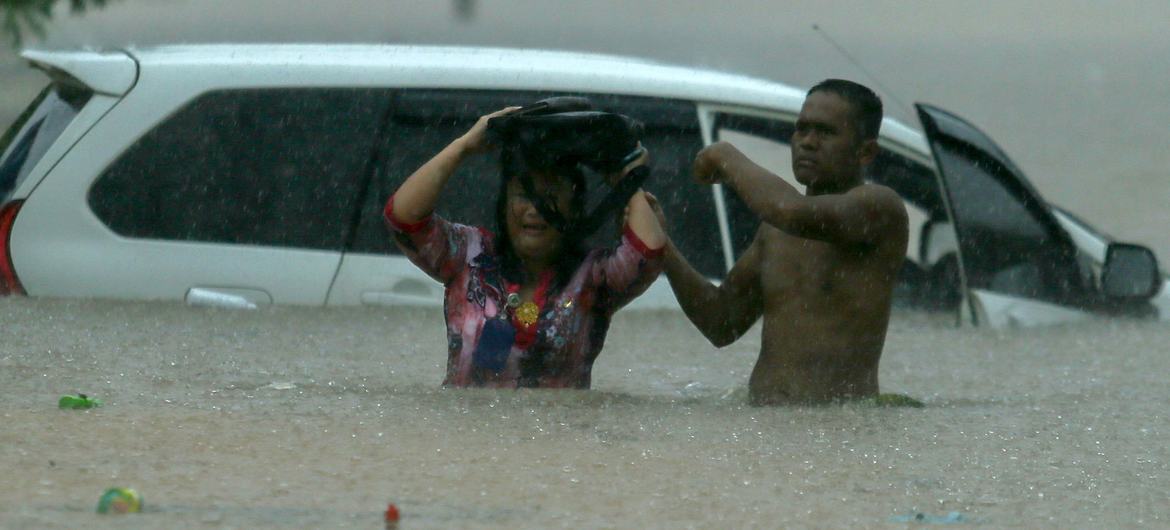
A man helps a woman after her car is stranded in waist-deep water. Globally rains are being more extreme due to impacts of climate change.
© WMO/Teguh Prihatna
 
A man helps a woman after her car is stranded in waist-deep water. Globally rains are being more extreme due to impacts of climate change.


By Vibhu Mishra
21 July 2025 
Climate and Environment

From the Himalayas to rural Texas, deadly floods this month have killed hundreds and exposed dangerous gaps in early warning systems, the UN’s weather agency warned, linking the devastation to rapid urbanization, land-use change and a warming climate that traps more moisture in the atmosphere.

The UN World Meteorological Organization (WMO) said on Monday that more intense downpours and glacier outburst floods are becoming increasingly frequent, with deadly consequences for communities caught off guard.

Flash floods are not new, but their frequency and intensity are increasing in many regions due to rapid urbanization, land-use change and a changing climate,” said Stefan Uhlenbrook, WMO Director of Hydrology, Water and Cryosphere.

Each additional degree Celsius of warming enables the air to hold about 7 per cent more water vapour.

This is increasing the risk of more extreme rainfall events. At the same time, glacier-related flood hazards are increasing due to enhanced ice melting in a warmer climate,” he added.

Thousands of lives lost every year

Floods and flash floods claim thousands of lives each year and cause billions of dollars in damage. In 2020, severe flooding across South Asia killed more than 6,500 people and caused $105 billion in economic losses.

Two years later, catastrophic floods in Pakistan left over 1,700 people dead, 33 million affected and losses exceeding $40 billion, reversing years of development gains.

This year, the onslaught has continued. In July alone, South Asia, East Asia and the United States have seen a string of deadly events, from monsoon rains to glacial lake bursts and sudden flash floods.
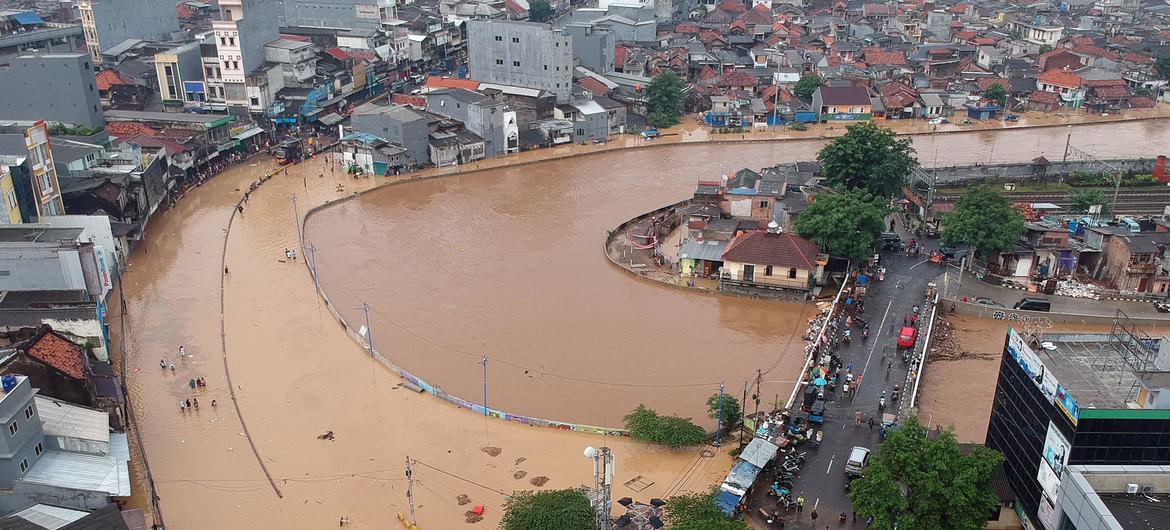
Each year, extreme weather and climate events take a massive toll on lives and economies worldwide.
© WMO/Arya Manggala
 
Each year, extreme weather and climate events take a massive toll on lives and economies worldwide.

Asia reels from monsoon onslaught

In India and Pakistan, heavy monsoon rains have severed transport links, washed away homes and triggered landslides. Pakistan declared a state of emergency in its worst-hit areas, deploying military helicopters for rescue missions after forecasters warned of exceptional flood risk along the upper Jhelum River.

The Republic of Korea suffered record-breaking downpours between 16-20 July, with rainfall exceeding 115 mm per hour in some locations. At least 18 people were killed and more than 13,000 were evacuated.

In southern China, authorities issued flash flood and landslide alerts on 21 July, just a day after Typhoon Wipha battered Hong Kong, underscoring the compound risks of sequential storms.

Texas flash flood strikes overnight

Overnight 3 into 4 July, a sudden deluge turned Texas Hill Country into a disaster zone, killing more than 100 people and leaving dozens missing. In a few hours, 10-18 inches (25–46 cm) of rain swamped the Guadalupe River basin, sending the river surging 26 feet (8 metres) in just 45 minutes.
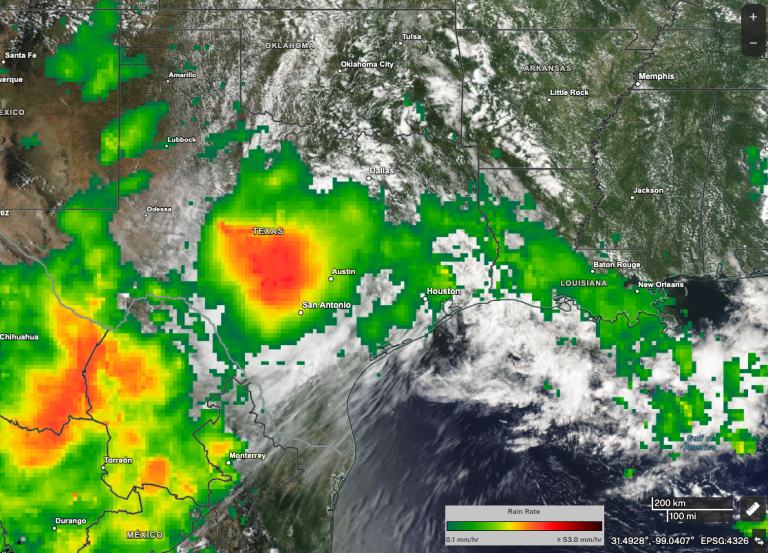
1-day precipitation totals from NASA’s IMERG multi-satellite precipitation product show heavy rainfall over central Texas on July 4, 2025.
© NASA
 
1-day precipitation totals from NASA’s IMERG multi-satellite precipitation product show heavy rainfall over central Texas on July 4, 2025.

Many of the victims were young girls at a summer camp, caught unaware as floodwaters tore through sleeping quarters around 4 AM. Although the US National Weather Service issued warnings ahead of time, local sirens were lacking and the final alerts came when most were asleep.

Glacier outburst floods surge

Not all floods this month were caused by rain.

In Nepal’s Rasuwa district, a sudden outburst from a supraglacial lake – formed on a glacier’s surface – swept away hydropower plants, a major bridge and trade routes on 7 July. At least 11 people were killed and more than a dozen are reported missing.

Scientists at the International Centre for Integrated Mountain Development (ICIMOD), a WMO partner, say glacial-origin floods in the Hindu Kush-Himalaya region are occurring far more often than two decades ago, when one might strike every five to 10 years.

In May and June 2025 alone, three glacial outburst floods hit Nepal, Afghanistan and Pakistan, with two more in Nepal on 7 July. If warming continues, the risk of such floods could triple by the century’s end.
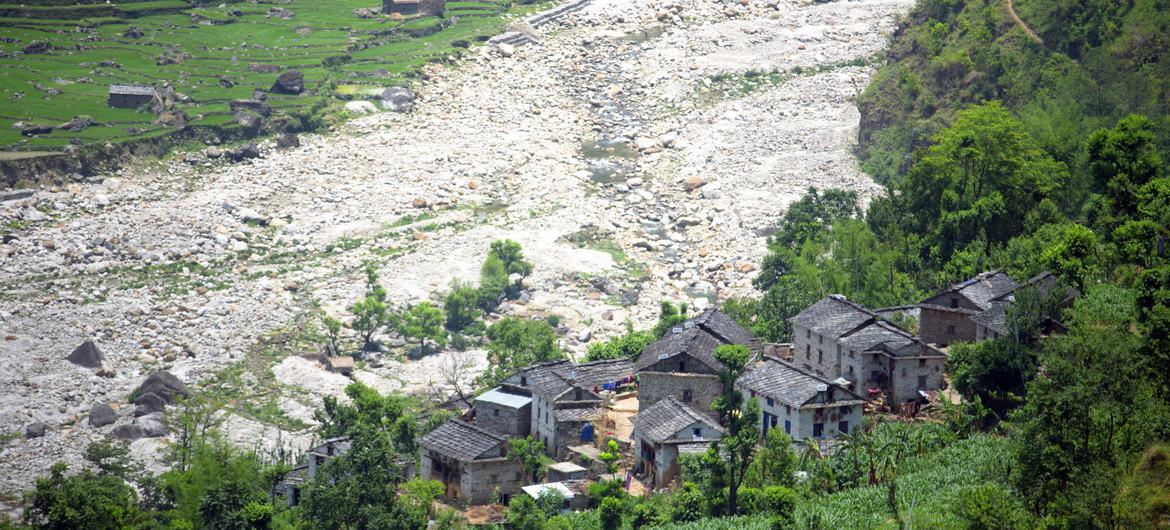
Aftermath of a flood that swept through a high-altitude village in Nepal.
© UNICEF
 
Aftermath of a flood that swept through a high-altitude village in Nepal.

Closing the warning gap

The WMO is stepping up efforts to improve flood forecasting through its global initiative and real-time guidance platform, now used in over 70 countries.

The system integrates satellite data, radar and high-resolution weather models to flag threats hours in advance and is being expanded into a country-led, globally interoperable framework.

A 2022 World Bank study estimated that 1.81 billion people – nearly a quarter of the world’s population – are directly exposed to 1-in-100-year flood events, with 89 per cent living in low- and middle-income countries.

The UN’s Early Warnings for All initiative aims to ensure that everyone, everywhere, is protected by early warning systems by 2027.


https://news.un.org/en/story/2025/07/1165455


https://creativecommons.org/licenses/by/4.0/legalcode

пятница, 11 июля 2025 г.

Overlooked and underestimated: Sand and dust storms wreak havoc across borders


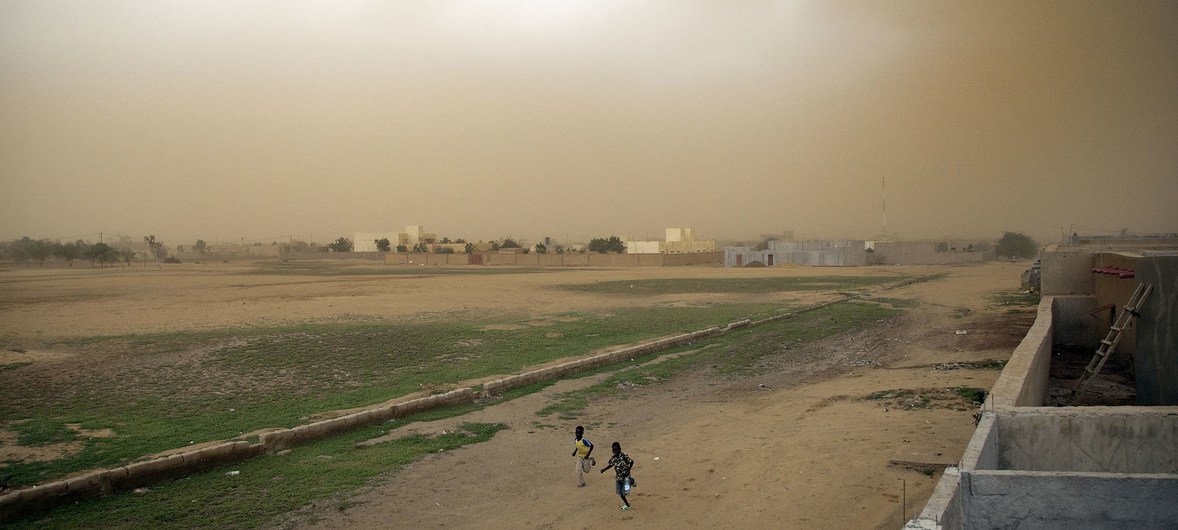
Children run from an approaching sand storm in Gao, Mali.
UN Photo/Marco Dormino
 
Children run from an approaching sand storm in Gao, Mali.


10 July 2025 
Climate and Environment

There are three Great Pyramids at Giza in Egypt - but imagine if there were 307 of the mighty edifices. And then imagine that they had dissolved into over two billion tons of sand and dust particles. 

That’s how much sand and dust enters the atmosphere on an annual basis according to the World Meteorological Organization (WMO)’s annual report on the storms which scatter such particles across borders worldwide.

The UN weather agency’s reports warns that while the amount of dust decreased marginally in 2024, the impact on humans and economies is increasing.

WMO estimates that over 330 million people across 150 countries are affected by sand and dust storms, leading to premature deaths and other health consequences in addition to steep economic costs.

More than just a dark sky 

Sand and dust storms do not just mean dirty windows and hazy skies. They harm the health and quality of life of millions of people and cost many millions of dollars,” said Celeste Saulo, the Secretary-General of WMO.

While the movement of sand and dust is a natural weather process, increased land degradation and water mismanagement have, in the past few decades, exacerbated the prevalence and geographic spread.

Dust and sand particles – 80 per cent of which come from North Africa and the Middle East – can be transported thousands of kilometres across borders and oceans.

Tweet URL

“What begins in a storm in the Sahara, can darken skies in Europe. What is lifted in Central Asia, can alter air quality in China. The atmosphere does not recognize borders,” said Sara Basart, WMO Scientific Officer, at a briefing in Geneva.

And this is precisely what happened in 2024. Dust and sand from the Western Sahara travelled all the way to Spain’s Canary Islands. And fierce winds and drought in Mongolia brought dust to Beijing and northern China.

Fast-growing challenge

“These extreme weather events are not local anomalies. Sand and dust storms are fast becoming one of the most overlooked yet far-reaching global challenges of our time,” said a senior official on Thursday morning speaking on behalf of Philémon Yang, President of the General Assembly.

The storms can obscure sunlight, altering ecosystems on land and in the ocean. In addition to environmental impacts, these weather occurrences have profound impacts on humans and their economies.

“Once considered seasonal or localised, sand and dust storms have escalated into a persistent and intensifying global hazard,” said Rola Dashti, the co-chair of the UN Coalition on Combating Sand and Dust Storms.

Between 2018-2022, over 3.8 billion people were exposed to dust particles, with the worst-affected regions experiencing dust exposure 87 per cent of the time during that same period.

These particles exacerbate cardiovascular diseases and have other adverse health effects, leading to 7 million premature deaths each year especially among already vulnerable populations.

Mr. Yang referred to this as the “staggering human toll”: from an economic perspective, storms can lead to a 20 per cent reduction in crop production among rural communities, pushing them towards hunger and poverty.

In the Middle East and North Africa alone, economic losses in 2024 as a result of sand and dust storms accounted for 2.5 per cent of the regional GDP.

Can’t go it alone

WMO is calling on the international community to invest more in early warning systems and data tracking.

No country, no matter how prepared, can face this challenge alone. Sand and dust storms are a trans-boundary threat that demands coordinated, multisectoral and multilateral action,” said Ms. Dashti.

With 2025-2034 declared the Decade on Combating Sand and Dust Storms, Mr. Yang said this should prove a turning point. He urged Member States to move from awareness to action – and fragmentation to coordination.


https://news.un.org/en/story/2025/07/1165363


https://creativecommons.org/licenses/by/4.0/legalcode

пятница, 4 июля 2025 г.

Конференция ООН в Севилье: новая надежда на достижение Целей устойчивого развития


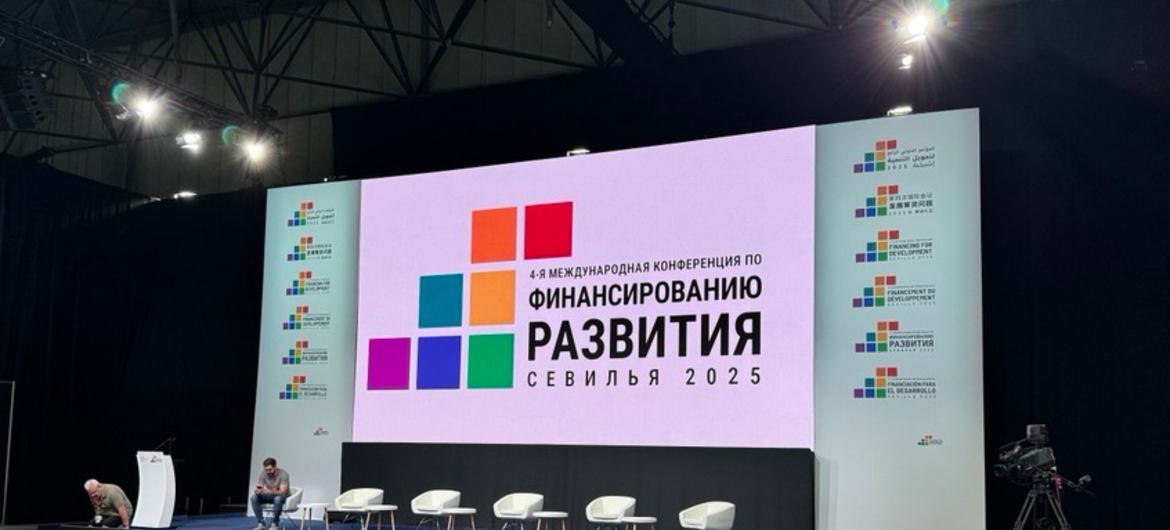
Конференция в Севилье завершила свою работу.
Служба новостей ООН/M. Уэллс
 
Конференция в Севилье завершила свою работу.


3 июля 2025
 Экономическое развитие

Четвертая международная конференция по финансированию развития завершилась сегодня в Севилье, Испания, с конкретными шагами по преобразованию амбиций в реальные действия. Более 130 инициатив, запущенных за четыре дня, призваны превратить принятое странами-участницами Севильское соглашение в эффективную платформу по преодолению финансового кризиса и ускорению достижения Целей устойчивого развития (ЦУР).

Принятые на конференции решения обозначают конкретные шаги по сокращению дефицита финансирования ЦУР, который в развивающихся странах составляет около 4 триллионов долларов в год.

В форуме приняли участие более 15 тысяч человек, включая почти 60 глав государств и правительств. Было проведено более 470 параллельных и специальных мероприятий, включая Международный бизнес-форум и Ярмарку инвестиций в ЦУР.

Решительный ответ на кризис

«Последствия растущих долговых обязательств, обостряющихся торговых разногласий и резкого сокращения официальной помощи на цели развития стали предельно очевидны на этой неделе, – заявила в своем заключительном выступлении первый заместитель Генерального секретаря ООН Амина Мохаммед.  – И все же, несмотря на эту тревожную картину, конференция в Севилье дала решительный ответ – объединяющий итоговый документ, сосредоточенный на конкретных решениях, который подтверждает обязательства, принятые в Аддис-Абебе десять лет назад, возрождает надежду на достижение ЦУР и доказывает, что многостороннее сотрудничество все еще важно и эффективно».

Читайте также:

ИНТЕРВЬЮ | Севильское соглашение: без развития не может быть безопасности

По словам Генерального секретаря конференции и Заместителя Генерального секретаря ООН по экономическим и социальным вопросам Ли Цзюньхуа, конференция в Севилье продемонстрировала способность ООН не только служить пространством для диалога, но и становиться платформой для реальных решений.

Севильское соглашение стало первым с 2015 года межправительственным соглашением по вопросам финансирования развития. Оно обозначает три ключевых направления дальнейших действий: масштабное привлечение инвестиций в устойчивое развитие, решение долгового и финансового кризиса в странах с низким и средним уровнем дохода, а также глубокую реформу международной финансовой системы.

Инновационные механизмы финансирования

В рамках Севильской платформы действий были представлены многочисленные инициативы, охватывающие широкий спектр задач. Среди них – новые механизмы обмена долговых обязательств на инвестиции в развитие, налоговые инициативы, направленные на увеличение поступлений от сверхбогатых и от премиальных форм потребления, платформы для технической помощи и содействие в подготовке проектов, а также меры по расширению кредитования в национальных валютах.

В частности, была учреждена международная коалиция по включению «пунктов приостановки» в кредитные соглашения, позволяющих временно приостановить обслуживание долга во время кризисов. Также было объявлено о формировании Севильского форума по вопросам долга, который будет координировать усилия стран в управлении и реструктуризации долга.

Для стимулирования притока инвестиций в устойчивое развитие было представлено несколько новых решений. Особое внимание было уделено развитию национальных платформ финансирования, выстраиваемых на основе стратегий, сформированных самими странами, а также механизмам по расширению доступа к превентивному финансированию на случай чрезвычайных ситуаций.

Вклад частного сектора

Впервые на полях конференции прошел Международный бизнес-форум, в рамках которого частный сектор выразил готовность активнее участвовать в достижении ЦУР. Его участники представили практические решения по привлечению капитала к реализации целей, особенно в развивающихся странах, через политические диалоги высокого уровня, сессии по инновациям и лучшим практикам, а также тематические круглые столы.

В ходе Ярмарки инвестиций в ЦУР развивающиеся страны представили инвесторам и международным финансовым организациям проекты на общую сумму более 10 миллиардов долларов.

Ключевые результаты

На фоне растущих глобальных вызовов конференция в Севилье стала важным сигналом: международное сообщество по-прежнему способно находить общий язык и предпринимать коллективные шаги ради устойчивого будущего для всех. Среди ключевых инициатив:

Для решения долговых проблем

  • Центр обмена долга на развитие (Debt Swaps for Development Hub), при поддержке Испании и Всемирного банка, для усиления потенциала и масштабирования программ по обмену долга;
  • Программа обмена долга на развитие от Италии на сумму 230 миллионов евро, направленная на инвестирование в проекты в африканских странах;
  • Альянс по введению «пунктов приостановки платежей» (Debt “Pause Clause” Alliance), в рамках которого страны-доноры и многосторонние банки развития (Канада, Франция, Испания, Великобритания, Межамериканский банк развития, Европейский инвестиционный банк, Африканский банк развития, Азиатский банк развития и Банк развития Латинской Америки и Карибского бассейна) договорились включать в кредиты положения о приостановке платежей в случае кризиса;
  • Форум по вопросам долга — площадка для обмена опытом и координации усилий стран в управлении и реструктуризации долга, при секретариате одной из структур ООН и при поддержке Испании.

Для стимулирования инвестиций с социальным эффектом

  • Коалиция за глобальные налоги солидарности, возглавляемая Францией, Кенией и Барбадосом (при поддержке Бенина, Сомали, Замбии и Испании), выступила с инициативой обложить налогами полеты бизнес-класса и частные самолеты для финансирования климатических инициатив и устойчивого развития;
  • Платформа смешанного финансирования SCALED, при участии стран (Германия, Канада, Франция, Великобритания, Дания, Южная Африка) и финансовых институтов (Allianz, AXA SA, CDPQ, Zurich Insurance Group), для масштабирования и репликации эффективных моделей смешанного финансирования;
  • Новый инструментарий FX EDGE от многосторонних банков развития по управлению валютными рисками, а также платформа Delta от Европейского банка реконструкции и развития для поддержки кредитования в местной валюте;
  • Инициатива по эффективному налогообложению состоятельных лиц, во главе с Бразилией и Испанией, для обеспечения справедливого налогообложения;
  • Центр технической поддержки от государственных банков развития (во главе с Finance in Common и IDFC), а также объединенная платформа МБР для подготовки проектов, координируемая Азиатским инфраструктурным инвестиционным банком.

Для реформы финансовой архитектуры на национальном и глобальном уровнях

  • Новое поколение национальных платформ с государственным управлением финансированием, при поддержке стран (включая ЮАР и Египет), Фонда интегрированных национальных финансовых стратегий и банков развития;
  • Коалиция под руководством Великобритании и проекта Bridgetown Initiative по увеличению доли заранее подготовленного финансирования в случае стихийных бедствий с 2 до 20 процентов к 2035 году

https://creativecommons.org/licenses/by/4.0/legalcode

https://news.un.org/ru/story/2025/07/1465901?_gl=1*xpihmt*_ga*MjU1NjY3ODguMTc1MTYwNjM5NA..*_ga_TK9BQL5X7Z*czE3NTE2MDYzOTQkbzEkZzEkdDE3NTE2MDY0MDIkajUyJGwwJGgw