 14 December 2023 Statement: The Elders welcome the signal from COP28 that the fossil fuel era must end. But the actions agreed in Dubai are too little, too late. World leaders need more urgent ambition in addressing the existential threat of the climate crisis, and supporting the most vulnerable. COP28’s call for a transition away from fossil fuels is a historic step. But that transition needs to be rapid and fully funded, cover all sectors, and involve all countries. The science is clear that phasing out all fossil fuels is essential if the global temperature increase is to be limited to 1.5°C. We regret that progress was held back by Saudi Arabia, its Gulf allies and other wealthy countries. They cannot stop the actions needed. Countries who depend on fossil fuel revenues, particularly poorer ones, need support to reconfigure their economies for a greener future. We welcome initial pledges to the loss and damage fund, and recognition of the need for innovative sources of finance. The Global Goal on Adaptation requires further targets and timelines for implementation. The countries who need and deserve help responding to the climate crisis should not wait any longer for promised money that never arrives. Future COPs need to agree diverse sources, such as international taxes, to finance a just transition to clean energy and support the most vulnerable. Repurposing the trillions currently spent subsidising fossil fuels would help. Significantly more money from the International Financial Institutions and private sector investment is also needed. Without more clarity on where the money will come from (based on common but differentiated responsibilities) and credible timelines, the gap between promises and delivery will widen. COPs are imperfect, but the best process we have for tackling the climate crisis. They require all nations to collaborate, and leaders to take a long view and act on what matters most. The UAE Presidency played its role but did not always manage proceedings in an inclusive and transparent way. Confirming the final decision without the small island states in the room was wrong. They have the most to lose. Their voices should be heard. The fossil fuel era will end eventually. COP28 finally acknowledged that necessity. We urge all leaders in politics, business and civil society to accelerate the inevitable. People’s ambition for a safer, cleaner, fairer future is increasingly visible across the world. That ambition can deliver climate justice for current and future generations. In the hottest year we have ever seen, the science – and our shared humanity - demand no less. Mary Robinson, former President of Ireland and Chair of The Elders Ban Ki-moon, former UN Secretary-General and Deputy Chair of The Elders Graça Machel, Founder of the Graça Machel Trust, Co-founder and Deputy Chair of The Elders Gro Harlem Brundtland, former Prime Minister of Norway and former Director-General of the WHO Helen Clark, former Prime Minister of New Zealand and former head of the UN Development Programme Elbegdorj Tsakhia, former President and Prime Minister of Mongolia Zeid Ra'ad Al Hussein, former UN High Commissioner for Human Rights Hina Jilani, Advocate of the Supreme Court of Pakistan and co-chair of the Taskforce on Justice Ellen Johnson Sirleaf, former President of Liberia and Nobel Peace Laureate Ricardo Lagos, former President of Chile Juan Manuel Santos, former President of Colombia and Nobel Peace Laureate Ernesto Zedillo, former President of Mexico  About The Elders The Elders are independent global leaders working for peace, justice, human rights and a sustainable planet. The group was founded by Nelson Mandela in 2007. The Elders are Ban Ki-moon (Deputy Chair), Gro Harlem Brundtland, Helen Clark, Elbegdorj Tsakhia, Zeid Ra’ad Al Hussein, Hina Jilani, Ellen Johnson Sirleaf, Ricardo Lagos, Graça Machel (Deputy Chair), Juan Manuel Santos, Mary Robinson (Chair) and Ernesto Zedillo. Lakhdar Brahimi, Fernando Henrique Cardoso, and Jimmy Carter are Elders Emeritus. Desmond Tutu (1931-2021) and Kofi Annan (1938-2018) were founding members of The Elders and served as Chairs from 2007 to 2013 and 2013 to 2018 respectively. Ela Bhatt (1933 - 2022) and Martti Ahtisaari (1937 - 2023) were members of The Elders from 2007 to 2016 and 2009 to 2018 respectively |
Показаны сообщения с ярлыком COP28. Показать все сообщения
Показаны сообщения с ярлыком COP28. Показать все сообщения
четверг, 14 декабря 2023 г.
COP28: The Elders welcome the beginning of the end for fossil fuels, but call for more urgent ambition at future COPs

среда, 13 декабря 2023 г.
COP28 ends with call to ‘transition away’ from fossil fuels; UN’s Guterres says phaseout is inevitable

COP28 President Sultan Al Jaber (centre), UN climate chief Simon Stiell (fourth from left) and other participants onstage during the Closing Plenary of the UN Climate Change Conference, COP28, at Expo City in Dubai, United Arab Emirates.
13 December 2023
Climate and Environment
Nations at COP28 in Dubai approved earlier on Wednesday a roadmap for “transitioning away from fossil fuels” – a first for a UN climate conference – but the deal still stopped short of a long-demanded call for a “phaseout” of oil, coal and gas.
Reacting to the adoption of the outcome document, UN chief Antonio Guterres said mention of the world’s leading contributor to climate change comes after many years in which the discussion of this issue was blocked.
The Secretary-General stressed that the era of fossil fuels must end with justice and equity.
“To those who opposed a clear reference to a phaseout of fossil fuels in the COP28 text, I want to say that a fossil fuel phase out is inevitable whether they like it or not. Let’s hope it doesn’t come too late”, he added.
More to follow on the breaking story from COP28 in Dubai…
https://news.un.org/en/story/2023/12/1144742
понедельник, 11 декабря 2023 г.
Stop ‘kicking the can down the road,’ UN chief urges COP28 deal on phaseout of fossil fuels

Stop ‘kicking the can down the road,’ UN chief urges COP28 deal on phaseout of fossil fuels
UN Secretary-General António Guterres speaks to reporters at Expo City, the venue for the UN climate change conference, COP28, in Dubai, United Arab Emirates.
11 December 2023Climate and Environment
UN Secretary-General António Guterres on Monday urged a deal at COP28 on the phaseout of fossil fuels, telling negotiators that “now is the time for maximum ambition and maximum flexibility,” as UN climate talks in Dubai head into the home stretch.
As COP28 entered its final 48 hours, the UN chief delivered a clear message to government negotiators: “We must conclude the conference with an ambitious outcome that demonstrates decisive action and a credible plan to keep 1.5-degree goal alive, protecting those on the frontlines of the climate crisis.”
‘The clock is ticking’
Negotiators are engaged in intense negotiations to hammer out a deal on key agenda items including the future of the use of fossil fuels, ramping up renewable energy, building resilience to climate change and ensuring financial support for vulnerable countries.
Speaking to reporters today, Mr. Guterres warned of humanity’s race against time as our planet is “minutes to midnight” for the 1.5-degree limit, referring to one of the keystone global warming targets set by the 2015 Paris Agreement. “And the clock keeps ticking.”
And yet, with COP28 so close to the finish line, there is still a “gap that needs to be bridged, said the Secretary-General.
Against this backdrop, he noted that “now is the time for maximum ambition and maximum flexibility. Ministers and negotiators must move beyond arbitrary red lines, entrenched positions and blocking tactics,” he said.
Urging countries to go into “overdrive to negotiate in good faith and rise to the challenge”, the Secretary-General also cautioned that any “compromise for solutions”, must not come at the cost of “compromising on the science or on the need for the highest ambition.”
He underscored that in a “fractured and divided world, COP28 can show that multilateralism remains our best hope to tackle global challenges.”
‘How high is our ambition’
Speaking to reporters just ahead of the Secretary-General, UN climate chief Simon Stiell said negotiations on an outcome document have a chance to begin a new chapter that delivers for people and planet.
He underscored the importance of finance as “the bedrock to scale-up climate action on all fronts”.Mr. Stiell said negotiations in Dubai have now boiled down to two issues:
- “How high is our ambition on mitigation”; and
- “Are we willing to back this transition with the proper means of support to deliver it?”
He stressed that the highest levels of ambition are possible on both, “but if we reduce on one, we reduce our ability to get either.”
To reach a meaningful deal, the many “unnecessary tactical blockades” seen along the COP28 journey must be removed, and “incrementalism” must be rejected, according to the climate chief.
He reminded negotiators that the world is watching and “there is nowhere to hide.”
“One thing is for certain: ‘I win – you lose’ is a recipe for collective failure. Ultimately it is 8 billion people’s security that is at stake”.
'The time to decide is now'
At the first formal meeting of the closing plenary, COP28 President Dr Sultan Al Jaber said the time for discussion on a final document was coming to an end, “We have a text, we need to agree on the text… there is no time for hesitation. The time to decide is now.”
The UAE’s top climate negotiator said the outcome of COP28 must respect science and keep the target of limiting global warming to 1.5 degrees in reach.
He said the flexibility of the delegates was evident in the historic operationalization of the loss and damage fund on the first day of the climate conference, now they have an opportunity “to deliver history again” and send a signal to the world that multilateralism does actually work.
Dr Al Jaber said even more flexibility was needed as COP28 approaches the finish line, adding: “I want you to deliver the highest ambition on all items, including on fossil fuel language.”
Global Stocktake
Following the landmark Paris COP, Dubai is the first time that a UN climate summit surveys progress towards achieving the goals agreed in 2015.
This so-named Global Stocktake is still being assessed and could pave the way to ambitious national climate action plans, or NDC’s that countries are due to submit in 2025.
Mr. Guterres has called for countries to step up their efforts to ensure maximum ambition on two fronts, namely ambition on reducing greenhouse gas emissions, and on delivering climate justice.
On Monday he stressed that the Global Stocktake must recognize the “need to phase out all fossil fuels on a time-frame consistent with the 1.5-degree limit – and to accelerate a just, equitable and orderly energy transition for all.”
Energy transformation
In his encounter with the press at Expo City, the Secretary-General focused on key action points essential to raise ambition and ramp up climate action on the energy transition front:
- A tripling of renewable power capacity, a doubling of energy efficiency and a phaseout of fossil fuel;
- Support, training and social protection for those who may be negatively impacted; and
- Consideration of needs of developing countries dependent on the production of fossil fuels.
He said that “timelines and targets might be different for countries at different levels of development”, but it should be in line with “achieving global net-zero by 2050 and preserving the 1.5-degree goal.”
Climate justice
Mr. Guterres recalled that COP28 began with two encouraging steps: an agreement to operationalize the Loss and Damage Fund to help vulnerable countries cope with the impacts of climate change, and the replenishment of the Green Climate Fund.
“It is a start, but much more is needed,” he said.
Given the challenges ahead of debt-ridden developing countries, the UN chief pushed for “all commitments made by developed countries on finance and adaptation to be met,” and in addition, “far more adaptation ambition will be needed.”
“COP28 must send clear signals that governments have grasped the scale of the adaptation challenge, and that it is a priority not just for developing countries, but the entire world,” he added.

New adaptation framework
Mr. Guterres welcomed the “emerging consensus for a new framework on adaptation” but cautioned that a “framework without the means of implementation is like a car without wheels.”
“The doubling of adaptation finance to $40 billion dollars by 2025 must be an initial step towards allocating at least half of all climate finance towards adaptation,” noted the Secretary-General.
Looking ahead, he flagged the next two years as vital for establishing a new global climate finance goal beyond 2025, and for governments to prepare new national climate action plans, fully aligned with the 1.5-degree limit.
“We can’t keep kicking the can down the road. We are out of road – and almost out of time,” he said, urging negotiators to rise to the scale and urgency of the climate challenge.
https://news.un.org/en/story/2023/12/1144642
четверг, 7 декабря 2023 г.
COP28: UN says staggering $7 trillion spent every year on investments that fuel climate change

COP28: UN says staggering $7 trillion spent every year on investments that fuel climate change
Seagrass meadows - expanses of green, grass-like shoots and flowers - are a hugely effective nature-based solution to climate change.
9 December 2023
Climate and Environment
Nearly $7 trillion of public and private finance each year supports activities that directly harm nature – some 30 times the amount spent on nature-based solutions annually, according to a shocking UN report launched on Saturday at COP28 in Dubai.
The report from the UN’s environmental wing, UNEP, also revealed that despite decades of calls for ending finance flows towards sectors that harm some of humanity’s most valuable assets, those investments currently account for a whopping 7 percent of global GDP.
Saturday’s report launch comes as negotiations on the conference’s outcome text are shifting into high gear – COP28 is scheduled to close on Tuesday – and against the backdrop of the largest on-site action yet for climate justice. Calls for ending the world’s dependence on fossil fuels and demanding reparations for 'loss and damage' can be heard ringing out at Dubai’s iconic Expo City venue.
This year’s State of Finance for Nature report is the first such survey to focus on what is known as “nature-negative finance flows” and underscores the urgency to address the interconnected crises of climate change, biodiversity loss, and land degradation.
The report, launched to coincide with a day set aside at the latest UN climate conference for discussions on nature and land use, also highlighted the fact that these investments dwarfed the annual amount being invested in nature-based solutions, which totaled roughly $200 billion last year.
A staggering $5 billion of these nature-negative finance flows come from the private sector, which is 140 times larger than private investments in nature-based solutions, and almost half of that stems from only 5 industries: construction, electric utilities, real estate, oil and gas, and food and tobacco.
‘Greening finance’
One of UNEP’s partners contributing to the report is Global Canopy, a data-driven non-profit that targets market drivers that negatively impact nature. It’s Executive Director, Niki Mardas, told UN News that there is a group of companies or financial institutions who may be making nature-positive investments “and making a big noise about that, but aren't even clear on their exposure to nature-negative [investments], particularly when it's down their supply chains.”
He emphasized that, while these companies must continue to make positive investments, they also need to do the hard and complex work of understanding how they are driving the problem.
They must start addressing that “not by getting out and not by divesting, but by engaging companies in their portfolios, by engaging companies in their supply chains so that they change their operations and their behaviour”.
Mr. Mardas gave the example of countering deforestation, which is “at the heart” of any effort to achieve net-zero, yet only 20 per cent of the over 700 financial institutions that made high profile net-zero commitments as part of the Glasgow Financial Alliance “have taken any action at all on deforestation.”
“The single biggest action we can take for nature, climate and people is to green finance. We need to finance green, but we also need to green that $7 trillion of finance. Otherwise, we'll always be stuck in this loop,” he added.
Turning the tide
At a press conference in Dubai, the head of UNEP’s Nature for Climate Branch, Mirey Atallah, said the report demonstrates that the climate crisis is still outpacing efforts to contain it.
She said finance is “the great enabler, and without money flowing in the right direction, we cannot achieve the targets we have set” at the 1992 Earth Summit in Rio to address the interconnected challenges of climate change, desertification and biodiversity loss.
While the report may provide very sobering conclusions, Ms. Atallah said UNEP wants to use the data to show that the money being used to harm nature can and must be diverted to have a positive impact and stressed that COP28 must be the turning point.
Speaking to UN News, the UNEP official said the chronic underfunding of nature-based solutions is not due to the lack of funds, “it’s just that the money is going in the wrong direction”.
She said convincing private companies to make the right investments requires putting in place the necessary legal frameworks to support directing funds towards nature-positive solutions.
Ms. Atallah noted that some private financial institutions have already started taking climate effects into account when approached for loans, which can help “turn the tide of investments”.
https://news.un.org/en/story/2023/12/1144597
Джон Керри представил план по ядерному синтезу на конференции COP28
Джон Керри представил план по ядерному синтезу на конференции COP28
6 декабря Среда 6:43

Делегаты со всего мира собрались в Дубае на конференцию по климату COP28, чтобы найти решения для сдерживания глобального потепления. Во вторник специальный посланник президента США по вопросам климата Джон Керри заявил, что ядерный синтез может совершить революцию в мире.
Ученые десятилетиями пытаются воспроизвести процесс, с помощью которого Солнце и другие звезды вырабатывают электричество. Керри сказал, что 35 стран будут работать над планом использования ядерного синтеза, уделяя особое внимание вопросам исследований, регулирования и цепочек поставок. Он отметил, что эта технология становится все ближе.
В прошлом году ученые из Ливерморской национальной лаборатории имени Лоуренса при Министерстве энергетики США достигли важной вехи. Они запустили реакцию и смогли получить больше энергии, чем израсходовали.
Это открытие породило надежды на то, что в будущем ядерный синтез может стать источником чистой энергии. Стартапы, работающие в этой области, привлекают все больше внимания и инвестиций.
https://creativecommons.org/licenses/by/3.0/legalcode
https://www3.nhk.or.jp/nhkworld/ru/news/20231206_N01/
понедельник, 4 декабря 2023 г.
COP28 is about action, not politics and point scoring, says UN climate chief
 COP28 is about action, not politics and point scoring, says UN climate chief
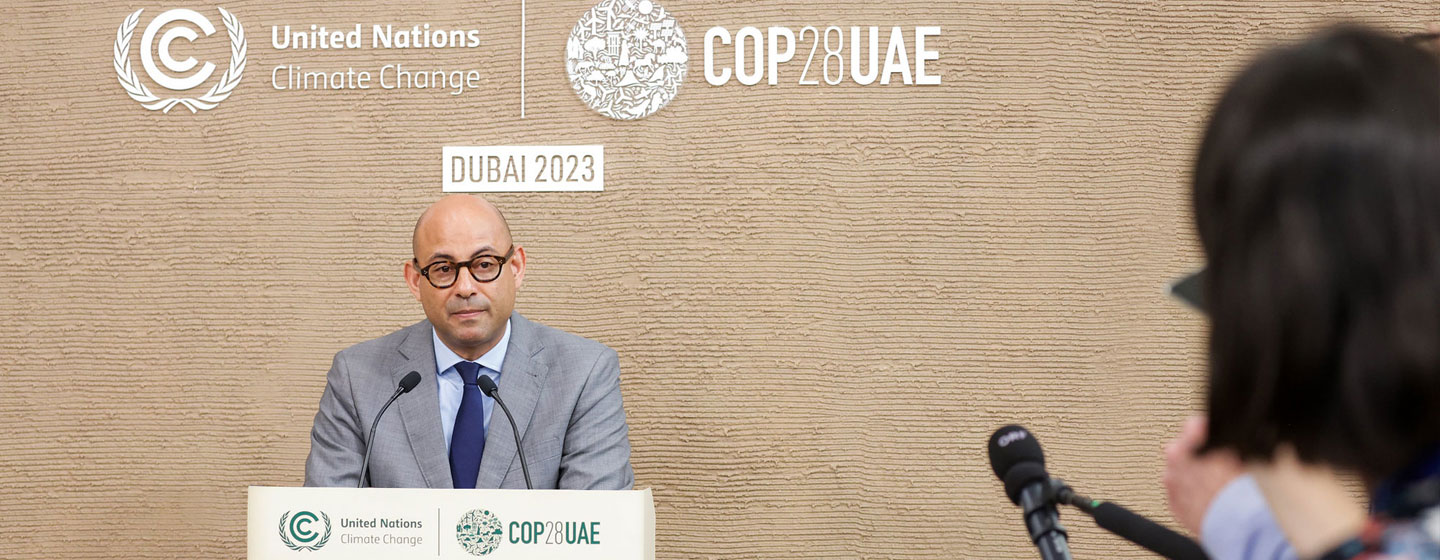
Simon Stiell, UNFCCC Executive Secretary speaks to reporters at the UN Climate Change Conference, COP28, at Expo City in Dubai, United Arab Emirates.
6 December 2023
Climate and Environment
UN climate chief Simon Stiell said on Wednesday that COP28 delegates are not in Dubai to “score points” and play at “lowest-denominator politics”; they must take ambitious action on curbing global warming and ending the climate crisis.
Mr. Stiell’s strong message to government negotiators comes as the latest UN climate conference, running in the UAE’s main city, Dubai, since last Thursday, reaches the halfway mark with agreement on financing for climate adaptation and the fate of fossil fuels still up in the air.
“All governments must give their negotiators clear marching orders".
"We need highest ambition, not point scoring or lowest common denominator politics,” said Mr. Stiell, who is the Executive Secretary of the UN climate convention, which facilitates COP28.
‘Good intentions won’t halve emissions’
Noting the early ‘win’ on a loss and damage fund to help vulnerable countries recover from climate-related disasters that was launched on the opening day of the summit, he acknowledged that long-awaited deal had given this COP a spring in its step.
Find out more here about the Loss and Damage Fund.
But “it is just a start,” he cautioned, and added: “We would be kidding ourselves if we think it’s a tick in the box for finance and support at this COP. More is required.”
He asked the delegates to take an honest look at the real work ahead, because “good intentions won’t halve emissions this decade or save lives right now.”
“We need enhanced transparency, and to deliver our promise to fund climate action across the world,” he explained.
‘Serious progress needed on finance’
Laying out his vision for the next round of climate talks, the UN climate chief said “only serious progress on finance can deliver frontline results,” which is the “great enabler” for climate action.
“The negotiations must put it front and center.”
Global stockake
According to Mr. Stiell, the Global Stocktake is the vehicle to get climate action on track.
In simple words, the stocktake process will review how much progress countries have made – and identify where there are gaps – on reaching the goals set by the landmark 2015 Paris Climate Change agreement, and its outcome will lay the roadmap for an accelerated climate action for the years ahead.
Find out more here about the Global stocktake.
“On the Global Stocktake, we have a starting text on the table… But it’s a grab bag of wish lists and heavy on posturing.”
“The key now is to sort the wheat from the chaff,” he pointed out.
“If we want to save lives now and keep [the] 1.5 goal within reach, the highest ambition COP outcomes must stay front and center.”
‘A bullet train for climate action’
Mr. Stiell emphasized that by the end of next week, when the conference is set to close, COP28 must deliver a bullet train to speed up climate action.
“We currently have an old caboose chugging over rickety tracks.”
He said that the technologies and solutions exist, and the tools are all there on the table.
“It’s time for governments and negotiators to pick them up and put them to work.”

COP28 at the halfway mark
COP28 continued its work on Wednesday with key discussions on phasing out fossil fuels and boosting financial support for countries bearing the brunt of climate crisis.
As the delegates head into the home stretch, here’s a snapshot of what’s happened so far and what’s ahead.
Key pledges and declarations made:
- The loss and damage fund designed to support climate-vulnerable developing countries was brought to life on the first day of the COP
- Countries have pledged hundreds of millions of dollars so far for the fund
- A pledge to shore up global health care systems to withstand the worsening impacts of climate change
- A pledge to curb cooling-related emissions was joined by nearly 60 countries
Most discussed topics:
- Phasing out or reducing the use of fossil fuels
2. Building resilience to climate impacts
3. Financial support for vulnerable countries coping with a climate catastrophe
Major reports launched at COP28:
Among the major reports launched in the first half of COP28, two sobering science-based surveys from the UN weather agency, WMO, opened and closed the week.
- The first WMO report warned that the world is heating up at pace that could signal “planetary collapse” if drastic and immediate action isn’t taken to curb greenhouse gas emissions
- The second WMO report, launched on Tuesday confirmed 2011-2030 was the warmest decade ever recorded with greenhouse gas emissions “turbo charging” climate change and imperiling our Polar ice caps and mountainous regions
What’s coming up:
Now all eyes are on countries’ ability to use the conclusions of the global stocktake as a springboard towards more ambitious climate action plans.
COP28 is expected to wrap up its work on Tuesday, 12 December and a decision adopted by the parties could emerge as the most consequential outcome following the 2015 Paris conference.
https://news.un.org/en/story/2023/12/1144427
COP28: Methane pledge by the ‘giants behind the climate crisis’ falls short, says Guterres
COP28: Methane pledge by the ‘giants behind the climate crisis’ falls short, says Guterres
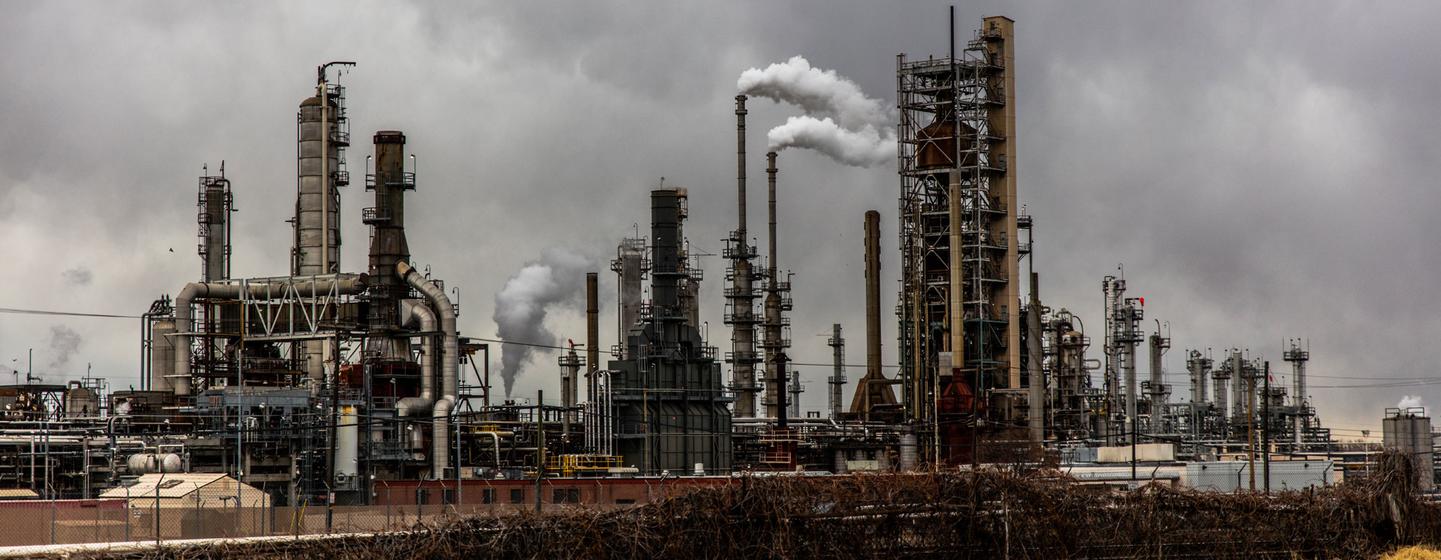
The burning of fossil fuels is driving climate change.
3 December 2023Climate and Environment
UN Secretary-General António Guterres on Sunday sent a strong message to the oil and gas industry: the pledges made at COP28 in Dubai fall well short of what’s needed to meaningfully tackle the climate crisis.
As the fourth day of this year’s UN climate conference got underway, the UN chief stated: “The fossil fuel industry is finally starting to wake up, but the promises made clearly fall short of what is required.”
Reacting to the pledge announced on Saturday by several major oil and gas companies to reduce methane leaks from their pipelines by 2030, Mr. Guterres said it is a “step in the right direction”, but the promise failed to address a core issue, namely, eliminating emissions from fossil fuel consumption.
Methane (CH4) is a primary component of natural gas and is responsible for about a third of the planetary warming we see today. It is short-lived but is more powerful than carbon dioxide, the greenhouse gas most responsible for climate change. Without serious action, global anthropogenic methane emissions are projected to rise by up to 13 per cent between now and 2030.
UN agencies tell you here what you need to know about methane.
Dubbing the oil and gas companies, the “giant behind the climate crisis”, the Secretary-General also pointed out that the pledge did not provide clarity on the pathway to reaching net-zero by 2050, which is “absolutely essential to ensure integrity.”
“Science is clear: we need to phase out fossil fuels within a timeframe compatible with limiting global warming to 1.5 Celsius,” he reiterated, referring to one of the keystone targets set by the landmark 2015 Paris Agreement.
“There must be no room for greenwashing,” he said, referring to the dangers involved in promoting deceptive marketing and false claims of sustainability.
Find out more here about the tactics of ‘greenwashing’.
Early Warning for All
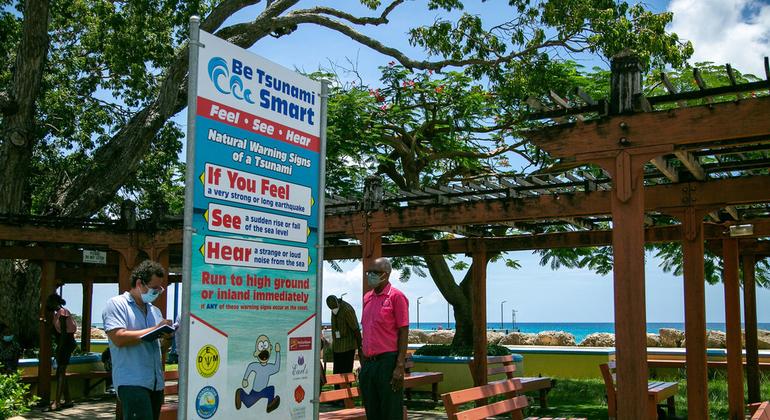
The groundbreaking Early Warnings for All Initiative launched by the Secretary-General last year aims to protect everyone from hazardous weather, water or climate through life-saving early warning systems by the end of 2027.
“This is an ambitious goal – but it is achievable. To make it a reality, we need all hands-on deck – collaborating and cooperating in a way that has not been done before,” he told delegates at Sunday’s main event on the issue.
Mr. Guterres also launched a new report prepared by the UN Office for Disaster Risk Reduction (UNDRR) and the UN World Meteorological Organization (WMO), which shows that more lives are being protected from extreme weather and dangerous climate change impacts, but the pace of progress remains insufficient.
So far,101 countries reported having an early warning system, an increase of six countries compared to last year, doubling of coverage since 2015.
Yet, half of countries globally still do not have adequate multi-hazard early warning systems, the report finds.
The head of UNDRR Mami Mizutori said: “The progress is encouraging but we must not be complacent ... with an 80 per cent increase in the number of people affected by disasters since 2015 and half the world still lacking access to early warnings.”
“Early warnings are the low-hanging fruit of climate adaptation. They are not a luxury but a must,” added WMO Secretary-General Petteri Taalas.
Basic tool to save lives
The UN chief said Early Warnings for All systems are “the most basic tool for saving lives and securing livelihoods” in a world defined by “escalating climate injustices”.
Worryingly, countries that are vulnerable to extreme weather, especially small island developing States and least developed countries, as well as the entire African continent, have a rate of protection is well below the global average.
“And delayed action leads to more extreme weather events. More deaths. More destruction,” stated the Secretary-General.
Progress so far
Highlighting the progress made over the past year, Mr. Guterres shared examples from several countries:
- Maldives, Laos and Ethiopia now have dedicated national action plans;
- Benin has strengthened communications to reach communities at greatest risk; and
- Fiji’s flash flood warning has been expanded to benefit nearly one million people.
He pointed out that in a world on a fast-track to temperature increase of 3 degrees Celsius, climate vulnerability is bound to escalate.
Therefore, it is critical to cut carbon pollution at an accelerated pace and invest in protecting vulnerable communities from the impact of more frequent and severe climate-related events.
The estimated cost of bringing everyone under the protection of early warning systems would be around $3 billion, “a tiny fraction of the hundreds of billions made by the fossil fuel industry last year.”
Mr. Guterres called for a windfall tax on these profits, and for the money to be used to protect those suffering the worst impacts, encouraging countries to be “bold and ambitious and to double the speed and scale of support in 2024”.
Race to net-zero
During a roundtable on the latest report from his High-Level Expert Group on Net-Zero, the Secretary-General said COP28 is about turning things around, but national governments cannot do it alone.
“Businesses, financial institutions, civil society, cities, states and regions are all critical in the race to net-zero,” he said.
In simple terms, ‘net-zero’ means cutting greenhouse gas emissions to as close to zero as possible.
In March 2022, the UN chief established the expert group to develop stronger and clearer standards for pledges by non-State entities and speed up their implementation.
Ten recommendations in its report, as a 'how-to' guide for credible, accountable net-zero pledges.
Reminding the room of his ‘Acceleration Agenda,’ Mr. Guterres called on governments and non-State actors to radically speed-up efforts to cut emissions, for which he highlighted five key elements:
- Genuine decarbonization effort to cover all activities, across every link of value chains;
- Detailed targets for 2025, 2030 and 2035, in line 1.5 degrees target of the Paris Agreement;
- Disclosure of all lobbying, policy engagements and communication campaigns;
- Information on efforts to change business models and internal operations to phase out fossil fuels; and
- Move towards a just, equitable and accelerated renewables transition.
https://news.un.org/en/story/2023/12/1144282
воскресенье, 3 декабря 2023 г.
COP28: Bring the vulnerable to ‘front of the line’ for climate funding
COP28: Bring the vulnerable to ‘front of the line’ for climate funding
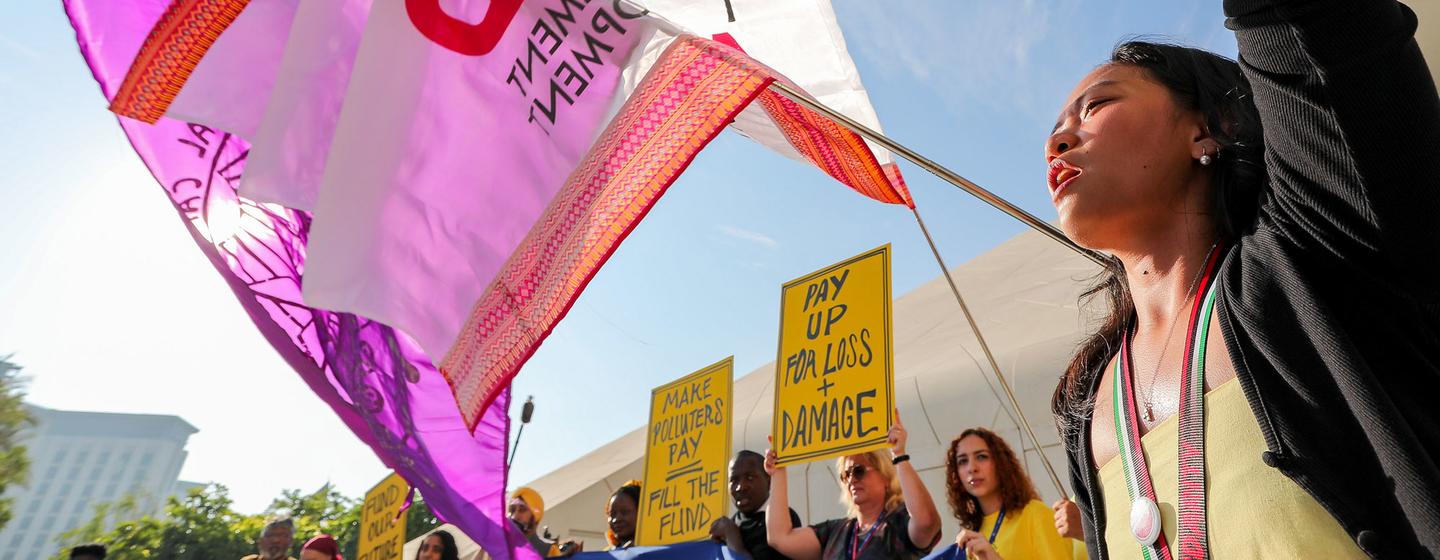
Nepal-based civil society group Digo Bikas Institute holds an action on loss and damage during the UN Climate Change Conference (COP28) at Expo City in Dubai, United Arab Emirates.
4 December 2023
Climate and Environment
Advocates showcased the devastating impacts of climate upheaval on their communities at COP 28 on Monday as the focus of the world’s largest climate gathering turned to financial support for those most at risk – first and foremost youth and women in developing countries.
Among them is young Senegalese singer and rapper Oumy Gueye, who goes by OMG and was triggered to embrace climate action when her grandparents’ home in Bargny east of the Senegalese capital Dakar was destroyed by rising seas.
She has been collaborating with UN humanitarian affairs coordination office OCHA to advocate for humanitarian causes in the Sahel – one of the world’s fastest-growing humanitarian emergencies.
OMG is part of the ‘My Sahel’ project with five other major artists from the region. Together they released a track from which proceeds are split between the contributing artists and the OCHA-managed humanitarian fund for West and Central Africa.
Speaking to UN News, she described the predicament in which her peers back home are increasingly finding themselves. Rising temperatures and, in the case of Senegal, sea levels are destroying livelihoods and homes, driving poverty, violence and fueling migration across perilous routes.
“Young people take the risk to travel by sea for a better situation,” she said, and some lose their lives – a tragedy for communities and for the future of their countries.

New climate action account
The humanitarian impact of the climate crisis is under the spotlight in Dubai. As part of the UN’s Central Emergency Response Fund (CERF), OCHA launched a Climate Action Account at COP28 to provide an additional avenue for financing humanitarian responses to climate-related disasters such as floods, droughts, storms and extreme heat, and building resilience.
Each year, between a quarter and a third of CERF funding already goes to extreme weather-related disasters.
UN Deputy emergency relief chief Joyce Msuya stressed the importance of ramping up this funding “as we move into a world in which climate change holds the sword of Damocles over an increasing number of people”.
According to the UN Intergovernmental Panel on Climate Change (IPCC), some 3.5 billion people, nearly half of humanity, live in areas highly vulnerable to climate change.

Trillions in damages
Extreme weather comes with a staggeringly high cost, as the UN weather agency WMO-led United in Science report published earlier this year showed. According to the report, between 1970 and 2021 some 12,000 reported disasters from weather, climate and water extremes caused $4.3 trillion in economic losses – most of them in developing countries.
To support vulnerable countries in protecting themselves from the worst consequences of climate disruptions, the loss and damage fund agreed at COP 27 in Sharm el-Sheikh last year and operationalised on the opening day of COP 28 has been hailed as a key climate justice instrument and the first major outcome of the gathering.
More than $650 million have reportedly been pledged so far and advocates for vulnerable communities present in Dubai have stressed the need to ensure that those most-affected benefit from the funding.
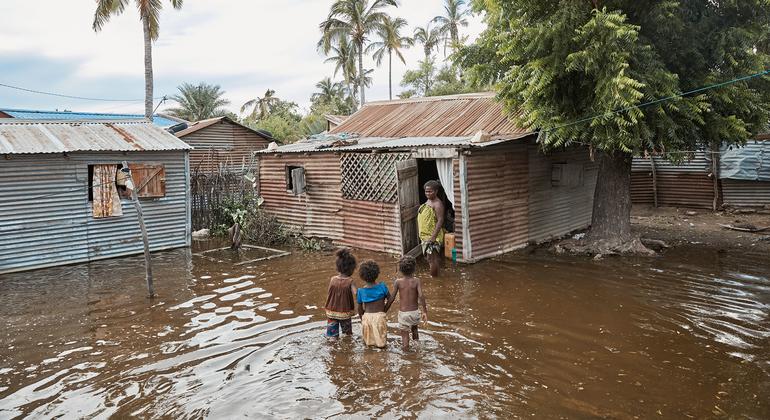
Vulnerable people ‘at the back of the line’
An increasing proportion of the over 110 million forcibly displaced people around the world are pushed to flee their homes due to weather-related hazards.
“The voice of those displaced by this emergency must be heard, and they must be included in plans and resource allocation,” UN refugee agency chief Filippo Grandi wrote on social platform X.
OCHA climate team head Greg Puley told the conference’s participants on Monday that it was a “grave injustice” that people on the frontlines of the climate crisis who were least responsible for it, too often found themselves “at the back of the line” for climate funding.
Women advocates from affected communities were in the spotlight at a COP28 event organised by the UN refugee agency (UNHCR), the UN migration agency (IOM) and partners on Monday.
Joelle Hangi from civil society organisation Global Platform for Action described the challenges she experienced while living herself in Kakuma camp as a refugee from the Democratic Republic of the Congo (DRC).
Living in the dark
The lack of reliable, sustained access to electricity was among the most pressing, she said, a reality faced by more than 94 per cent of displaced people – and which could be alleviated by an increased use of renewables.
“Darkness means you are not safe; you are exposed to a lot of things. I saw many people who could not seize opportunities that could change their lives only because there was no access to electricity,” she said. Ms. Hangi is currently working to change this reality for displaced people, help improve their internet connectivity and support transitions to clean cooking options.
Invest in mitigation
Speaking to UN News, COP28 participant Caroline Teti of aid organisation Give Directly based in Nairobi, which collaborates with UNHCR on refugees responses, highlighted the empowering nature of direct cash transfers to people suffering the impacts of the climate crisis.
She gave the example of a project in Mozambique which enabled money to be sent to communities a week before Cyclone Freddy unleashed massive floods upon the east African nation earlier this year. “They could start preparing to move out, communicate with their relatives to prepare for floods, started reinforcing their structures so they don’t get washed away,” she said.
She also described an ongoing project in Malawi where climate-vulnerable people received lump sum transfers of $800 dollars so that they could move out of at-risk areas to higher ground.
“If investments are put into climate mitigation, we can put in place cheap, fast and simple solutions that can go a long way in responding to some of the climate challenges,” she insisted.
‘Innovative humanitarianism’
The climate advocates called for a shift to “more inclusive and innovative humanitarianism” which leverages the experience of displaced people in developing solutions and helps “end the circle of dependency”.
Echoing this call, Bernhard Kowatsch, head of the UN World Food Programme (WFP) Innovation Accelerator, told UN News that “innovations can show a sign of hope also in the short term and prove that change is possible – even right now”.
He said that much more investment is needed in high-impact innovations which can help mitigate the most dire consequences of climate change.
WFP Innovation Accelerator projects which leverage private insurance to the benefit of smallholder farmers or enable them to make climate adaptation decisions based on satellite imagery and artificial intelligence are a case in point, along with microfinance loans to female farmers and entrepreneurs most affected by weather disasters and excluded from traditional funding
https://news.un.org/en/story/2023/12/1144297
Подписаться на:
Сообщения (Atom)