Избранное сообщение

среда, 31 декабря 2025 г.

ГА ООН приняла резолюцию "Международное десятилетие действий "Вода для жизни"


2014-12-25 09:50:55 | Russian.News.Cn


Душанбе, 24 декабря /Синьхуа/ -- На 69-й сессии Генеральной Ассамблеи ООН единогласно принята резолюция "Международное десятилетие действий "Вода для жизни", 2005–2015 годы, и дальнейшие усилия по обеспечению устойчивого освоения водных ресурсов".

Как сообщили сегодня в МИД Таджикистана, данная резолюция была подготовлена и вынесена на обсуждение по инициативе Таджикистана. В соответствии с ней планируется проведение двух мероприятий - диалога высокого уровня в ходе 69-й сессии ГА ООН в марте 2015 года и международной конференции высокого уровня в Душанбе в июне 2015 года.

Резолюция является продолжением глобальных инициатив Таджикистана, нацеленных на устойчивое управление водными ресурсами.


http://russian.news.cn/world/2014-12/25/c_133877234.htm
http://creativecommons.org/licenses/by/3.0/legalcode

среда, 10 декабря 2025 г.

A sustainable future requires new thinking: UN environment report


The production, use, and disposal of plastic creates significant greenhouse gas emissions that cause climate change


9 December 2025 
Climate and Environment

Fresh approaches to facing complex environmental challenges are revealed in the UN Environment Programme’s (UNEP) new global outlook released on Tuesday.

The agency calls the report the most comprehensive assessment of the global environment ever undertaken, with input from 287 multi-disciplinary scientists from 82 countries – stretching to well over 1,000 pages.

The Global Environment Outlook lays out a simple choice for humanity,” said UNEP Executive Director Inger Andersen.

“Continue down the road to a future devastated by climate change, dwindling nature, degraded land and polluted air, or change direction to secure a healthy planet, healthy people and healthy economies.”

Tweet URL

Looking beyond GDP

The report makes a case for interconnected ‘whole-of-society’ and ‘whole-of-government’ approaches to transform economy and finance, materials and waste, energy, food and the environment.

Taking this path starts with moving beyond gross domestic product (GDP) as a measure of economic wellbeing and instead using inclusive indicators that also track the health of human and natural capital.

It continues with a transition to circular economy models; a rapid decarbonisation of the energy system; a shift towards sustainable diets, reduced waste and improved agricultural practices; and expanding protected areas and restoring degraded ecosystems – all backed by behavioural, social and cultural shifts that include Indigenous and local knowledge.

Two pathways to change

The report lays out a social and a technological pathway to transformation.

  1. Behaviour-focused transformation pathway: lifestyle, behavioural and value changes. Social awareness of the environmental crises drives a shift in worldview.
  2. Technology-focused transformation pathway: innovation and technological solutions. An urbanized world with significant global trade and technological spill-over.

Why it matters

According to UNEP:

  • The state of the environment will dramatically worsen if the world continues to power economies under a business-as-usual pathway.
  • Without action, global mean temperature rise is likely to exceed 1.5°C above pre-industrial levels in the early 2030s, exceed 2.0°C by the 2040s and keep climbing.
  • Climate change would cut 4 per cent off annual global GDP by 2050 and 20 per cent by the end of the century.
  • If made, the changes have the potential to avoid nine million pollution-related premature deaths, lift 200 million people out of undernourishment, and move 150 million people out of extreme poverty by 2050.

The agency called on countries to follow the whole-of-society and whole-of-government approaches laid out in the report to achieve a sustainable future.

“This sounds like, and indeed is, a massive undertaking. But there is no technical reason why it cannot be done,” Ms. Andersen said.

https://news.un.org/en/story/2025/12/1166553

https://creativecommons.org/licenses/by/4.0/legalcode

вторник, 9 декабря 2025 г.

Humanitarians launch $33 billion appeal for 2026

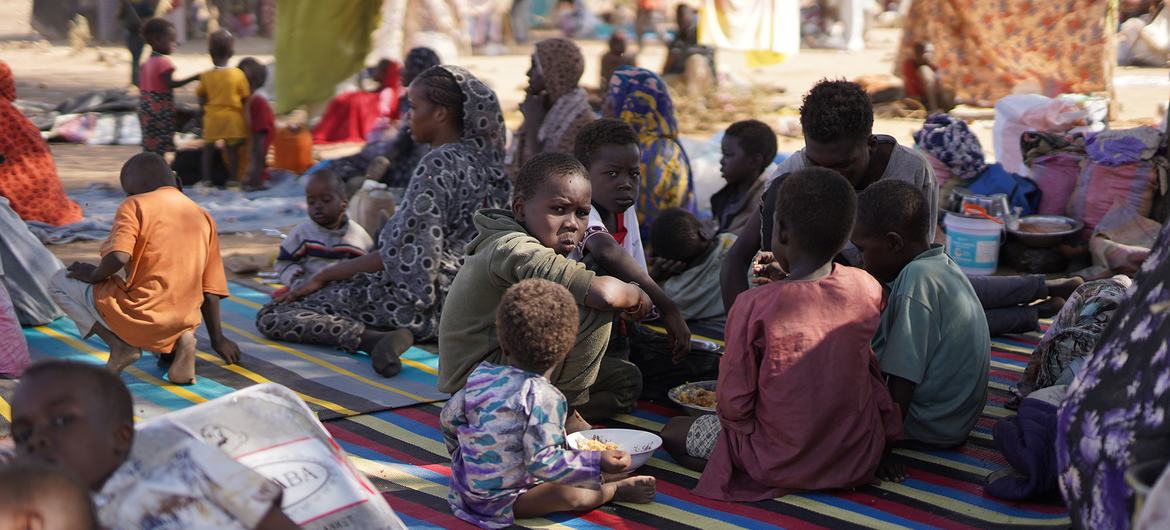
Families fleeing violence in Darfur, Sudan, arrive at a camp for displaced people.
© UNICEF/Mohammed Jamal
 
Families fleeing violence in Darfur, Sudan, arrive at a camp for displaced people.


8 December 2025 
Humanitarian Aid

The UN and partners are seeking $23 billion to provide lifesaving support next year to 87 million people worldwide affected by war, climate disasters, earthquakes, epidemics and crop failures. 

Tweet URL

This is the immediate priority of the $33 billion Global Humanitarian Overview 2026, launched on Monday, which aims to reach 135 million people overall in 50 countries.

This appeal sets out where we need to focus our collective energy first: life by life,” said UN humanitarian chief Tom Fletcher.

Millions in need

The updated GHO follows a year marked by brutal cuts to humanitarian operations and a record number of deadly attacks against aid workers.

It includes 29 detailed plans, and the largest is for the Occupied Palestinian Territory, where $4.1 billion is needed to reach some three million people.

In Sudan, $2.9 billion is required to provide lifesaving aid to 20 million people caught in the world’s largest displacement crisis, with another $2 billion for the seven million Sudanese who have fled the country.

The largest of the regional plans is for Syria, at $2.8 billion for 8.6 million people.

Cuts and consequences

Mr. Fletcher recalled that the 2025 appeal received only $12 billion – the lowest funding in a decade. As a result, humanitarians reached 25 million less people than during the previous year.

The consequences were immediate, including rising hunger and strained health systems – “even as famines hit parts of Sudan and Gaza,” he said at a press briefing prior to this year's launch.

Programmes to protect women and girls were slashed, hundreds of aid organizations shut. And over 380 aid workers were killed – the highest on record.”

Humanitarians under attack

The UN relief chief described humanitarians as “overstretched, underfunded and under attack” – something he has stressed on several occasions.

“Only 20 per cent of our appeals are supported. And we drive the ambulance towards the fire on your behalf,” he said.

“But we are also now being asked to put the fire out. And there is not enough water in the tank. And we are being shot at.”

Member State support

Humanitarians will now take the appeal to UN Member States and ask for their backing.

This will happen over the next 87 days – “one for each of the million lives that we will set out to save,” he said.

Countries will also be urged to step up protection for humanitarians, “not with statements of concern, but by holding to account those killing us – and those arming those killing us,” he added.


https://news.un.org/en/story/2025/12/1166526

https://creativecommons.org/licenses/by/4.0/legalcode

понедельник, 1 декабря 2025 г.

Cyclone Ditwah brings worst flooding in decades to Sri Lanka, killing hundreds


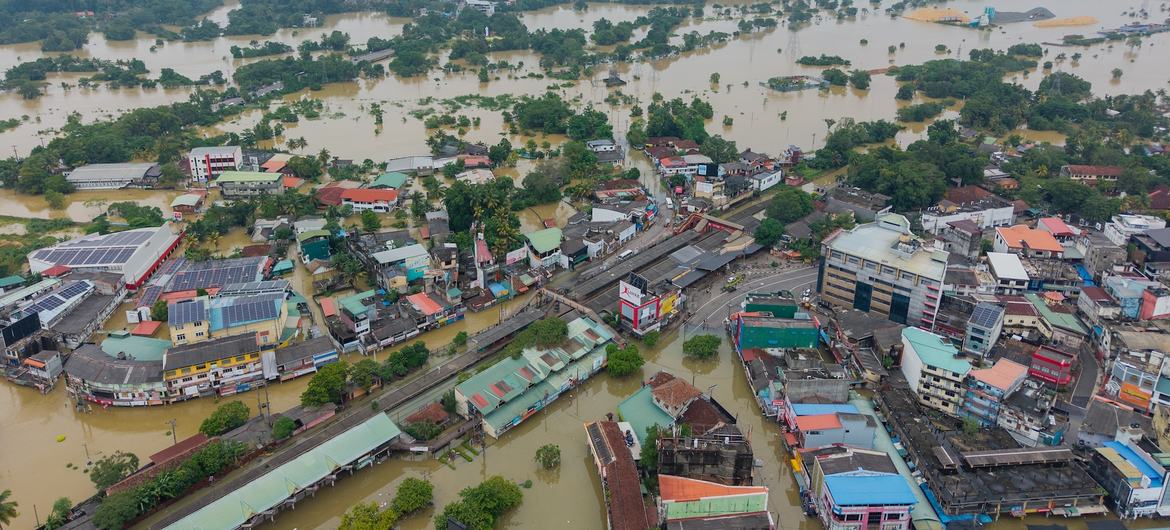
Gampaha (pictured), a district on Colombo's outskirts, has been among the areas hardest hit by flooding after Cyclone Ditwah.© UNICEF/InceptChange
 
Gampaha (pictured), a district on Colombo's outskirts, has been among the areas hardest hit by flooding after Cyclone Ditwah.


By Vibhu Mishra
30 November 2025 
Humanitarian Aid

Sri Lanka is facing one of its worst flood disasters in two decades, with nearly one million people affected and more than 400 reported dead or missing after Cyclone Ditwah unleashed catastrophic flooding and landslides across the island.

According to the UN relief coordination office, OCHA, 998,918 people across all 25 districts have now been affected, with 212 deaths reported and 218 people missing. More than 180,000 people from over 51,000 families are sheltering in 1,094 government-run safety centres as search and rescue efforts continue.

Cyclone Ditwah made landfall on 28 November before moving back over the Bay of Bengal, triggering some of the most severe flooding Sri Lanka has seen since the early 2000s.

The hardest-hit districts include Gampaha, Colombo, Puttalam and Mannar, as well as Trincomalee and Batticaloa, while deadly landslides in the central hill country have devastated Kandy, Badulla and Matale.

Tweet URL

Homes destroyed, infrastructure shattered

Initial assessments indicate that more than 15,000 homes have been destroyed. Over 200 roads remain impassable, at least 10 bridges have been damaged, and sections of the rail network and national power grid affected.

Flooding along the Kelani River, which runs through Colombo and surrounding low-lying areas, continues to hamper access and disrupt information flow from affected communities, complicating rescue and relief operations.

Severe disruption to electricity, mobile and communications, and transport networks are reported in northern districts such as Jaffna, with entire villages isolated

Access to clean water also remains a major concern, with several areas reporting little or no supply.

Health system under strain, food insecurity looms

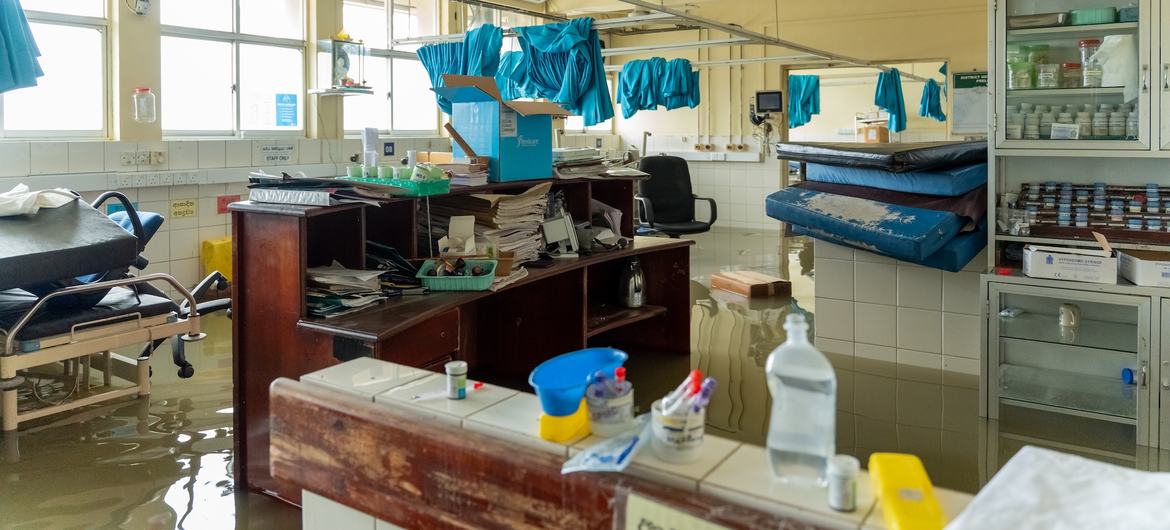
Sri Lanka’s already fragile health system is under severe pressure, OCHA said. Several district hospitals remain flooded and are receiving only limited supplies, with critically ill patients being airlifted to functioning facilities.

Response is further hindered by recurring landslides and the breach of multiple tank bunds (embankments or barriers), including at Mavilaaru, heightening risks in Trincomalee and Batticaloa.

Authorities have also warned of rising food insecurity, as submerged farmland, damaged storage facilities and severed supply routes threaten shortages and price increases in the weeks ahead.

The World Health Organization (WHO) warned that floods significantly raise the risk of vector-borne, food-borne and water-borne diseases, urging communities to prevent mosquito bites, ensure food safety and use safe drinking water wherever possible.

Floodwaters have entered several hospitals across Sri Lanka, further straining the health system.
© UNICEF/ InceptChange
 
Floodwaters have entered several hospitals across Sri Lanka, further straining the health system.

UN mobilises coordinated response

The United Nations in Sri Lanka activated its emergency coordination system on Sunday to scale up a unified response with government agencies and humanitarian organizations.

Sector coordination has been set up across food security, health, water and sanitation (WASH), education, protection, shelter and early recovery, while a multi-sector needs assessment is under way with disaster management authorities to identify the most urgent gaps.

“The UN in Sri Lanka is mobilising its teams across the system to support national rescue and early recovery efforts, in coordination with authorities. We stand in solidarity with all affected communities,” said UN Resident Coordinator Marc-André Franche.

Despite access challenges, the UN Children’s Fund (UNICEF) has delivered portable water to 25 safety centres in Badulla in the central hills, which had been cut off from the rest of the country by floods and infrastructure damage.

To support government-led efforts, India and Pakistan have deployed emergency teams to work alongside Sri Lanka’s armed forces in the worst-hit districts.

Meanwhile, in the wider Asian region

Severe monsoon flooding continues across Thailand and Malaysia, affecting more than two million people in southern Thailand alone and displacing nearly 25,000 people in Malaysia, according to OCHA. People have been evacuated in several hard-hit Thai provinces, while the rainfall is expected to ease in coming days.

In Indonesia, media reports cite at least 440 deaths from floods and landslides, with more than 400 people missing, particularly in parts of Sumatra, where thousands remain stranded without access to food and water.


https://creativecommons.org/licenses/by/4.0/legalcode

https://news.un.org/en/story/2025/11/1166474