Избранное сообщение

понедельник, 29 сентября 2025 г.

Екатеринбург готов принять ЭКСПО в 2025 году


Фото Службы новостей ООН/ А.Успенский


Делегация России провела в ООН презентацию заявки на проведение ЭКСПО-2025 в Екатеринбурге


28 сентября 2018


Культура и образование


Екатеринбург и Баку оказались конкурентами в борьбе за проведение международной выставки ЭКСПО. Россияне на 99 процентов уверены, что победят. Поддержать екатеринбуржцев на презентацию в ООН пришел министр иностранных дел России Сергей Лавров. А председатель заявочного комитета «ЭКСПО – 2025» Александр Чернов рассказал Елене Вапничной о том, что дает ему уверенность в успехе.


ЕВ: Почему Екатеринбург?

АЧ: Набор городов России велик, и определиться с кандидатом на ЭКСПО от нашей страны было не так просто. Есть блестящая Москва, есть изумительно красивый Петербург, есть восхитительная Казань…

ЕВ: И замечательный Нижний Новгород, в котором проходили игры чемпионата мира по футболу…

Да, прекрасный ярмарочный город. И в Екатеринбурге тоже были игры Чемпионата.

Кстати, в последнем отборочном туре «финальный забег» проходил как раз между Екатеринбургом и Нижним Новгородом. В пользу «Еката» сыграло то, что он уже прежде выдвигался на эту позицию. То есть существует команда, отношения, а главное – возможность показать, тем, кто голосует, что город этого хочет. А мы действительно хотим поместить себя на мировую выставочную карту.

ЕВ: Как я понимаю, в России никогда ЭКСПО не проводились. У каждого ЭКСПО своя тема. Какую тему предлагаете вы?

АЧ: Тема у нас «Инновации и развитие для будущих поколений». Эта тема достаточно общая, с одной стороны, а с другой – позволяет всем «выплеснуть» в свои павильоны, в свои решения, в свои предложения, в свое продвижение максимум наработок – научных, культурных, общественных, социальных – которые присущи той или иной стране. Это же выставка всех стран мира. То есть нет такой темы, которая не могла бы стать элементом обсуждения и решения в рамках этого заявленного слогана.

ЕВ: Мы еще не знаем решения… С кем вы, кстати, конкурируете?

АЧ: Очень некстати мы конкурируем с очень сильными претендентами, которых мы очень уважаем, с которыми мы дружим. Это Осака – японский город – я там был: красивый, динамичный, молодой. Но Япония уже пять раз проводила ЭКСПО. И Баку – сумасшедше красивый город, куда хочется возвращаться. И та борьба, которую нам навязывает Азербайджан, заставляет меня уважать их еще больше. Молодцы.

ЕВ: То есть Вам нужно противопоставить что-то такое уникальное, ради чего всем захотелось бы приехать в Россию, и я понимаю, планы уже какие-то есть. Немного можете рассказать? Там что-то интересное у Вас происходит.

АЧ: Во-первых, сам город. Это подарок Петра I своей жене Екатерине. Мало где в мире, наверное, могут похвастаться такими подарками. Во-вторых, конечно, сама история России – необъятна, восхитительна, глубока, многомерна. В-третьих, наша приверженность ценностям ЭКСПО. Мы участвовали в самой первой выставке в 1851 году в Лондоне, когда половины стран, которые сейчас конкурируют и голосуют, не существовало, а вторая половина не являлась членами этого движения. Мы уже были его приверженцами. На нашем «боевом счету» – участие в выставках в Париже, когда был представлен шедевр Веры Мухиной [скульптура «Рабочий и колхозница»], но мало кто знает, что еще один шедевр является подарком России движению ЭКСПО – это мост Александра III в Париже. Это был наш подарок Парижской выставке 1900 года, под понятием «наш подарок» я имею в виду, Россию.

Но есть у нас один очень хороший аргумент – это Чемпионат мира по футболу, который прошел в России. И всех, с кем я встречаюсь сейчас, я спрашиваю: «Вам надо рассказывать, что мы умеем проводить большие мероприятия?» «Нет, не надо, мы не могли оторваться, мы знаем - мой друг приехал, моя жена там была, мой брат, мой сын и так далее». Это бронебойный аргумент, которым, конечно, успешно надо воспользоваться, и мы надеемся, что у нас это получится. Тем более, что в «Екате» проходили матчи чемпионата мира по футболу, и французы, японцы, и сенегальцы, и мексиканцы знают, что такое Екатеринбург с его гостеприимством и умением принимать гостей.

ЕВ: Успехов!

АЧ: Спасибо большое.
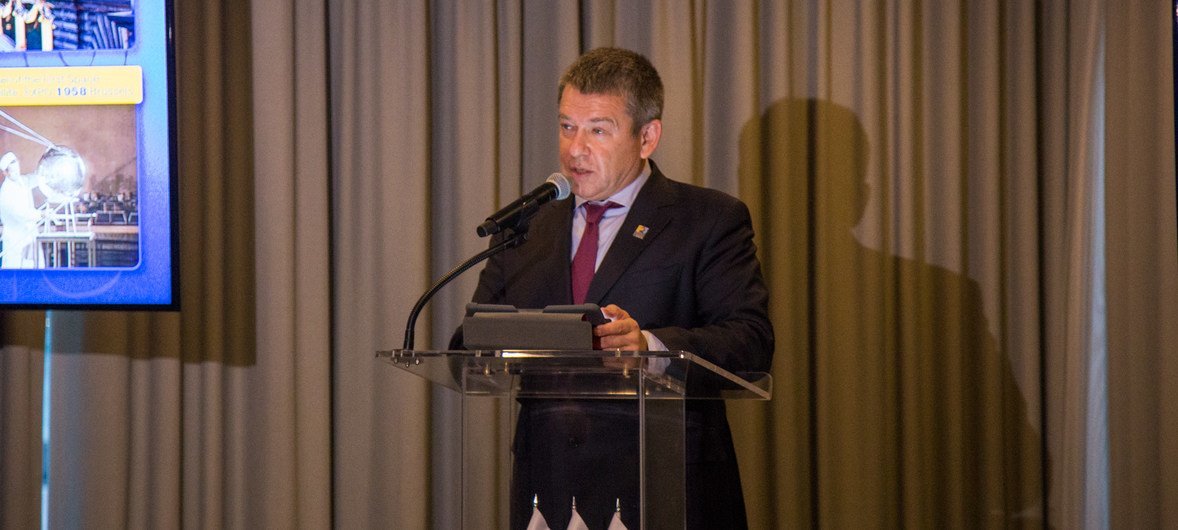
Фото Службы новостей ООН/ М.Баранюк
Александр Чернов рассказал в ООН о заявке Екатеринбурга на проведение в городе выставки ЭКСПО в 2025 году


https://news.un.org/ru/story/2018/09/1339382

http://creativecommons.org/licenses/by/3.0/legalcode

воскресенье, 21 сентября 2025 г.

UN ‘high seas’ treaty clears ratification threshold, to enter into force in January

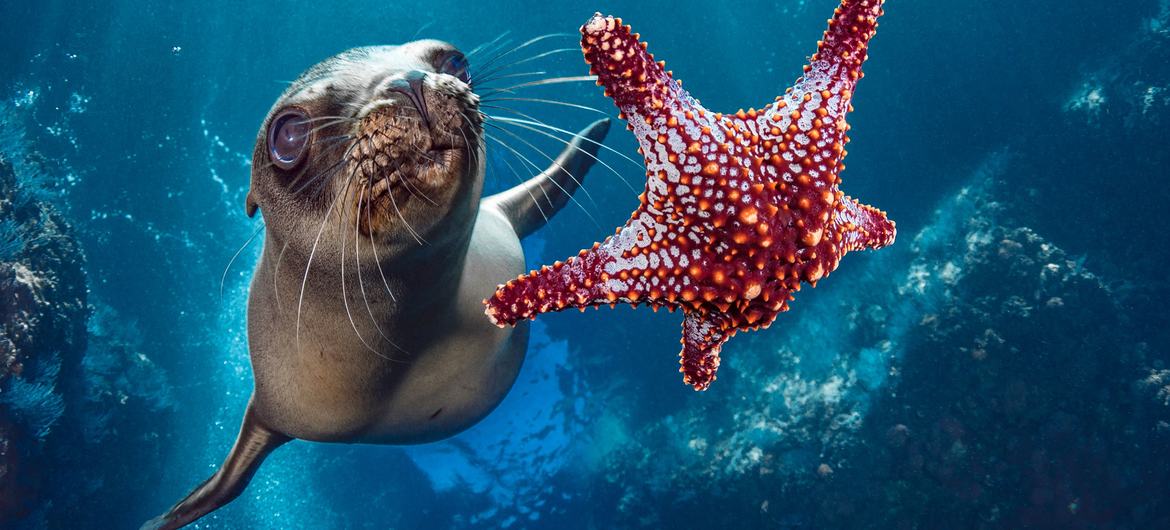
A sea lion swims past a starfish, highlighting the vibrant biodiversity of marine ecosystems.
© Ocean Image Bank/Hannes Klost
 
A sea lion swims past a starfish, highlighting the vibrant biodiversity of marine ecosystems.


By Vibhu Mishra
20 September 2025
 Climate and Environment

A landmark UN treaty to safeguard marine biodiversity on the high seas has now met the required 60 ratifications for entry into force, clearing the way for it to take effect in January 2026.

Morocco and Sierra Leone joined the list of States ratifying on Friday, becoming the 60th and 61st parties to the pact.

The treaty, formally known as the Agreement under the United Nations Convention on the Law of the Sea on the Conservation and Sustainable Use of Marine Biological Diversity of Areas beyond National Jurisdiction (BBNJ agreement), was adopted by UN Member States in June 2023 after nearly two decades of negotiations.

A historic achievement

Secretary-General António Guterres welcomed the development, calling it a “historic achievement for the ocean and for multilateralism.

“In two years, States have turned commitment into action – proving what is possible when nations unite for the common good,” he said in a statement.

“As we confront the triple planetary crisis of climate change, biodiversity loss, and pollution, this agreement is a lifeline for the ocean and humanity.

Tweet URL

The pact – also called the “high seas treaty” – covers two-thirds of the world’s ocean area that lies beyond national boundaries.

It establishes legally binding rules to conserve and sustainably use marine biodiversity, share benefits from marine genetic resources more fairly, create protected areas, and strengthen scientific cooperation and capacity building.

Foundation of our existence

UN Environment Programme (UNEP) Executive Director Inger Andersen also hailed the milestone.

Our ocean is the foundation of our very existence. Today we took an important step forward to save our ocean, and to save our future,” she said in a post on social media.

Safeguarding humanity’s future

The BBNJ agreement builds on the UN Convention on the Law of the Sea, regarded as the “constitution for the oceans.”

Once the high seas treaty enters into force on 17 January 2026, it will provide a global framework to help achieve international biodiversity targets, including the pledge to protect 30 per cent of land and sea areas by 2030 under the Kunming-Montreal Global Biodiversity Framework.

Mr. Guterres urged all remaining UN Member States to join the treaty without delay and called on partners to support its swift and full implementation.

The ocean’s health is humanity’s health,” he said.

https://news.un.org/en/story/2025/09/1165901

https://creativecommons.org/licenses/by/4.0/legalcode

среда, 17 сентября 2025 г.

Healing the ozone layer: ‘Guided by science, united in action’

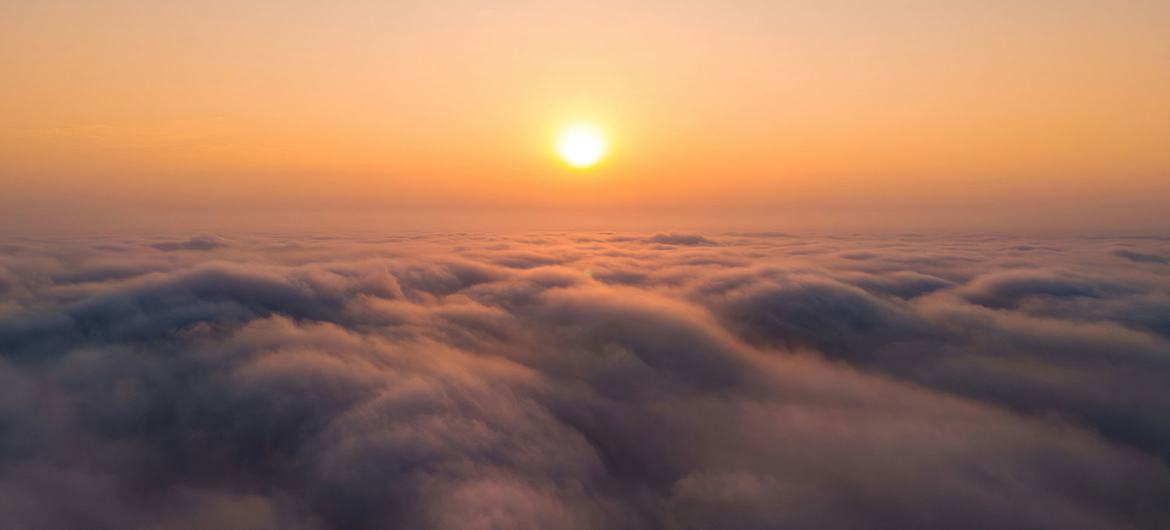
The ozone layer, a fragile shield of gas, protects the Earth from the harmful portion of the rays of the sun.
© Unsplash/Jerry Zhang
 
The ozone layer, a fragile shield of gas, protects the Earth from the harmful portion of the rays of the sun.


16 September 2025
 Climate and Environment

Every year on 16 September, the UN celebrates the international community’s success in healing the ozone layer and brings attention to what more can be done to protect the planet.

Last century, scientists confirmed the alarming reality of a significant depletion in the ozone layer – an invisible shield of gas which surrounds the earth and protects it from the sun’s UV rays.

Tweet URL

The collection of ozone-depleting substances included CFCs, or chlorofluorocarbons, which in the mid-1980s were commonly found in everyday products such as air conditioners, fridges and aerosol cans.

Science led to global action. Realising that harmful UV radiation was entering the atmosphere through what was potentially a damaged ozone layer, countries made a commitment under the Vienna Convention in 1985, to do what was needed for the protection of the people and the planet.

The Vienna Convention and its Montreal Protocol became a landmark of multilateral success,” said the UN Secretary General António Guterres in a message for this year’s World Ozone Day.

“Today, the ozone layer is healing,” he said.

What is the Vienna Convention?

Forty years ago, countries came together to take the first step in protecting the ozone layer, “guided by science, united in action,” the UN chief continued.

The Vienna Convention for the Protection of the Ozone Layer, adopted and signed by 28 countries on 22 March 1985, formalised universal cooperation over the protection of the fragile ozone layer.

It is the first treaty to be signed by every country in the world and the precursor to the Montreal Protocol.

The objective of the Montreal Protocol is to monitor the global production and consumption of substances that deplete the ozone layer – and eventually eliminate them.

Multilateralism at its best

In a video message, Inger Andersen, Executive Director of the UN Environment Programme (UNEP), highlighted that through action under the conventions “ozone depleting substances have now been virtually eradicated and the hole in ozone layer is closing.”

After scientists sounded the alarm, countries, nations, and businesses came together and took action for the planet.

“That is multilateralism at its very, very best,” she added.

The Montreal Protocol has been progressing well in both developed and developing countries with most phase-out schedules – the time given for each country to gradually stop the production of harmful substances – adhered to or even surpassed.

This achievement reminds us that when nations heed the warnings of science, progress is possible,” remarked Mr. Guterres.

Next in line, the Kigali Amendment

In his message, Mr. Guterres urged governments to ratify and implement the Kigali Amendment to the Montreal Protocol, which commits to phase down, or reduce, hydrofluorocarbons (HFCs), greenhouse gases used mainly in cooling technologies.

“Implementing the Kigali Amendment could avoid up to 0.5 degrees Celsius of warming by the end of the century,” he said. “Paired with energy-efficient cooling, we could double these gains.”

As outlined in the Paris Agreement, countries have agreed to try and limit the rise of global temperature to 1.5 degrees Celsius.

“On this World Ozone Day, let’s recommit to preserving our ozone layer and to protecting people and planet for generations to come,” the UN chief said. 


https://creativecommons.org/licenses/by/4.0/legalcode

https://news.un.org/en/story/2025/09/1165861