Избранное сообщение

четверг, 25 апреля 2019 г.

«Цифровизация» в этом году обойдется предприятиям в 1,2 трлн долларов


24 апреля 2019 в 18:05

Бизнес рассчитывает на преимущества цифровой экономики

Предприятия по всему миру делают значительные инвестиции в технологии и услуги, которые обеспечивают цифровую трансформацию («цифровизацию») их бизнес-моделей, продуктов и услуг, а также организационных структур. По прогнозу IDC, мировые расходы на цифровизацию в 2019 году достигнут 1,18 трлн долларов, увеличившись на 17,9% по сравнению с 2018 годом.

Наибольшие инвестиции в цифровую трансформацию в 2019 году будут вложены в дискретном производстве (221,6 млрд долларов) и процессном производстве (124,5 млрд долларов). Для обеих отраслей основной приоритет расходов — умное производство. Далее по величине расходов следует розничная торговля, за ней — транспортные и профессиональные услуги.

С технологической точки зрения инвестиции в оборудование и услуги составят более 75% всех расходов на цифровую трансформацию в 2019 году. К услугам относятся, прежде всего, ИТ-услуги (154 млрд долларов) и услуги связи (102 млрд долларов). Расходы на оборудование будут распределены по нескольким категориям, включая корпоративное оборудование, персональные устройства и инфраструктуру IaaS. Расходы на программное обеспечение в 2019 году составят 253 млрд долларов.


Представление о распределении расходов между регионами дает график.


https://www.ixbt.com/news/2019/04/24/cifrovizacija-v-jetom-godu-obojdetsja-predprijatijam-v-12-trln-dollarov-.html http://creativecommons.org/licenses/by/3.0/legalcode

World Malaria Day


25 April 2019

WHO/T. Trenchard

“Zero malaria starts with me”

After more than a decade of steady advances in fighting malaria, progress has levelled off. According to WHO’s latest World malaria report, no significant gains were made in reducing malaria cases in the period 2015 to 2017. The estimated number of malaria deaths in 2017, at 435 000, remained virtually unchanged over the previous year.

Urgent action is needed to get the global response to malaria back on track – and ownership of the challenge lies in the hands of countries most affected by malaria. On World Malaria Day 2019, WHO joins the RBM Partnership to End Malaria, the African Union Commission and other partner organizations in promoting “Zero malaria starts with me,,” a grassroots campaign that aims to keep malaria high on the political agenda, mobilize additional resources, and empower communities to take ownership of malaria prevention and care.


https://www.who.int/campaigns/world-malaria-day/world-malaria-day-2019 http://creativecommons.org/licenses/by/3.0/legalcode

Under-fives' daily screen time should be kept to 60 minutes only, warns WHO


UNICEF


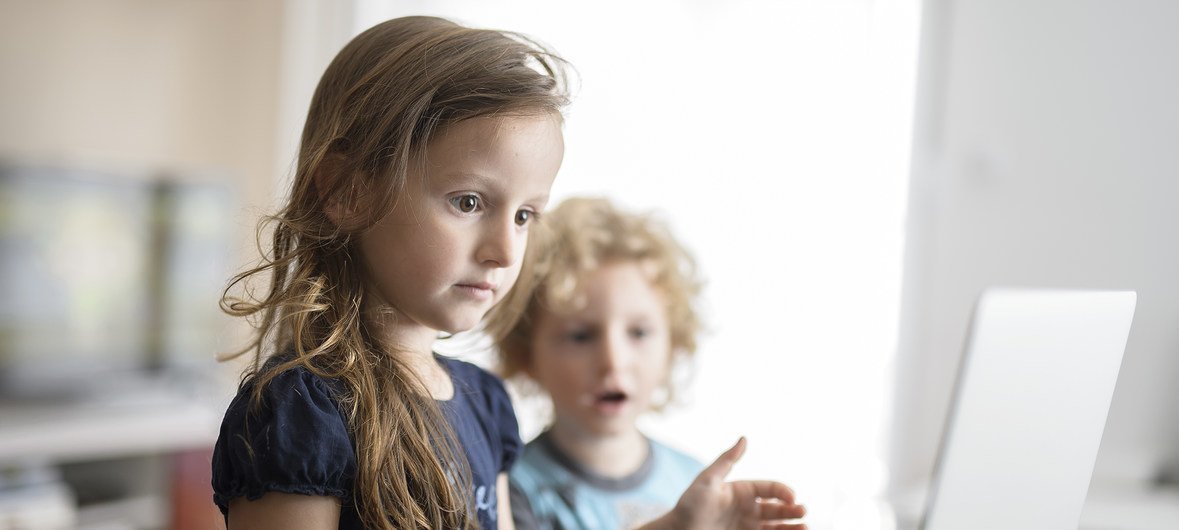
A 6 year-old and 4 year-old in front of a laptop, in the city of Podgorica, Montenegro, as part of the promotion of the “End Violence Online” campaign (2016)

24 April 2019

Health

Toddlers should spend no more than 60 minutes passively watching a screen every day, while babies under 12 months should have none, to ensure that they grow up fit and well, the World Health Organization (WHO) said on Wednesday, as part of a campaign to tackle the global obesity crisis.

In recommendations specifically aimed at under-fives for the first time, the UN health agency said that some than 40 million children around the globe - around six per cent of the total - are overweight. Of that number, half are in Africa and Asia, it noted.

The guidelines – which refer to passive activities such as watching cartoons, for example, as opposed to going online to talk to a grandparent - build on data gathered in countries including Canada and Australia, which show that as many as 75 per cent of children do not have healthy lifestyles.


“That takes a moment to think about,” said Dr. Fiona Bull, a Programme Manager at WHO’s Department of Prevention of Noncommunicable Diseases. “Children under-five who seem to be running around and busy all day and certainly tiring their parents, may not be as active as we think.”
'More is better' for sleep and exercise


In addition to screen time recommendations for very young children the UN health agency says that they should be physically active several times a day and get lots of sleep.


“More is better,” the WHO report maintains, suggesting that carers should engage in interactive floor-based play and ensure that babies who are not yet walking spend at least 30 minutes on their stomach, rather than sitting in a chair.


“The advice is where possible, to move from sedentary, passive screen time to more physical activity while at the same time protecting that very important quality sleep,” said Dr. Juana Willumsen, WHO focal point for childhood obesity and physical activity. “And what’s particularly important is that quality interactive play with a caregiver that’s so important for early childhood development…that sedentary time should also be protected.”


Children aged one to four years old should be active for at least 180 minutes throughout the day, WHO says, citing walking, crawling, running, jumping, balancing, climbing, dancing, riding wheeled toys, cycling and jumping rope as suitable pastimes. 

Playtime, not screen time


For three to four-year-olds, moreover, 60 minutes of this activity should be of “moderate-to-vigorous intensity”, according to the UN agency’s guidelines, which also note that around the world, five million people die every year because they are not active enough.


“Sedentary behaviours, whether riding motorized transport rather than walking or cycling, sitting at a desk in school, watching TV or playing inactive screen-based games are increasingly prevalent and associated with poor health outcomes,” says WHO’s Guidelines on physical activity, sedentary behaviour and sleep for children under five years old.


Noting the emergence of on-screen applications that help users understand how long they are spending on their devices, Dr. Bull noted that there was still much uncertainty about their health impacts.


“This is a recent development and I think it is a signal that the digital industry is also wary about the addictive nature the time that’s being spent using these in different ways,” she said. “Of course, all of us are using them for work, we’re using them in schools for education, we’re using them at home for education. It’s about managing the use of these valuable tools and about watching both the benefits and the risks.”


https://news.un.org/en/story/2019/04/1037201 
http://creativecommons.org/licenses/by/3.0/legalcode

Vaccinations create ‘umbrella of immunity’ against global measles outbreaks, says UNICEF


UNICEF/Mahmood Fadhel

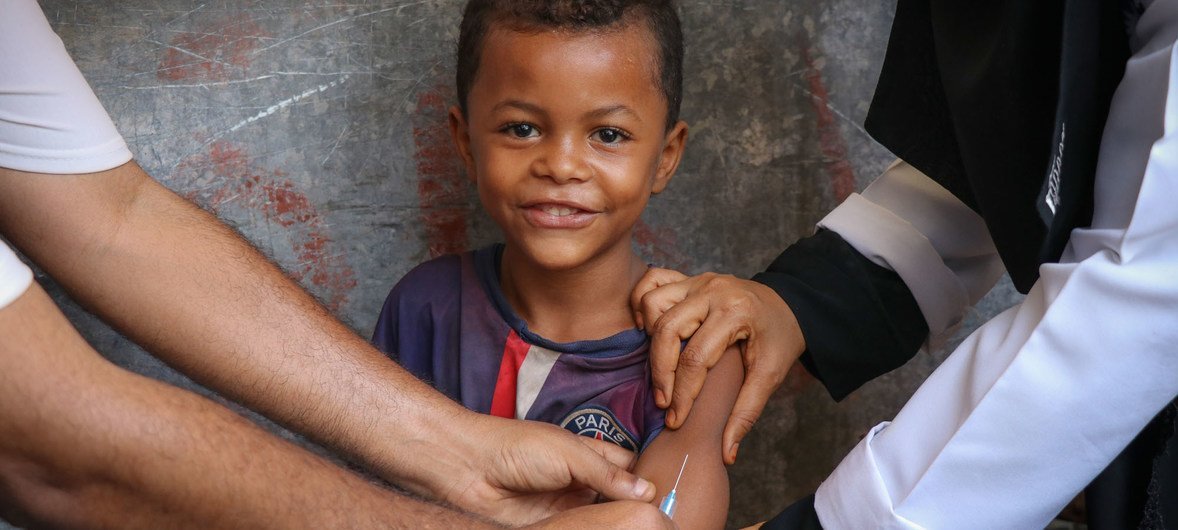
A child smiles while receiving a Measles and Rubella vaccination during a UNICEF-supported mobile vaccination campaign in Aden, Yemen, February 2019.


24 April 2019

Health


Between 2010 and 2017, an average of 21.1 million children missed their first dose of the measles vaccine, the United Nations Children’s Fund (UNICEF) revealed on Wednesday, stressing its importance to create “an umbrella of immunity for everyone.”


According to UNICEF, widening pockets of unvaccinated children have created a pathway to the measles outbreaks currently spreading around the world.

“The ground for the global measles outbreaks we are witnessing today was laid years ago,” said Henrietta Fore, UNICEF Executive Director.

During the first three months of 2019, more than 110,000 measles cases were reported worldwide, representing a near 300 per cent jump from the same period last year. And in 2017, measles cost some 110,000 people, mostly children, their lives, representing a 22 per cent increase from the previous year.


UNICEF explained that although two doses of the measles vaccine are “essential” to protect children from the disease, a lack of access, poor health systems, complacency, and in some cases a fear of vaccines, led to a drop in global coverage to only 85 per cent in 2017, which has remained relatively constant over the last decade.

However, at 67 per cent, global coverage for the second dose is much lower. The World Health Organization (WHO) recommends a threshold of 95 per cent immunization coverage to achieve so-called “herd immunity”; or vaccinating a significant enough portion of the population to provide protection for those who have yet to develop immunity.

“The measles virus will always find unvaccinated children”, Ms. Fore stated, but “if we are serious about averting the spread of this dangerous but preventable disease, we need to vaccinate every child, in rich and poor countries alike.” 

View by income

While 94 per cent of people in high-income countries receive the first dose, coverage for the second dips to 91 per cent, according to the latest data.

The United States tops the list of high-income countries not receiving the first dose of the vaccine (2.5 million children), followed by France (600,000) and the United Kingdom (500,000) during the period between 2010 and 2017.

In low- and middle-income countries, the situation is critical.

In 2017, for example, nearly four million Nigerian children under 12 months, missed out on the first dose, putting it in the number one spot, followed by India at 2.9 million, Pakistan and Indonesia each at 1.2 million each and Ethiopia at 1.1 million.

Worldwide coverage levels of the second dose are even worse. Of the 20 countries with the largest number of unvaccinated children in 2017, nine have not introduced the second dose.

In sub-Saharan Africa, 20 countries have not introduced the necessary second dose in the national vaccination schedule, putting over 17 million infants a year at higher risk of measles during their childhood.

“Measles is far too contagious,” Ms. Fore underscored. “It is critical not only to increase coverage but also to sustain vaccination rates at the right doses to create an umbrella of immunity for everyone,” she concluded. 

Tackling the crisis

UNICEF, with partners such as the Measles and Rubella Initiative and Gavi, the Vaccine Alliance, is helping address this measles crisis by: 

Negotiating vaccine prices. 

Helping countries identify underserved areas and unreached children. 

Procuring vaccines and other immunization supplies. 

Supporting vaccination campaigns to address immunization coverage gaps. 

Working to introduce the second measles dose vaccine in national immunization schedules. 

Introducing solar power, mobile technologies and other innovations to maintain vaccine temperatures.

WHO/UN News

Top ten high-income countries where children not vaccinated with the first measles vaccine dose 2010-2017


https://news.un.org/en/story/2019/04/1037271
http://creativecommons.org/licenses/by/3.0/legalcode

среда, 24 апреля 2019 г.

Контактная группа не смогла согласовать "пасхальное" перемирие в Донбассе


Вчера, 22:27

ДОНЕЦК, 18 апр – РИА Новости. "Пасхальное" перемирие в Донбассе в ходе видеоконференции контактной группы согласовано не было, заявили в четверг в пресс-службе МИД ДНР.


"Официальный Киев впервые за все время минских переговоров создал прецедент несогласования перемирия в канун праздничных дат", - говорится в сообщении пресс-службы МИД ДНР.


17 апреля, 12:28


В ведомстве отметили, что важным вопросом повестки дня прошедших переговоров было "согласование параметров возобновления обязательств сторон по введению всеобъемлющего, безусловного перемирия в преддверии пасхальных праздников".

"Усилия остальных участников были проигнорированы официальным Киевом – его представители в рабочей группе по вопросам безопасности продолжили свою прежнюю деструктивную линию: отказались обсуждать и согласовывать с представителями республик конкретные дополнительные меры усиления и контроля перемирия, которые должны быть включены в текст заявления контактной группы о возобновлении обязательств сторон по соблюдению режима прекращения огня", - отметили в МИД.


Министр иностранных дел самопровозглашенной Луганской народной республики Владислав Дейнего отметил, что со стороны Киева не получил поддержки содержащий дополнительные меры проект, предложенный спецпредставителем ОБСЕ Мартином Сайдиком. "Представители Киева пытались говорить о чем угодно, только не о реальных шагах, позволяющих обеспечить устойчивое перемирие. В итоге, сегодня, в очередной раз, по вине украинской стороны согласование было сорвано", - заявил дипломат.


Вчера, 15:15

В ДНР прокомментировали заявление Киева о захвате территорий в Донбассе


В МИД ДНР выразили надежду, что согласовать перемирие к пасхальным праздникам удастся на предстоящей встрече в Минске 24 апреля. "Мы заинтересованы в скорейшем согласовании действенного перемирия в преддверии Пасхальных праздников, однако, очевидно, что это возможно только в случае принятия дополнительных мер его усиления и контроля", - добавили во внешнеполитическом ведомстве.


https://ria.ru/20190418/1552831776.html 

http://creativecommons.org/licenses/by/3.0/legalcode

Количество активных пользователей Twitter за год уменьшилось


23 апреля 2019    в 20:57

При этом доход вырос на 20%

Компания Twitter опубликовала отчет за первый квартал 2019 года. Отчетный период принес компании 787 млн долларов дохода, что на 18% больше, чем год назад (на 20%, если учесть изменения курса валют).


Основной доход компании приносит реклама. В минувшем квартале на эту статью пришлось 679 млн долларов. Опять-таки, это соответствует росту на 18% в годовом выражении или на 20% с учетом курсовой коррекции. Примечательно, что на США пришлось 432 млн долларов, а рост на американском рынке составил 25%.


По подсчетам компании, среднее количество активных пользователей в месяц составляет 330 млн человек. Для сравнения: в первом квартале 2018 года этот показатель был равен 336 млн человек, а в четвертом квартале — 321 млн человек.


https://www.ixbt.com/news/2019/04/23/kolichestvo-aktivnyh-polzovatelej-twitter-za-god-umenshilos-.html http://creativecommons.org/licenses/by/3.0/legalcode

Вакцины безопасны и эффективны, напоминают в ЮНИСЕФ, запуская новую кампанию


Фото ЮНИСЕФ/А.Алайдрус

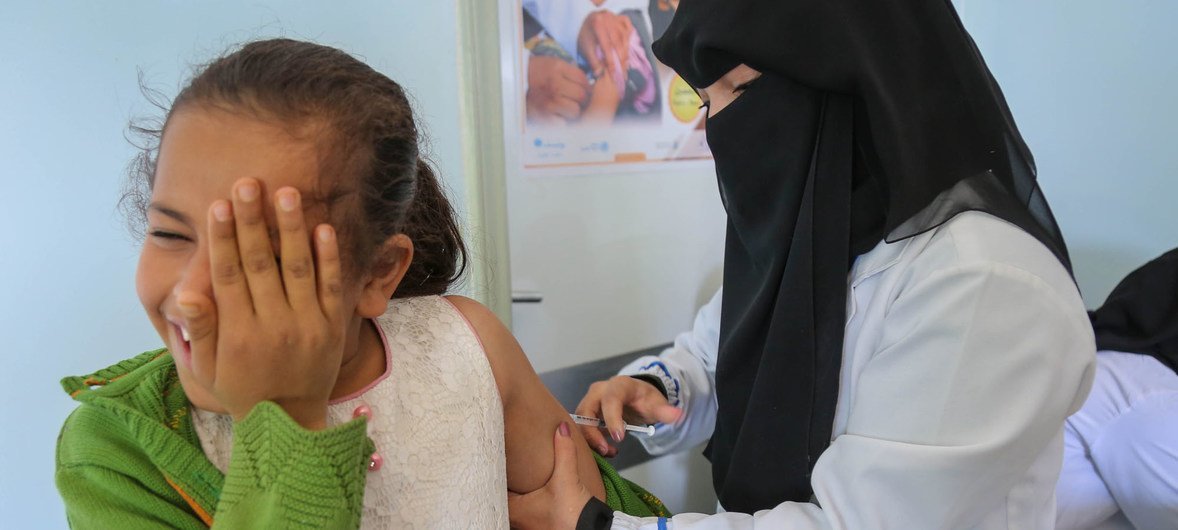
Девочка в Сане, Йемен, пришла на вакцинацию против кори и краснухи, которая проводится в рамках кампании ЮНИСЕФ, февраль 2019 года

22 апреля 2019


Права человека


24 апреля ЮНИСЕФ запускает кампанию #ВакциныРаботают. Она призвана убедить всех родителей и других пользователей социальных сетей в том, что прививки безопасны и обеспечат эффективную защиту детей от инфекционных заболеваний.


Кампания приурочена к Всемирной неделе иммунизации, которая пройдет с 24 по 30 апреля. В этом году Детский фонд ООН (ЮНИСЕФ) и Всемирная организация здравоохранения (ВОЗ) проводят кампанию при поддержке Фонда Билла и Мелинды Гейтс.


Фонд пообещал выделять для ЮНИСЕФ по одному доллару США за каждый пост в социальных сетях под хештегом #ВакциныРаботают и за каждый «лайк» под ним.


Ежегодно благодаря вакцинам удается спасать около трех миллионов детей от смертельных и крайне опасных инфекционных заболеваний, таких как корь, пневмония, холера и дифтерия.


«Вакцины безопасны. Они спасают жизни. Эта кампания является возможностью показать мировому сообществу, что социальные сети могут стать мощным двигателем перемен…», - заявил глава Управления по иммунизации ЮНИСЕФ Робин Нэнди.


Вакцины являются одним из самых экономически эффективных инструментов здравоохранения, когда-либо изобретенных человечеством. Но несмотря на это, в 2017 году около 1,5 млн детей умерли от болезней, которые можно было бы предотвратить с помощью прививки. Нередко это связано с тем, что в некоторых странах семьи откладывают иммунизацию детей или отказываются делать им прививки из-за скептического или настороженного отношения к вакцинам. Такое безответственное поведение обернулось вспышками ряда заболеваний, в частности увеличением случаев заболеваний корью. ЮНИСЕФ и ВОЗ хотят повернуть эту ситуацию вспять с помощью социальных сетей.


https://news.un.org/ru/story/2019/04/1353571 

http://creativecommons.org/licenses/by/3.0/legalcode